
How to Sell an Inherited House in Great Falls, VA: Probate, Taxes, and Smart Exit Strategies
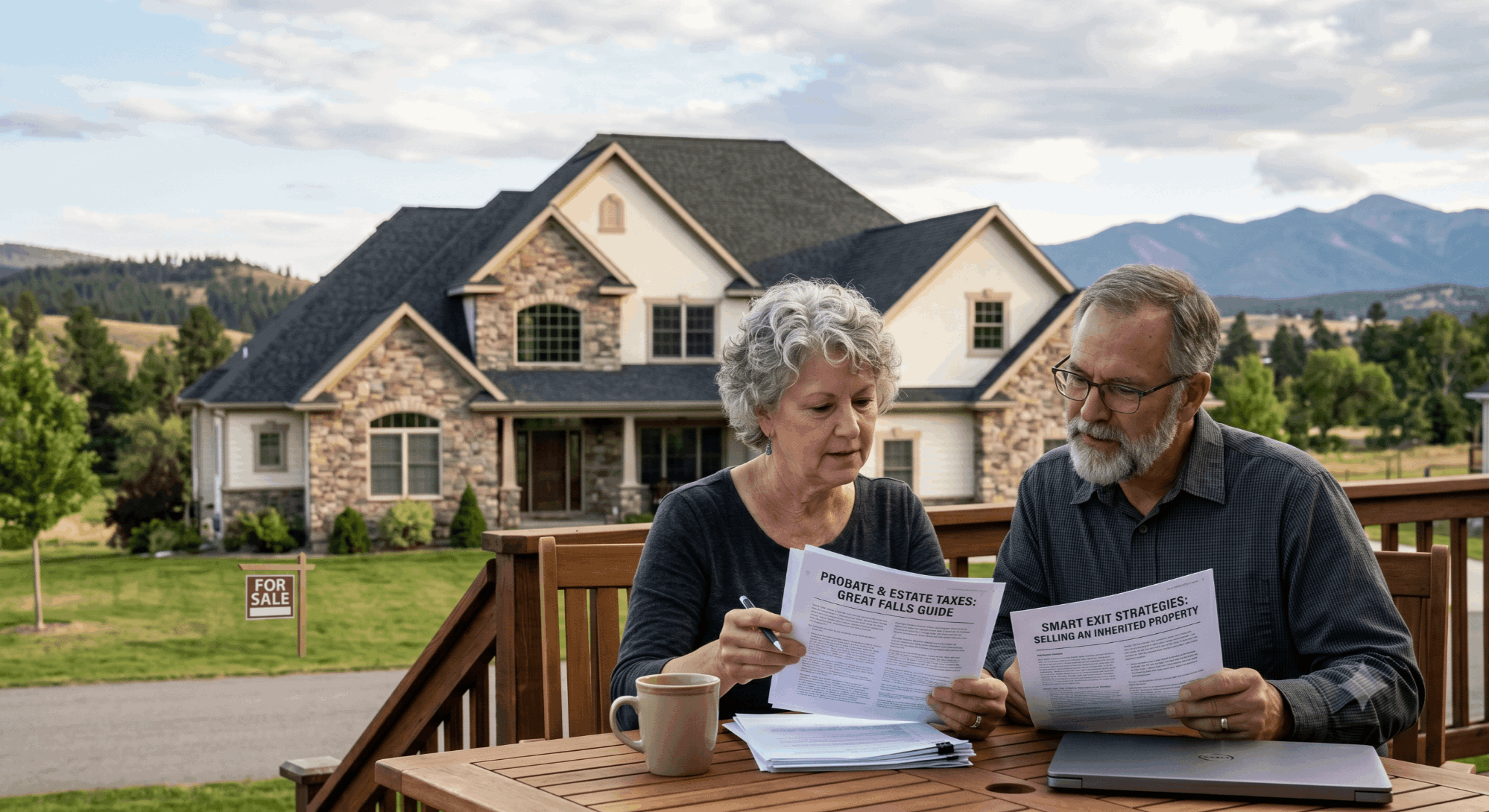
Quick Answer: To sell an inherited house in Great Falls, VA, first confirm whether the estate must pass through Virginia probate, establish the property's stepped-up tax basis as of the date of death, and choose an exit strategy — list on the open market, accept a cash offer, or sell as-is without repairs. Most Great Falls estate homes sell highest on the open market because the luxury buyer pool rewards staging and condition, and capital gains tax is usually minimal thanks to the stepped-up basis. The Jamil Brothers Realty Group helps heirs sell inherited property in Great Falls with a 1.5% full-service listing fee.
Inheriting a home in Great Falls is rarely simple. You are managing grief, coordinating with family, and facing a property that may carry decades of belongings, deferred maintenance, and an estate process you have never navigated before — all while the home sits empty and costs keep accruing. This guide walks you through every step of selling inherited property in Great Falls, from the Fairfax County probate process to the tax implications of inherited property sales, so you can make a confident, informed decision.
Key Takeaways
- Most inherited Great Falls homes must clear Fairfax County probate before sale, but small estates and homes held in trust may qualify to avoid probate delays entirely.
- Inherited property receives a stepped-up tax basis as of the date of death — meaning capital gains are calculated only on appreciation after you inherit, which is usually small.
- Great Falls is a luxury home market where condition, staging, and marketing meaningfully affect sale price; selling as-is leaves money on the table more often than in lower-priced markets.
- You have three realistic exit paths: a full-service market listing (highest net), a cash offer (fastest and most certain), or an as-is sale (no repairs, middle ground).
- When multiple siblings inherit jointly, all heirs (or the executor) must agree before the estate property can sell — disputes are the single biggest cause of delay.
- The Jamil Brothers Realty Group offers a 1.5% full-service listing fee on inherited real estate in Great Falls, Virginia, with no reduction in marketing or service.
In This Guide
- The Probate Process for Inherited Homes in Virginia
- How to Avoid Probate Delays When Selling
- Tax Implications of Inherited Property Sales
- How to Value Inherited Property in Northern Virginia
- The Great Falls VA Real Estate Market for Estate Homes
- Three Smart Exit Strategies for Your Inherited Home
- What It Costs to Sell an Estate Property in Great Falls
- Seller Savings Calculator
- Can Siblings Sell Inherited Property Together?
- Step-by-Step Timeline to Sell
- Choosing the Best Realtor for Inherited Homes
- Common Mistakes Heirs Make
- Your Next Step as a Great Falls Estate Seller
- Frequently Asked Questions
- Glossary
Great Falls sits in northern Fairfax County along the Potomac, known for large wooded lots, custom estate homes, and one of the highest median sale prices in Northern Virginia. When a Great Falls home passes to heirs, the stakes are higher than in most markets simply because the dollar amounts are larger — a single pricing or tax mistake can cost six figures. The good news is that with the right sequence of steps, selling an inherited home in Great Falls is very manageable.
Below, we cover the Virginia probate process, the tax rules that work in your favor, how to value the property accurately, and the three exit strategies most Great Falls heirs choose between. Whether you want the highest possible price or a fast, certain sale, you will leave this guide knowing exactly what to do next.
The Probate Process for Inherited Homes in Virginia
Probate is the court-supervised process of validating a will, settling debts, and legally transferring a deceased person's assets to heirs. In Virginia, probate for a Great Falls property runs through the Fairfax County Circuit Court and the Commissioner of Accounts. Before you can sell an inherited house in Great Falls, VA, you generally need legal authority to act for the estate — either as the named executor in the will or as an administrator appointed by the court when there is no will.
The core steps in a Virginia probate home sale in Great Falls look like this:
Qualify the executor or administrator — Weeks 1–4
The will is presented to the Fairfax County Circuit Court clerk, and the executor is formally qualified and granted Letters Testamentary (or Letters of Administration if there is no will). This document is your legal authority to list and sell the estate property.
Inventory and appraise assets — Weeks 4–16
Virginia requires an inventory of estate assets filed with the Commissioner of Accounts, typically within four months. A date-of-death valuation of the Great Falls home is established here — this number becomes your stepped-up basis for taxes.
Settle debts and list the home — Months 2–6
Once authority is established, the executor can list and sell the property. If the will grants a power of sale (most do), court approval for the sale itself is usually not required, which keeps the process moving.
Close and distribute proceeds — After sale
Sale proceeds flow into the estate, remaining debts and the Virginia probate tax are paid, and the balance is distributed to heirs per the will or Virginia's intestacy laws. A final accounting is filed with the Commissioner of Accounts.
ℹ️ Virginia Probate Tax
Virginia charges a probate tax of $1.00 per $1,000 of estate value (0.10%), plus a local probate tax of $0.33 per $1,000 in jurisdictions like Fairfax County. On a $1.5 million Great Falls estate, that totals roughly $2,000 — modest relative to the property value, but a line item to plan for.
How to Avoid Probate Delays When Selling a House
Probate delays are the number-one frustration for heirs trying to sell estate property in Great Falls. The full process can stretch six to twelve months, and a vacant luxury home accrues real carrying costs — property taxes, insurance, utilities, landscaping on multi-acre lots, and security. Fortunately, several situations allow you to avoid or shorten Virginia probate entirely.
When You Can Skip or Shorten Probate
| Situation | What Happens |
|---|---|
| Home held in a living trust | The successor trustee can sell immediately — no probate required. The cleanest path. |
| Joint ownership with survivorship | Title passes automatically to the surviving owner, who can then sell without probate. |
| Transfer-on-death deed | Virginia allows TOD deeds; the named beneficiary takes title outside probate. |
| Small estate (under $50,000 personal property) | Simplified affidavit process — but rarely applies to a Great Falls home given values. |
| Will with power of sale | Still requires qualification, but the executor can sell without a separate court order. |
If none of these apply and you are in full probate, you can still keep the timeline tight: qualify the executor promptly, order a date-of-death appraisal early, and engage a listing agent who has handled Fairfax County inherited property sales before. An agent who understands estate timelines can have marketing ready to launch the moment you have legal authority, rather than starting from scratch.
⚠️ Don't Let the Home Sit Empty Too Long
Vacant luxury homes in Great Falls are targets for water damage, pests, and break-ins. Many insurers also limit or void coverage on homes vacant beyond 30–60 days. Notify the insurer, keep utilities on, and consider a vacant-home policy until the estate property sells.
If clearing the estate quickly matters more than maximum price — or the home needs major work — a cash offer on your inherited Great Falls house may be the right fit. We'll walk you through your full range of options, including a market listing comparison, with no pressure.
Tax Implications of Inherited Property Sales
The tax rules for inherited real estate in Great Falls, Virginia, are more favorable than most heirs expect. The single most important concept is the stepped-up basis, and understanding it can save you tens of thousands of dollars.
The Stepped-Up Basis Advantage
When you inherit a home, your tax basis is "stepped up" to the property's fair market value on the date of the previous owner's death — not what they originally paid. If your parents bought a Great Falls home for $300,000 in 1995 and it was worth $1.5 million when they passed, your basis becomes $1.5 million. If you then sell for $1.55 million, you owe capital gains tax only on the $50,000 of appreciation since the date of death, not on the $1.25 million of lifetime appreciation.
| Scenario | Without Step-Up | With Step-Up (Inherited) |
|---|---|---|
| Original purchase price | $300,000 | $300,000 |
| Tax basis | $300,000 | $1,500,000 (date-of-death value) |
| Sale price | $1,550,000 | $1,550,000 |
| Taxable gain | $1,250,000 | $50,000 |
This is why selling an inherited home relatively soon after inheriting is often tax-efficient: the closer the sale price is to the date-of-death value, the smaller the taxable gain. Holding the property for years while it appreciates can create a larger capital gains bill later.
Other Taxes to Know
Tax Checklist for an Inherited Great Falls Home
- ✓ No Virginia estate tax — Virginia repealed its estate tax in 2007. Most estates also fall under the large federal estate tax exemption.
- ✓ No inheritance tax — Virginia does not impose an inheritance tax on heirs.
- ✓ Capital gains apply only to appreciation after the date of death — usually small if you sell promptly.
- ✓ Virginia grantor tax at sale: $1 per $1,000 of sale price, plus the Northern Virginia regional congestion tax of $0.15 per $100 (an extra grantor's tax on NOVA jurisdictions).
- ✓ Confirm the date-of-death value in writing — a formal appraisal protects your stepped-up basis if the IRS ever asks.
The Jamil Brothers Realty Group is a real estate team, not a tax or legal advisor. Always confirm your specific tax situation with a CPA and your probate attorney before selling.
Get a street-level home valuation for the Great Falls estate from The Jamil Brothers — real comps from recent luxury sales, not an automated guess. This also gives you a defensible date-of-death value reference point. Response within 24 hours.
How to Value Inherited Property in Northern Virginia
Accurate valuation matters twice when you sell estate property in Great Falls: once for taxes (the date-of-death basis) and again for pricing the home to sell. Great Falls is a low-volume luxury market where automated estimates from national portals are notoriously unreliable — homes here are highly individual, sitting on one to five acres with custom finishes, so a true valuation requires local comparable sales analysis.
How a Great Falls Estate Home Gets Priced
Factors that move value most in Great Falls:
An older inherited home — even a structurally sound one — often shows dated kitchens, baths, and mechanicals. In a luxury market, buyers either pay a premium for move-in-ready condition or discount heavily for the cost and hassle of renovation. The right pricing strategy depends entirely on which buyer pool you are targeting, which is why a professional valuation from an agent active in McLean and Great Falls real estate is the essential first step. You can also run a seller net sheet to translate any target price into estimated proceeds for the estate.
The Great Falls VA Real Estate Market for Estate Homes
Understanding the Great Falls luxury real estate market helps you set expectations for how quickly an inherited home will sell and at what price. Great Falls (ZIP 22066) is one of the most affluent communities in Fairfax County, with a median sale price well into seven figures and a buyer pool that is smaller but highly qualified compared to mid-priced Northern Virginia markets.
| Market Metric | Great Falls (Typical Range) |
|---|---|
| Median sale price | ~$1.4M–$1.7M |
| Typical days on market | Longer than NOVA average — luxury buyer pool is smaller |
| Lot sizes | Often 1–5+ acres; many on well & septic |
| School pyramid | Langley HS / Cooper MS — a major draw for buyers |
| Buyer profile | Move-up families, executives, cash-strong purchasers |
Because the Great Falls luxury home market moves more slowly than entry-level Northern Virginia neighborhoods, pricing precision and marketing reach matter enormously for inherited home selling in Northern Virginia. A home priced 8–10% over the supportable comps can sit for months, accruing estate carrying costs and signaling to buyers that something is wrong. Conversely, a well-prepared, accurately priced Great Falls VA estate property can still attract competitive interest, particularly homes feeding the Langley High School pyramid.
Many estate homes in Great Falls were custom-built decades ago and have not been updated. This is not a disadvantage if marketed correctly — a segment of luxury buyers specifically seeks large lots they can renovate or rebuild. The key is identifying which story your inherited property tells: turnkey estate, renovation opportunity, or land value play.
Three Smart Exit Strategies for Your Inherited Home
There is no single best way to sell an inherited home in Great Falls — the right path depends on your priorities around price, speed, condition, and effort. Here are the three exit strategies most Great Falls heirs weigh, with the honest tradeoffs of each.
Strategy 1: Full-Service Market Listing (Highest Net)
Listing the inherited property on the open market with full-service representation almost always produces the highest sale price, especially in a luxury market like Great Falls where staging, professional photography, drone video, and 3D tours meaningfully expand the buyer pool. The tradeoff is time — you'll invest a few weeks in preparation and the home will need to show well.
Strategy 2: Cash Offer (Fastest & Most Certain)
If you need to sell the inherited house fast in Great Falls, VA — perhaps because siblings live out of state, the estate needs liquidity, or no one can manage a renovation — a cash offer trades some price for speed and certainty. Cash buyers for inherited homes in Great Falls purchase as-is, close in as little as two to three weeks, and remove financing and appraisal risk. Expect a cash offer to come in below full market value in exchange for that convenience.
Strategy 3: Sell As-Is on the Market (No Repairs)
Selling the inherited house without repairs but still on the open market is the middle path. You skip renovation but still expose the home to retail buyers, including renovators who pay more than a wholesale cash buyer. This works well in Great Falls because land and location carry real value even when the structure is dated.
| Strategy | Net Price | Speed | Effort |
|---|---|---|---|
| Full-service listing | Highest | Moderate | Moderate |
| As-is on market | Mid–High | Moderate | Low |
| Cash offer | Lowest | Fastest | Lowest |
Pros and Cons at a Glance
| ✓ List on the Market | ✗ Tradeoffs |
|---|---|
| Highest possible sale price for the estate | Takes longer than a cash sale |
| Competitive bidding possible in the right season | Home must show well to buyers |
| Professional marketing reaches qualified luxury buyers | Some prep and coordination required |
What It Costs to Sell an Estate Property in Great Falls
Selling costs are magnified in Great Falls because the dollar amounts are large — and the listing commission is the biggest single line item. On a $1.5 million sale, the difference between a traditional 3% listing fee and the Jamil Brothers 1.5% full-service listing fee is $22,500. That is real money kept in the estate and distributed to heirs.
Typical Seller Closing Costs in Virginia
| Cost | Who Pays | Estimate (on $1.5M) |
|---|---|---|
| Listing commission (1.5% vs 3%) | Seller | $22,500 vs $45,000 |
| Buyer's agent commission | Negotiable post-NAR | ~2.5% if offered |
| VA grantor tax | Seller | $1,500 ($1/$1,000) |
| NOVA regional congestion (grantor's) tax | Seller | $2,250 ($0.15/$100) |
| Settlement / title fees | Seller portion | ~$1,000–$2,000 |
| Estate-specific (probate, attorney) | Estate | Varies |
The commission is the only major cost you can meaningfully control. The Jamil Brothers Realty Group offers a 1.5% full-service listing fee in Northern Virginia, which includes professional photography, drone video, 3D tours, staging consultation, and partner-led negotiation — the same full-service experience as a 3% listing, at half the listing fee. On a high-value Great Falls estate home, that single decision can preserve $20,000 or more for the heirs. Learn more about the 1.5% full-service listing program.
Our seller net sheet calculator breaks down every cost — commission, grantor tax, congestion tax, settlement fees — so the executor and heirs know the estate's real bottom line before listing the Great Falls property.
Seller Savings Calculator
Select a value close to the inherited Great Falls home's estimated price to see how much more the estate keeps with a 1.5% full-service listing fee versus a traditional 3% agent.
Seller Savings Calculator
How much more does the estate keep with our 1.5% listing fee?
Select an estimated value to see real net proceeds — side by side.
Traditional Agent — 3%
| Sale price | $400,000 |
| Listing fee (3%) | −$12,000 |
| Buyer's agent (2.5%) | −$10,000 |
| Est. closing (1%) | −$4,000 |
| Net Proceeds | $374,000 |
Our Fee — Only 1.5%
| Sale price | $400,000 |
| Listing fee (1.5%) | −$6,000 |
| Buyer's agent (2.5%) | −$10,000 |
| Est. closing (1%) | −$4,000 |
| Net Proceeds | $380,000 |
Extra in your pocket
$6,000
vs. a traditional 3% listing agent — with zero reduction in service or marketing.
Traditional Agent — 3%
| Sale price | $500,000 |
| Listing fee (3%) | −$15,000 |
| Buyer's agent (2.5%) | −$12,500 |
| Est. closing (1%) | −$5,000 |
| Net Proceeds | $467,500 |
Our Fee — Only 1.5%
| Sale price | $500,000 |
| Listing fee (1.5%) | −$7,500 |
| Buyer's agent (2.5%) | −$12,500 |
| Est. closing (1%) | −$5,000 |
| Net Proceeds | $475,000 |
Extra in your pocket
$7,500
vs. a traditional 3% listing agent — with zero reduction in service or marketing.
Traditional Agent — 3%
| Sale price | $600,000 |
| Listing fee (3%) | −$18,000 |
| Buyer's agent (2.5%) | −$15,000 |
| Est. closing (1%) | −$6,000 |
| Net Proceeds | $561,000 |
Our Fee — Only 1.5%
| Sale price | $600,000 |
| Listing fee (1.5%) | −$9,000 |
| Buyer's agent (2.5%) | −$15,000 |
| Est. closing (1%) | −$6,000 |
| Net Proceeds | $570,000 |
Extra in your pocket
$9,000
vs. a traditional 3% listing agent — with zero reduction in service or marketing.
Traditional Agent — 3%
| Sale price | $750,000 |
| Listing fee (3%) | −$22,500 |
| Buyer's agent (2.5%) | −$18,750 |
| Est. closing (1%) | −$7,500 |
| Net Proceeds | $701,250 |
Our Fee — Only 1.5%
| Sale price | $750,000 |
| Listing fee (1.5%) | −$11,250 |
| Buyer's agent (2.5%) | −$18,750 |
| Est. closing (1%) | −$7,500 |
| Net Proceeds | $712,500 |
Extra in your pocket
$11,250
vs. a traditional 3% listing agent — with zero reduction in service or marketing.
Traditional Agent — 3%
| Sale price | $1,000,000 |
| Listing fee (3%) | −$30,000 |
| Buyer's agent (2.5%) | −$25,000 |
| Est. closing (1%) | −$10,000 |
| Net Proceeds | $935,000 |
Our Fee — Only 1.5%
| Sale price | $1,000,000 |
| Listing fee (1.5%) | −$15,000 |
| Buyer's agent (2.5%) | −$25,000 |
| Est. closing (1%) | −$10,000 |
| Net Proceeds | $950,000 |
Extra in your pocket
$15,000
On a $1.5M Great Falls estate, the savings exceed $22,000 — vs. a 3% agent, with zero reduction in service.
Estimates only. Closing costs vary. Buyer's agent commission is negotiable.
| 500+ Five-Star Reviews · Top 1% Nationwide · 840+ Homes Sold | TheJamilBrothers.com · (703) 782-4830 |
Can Siblings Sell Inherited Property Together?
Yes — siblings can sell inherited property together, but every co-heir must agree to the sale, or the executor must have authority to act on the estate's behalf. When a Great Falls home passes to multiple children, they typically inherit as tenants in common, each holding an undivided fractional share. No single sibling can force a sale of the whole property on their own without consent or a court action.
Disagreements among heirs are the most common cause of stalled estate sales. One sibling may want to keep the home, another wants top dollar through a listing, and a third needs cash quickly. A few practical approaches:
Resolving Sibling Disagreements
- ✓ One heir buys out the others at an appraised value — keeps the home in the family.
- ✓ Sell and split proceeds — the most common and cleanest resolution.
- ✓ Use a neutral third-party agent whose valuation and recommendations all heirs trust.
- ✓ Partition action — a last-resort court process if heirs cannot agree at all.
A neutral, experienced listing agent often becomes the linchpin in multi-heir situations. When all siblings receive the same data — comparable sales, a clear net sheet, and an honest read on the Great Falls market — emotional disagreements tend to resolve into rational decisions.
Professional photography, drone video, 3D tours, staging guidance, and partner-led negotiation — all included at a 1.5% full-service listing fee. No hidden costs, no service reductions, no surprises for the heirs.
Step-by-Step Timeline to Sell an Inherited House in Great Falls
Here is a realistic timeline for the best way to sell an inherited home in Great Falls through a full-service market listing, assuming the estate must pass through probate.
Qualify & gather documents — Weeks 1–4
Qualify the executor at the Fairfax County Circuit Court, locate the deed and any will, and confirm whether the home is in trust or subject to probate.
Valuation & strategy — Weeks 2–5
Get a date-of-death appraisal and a current market valuation, then choose your exit strategy: list, as-is, or cash offer.
Clear & prepare the home — Weeks 4–8
Remove belongings, complete any light cosmetic touch-ups, and stage. For an as-is sale, skip this and price accordingly.
List & market — Weeks 6–10
Professional photography, drone video, 3D tour, and full MLS syndication launch. Showings and offers follow.
Negotiate & close — Weeks 10–16
Accept an offer, complete inspections and appraisal, and close. Proceeds flow to the estate and are distributed to heirs.
Choosing the Best Realtor for Inherited Homes in Great Falls
Not every agent is equipped to handle estate sales — especially luxury estate sales in Great Falls. When choosing the best way to sell inherited home in Great Falls, evaluate agents on objective criteria, not just a familiar name.
What to Look for in an Estate Listing Agent
- ✓ Documented experience with Fairfax County inherited property sales and probate timelines
- ✓ Proven track record in the Great Falls luxury real estate market specifically
- ✓ Full marketing capabilities: professional photography, drone, 3D tours, MLS reach
- ✓ Transparent fee structure and a clear written net sheet
- ✓ Comfort coordinating with multiple heirs, executors, and estate attorneys
The Jamil Brothers Realty Group meets each of these criteria: the team has sold 840+ homes with $500M+ in closed volume across Northern Virginia, holds NVAR Lifetime Top Producer recognition, and carries 500+ five-star reviews. For inherited Great Falls homes, that combination of luxury-market experience and a 1.5% full-service listing fee directly protects the estate's bottom line.
Common Mistakes Heirs Make When Selling Estate Property
| Mistake | Better Approach |
|---|---|
| Selling to the first cash buyer who calls | Compare a cash offer against a market listing estimate first |
| Skipping the date-of-death appraisal | Document basis in writing to protect against capital gains surprises |
| Over-improving before sale | In Great Falls, target only the upgrades that return more than they cost |
| Letting the home sit vacant uninsured | Secure a vacant-home policy and keep utilities active |
| Overpricing based on emotion | Price to current comps; the luxury buyer pool is data-driven |
Your Next Step as a Great Falls Estate Seller
Selling an inherited house in Great Falls comes down to three decisions: clear the probate or trust path, lock in your stepped-up basis with a documented valuation, and choose the exit strategy that fits the estate's priorities. Handle those well and a Great Falls estate sale becomes far less stressful than it first appears — and considerably more profitable for the heirs.
The right starting move is almost always the same: get an accurate, street-level valuation and a clear net sheet so every heir can see the real numbers. From there, listing on the open market with a 1.5% full-service fee, accepting a cash offer, or selling as-is becomes a straightforward, well-informed choice rather than a guess.
Know the home's value, understand the estate's costs, and see exactly what the heirs will walk away with — before any decisions are made. The Jamil Brothers provide a full estate-seller consultation at no cost or obligation.
Frequently Asked Questions
How do I sell an inherited house in Great Falls, VA?
To sell an inherited house in Great Falls, first establish legal authority to act for the estate — either as the qualified executor through the Fairfax County Circuit Court or as a successor trustee if the home is in a trust. Next, obtain a date-of-death valuation to set your stepped-up tax basis, then choose an exit strategy: a full-service market listing for the highest price, a cash offer for speed, or an as-is sale to skip repairs. Most Great Falls estate homes net the most on the open market because the luxury buyer pool rewards condition and marketing.
How much does it cost to sell an inherited home in Great Falls?
The largest cost is the listing commission. On a $1.5 million Great Falls estate, a traditional 3% listing fee is $45,000, while the Jamil Brothers 1.5% full-service listing fee is $22,500 — a $22,500 difference kept in the estate. Other Virginia seller costs include the grantor tax ($1 per $1,000 of sale price), the Northern Virginia regional congestion grantor's tax ($0.15 per $100), settlement and title fees of roughly $1,000–$2,000, plus any probate and attorney costs paid by the estate.
How long does it take to sell an inherited house in Great Falls?
If the home must pass through full Virginia probate, plan for roughly four to six months from qualifying the executor to closing, sometimes longer in the slower-moving Great Falls luxury market. Homes held in a living trust or passing by survivorship can list almost immediately and close in 30–45 days on a financed sale. A cash offer on an inherited Great Falls house can close in as little as two to three weeks once you have legal authority to sell.
Do I have to pay capital gains tax on an inherited home in Virginia?
Usually very little. Inherited property receives a stepped-up basis equal to its fair market value on the date of the previous owner's death. You owe capital gains tax only on appreciation between that date-of-death value and your eventual sale price. If you sell soon after inheriting, the gain — and therefore the tax — is typically small. Virginia also has no state estate tax and no inheritance tax. Always confirm your specific situation with a CPA.
Can siblings sell inherited property in Great Falls together?
Yes. When a Great Falls home passes to multiple siblings, they typically inherit as tenants in common and all must agree to sell, or the executor must hold authority to sell on the estate's behalf. Common resolutions include one heir buying out the others at appraised value, selling and splitting the proceeds, or — only as a last resort — a court-ordered partition action. A neutral, experienced listing agent providing the same comps and net sheet to every heir is often the fastest way to reach agreement.
How do I avoid probate delays when selling an inherited house?
Probate can sometimes be avoided entirely. If the home is held in a living trust, the successor trustee can sell immediately. Joint ownership with right of survivorship and transfer-on-death deeds also pass title outside probate. If full probate is unavoidable, you can still keep things moving by qualifying the executor promptly, ordering a date-of-death appraisal early, and engaging a listing agent experienced with Fairfax County inherited property sales so marketing is ready the moment you have legal authority.
Can I sell an inherited house in Great Falls without making repairs?
Yes. You can sell an inherited house without repairs either on the open market as an as-is listing or directly to a cash buyer. In Great Falls, selling as-is on the market often beats a wholesale cash sale because renovation-minded luxury buyers value the large lots and location and will pay more than an investor. A cash offer remains the fastest, most certain route if condition or timing makes a market listing impractical.
What is the Great Falls VA real estate market like for luxury estate homes?
Great Falls (ZIP 22066) is among the most affluent communities in Fairfax County, with a median sale price typically in the $1.4M–$1.7M range and a smaller but highly qualified buyer pool. Homes sit on large lots, often one to five acres, many feeding the sought-after Langley High School pyramid. Because the luxury buyer pool is smaller, days on market tend to run longer than the Northern Virginia average, which makes accurate pricing and strong marketing especially important for estate sellers.
How do I value an inherited property in Northern Virginia?
Inherited Great Falls homes should be valued through a local comparable-sales analysis, not an automated online estimate, because luxury homes here are highly individual. You'll want two numbers: a date-of-death appraisal for tax basis and a current market valuation for pricing. An agent active in McLean and Great Falls real estate can provide a street-level valuation drawn from recent luxury sales, which is far more reliable than national portal estimates for high-value, large-lot properties.
How do I choose the best realtor for an inherited home in Great Falls?
Evaluate agents on objective criteria: documented experience with Fairfax County inherited property sales, a track record in the Great Falls luxury market, full marketing capabilities (professional photography, drone, 3D tours, broad MLS reach), a transparent fee structure with a written net sheet, and comfort coordinating with multiple heirs and estate attorneys. The Jamil Brothers Realty Group meets each criterion, with 840+ homes sold, NVAR Lifetime Top Producer recognition, and a 1.5% full-service listing fee that protects the estate's net proceeds.
Are real estate commissions negotiable after the NAR settlement?
Yes. Following the 2024 NAR settlement, buyer-agent compensation is no longer automatically embedded in the listing commission and is fully negotiable between the parties. Listing fees themselves have always been negotiable. This makes a model like the Jamil Brothers 1.5% full-service listing fee especially relevant — heirs keep more of the estate's equity while still receiving complete marketing and negotiation services.
Does an inherited Great Falls home have an HOA, and does it affect the sale?
Many Great Falls properties sit on large private lots without an HOA, though some subdivisions do have associations. If the inherited home is in an HOA, Virginia requires the seller to provide a resale disclosure packet, which can take up to two weeks to obtain and carries a fee. Identify HOA status early so you can order the packet in time and disclose any dues or assessments to buyers, avoiding closing delays.
Glossary
Probate
The court-supervised process of validating a will, settling debts, and transferring a deceased person's assets to heirs.
Stepped-Up Basis
The reset of a property's tax basis to its fair market value as of the prior owner's date of death, reducing capital gains.
Executor
The person named in a will and qualified by the court to administer the estate and sell estate property.
Letters Testamentary
The court document granting an executor legal authority to act on behalf of an estate, including selling real property.
Tenants in Common
A form of co-ownership in which multiple heirs each hold an undivided fractional share of the same property.
Grantor Tax
A Virginia transfer tax paid by the seller at closing — $1 per $1,000 of sale price, plus a regional congestion tax in NOVA.
Date-of-Death Appraisal
A formal valuation of the property as of the owner's death, used to document the stepped-up basis for tax purposes.
Partition Action
A court process that can force the sale or division of jointly inherited property when co-heirs cannot agree.
This guide is general information from The Jamil Brothers Realty Group (Samson Properties) and is not legal, tax, or financial advice. Probate, tax, and estate matters vary by situation — consult a licensed Virginia attorney and CPA. Figures are estimates; actual costs vary. Phone: (703) 782-4830.
Explore More
Browse Every Corner of the DMV Market
Whether you're searching by budget, neighborhood, or buying situation — find exactly what you need below.
Virginia Homes by Budget
Washington DC Homes by Budget
Maryland Homes
Explore Northern Virginia Communities
Loudoun County
Fairfax County & Surrounding
Ready to Make a Move?
Full-Service · No Tradeoffs
List for 1.5% & Keep More Equity
Professional photography, drone video, 3D tours, and expert negotiation — all included. On an $800K home, that's $12,000 more in your pocket vs. a 3% agent.
See the 1.5% Program →Need Speed or Certainty?
Get a No-Obligation Cash Offer
Skip the showings, skip the contingencies. If timing or condition matters more than top dollar, a cash offer may be the right fit. We'll walk you through every option.
Explore Cash Offers →
Categories
- All Blogs (1227)
- Aldie (3)
- Ashburn (6)
- Buyer Guide (8)
- Buying a home (2)
- Buying Strategies (30)
- festivals (1)
- General Blog (67)
- Leesburg (5)
- Market Intelligence (29)
- Market Updates (8)
- Notable Properties For Sale (32)
- Real Estate Tips, News, and More (385)
- Seller Guide (2)
- Seller Guides (60)
- Selling Your Home (522)
- Sterling (6)
- Top Realtors in Northern Virginia (58)
Recent Posts
Message Sent!
Thank you for reaching out. Arslan & Saad have received your details and will be in touch shortly.
Need immediate assistance? Call or text 703-782-4830.