
Polybutylene Pipes: What Fairfax County Sellers of 1980s–90s Homes Need to Know
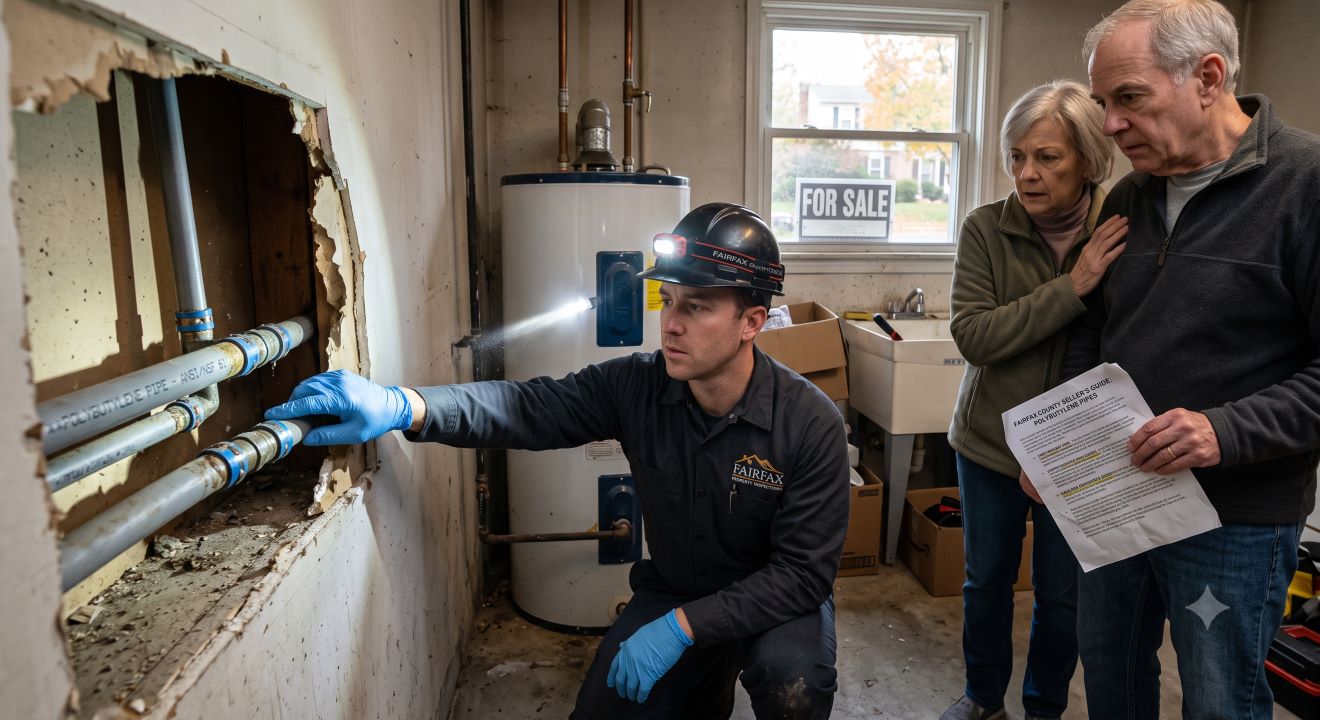
If your Fairfax County home was built between the late 1970s and the mid-1990s, there is a real chance the water lines running through your walls are made of polybutylene, a gray plastic pipe that was popular for two decades and then quietly discontinued after it earned a reputation for failing without warning. For a seller, it is one of those hidden issues that can surface at the worst possible moment, during the buyer's inspection, and turn a smooth sale into a scramble. As Fairfax County Realtors, we see polybutylene flagged on plenty of Burke, Springfield, and Centreville-era homes, and we know how to keep it from derailing a deal.
The good news is that polybutylene is a known, manageable issue, not a dealbreaker, as long as you understand what it is and get ahead of it before you list. This guide walks you through how to identify it, why it fails, how it affects your insurance and your sale, and the specific choices you have as a seller, whether that is repiping, offering a credit, or disclosing and selling as-is. It is the same playbook we use to protect our sellers as a top real estate team across the DMV.
Quick Answer: Polybutylene (PB) is a gray, blue, or black flexible plastic water pipe installed in roughly 6 to 10 million U.S. homes from 1978 to the mid-1990s, including many Fairfax County homes built in the 1980s and early 90s. It fell out of use because it reacts with chlorine and other oxidants in public water, becoming brittle over time and prone to sudden leaks and bursts, often at the fittings. For sellers, the two biggest practical problems are insurance (many carriers now refuse to cover homes with PB or charge more) and the buyer's inspection (an inspector will flag it, and buyers may ask for a credit, a price reduction, or a full repipe). You generally have three paths: replace the pipes with PEX or copper before listing, offer the buyer a credit toward replacement, or disclose it and sell as-is at a price that reflects it. Virginia is largely a "buyer beware" state, but you must not conceal a known defect, so disclosing polybutylene you know about is both smart and safer. The right move depends on your home's value, your timeline, and how competitive your local market is.
Key Takeaways
- Polybutylene was used from 1978 to the mid-1990s, so 1980s and early-90s Fairfax homes are prime candidates.
- It is usually gray (sometimes blue or black), flexible, about half an inch to an inch wide, and often stamped "PB2110."
- It fails because chlorine in public water makes it brittle over time, leading to sudden leaks, frequently at the fittings.
- Insurance is the quiet dealbreaker: many carriers now decline or surcharge homes with polybutylene.
- Inspectors will flag it, so expect buyers to ask for a repipe, a credit, or a price reduction.
- You have three seller options: replace before listing, offer a credit, or disclose and sell as-is.
- Disclose what you know: Virginia is "buyer beware," but concealing a known defect is a costly mistake.
On This Page
- What is polybutylene pipe?
- How to identify polybutylene
- Why polybutylene fails
- Which Fairfax homes are most likely to have it
- The insurance problem
- Do you have to disclose it in Virginia?
- How it affects your home sale
- Your options as a seller
- What a repipe involves & costs
- Polybutylene vs. PEX
- Credit vs. replace before listing
- Selling with polybutylene, step by step
- Common mistakes to avoid
- Frequently asked questions
- Glossary
What Is Polybutylene Pipe?
Polybutylene, often shortened to PB or "poly," is a flexible plastic once used to make the water supply lines inside homes, the pipes that carry potable water to your faucets, showers, and appliances. It was manufactured from 1978 until the mid-1990s and installed in an estimated 6 to 10 million U.S. homes during that stretch, prized at the time for being cheap, flexible, quick to install, and resistant to freezing.
Production was halted in the mid-1990s after a wave of failures and lawsuits. The most well-known, a class action known as Cox v. Shell Oil, settled for hundreds of millions of dollars and once paid to replace affected pipes, but that settlement closed years ago, so today's homeowners cannot rely on it for a free repipe. What remains is a large stock of aging homes, many in established Fairfax County neighborhoods, still carrying pipe that the industry abandoned for good reason.
Good to know: polybutylene was used for both interior supply lines and, in some homes, the underground service line from the water main to the house. The interior gray pipe is what inspectors most often flag, but the buried line can be polybutylene too.
How to Identify Polybutylene
You do not need to be a plumber to spot likely polybutylene, and checking a few accessible places will tell you a lot before an inspector ever shows up. Here is how to look.
Check near the water heater and main shutoff
These are the easiest spots. Look at the pipes entering and leaving the water heater and around the main water shutoff valve, where the piping is usually exposed.
Look for gray (or blue/black) flexible plastic
Polybutylene is most often dull gray, though it can be blue or black. It is flexible plastic, not rigid, and typically half an inch to one inch in diameter.
Find the "PB2110" stamp
Genuine polybutylene is usually printed with the code "PB2110" along the pipe. Seeing that stamp is a strong confirmation you are looking at polybutylene.
Scan basements, crawlspaces, and where pipes enter walls
Check any unfinished basement, crawlspace, or utility area, and look where pipes disappear into walls and ceilings. Much of a home's PB is hidden, so visible runs are just a sample.
Confirm with a licensed plumber
Because gray plastic can be mistaken for other materials, a licensed plumber can confirm polybutylene definitively and tell you how much of the home is affected.
One important caution: polybutylene is not the same as the flexible PEX tubing used in modern homes, even though both are plastic. Confusing the two is common, and we untangle the difference later in this guide. When in doubt, the "PB2110" stamp and a plumber's opinion are your most reliable signals.
Why Polybutylene Fails
The core problem is chemistry. Chlorine and other oxidants added to public drinking water react with polybutylene over years of exposure, causing the pipe to flake and scale on the inside and grow brittle. What starts as microscopic fractures eventually becomes a crack, a pinhole leak, or a full rupture, and the failures are notorious for happening suddenly and without visible warning.
The fittings that connect sections of pipe are an especially weak point. Many polybutylene systems used plastic acetal fittings (and sometimes metal ones) that degrade and fail even faster than the pipe itself, which is why leaks so often show up at joints and connections. Because Fairfax County homes are served by treated, chlorinated public water, the exact conditions that break down polybutylene are present in everyday use.
The most troubling part for a homeowner is the unpredictability. Polybutylene can look perfectly fine from the outside while deteriorating internally, so a system can go from "no problems" to a burst pipe and a flooded floor with essentially no notice. That hidden, all-at-once failure mode is exactly why insurers and buyers treat it so seriously.
Which Fairfax Homes Are Most Likely to Have It
The single best predictor is the year the home was built. Polybutylene shows up most in houses and townhomes constructed from roughly 1978 through the mid-1990s, which covers a large share of Fairfax County's building boom in the 1980s and early 90s. If your home dates to that window, it is worth checking regardless of whether you have ever had a leak.
Neighborhoods and communities that saw heavy construction in that era, think much of Burke, Springfield, West Springfield, Centreville, Fairfax Station, and pockets of Reston and Herndon, tend to have more polybutylene than newer subdivisions. It appeared in both single-family homes and townhomes, and in some cases in condominium buildings as well.
None of this is a guarantee: some 1980s homes were built with copper, and others have already been repiped by a previous owner. But if your home is from that period and you have not confirmed otherwise, you should assume polybutylene is a possibility and verify it, ideally before you list rather than during a buyer's inspection.
The Insurance Problem
For sellers, insurance is often the most underestimated consequence of polybutylene, and it can quietly complicate a sale. Because of the material's failure history, a significant share of homeowners insurance carriers, by some industry estimates a majority, will either decline to write a new policy on a home with polybutylene or charge a higher premium to cover it.
This matters at closing because your buyer typically needs a bound homeowners policy to get their loan funded. If polybutylene makes it hard or expensive for them to obtain coverage, it can slow the transaction, shrink the buyer pool, or become another point of negotiation. A buyer who learns at the last minute that insurers are balking may get cold feet or push for concessions.
Heads up: insurance friction is one reason many sellers choose to repipe before listing. Removing polybutylene removes the coverage objection entirely, which can widen your buyer pool and smooth the path to closing.
Do You Have to Disclose It in Virginia?
Virginia is generally a "buyer beware" (caveat emptor) state, and under the Virginia Residential Property Disclosure Act, sellers typically provide a disclosure statement that puts much of the responsibility to investigate on the buyer, rather than requiring a long list of affirmative disclosures. In practical terms, that means the burden to inspect and discover issues largely sits with the buyer.
That said, "buyer beware" is not a license to hide problems. A seller cannot legally conceal a known material defect or actively misrepresent the condition of the home, and doing so can expose you to serious liability after closing. If you know your home has polybutylene, and especially if you have had leaks or repairs, the safe and honest path is to disclose it rather than paper over it, which is also one of the classic pitfalls we cover in our guide to the top mistakes Fairfax home sellers make.
Because disclosure rules and their nuances can vary and carry legal weight, this is an area where you should lean on your agent and, when appropriate, a real estate attorney, rather than guessing. The overarching principle is simple: transparency protects you. A disclosed, understood issue is far less dangerous to your sale, and to you personally, than one a buyer discovers later and feels was hidden.
How It Affects Your Home Sale
Polybutylene rarely stops a sale outright, but it reliably shows up as friction, usually at the inspection. A competent home inspector will identify polybutylene and note it in the report, at which point it becomes a topic in the negotiation whether you raised it or not. Getting ahead of it is almost always better than being surprised by it.
Once it is on the table, buyers commonly respond in a few predictable ways: asking you to replace the pipes before closing, requesting a credit or price reduction to cover a future repipe, or, less commonly, walking away if they are risk-averse or cannot line up affordable insurance. In a hot market, buyers may accept it with a modest concession; in a slower market, they have more leverage to push.
There can be financing and appraisal ripples too. While polybutylene alone does not automatically kill a loan, a low appraisal or a lender's condition tied to plumbing can add complications, and insurance trouble can stall funding. The through-line is that an informed seller who has already decided how to handle polybutylene negotiates from strength, while an unprepared one reacts under pressure.
Your Options as a Seller
When it comes to polybutylene, you essentially have three strategies, and there is no single right answer, the best choice depends on your home's value, your timeline, your budget, and how competitive your market is. Here is how they compare.
| Option | What it means | Best when | Trade-off |
|---|---|---|---|
| Replace before listing | Repipe the home with PEX or copper before you go to market | You want the widest buyer pool and the cleanest, fastest sale | Upfront cost and some scheduling before listing |
| Offer a credit | List as-is but offer a closing credit toward replacement | You would rather not manage the work yourself | Buyers may still negotiate hard on the amount |
| Disclose & sell as-is | Price the home to reflect the pipes and disclose them | Budget is tight or you need to sell quickly | Smaller buyer pool and more price sensitivity |
Many sellers underestimate how much presentation and preparation influence which path pays off. Handling polybutylene proactively is part of the same broader prep that makes a home show and sell well, a topic we lay out in our guide to preparing a Fairfax home for sale. The key is deciding your approach before you list, not mid-negotiation.
What a Repipe Involves & Costs
Repiping means replacing the home's polybutylene supply lines with a modern material, almost always PEX (cross-linked polyethylene) or copper. A plumber runs new lines to your fixtures, ties them into your existing system, and removes or abandons the old polybutylene. It typically takes a few days, and it usually involves opening some drywall to reach pipes inside walls and ceilings, which then needs patching and painting.
Cost depends heavily on the size of the home, the number of bathrooms, and how accessible the pipes are. As a rough guide, a straightforward repipe often runs in the range of a few thousand dollars, commonly around $2,500 to $7,500, while larger single-family homes or those with difficult access can climb to $10,000 to $15,000 or more once drywall repair is included. Always get multiple quotes from licensed plumbers for your specific home.
One practical tip: significant plumbing work in Fairfax County generally requires a permit, and a permitted, inspected repipe gives your buyer documented proof the work was done correctly, which is a real selling point. You can research your property's records and permit history using the free county tools we outline in our Fairfax property records guide.
Polybutylene vs. PEX
This is the single most common point of confusion, so it is worth being crystal clear: polybutylene and PEX are both flexible plastic pipes, but they are not the same thing, and PEX is the reliable modern replacement, not a problem. Do not let anyone tell you your new PEX lines are "the bad plastic pipe."
| Feature | Polybutylene (PB) | PEX |
|---|---|---|
| Era | 1978 to mid-1990s | 1990s to today (current standard) |
| Typical color | Gray, sometimes blue or black | Red, blue, or white |
| Reputation | Prone to sudden failure; discontinued | Durable, widely trusted, code-approved |
| Reaction to chlorine | Degrades and becomes brittle | Formulated to resist it |
| Effect on a sale | A red flag for buyers and insurers | A positive; a modern, sound system |
If your home already has PEX, that is a good thing to highlight, not hide. And if you repipe from polybutylene to PEX, you have converted a liability into a feature you can market. The takeaway: gray "PB2110" pipe is the concern; the colored PEX tubing in newer or repiped homes is the solution.
Credit vs. Replace Before Listing
If you have decided not to sell purely as-is, the practical question becomes whether to replace the pipes yourself before listing or to offer the buyer a credit toward doing it. Both are legitimate, and the math and the market usually point to one or the other.
| Consideration | Replace Before Listing | Offer a Credit |
|---|---|---|
| Buyer pool | Widest; removes the objection entirely | Narrower; some buyers still hesitate |
| Insurance obstacle | Eliminated | Remains for the buyer to solve |
| Your effort | You manage the repipe and repairs | Buyer handles the work after closing |
| Negotiating leverage | Stronger; clean, move-in-ready story | Weaker; credit amount is negotiable |
| Upfront cash | Required before listing | Comes out of proceeds at closing |
A credit can feel easier, but remember that buyers often negotiate the credit up beyond the true repipe cost, and the lingering insurance question can still thin your buyer pool. Weigh the concession against your overall net proceeds, which is easier to see when you understand all the other costs of selling, laid out in our breakdown of Fairfax home sale fees and commissions. In many competitive situations, replacing before listing produces the cleaner, stronger result.
Interactive · Commission Savings
Selling a 1980s Fairfax Home? Keep More With a 1.5% Listing Fee
Pick your Fairfax home value:
Typical 3% Listing Fee
Your Estimated Savings
$6,000
Kept in your pocket versus a traditional 3% listing fee.
Typical 3% Listing Fee
Your Estimated Savings
$7,500
Kept in your pocket versus a traditional 3% listing fee.
Typical 3% Listing Fee
Your Estimated Savings
$9,000
Kept in your pocket versus a traditional 3% listing fee.
Typical 3% Listing Fee
Your Estimated Savings
$11,250
Kept in your pocket versus a traditional 3% listing fee.
Typical 3% Listing Fee
Your Estimated Savings
$15,000
Kept in your pocket versus a traditional 3% listing fee.
Estimates compare a 3% listing-side fee to our 1.5% listing fee. Full-service representation either way. Buyer's-agent compensation is separate and negotiable.
Selling With Polybutylene, Step by Step
If your Fairfax home has polybutylene, a clear sequence keeps you in control and out of a last-minute scramble. Here is the path we walk our sellers through.
Confirm what you have
Verify whether the home actually has polybutylene, and how much, with a visual check and a licensed plumber if needed.
Get repipe quotes
Collect two or three written estimates from licensed plumbers so you know the real cost, whether you replace or offer a credit.
Check the insurance angle
Understand how polybutylene may affect a buyer's insurance in your area, since it shapes how you position the home.
Choose your strategy
Decide with your agent whether to replace before listing, offer a credit, or disclose and sell as-is at the right price.
Disclose and market honestly
Be transparent about what you know, and if you repiped, showcase it as an upgrade that removes the buyer's biggest objection.
The person who ties this together is your listing agent, who reads the market, prices the strategy, and negotiates the inspection. Choosing the right one matters enormously here, which is why we wrote a full guide on how to choose a Fairfax listing agent who can turn a known issue like polybutylene into a non-event.
Common Mistakes to Avoid
Polybutylene sales go sideways less because of the pipe itself and more because of avoidable seller missteps. Steer clear of these.
- Hiding it and hoping: concealing a known defect invites a failed inspection, lost trust, and potential liability after closing.
- Ignoring the insurance angle: assuming the buyer will easily insure the home, then watching coverage trouble stall the deal.
- Guessing at the cost: setting a credit without real repipe quotes, and either overpaying or under-offering.
- Confusing PEX with polybutylene: mislabeling a sound modern system as a defect, or vice versa, and mispricing as a result.
- Deciding mid-negotiation: reacting to the inspection instead of choosing your strategy before you ever list.
The common thread is preparation. Decide how you will handle polybutylene up front, back it with real numbers, and disclose honestly, and a scary-sounding issue becomes just another line item you have already solved.
Explore Fairfax County Communities
Selling an Established Home in a Fairfax County Community?
Frequently Asked Questions
What are polybutylene pipes?
Polybutylene (PB) pipes are flexible plastic water supply lines used in homes from 1978 to the mid-1990s. They were installed in an estimated 6 to 10 million U.S. homes because they were cheap and easy to work with, but they were discontinued after a history of sudden failures. Today they are considered a defect because they react with chlorinated water, grow brittle, and can leak or burst without warning.
How do I know if my home has polybutylene?
Check accessible pipes near the water heater, the main shutoff valve, and in any basement or crawlspace. Polybutylene is typically dull gray (sometimes blue or black), flexible, about half an inch to one inch in diameter, and often stamped "PB2110." Because much of it is hidden inside walls, the most reliable confirmation comes from a licensed plumber who can identify it and estimate how much of the home is affected.
What years were polybutylene pipes used?
Polybutylene was manufactured and installed from 1978 until the mid-1990s, with production ending around 1995 to 1996. Homes built or plumbed during that window, which includes much of Fairfax County's 1980s and early-90s construction, are the most likely to contain it. Homes built after the late 1990s generally use PEX or copper instead.
Why do polybutylene pipes fail?
Chlorine and other oxidants in public drinking water react with polybutylene over time, causing it to flake internally and become brittle. The fittings that join the pipe, often plastic acetal, are especially prone to failure. The result is cracks, pinhole leaks, or sudden bursts that frequently happen with no visible warning, which is why the material was abandoned and why insurers treat it as a risk.
Do I have to disclose polybutylene when selling in Virginia?
Virginia is largely a "buyer beware" state under the Residential Property Disclosure Act, which puts much of the duty to investigate on the buyer. However, you cannot legally conceal a known material defect or misrepresent the home's condition. If you know your home has polybutylene, disclosing it is the safe and honest course. Because the rules carry legal weight, confirm your specific obligations with your agent and, if needed, a real estate attorney.
Will polybutylene affect the buyer's home insurance?
Often, yes. Because of the failure history, many homeowners insurance carriers decline to write new policies on homes with polybutylene or charge higher premiums. Since a buyer usually needs bound insurance to close their loan, this can slow the sale, shrink the buyer pool, or become a negotiating point. Replacing the pipes before listing removes this obstacle entirely.
Can I sell a house with polybutylene pipes?
Yes. Homes with polybutylene are sold regularly. The pipe is a known, manageable issue, not an automatic dealbreaker. Your main choices are to replace it before listing, offer the buyer a credit toward replacement, or disclose it and price the home accordingly. The right approach depends on your budget, timeline, and how competitive your market is, which is where an experienced local agent helps.
How much does it cost to replace polybutylene pipes?
A repipe with PEX or copper commonly runs around $2,500 to $7,500 for a straightforward job, though larger single-family homes or those with hard-to-reach pipes can reach $10,000 to $15,000 or more once drywall repair is included. Cost depends on the home's size, the number of bathrooms, and how accessible the piping is. Always get multiple quotes from licensed plumbers for an accurate figure.
Should I replace polybutylene before selling or offer a credit?
Both work, but they serve different situations. Replacing before listing gives you the widest buyer pool, removes the insurance objection, and creates a clean move-in-ready story, at the cost of upfront cash and effort. Offering a credit is easier for you but often gets negotiated upward, and it leaves the insurance question for the buyer. In competitive markets, replacing first usually produces the stronger result.
Is polybutylene the same as PEX?
No. Both are flexible plastic, but they are different materials. Polybutylene (usually gray, made 1978 to the mid-1990s) is prone to failure and discontinued. PEX (usually red, blue, or white) is the durable, code-approved modern standard formulated to resist chlorine. PEX is the material plumbers use to replace polybutylene, so PEX in a home is a positive, not a problem.
Is there still a lawsuit or settlement that replaces polybutylene for free?
No. The well-known class action, Cox v. Shell Oil, settled decades ago and once funded pipe replacements, but that settlement and its claim deadlines closed years ago. Today's homeowners cannot rely on it to pay for a repipe. Replacement is now an out-of-pocket cost, which is why deciding how to handle it before selling matters.
Does polybutylene affect financing or the appraisal?
Polybutylene alone does not automatically disqualify a loan, but it can create ripples. Insurance difficulty can stall a lender's funding, and some loan programs or appraisers may note plumbing condition. In practice, the inspection and insurance issues are the bigger hurdles than the appraisal itself. Handling the pipes proactively keeps these complications from stacking up late in the deal.
Where in the house do I find polybutylene?
Start at the water heater, the main water shutoff, and any exposed runs in a basement, crawlspace, or utility closet. Look where pipes enter walls and ceilings. In some homes, the underground service line from the street to the house is also polybutylene. Since most of the piping is hidden, visible sections are just a sample, so a plumber's assessment gives the full picture.
Glossary
Polybutylene (PB): A flexible plastic water pipe used from 1978 to the mid-1990s, now considered failure-prone and discontinued.
PB2110: The code commonly stamped on genuine polybutylene pipe, a key identifier when inspecting your plumbing.
PEX: Cross-linked polyethylene, the durable, chlorine-resistant flexible pipe used in modern homes and to replace polybutylene.
Repipe: Replacing a home's supply lines with new material (usually PEX or copper), including any needed drywall repair.
Acetal fittings: Plastic connectors used in many polybutylene systems that are especially prone to failure at the joints.
Oxidative degradation: The chemical breakdown of polybutylene caused by chlorine and oxidants in treated water.
Residential Property Disclosure Act: Virginia's "buyer beware" framework governing what sellers disclose about a home's condition.
Cox v. Shell Oil: The major polybutylene class action that once funded pipe replacements; its claim period is long closed.
Home inspection: The buyer's professional evaluation of a home's condition, where polybutylene is typically flagged.
Seller credit: A closing concession where the seller contributes toward a buyer cost, such as a future repipe.
The Bottom Line on Polybutylene in Fairfax
Polybutylene sounds alarming, and left unmanaged it can genuinely complicate a sale, but it is a known, solvable issue rather than a dead end. If your Fairfax County home dates to the 1980s or early 90s, confirm whether you have it, get real repipe numbers, understand the insurance angle, and choose your strategy, replace, credit, or disclose and sell as-is, before you ever list. That preparation is what turns a scary inspection finding into a line item you have already handled.
Whether the smartest move is repiping to widen your buyer pool or pricing and disclosing thoughtfully, we will help you weigh the numbers, position the home, and negotiate the inspection with confidence, and if you sell with us, keep more of your equity through a 1.5% full-service listing. Start with a free consult and a valuation built around your home's specifics.
Whether you want to repipe, offer a credit, or sell as-is, we'll help you choose the strategy that protects your price and widens your buyer pool. Start with a free consult, and a valuation that reflects your home's real position in the market.
Disclaimer: This article is an independent educational guide for informational purposes only and is not legal, insurance, plumbing, or financial advice. Building materials, insurance practices, disclosure obligations, repair costs, and market conditions vary and change; figures are illustrative examples only. Always confirm your home's specific situation with a licensed plumber, your insurer, your agent, and, where appropriate, a qualified attorney. The Jamil Brothers Realty Group is a licensed real estate team with Samson Properties serving Fairfax County and the greater DMV. Equal Housing Opportunity.
Explore More
Browse Every Corner of the DMV Market
Whether you're searching by budget, neighborhood, or buying situation — find exactly what you need below.
Virginia Homes by Budget
Washington DC Homes by Budget
Maryland Homes
Explore Fairfax County & Surrounding Northern Virginia
Ready to Make a Move?
Full-Service · No Tradeoffs
List for 1.5% & Keep More Equity
Professional photography, drone video, 3D tours, and expert negotiation — all included. On an $800K home, that's $12,000 more in your pocket vs. a 3% agent.
See the 1.5% Program →Need Speed or Certainty?
Get a No-Obligation Cash Offer
Skip the showings, skip the contingencies. If timing or condition matters more than top dollar, a cash offer may be the right fit. We'll walk you through every option.
Explore Cash Offers →Categories
- All Blogs (1227)
- Aldie (3)
- Ashburn (6)
- Buyer Guide (8)
- Buying a home (2)
- Buying Strategies (30)
- festivals (1)
- General Blog (67)
- Leesburg (5)
- Market Intelligence (29)
- Market Updates (8)
- Notable Properties For Sale (32)
- Real Estate Tips, News, and More (385)
- Seller Guide (2)
- Seller Guides (60)
- Selling Your Home (522)
- Sterling (6)
- Top Realtors in Northern Virginia (58)
Recent Posts








Message Sent!
Thank you for reaching out. Arslan & Saad have received your details and will be in touch shortly.
Need immediate assistance? Call or text 703-782-4830.