
Loudoun County Building Permits: What Homeowners Need Before Renovating
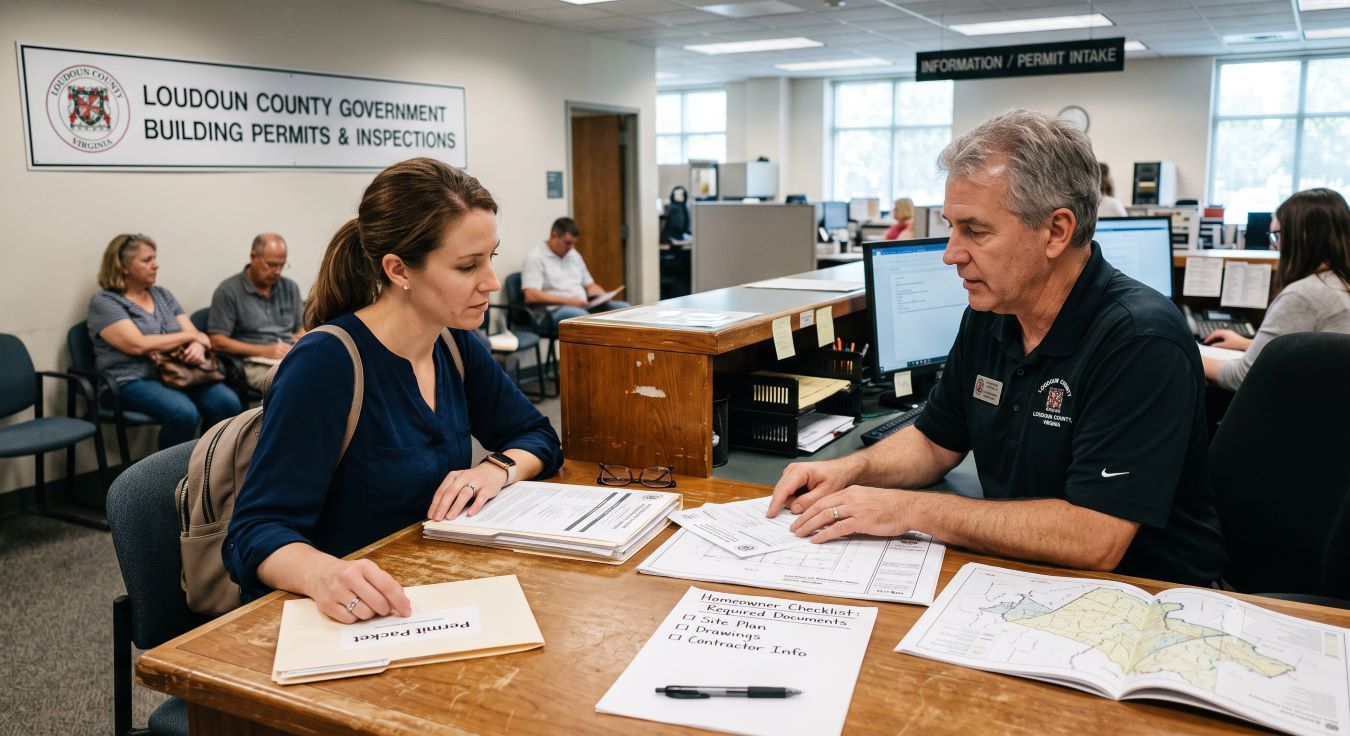
Planning a renovation in Loudoun County is exciting, right up until you hit the permit question. Skip a required permit and you risk failed inspections, fines, insurance headaches, and a nasty surprise when you eventually sell. Pull the right permits and your project is safer, code-compliant, and fully documented for the future.
This is an educational guide, not a service we offer. The Jamil Brothers Realty Group does not provide permit services — we do not pull, file, expedite, or advise on permits. What we do is help Loudoun County homeowners sell their homes. Where permits intersect with selling — disclosure, appraisal, buyer due diligence — we explain that here, because it is the part of the process we handle every day. For the permits themselves, Loudoun County Building and Development is your authority, and this guide points you to the right county pages.
ℹ️ What we do — and what we don't
We do not: apply for, file, expedite, or consult on building permits, zoning approvals, HOA architectural approvals, or inspections. Contact Loudoun County Building and Development, your town, your HOA, or a licensed contractor for those.
We do: help homeowners sell their Loudoun County home — pricing, preparation, marketing, negotiation, and getting to closing — including homes with a complicated permit history. If you are planning to sell, request a free home valuation and we will walk you through the process.
This guide walks you through what Loudoun County homeowners need before renovating: which projects require a permit, the different permit types, the extra approvals for HOAs, incorporated towns, and historic districts, how to apply through the county's LandMARC system, what it costs, and how inspections work.
Quick Answer: Most Loudoun County renovations that are structural, add square footage, change the home's use, or involve electrical, plumbing, gas, or HVAC work require a permit before any work begins. Common projects that need permits include finished basements, decks, additions, detached structures over 256 square feet, pools, and most trade work. You secure permits through the county's online LandMARC portal, and depending on the project you may need a combination of zoning, building, trade, grading, and health-department approvals, all under the Virginia Uniform Statewide Building Code (VUSBC). You must also clear your project separately with your HOA or POA and, if you live inside an incorporated town or a historic district, with that town or historic authority first. Purely cosmetic work like paint, flooring, and cabinet swaps generally does not need a permit. When in doubt, confirm with Loudoun County Building and Development before you start.
Key Takeaways
- Permits protect you: they ensure code compliance, safety, insurability, and clean documentation that matters at resale.
- Five permit types exist: zoning, building, trade (electrical, plumbing, mechanical, gas), grading, and health-department approvals.
- Project scale decides the permit: finished basements, decks, additions, and larger sheds need permits; minor cosmetic work usually does not.
- Extra approvals stack on top: your HOA or POA, your incorporated town, and any historic district each require separate sign-off.
- Well or septic homes get extra scrutiny: adding a bedroom or altering wastewater load triggers health-department review.
- Apply through LandMARC: Loudoun's online portal handles applications, plan review, fees, and inspection scheduling. The county issues permits; a real estate team does not.
- Unpermitted work surfaces at sale: buyers, lenders, and inspectors flag it, so permit it right or resolve and disclose it before you list.
On This Page
- Do you even need a permit?
- Why permits matter
- The five permit types in Loudoun County
- Permits by project type
- Zoning, setbacks & your plat
- HOA & POA approval
- Incorporated towns vs. county
- Historic districts
- Well, septic & health department
- Documents you need to apply
- How to apply, step by step
- Permit fees: what to expect
- Inspections & final approval
- How long does it take?
- Renovating without a permit: the risks
- Permits & selling your home
- Seller savings calculator
- Seller savings calculator
- Official Loudoun County resources
- Frequently asked questions
- Glossary
Do You Even Need a Permit?
The first question every homeowner asks is also the most important: does my project actually require a permit? The short answer is that Loudoun County requires permits for work that affects the structure, safety, size, or systems of your home, and for most exterior additions and detached structures. Purely cosmetic updates usually do not.
Here is a general guide to the line between the two. Always confirm your specific project with the county, since details and thresholds change and every property is different.
| Usually Needs a Permit | Usually Does Not |
|---|---|
| Finishing a basement | Painting, interior or exterior |
| Building a deck or porch | Installing flooring or carpet |
| Additions and new square footage | Replacing cabinets or countertops (no plumbing/electrical changes) |
| Structural alterations (removing or moving walls) | Minor drywall or trim repair |
| Electrical, plumbing, gas, or HVAC work | Swapping light fixtures like-for-like |
| Detached structures over 256 sq. ft. | Small sheds under 256 sq. ft. (zoning may still apply) |
| Pools and hot tubs | Landscaping that does not disturb significant land |
| Roof replacement and solar | Appliance swaps with no system changes |
Rule of thumb: if the work is structural, adds square footage, changes how the home is used, or touches electrical, plumbing, gas, or mechanical systems, assume you need a permit and verify with the county before you start.
Why Permits Matter
It is tempting to view permits as red tape, but they exist to protect you and everyone who lives in or later buys your home. A permit confirms your project meets the Virginia Uniform Statewide Building Code (VUSBC) and Loudoun's local zoning ordinances, which are the standards that keep a deck from collapsing or wiring from starting a fire.
Permits also protect you financially. Unpermitted work can void or complicate homeowners insurance claims, create liability if someone is injured, and expose you to fines or orders to tear the work out. And permits create an official record that the work was done correctly, which becomes a real asset when it is time to sell.
That record matters because improvements are only worth full value at resale if a buyer can trust they were done right. Our guide to which improvements add value before selling in Loudoun County covers the projects that tend to pay off; permitted, documented work is what lets those improvements count when your home is appraised and inspected. If you are selling after a renovation, our prep-to-sell checklist for Loudoun County homeowners shows where permit paperwork fits in your listing timeline.
The Five Permit Types in Loudoun County
Loudoun does not use a single, one-size-fits-all permit. Depending on your project, you may need one or several of these five types, sometimes bundled into one application and sometimes filed separately.
1. Zoning permits
Required for exterior additions, new detached structures like larger sheds, and any change to the home's use. Zoning review confirms your project fits setback, lot-coverage, and use rules, and it relies on a plat of your property showing property lines, structure dimensions, and required setback distances.
2. Building permits
Required for structural alterations, finishing a basement, building a deck, and similar construction. You submit structural plans detailing materials and construction methods so the county can confirm the work meets code.
3. Trade permits
If your project involves electrical, plumbing, gas, or HVAC systems, those trades require their own permits in addition to the building permit. This is why a basement finish or kitchen remodel often carries several permits at once.
4. Grading permits
Required when landscaping or an addition disturbs a significant amount of land, generally in the thousands of square feet. Grading review addresses erosion, sediment control, and drainage so your project does not harm neighboring properties or waterways.
5. Health-department approval
Required when your home is on a private well or septic system and you are adding a bedroom or making changes that increase wastewater load. This protects the septic system's capacity and your water supply, and it is a common step for rural Loudoun renovations.
Permits by Project Type
Because the most common question is simply "do I need a permit for this specific project," here is a quick reference for popular Loudoun renovations. Treat it as a starting point and confirm the exact requirements for your property with the county.
| Project | Typically Required |
|---|---|
| Finished basement | Building permit, plus trade permits; health-department review if adding a bedroom on well/septic |
| Deck or porch | Building permit; zoning review for size and setbacks |
| Room addition | Zoning and building permits, trade permits, possibly grading and health-department review |
| Shed under 256 sq. ft. | Zoning-only application (no building permit) |
| Shed over 256 sq. ft. | Building permit for a miscellaneous structure, plus zoning |
| Detached garage | Zoning and building permits, plus trade permits for power |
| Kitchen or bath remodel | Building permit if structural; trade permits for plumbing and electrical changes |
| In-ground pool | Building and zoning permits, barrier and electrical requirements |
| Water heater or HVAC replacement | Trade permit (plumbing, mechanical, or gas) |
| Roof replacement / solar | Building permit; electrical permit for solar |
| Fence | Often no building permit, but confirm height and location rules with zoning and your HOA |
| Cosmetic updates (paint, flooring, cabinets) | Generally none, if no systems or structure change |
We don't handle permits — but if selling is on your horizon, we can tell you what your home is worth in the current market and walk you through the full selling process. Free, no obligation, and no automated estimates.
Zoning, Setbacks & Your Plat
Before the county reviews how your project is built, it checks whether it is allowed where you want to put it. That is the job of zoning, and the key document is your plat, the survey drawing that shows your property lines, existing structures, and the required setback distances from lot lines.
Setbacks are the minimum distances a structure must sit from your property boundaries, and they vary by zoning district, so a deck or addition that is fine on one lot may be too close to the line on another. Corner lots, easements, and floodplains add further constraints. Getting your plat and setbacks right up front prevents the most common cause of permit rejections.
Find your lines first: pull your plat and confirm your zoning district before you design anything permanent. Our guide on how to look up Loudoun County property records shows where to find your plat, zoning district, and prior permits online. If you are unsure where your boundaries run, a current survey is worth the cost, since building over a setback can mean tearing the work out.
HOA & POA Approval
Here is a point that trips up many Loudoun homeowners: the county does not enforce your neighborhood's private rules. Loudoun County does not enforce the restrictive covenants that a homeowners association (HOA) or property owners association (POA) sets, which means a county permit does not mean your HOA has signed off.
If your home is in an association — and most homes in Ashburn, Brambleton, South Riding, and Cascades are — you must separately confirm your project against the community's design rules and architectural guidelines, often through an architectural review committee. Approvals can cover everything from deck materials and paint colors to fence styles and shed placement. Start this early, because association review runs on its own timeline and can take weeks.
Incorporated Towns vs. County
Loudoun contains several incorporated towns, and if you live inside one, your permitting path changes. Towns like Leesburg, Purcellville, and Middleburg handle their own zoning, so you will typically need zoning approval from the town before the county will issue your building permit.
This matters because it adds a step and another authority to satisfy. If your address is inside town limits, start with the town's planning or zoning office to confirm what they require and in what order. Skipping this step is a common reason town-resident projects stall at the county level.
Historic Districts
Loudoun is rich in history, and homes within an old and historic district — including parts of Leesburg, Waterford, and Middleburg — carry an extra layer of review designed to protect the area's character. If your property is in such a district, you generally need a Certificate of Appropriateness before you apply for building permits.
That certificate confirms your exterior changes are consistent with the district's design standards, and it can affect materials, windows, additions, and more. Because this review happens before permitting, factor it into your timeline early if your home is historic, and confirm your property's status with the county or town before you finalize plans.
Well, Septic & Health Department
Many Loudoun homes, especially in the west around Lovettsville, Hamilton, and Round Hill, rely on private wells and septic systems rather than public utilities, and that changes the renovation math. When you add a bedroom or make changes that increase the wastewater load, the health department must confirm your septic system can handle it.
The reason is capacity: septic systems are sized for a specific number of bedrooms, and overloading one can cause failure and expensive repairs. If your project adds bedrooms or bathrooms on a septic property, budget time for health-department review, and know your system's design before you plan. For rural properties, our guide to selling a farm or acreage property in western Loudoun explains how well and septic records are handled when the property goes on the market.
Documents You Need to Apply
A smooth application starts with complete paperwork. The exact list depends on your project, but most Loudoun building permits draw from the same core set of documents, and having them ready prevents review delays.
Core permit application documents
- ✓ Property survey / plat: showing property lines, existing structures, dimensions, and setback distances.
- ✓ Building plans: often three sets, including foundation, floor framing, roof framing, wall sections, floor plans, and elevations.
- ✓ Site plan: showing where the work sits on the lot, with erosion and sediment control where grading is involved.
- ✓ Trade details: electrical, plumbing, and mechanical information for the systems your project touches.
- ✓ Owner-signed application: the permit application signed by the property owner, plus the square footage of area being disturbed.
- ✓ Supporting approvals: HOA sign-off, town zoning approval, historic certificate, or health-department review where they apply.
How to Apply, Step by Step
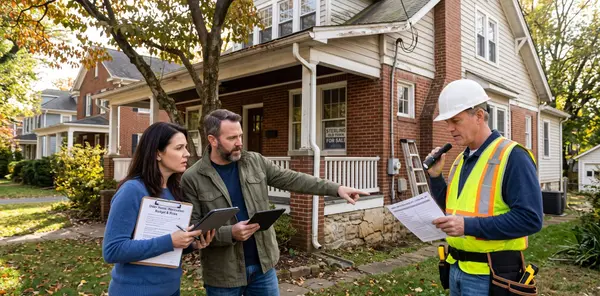
Loudoun County manages residential permit applications through its online LandMARC portal. You (or your licensed contractor) apply directly with the county; there is no role for a real estate agent in this process. Here is the typical path from idea to approved permit.
Confirm what you need
Check whether your project requires a permit and which types, and clear any HOA, town, historic, or health-department requirements first.
Prepare your documents
Gather your plat, building plans, site plan, and trade details so your submission is complete on the first try.
Create a LandMARC account and apply
Register on the county's online LandMARC portal, start the correct application type, and upload your plans and documents. You can also apply in person at Building and Development, 1 Harrison Street SE, Leesburg.
Plan review and fees
The county reviews your plans and invoices you once review is complete. Respond promptly to any correction requests to keep things moving.
Permit issued, then build
Once fees are paid and the permit is issued, work can begin, keeping the permit and approved plans on site.
Inspections and final approval
Schedule inspections at each required stage through LandMARC, and obtain final approval before the space is occupied or used.
Permit Fees: What to Expect
Permit fees in Loudoun vary by project type, size, and location, and they are usually invoiced after plan review rather than paid up front. The figures below are general guides drawn from county sources; confirm current fees for your specific project.
| Project | Approximate Fee Basis |
|---|---|
| Deck | Roughly $230 to $395, depending on size and location |
| Shed 256–1,000 sq. ft. | Around $395, bundling building, plan review, and zoning |
| Finished basement | Calculated around 1% of construction cost, plus separate trade permits |
| Additions & larger projects | Scaled to construction value and square footage |
| Trade permits | Charged separately for electrical, plumbing, and mechanical work |
Because trade permits are billed on top of the building permit, the total cost of a multi-system project like a basement finish is more than the building permit alone. Budget for the full stack, and remember these fees are a fraction of what unpermitted work can cost you later.
Inspections & Final Approval
A permit is not a one-and-done document. Once it is issued, your project must pass inspections at key stages so the county can verify the work meets code before it gets covered up. Missing an inspection can force you to reopen finished walls, so build the schedule into your project.
Typical inspection points include footing and foundation, framing, and the rough-ins for electrical, plumbing, and mechanical work, all before insulation and drywall close the walls. After the work is complete, a final inspection confirms everything is done correctly, and that final approval is what makes the space lawful to occupy or use. Schedule each inspection through LandMARC and do not proceed past a stage until it passes.
How Long Does It Take?
Timelines vary widely with the project's complexity, the completeness of your application, and the county's current workload. A simple, well-documented permit can move quickly, while an addition requiring multiple reviews, plus HOA, town, historic, or health-department approvals, takes considerably longer.
The single biggest factor within your control is the quality of your submission. Complete, accurate plans that answer the reviewer's questions the first time avoid the correction cycles that stretch timelines out. If you are renovating with a sale in mind, this timeline matters twice: permit review has to finish before you list, and the best time to sell in Loudoun County depends partly on whether your project — and its final inspection — is done by then.
Plan ahead: start the permit process well before you want work to begin, and stack the extra approvals (HOA, town, historic, health) early, since they run on their own clocks and often gate the county permit.
Renovating Without a Permit: The Risks
Some homeowners are tempted to skip permits to save time or money, especially for work hidden inside walls. It is a risky bet. Unpermitted work can trigger stop-work orders and fines, and the county can require you to expose finished work for inspection or remove it entirely if it does not meet code.
The consequences follow the house, not just the owner who did the work. Insurance claims tied to unpermitted work can be denied, and safety issues from uninspected electrical or structural changes are real. The bill for doing it twice, once wrong and once right, almost always dwarfs the permit fees you tried to avoid.
And the reckoning often comes at the worst possible time: closing. Buyers, their agents, lenders, and home inspectors routinely uncover unpermitted additions and finished spaces, which can derail negotiations or force costly fixes under deadline pressure. This is the point where our role begins — not with the permit, but with the sale. If your home has unpermitted work and you want to sell, we can help you understand your disclosure obligations, price the home for its actual condition, and weigh an open-market listing against a cash offer option. Cash-offer terms vary and may come in below an open-market result, so compare net proceeds, timing, and certainty side by side.
Disclose and price for condition, resolve the work first, or sell for cash — each path changes your net and your timeline. We help Loudoun sellers compare them honestly. Permits stay with the county; the sale is where we come in.
Permits & Selling Your Home
When you sell, permits quietly do a lot of work in your favor. A finished basement or addition that was properly permitted counts as legitimate, code-compliant square footage that buyers and appraisers can trust, while an unpermitted version invites doubt, discounts, or demands to fix it.
Buyers increasingly research a property's permit history themselves, and it is easy to do: anyone can pull permit records through LandMARC by address. That is exactly what a diligent buyer, their agent, or their inspector will do to your listing, so anything unpermitted tends to surface at the worst possible moment.
There is also a valuation angle. Unpermitted additions may not be counted in an appraisal the way permitted space is, which can widen the gap between what you think your home is worth and what it appraises for. Our breakdown of assessed value vs. market value in Loudoun County explains how that gap works and why documentation matters. It also helps to know whether you are entering a buyer's or seller's market in Loudoun County, since buyers in a slower market have more time to scrutinize permit history.
The takeaway for anyone planning to sell after a renovation is simple: keep a clean, fully permitted paper trail so every improvement counts toward your price rather than raising questions at the closing table. When you are ready to list, that paper trail is one of the first things we ask for — and the seller net sheet we prepare shows how permitted square footage, condition, and your listing fee translate into what you actually walk away with. Homes in Sterling, Aldie, and Lansdowne with finished basements and additions are exactly where this comes up most.
Seller Savings Calculator
If you are selling after a renovation, the listing fee is one of the largest line items in your net. Select the price point closest to your Loudoun home to compare a traditional 3% listing fee against our 1.5% full-service fee. The 1.5% listing-side fee is available on qualifying homes that sell for $500,000 or more. Final commission, services and eligibility are established in the signed listing agreement. Buyer-agent compensation and normal seller closing costs are separate. The buyer-agent and closing-cost lines below are illustrative assumptions so both columns compare on equal footing.
Seller Savings Calculator: What You Keep When You Sell
Permits are the county's job. Selling is ours. If you are looking to sell your Loudoun County home, we can assist you throughout the home-selling process — and the first question most sellers ask is what they will actually keep. Select the price point closest to your home to compare a traditional 3% listing fee against our 1.5% full-service fee. The 1.5% listing-side fee is available on qualifying homes that sell for $500,000 or more. Final commission, services and eligibility are established in the signed listing agreement. Buyer-agent compensation and normal seller closing costs are separate. We do not handle or provide permit-related services.
Seller Savings Calculator
How much more do you keep with our 1.5% listing fee?
Select your home's estimated value to see your net proceeds — side by side.
Traditional Agent — 3%
Our Fee — Only 1.5%
Extra in your pocket
$6,000
vs. a traditional 3% listing agent — with no reduction in service or marketing.
Traditional Agent — 3%
Our Fee — Only 1.5%
Extra in your pocket
$7,500
vs. a traditional 3% listing agent — with no reduction in service or marketing.
Traditional Agent — 3%
Our Fee — Only 1.5%
Extra in your pocket
$9,000
vs. a traditional 3% listing agent — with no reduction in service or marketing.
Traditional Agent — 3%
Our Fee — Only 1.5%
Extra in your pocket
$11,250
vs. a traditional 3% listing agent — with no reduction in service or marketing.
Traditional Agent — 3%
Our Fee — Only 1.5%
Extra in your pocket
$15,000
vs. a traditional 3% listing agent — with no reduction in service or marketing.
Estimates only. Closing costs vary. Buyer-agent compensation is negotiable and separate. Permitted square footage and condition affect your sale price; confirm permit history with Loudoun County — we do not provide permit-related services.
Official Loudoun County Resources
These official county pages are the authoritative source for your project. For permit questions, contact the county directly — not a real estate team.
| Resource | What it's for | Link |
|---|---|---|
| LandMARC Permitting Portal | Apply, upload plans, pay fees, schedule inspections, search public permit records by address | loudoun.gov/LandMARC |
| Permitting overview | Which residential and commercial projects require permits and how the process works | loudoun.gov Permitting |
| Building & zoning permit forms | Application forms and requirements for residential additions and alterations | loudoun.gov/building-permits |
| Project guides: decks, sheds, basements | Exact requirements and fees for popular renovations | loudoun.gov project guides |
| Building & Development office | 1 Harrison Street SE, 2nd Floor, Leesburg, VA 20175 — in-person help | loudoun.gov Building & Development |
Frequently Asked Questions
Do I need a building permit to renovate in Loudoun County?
For most substantial renovations, yes. Loudoun County requires permits for structural work, additions, changes to the home's use, and any electrical, plumbing, gas, or HVAC work, all under the Virginia Uniform Statewide Building Code. Cosmetic updates like painting, flooring, and like-for-like fixture swaps generally do not need a permit. When your project is more than cosmetic, confirm requirements with Loudoun County Building and Development before starting.
Do I need a permit to build a shed in Loudoun County?
It depends on size. A shed under 256 square feet typically requires only a zoning-only application, while a shed over 256 square feet requires a building permit for a miscellaneous structure plus zoning review. Even small sheds must still meet setback and zoning rules, and your HOA may have its own requirements. Confirm the current thresholds and fees with the county before you build.
Do I need a permit to build a deck in Loudoun County?
Yes, decks require a building permit in Loudoun County, along with zoning review for size and setback compliance. You will submit structural plans showing framing, footings, and materials, and the deck must be inspected during construction. Deck permit fees generally run from roughly $230 to $395 depending on size and location. Always verify current requirements, since deck rules are strict for safety reasons.
Do I need a permit to build a fence in Loudoun County?
A fence often does not require a building permit, but it must still comply with zoning rules on height and placement, and corner-lot and sight-line rules can apply. Your HOA or POA likely regulates fence style, height, and materials as well. Confirm both the county zoning rules and your association's guidelines before installing a fence to avoid having to move or remove it.
Do I need a permit to finish a basement in Loudoun County?
Yes. Finishing a basement requires a building permit, plus trade permits for any electrical, plumbing, or mechanical work, which is nearly always involved. If you are adding a bedroom and your home is on a septic system, health-department review may also be required. Basement permit fees are commonly calculated around 1% of the construction cost, with trade permits billed separately.
Do I need a permit to replace my water heater in Loudoun County?
Replacing a water heater generally requires a trade permit, because it involves plumbing and, for gas units, gas connections that must meet code and be inspected. Even a like-for-like swap typically needs the permit, since the work affects a regulated system. Confirm the current requirement with the county or use a licensed contractor who pulls the permit as part of the job.
What are the minimum building setback requirements in Loudoun County?
Setbacks vary by zoning district, so there is no single number. Front, side, and rear setbacks differ, and corner lots, easements, and floodplains add constraints. Your plat and your zoning district determine the exact figures for your lot, so confirm them with the county before designing a deck, addition, or detached structure.
How much does a building permit cost in Loudoun County?
Fees vary by project type, size, and location. As rough guides, decks run about $230 to $395, sheds between 256 and 1,000 square feet are around $395, and finished basements are commonly calculated near 1% of construction cost, with trade permits charged separately. Fees are usually invoiced after plan review. Confirm current figures for your specific project with the county.
How long does it take to get a building permit in Loudoun County?
It depends on the project's complexity, how complete your application is, and the county's workload. A simple, well-documented permit can be relatively quick, while additions needing multiple reviews plus HOA, town, historic, or health-department approvals take longer. Submitting complete, accurate plans that answer reviewer questions the first time is the best way to speed the process.
Are Loudoun County building permits public record?
Yes. Issued permits are public and searchable through the county's LandMARC system, typically by address. This is how buyers, agents, and inspectors verify that work on a property was permitted. Because your permit history is visible, doing renovations by the book protects you when you sell, when a buyer will almost certainly check.
Do I need HOA approval in addition to a county permit?
Usually, yes, and they are separate. Loudoun County does not enforce your HOA or POA covenants, so a county permit does not satisfy your association, and association approval does not satisfy the county. If your neighborhood has an architectural review process, secure that approval as well, ideally before or alongside your county application, since each runs on its own timeline.
What happens if I renovate without a permit?
You risk stop-work orders, fines, and being required to expose or remove completed work that does not meet code. Unpermitted work can also complicate insurance claims and create safety liability. It frequently surfaces at resale, when buyers, lenders, and inspectors flag it, potentially derailing your sale or forcing fixes under deadline. Permitting correctly, or resolving past unpermitted work, is far cheaper than the alternative.
Do I need a permit for a kitchen or bathroom remodel?
It depends on scope. Purely cosmetic swaps, like new cabinets or countertops with no changes to plumbing or wiring, generally do not need a permit. Moving walls, relocating plumbing, or altering electrical or gas lines requires building and trade permits. Because most real kitchen and bath remodels touch systems, assume you will need permits and confirm with the county before work begins.
Does The Jamil Brothers Realty Group help with building permits?
No. We do not provide permit-related services of any kind — we do not apply for, file, expedite, or advise on building permits, zoning approvals, or inspections. Those are handled by Loudoun County Building and Development, your incorporated town, your HOA, and your licensed contractor. What we do is help homeowners sell their property: if you are looking to sell your Loudoun County home, we assist you throughout the home-selling process, including when the home has a permit history that needs to be disclosed or explained to buyers.
Can I sell a Loudoun County home that has unpermitted work?
Yes, but you must disclose known unpermitted work to buyers, and it typically affects price, financing, and appraisal. Your options are to obtain permits for the existing work before listing, to disclose and price for condition on the open market, or to consider a cash offer, where terms vary and may be lower than an open-market result. A listing agent can help you compare the net outcome of each path; the permitting itself is handled with the county and a licensed contractor.
Glossary
VUSBC
The Virginia Uniform Statewide Building Code, the statewide standard your permitted work must meet.
Zoning permit
Approval confirming a project fits use, setback, and lot-coverage rules for your zoning district.
Building permit
Approval for structural and construction work, issued after plan review confirms code compliance.
Trade permit
A separate permit for electrical, plumbing, gas, or mechanical (HVAC) work.
Grading permit
Required when a project disturbs significant land, addressing erosion, sediment, and drainage.
Setback
The minimum required distance a structure must sit from a property line; varies by zoning district.
Plat
The recorded survey drawing showing property lines, structures, dimensions, and setbacks.
Certificate of Appropriateness
Approval needed before permitting for exterior changes in an old and historic district.
LandMARC
Loudoun County's online system for permit applications, fees, inspections, and public permit search.
Final inspection / occupancy
The last approval confirming work is code-compliant and the space is lawful to use.
The Bottom Line on Loudoun County Building Permits
Permits are not the obstacle they seem; they are the safeguard that makes your renovation safe, legal, insurable, and valuable at resale. Figure out which permits your project needs, clear your HOA, town, historic, and health-department approvals early, prepare complete documents, and apply through LandMARC. Then respect the inspections, and your project finishes clean and fully documented.
To be clear about our role: The Jamil Brothers Realty Group does not provide permit-related services. The county, your town, your HOA, and your contractor handle permits. What we do is help homeowners sell. If selling your Loudoun County home is the goal — whether the renovation is done, in progress, or still an idea — we can assist you throughout the home-selling process, from a free home valuation and net sheet to pricing, marketing, negotiation, and closing, with a 1.5% full-service listing fee. The 1.5% listing-side fee is available on qualifying homes that sell for $500,000 or more. Final commission, services and eligibility are established in the signed listing agreement. Buyer-agent compensation and normal seller closing costs are separate. See flexible commission options for details.
Know what your home is worth today, understand your costs, and see what you'll walk away with — before you make any decisions. We handle the sale from listing to closing; permits stay with the county. Free and no obligation.
Selling in a Loudoun County Community?
Loudoun County Ashburn Leesburg Sterling Brambleton South Riding Aldie Purcellville Stone Ridge Lansdowne Dulles South Middleburg Potomac Falls Lovettsville Waterford Broadlands One Loudoun Ashburn Village Willowsford CascadesRelated Seller Guides
Prep-to-Sell Checklist Increase Home Value Before Selling Best Time to Sell in Loudoun Buyer's or Seller's Market? Assessed vs. Market Value Look Up Property Records Sell an Ashburn Home in Fall 2026 Data Centers & Home ValuesDisclaimer: This article is an independent educational guide for informational purposes only and is not legal, engineering, contracting, or permitting advice. The Jamil Brothers Realty Group does not provide permit-related services; permit requirements, thresholds, fees, forms, office locations, and procedures are set by Loudoun County and the Commonwealth of Virginia and change over time. Always verify current details directly with Loudoun County Building and Development, your incorporated town, your HOA/POA, the health department, and a licensed contractor for your specific property and project. The Jamil Brothers Realty Group is a licensed real estate team with Samson Properties that helps homeowners sell property in Loudoun County and the greater DMV. Equal Housing Opportunity.
Categories
- All Blogs (1227)
- Aldie (3)
- Ashburn (6)
- Buyer Guide (8)
- Buying a home (2)
- Buying Strategies (30)
- festivals (1)
- General Blog (67)
- Leesburg (5)
- Market Intelligence (29)
- Market Updates (8)
- Notable Properties For Sale (32)
- Real Estate Tips, News, and More (385)
- Seller Guide (2)
- Seller Guides (60)
- Selling Your Home (522)
- Sterling (6)
- Top Realtors in Northern Virginia (58)
Recent Posts
Message Sent!
Thank you for reaching out. Arslan & Saad have received your details and will be in touch shortly.
Need immediate assistance? Call or text 703-782-4830.