
Centreville Downsizing & Estate Sales: A Step-by-Step Guide for Empty Nesters

Quick Answer: Centreville empty nesters who downsize successfully run the estate sale before listing the home — typically 30 to 45 days out — then sell the cleared property with The Jamil Brothers Realty Group's 1.5% full-service listing program. For a $750,000 Centreville home, that fee structure puts roughly $11,250 back in your pocket versus a traditional 3% agent, money that often funds the entire estate-sale operation, movers, and a fresh paint refresh combined.
Key Takeaways
- Estate sale before listing. A cleared home photographs better, shows easier, and sells faster than one packed with decades of belongings.
- Centreville's median list price sits in the $720K–$780K range heading into mid-2026, with single-family detached homes in Virginia Run and Little Rocky Run pulling above $900K.
- Plan 60 to 90 days from estate-sale prep to listing day. Most empty-nester sellers underestimate the time it takes to sort 25+ years of contents.
- The 1.5% full-service listing fee from The Jamil Brothers includes professional photography, drone video, 3D tours, MLS marketing, and partner-led negotiation — no service tradeoffs.
- Estate sale companies in the Centreville area typically charge 30%–40% of gross sale proceeds; net out roughly 60% of fair-market garage-sale value.
- Next-destination options for Centreville downsizers commonly include single-level homes in Heritage Hunt (Gainesville), Birchwood at Brambleton, and Two Rivers, plus Northern Virginia townhomes and condos.
- Why Centreville Empty Nesters Downsize Now
- The Centreville Market for Downsizing Sellers
- Step 1 — Estate Sale Planning: What to Sell, Donate, Keep
- Step 2 — Hiring an Estate Sale Company in Centreville
- Step 3 — Estate Sale Logistics, Pricing & Marketing
- Step 4 — Sequencing the Estate Sale with the Home Sale
- Pre-Listing Prep After the Estate Sale
- Where Centreville Empty Nesters Move Next
- Pricing Strategy for the Cleared Home
- Closing Costs & Tax Considerations for Downsizers
- Seller Savings Calculator: 1.5% vs 3%
- Common Downsizing Mistakes to Avoid
- Alternatives to a Traditional Sale
- Your Next Step in Downsizing
- Frequently Asked Questions
- Glossary
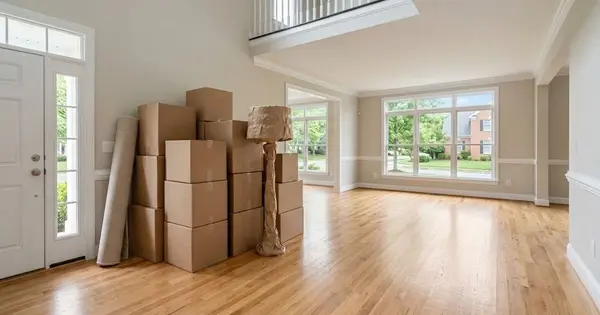
Selling the home you raised a family in is rarely just a transaction. For Centreville empty nesters, the house holds 20, 30, sometimes 40 years of memories — and contents to match. The estate sale isn't a chore tacked onto the home sale; it's the first half of the project. Handle it well, and the listing that follows is calm, well-staged, and priced to perform. Handle it badly, and you're still moving boxes the night before settlement.
This guide walks Centreville sellers — many of you living in Virginia Run, Little Rocky Run, Sully Station, Centre Ridge, Cabells Mill, or Heritage Square — through the entire downsizing arc. From the first walk through the basement, to picking an estate sale company, to listing day with The Jamil Brothers Realty Group's 1.5% full-service program, to picking up the keys at your next single-level home. No fluff, no upselling. Just the order of operations that works in this market.
Where it makes a difference, we'll point out what's specific to Centreville and Fairfax County — the buyer mix, the price tiers, the closing costs the state will pull from your settlement statement, and the next-destination communities most of our downsizing clients move to. Saad and Arslan Jamil have walked dozens of empty-nester families through this exact path; the steps below reflect what actually closes the loop cleanly.
Why Centreville Empty Nesters Downsize Now
The decision to downsize is almost never sudden. It builds quietly: unused bedrooms, a basement you haven't entered in months, stairs that take a little longer, lawn maintenance that eats every Saturday, a property tax bill on square footage you no longer need. Then a triggering event — retirement, a knee replacement, a spouse's passing, grandchildren in another state — turns the slow build into a decision.
In Centreville specifically, the downsizing wave has accelerated for a few reasons:
Centreville's housing stock skews toward the homes families bought in the 1990s and early 2000s — five-bedroom colonials, side-load garages, finished basements, half-acre yards. Those homes have appreciated dramatically. Empty-nester sellers are sitting on equity gains in the $400,000 to $600,000 range relative to what they paid, and that capital becomes the foundation of the downsize: it pays cash for a smaller home, funds a move closer to family, or rebalances retirement allocations away from a single illiquid asset.
The other side of the equation matters too. Young families relocating to Northern Virginia — many for Fairfax County Public Schools, federal jobs, or commuting access to the Dulles tech corridor — actively want the floor plans empty nesters are leaving. Demand is durable. A well-prepped Centreville home, priced correctly and marketed properly, doesn't sit.
The four most common downsizing triggers we see in Centreville
Downsizing trigger checklist
- Retirement and a fixed income. Property tax, HVAC replacement cycles, and HOA dues feel different on a pension than they did on a peak-earnings salary.
- Health and mobility. Stairs, two-story footprints, and large lawns become harder to maintain after 60.
- Family relocation. Adult children move to North Carolina, Florida, or Texas — and the calculus shifts.
- Loss of a spouse. A house built for two often feels wrong for one, and the maintenance load becomes overwhelming.
Get a personalized home valuation from The Jamil Brothers — street-level comps tied to Virginia Run, Little Rocky Run, Sully Station, Centre Ridge, and the rest of Centreville's submarkets. Not an automated estimate. Response within 24 hours.
The Centreville Market for Downsizing Sellers
Before any estate-sale planning starts, anchor yourself in market reality. Pricing your home correctly is what determines whether the entire downsizing plan funds itself or stalls. Here are the figures Centreville sellers should plan around for mid-2026.
| Centreville segment | Median list price | Median days on market | List-to-sale ratio |
|---|---|---|---|
| Single-family detached (overall) | $725K–$780K | 14–22 days | ~99.5% |
| Virginia Run (large lot, premium) | $900K–$1.15M | 10–18 days | ~100% |
| Little Rocky Run | $760K–$900K | 12–20 days | ~99.5% |
| Sully Station I & II | $680K–$820K | 14–24 days | ~99% |
| Centre Ridge / Cabells Mill | $640K–$760K | 16–26 days | ~99% |
| Townhomes (across Centreville) | $525K–$640K | 10–18 days | ~100% |
| Condos / 55+ communities | $340K–$465K | 20–34 days | ~98% |
ℹ️ Why these numbers matter for downsizers
The list-to-sale ratio sitting at 99%+ tells you Centreville is still a tight market — well-prepped homes are getting near or at asking price. The 14–22 day median means a properly priced and staged home doesn't linger. Both numbers are good news for empty nesters who want a clean exit on a predictable timeline.
The single biggest mistake we see Centreville empty nesters make is overpricing based on what a neighbor allegedly got two years ago. Saad Jamil regularly walks sellers through hyper-local comps street by street — not just MLS averages — because Virginia Run pricing simply does not match Sully Station pricing, and an automated home value estimate flattens those distinctions.
Once you have a defensible price range, the estate-sale calendar starts to work backward from listing day. Plan for it.
Step 1 — Estate Sale Planning: What to Sell, Donate, Keep
Estate sale planning is mostly a sorting problem, and the way you sort dictates what the sale earns and how clean the house looks for photography day. Most Centreville empty nesters benefit from a simple four-bucket method.
The four-bucket method
| Bucket | What goes here | Where it ends up |
|---|---|---|
| Keep — moves with you | Daily-use items, sentimental keepsakes, furniture for the next home | Goes to the new residence on move day |
| Family / heirs | Items your children, grandchildren, or close family have claimed | Distributed in advance, before the sale company arrives |
| Estate sale | Furniture, china, tools, lawn equipment, art, books, kitchenware | Priced and sold over a 2- to 3-day weekend |
| Donate / haul | Worn items, broken items, used mattresses, expired chemicals | Donation pickup or junk removal — never staged for sale |
Start in the rooms you use least: the basement, garage, attic, and any spare bedrooms. These spaces accumulate the most over time and create the most visual friction for buyers. Front-load the heavy lifting here, and the rest of the house becomes manageable.
What estate sales sell well in Centreville
The Centreville and broader Fairfax County buyer pool for estate sales skews suburban — younger families furnishing first homes, antique dealers, collectors, and DIY remodelers. Items that consistently sell well include solid-wood furniture (oak, maple, cherry), kitchen tools and small appliances in working order, garage and lawn equipment, power tools, china and serving pieces, area rugs in good condition, framed art, decorative lighting, hand tools, and quality vintage items.
Items that move slowly or not at all include older particle-board furniture, used mattresses (Virginia law restricts resale), large console TVs, dated exercise equipment, and partially used paint or chemicals.
60-day estate sale prep timeline (countdown to listing day)
- Day 60–55: Walk the house room by room. Tag items into the four buckets. Take photos of everything you might second-guess later.
- Day 55–50: Notify children and family of items they've claimed. Set a hard deadline for pickup.
- Day 50–40: Interview 2–3 estate sale companies. Get written contracts and proposed sale dates.
- Day 40–35: Sign with chosen company. Begin haul-away of donation and junk piles.
- Day 35–14: Estate sale company sorts, prices, photographs, and markets the sale.
- Day 14–11: The 2–3 day estate sale weekend runs. Stay off-site if possible.
- Day 10–7: Company removes unsold items per contract. Final donation pickups.
- Day 7–0: Deep cleaning, minor repairs, professional photography, listing goes live.
Step 2 — Hiring an Estate Sale Company in Centreville
You can run an estate sale yourself, but most Centreville empty nesters choose a professional company. The reason is simple: pricing, marketing, traffic management, and the physical labor of running a multi-day sale across a four-bedroom home is more work than it looks. A reputable company earns its fee by getting higher gross prices, reaching more buyers, and protecting your home and remaining belongings during the sale.
How estate sale company fees work
| Fee model | Typical range | When it's used |
|---|---|---|
| Commission only | 30%–40% of gross sales | Standard residential estate sale |
| Commission + setup fee | 30%–35% + $500–$1,500 setup | Large, complex estates needing extensive pricing |
| Buyout | Lump sum, paid up front | Time-sensitive moves, mostly low-value contents |
| Hourly consulting | $50–$125/hour | DIY sellers who just want pricing help |
What to ask before signing the contract
Estate sale company interview checklist
- How long have you been operating in Northern Virginia, and how many Centreville-area sales have you run?
- Can I see your last three sale listings on EstateSales.net and your written reviews?
- What's your commission rate, and what does it include — pricing, staging, marketing, staffing, cleanup?
- Who prices items, and what's your appraisal process for higher-value pieces (jewelry, art, antiques)?
- How do you handle leftover items at the end of the sale — donation, removal, additional fee?
- Do you carry liability insurance, and can I see proof of coverage?
- How and when do I receive payment after the sale concludes?
- What does your contract say about damage to my remaining belongings or the home itself?
Verifying liability insurance is critical. A reputable Centreville estate sale company will carry coverage that protects you if a buyer is injured on your property or if something is damaged during setup. Walk away from any operator who can't produce a current certificate of insurance.
⚠️ Red flags to watch for
Avoid companies that demand cash up front before any setup work begins, refuse to provide a written contract, can't show recent reviews or sale listings, won't carry insurance, or commit to specific dollar projections of what your contents "should" earn. Honest operators discuss ranges, not promises.
Our seller net sheet calculator breaks down every cost — commission, transfer taxes, closing fees — so you know your real bottom line before you list your Centreville home. Combine it with your estate-sale projections and you'll know your full downsizing budget cold.
Step 3 — Estate Sale Logistics, Pricing & Marketing
Once a company is hired, the bulk of the work shifts to them — but a few logistics decisions stay with you and meaningfully impact the outcome.
Timing the sale
The best estate sale weekends in Northern Virginia are Friday–Saturday or Friday–Saturday–Sunday in the spring and fall. Summer works but heat impacts attendance. Holiday weekends — Memorial Day, Labor Day, the week of July 4 — are mixed; some buyers travel, but inventory-hungry dealers turn out heavily. Avoid the two weeks leading up to Christmas and the first week of January.
Pricing strategy
Estate sale prices in Centreville tend to start at roughly 30–40% of original retail for furniture, 50% for collectibles in demand, and 10–20% for general housewares. Most companies use a tiered markdown schedule across the sale: full price Friday, 25% off Saturday, 50% off Sunday. The goal is to clear inventory and minimize haul-away costs.
Marketing the sale
Reputable companies post the sale to EstateSales.net (the dominant Northern Virginia listing platform), EstateSales.org, their own subscriber email lists, Facebook Marketplace, local NextDoor groups, and Craigslist. Detailed photography of higher-value items — especially furniture, jewelry, antiques, and art — drives meaningful traffic. Confirm the company commits to a published photo count in writing.
The day of the sale
Plan to be off-site. Estate sales are intense — buyers arrive an hour before opening, the front yard fills with cars, and the company staff manages the entire operation. Most Centreville sellers spend the weekend with family or at a hotel and return Monday to a clean, near-empty home.
ℹ️ Net proceeds expectation
A reasonable expectation for a well-run estate sale in a Centreville four- to five-bedroom home with 25+ years of accumulated contents is gross sales of $8,000 to $25,000, of which you keep roughly 60–70% after the company's commission and any cleanup fees. Exceptional estates (significant antiques, collectibles, or art) can push higher. Sparse estates land lower.
Step 4 — Sequencing the Estate Sale with the Home Sale
The single most important sequencing question Centreville empty nesters ask: do I hold the estate sale before or after listing the house? The answer in this market is nearly always before, and here's the reasoning.
Why the estate sale runs first
| Factor | Estate sale BEFORE listing | Estate sale AFTER listing |
|---|---|---|
| Photography quality | Cleared home photographs beautifully | Cluttered photos hurt online click-through |
| Showing experience | Buyers see space, not stuff | Buyers get distracted, can't imagine themselves |
| Days on market | Faster sale, fewer price reductions | Longer DOM, often a price cut needed |
| Open house traffic | Easy to host, easy to clean | Constant disruption of estate-sale prep |
| Negotiating leverage | Strong opening position | Sellers feel rushed, accept weak offers |
| Stress level | Two distinct projects, one at a time | Both projects collide constantly |
The proven sequence
Initial consultation with The Jamil Brothers — Day 75 to 60
Walk-through, comparative market analysis, pricing range, prep recommendations, target listing date. No commitment yet — just a roadmap.
Estate sale planning & family pickup — Day 60 to 45
Sort the four buckets. Family members claim their items and pick up. Donation hauls scheduled. Estate sale company interviewed and contracted.
Estate sale weekend — Day 21 to 18
2- to 3-day sale runs. Seller is off-site. Cleanup and remaining-item removal completes Monday morning.
Light staging & touch-ups — Day 17 to 10
Deep clean, neutral paint touch-ups where needed, landscape refresh, light staging of remaining furniture (or rental staging if needed).
Professional photography & media — Day 9 to 7
4K still photography, drone exterior, 3D Matterport tour, video walkthrough. All included in The Jamil Brothers' 1.5% full-service listing program.
Listing goes live — Day 6 to 0
MLS goes live, syndication to Zillow, Realtor.com, Redfin, Homes.com, social campaign launches. First weekend of showings and open house.
Offers, negotiation, settlement — Day +14 to +45
Typical Centreville timeline: 7–21 days under contract, 30–45 days to settlement. Coordinated tightly with the purchase of your next home.
Pre-Listing Prep After the Estate Sale
The week between estate sale Monday and listing day is the prep sprint. It's short, targeted, and disproportionately impactful. Centreville buyers are educated; they notice clean and they notice neglect.
Centreville pre-listing checklist (post-estate-sale)
- Deep clean every room — baseboards, ceiling fans, inside cabinets, oven, fridge, windows inside and out.
- Pressure-wash siding, walkways, deck, and driveway.
- Touch up paint scuffs in white or off-white. Repaint any bold accent walls neutral.
- Replace any obviously-dated light fixtures in the foyer, dining room, and primary bath.
- Re-caulk tubs, showers, and sinks where caulk has yellowed or cracked.
- Replace burned-out bulbs throughout; standardize bulb color temperature to soft white (2700K–3000K).
- Fresh mulch in flower beds, edge the lawn, trim shrubs from windows.
- Repair any obvious deferred items: loose handrails, sticky doors, leaky faucets, running toilets.
- If staging is needed, schedule a partial staging consult — sometimes 4–6 rented pieces transform a cleared home.
- Pre-listing home inspection if the home is over 20 years old — surfaces surprises before buyers find them.
ℹ️ Repair vs. price-it-in
Not every flaw needs to be fixed. Smaller cosmetic items — minor paint, caulk, hardware — are almost always worth repairing. Major systems (a 22-year-old HVAC, an aging roof, original windows) are usually better disclosed and priced in than retrofitted. Saad and Arslan will walk you through which repairs return their investment in your Centreville market segment and which simply burn cash and time.
4K photography, drone video, 3D Matterport tours, expert negotiation, and full MLS marketing — all included at 1.5%. On a $750,000 Centreville home, our full-service listing program puts an extra $11,250 in your pocket compared to a traditional 3% listing agent. No hidden fees, no service reductions, no surprises.
Where Centreville Empty Nesters Move Next
The downsize destination shapes the entire timeline. Some clients have already purchased; others are house-shopping concurrently. Most Centreville downsizers fall into one of five next-home categories.
| Next-home option | Typical price range | Best fit for |
|---|---|---|
| 55+ active-adult communities (Heritage Hunt, Birchwood at Brambleton, Two Rivers) | $525K–$850K | Sellers wanting single-level living, low-maintenance, social amenities |
| Townhomes in Centreville, Chantilly, or Fairfax | $525K–$700K | Sellers wanting to stay local with less square footage and yard |
| Condos in Reston, Herndon, or Fairfax | $340K–$560K | Lock-and-leave lifestyle, walkable amenities, future-proof living |
| Single-family in lower-cost VA markets (Warrenton, Culpeper, Front Royal) | $400K–$650K | Sellers cashing out equity for retirement income |
| Out-of-state relocation (NC, FL, SC, TX) | Varies widely | Sellers moving near grandchildren or for tax climate |
If your next home is local, a coordinated sell-and-buy is often workable — close the sale of the Centreville home, take occupancy of the new one within a few days. The Jamil Brothers regularly run both transactions on the same settlement calendar.
If your next home is out-of-state, the calculus changes. Most Centreville empty nesters in that situation either close the sale first and rent short-term, or use a bridge loan to purchase the new home before closing the old one. Both paths are workable; the right answer depends on your liquidity, your tolerance for two simultaneous moves, and your timing flexibility.
Pricing Strategy for the Cleared Home
With the contents handled and the home prepped, pricing becomes the central commercial decision. There are three viable approaches in the current Centreville market.
Strategy 1 — Price at market
List at the price most likely to produce an at-list offer in 14–21 days. Backed by hyper-local comps, this strategy maximizes total proceeds in most Centreville submarkets. It is the default approach for most downsizing sellers because it pairs predictable timing with strong net proceeds.
Strategy 2 — Price slightly under market
List 2–3% below comparable sales to drive multiple offers. Works best when the home is exceptionally well-prepped, the spring or early-fall season is active, and the seller can tolerate the brief uncertainty of a multi-offer scenario. In tight Centreville micro-markets like Virginia Run, this strategy can drive final prices 2–5% above asking.
Strategy 3 — Price at the top of the range
Test the ceiling of the comp set, expecting 30+ days on market before a serious offer. Reserved for unique homes — premium lots, recent significant renovation, or exceptional features. Risky if the home is more typical, because price reductions after the first 21 days signal weakness to buyers.
⚠️ The price-reduction trap
Centreville buyers track days on market closely. A home that drops price once after 30 days is "negotiable." A home that drops twice is "stale." Three reductions and most agents quietly steer buyers elsewhere. Better to start with a defensible price than to discover the right price through public reductions.
Closing Costs & Tax Considerations for Downsizers
The seller-side closing costs in Centreville are predictable. Plan around these line items.
| Cost item | Who pays | Typical amount (Centreville, $750K sale) |
|---|---|---|
| Listing agent commission (1.5% with The Jamil Brothers) | Seller | $11,250 |
| Buyer's agent compensation (negotiable post-NAR) | Seller or buyer, by negotiation | $0–$22,500 (commonly 2–3%) |
| Virginia grantor tax (state) | Seller | ~$750 ($1 per $1,000 of sale price) |
| Northern Virginia regional congestion tax | Seller | ~$112.50 ($0.15 per $100) |
| Title settlement fee | Seller (typically) | $400–$700 |
| Wire/courier/recording fees | Seller | $75–$150 |
| HOA transfer / resale documents | Seller | $250–$600 (where applicable) |
| Pro-rated property taxes | Seller (through closing date) | Varies by closing date |
Capital gains exclusion — the most important downsizing tax rule
For empty nesters who have lived in the home for decades, capital gains taxation is usually the biggest question. The federal primary-residence exclusion is the key: if you've owned and lived in the home as your primary residence for at least 2 of the last 5 years, married couples filing jointly can exclude up to $500,000 of gain from federal tax, and single filers can exclude up to $250,000.
For most Centreville downsizers — even those who bought 25 years ago for $300,000 and are selling for $850,000 — the gain falls within the exclusion and no federal capital gains tax is owed. Gains beyond the exclusion are typically taxed at long-term capital gains rates. Consult a CPA or tax advisor for your specific situation; the rules around partial exclusions, business-use portions of the home, and Virginia state tax interact in ways worth confirming.
ℹ️ Estate sale proceeds and taxes
For most household-contents estate sales, the IRS treats sales of personal-use items below their original cost basis as a non-event — no taxable gain, no deductible loss. The proceeds are simply not reportable income. Exceptions apply to collectibles, jewelry, or art sold above their original cost; consult a tax advisor if you have those categories in your sale.
Seller Savings Calculator: 1.5% vs 3%
Tap a price tier below that matches your Centreville home value. The calculator shows what The Jamil Brothers' 1.5% full-service listing fee saves you compared to a traditional 3% listing agent — same buyer's agent compensation, same closing costs, same marketing package.
Seller Savings Calculator
How much more do you keep with our 1.5% listing fee?
Tap your Centreville home's estimated value to see your real net proceeds — side by side, no surprises.
|
Traditional Agent — 3%
Net Proceeds $374,000
|
Jamil Brothers — 1.5%
Our Fee — Only 1.5%
Net Proceeds $380,000
|
|
Traditional Agent — 3%
Net Proceeds $467,500
|
Jamil Brothers — 1.5%
Our Fee — Only 1.5%
Net Proceeds $475,000
|
|
Traditional Agent — 3%
Net Proceeds $561,000
|
Jamil Brothers — 1.5%
Our Fee — Only 1.5%
Net Proceeds $570,000
|
|
Traditional Agent — 3%
Net Proceeds $701,250
|
Jamil Brothers — 1.5%
Our Fee — Only 1.5%
Net Proceeds $712,500
|
|
Traditional Agent — 3%
Net Proceeds $935,000
|
Jamil Brothers — 1.5%
Our Fee — Only 1.5%
Net Proceeds $950,000
|
Estimates only. Closing costs vary. Buyer's agent compensation is negotiable post-NAR settlement.
Common Downsizing Mistakes to Avoid
After walking many Centreville empty-nester families through this process, the same handful of mistakes show up repeatedly. Most are avoidable with a little forward planning.
Avoid these downsizing pitfalls
- Listing before the estate sale. Cluttered photography costs you both showings and dollars. Always estate-sale first.
- Trying to do it all in 30 days. 25 years of contents needs 60 to 90 days minimum to sort properly.
- Overpricing based on a neighbor's old comp. Centreville pricing varies street by street; rely on current, like-kind comps.
- Hiring the cheapest estate sale company. 5% in commission savings on a low-quality sale costs you far more in gross proceeds.
- Skipping the pre-listing home inspection. Discovering a major issue during buyer due diligence costs you negotiating leverage.
- Doing major renovations. A kitchen redo before sale rarely returns its cost. Cosmetic refresh, not gut remodel.
- Buying the next home before listing. Owning two mortgages while one home sits creates pressure to accept weaker offers.
- Ignoring the capital gains exclusion. Most downsizers qualify, but the documentation matters at tax time.
- Throwing away or donating valuable items. Vintage furniture, jewelry, and art frequently surprise sellers — let the estate sale company assess.
- Choosing an agent based on commission alone. A 1% listing fee that lists at the wrong price costs you far more than the savings.
Alternatives to a Traditional Sale
Most Centreville downsizers do best with a traditional MLS listing. But three alternatives are worth understanding, because each fits a specific situation.
Cash offer / investor sale
Sell directly to an investor or institutional buyer for a quick, certain close — often within 14 days, in current as-is condition, with no showings or open houses. Trade-off: net price is typically 80–88% of fair market value. Fits sellers prioritizing speed, privacy, or avoiding repair work over maximum proceeds.
FSBO (for sale by owner)
Skip the listing-side commission entirely. Trade-off: most Centreville FSBOs sell for materially less than agent-listed comps, often offsetting the saved commission and then some, plus the seller carries the full legal and logistical workload of marketing, contracts, negotiation, and Virginia disclosure compliance.
iBuyer / instant offer programs
Submit basic home details for an algorithmic offer, often within 24 hours. Trade-off: significant fees (often 5–8% service charges plus repair credits) and offers typically below market. Most major iBuyer operations have scaled back in the DMV market, so availability varies.
If timing, condition, or certainty matters more than maximum price — for example, you need to settle before the next home purchase or want to avoid showings during the estate-sale period — a cash offer may be the right fit. We'll walk you through your full range of options, no pressure.
Your Next Step in Downsizing
Downsizing is a project, not a transaction. Done well, it ends with you in a smaller, more manageable home, with significant capital freed up, and a clean exit from a property you've loved for decades. Done badly, it stretches across months of stress, lost equity, and rushed decisions you regret later.
The two best decisions you can make today are: get an honest valuation of your Centreville home, and run the numbers on what you actually net at closing. Both are free, both take less than a week, and together they give you the foundation to plan the estate sale, the next-home search, and the calendar for the entire move.
The Jamil Brothers Realty Group — Saad and Arslan Jamil — has guided dozens of empty-nester families through this exact path in Centreville, Chantilly, Fairfax, and Herndon. Our 1.5% full-service listing program means full marketing, 4K photography, drone video, 3D tours, MLS syndication, expert negotiation, and partner-led representation, with thousands more left in your pocket at settlement. Reach out for a free walk-through; it's the simplest first step you can take.
About The Jamil Brothers Realty Group
Saad and Arslan Jamil are NVAR Lifetime Top Producers with 840+ homes sold and over $500 million in closed volume, licensed in Virginia, Maryland, DC, and West Virginia and recognized by 500+ five-star reviews across Google, Zillow, and Realtor.com. They lead The Jamil Brothers Realty Group at Samson Properties, and they specialize in helping Northern Virginia families — including downsizing empty nesters — navigate the full home-sale process with the team's full-service 1.5% listing program.
Know your equity, understand your costs, and see exactly what you'll walk away with — before you make any decisions about the estate sale, the next home, or the timeline. The Jamil Brothers provide a full seller consultation at no cost or obligation.
Explore More Guides
Centreville Chantilly Fairfax Herndon 1.5% Listing Net Sheet Free Valuation Cash Offers Homes for SaleFrequently Asked Questions
Should I hold an estate sale before or after listing my Centreville home?
Almost always before. A cleared, lightly-staged home photographs significantly better, shows easier to buyers, and typically sells in fewer days at a higher price than a home full of decades of belongings. Running the estate sale 14 to 21 days before listing day gives the home time for a deep clean, paint touch-ups, and professional photography while the seller is focused on one project at a time. Trying to coordinate showings around an active estate sale almost always damages the listing's performance.
How much does an estate sale company charge in Centreville?
Most Centreville and Northern Virginia estate sale companies charge 30% to 40% of gross sale proceeds, with the higher end reserved for smaller or lower-value estates. Some companies layer a $500 to $1,500 setup fee on top of the commission for particularly large or complex sales. Hourly consulting for DIY sellers typically runs $50 to $125 per hour. A reasonable expectation for a four- to five-bedroom Centreville home with 25 years of accumulated contents is gross sales of $8,000 to $25,000, of which the seller keeps roughly 60% to 70% after company fees and cleanup costs.
How long does the full downsizing process take in Centreville?
Plan for 60 to 90 days from the day you decide to downsize to the day you settle on the home sale. That breaks down roughly as: 30 to 45 days of estate-sale planning, family pickups, and donation hauls; one estate-sale weekend; 7 to 14 days of post-sale prep and photography; and then 30 to 45 days from listing to settlement in a typical Centreville timeline. Sellers who try to compress this into 30 days usually regret it — the rushed prep shows in the photos, the listing performance suffers, and the home sells for less than it should.
How do I choose a listing agent for a downsizing sale?
Look for an agent with specific Centreville experience, hyper-local pricing knowledge, full-service marketing (4K photography, drone, 3D tour, MLS, syndication), and a track record with downsizing or estate-related sales. Verify recent local closings, ask for references from comparable empty-nester clients, and confirm the listing fee includes everything you need — marketing, staging consultation, negotiation, settlement coordination. The Jamil Brothers Realty Group offers a 1.5% full-service listing program with all marketing assets included, and has walked many Centreville empty-nester families through the full process; call (703) 782-4830 for a free consultation.
What happens to items the estate sale doesn't sell?
Most reputable Centreville estate sale companies build a removal plan into the contract. Typical options include: company-managed donation pickup (commonly to AMVETS, Habitat for Humanity ReStore, or Salvation Army), donation hauling at an extra fee, or a paid junk-removal service like Bumble Bee Junk or 1-800-Got-Junk. Some companies will also buy out remaining inventory at the end of the sale for a flat price. Confirm exactly how unsold items are handled in writing before signing the company contract — surprise cleanup fees at the end of the sale are a common complaint.
Do I owe capital gains tax when I sell my long-held Centreville home?
For most empty-nester downsizers, no federal capital gains tax is owed. If you've owned and lived in the home as your primary residence for at least two of the previous five years, married couples filing jointly can exclude up to $500,000 of gain and single filers up to $250,000. That covers most Centreville downsizers, even those who bought 25 years ago at much lower prices. Gains beyond the exclusion are typically taxed at long-term capital gains rates, currently 15% or 20% depending on income. Virginia state tax interacts with federal rules; consult a CPA for your specific situation. The Jamil Brothers can connect you with trusted local tax professionals during your consultation.
What are the closing costs for a Centreville home sale?
For a $750,000 Centreville sale, plan on approximately $11,250 in listing-side commission with The Jamil Brothers' 1.5% full-service program, plus a Virginia grantor tax of around $750, the Northern Virginia regional congestion tax of roughly $112.50, title settlement fees of $400 to $700, recording and courier fees of $75 to $150, an HOA transfer or resale document fee of $250 to $600 where applicable, and pro-rated property taxes through the closing date. Buyer's agent compensation is negotiable post-NAR settlement and commonly runs 2% to 3% when offered by the seller.
What is the post-NAR settlement and how does it affect downsizing sellers?
The 2024 NAR settlement decoupled buyer's agent compensation from listing commission. In practical terms for Centreville sellers, this means buyer's agent compensation is no longer automatically baked into your listing fee; it's a negotiated line item in the offer. Many buyers still expect the seller to compensate their agent, but the amount is now openly negotiable in each transaction. The Jamil Brothers walk every listing client through the current local market practice — typically 2% to 3% offered to buyer's agents — and structure each offer's compensation strategically to maximize seller net proceeds.
What if my Centreville HOA has restrictive rules on estate sales?
Several Centreville HOAs — Virginia Run, Little Rocky Run, Sully Station, Cabells Mill, and others — have specific rules about estate sales, garage sales, and exterior signage. Common restrictions include requiring board notification, limiting sale duration to a single weekend, prohibiting parking on common areas, restricting signage placement on community streets, and requiring sale hours to end by early evening. Pull the HOA's most recent rules document, notify the management company before signing with an estate sale company, and confirm the company's marketing approach complies. The Jamil Brothers can request the resale package early in the process to surface any HOA issues before they impact the sale timeline.
How does Centreville's market compare to nearby cities like Chantilly or Fairfax?
Centreville price points sit slightly below Fairfax and slightly below or in line with Chantilly for comparable square footage, with single-family detached homes in the $725,000 to $780,000 median range heading into mid-2026. Fairfax City and inner-Fairfax-County submarkets typically run $50,000 to $150,000 higher for similar homes due to closer Metro access and tighter inventory. Chantilly sits at a comparable price point with similar buyer demand. Empty nesters selling in Centreville often benefit from the area's strong family-buyer demand, suburban-feel commute access, and the relative price ceiling that makes Centreville attractive to buyers priced out of Fairfax City and Vienna.
Can I sell my Centreville home and buy the next one simultaneously?
Yes. Coordinated sell-and-buy transactions are common for Centreville downsizers, and The Jamil Brothers regularly run both sides on the same settlement calendar. The two main mechanisms are: a sale contingency on the next-home purchase (your purchase only closes if your home closes), or a bridge loan / HELOC against the Centreville home's equity to fund the new purchase before settlement. Each path has trade-offs in offer competitiveness and short-term cost; the right answer depends on your liquidity, your tolerance for two simultaneous transactions, and how competitive your next-home market is.
Is now a good time for a Centreville empty nester to downsize?
The mid-2026 Centreville market remains favorable for empty-nester sellers. Inventory of single-family detached homes is tight, the list-to-sale ratio sits near 99.5%, median days on market run 14 to 22 days, and demand from young families is durable thanks to Fairfax County Public Schools, federal job access, and the Dulles tech corridor. For downsizers with significant equity built since the early 2000s, current prices reward a well-prepped, well-marketed listing. The single best way to confirm whether your specific situation works in this market is a free walk-through and valuation; call The Jamil Brothers at (703) 782-4830 to schedule one.
Glossary
Estate sale
A multi-day event, usually held over a weekend, in which the contents of a home are sold to the public — typically run by a professional company that handles pricing, marketing, staffing, and cleanup.
Downsizing
Moving from a larger primary residence to a smaller home, often by empty nesters or retirees, to reduce maintenance, free up equity, or relocate to a more manageable property.
1.5% full-service listing fee
The Jamil Brothers' listing program: a 1.5% listing commission that includes 4K photography, drone video, 3D Matterport tours, full MLS marketing, expert negotiation, and partner-led representation. No service tradeoffs versus traditional 3% agents.
Capital gains exclusion
The federal tax rule allowing married couples filing jointly to exclude up to $500,000 (single filers $250,000) of capital gain on the sale of a primary residence, provided ownership and use tests are met.
Virginia grantor tax
A state-level tax on the seller of real property in Virginia, currently $1 per $1,000 of sale price, paid at closing through the settlement statement.
NOVA regional congestion tax
An additional Northern Virginia regional tax on real-estate transfers of $0.15 per $100 of sale price, paid by the seller at closing in qualifying NOVA jurisdictions including Fairfax County.
NAR settlement
The 2024 National Association of Realtors settlement that decoupled buyer's agent compensation from the listing commission, making buyer-agent fees an openly negotiable line item in each transaction.
HOA resale package
A document set produced by the homeowners association that must be provided to a buyer before closing — includes covenants, financial statements, governing documents, and fee schedules. Typical Centreville HOA resale fees run $250 to $600.
Days on market (DOM)
The number of days a listing has been active on the MLS. Centreville's mid-2026 median DOM for single-family detached homes is 14 to 22 days for well-prepped listings.
List-to-sale ratio
The ratio of the final sale price to the original list price, expressed as a percentage. A ratio near 100% indicates a balanced market; ratios above 100% indicate multiple-offer environments. Centreville's current ratio sits near 99.5%.
Explore More
Browse Every Corner of the DMV Market
Whether you're searching by budget, neighborhood, or buying situation — find exactly what you need below.
Virginia Homes by Budget
Washington DC Homes by Budget
Maryland Homes
Explore Northern Virginia Communities
Loudoun County
Fairfax County & Surrounding
Ready to Make a Move?
Full-Service · No Tradeoffs
List for 1.5% & Keep More Equity
Professional photography, drone video, 3D tours, and expert negotiation — all included. On an $800K home, that's $12,000 more in your pocket vs. a 3% agent.
See the 1.5% Program →Need Speed or Certainty?
Get a No-Obligation Cash Offer
Skip the showings, skip the contingencies. If timing or condition matters more than top dollar, a cash offer may be the right fit. We'll walk you through every option.
Explore Cash Offers →
Categories
- All Blogs (1227)
- Aldie (3)
- Ashburn (6)
- Buyer Guide (8)
- Buying a home (2)
- Buying Strategies (30)
- festivals (1)
- General Blog (67)
- Leesburg (5)
- Market Intelligence (29)
- Market Updates (8)
- Notable Properties For Sale (32)
- Real Estate Tips, News, and More (385)
- Seller Guide (2)
- Seller Guides (60)
- Selling Your Home (522)
- Sterling (6)
- Top Realtors in Northern Virginia (58)
Recent Posts


Message Sent!
Thank you for reaching out. Arslan & Saad have received your details and will be in touch shortly.
Need immediate assistance? Call or text 703-782-4830.