
Who Pays Closing Costs in Virginia, the Buyer or the Seller?
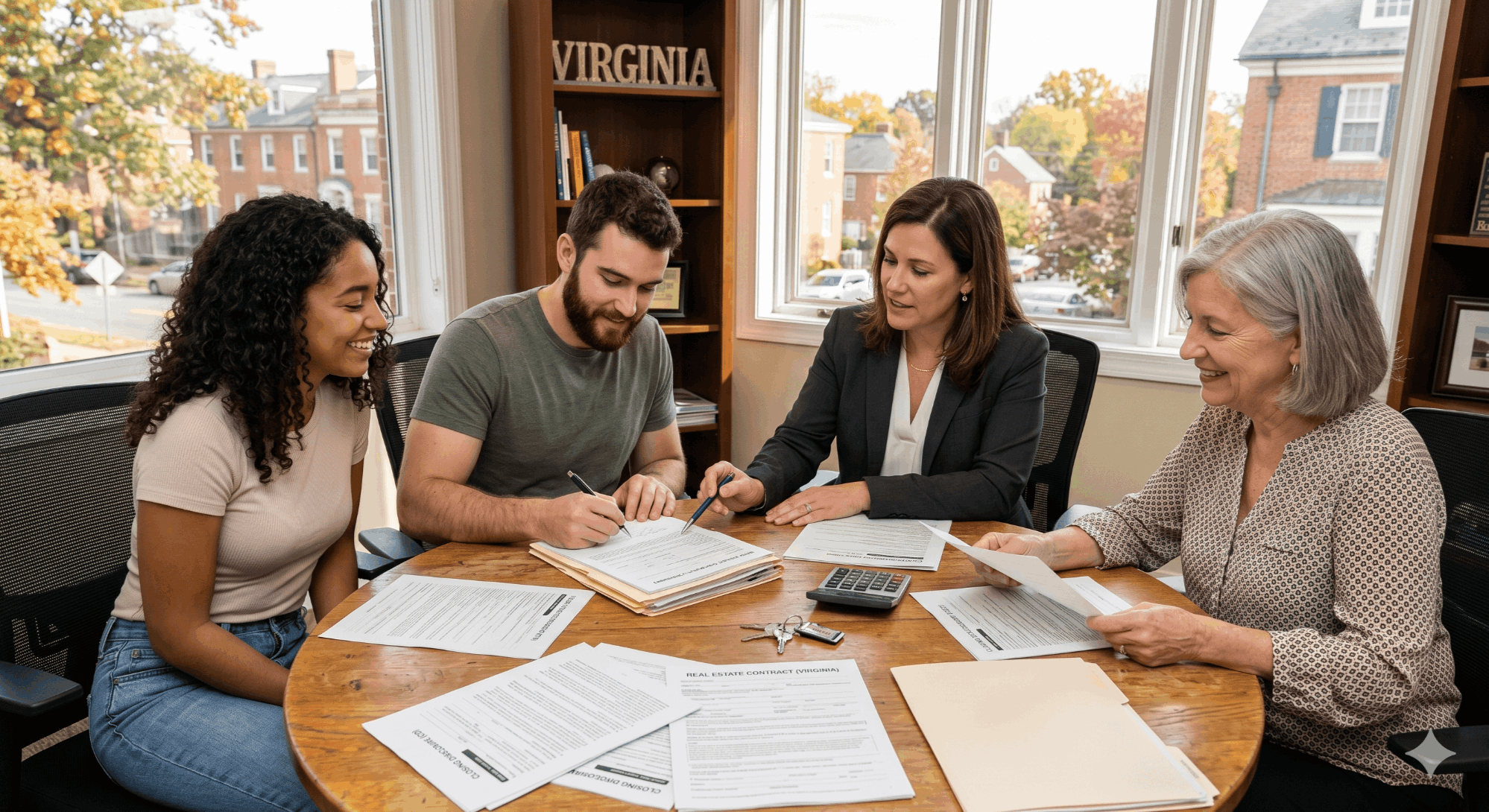
Quick Answer: In Virginia, both buyers and sellers pay closing costs, but they pay different things. Sellers typically pay real estate commission (the biggest line item), the state grantor tax of $1 per $1,000 of sale price, any NOVA regional congestion fee of $1.50 per $1,000, and pro-rated property taxes, usually 6% to 10% of the sale price total. Buyers typically pay lender fees, appraisal, title insurance, the recordation tax of roughly $3.33 per $1,000, and prepaid escrows, usually 2% to 5% of the purchase price. Every one of these costs is negotiable.
Key Takeaways
- Sellers in Virginia shoulder the larger share, typically 6% to 10% of sale price, driven by real estate commission, grantor tax, and NOVA congestion fees.
- Buyers in Virginia pay 2% to 5% of purchase price, loan fees, appraisal, title insurance, recordation tax, and prepaid escrows.
- Virginia has two transfer taxes: a state grantor tax (seller-paid) and a state + local recordation tax (buyer-paid on the deed and loan).
- NOVA jurisdictions, Fairfax, Loudoun, Arlington, Alexandria, Prince William, Fairfax City, Falls Church, Manassas, Manassas Park, add a $0.15 per $100 Regional Congestion Relief Fee on the seller and a $0.15 per $100 WMATA/congestion fee on the buyer.
- Almost every closing cost is negotiable, including who pays for what. The largest seller cost, commission, is where most sellers find the biggest savings.
- Post-NAR settlement (August 2024 onward), buyer-agent compensation is no longer embedded in the listing agreement by default, it must be negotiated between seller and buyer separately.
In This Guide
- Closing Costs 101: What They Actually Are
- What Sellers Pay at Closing in Virginia
- What Buyers Pay at Closing in Virginia
- Side-by-Side: Who Pays What
- Virginia's Unique Closing Cost Rules
- Closing Cost Examples at Every Price Point
- What's Negotiable, and What Isn't
- How Sellers Reduce Closing Costs in Virginia
- How Buyers Reduce Closing Costs in Virginia
- Post-NAR Settlement: What Changed in 2024
- Common Closing Cost Mistakes to Avoid
- Frequently Asked Questions
- Glossary
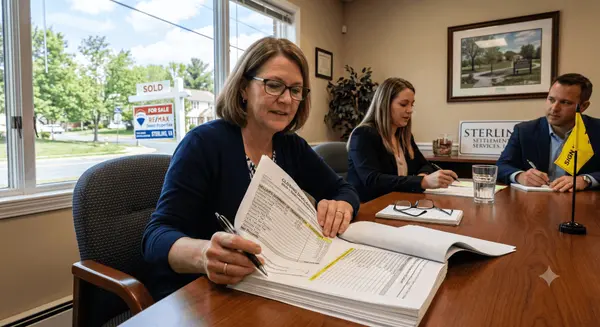
Closing costs are the second-biggest surprise in any Virginia real estate transaction, second only to how much the paperwork weighs. The line items are scattered across a Closing Disclosure that can feel intentionally dense, and the rules about who pays for what vary not just by state but by county, by jurisdiction, and by how well you negotiate your contract. A seasoned Northern Virginia real estate agent can walk that disclosure line by line and tell you which fees are actually negotiable before you ever reach the table.
This guide breaks down every closing cost line item you'll encounter when buying or selling a home in Virginia, what it is, who traditionally pays it, how much it typically runs, and where there's room to push back. We'll focus on Northern Virginia since that's where most Virginia real estate activity happens, but everything here applies statewide. By the end you'll know exactly what your Closing Disclosure should look like before it hits your inbox.
Throughout, we'll flag where Virginia rules diverge from what you'll see on national closing-cost guides, because national averages hide the grantor tax, the regional congestion fee, and the NOVA-specific WMATA Capital Fee that hit every sale in the DC suburbs.
Closing Costs 101: What They Actually Are
Closing costs are every fee, tax, and expense that has to be paid, by either party, to legally transfer ownership of the property from seller to buyer. They're not the price of the house. They're the cost of the transaction. Think of closing costs as the tollbooth you pass through to complete the deal.
Some costs are fixed by Virginia law (transfer taxes, recordation fees). Some are set by third parties (lenders, appraisers, inspectors, title insurance underwriters). And some are genuinely negotiable between buyer and seller, including, in post-settlement 2024+ world, the buyer-agent commission that used to be automatically split.
The key framing: "who pays closing costs" is partly custom, partly law, and partly contract. Virginia law says the grantor tax is paid by the seller. But nothing stops a buyer from offering to cover it as part of a competitive bid in a hot market. Nothing stops a seller from offering a "closing cost credit" to help a buyer with a tight cash-to-close position. Every line item on the Closing Disclosure has a column labeled "Who Pays", and every one of those assignments started as a default that someone agreed to.
ℹ️ What's NOT a closing cost
Down payment is not a closing cost, it's equity going into the home. Moving expenses, repairs negotiated into the contract, and your first month of mortgage payment are also separate from closing costs. The Closing Disclosure only covers the transaction itself.
What Sellers Pay at Closing in Virginia
In Virginia, sellers carry the larger share of closing costs. Expect total seller-side costs to land between 6% and 10% of the final sale price, a range driven almost entirely by commission structure. On a $750,000 Fairfax home, that's $45,000 to $75,000. It's a number that deserves real attention before you sign a listing agreement. If you're selling a home in Virginia, understanding this range upfront protects your bottom line.
Real Estate Commission (The Big One)
Commission is the single largest closing cost for Virginia sellers by an order of magnitude. Traditional full-service listings charge 3% to the listing agent plus 2.5% to 3% offered to the buyer's agent, roughly 5.5% to 6% combined. On a $700,000 home, that's $38,500 to $42,000 going to agents.
This is exactly why commission structure gets the most scrutiny. It's also why our 1.5% full-service listing program exists, same professional photography, drone video, 3D tours, expert negotiation, and full MLS syndication, at a listing fee about half the traditional rate. On that $700,000 Fairfax home, the listing-side savings alone come to $10,500.
Listing-agent fee on a $700,000 Virginia home. Buyer-agent compensation negotiated separately.
Virginia Grantor Tax
Virginia imposes a state grantor tax (also called the "state deeds tax" or "transfer tax") on the seller, officially $0.50 per $500 of value conveyed, which works out to $1 per $1,000 of sale price. On a $600,000 home, that's $600. On a $1,000,000 home, $1,000. It's not huge compared to commission, but it's a real line item the seller must plan for.
The grantor tax is calculated on the actual sale price, not the assessed value. It's collected by the county clerk's office when the deed is recorded, and your closing attorney or title company will handle the filing. A seller cannot avoid this tax by selling "off market" or to a friend at discount, the tax is based on consideration paid.
NOVA Regional Congestion Relief Fee (If Applicable)
If your home is in a Northern Virginia jurisdiction, there's an additional grantor-side fee on top of the state grantor tax: the Regional Congestion Relief Fee of $0.15 per $100 (or $1.50 per $1,000 of sale price). This funds NOVA transportation infrastructure. On a $750,000 McLean sale, that's $1,125 extra, stacked on top of the $750 state grantor tax.
| Jurisdiction | State Grantor Tax | Regional Fee | Combined (on $750K) |
|---|---|---|---|
| Fairfax County | $1/$1,000 | $1.50/$1,000 | $1,875 |
| Loudoun County | $1/$1,000 | $1.50/$1,000 | $1,875 |
| Arlington County | $1/$1,000 | $1.50/$1,000 | $1,875 |
| Alexandria City | $1/$1,000 | $1.50/$1,000 | $1,875 |
| Prince William County | $1/$1,000 | $1.50/$1,000 | $1,875 |
| Non-NOVA counties (Richmond, Charlottesville, etc.) | $1/$1,000 | None | $750 |
Pro-Rated Property Taxes
Virginia property taxes are paid in arrears, meaning you're paying for the period that just ended, not the one coming. At closing, the seller credits the buyer for the portion of the tax year they owned the home but haven't yet paid the tax bill for. On a Fairfax home with a $7,200 annual tax bill, a July closing means the seller owes the buyer roughly $4,200 in pro-rated taxes at the closing table.
This isn't "extra" money out of pocket in the economic sense, you'd owe the tax regardless, but it does come directly out of your proceeds check at closing, so plan for it.
HOA and Condo Fees
If your home is in a homeowners association or condominium, Virginia law requires a disclosure packet, often called a "resale packet" or "POA/condo docs", that must be delivered to the buyer within three days of ratified contract. Sellers pay for this packet; costs range from $250 to $500+ depending on the association. Master-planned communities like Reston Association, One Loudoun, or Brambleton tend toward the higher end.
Beyond the packet, sellers typically pay any unpaid assessments, a transfer fee (often $250 to $500), and pro-rated dues up to the closing date. For condos, add any move-out fees the association charges.
Settlement, Attorney, and Miscellaneous Fees
Virginia closings are typically handled by a settlement attorney or title company. Sellers usually cover their own attorney fee (if they retain one separately, often $300 to $800), wire fees, a deed preparation fee ($100 to $200), courier fees, and any payoff/reconveyance processing on existing mortgages or HELOCs. If there's a Home Warranty offered to the buyer, that's typically a seller-paid line item ranging from $500 to $800.
Buyer-Agent Compensation (Changed in 2024)
Historically, the listing agreement spelled out what percentage of the commission would be offered to a buyer's agent, usually 2.5% or 3%. Post-August 2024 NAR settlement, that automatic offer of compensation in the MLS is gone. Buyer-agent compensation is now negotiated between the seller (or listing) and the buyer (via their agent) as part of the purchase contract itself.
In practice, in most Virginia transactions today, sellers still offer buyer-agent compensation, because most buyers won't afford the out-of-pocket cost, and listings that don't offer it tend to get fewer showings. But the structure has changed: the amount is now explicitly negotiated contract-by-contract rather than embedded in the MLS listing.
4K photography, drone video, 3D tours, expert negotiation, and full MLS marketing, all included at 1.5%. No hidden fees, no service reductions, no surprises.
What Buyers Pay at Closing in Virginia
Virginia buyers typically pay 2% to 5% of the purchase price in closing costs, on top of their down payment. On a $600,000 Ashburn purchase, that's $12,000 to $30,000 in closing costs beyond whatever you're putting down. The range depends on loan type, down payment, and how aggressively you negotiate. Before you browse homes for sale, fold these closing costs into your budget so the cash-to-close figure doesn't catch you off guard. Here's the full breakdown.
Loan Origination and Lender Fees
Lender-side fees cover the cost of underwriting and funding your mortgage. Expect: origination fee (0.5% to 1% of the loan), application fee, underwriting fee, processing fee, tax service fee, flood certification, and sometimes a rate-lock fee. Combined, these typically run $2,500 to $5,000 on a conventional loan. Shopping lenders matters, this is where a half-point difference in rate or fees can cost or save thousands.
Appraisal and Inspection Fees
A lender-ordered appraisal in Northern Virginia typically runs $550 to $750 for a standard single-family home; luxury or unique properties in McLean or Great Falls can push $900 to $1,200. Home inspections, which are buyer-optional but always recommended, run $400 to $700 for a standard home, plus optional add-ons (radon $150, chimney $200, mold $300, sewer scope $200, pest $100). Both fees are typically paid by the buyer, often before closing.
Title Insurance
Virginia uses title insurance (not abstract/attorney opinion) to protect against defects in title history. There are two policies at closing: lender's title insurance (required by every mortgage lender, protects the lender) and owner's title insurance (optional but strongly recommended, protects the buyer's equity).
Both are one-time premiums at closing. On a $600,000 purchase, expect roughly $1,200 to $1,800 for lender's coverage and $1,500 to $2,500 for owner's coverage, though costs vary by title company and whether you're buying a simultaneous policy package (usually cheaper). The buyer traditionally pays both in Virginia.
Virginia Recordation Tax (Deed + Deed of Trust)
When your deed is recorded with the county clerk, Virginia charges a recordation tax. It's $0.25 per $100 of consideration at the state level, plus a local recordation tax equal to one-third of the state tax, approximately $3.33 per $1,000 of purchase price total. On a $600,000 home, that's roughly $2,000 just on the deed recording.
If you're financing, there's an additional recordation tax on the deed of trust (the document that secures the mortgage), the same rate, applied to the loan amount. With a $480,000 mortgage (80% LTV on that $600K home), that's another $1,600 or so. Combined deed + deed-of-trust recordation on a typical financed purchase runs about $3,500 to $4,000.
NOVA WMATA/Regional Congestion Fee (Buyer Side)
In NOVA jurisdictions, buyers also pay a regional tax, $0.15 per $100 on the deed of trust, dedicated to WMATA (Metro) capital funding and regional transportation. On a $480,000 loan, that's another $720. This is in addition to the seller-side congestion fee, both sides chip in to fund NOVA infrastructure.
Prepaid Items and Escrow
Your lender will require you to prepay: interest from closing date to end of month, the first year of homeowner's insurance ($1,200 to $2,500 in NOVA depending on coverage), and a property tax escrow cushion (typically 2 to 6 months of tax reserves). This alone can add $4,000 to $8,000 to cash-to-close. It's not technically a "fee", it's pre-funding your escrow account, but it's real money you need at the table.
Settlement, Survey, and Misc. Fees
The settlement fee itself (paid to the settlement attorney or title company for conducting the closing) is typically $500 to $900 in NOVA. Survey (if required) is $400 to $700. Credit report pulls, endorsements on the title policy, courier and wire fees, and notary fees round out the smaller line items, totaling another $500 to $1,000.
Before you tour a single home, know your budget, your closing-cost cash-to-close target, and your negotiation position on credits and concessions. Our buyer strategy session is free and covers everything you need.
Side-by-Side: Who Pays What in Virginia
Here's the customary split, line-by-line. Remember: every one of these is negotiable. The "Who Pays" column is what Virginia practice defaults to, not what's legally required.
| Closing Cost Line Item | Typical Who Pays | Typical Cost |
|---|---|---|
| Listing agent commission | Seller | 1.5% to 3% of sale price |
| Buyer-agent compensation | Negotiated (often seller) | 2% to 3% of sale price |
| VA state grantor tax | Seller | $1/$1,000 of price |
| NOVA Regional Congestion Fee | Seller (NOVA only) | $1.50/$1,000 of price |
| HOA/condo docs & transfer fee | Seller | $250 to $800+ |
| Pro-rated property taxes | Seller (credit to buyer) | Varies, $1,500 to $7,000 |
| Home warranty (if offered) | Seller (optional) | $500 to $800 |
| Deed preparation | Seller | $100 to $200 |
| Loan origination & lender fees | Buyer | $2,500 to $5,000 |
| Appraisal | Buyer | $550 to $1,200 |
| Home inspection | Buyer | $400 to $1,000+ |
| Lender's title insurance | Buyer | $1,200 to $1,800 |
| Owner's title insurance | Buyer (optional) | $1,500 to $2,500 |
| VA recordation tax (deed) | Buyer | ~$3.33/$1,000 of price |
| VA recordation tax (deed of trust) | Buyer | ~$3.33/$1,000 of loan |
| NOVA WMATA/Congestion (buyer) | Buyer (NOVA only) | $1.50/$1,000 of loan |
| Prepaid interest, insurance, escrow | Buyer | $4,000 to $8,000 |
| Settlement / closing fee | Buyer (usually) | $500 to $900 |
| Survey (if required) | Buyer | $400 to $700 |
Virginia's Unique Closing Cost Rules
Every state has its quirks. Here are the ones Virginia buyers and sellers need to know, because they're where national closing-cost calculators go wrong and where out-of-state real estate advice falls apart.
The Grantor/Grantee Tax Split
Virginia splits its transfer taxes between buyer and seller. The grantor tax (seller-paid) funds state general revenue. The grantee tax, really the recordation tax, is paid by the buyer and funds the state plus the county/city. The economic effect: both parties pay transfer-style taxes at closing. A state like Texas has no transfer tax on real estate at all. A state like Delaware has a combined 4% transfer tax often split by contract. Virginia sits in the middle, modest taxes, but two separate ones that confuse anyone used to a single-line transfer tax.
NOVA Regional Taxes
If the property is in Fairfax County, Arlington County, Loudoun County, Prince William County, Alexandria City, Fairfax City, Falls Church, Manassas, or Manassas Park, add the NOVA regional fees. The Hampton Roads region has its own parallel regional transportation fee, though the specifics differ. The rest of Virginia has no regional overlay.
Attorney-Handled Closings
Virginia permits both attorney and title-company-only settlements. In practice, most NOVA closings are handled by a combined settlement attorney (who is both a licensed Virginia attorney and a title agent). This is different from "escrow states" like California where a neutral escrow officer runs closing. The buyer typically selects the settlement agent in Virginia, a choice that can shift the cost and experience meaningfully.
Virginia POA & Condo Act Disclosure Packets
The Virginia Property Owners' Association Act and the Virginia Condominium Act require sellers to provide specific disclosure packets to buyers. There's a statutory 3-day review period during which the buyer can rescind without penalty after receiving the docs. This adds a scheduling dimension (and a cost) that sellers in non-HOA areas don't deal with.
Closing Cost Examples at Every Price Point
Here's what seller-side closing costs actually look like at Virginia price points, comparing a traditional 3% listing commission to our 1.5% full-service program. Tap any price band to see the numbers, the savings are built entirely into the listing-side commission structure.
Seller Savings Calculator
How much more do you keep with our 1.5% listing fee?
Select your home's estimated value to see your real net proceeds, side by side.
Traditional Agent, 3%
Our Fee, Only 1.5%
Extra in your pocket
$6,000
vs. a traditional 3% listing agent, with zero reduction in service or marketing.
Traditional Agent, 3%
Our Fee, Only 1.5%
Extra in your pocket
$7,500
vs. a traditional 3% listing agent, with zero reduction in service or marketing.
Traditional Agent, 3%
Our Fee, Only 1.5%
Extra in your pocket
$9,000
vs. a traditional 3% listing agent, with zero reduction in service or marketing.
Traditional Agent, 3%
Our Fee, Only 1.5%
Extra in your pocket
$11,250
vs. a traditional 3% listing agent, with zero reduction in service or marketing.
Traditional Agent, 3%
Our Fee, Only 1.5%
Extra in your pocket
$15,000
vs. a traditional 3% listing agent, with zero reduction in service or marketing.
Estimates only. Closing costs vary. Buyer's agent commission is negotiable.
Our seller net sheet calculator breaks down every cost, commission, grantor tax, NOVA congestion fee, HOA transfer, closing fees, so you know your real bottom line before you list.
What's Negotiable, and What Isn't
Here's the reality that closing-cost calculators don't capture: who-pays-what is mostly convention, not law. Two things are truly non-negotiable, the transfer taxes and recordation taxes owed to the state and county. Everything else is on the table.
| ✓ Genuinely Negotiable | ✗ Fixed (Required by Law or Lender) |
|---|---|
| Real estate commission rates (both sides) | Virginia state grantor tax ($1/$1,000) |
| Closing-cost credits (seller concession to buyer) | NOVA Regional Congestion Fee (in NOVA) |
| Who pays owner's title insurance | Virginia recordation taxes |
| Home warranty (and which party pays) | Lender's title insurance premium (set by underwriter) |
| Survey cost (if required) | Appraisal (if required by lender) |
| Settlement/attorney fee allocation | Pro-rated property tax calculations |
| Repairs and credits after inspection | HOA disclosure packet fee (statute-governed cap) |
| Who pays HOA transfer fee | Recording fees at the county clerk |
The "Seller Concession" Move
One of the most common ways closing costs get re-allocated: a seller concession, also called a "closing-cost credit." The buyer offers a higher purchase price, and the seller credits some or all of that back to the buyer at closing to cover buyer-side closing costs. It's a way of financing closing costs into the loan (the buyer's higher purchase price gets mortgaged), useful when the buyer is cash-tight but can support a slightly larger loan.
There are lender-imposed limits: typically 3% of purchase price on conventional loans with under 10% down, 6% with 10 to 25% down, and up to 9% with 25%+ down. FHA allows up to 6%, VA loans allow up to 4% in true concessions (though closing-cost coverage is more permissive).
How Sellers Reduce Closing Costs in Virginia
The biggest lever by far is commission structure. A 1.5-point reduction on commission on a $750K home saves more than optimizing every other line item on your Closing Disclosure combined. Exploring flexible commission options is where most Virginia sellers find their largest savings. Here's the checklist:
Seller's Cost-Reduction Checklist
- ✓ Negotiate listing commission, a 1.5% full-service listing saves 1.5 points vs. traditional 3%.
- ✓ Decide what buyer-agent compensation you'll offer, be competitive in your market, but run the math.
- ✓ Price the home correctly, sell faster, avoid price reductions that trigger additional marketing spend.
- ✓ Pre-order HOA/condo disclosure packets, avoid rush fees (they can be $100+).
- ✓ Complete a pre-listing inspection, catch issues before the buyer does and avoid post-inspection credits.
- ✓ Request that the buyer cover owner's title insurance, it's negotiable, and buyers sometimes accept.
- ✓ Skip the home warranty unless it's a real competitive differentiator in your price band.
- ✓ Run a pre-listing net sheet to model scenarios before signing anything.
How Buyers Reduce Closing Costs in Virginia
Buyers have fewer levers than sellers but still have meaningful optimization paths. The biggest opportunities: lender shopping, seller concessions, and understanding loan-product differences.
Buyer's Cost-Reduction Checklist
- ✓ Get Loan Estimates from at least 3 lenders, compare origination fees, not just rate.
- ✓ Negotiate seller concessions in your offer, especially in balanced or buyer-friendly markets.
- ✓ Consider a lender that doesn't charge an origination fee, they exist, and they're competitive.
- ✓ Shop title insurance, some companies offer significantly lower rates than defaults.
- ✓ Ask about simultaneous-issue discounts, buying lender's and owner's policies together is often cheaper.
- ✓ For VA loans, remember the lender is limited in what fees it can charge you.
- ✓ Close at end of month to reduce prepaid interest (you only prepay a few days rather than 30).
- ✓ Review your Loan Estimate line-by-line and push back on any fee you don't recognize.
Where Buyers Can Save the Most
Post-NAR Settlement: What Changed in 2024
In August 2024, the National Association of Realtors settlement took effect, restructuring how buyer-agent compensation is handled. For Virginia real estate, this was the most significant change to closing-cost economics in decades.
The Old System
Before August 2024, the MLS listing included an "offer of compensation", typically 2.5% or 3%, that the seller (through their listing agent) offered to any buyer's agent who brought a buyer. That amount was essentially embedded in the listing commission (the listing agent would split their commission with the buyer's agent). Buyers rarely saw these numbers because they were built into the transaction behind the scenes.
The New System
Now, buyer-agent compensation is negotiated directly between buyer and seller, typically in the purchase contract. Buyers must sign a buyer-representation agreement with their agent specifying compensation before touring homes. Sellers can still choose to offer compensation to the buyer's agent, but the offer happens through the contract or concession, not through an MLS field.
What This Means for Closing Costs
For sellers, the practical impact depends on your market and price band. In competitive seller's markets, many listings still offer buyer-agent compensation, because not offering it can reduce showings. In balanced or buyer-friendly markets, some sellers are opting to offer lower compensation (or none) and let buyers negotiate directly.
For buyers, the impact is more pronounced. You may now need to pay your own agent out-of-pocket or negotiate compensation from the seller as part of your offer. This is where a strong buyer-strategy conversation matters most, knowing your negotiation position before you make an offer.
Closing Day Timeline, What Happens When
3 Days Before Closing, Closing Disclosure Delivered
Federal law (TRID) requires buyers to receive the final Closing Disclosure at least 3 business days before closing. Review every line item. This is your chance to catch errors before the wire is locked in.
1 Day Before, Final Walkthrough
Buyer walks the property one last time to verify condition hasn't changed and any agreed-upon repairs are complete. Issues discovered here can delay closing.
Closing Day, Signing & Funding
Both parties (or just their representatives) meet at the settlement attorney's office. Buyers wire cash-to-close; sellers sign deed. Expect 45 to 90 minutes of signing. Buyer receives keys once funds are disbursed (usually same day).
1 to 3 Days After, Deed Recorded
Settlement attorney records the deed with the county clerk, paying the grantor tax (seller) and recordation taxes (buyer) at filing. Title transfer is legally complete.
Get a personalized home valuation from The Jamil Brothers, street-level comps, not automated estimates. We respond within 24 hours and include closing-cost projections tailored to your jurisdiction.
Common Closing Cost Mistakes to Avoid
After helping hundreds of DMV buyers and sellers through closing, these are the miscalculations and oversights that show up most often. Each one is avoidable with a little prep.
⚠️ Mistake #1, Budgeting for the "national average"
National closing-cost guides show 2 to 3% for buyers. In NOVA, it's often 3 to 5% because of the regional fees and NOVA's higher price points driving larger absolute title insurance and prepaid amounts. Budget based on Virginia-specific numbers.
⚠️ Mistake #2, Assuming your listing commission is "standard"
There is no standard commission. The Department of Justice has repeatedly stated that commission rates are fully negotiable. Ask every listing agent to explain their rate and what's included, then compare.
⚠️ Mistake #3, Ignoring the NOVA congestion fees
Sellers in NOVA who budget only for the state grantor tax miss 60% of their transfer-tax obligation. Always add the Regional Congestion Relief Fee to your seller net sheet if you're in one of the nine NOVA jurisdictions.
⚠️ Mistake #4, Waiting for the Closing Disclosure to discover costs
Closing Disclosure arrives 3 days before closing. That's too late to renegotiate or push back. Run a detailed net sheet or cash-to-close estimate before you sign the contract, not after.
⚠️ Mistake #5, Skipping owner's title insurance
It's optional, and we see buyers skip it to save $1,500. It covers defects in title that could threaten ownership for decades. In a region with complex title history (easements, old liens, boundary issues), skipping owner's coverage is often false economy.
Frequently Asked Questions
Do buyers or sellers pay closing costs in Virginia?
Both. In Virginia, sellers typically pay 6 to 10% of the sale price (driven mostly by real estate commission and transfer taxes), and buyers typically pay 2 to 5% (driven by lender fees, recordation tax, title insurance, and prepaid escrows). The specific split depends on your contract, every cost is negotiable, and buyers often request "seller concessions" to reduce their cash-to-close.
How much are seller closing costs in Virginia on a $700,000 home?
On a $700,000 Northern Virginia home with a traditional 3% listing commission and 2.5% buyer-agent compensation, expect approximately: commission $38,500; state grantor tax $700; NOVA congestion fee $1,050; HOA packet and transfer $400 to 700; pro-rated taxes varies; settlement and misc $500 to 1,000. Total: roughly $41,000 to 44,000, or 6% of sale price. With The Jamil Brothers' 1.5% listing program, that drops by about $10,500.
How much are buyer closing costs in Virginia on a $600,000 home?
On a $600,000 Northern Virginia home with 20% down ($480,000 loan), expect approximately: loan origination/lender fees $3,000 to 5,000; appraisal $650; inspection $550; lender's title insurance $1,500; owner's title insurance $1,800; recordation tax on deed $2,000; recordation tax on deed of trust $1,600; NOVA WMATA fee $720; prepaids/escrow $5,500; settlement $700; miscellaneous $700. Total: roughly $18,000 to 22,000, or 3 to 4% of purchase price.
What is the grantor tax in Virginia?
The Virginia state grantor tax is a transfer tax paid by the seller at closing, calculated at $0.50 per $500 of sale price, or $1 per $1,000. On a $500,000 home, the grantor tax is $500. If the home is in a NOVA jurisdiction, add the Regional Congestion Relief Fee of $1.50 per $1,000, bringing total seller-side transfer taxes to $1,250 on that $500,000 sale.
What is the recordation tax in Virginia?
The Virginia recordation tax is paid by the buyer when the deed and (if financed) the deed of trust are recorded with the county clerk. It's $0.25 per $100 at the state level, plus a local tax equal to one-third of the state tax, roughly $3.33 per $1,000 of consideration. It applies to both the deed (based on purchase price) and the deed of trust (based on loan amount), so financed buyers pay twice.
Can a seller pay the buyer's closing costs in Virginia?
Yes, this is called a "seller concession" or "closing-cost credit." The seller credits the buyer a specified amount at closing that the buyer applies toward their closing costs. Lender rules cap how much a seller can credit: generally 3% of purchase price on conventional loans with less than 10% down, 6% with more down, 6% on FHA, and 4% on VA. Seller concessions are common in balanced and buyer-friendly markets and let buyers bring less cash to closing.
How long does closing take in Virginia?
From ratified contract to closing, most Virginia financed purchases take 30 to 45 days. Cash transactions can close in 14 to 21 days. The closing appointment itself typically runs 45 to 90 minutes of signing. Federal TRID rules require buyers to receive the Closing Disclosure at least 3 business days before closing, which is why last-minute changes can force a delay.
How do I choose a listing agent in Northern Virginia?
Evaluate three things: track record (recent sales in your specific neighborhood and price band), marketing scope (professional photography, drone, 3D tour, paid MLS syndication), and fee structure (what's the listing commission, what's included, what's the buyer-agent offer). Ask for a written list of what's included at the quoted rate. The Jamil Brothers Realty Group offers a 1.5% full-service listing program in Northern Virginia, full professional marketing, expert negotiation, and 840+ homes sold with 500+ five-star reviews.
What changed with the NAR settlement in 2024?
Starting August 2024, the MLS no longer displays an offer of buyer-agent compensation. Buyer-agent pay is now negotiated directly between buyer and seller in the purchase contract. Buyers must sign a representation agreement with their agent before touring. The economic reality is similar to before, sellers often still offer buyer-agent compensation to attract showings, but the mechanism moved from MLS-embedded to contract-explicit. For closing costs, this means buyer-agent pay is now a line item you might see on either the buyer's or seller's side of the Closing Disclosure, depending on what was negotiated.
Do HOA fees affect closing costs in Virginia?
Yes, in two ways. First, Virginia law requires sellers in HOAs or condos to deliver a disclosure packet to buyers within three days of contract ratification; the packet costs $250 to 500+ and is seller-paid. Second, associations typically charge a "transfer fee" or "capital contribution" at closing, ranging from $250 to over $1,000 depending on the community. Master-planned communities like Reston, One Loudoun, and Brambleton often have higher transfer fees. Your agent can tell you these costs upfront when you list.
Is owner's title insurance worth it in Virginia?
For most buyers, yes. It's a one-time premium ($1,500 to 2,500 on typical NOVA purchases) that protects your equity from title defects forever, claims against ownership, errors in the title chain, undisclosed liens, boundary disputes, or even fraud. Virginia's long title history means older properties can have surprises. The lender's policy (required anyway) only protects the lender. Skipping owner's coverage saves a modest amount today but exposes you to potentially catastrophic loss later.
What are the biggest mistakes Virginia sellers make on closing costs?
Three stand out: accepting the first commission rate they're quoted without asking what's included or negotiating; forgetting the NOVA regional congestion fee (adds ~60% to their state transfer tax obligation); and not running a detailed net sheet before signing the listing agreement. A pre-listing net sheet, modeling price, commission, and all fees, takes minutes to prepare and prevents five-figure surprises at closing.
Glossary
Closing Disclosure (CD)
The federally mandated 5-page document detailing every closing cost, given to buyers at least 3 business days before closing. Replaced the HUD-1 statement in 2015.
Grantor Tax
Virginia's state transfer tax paid by the seller, $0.50 per $500 of consideration, or $1 per $1,000 of sale price.
Recordation Tax
Virginia's state + local tax paid by the buyer to record the deed and deed of trust, roughly $3.33 per $1,000 of consideration on each document.
NOVA Regional Congestion Relief Fee
An additional $0.15 per $100 fee on sales in nine Northern Virginia jurisdictions, funding regional transportation.
Seller Concession
A negotiated credit from seller to buyer at closing that offsets the buyer's closing costs. Capped by loan-program rules.
Net Sheet
A pre-listing estimate of a seller's final proceeds, sale price minus every anticipated closing cost. The single best tool for avoiding closing-day surprises.
Title Insurance
One-time premium policies protecting lender (required) and owner (optional) against defects in the property's title history.
Pro-Rated Property Taxes
At closing, the seller credits the buyer for the portion of the tax year the seller owned the property but for which taxes haven't yet been paid.
Bottom Line: Know Your Numbers Before You Sign
Virginia closing costs aren't mysterious, they're just specific. The grantor tax, the NOVA congestion fee, the recordation tax on both deed and deed of trust, the HOA packet, the pro-rated taxes, every one of these is a known quantity that a good net sheet can project accurately before you ever list or make an offer.
For sellers, the single biggest lever is commission structure. A 1.5-point reduction on a $750,000 home saves $11,250, which is more than the state grantor tax, NOVA congestion fee, HOA transfer, and settlement fees combined. That's why we built our 1.5% full-service listing program: same professional marketing, same expert negotiation, same results, you just keep more of your equity at closing.
For buyers, the biggest levers are lender shopping (up to $4,000 in savings between competing lenders), seller concessions (up to 3 to 6% of purchase price as a closing-cost credit), and simply understanding what every line item means so you can push back when something looks off. The buyers who get the best deals are the ones who show up prepared. If you're planning to buy in Northern Virginia, a strategy session before you start touring pays for itself many times over.
Know your equity, understand your Virginia closing costs, and see exactly what you'll walk away with, before you make any decisions. The Jamil Brothers provide a full seller consultation at no cost or obligation.
Explore More Northern Virginia Guides
Fairfax Ashburn Leesburg Alexandria McLean Vienna Prince William 1.5% Listing Program Seller Net Sheet Home Evaluation Cash Offers Homes for SaleThe Jamil Brothers Realty Group | Samson Properties | Licensed in VA, MD, DC, and WV | (703) 782-4830 | TheJamilBrothers.com
Explore More
Browse Every Corner of the DMV Market
Whether you're searching by budget, neighborhood, or buying situation, find exactly what you need below.
Virginia Homes by Budget
Washington DC Homes by Budget
Maryland Homes
Explore Northern Virginia Communities
Loudoun County
Fairfax County & Surrounding
Ready to Make a Move?
Full-Service · No Tradeoffs
List for 1.5% & Keep More Equity
Professional photography, drone video, 3D tours, and expert negotiation, all included. On an $800K home, that's $12,000 more in your pocket vs. a 3% agent.
See the 1.5% Program →Need Speed or Certainty?
Get a No-Obligation Cash Offer
Skip the showings, skip the contingencies. If timing or condition matters more than top dollar, a cash offer may be the right fit. We'll walk you through every option.
Explore Cash Offers →
Categories
- All Blogs (1148)
- Aldie (3)
- Ashburn (6)
- Buyer Guide (8)
- Buying a home (2)
- Buying Strategies (28)
- festivals (1)
- General Blog (66)
- Leesburg (5)
- Market Intelligence (29)
- Market Updates (8)
- Notable Properties For Sale (29)
- Real Estate Tips, News, and More (376)
- Seller Guide (2)
- Seller Guides (60)
- Selling Your Home (459)
- Sterling (6)
- Top Realtors in Northern Virginia (58)
Recent Posts


Message Sent!
Thank you for reaching out. Arslan & Saad have received your details and will be in touch shortly.
Need immediate assistance? Call or text 703-782-4830.