How to Sell a Fire-Damaged House in Hamilton, VA: Buyer Pool, Pricing & Disclosures
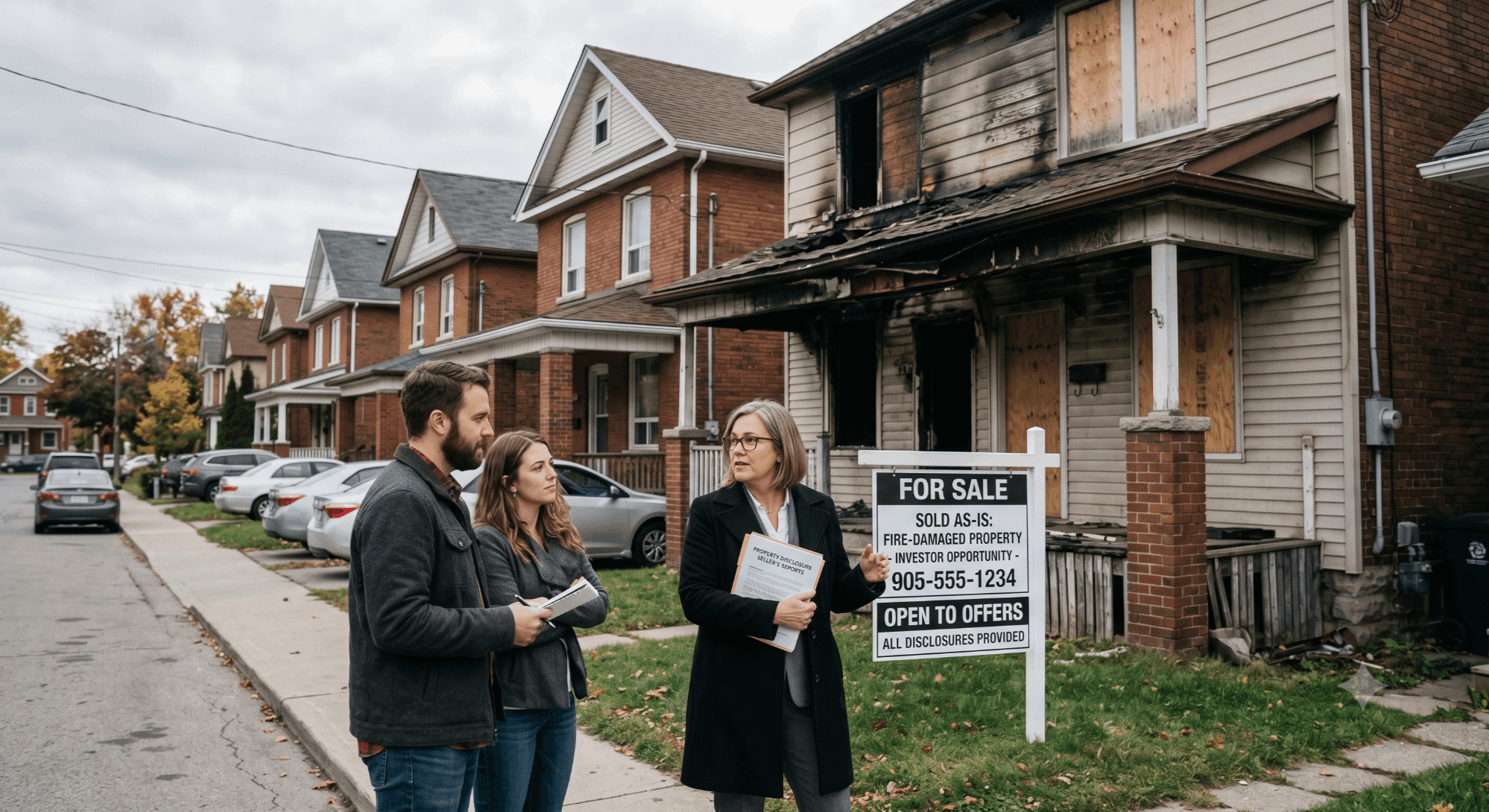
Quick Answer: To sell a fire-damaged house in Hamilton, VA, you have three realistic paths: sell as-is to cash investors who buy distressed Loudoun County property, make targeted repairs and list on the open market, or use a hybrid pre-listing cleanup. Virginia law requires you to disclose the fire and any known damage, and most sellers net the most by pricing transparently and marketing to both renovation-minded buyers and fire damaged home buyers in Hamilton. A local listing team can run the numbers both ways so you choose the option that leaves the most money in your pocket.
A house fire is one of the most disruptive events a homeowner can face, and once the immediate crisis passes, a hard question follows: what do you do with the property? In a high-demand market like western Loudoun County, a fire-damaged home in Hamilton still holds real value — the land, the location, and even a partially damaged structure all command interest. The challenge is matching the right strategy to the right buyer pool, pricing the property accurately, and meeting Virginia's disclosure rules so the sale closes cleanly.
This guide walks through every decision you'll face when you sell a fire damaged house in Hamilton VA — from who the realistic buyers are, to how fire damage affects home value in Virginia, to the exact disclosures you're legally required to make. Whether you're leaning toward a quick cash sale or a full-market listing after repairs, the goal is the same: protect your equity and avoid the costly mistakes that trip up sellers of distressed property.
Key Takeaways
- Fire-damaged homes in Hamilton attract three buyer groups: cash investors, renovation-minded owner-occupants, and builders who value the lot in western Loudoun County.
- Virginia is a "buyer beware" (caveat emptor) state, but you must still disclose a material defect like fire damage you have actual knowledge of — and never conceal it.
- Selling as-is is faster and removes repair risk; repairing first can recover more of the home's pre-fire value if the damage is cosmetic rather than structural.
- A professional fire damage assessment and a clear scope of work give you negotiating leverage with both cash buyers and traditional buyers.
- Even on a distressed sale, listing with a full-service agent at a 1.5% fee instead of 3% can preserve thousands in equity you'd otherwise lose to commission.
In This Guide
- Who Buys Fire-Damaged Homes in Hamilton
- Home Value After Fire Damage in Virginia
- Your Three Paths to Sell a Burned House
- Pricing a Fire-Damaged Property in Hamilton
- Seller Savings Calculator
- Virginia Fire Damage Disclosure Requirements
- Repair vs. Sell As-Is: Running the Numbers
- The Fire-Damaged Home Sale Process Step by Step
- Closing Costs on a Distressed Sale in Loudoun County
- Choosing the Right Agent or Cash Buyer
- Common Mistakes to Avoid
- Frequently Asked Questions
- Glossary
Who Buys Fire-Damaged Homes in Hamilton
The single biggest fear sellers have is that no one will want a burned house. In reality, the fire damaged home buyers in Hamilton fall into three distinct groups, each with different motivations and different price ceilings. Understanding which buyer you're targeting determines how you market the property, how you price it, and how quickly it sells.
Cash Investors and "We Buy Houses" Buyers
Cash home buyers in Hamilton VA — including local rehabbers, flippers, and Western Loudoun property investors — are the fastest route to a sale. They buy fire-damaged real estate as-is, with no repairs, no financing contingency, and often a 7-to-21-day close. The trade-off is price: an investor builds in their renovation budget, holding costs, and profit margin, so a cash offer on a fire damaged home typically lands well below restored market value. These buyers are ideal when speed, certainty, or avoiding foreclosure matters more than maximizing the final number.
Renovation-Minded Owner-Occupants
Hamilton sits in one of the most desirable corners of the DMV, and some buyers actively seek a project home in a location they otherwise couldn't afford. These owner-occupants can pay more than investors because they're buying a future home, not a flip — but most rely on renovation loans (such as an FHA 203(k) or conventional rehab product), which require the property to be financeable and the scope of work to be documented. With smoke or moderate fire damage, this pool can be surprisingly deep.
Builders and Lot Buyers in Western Loudoun
When fire damage is severe enough that the structure is a teardown, the value shifts almost entirely to the land. In western Loudoun — including Hamilton, Purcellville, and Lovettsville — buildable lots are scarce and valuable. Builders and lot buyers will assess the cost to demolish and rebuild against what a finished home would sell for. For these buyers, the burned structure is nearly irrelevant; the parcel, the zoning, and the well-and-septic or utility access drive the offer.
Here's how the three buyer pools compare on the factors that matter most:
| Buyer Type | Typical Offer Level | Speed to Close | Best For |
|---|---|---|---|
| Cash investor | Lowest (margin-driven) | 7–21 days | Speed, certainty, severe damage |
| Renovation buyer | Mid-to-high | 30–60 days (rehab loan) | Cosmetic/moderate damage |
| Builder / lot buyer | Land value, less demo cost | 21–45 days | Teardown / structural loss |
Relative depth of each buyer pool in the Hamilton VA real estate market looks roughly like this — note that the renovation-buyer pool grows quickly as damage moves from severe toward cosmetic:
If timing, condition, or certainty matters more than maximum price, a cash offer on your fire-damaged Hamilton home may be the right fit. We'll show you what investors are paying right now and weigh it against a market sale — no pressure.
Home Value After Fire Damage in Virginia
The first thing every seller wants to know is how much value a fire wiped out. The honest answer: it depends almost entirely on the type and extent of damage. Home value after fire damage in Virginia ranges from a modest cosmetic discount all the way down to land value alone. The categories below show how the market typically treats each level of damage.
Smoke and Cosmetic Damage
If the fire was contained quickly and the damage is mostly smoke, soot, and water from suppression, the structure may be fundamentally sound. Professional smoke remediation, repainting, and replacing affected drywall and flooring can return the home close to its pre-fire value. In these cases sellers often recover the most by repairing first and listing on the open market.
Moderate Structural Damage
When fire reaches framing, the roof, or major systems (electrical, HVAC, plumbing), repair costs climb and the as-is value drops meaningfully. This is the zone where renovation buyers and investors compete most directly, and where a documented contractor estimate becomes essential to justify your price.
Severe Damage and Total Loss
A structure deemed unsafe or uneconomical to repair is effectively a teardown. Here the property sells as a lot, and the buyer factors in demolition and debris-removal costs. The good news for Hamilton sellers: land in western Loudoun County is in genuinely short supply, which cushions the floor on these distressed property sales.
| Damage Level | Typical Value vs. Pre-Fire | Best Strategy |
|---|---|---|
| Smoke / cosmetic | 85%–95% | Repair, then list on market |
| Moderate structural | 60%–80% | As-is to renovation buyer or investor |
| Severe / total loss | Land value − demo cost | Sell as lot to builder |
ℹ️ Insurance proceeds and your sale
If you have an open insurance claim, how you handle proceeds affects your net. Some sellers complete the claim and repair first; others assign or keep proceeds and sell as-is. Coordinate with your insurer and a real estate professional before signing anything, because the choice changes both your timeline and your bottom line.
Your Three Paths to Sell a Burned House in Hamilton
There's no single "right" way to sell a burned house in Hamilton Virginia. The best route depends on your timeline, your tolerance for risk, and how much of the home's value the damage destroyed. Here are the three paths, with the honest pros and cons of each.
Path 1 — Sell Fire-Damaged Home As-Is
Selling fire damaged home as-is in Hamilton means you sell the property in its current condition with no repairs. This is the lowest-effort, fastest, and lowest-risk path. You'll attract cash buyers and renovation buyers, and you avoid sinking money into a property you no longer want. The trade-off is that buyers price in the unknown, so as-is offers are conservative — though listing as-is on the open market (rather than selling only to a single investor) often produces competing offers that lift the price.
Path 2 — Repair Then List on the Open Market
If the damage is cosmetic or moderate and you have the time and capital, professional remediation and repair can recover much of the home's pre-fire value. This path works best when the cost to repair is comfortably less than the value it adds. It requires upfront money, contractor coordination, and patience, but it opens the property to the full pool of traditional, financed buyers.
Path 3 — Hybrid: Partial Cleanup, Then List As-Is
The middle road is to do minimal, high-impact work — debris removal, board-up, basic smoke cleanup, and a professional damage assessment — then list as-is with full disclosure and documentation. This makes the property easier to show and finance while keeping your cash outlay low. It's frequently the highest-net option for moderate damage in a strong location like Hamilton.
| ✓ Selling As-Is — Pros | ✗ Selling As-Is — Cons |
|---|---|
| No repair costs or contractor risk | Lower offers than a restored home |
| Fastest path to closing | Smaller financed-buyer pool |
| No money tied up while you wait | Buyers price in worst-case unknowns |
| Avoids further holding costs and liability | Leaves repair profit to the buyer |
Get a personalized valuation from The Jamil Brothers — including both an as-is estimate and a repaired-value estimate so you can compare your options with real numbers, not guesses. Response within 24 hours.
Pricing a Fire-Damaged Property in Hamilton
Pricing a fire damaged property sale in Hamilton correctly is the difference between a quick, clean closing and a listing that sits and gets lowballed. The method is straightforward: start from the home's likely restored value, subtract the realistic cost to cure the damage, and subtract the buyer's required margin or risk premium. The result is your defensible as-is price.
A simplified example for a moderate-damage Hamilton home shows how the math works:
| Line Item | Amount |
|---|---|
| Estimated restored market value | $750,000 |
| Less: estimated repair / remediation cost | −$140,000 |
| Less: buyer risk / profit margin | −$90,000 |
| Defensible as-is list price | ≈ $520,000 |
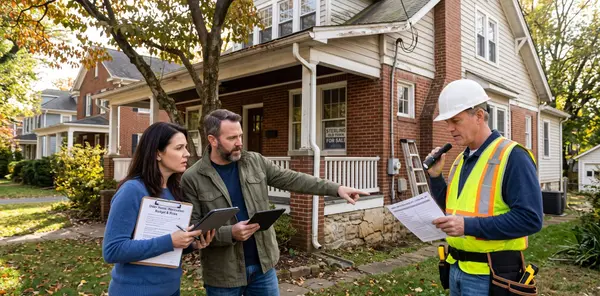
The single most powerful pricing tool is a written, third-party damage assessment and repair estimate. When you can hand a buyer a clear scope of work, you remove the fear of the unknown that drives lowball offers — and you create the documentation a lender needs for a renovation loan. Before you set a number, it's worth running a full seller net sheet so you understand your true bottom line after costs.
Our seller net sheet calculator breaks down every cost — commission, Virginia grantor tax, closing fees — so you know your real bottom line before you accept any offer on a fire-damaged home.
Seller Savings Calculator
Even on a distressed property sale, the listing commission you pay has a direct effect on what you keep. On a Hamilton home, the difference between a traditional 3% listing fee and The Jamil Brothers Realty Group's 1.5% full-service fee can be thousands of dollars — money that matters even more when a fire has already cost you. Select a value below to see the comparison side by side.
Seller Savings Calculator
How much more do you keep with our 1.5% listing fee?
Select your home's estimated value to see your real net proceeds — side by side.
Traditional Agent — 3%
| Sale price | $400,000 |
| Listing fee (3%) | −$12,000 |
| Buyer's agent (2.5%) | −$10,000 |
| Est. closing (1%) | −$4,000 |
| Net Proceeds | $374,000 |
Our Fee — Only 1.5%
| Sale price | $400,000 |
| Listing fee (1.5%) | −$6,000 |
| Buyer's agent (2.5%) | −$10,000 |
| Est. closing (1%) | −$4,000 |
| Net Proceeds | $380,000 |
Extra in your pocket
$6,000
vs. a traditional 3% listing agent — with zero reduction in service or marketing.
Traditional Agent — 3%
| Sale price | $500,000 |
| Listing fee (3%) | −$15,000 |
| Buyer's agent (2.5%) | −$12,500 |
| Est. closing (1%) | −$5,000 |
| Net Proceeds | $467,500 |
Our Fee — Only 1.5%
| Sale price | $500,000 |
| Listing fee (1.5%) | −$7,500 |
| Buyer's agent (2.5%) | −$12,500 |
| Est. closing (1%) | −$5,000 |
| Net Proceeds | $475,000 |
Extra in your pocket
$7,500
vs. a traditional 3% listing agent — with zero reduction in service or marketing.
Traditional Agent — 3%
| Sale price | $600,000 |
| Listing fee (3%) | −$18,000 |
| Buyer's agent (2.5%) | −$15,000 |
| Est. closing (1%) | −$6,000 |
| Net Proceeds | $561,000 |
Our Fee — Only 1.5%
| Sale price | $600,000 |
| Listing fee (1.5%) | −$9,000 |
| Buyer's agent (2.5%) | −$15,000 |
| Est. closing (1%) | −$6,000 |
| Net Proceeds | $570,000 |
Extra in your pocket
$9,000
vs. a traditional 3% listing agent — with zero reduction in service or marketing.
Traditional Agent — 3%
| Sale price | $750,000 |
| Listing fee (3%) | −$22,500 |
| Buyer's agent (2.5%) | −$18,750 |
| Est. closing (1%) | −$7,500 |
| Net Proceeds | $701,250 |
Our Fee — Only 1.5%
| Sale price | $750,000 |
| Listing fee (1.5%) | −$11,250 |
| Buyer's agent (2.5%) | −$18,750 |
| Est. closing (1%) | −$7,500 |
| Net Proceeds | $712,500 |
Extra in your pocket
$11,250
vs. a traditional 3% listing agent — with zero reduction in service or marketing.
Traditional Agent — 3%
| Sale price | $1,000,000 |
| Listing fee (3%) | −$30,000 |
| Buyer's agent (2.5%) | −$25,000 |
| Est. closing (1%) | −$10,000 |
| Net Proceeds | $935,000 |
Our Fee — Only 1.5%
| Sale price | $1,000,000 |
| Listing fee (1.5%) | −$15,000 |
| Buyer's agent (2.5%) | −$25,000 |
| Est. closing (1%) | −$10,000 |
| Net Proceeds | $950,000 |
Extra in your pocket
$15,000
vs. a traditional 3% listing agent — with zero reduction in service or marketing.
Estimates only. Closing costs vary. Buyer's agent commission is negotiable.
Virginia Fire Damage Disclosure Requirements
When you sell a house with fire damage in Loudoun County, disclosure is where many sellers get nervous — and where getting it wrong can sink a deal or trigger liability later. Virginia operates under a "buyer beware" (caveat emptor) framework through the Virginia Residential Property Disclosure Act, which means sellers generally provide a disclosure statement directing buyers to investigate the property themselves rather than warranting its condition.
That does not mean you can hide a fire. The critical rule is simple: you must never actively conceal a known material defect or make a false statement about it. Painting over smoke stains to hide them, or answering "no" to a direct question about fire history, can expose you to a fraud or misrepresentation claim. The safe, deal-protecting approach is full, written transparency about the fire damage sale process.
Fire-Damage Disclosure Checklist for Virginia Sellers
- ✓ Deliver the Virginia Residential Property Disclosure Statement before contract ratification
- ✓ Disclose the fire event, its date, and the areas affected in writing
- ✓ Provide any inspection, remediation, or repair documentation you have
- ✓ Never paint over, hide, or misrepresent smoke, soot, or structural damage
- ✓ Keep records of the fire department report and insurance claim status
- ✓ Confirm whether any permits are required for completed or planned repairs
⚠️ This is general information, not legal advice
Disclosure obligations carry real legal consequences. The Jamil Brothers are real estate professionals, not attorneys. For a fire-damaged sale with an open claim or potential liability questions, consult a Virginia real estate attorney before you list.
Repair vs. Sell As-Is: Running the Numbers
The repair-or-sell-as-is decision should come down to math, not emotion. The core question is whether each repair dollar returns more than a dollar in added sale price. For Virginia as-is home sales, the answer often favors selling without repairs when damage is structural — but favors repairing when damage is cosmetic and you can do the work efficiently.
| Factor | Lean Toward Repairing | Lean Toward Selling As-Is |
|---|---|---|
| Damage type | Cosmetic / smoke | Structural / severe |
| Available capital | You can fund repairs | Limited cash on hand |
| Timeline | Flexible (60–120 days) | Need to sell quickly |
| Risk tolerance | Comfortable managing a project | Want certainty and a clean exit |
Recovery of value also varies sharply by strategy. The bar meters below illustrate roughly how much of a home's pre-fire value each path tends to recover for a moderate-damage Hamilton property:
The takeaway: marketing a fire-damaged property to the full buyer pool — even as-is — usually beats accepting the first investor offer, because competition lifts the price. To compare scenarios in dollars for your specific home, the team can prepare side-by-side net proceeds estimates and walk you through the 1.5% full-service listing program.
Professional photography, drone video, 3D tours, expert negotiation, and full MLS marketing — all included at 1.5%, even on a distressed or as-is sale. No hidden fees, no service reductions.
The Fire-Damaged Home Sale Process Step by Step
Here's the typical home fire damage sale process in Virginia, from the days after the fire to closing. The exact timeline depends on which path you choose, but the sequence is consistent.
Secure the property — Days 1–7
Board up openings, address safety hazards, and notify your insurer. Securing the home protects its value and prevents further loss.
Assess damage and get estimates — Weeks 1–3
Bring in a licensed contractor or fire-restoration specialist for a written scope of work. This document drives your pricing and your buyer's confidence.
Choose your strategy — Week 3
With estimates in hand, decide between as-is, repair-then-list, or hybrid. A net-sheet comparison makes the financial trade-offs clear.
Price, market, and disclose — Weeks 4–5
List at a defensible price, market to all three buyer pools, and provide complete disclosure with documentation up front.
Negotiate and close — Weeks 6–10
Review offers, negotiate terms, and proceed to settlement. Cash deals can close in days; financed deals follow the lender's timeline.
Closing Costs on a Distressed Sale in Loudoun County
Sellers in Loudoun County distressed home sales pay most of the same closing costs as any other Virginia sale. The largest controllable line is the listing commission; the rest are largely fixed by the state and locality. Here are the typical seller-side costs on a Hamilton sale.
| Cost | Typical Amount | Notes |
|---|---|---|
| Listing commission | 1.5% (vs. 3% traditional) | Your biggest savings lever |
| Virginia grantor tax | $1 per $1,000 of price | State transfer tax paid by seller |
| Regional congestion / WMATA tax | Varies in NOVA | Applies in Northern Virginia jurisdictions |
| Settlement / attorney fee | $400–$900 | Title company or closing attorney |
| Prorated property taxes | Varies | Through the closing date |
Because the fire has already reduced your equity, controlling the commission line matters more than ever. A free, no-obligation home valuation plus a detailed net sheet gives you the full picture before you commit to a price or a buyer.
Choosing the Right Agent or Cash Buyer for a Distressed Property Sale
Whether you sell to investor home buyers in Loudoun County or list with an agent, vet the person you're working with using objective criteria. A fire-damaged sale has more moving parts than a standard transaction, so experience with distressed property buyers in Virginia genuinely matters.
Questions to Ask Before You Commit
- ✓ Have you sold fire-damaged or distressed homes in western Loudoun before?
- ✓ Can you show me both an as-is and a repaired-value estimate?
- ✓ If a cash buyer: are you the actual buyer, or assigning the contract?
- ✓ What is your total fee, and what marketing is included?
- ✓ Can you provide recent local references and proof of funds?
The Jamil Brothers Realty Group serves Hamilton and the wider Northern Virginia fire damaged homes market, with 840+ homes sold and 500+ five-star reviews. The team can present both a market-listing path and vetted cash-offer options side by side, so you can choose with full information rather than pressure. They're also active across nearby western Loudoun communities like Leesburg and Ashburn. If you also need to find your next home, you can browse current listings in Northern Virginia.
Common Mistakes to Avoid When Selling Fire-Damaged Real Estate
Sellers of fire damaged real estate in Northern Virginia tend to repeat the same handful of costly errors. Avoiding them protects both your price and your peace of mind.
Top Mistakes — and How to Sidestep Them
- ✗ Accepting the first cash offer without testing the open market
- ✗ Hiding or downplaying the fire damage in disclosures
- ✗ Over-improving with repairs that don't return their cost
- ✗ Pricing with no third-party repair estimate to back it up
- ✗ Overpaying commission on equity the fire already reduced
Your Path Forward From Here
Selling a fire-damaged house in Hamilton is absolutely doable — and in a land-scarce, high-demand corner of Loudoun County, your property still has real buyers and real value. The winning approach is almost always the same: get a professional damage assessment, understand which of the three buyer pools fits your situation, price from defensible numbers, disclose fully, and protect the equity you have left by controlling the costs you can control.
You don't have to make these calls alone. The Jamil Brothers Realty Group will lay out your as-is value, your repaired value, and vetted cash-offer options side by side — then let you decide what's best, with no pressure and no obligation. When you're ready to sell your house fast in Hamilton VA or simply want to know your numbers, the next step is a free valuation and a personalized net sheet.
Know your equity, understand your costs, and see exactly what you'll walk away with — before you make any decisions. The Jamil Brothers provide a full seller consultation for your fire-damaged Hamilton home at no cost or obligation.
Frequently Asked Questions
Can you sell a fire-damaged house in Hamilton, VA?
Yes. You can sell a fire-damaged house in Hamilton, VA through three main paths: selling as-is to cash investors, repairing the home and listing it on the open market, or a hybrid of partial cleanup followed by an as-is listing. Because western Loudoun County has limited land and strong demand, fire-damaged homes in Hamilton continue to attract investors, renovation buyers, and builders even when the structure needs significant work.
How much does fire damage reduce a home's value in Virginia?
It depends on severity. Cosmetic and smoke damage typically reduce value to roughly 85%–95% of pre-fire value once remediated, moderate structural damage falls to about 60%–80% on an as-is basis, and a severe or total loss sells essentially for land value minus demolition costs. A written contractor estimate is the most reliable way to pin down home value after fire damage in Virginia for your specific property.
Do I have to disclose a fire when selling a house in Virginia?
Virginia is a caveat emptor ("buyer beware") state under the Virginia Residential Property Disclosure Act, so sellers generally provide a disclosure statement rather than warranting condition. However, you may never actively conceal a known material defect such as fire damage or make false statements about it. The safest approach is to disclose the fire, its date, and the affected areas in writing and to provide any inspection or repair documentation. This is general information, not legal advice — consult a Virginia real estate attorney for your situation.
How fast can I sell a fire-damaged home in Hamilton?
A cash sale to an investor can close in roughly 7 to 21 days because there's no financing contingency. A market sale to a renovation buyer using a rehab loan typically takes 30 to 60 days, and a builder or lot buyer usually closes in 21 to 45 days. If you need to sell your house fast in Hamilton VA, a vetted cash offer is the quickest route, though it usually comes at a lower price than a competitive market listing.
Should I repair the fire damage before selling, or sell as-is?
Repair first when the damage is cosmetic and each repair dollar returns more than a dollar in added value, and when you have the time and capital. Sell as-is when the damage is structural, your cash is limited, or you need a fast, certain exit. For many moderate-damage Hamilton homes, a hybrid approach — minimal cleanup plus full documentation, then an as-is market listing — produces the highest net proceeds.
Who buys fire-damaged homes in Loudoun County?
Three groups buy fire-damaged property in Loudoun County: cash investors and "we buy houses" buyers who purchase as-is for speed, renovation-minded owner-occupants who use rehab loans to buy a project home in a desirable area, and builders or lot buyers who value the parcel when the structure is a teardown. Marketing to all three pools rather than just one usually produces the best price.
What are the closing costs when selling a fire-damaged home in Loudoun County?
Sellers pay the listing commission, the Virginia grantor tax of $1 per $1,000 of sale price, any applicable Northern Virginia regional congestion tax, a settlement or attorney fee of roughly $400–$900, and prorated property taxes through closing. The commission is the largest cost you can control, which is why selling with a 1.5% full-service listing fee instead of 3% can preserve thousands in equity the fire already reduced.
How do I choose the right agent or cash buyer for a distressed sale?
Use objective criteria: ask whether they've sold fire-damaged or distressed homes in western Loudoun, whether they'll show both an as-is and a repaired-value estimate, what their total fee and included marketing are, and — for cash buyers — whether they're the actual buyer with proof of funds or simply assigning the contract. The Jamil Brothers Realty Group, with 840+ homes sold and 500+ five-star reviews, can present both a market-listing path and vetted cash options side by side so you decide with full information.
Can I sell a fire-damaged house with an open insurance claim?
Often yes, but how you handle the insurance proceeds affects your net and your timeline. Some sellers complete the claim and repair before listing; others keep or assign proceeds and sell as-is. Coordinate with your insurer and a real estate professional before signing any contract, because the structure of the deal can change both how much you walk away with and how quickly you close.
Is the Hamilton, VA real estate market good for selling a distressed property?
Western Loudoun County, including Hamilton, has limited buildable land and consistent demand, which supports values even for distressed properties. That scarcity puts a meaningful floor under teardown and as-is sales because the underlying lot retains strong value. Local conditions shift over time, so a current valuation from an agent active in the Hamilton VA real estate market is the best way to gauge timing.
Can selling a fire-damaged house help me avoid foreclosure?
It can. If a fire has made the home uninhabitable and you're falling behind on payments, a fast as-is sale or a cash offer can settle the mortgage before foreclosure proceedings advance. The right path depends on your equity, your timeline, and your lender — so review your numbers with a real estate professional quickly, since options narrow as foreclosure progresses.
Glossary
As-Is Sale
Selling a property in its current condition with no repairs, where the buyer accepts the home's defects as they are.
Caveat Emptor
Latin for "buyer beware" — Virginia's general framework placing the duty to investigate condition on the buyer, while still barring sellers from concealing known defects.
Material Defect
A significant problem with a property — such as fire or structural damage — that a buyer would consider important to their decision.
Grantor Tax
Virginia's state transfer tax paid by the seller, calculated at $1 per $1,000 of the sale price.
Renovation Loan
Financing (such as FHA 203(k) or a conventional rehab product) that lets a buyer fund both the purchase and the cost of repairs in one loan.
Scope of Work
A written contractor document detailing the repairs needed and their estimated cost, used to justify pricing and secure financing.
Net Proceeds
The money a seller actually keeps after subtracting commission, taxes, and closing costs from the sale price.
Teardown
A structure damaged beyond economical repair, where the property's value lies almost entirely in the land.
Explore More
Browse Every Corner of the DMV Market
Whether you're searching by budget, neighborhood, or buying situation — find exactly what you need below.
Virginia Homes by Budget
Washington DC Homes by Budget
Maryland Homes
Explore Northern Virginia Communities
Loudoun County
Fairfax County & Surrounding
Ready to Make a Move?
Full-Service · No Tradeoffs
List for 1.5% & Keep More Equity
Professional photography, drone video, 3D tours, and expert negotiation — all included. On an $800K home, that's $12,000 more in your pocket vs. a 3% agent.
See the 1.5% Program →Need Speed or Certainty?
Get a No-Obligation Cash Offer
Skip the showings, skip the contingencies. If timing or condition matters more than top dollar, a cash offer may be the right fit. We'll walk you through every option.
Explore Cash Offers →
Categories
- All Blogs (1227)
- Aldie (3)
- Ashburn (6)
- Buyer Guide (8)
- Buying a home (2)
- Buying Strategies (30)
- festivals (1)
- General Blog (67)
- Leesburg (5)
- Market Intelligence (29)
- Market Updates (8)
- Notable Properties For Sale (32)
- Real Estate Tips, News, and More (385)
- Seller Guide (2)
- Seller Guides (60)
- Selling Your Home (522)
- Sterling (6)
- Top Realtors in Northern Virginia (58)
Recent Posts


Message Sent!
Thank you for reaching out. Arslan & Saad have received your details and will be in touch shortly.
Need immediate assistance? Call or text 703-782-4830.