How Do Data Centers Affect Home Values in Loudoun County?
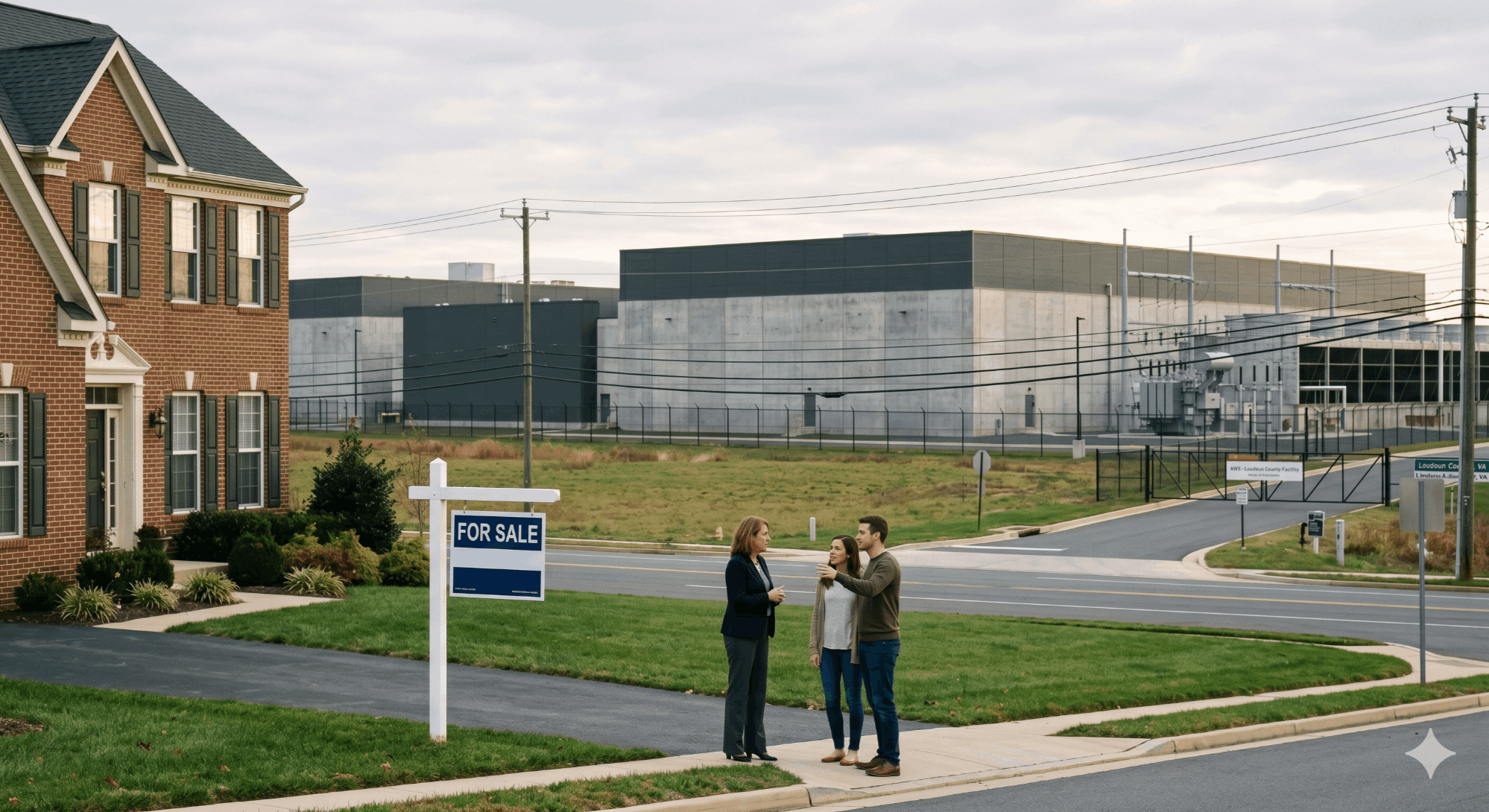
If you're planning to buy or sell a home, you may be wondering whether the rapid growth of data centers has any impact on property values in Loudoun County. As the world's largest hub for data centers, Loudoun County's real estate market continues to attract homeowners, investors, and technology companies alike. While some residents have concerns about nearby development, the effect on home values depends on factors such as proximity, neighborhood demand, schools, and overall market conditions. Understanding how these elements work together can help you make better real estate decisions. In this guide, we'll explain how data centers influence home values, what buyers and sellers should consider, and whether living near a data center truly affects your property's long-term value.
Quick Answer: The best available research, a 2025 George Mason University study of Northern Virginia home sales, found no evidence that data centers lower nearby home values. On a countywide basis, homes closer to data centers actually sold for slightly more, largely because data centers cluster where infrastructure, jobs, and demand are strongest. The real risk in Loudoun County is hyper-local: a specific home with a direct sightline, noise exposure, or backup-generator proximity can take a hit even when the broader market does not.
Street-level comps from your neighborhood, not an automated estimate. Response within 24 hours.
Request Received
Thank you. A Jamil Brothers partner will reach out within one business day. Need us sooner? Call or text 703-782-4830.
Prefer to talk? Call (703) 782-4830 or use our contact page.
Key Takeaways
- A George Mason University analysis of 2023 Northern Virginia sales found that proximity to a data center did not reduce home prices, and that closer homes sold for slightly more after controlling for other factors.
- Loudoun County now hosts roughly 250 data center buildings totaling more than 53 million square feet, the largest such concentration in the world.
- Data centers fund close to half of the county's property tax revenue, which has helped push the residential tax rate down. A 2026 industry report estimated the typical Loudoun homeowner would pay about $5,800 more per year without that revenue.
- The downside is real but local: noise, vibration, light, and direct views can hurt the value of an individual home even when the wider market stays healthy.
- If your home sits near a data center, pricing, presentation, and an agent who knows the specific corridor matter far more than the headline statistics.
In This Guide
- Loudoun County: The Heart of Data Center Alley
- Do Data Centers Lower Home Values? What the Research Shows
- Why Home Prices Hold Up Near Data Centers
- The Hidden Tax Benefit for Loudoun Homeowners
- The Real Downsides: Noise, Views, and Buyer Perception
- How Proximity and Location Change the Impact
- Data Center Impact by Loudoun Community
- Selling a Home Near a Data Center: A Practical Playbook
- What This Means If You Are Thinking of Selling
- The Bottom Line for Loudoun Homeowners
- Frequently Asked Questions
- Glossary
- About the Author
- Related Loudoun County Guides
- Nearby Areas Around Loudoun County
Data centers have become one of the defining features of life in Loudoun County, and the worry that they drag down property values is one of the most common questions we hear from homeowners thinking about selling. It is a reasonable fear. These are industrial buildings, they run nonstop, and a few of them sit uncomfortably close to neighborhoods that were quiet a decade ago. The honest answer, though, is more nuanced than either the alarmist headlines or the industry's reassurances suggest.
This guide walks through what the data actually says, where the genuine risks live, and how Loudoun County sellers can protect their equity whether their home is a mile from the nearest campus or backs right up to one. The goal is to give you the same clear-eyed read on the situation that we give our own clients.
Loudoun County: The Heart of Data Center Alley
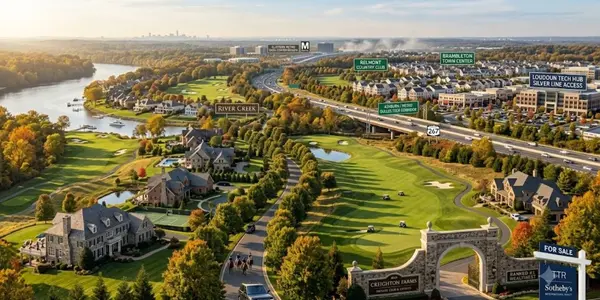
To understand the home value question, you first have to grasp the scale. Loudoun County is the single largest data center market on Earth. The corridor around Ashburn earned the nickname "Data Center Alley" because a remarkable share of the world's internet traffic physically passes through fiber and servers located here. What started as a cluster of buildings near Dulles Airport has grown into a sprawling industrial backbone stretching across the eastern and central parts of the county.
According to the Loudoun County Commissioner of the Revenue's 2026 assessment data, the county now contains roughly 250 data center structures totaling more than 53 million square feet, with new buildings added every year. These facilities have reshaped the county's tax base in ways that directly touch every homeowner, which we will get to shortly.
| Loudoun Data Center Snapshot (2026) | Figure |
|---|---|
| Data center buildings in the county | ~250 structures |
| Total data center square footage | 53.4 million sq ft |
| Share of taxable commercial real estate | ~71% |
| Share of total real estate tax base (data center land) | ~26% |
| Residential share of real estate tax base | ~55% |
| Estimated share of county property tax revenue from data centers | ~50% |
Here is how the county's real estate tax base breaks down by use, which gives you a sense of how dominant data centers have become on the commercial side without overtaking residential value:
The takeaway from the scale is simple. Data centers are not a passing trend in Loudoun, and they are not going away. If anything, the data center surge reshaping Northern Virginia is still accelerating. That permanence is exactly why the home value question deserves a serious answer rather than a guess.
Do Data Centers Lower Home Values? What the Research Shows
For years, the conversation around data centers and home values ran on intuition. A loud, ugly industrial box near your neighborhood feels like it should pull prices down. In late 2025, researchers finally put that intuition to the test with hard numbers, and the result surprised almost everyone.
The Center for Regional Analysis at George Mason University's Schar School of Policy and Government published a study titled "Data Centers and 2023 Home Sales in Northern Virginia," authored by Terry Clower and Keith Waters. The researchers pulled thousands of BrightMLS home sales from 2023 across Fairfax, Loudoun, and Prince William counties, mapped them against the locations of every data center built or permitted through August 2024, and then used a hedonic regression model to isolate the effect of data center proximity from everything else that drives price.
Hedonic modeling is the standard tool appraisers and economists use to separate one variable from the noise. The model controlled for home size, age, bedroom count, distance to Metro, distance to other industrial land, proximity to Dulles Airport, and roughly a dozen other factors, and it explained about 87 percent of the variation in sale prices. In plain terms, it was a strong model that took the obvious objections into account.
The headline finding: the study failed to find statistical evidence that proximity to a data center reduces home values. In fact, after controlling for everything else, homes closer to data centers tended to sell for slightly more, not less, and the pattern held across single-family homes, townhomes, and condos. The authors had expected to find the opposite, which makes the result more credible rather than less.
| George Mason University Study at a Glance | Detail |
|---|---|
| Data analyzed | 2023 BrightMLS sales, Fairfax, Loudoun, Prince William |
| Method | Hedonic regression controlling for ~13 factors |
| Model strength | Explained ~87% of price variation |
| Main finding | No evidence of a negative effect on home values |
| Property types covered | Single-family, townhome, condo |
| Key caveat from authors | Severe housing shortage may mask localized effects |
The researchers were careful not to oversell the result. Co-author Terry Clower noted that the finding does not mean a data center is a selling point that adds value, only that it "does not create a drag on value" at the regional level. He also flagged an important limitation: Northern Virginia has underbuilt housing for so long that pent-up demand may be masking smaller, hyper-local effects that would show up in a less supply-constrained market. That nuance matters, and we will return to it.
Regional studies are useful, but your home is not a regional average. Get a personalized valuation from The Jamil Brothers built on street-level comparable sales, not an automated estimate. Response within 24 hours.
Why Home Prices Hold Up Near Data Centers
A counterintuitive result begs for an explanation. If data centers are loud and industrial, why do nearby homes hold their value and sometimes sell for more? The answer has less to do with the buildings themselves and more to do with where they get built and what comes with them.
Data centers follow infrastructure, and so do buyers
Data centers need three things: cheap and reliable power, dense fiber connectivity, and good road access. Those same ingredients tend to exist in places that are already desirable for homeowners, near major employment centers, transportation, and amenities. The GMU researchers pointed out that buyers are not paying a premium for a view of a server farm. They are paying for the strong infrastructure, job density, and convenience that happen to surround the corridor where data centers locate. Major commitments like Google's multibillion-dollar AI investment in Virginia only deepen that infrastructure advantage.
Many facilities sit where prices were already buffered
A large share of Loudoun's data centers cluster near Dulles Airport, along highway corridors, and beside existing industrial land. These are areas where home prices already reflected proximity to an airport flight path or a commercial zone. In other words, the noise and visual impact of a data center is often less noticeable in a setting that was never going to read as pristine countryside in the first place.
Loudoun's housing shortage keeps demand intense
This is the big one. As of early 2026, Loudoun County had roughly a 1.9-month supply of homes for sale, far below the five to seven months that signals a balanced market. The average home was selling in about 23 days. When buyers far outnumber available listings, they cannot afford to be picky about every nearby industrial feature. Tight inventory protects prices, and Loudoun has had tight inventory for years, a dynamic the latest Loudoun County market trends for 2026 lay out in more detail.
ℹ️ The 2026 Loudoun Market in Brief
The county's 2026 assessments showed total taxable real estate of about $185.6 billion, up 12 percent year over year, with the typical existing single-family detached home up 1.4 percent and the average townhouse up 0.5 percent. Average assessed values now sit near $1 million for single-family homes, around $641,000 for townhomes, and roughly $448,000 for condos. The county describes the residential side as stabilizing after several hot years, not declining.
The Hidden Tax Benefit for Loudoun Homeowners
There is one effect of data centers that almost never makes the headlines but shows up on every Loudoun homeowner's bill: lower property taxes. Because data centers pay enormous personal property and real estate taxes, they shoulder a large portion of the county budget that would otherwise fall on residents.
A 2026 report prepared by Mangum Economics for the Northern Virginia Technology Council quantified this directly. The analysis asked a simple counterfactual: if data centers vanished, how much would the residential tax rate need to rise to keep county services funded? In Loudoun, the residential real property tax rate would have to climb from $0.805 to about $1.537 per $100 of assessed value, an increase of roughly 91 percent. For a median-valued home, that translates to about $5,800 more in property taxes every single year.
This matters for value, not just affordability. Lower Loudoun County property taxes make a home cheaper to own, which supports what buyers are willing to pay. Loudoun's residential tax rate has fallen substantially over the past 15 years, a trend that tracks closely with the rise of the data center tax base. The county has even set up a Revenue Stabilization Fund to manage its reliance on that revenue, a sign of how central data centers have become to local finances.
| Estimated Annual Property Tax Impact | With Data Centers | Without Data Centers |
|---|---|---|
| Residential rate per $100 | $0.805 | ~$1.537 |
| Approx. annual bill, median home | Lower (current) | About $5,800 more |
| Effect on cost of ownership | Supports buyer demand | Raises monthly carrying cost |
None of this means you should celebrate every new campus. It simply means the financial picture is more balanced than the noise complaints alone would suggest. For a precise read on your own numbers, our seller net sheet calculator can show you how taxes and other costs flow into your bottom line at sale.
Our seller net sheet calculator breaks down every cost, from commission to Virginia transfer taxes to closing fees, so you know your real bottom line before you list a single photo.
The Real Downsides: Noise, Views, and Buyer Perception
Now for the part the industry's talking points tend to skip. The regional research says the average home is fine. It does not say every home is fine. There is a meaningful difference between a countywide average and the experience of a homeowner whose backyard now faces a wall of cooling fans.
The most consistent complaint in Loudoun and neighboring Prince William County is noise. Cooling systems and backup generators can produce a constant hum, and in some locations residents report high-pitched whines and even vibration that carries into homes. Where on-site power generation is used, the disturbance can be worse. These effects do not show up in regional price averages, but they absolutely show up in how a specific buyer feels during a showing.
⚠️ Perception Risk Is Real
A buyer who hears a hum during a Saturday afternoon showing, or who sees a campus directly out the kitchen window, may simply move on to the next listing or submit a lower offer. That hyper-local perception gap is the genuine risk for sellers, even in a market where the broader data looks reassuring.
Beyond noise, there are secondary concerns: the visual scale of the buildings, exterior lighting at night, construction traffic during build-out, new transmission lines, and competition for land that can crowd out future housing and amenities. Concerns like these are part of why communities across Northern Virginia have started pushing back against the data center boom. Loudoun County is actively reviewing zoning rules, setback requirements, and noise standards to address these issues, but changes take time and development continues in the meantime.
| ✓ Working in a Seller's Favor | ✗ Working Against a Seller |
|---|---|
| No proven regional drag on home values | Audible noise or vibration at a specific home |
| Lower property taxes support buyer demand | Direct sightline of an industrial building |
| Strong jobs and infrastructure nearby | Nighttime lighting and exterior glare |
| Very tight inventory keeps demand high | Buyer perception and resale hesitancy |
How Proximity and Location Change the Impact
If you remember one thing from this guide, make it this: distance and sightline are everything. The regional average flattens out a very wide range of individual outcomes. A home two miles from the nearest campus, buffered by trees and other homes, is in a completely different situation from one that shares a property line with a generator yard.
Here is a practical way to think about where your home falls. These tiers are general guidance, not appraisal rules, but they reflect how buyers actually react.
| Proximity Tier | Typical Buyer Reaction | Value Sensitivity |
|---|---|---|
| More than one mile, no view | Rarely a factor in the decision | Minimal |
| Within a mile, no direct view or noise | Occasional question, easily answered | Low |
| Audible hum but no direct view | Some buyers pause, pricing matters | Moderate |
| Direct view or shared property line | Narrower buyer pool, more negotiation | High |
The further down that table your home sits, the more your sale depends on strategy rather than luck. Below is a rough illustration of how much the data center factor weighs on buyer decision making at each tier.
Data Center Impact by Loudoun Community
Loudoun's exposure to data centers is far from uniform. The eastern part of the county carries the heaviest concentration, while western Loudoun remains rural and protected. Here is a high-level read by area, keeping in mind that conditions vary block by block within each one.
| Area | Data Center Presence | What Sellers Should Know |
|---|---|---|
| Ashburn & Sterling | Heaviest in the county | Strong demand persists, but proximity and noise vary widely by neighborhood |
| Dulles South & Stone Ridge | Growing rapidly | New campuses near newer subdivisions, sightlines matter most |
| Leesburg & Lansdowne | Moderate, edges of corridor | Most homes well buffered, limited direct exposure |
| Brambleton & Aldie | Mixed, expanding westward | Watch proposed development near the rural edge |
| Western Loudoun | Minimal, protected rural land | Largely insulated, scenic and agricultural character preserved |
Whatever corner of the county you are in, the most reliable way to understand your home's situation is a local read on your exact street. Explore market details and current listings for your community below.
Explore Loudoun County Communities
Tap your city or neighborhood to see local market data, listings, and selling guidance.
Cities & Towns
Neighborhoods & Subdivisions
Selling a Home Near a Data Center: A Practical Playbook
If your home falls into one of the higher-sensitivity tiers, the good news is that proximity is a manageable factor, not a dealbreaker. The right preparation, pricing, and a full-service 1.5 percent agent in Loudoun County turn a potential objection into a footnote. Here is the approach we use with sellers in affected corridors.
Pre-Listing Checklist for Homes Near a Data Center
- Walk the property at different times of day and note exactly where, and how loud, any noise is
- Use landscaping, fencing, or window treatments to soften any direct sightlines
- Lead marketing with the home's genuine strengths: interior, layout, lot, schools, commute
- Prepare honest, factual answers about the data center for buyer questions
- Price against recent comparable sales in the same corridor, not the county average
- Use professional photography and drone work that frames the property accurately and attractively
- Consider timing showings for quieter parts of the day when possible
The sale itself follows a predictable path once the prep is done. Here is a realistic timeline for a well-prepared Loudoun listing.
- 1Consultation and corridor pricing, Week 1Review recent sales in your specific area, assess proximity factors honestly, and set a price that reflects your block rather than a countywide guess.
- 2Prep and professional media, Week 1 to 2Stage, repair, and capture photography, drone footage, and a 3D tour that present the home at its best.
- 3Go live and market widely, Week 2 to 3List on BrightMLS, syndicate everywhere buyers look, and host showings, prioritizing quieter time windows where it helps.
- 4Negotiate and close, Week 3 onwardField offers, handle inspection and appraisal, and close. With Loudoun's tight inventory, well-prepared homes still move quickly.
For sellers who care more about speed and certainty than squeezing out the last dollar, perhaps because of a relocation or an estate situation, it is worth understanding all the paths available, including a cash offer option alongside a traditional listing. The right choice depends on your priorities, and a good agent lays out every option without pressure.
Skip the showings, skip the contingencies. If timing or condition matters more than top dollar, a cash offer may be the right fit. We'll walk you through every option.
What This Means If You Are Thinking of Selling
If you are weighing a sale, the data center question should inform your strategy, not paralyze your decision. The fundamentals in Loudoun remain firmly on the seller's side: low inventory, steady demand, and assessed values near record highs. If you are torn on timing, our guide on whether to sell now or wait in Loudoun County walks through the trade-offs. Your job is to make sure you keep as much of that value as possible.
One of the most direct levers you control is your commission. The Jamil Brothers Realty Group offers a 1.5 percent full-service listing fee across Northern Virginia, which includes professional photography, drone video, 3D tours, full BrightMLS syndication, and partner-led negotiation. It is full service at a lower listing rate, not a stripped-down package. On a typical Loudoun home, the savings versus a traditional 3 percent listing fee can run well into five figures, money that stays in your pocket regardless of what the market does. See exactly how much Loudoun sellers keep at 1.5 percent versus 3 percent before you list. Use the calculator below to see the difference at your home's value.
Seller Savings Calculator
How much more do you keep with our 1.5% listing fee?
Select your home's estimated value to see your real net proceeds, side by side.
| Sale price | $500,000 |
| Listing fee (3%) | −$15,000 |
| Buyer's agent (2.5%) | −$12,500 |
| Est. closing (1%) | −$5,000 |
| Net Proceeds | $467,500 |
| Sale price | $500,000 |
| Listing fee (1.5%) | −$7,500 |
| Buyer's agent (2.5%) | −$12,500 |
| Est. closing (1%) | −$5,000 |
| Net Proceeds | $475,000 |
| Sale price | $750,000 |
| Listing fee (3%) | −$22,500 |
| Buyer's agent (2.5%) | −$18,750 |
| Est. closing (1%) | −$7,500 |
| Net Proceeds | $701,250 |
| Sale price | $750,000 |
| Listing fee (1.5%) | −$11,250 |
| Buyer's agent (2.5%) | −$18,750 |
| Est. closing (1%) | −$7,500 |
| Net Proceeds | $712,500 |
| Sale price | $1,000,000 |
| Listing fee (3%) | −$30,000 |
| Buyer's agent (2.5%) | −$25,000 |
| Est. closing (1%) | −$10,000 |
| Net Proceeds | $935,000 |
| Sale price | $1,000,000 |
| Listing fee (1.5%) | −$15,000 |
| Buyer's agent (2.5%) | −$25,000 |
| Est. closing (1%) | −$10,000 |
| Net Proceeds | $950,000 |
| Sale price | $1,500,000 |
| Listing fee (3%) | −$45,000 |
| Buyer's agent (2.5%) | −$37,500 |
| Est. closing (1%) | −$15,000 |
| Net Proceeds | $1,402,500 |
| Sale price | $1,500,000 |
| Listing fee (1.5%) | −$22,500 |
| Buyer's agent (2.5%) | −$37,500 |
| Est. closing (1%) | −$15,000 |
| Net Proceeds | $1,425,000 |
| Sale price | $2,000,000 |
| Listing fee (3%) | −$60,000 |
| Buyer's agent (2.5%) | −$50,000 |
| Est. closing (1%) | −$20,000 |
| Net Proceeds | $1,870,000 |
| Sale price | $2,000,000 |
| Listing fee (1.5%) | −$30,000 |
| Buyer's agent (2.5%) | −$50,000 |
| Est. closing (1%) | −$20,000 |
| Net Proceeds | $1,900,000 |
| Sale price | $3,000,000 |
| Listing fee (3%) | −$90,000 |
| Buyer's agent (2.5%) | −$75,000 |
| Est. closing (1%) | −$30,000 |
| Net Proceeds | $2,805,000 |
| Sale price | $3,000,000 |
| Listing fee (1.5%) | −$45,000 |
| Buyer's agent (2.5%) | −$75,000 |
| Est. closing (1%) | −$30,000 |
| Net Proceeds | $2,850,000 |
| Sale price | $4,000,000 |
| Listing fee (3%) | −$120,000 |
| Buyer's agent (2.5%) | −$100,000 |
| Est. closing (1%) | −$40,000 |
| Net Proceeds | $3,740,000 |
| Sale price | $4,000,000 |
| Listing fee (1.5%) | −$60,000 |
| Buyer's agent (2.5%) | −$100,000 |
| Est. closing (1%) | −$40,000 |
| Net Proceeds | $3,800,000 |
Estimates only. Closing costs vary. Buyer's agent commission is negotiable.
TheJamilBrothers.com · (703) 782-4830
If you are still in the research phase and simply want to see what is available, you can browse current homes for sale across Loudoun County to get a feel for pricing and competition before you decide anything.
Professional photography, drone video, 3D tours, expert negotiation, and full MLS marketing, all included in our 1.5 percent full-service listing program. No hidden fees, no service reductions, no surprises.
The Bottom Line for Loudoun Homeowners
So, do data centers affect home values in Loudoun County? At the countywide level, the best evidence says no, they do not drag values down, and the lower property taxes they fund quietly help homeowners. At the individual level, the answer depends almost entirely on how close you are, what you can see, and what you can hear. A home a mile away with no sightline behaves like any other Loudoun listing. A home sharing a fence line with a generator yard is a different conversation.
The practical message for sellers is encouraging. Loudoun's tight inventory and steady demand mean well-prepared homes continue to sell, even in the most data-center-dense corridors. What separates a strong sale from a disappointing one is local knowledge: pricing against the right comparable sales, presenting the home honestly and attractively, and answering buyer questions with facts rather than spin. That is exactly the kind of street-level guidance our team brings to every Loudoun listing, and you can start with a no-cost home valuation whenever you are ready.
Know your equity, understand your costs, and see exactly what you will walk away with before you make any decisions. The Jamil Brothers provide a full seller consultation at no cost or obligation, including a candid read on how your specific location affects your sale.
Frequently Asked Questions
Do data centers lower home values in Loudoun County?
On a countywide basis, the evidence says no. A 2025 George Mason University study of 2023 home sales across Northern Virginia found no statistical evidence that proximity to a data center reduces home values, and after controlling for other factors, homes closer to data centers actually sold for slightly more. The exception is hyper-local: an individual home with direct noise, vibration, or a clear view of a campus can still be affected even when the broader market is healthy.
How much do data centers affect my property taxes in Loudoun?
Significantly, and in your favor. Data centers fund close to half of Loudoun County's property tax revenue. A 2026 report prepared for the Northern Virginia Technology Council estimated that without data centers, the residential tax rate would need to rise from about $0.805 to roughly $1.537 per $100 of assessed value, adding around $5,800 per year to the typical homeowner's bill. Lower carrying costs help support what buyers are willing to pay.
Does living next to a data center make a home harder to sell?
It can narrow your buyer pool if there is audible noise or a direct view, which is why pricing and presentation matter more for those homes. That said, Loudoun County's inventory is extremely tight, with roughly a 1.9-month supply in early 2026 and an average of about 23 days on market. In a market that starved for listings, well-prepared homes near data centers continue to sell, often quickly, when priced against the right comparable sales.
How far from a data center does a home need to be to avoid any impact?
There is no fixed number, because terrain, buffers, and the type of facility all matter. As a general rule, homes more than a mile away with no direct view or audible noise rarely see the data center come up as a factor at all. Within a mile, it depends heavily on sightlines and sound. The single biggest variables are whether a buyer can see the building from the home and whether they can hear it during a showing.
Is the noise from data centers really a problem for nearby homes?
For some homes, yes. Cooling systems and backup generators can create a steady hum, and residents in parts of Loudoun and neighboring Prince William County have reported high-pitched whines and vibration, especially where on-site power generation is used. The intensity varies a great deal by location and by the specific facility. If you are near a campus, walking your property at different times of day is the only reliable way to know what a buyer will experience.
Why did the George Mason study find higher prices near data centers?
The researchers concluded it is not the buildings buyers value, but what surrounds them. Data centers locate where power, fiber, roads, and jobs are strongest, and those same factors drive home demand. Many facilities also sit near existing industrial land or airport corridors where prices were already adjusted. The authors cautioned that Northern Virginia's severe housing shortage may mask smaller localized effects, so the result reflects the regional average rather than every individual property.
Which Loudoun communities have the most data centers?
The heaviest concentration is in eastern Loudoun, around Ashburn and Sterling, with rapid growth across the Dulles South and Stone Ridge area. Leesburg and Lansdowne sit closer to the edges of the corridor with more buffering, while western Loudoun remains rural and largely insulated. Even within a single community, exposure varies block by block, so a community-level read is only the starting point.
What mistakes should sellers near data centers avoid?
The most common mistake is pricing off the countywide average instead of recent sales in the same corridor, which can leave a home overpriced and stale. Other pitfalls include ignoring a fixable sightline, refusing to acknowledge the data center when buyers ask, and skimping on photography that could otherwise frame the property at its best. Honesty plus strong presentation almost always beats avoidance.
Do HOAs or the county regulate data center noise and setbacks?
Loudoun County is actively reviewing zoning rules, setback requirements, and noise standards as part of its data center planning efforts, with growing public input. Some homeowners associations also weigh in on nearby development. These protections are evolving, and changes take time, so current regulations may not yet reflect everything residents are asking for. If a campus is proposed near your neighborhood, watching county zoning notices is worthwhile.
How do I choose the right agent to sell a home near a data center?
Look for an agent who knows your specific corridor, prices against true comparable sales rather than broad averages, invests in professional marketing, and is candid about both the strengths and the challenges of your location. Ask how they have handled proximity objections before and what their plan is for your home. It also helps to know the average realtor commission in Loudoun County so you can judge any quote in context. The Jamil Brothers Realty Group works across Loudoun County and offers a 1.5 percent full-service listing program, and a good first step with any agent is a free, no-obligation home valuation so you can compare advice before you commit.
Are data centers slowing down new home construction in Loudoun?
There is pressure on land. Developers sometimes pay premium prices for parcels that could become data centers, which can reduce the land available for housing. The county also reported that new home construction slowed recently, with roughly 3,600 units built in the most recent year, down about 16 percent. Less new supply tends to keep existing home values firm, which is one more reason Loudoun has stayed a seller's market.
Should I sell now or wait given the data center boom?
There is no universal answer, since timing depends on your finances, your plans, and your specific location. What the current data shows is a stabilizing market with very low inventory, near-record assessed values, and no proven downward pressure from data centers at the regional level. For many owners, that is a favorable backdrop to sell. A personalized valuation and net sheet will tell you far more about your situation than any general forecast, and we are happy to walk through both with you.
Glossary
Data Center Alley
The nickname for the corridor around Ashburn in Loudoun County, home to the largest concentration of data centers in the world.
Hedonic Model
A statistical method that isolates how one feature, such as distance to a data center, affects price after accounting for all the other things that drive home value.
Months of Supply
How long it would take to sell every home currently listed at the present pace of sales. Five to seven months is balanced; Loudoun sits near 1.9 months, a strong seller's market.
Net Proceeds
The amount a seller actually keeps after the sale price is reduced by commissions, closing costs, and any payoffs.
Assessed Value
The value the county assigns to a property for tax purposes, which can differ from the market price a buyer would pay.
Days on Market (DOM)
The number of days a listing is active before it goes under contract. A lower DOM signals stronger demand.
Setback
The minimum required distance between a building and a property line or neighboring use, a key tool counties use to buffer homes from industrial sites.
1.5% Full-Service Listing
The Jamil Brothers listing program that includes professional photography, drone video, 3D tours, MLS syndication, and negotiation at a 1.5 percent listing fee instead of the traditional 3 percent.
About the Author
Related Loudoun County Guides
Nearby Areas Around Loudoun County
Explore More
Browse Every Corner of the DMV Market
Whether you're searching by budget, neighborhood, or buying situation, find exactly what you need below.
Virginia Homes by Budget
Washington DC Homes by Budget
Maryland Homes
Explore Northern Virginia Communities
Loudoun County · 29 Pages
Fairfax County & Surrounding
Ready to Make a Move?
Full-Service · No Tradeoffs
List for 1.5% & Keep More Equity
Professional photography, drone video, 3D tours, and expert negotiation, all included. On an $800K home, that's $12,000 more in your pocket vs. a 3% agent.
See the 1.5% Program →Need Speed or Certainty?
Get a No-Obligation Cash Offer
Skip the showings, skip the contingencies. If timing or condition matters more than top dollar, a cash offer may be the right fit. We'll walk you through every option.
Explore Cash Offers →
Categories
- All Blogs (1238)
- Buyer Guide (7)
- Buying a home (2)
- Buying Strategies (30)
- festivals (1)
- General Blog (66)
- Market Intelligence (28)
- Market Updates (7)
- Notable Properties For Sale (32)
- Real Estate Tips, News, and More (396)
- Seller Guide (1)
- Seller Guides (59)
- Selling Your Home (525)
- Top Realtors in Northern Virginia (58)
Recent Posts






Let's Connect