How Local Amenities Increase Property Value in Northern Virginia
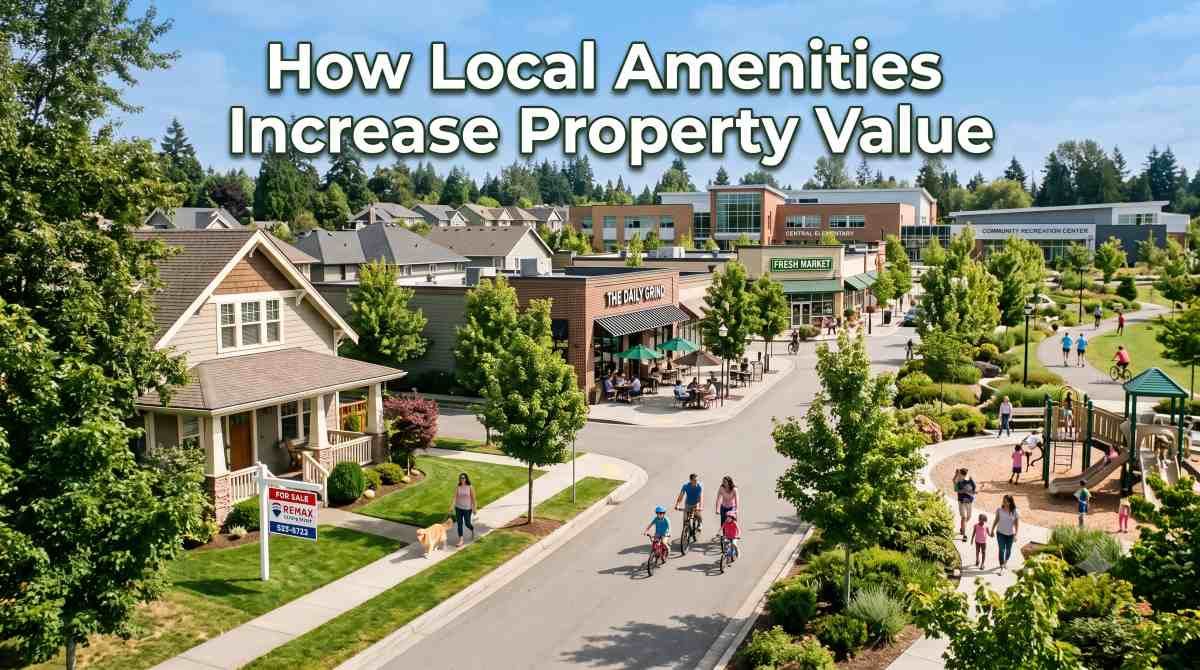
Quick Answer: Local amenities increase property value because buyers pay more for convenience, shorter commutes, and quality of life. In Northern Virginia, the amenities that move prices the most are top-rated schools (a 5 to 12 percent premium inside sought-after Loudoun County zones), Silver Line Metro access, walkable town centers, parks and trails, and nearby grocery and dining. Research from Redfin found walkable homes sell for about 23.5 percent more than car-dependent ones, and a Brookings analysis put the walkability premium in the Washington, D.C. metro at roughly 71 percent per square foot.
Key Takeaways
- Schools are the single biggest amenity premium in Northern Virginia. Homes in top Loudoun County school zones often sell $200,000 to $700,000 above the regional median for comparable square footage.
- Walkability pays. Redfin found walkable homes sell for about 23.5 percent more, and each additional Walk Score point adds an average of roughly $3,250 to a home's value.
- The Silver Line Metro created a measurable "Metro premium" in Ashburn and the wider Dulles corridor by expanding the buyer pool to D.C. commuters.
- Grocery and retail proximity matters. ATTOM data links homes near stores like Trader Joe's and Whole Foods to stronger appreciation and higher seller ROI.
- Not every nearby feature helps. Busy roads, high-tension power lines, and certain commercial neighbors can quietly lower your sale price.
- The way you market local amenities in your listing directly affects how much of that premium shows up in your final net proceeds.
In This Guide
- What Local Amenities Are and Why They Move Home Prices
- How Much Do Local Amenities Increase Property Value?
- Top-Rated Schools: The Biggest Premium in NoVA
- Metro Access and the Silver Line Premium
- Walkability and Walk Score
- Parks, Trails, and Green Space
- Shopping, Grocery, and Dining
- Which Amenities Matter Most? A Value Ranking
- How to Turn Nearby Amenities Into a Higher Sale Price
- Amenities That Can Lower Your Home's Value
- Frequently Asked Questions
- Glossary
When people ask how local amenities increase property value, the honest answer is that buyers are not just paying for a house. They are paying for everything within a short drive or a walkable few blocks: the school their children will attend, the Metro station that shortens the commute, the trail they will run on Saturday mornings, and the grocery store they will visit twice a week. In Northern Virginia, where dual-income households compete for a limited supply of homes, those surrounding features often separate two otherwise identical houses by tens of thousands of dollars. If you want a professional read on how your specific location translates into value, our team of Northern Virginia real estate agents can walk you through the comparable sales that prove it.
This guide breaks down exactly which neighborhood amenities increase home value, how much each one is worth based on current research and local market behavior, and how sellers can turn those advantages into a higher final sale price. We will cover the data behind school premiums, the Silver Line "Metro effect," walkability, parks, and retail proximity, then rank the amenities by real impact and flag the ones that quietly work against you. The goal is simple: help you understand what you already own so you can price and market it correctly.
One principle runs through everything below. An amenity only adds value if a buyer can verify it and picture using it. A top school two boundaries away does nothing for your price. A Metro station you can actually reach in ten minutes does. As a DMV real estate team that lists and sells across the region every week, we see the difference between a location advantage that is real and one that only looks good on a map.
Glossary
Local Amenities
Features and services near a home, such as schools, transit, parks, and shops, that make daily life easier and factor into a property's location value.
Walk Score
A 0 to 100 rating of how easy it is to run daily errands on foot from an address. Higher scores correlate with higher home values.
Walkability Premium
The extra price buyers pay for a more walkable home. Measured at about 23.5 percent nationally by Redfin and roughly 71 percent per square foot in the D.C. metro by Brookings.
Metro Premium
The value boost for homes near a Silver Line station, driven by a larger buyer pool and shorter, more predictable commutes to the wider D.C. region.
School Attendance Boundary
The address-level zone that assigns a home to specific public schools. It can differ house to house and is the source of much of NoVA's amenity premium.
Comparable Sales (Comps)
Recent sales of similar nearby homes used to price a property and prove an amenity premium to buyers and appraisers.
Master-Planned Community
A large, deliberately designed neighborhood built around amenities like trails, pools, and town centers. Common in Ashburn and Brambleton.
Net Proceeds
The money you actually keep after commission, transfer taxes, and closing costs are subtracted from your sale price. The number that matters most.
The Bottom Line on Amenities and Value
Local amenities increase property value because they sell a lifestyle, not just a house. In Northern Virginia, that means top schools first, then walkable town centers, Metro access, parks and trails, and everyday shopping, often stacked together in the region's master-planned communities. The research is consistent and the local pattern is clear: buyers pay real premiums for convenience and quality of life, and the homes that capture those premiums are the ones that market their amenities well and price to the comparable sales.
If you own a home in the DMV, the practical next step is to find out exactly what your specific location is worth today. For a deeper look at how all of these factors combine into a single number, see our guide on how to calculate property value in Northern Virginia, or explore the region's strongest amenity markets in our roundup of the best Northern Virginia neighborhoods for families. If you are buying and weighing which amenities are worth paying for, our Northern Virginia buyer strategy session helps you decide with data. And whenever you are ready to talk it through, you can contact The Jamil Brothers directly.
Know your equity, understand your costs, and see exactly what you'll walk away with, before you make any decisions. The Jamil Brothers provide a full seller consultation at no cost or obligation, and factor your school zone, transit, and walkability into the number.
What Local Amenities Are and Why They Move Home Prices
Local amenities are the features and services near a home that make daily life easier, safer, or more enjoyable. They are not part of the house itself. Instead, they are the schools, transit options, parks, shops, restaurants, medical offices, and recreation that surround it. Real estate professionals sometimes call these neighborhood amenities or property amenities, and appraisers factor them into value under the broad heading of location.
There is a reason the oldest saying in real estate is about location. Two homes can be identical in square footage, bedroom count, finish level, and age, yet sell for very different prices simply because of what sits around them. The house you can change. The location you cannot. That is why local amenities carry so much weight: they are the one part of a home's value that a renovation can never fix.
The Mechanism: Convenience, Demand, and Competition
Amenities raise prices through a simple chain of cause and effect. Desirable features attract more buyers to an area. More buyers create more competition for a fixed number of homes. More competition produces higher offers, faster sales, and stronger appreciation over time. Google's own AI Overview for this topic sums up the pattern well: homes near top schools, parks, transit, and walkable shops sell faster and command higher prices because buyers want convenience and a high quality of life.
In Northern Virginia this effect is amplified by who is buying. The region draws relocating tech and government professionals, many with children and dual incomes, who research schools and commute times before they ever tour a home. A National Association of Realtors survey found that 84 percent of buyers value walkability and 61 percent are willing to pay more for it. When that many buyers rank the same amenities highly, those amenities become priced into the market.
Amenity value versus home features
This guide is about external, neighborhood amenities you do not control. If you want to know which upgrades inside and on the home pay off at resale, read our companion piece on what adds the most value to a home in Leesburg. Together they cover both halves of the value equation: the location around your home and the improvements you can make to it.
How Much Do Local Amenities Increase Property Value?
The short answer is that local amenities can swing a home's value by anywhere from a few percent to well over 20 percent, depending on the amenity, the market, and how close the home sits to it. National studies give the clearest benchmarks, and they line up closely with what we see on the ground across the DMV.
| Amenity | Measured Value Impact | Source |
|---|---|---|
| Walkable location (near schools, shops, parks) | About 23.5 percent, or roughly $77,668, more than car-dependent homes | Redfin |
| Each additional Walk Score point | Around $3,250, or about 0.9 percent, per point | Redfin |
| Walkability in the Washington, D.C. metro | Roughly 71 percent premium per square foot vs. car-dependent areas | Brookings Institution |
| Above-average Walk Score | $4,000 to $34,000 more than similar less-walkable homes | CEOs for Cities |
| Top-rated school zone (Loudoun County) | 5 to 12 percent premium over nearby non-zoned homes | Local market data |
| Parks and green space nearby | Commonly cited lift of up to about 20 percent for adjacent homes | Industry research |
Read these figures as ranges, not guarantees. A single amenity rarely acts alone, and premiums stack or overlap. A home in a master-planned Ashburn community, for example, may benefit from a top school, Silver Line access, and a walkable town center all at once. The chart below shows how the major amenity categories tend to rank by their influence on Northern Virginia sale prices, based on buyer behavior we track across the region.
The rest of this guide takes each of these categories in order, starting with the one that carries the most weight in Northern Virginia by a wide margin: schools.
Top-Rated Schools: The Biggest Amenity Premium in Northern Virginia
If you can only track one amenity for its effect on your home's value in Northern Virginia, make it the school assignment. School quality is the amenity that increases home value more consistently, and by larger dollar amounts, than any other in this region. Buyers with children treat the assigned school as non-negotiable, and buyers without children still recognize that a strong school zone protects resale value.
The numbers are substantial. Homes inside sought-after Loudoun County school zones typically carry a 5 to 12 percent premium over comparable homes in surrounding boundaries. Across the wider region, homes in top school zones often command $200,000 to $700,000 more than the regional median for the same square footage. That is not a rounding error. It is often the single largest line item in a home's location value.
Why School Premiums Run So High in Loudoun and Fairfax
Northern Virginia is one of the strongest public education markets in the country. Every major district in the region earns an A or higher grade from Niche, and several of the top-ranked public high schools in America sit within a short drive of one another. Fairfax County is home to Thomas Jefferson High School for Science and Technology, routinely ranked at or near the top nationally. Loudoun County Public Schools serves more than 80,000 students, and high schools like Briar Woods, Stone Bridge, and Rock Ridge rank among the best in Virginia.
Because the districts are large and boundaries are drawn at the address level, two homes on the same street can feed different schools. That granularity is exactly why the premium exists, and why it can be so precise. To see how school zones map to prices in specific communities, our guide to the best school districts in Northern Virginia and home prices breaks the numbers down county by county, and the top Loudoun County elementary school zones guide gets down to the individual attendance areas.
Always verify the boundary before you rely on it
School assignments change. Fairfax County completed its first comprehensive boundary review in nearly 40 years, affecting more than 2,200 students starting in 2026, and Loudoun adjusts boundaries as it grows. Never price a home on an old listing's stated school. Confirm the current assignment with the district before you market that premium.
What This Means for Sellers
If your home sits in a top-rated zone, that assignment belongs in your listing, your photos captions, and your pricing strategy. Buyers searching by school will filter you in or out based on it. If your home is in an average zone, you are not stuck, but you will lean harder on your other amenities to compete. Either way, the first step is knowing your true starting number. A free home valuation that accounts for your exact school assignment tells you where your equity really stands before you plan anything else.
Get a personalized home valuation from The Jamil Brothers that factors in your school zone, Metro proximity, and walkability, not an automated estimate. Response within 24 hours.
Metro Access and the Silver Line Premium
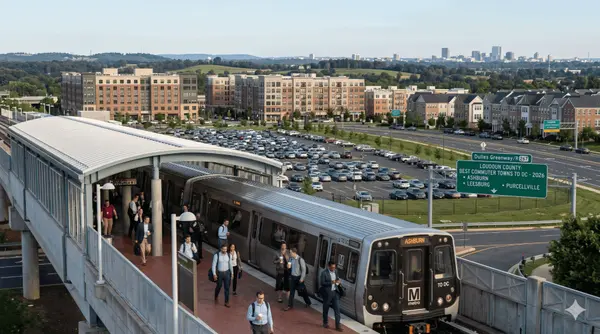
Transit access is one of the clearest examples of how local amenities increase property value in the Dulles corridor. When Phase 2 of the Metrorail Silver Line opened stations at Ashburn and Innovation Center, it did more than shorten commutes. It changed which buyers even consider the area. Homes that once competed only with other suburban Loudoun listings now compete for D.C. commuters who might otherwise have limited their search to Arlington, Alexandria, or closer-in Fairfax.
That expanded buyer pool is the engine behind what local agents call the Metro premium. Homes located within roughly two miles of the Ashburn and Innovation Center stations consistently outperform the broader market. The Silver Line gave Ashburn something it never had before: direct rail access at price points that remain more attainable than the inner suburbs. For a professional commuting to Tysons or Reston, that combination is hard to beat, and buyers pay for it.
How Transit Value Shows Up in Prices
What buyers pay extra for near transit
- ✓ A predictable commute that does not depend on Dulles Toll Road traffic
- ✓ Access to a far larger job market across the entire D.C. region
- ✓ Flexibility for hybrid workers who ride two or three days a week
- ✓ Stronger long-term resale appeal as the corridor keeps developing
- ✓ Walkable, higher-density homes near stations that sell faster
Proximity is not the whole story. The right product still matters. Near a station you will find more townhomes and condos, plus master-planned neighborhoods like Broadlands, Ashburn Village, Brambleton, Belmont, and One Loudoun. Remote-work trends shape how often buyers actually ride the rail, so the premium is strongest for buyers who value the option even if they do not use it daily. If you own near a Silver Line station, treat that access as a headline feature, and confirm current values with an agent who tracks the corridor. You can also browse current listings across Northern Virginia to see how transit-adjacent homes are priced today.
Walkability and Walk Score: What Buyers Pay Extra For
Walkability has moved from a nice-to-have to a proven driver of price. The relationship between Walk Score and property value is one of the most studied topics in real estate economics, and the findings are remarkably consistent: more walkable homes sell for more, and they spend fewer days on the market.
The headline research from Redfin found that homes within walking distance of schools, shopping, parks, and other everyday amenities sell for an average of 23.5 percent, or roughly $77,668, more than comparable car-dependent homes. Redfin also estimated that each additional Walk Score point adds about $3,250, or 0.9 percent, to a home's value, and a widely cited CEOs for Cities study put the premium for an above-average Walk Score at $4,000 to $34,000 over similar less-walkable homes.
The D.C. metro is a walkability standout
A Brookings Institution analysis found that properties in walkable neighborhoods in the Washington, D.C. metro area commanded roughly a 71 percent premium on a per-square-foot basis compared with car-dependent areas. That is one of the largest walkability premiums measured anywhere in the country, and it is a direct reason walkable Northern Virginia communities price the way they do.
Where Walkability Shows Up in NoVA
Northern Virginia is mostly suburban, which makes its genuinely walkable pockets scarce and, therefore, valuable. One Loudoun in Ashburn is one of the few communities in the county designed around a walkable, urban-style layout, with restaurants, retail, and daily conveniences integrated into the neighborhood. That design creates a lifestyle premium buyers are willing to pay for, and homes within walking distance of the central retail and dining core command higher prices and sell more quickly than those on the outer edges. Reston Town Center and revitalized downtowns in Herndon, Vienna, and Leesburg offer similar walkable cores that hold their value well.
The premium buyers pay for walkability and school access is exactly the kind of equity you want to protect when you sell. Keeping more of it in your pocket is where our listing model comes in.
Professional photography, drone video, 3D tours, expert negotiation, and full MLS marketing, all included at a 1.5 percent full-service listing fee. The premium your amenities earned should stay with you, not disappear into a traditional 3 percent commission.
Parks, Trails, and Green Space
Green space is one of the most reliable amenities for lifting nearby home values, and it is one Northern Virginia has in abundance. Proximity to parks, protected woodland, and connected trail systems consistently correlates with higher prices, and industry research commonly points to a lift of up to around 20 percent for homes that sit directly adjacent to well-maintained green space. Buyers read a nearby park as room to breathe, a place for kids and dogs, and a quiet buffer from traffic and density.
Loudoun and Fairfax counties invested heavily in this amenity, and it shows in pricing. The W&OD Trail runs 45 miles through the region and functions as a linear park that dozens of neighborhoods back onto. Master-planned communities like Broadlands and Brambleton were designed around ponds, walking paths, and preserved open space precisely because developers know it sells. Willowsford, a nature-immersed community in Aldie, carries one of the highest medians in Loudoun in large part because its identity is built on trails, farms, and conservation land.
Which Green Features Buyers Value Most
| Green Amenity | Why It Adds Value |
|---|---|
| Backing to a park or protected woods | Privacy, no rear neighbors, and a permanent view that will not be built on |
| Direct trail access (W&OD, community paths) | Daily recreation without driving, a top draw for active buyers |
| Community pond, lake, or water feature | Scenic value and a stronger sense of place within the neighborhood |
| Nearby playgrounds and sports fields | A major convenience for families, who make up much of the NoVA buyer pool |
| Mature tree canopy on the street | Curb appeal, shade, and a signal of an established, cared-for area |
One caveat worth remembering: adjacency helps, but overlooking a busy park entrance or a floodlit field can cut the other way if it brings noise and traffic. The premium is strongest when the green space is close enough to enjoy but not so close that it disrupts daily life.
Shopping, Grocery, and Dining: The Trader Joe's Effect
Everyday convenience is an amenity too, and the data behind grocery proximity is surprisingly strong. A widely cited analysis from ATTOM found that homes near certain grocery chains tend to appreciate faster and deliver higher seller returns than the national average. Homes near a Trader Joe's, a Whole Foods, or an ALDI all showed above-average five-year appreciation, with Trader Joe's often leading on home values and seller ROI. Zillow research found a similar pattern for homes near Starbucks locations, which historically appreciated faster than the typical U.S. home.
There is a chicken-and-egg element here that is worth being honest about. These retailers study demographics carefully and open where incomes and demand are already strong, so the store is partly a signal of a desirable area rather than the sole cause of higher prices. But the convenience premium is real regardless of direction. Buyers will pay more for the ability to reach a good grocery store, a coffee shop, and a handful of restaurants in a few minutes, and appraisers recognize that access as part of a home's location value.
How This Plays Out in Northern Virginia
The most valuable version of this amenity in NoVA is the mixed-use town center, where shopping, dining, and daily errands sit within a short walk of home. One Loudoun, Reston Town Center, and the Village at Leesburg bundle grocery, restaurants, entertainment, and services into walkable cores, which is why homes near them combine the retail-proximity effect with the walkability premium discussed earlier. For most single-family neighborhoods, the practical measure is simpler: how many minutes to a full-service grocery store, and how many quality restaurants are within a short drive. Both belong in your listing when you sell.
Convenience compounds
The strongest locations rarely rely on a single amenity. A home that pairs a top school with Metro access, a walkable town center, and a nearby grocery store benefits from several premiums at once, which is how master-planned communities in Ashburn and Brambleton justify their pricing. Curious how your combination of amenities compares? Explore our Loudoun County real estate resources for a community-level view.
Which Amenities Matter Most? A Value Ranking
Pulling the research together, here is how the major local amenities tend to rank for their effect on Northern Virginia home values. Use this as a planning tool, not a formula. Your exact mix, your community, and the current market all shift the weightings, which is why a local comparable-sales analysis beats any generic list.
| Rank | Amenity | Typical NoVA Impact | Best For |
|---|---|---|---|
| 1 | Top-rated school zone | Largest single premium, often $200K to $700K over median | Family buyers, long-term resale |
| 2 | Walkable town center | Strong, scarce in suburban NoVA so it stands out | Professionals, empty nesters, younger buyers |
| 3 | Metro or transit access | Measurable Metro premium within about two miles of a station | Commuters to Tysons, Reston, or D.C. |
| 4 | Parks, trails, green space | Reliable lift, strongest for adjacent lots and trail access | Active buyers, families, dog owners |
| 5 | Grocery and dining proximity | Solid, and compounds with walkability when in a town center | Nearly all buyers |
| 6 | Healthcare, gyms, community facilities | Modest but positive, matters more to specific buyer segments | Older buyers, health-focused households |
How Buyers Weigh These Amenities
The ranking above reflects dollar impact. The chart below reflects something slightly different: how often buyers name each amenity as a deciding factor when they choose between homes. The two usually line up, but the gap between them tells you where to focus your marketing.
Percentages shown illustrate relative buyer priority based on regional patterns and the 84 percent of buyers who told the National Association of Realtors they value walkability. Before you decide how to position your home, it helps to see the actual dollars. Our seller net sheet shows what you would walk away with once commission, transfer taxes, and closing costs are subtracted from your amenity-driven sale price.
Our seller net sheet calculator breaks down every cost, from commission to Virginia transfer taxes to closing fees, so you know your real bottom line before you list. Pair it with a free valuation for a complete picture.
How to Turn Nearby Amenities Into a Higher Sale Price
Owning near great amenities is only half the job. The other half is making sure buyers, appraisers, and search filters actually credit you for them. A location advantage that no one notices does not show up in your final number. Here is the process we use with sellers to convert nearby amenities into real dollars.
Verify and document every amenity
Confirm your exact school assignment with the district, note the walking distance to the nearest station, park, and grocery store, and record trail access. Facts you can prove are facts buyers will pay for.
Lead your listing with the strongest one
If you are in a top school zone, that goes in the headline. If you are a short walk from a town center or Metro, lead with that. Buyers scan quickly, so put your most valuable amenity where they see it first.
Show the amenity, do not just name it
Include photos of the trailhead, the town center, or the park view. Drone footage that shows proximity to green space or a station makes the advantage obvious in a way words cannot.
Price to the comparable sales, not a hunch
The premium is only real if recent sales support it. An agent who pulls address-level comps can show exactly how much your amenities are worth in the current market and defend that price to the appraiser.
Give the appraiser the evidence
A strong offer still needs to appraise. Providing the appraiser with your amenity documentation and supporting comps protects the premium so it survives into your net proceeds.
This is where working with a local team pays for itself. Our full-service approach covers professional media, address-level comps, and appraisal support, and our flexible commission options mean you get all of it without surrendering the equity your location earned. When you are ready to plan the sale itself, our sell my home resources walk through every step.
Amenities That Can Lower Your Home's Value
Not every nearby feature helps. Some of the same things that add convenience can subtract value when they bring noise, traffic, or safety concerns. Knowing the difference lets you price realistically and get ahead of buyer objections instead of being surprised by them.
| ✓ Amenities That Add Value | ✗ Nearby Features That Can Subtract |
|---|---|
| Quiet park or trail access | Backing to a busy highway or arterial road |
| Short walk to a town center | Overlooking a floodlit sports field or busy park entrance |
| Metro station within a comfortable distance | Directly adjacent to a rail line or under a flight path |
| Grocery and dining a few minutes away | Sharing a property line with a commercial or industrial lot |
| Top-rated assigned school | High-tension power lines or a substation next door |
If your home carries one of these challenges, it is not a dead end. It simply changes the strategy. Sometimes the right move is to lean into your positive amenities and price accordingly. Other times, when speed or certainty matters more than squeezing out the last dollar, a cash offer can be the cleaner path.
If your location comes with tradeoffs, or if timing and certainty matter more than maximum price, a cash offer may be the right fit. We'll walk you through your full range of options, with no pressure.
Once your amenities have earned a strong sale price, the last question is how much of it you actually keep. The calculator below shows the difference between a traditional 3 percent listing fee and our 1.5 percent full-service fee at several Northern Virginia price points. Select the value closest to your home.
Seller Savings Calculator
How much more do you keep with our 1.5% listing fee?
Select your home's estimated value to see your real net proceeds, side by side.
Traditional Agent · 3%
Our Fee · Only 1.5%
Extra in your pocket
$6,000
vs. a traditional 3% listing agent, with zero reduction in service or marketing.
Traditional Agent · 3%
Our Fee · Only 1.5%
Extra in your pocket
$7,500
vs. a traditional 3% listing agent, with zero reduction in service or marketing.
Traditional Agent · 3%
Our Fee · Only 1.5%
Extra in your pocket
$9,000
vs. a traditional 3% listing agent, with zero reduction in service or marketing.
Traditional Agent · 3%
Our Fee · Only 1.5%
Extra in your pocket
$11,250
vs. a traditional 3% listing agent, with zero reduction in service or marketing.
Traditional Agent · 3%
Our Fee · Only 1.5%
Extra in your pocket
$15,000
vs. a traditional 3% listing agent, with zero reduction in service or marketing.
Estimates only. Closing costs vary. Buyer's agent commission is negotiable.
Frequently Asked Questions
How do local amenities increase property value?
Local amenities increase property value by making an area more desirable, which attracts more buyers and creates competition for a limited number of homes. That competition produces higher offers, faster sales, and stronger appreciation over time. In Northern Virginia, buyers pay measurable premiums for top schools, Metro access, walkability, parks, and nearby shopping because those features improve daily convenience and quality of life. The amenity has to be real and verifiable to a buyer, though. A benefit no one can confirm or picture using does not move your price.
What amenities increase home value the most in Northern Virginia?
In Northern Virginia, a top-rated school assignment is the single biggest amenity premium, often adding $200,000 to $700,000 over the regional median for comparable square footage and a 5 to 12 percent premium inside sought-after Loudoun County zones. Walkable town centers and Metro access rank next, followed by parks and trail access, then grocery and dining proximity. The most valuable locations usually combine several of these at once, which is why master-planned communities in Ashburn and Brambleton command the prices they do.
How much do local amenities add to a home's value?
It depends on the amenity and how close the home sits to it, but the ranges are significant. Redfin found walkable homes sell for about 23.5 percent, or roughly $77,668, more than car-dependent homes, and each additional Walk Score point adds around $3,250. A Brookings analysis put the walkability premium in the Washington, D.C. metro at roughly 71 percent per square foot. Top school zones can add several hundred thousand dollars, and parks commonly lift adjacent home values by up to about 20 percent. Treat these as ranges that stack, not fixed figures.
Does being near a Metro station increase home value?
Yes. Homes located within roughly two miles of the Ashburn and Innovation Center Silver Line stations consistently outperform the broader market, an effect local agents call the Metro premium. The Silver Line expanded the buyer pool to include D.C.-region commuters who previously would have looked only at Arlington, Alexandria, or closer-in Fairfax. Buyers value the predictable, traffic-independent commute and the flexibility it gives hybrid workers, and they pay for that access even when they do not ride the rail every day.
Does walkability increase property value?
Walkability is one of the most studied and most consistent drivers of home value. Redfin's research shows walkable homes sell for more and spend fewer days on the market, and a National Association of Realtors survey found 84 percent of buyers value walkability while 61 percent will pay more for it. In the Washington, D.C. metro specifically, Brookings measured a walkability premium of around 71 percent per square foot. Because genuinely walkable pockets are scarce in suburban Northern Virginia, communities like One Loudoun and Reston Town Center command a real, visible premium.
Do parks and green space increase home value?
Yes. Proximity to parks, protected woodland, and connected trails reliably lifts nearby home values, with industry research commonly citing gains of up to around 20 percent for directly adjacent homes. Buyers value the privacy of backing to protected land, the recreation of trail access like the 45-mile W&OD Trail, and the permanent open view that will not be built on. The premium is strongest when the green space is close enough to enjoy but not so close that a busy entrance or floodlit field brings noise and traffic.
Do grocery stores like Trader Joe's or Whole Foods increase home value?
Data from ATTOM links homes near chains like Trader Joe's, Whole Foods, and ALDI to stronger five-year appreciation and higher seller returns than the national average, and Zillow found homes near Starbucks appreciate faster than the typical U.S. home. Part of this is a signal rather than pure cause, because these retailers open where demand is already strong. But the convenience premium is real, and appraisers count grocery and dining access as part of a home's location value. In NoVA, the effect is strongest inside walkable town centers that bundle retail, dining, and daily errands together.
How much does a good school district add to home value?
In Northern Virginia, homes in sought-after school zones typically sell $200,000 to $700,000 above the regional median for comparable square footage, and specific top zones in Loudoun County carry a 5 to 12 percent premium over nearby non-zoned homes. The premium is precise because boundaries are drawn at the address level, so two homes on the same street can feed different schools. Always confirm the current assignment with the district before you rely on it, since Fairfax and Loudoun both adjust boundaries as they grow.
What nearby features can lower a home's value?
The same proximity that adds convenience can subtract value when it brings noise, traffic, or safety concerns. Backing to a busy highway or arterial road, overlooking a floodlit sports field or busy park entrance, sitting directly adjacent to a rail line or under a flight path, sharing a property line with a commercial or industrial lot, and high-tension power lines next door can all reduce your sale price. If your home carries one of these, the fix is strategy: lean into your positive amenities, price to the comparable sales, and consider whether a cash offer better fits your goals.
Do HOA and community amenities like pools and clubhouses add value?
Community amenities such as pools, clubhouses, gyms, tot lots, and maintained trails can add value, especially in master-planned Northern Virginia communities where they are part of the lifestyle buyers are shopping for. The catch is the HOA fee. Buyers weigh the amenities against the monthly cost, so a rich amenity package with reasonable dues tends to help, while high dues for lightly used amenities can be a drag. When you sell, present the amenities and the fee together so buyers see the full value, not just the line item.
Which Northern Virginia communities have the most valuable amenities?
Ashburn and Brambleton stand out for stacking top Loudoun schools, Silver Line access, and walkable or amenity-rich neighborhoods. One Loudoun leads on walkable, urban-style town center living, and Reston is known for its lakes, trails, and town center. Willowsford in Aldie commands one of Loudoun's highest medians on the strength of its trails and conservation land, and Leesburg pairs a walkable historic downtown with strong schools. The best fit depends on which amenities matter most to your buyer pool, which is where a local agent's read of the market helps.
How should I choose an agent to price my home's amenity value?
Look for an agent who closes consistently in your specific county rather than broadly across the DMV, can pull address-level comparable sales and school boundary data on demand, has a documented track record with multiple-offer and appraisal situations, and is transparent about commissions and fees. Those criteria protect the premium your location earned. The Jamil Brothers Realty Group has sold 840 or more homes across Northern Virginia, holds NVAR Lifetime Top Producer status, and maintains 500 or more five-star reviews across Google, Zillow, and Realtor.com.
What mistakes do sellers make when pricing amenity value?
The most common mistakes are claiming a school or amenity that a buyer cannot verify, pricing to a premium that recent comparable sales do not actually support, and failing to market the amenity at all so buyers never credit it. Sellers also overlook the appraisal risk: a strong offer still has to appraise, and a premium that is not documented with comps can fall apart at that stage. The fix is to verify each amenity, lead with the strongest one, show it in your photos, price to the comps, and give the appraiser the evidence to defend your number.
Categories
- All Blogs (1238)
- Buyer Guide (7)
- Buying a home (2)
- Buying Strategies (30)
- festivals (1)
- General Blog (66)
- Market Intelligence (28)
- Market Updates (7)
- Notable Properties For Sale (32)
- Real Estate Tips, News, and More (396)
- Seller Guide (1)
- Seller Guides (59)
- Selling Your Home (525)
- Top Realtors in Northern Virginia (58)
Recent Posts


Let's Connect