
Selling a Luxury Home in McLean or Great Falls: Strategies for $1M+ Properties (2026)
Selling a Luxury Home in McLean or Great Falls: Strategies for $1M+ Properties (2026)

Selling a luxury home in McLean or Great Falls in 2026 is a different game from selling a $700K townhouse in Herndon. The buyer pool is smaller and more selective, marketing has to travel further, every comp conversation becomes a nuanced valuation debate, and tax exposure on net proceeds is real. The good news: 22101, 22102, and 22066 remain three of the most resilient luxury micro-markets in the DMV, and a sharp pricing and marketing strategy can still move $1.5M–$5M homes at or above asking in the right price band.
Quick Answer: To sell a luxury home in McLean or Great Falls in 2026, price within 2–5% of precise comp-driven market value, invest in cinematic marketing (drone video, 3D tours, magazine-grade photography), target buyers relocating for Tysons tech, government/defense, and D.C. executive roles, and plan 45–90 days on market for homes $1.5M–$3M and 90–180 days for $3M+. The Jamil Brothers Realty Group lists luxury homes in McLean and Great Falls at a 1.5% full-service listing fee — the savings on an $800K-plus net typically funds higher-end staging, video, and print marketing without reducing the seller's take-home.
Key Takeaways
- McLean (22101/22102) and Great Falls (22066) are two of the most active $1M–$5M markets in Northern Virginia, with distinct buyer profiles and pricing dynamics for each ZIP.
- Luxury buyers research deeply before touring — so pricing, photography, and positioning must be right on day one. Price drops in the luxury band disproportionately damage perceived value.
- Post-NAR settlement, buyer-agent compensation is fully negotiable and no longer a fixed 2.5–3%. This matters more at $2M+ where small percentage shifts become five-figure decisions.
- Virginia grantor tax, congestion tax, and capital gains exposure above the $500K married exclusion are the three biggest financial surprises for luxury sellers.
- A 1.5% full-service listing fee — paired with 3% traditional comparison — saves $15,000 per $1M of sale price with no reduction in professional photography, drone video, 3D tours, expert negotiation, or MLS marketing.
In This Guide
- McLean & Great Falls Luxury Market Snapshot 2026
- Who's Actually Buying $1M+ Homes Here
- Luxury Pricing Strategy — Three Approaches
- Pre-Listing Preparation at the Luxury Tier
- Luxury Marketing — What Actually Moves $2M+ Homes
- Your Selling Timeline
- Your Net Proceeds — Run the Numbers
- Closing Costs for Virginia Luxury Sellers
- Capital Gains — The $500K Exclusion Trap
- How to Choose a Luxury Listing Agent
- Common Luxury Seller Mistakes
- Alternatives — FSBO, iBuyer, Off-Market
- Frequently Asked Questions
- Glossary
McLean and Great Falls occupy a specific corner of the Fairfax County luxury market — close enough to Tysons, the Beltway, and D.C. for two-income executive households, but far enough into Potomac-adjacent wooded lots to deliver the acreage, privacy, and estate-scale architecture that buyers paying $2M+ expect. What works for a $900K listing in Centreville or Vienna does not translate upward; luxury requires a different playbook.
This guide is written for owners of homes priced $1M and above in ZIP codes 22101, 22102, and 22066 who want to understand how the current market actually behaves, what preparation and marketing genuinely move buyers at this tier, how much you'll net after grantor tax and capital gains, and how to choose the right listing strategy. If you'd like a street-level valuation before you go any further, request a free home valuation — we use BrightMLS comps, not automated estimates.
McLean & Great Falls Luxury Market Snapshot 2026
The McLean and Great Falls luxury segments have held up well through 2025 and into early 2026. Fairfax County's overall market has normalized from the post-pandemic frenzy, but the $1.5M–$5M band in these two areas continues to show steady transaction volume, supported by Tysons corporate relocations, federal executive buyers, and international buyers using the D.C. corridor as a U.S. anchor.
McLean Luxury Snapshot (22101 + 22102)
McLean is two markets inside one town. ZIP 22101 (central and south McLean, including Langley, Chesterbrook, and Churchill Road) trends slightly older with established estate-scale homes, large lots, and the highest concentration of $3M+ sales. ZIP 22102 (north McLean, closer to Tysons, including West*gate, Chain Bridge Forest, and communities feeding Tysons Corner schools) tends toward newer builds, luxury townhomes at Tysons, and transit-oriented buyer demand.
| Metric | 22101 (Central/South McLean) | 22102 (North McLean/Tysons) |
|---|---|---|
| Median sale price (SFH) | $1.85M–$2.1M | $1.5M–$1.75M |
| Typical luxury range | $1.5M – $6M+ | $1.2M – $4M |
| Days on market — $1.5M–$3M | 45–75 days | 40–65 days |
| Days on market — $3M+ | 90–180 days | 90–150 days |
| List-to-sale ratio | 96–99% | 97–99% |
| Typical lot size | 0.5–2+ acres | 0.25–0.75 acre |
Great Falls Luxury Snapshot (22066)
Great Falls is McLean's rural cousin — larger lots (often 1–5 acres), equestrian properties, custom-built estate homes, and a notably higher concentration of waterfront and river-view parcels along the Potomac. The pace is slower and the buyer pool narrower, but the upside for well-prepared estate-scale listings is strong. Great Falls also hosts a growing segment of $4M–$10M ultra-luxury new construction in the past few years.
| Metric | 22066 (Great Falls) |
|---|---|
| Median sale price (SFH) | $1.75M–$2M |
| Typical luxury range | $1.5M – $8M+ (custom estates and waterfront) |
| Days on market — $1.5M–$3M | 60–120 days |
| Days on market — $3M+ | 120–240 days |
| List-to-sale ratio | 94–98% |
| Typical lot size | 1–5+ acres (many on well/septic) |
How Active Is the Luxury Segment vs. the Broader NOVA Market?
A helpful visual: luxury demand in McLean and Great Falls sits meaningfully above the county average, driven by Tysons tech concentration, federal executive incomes, and international buyer activity around the Washington metro. Below is a relative demand picture by price tier for 2026.
Relative buyer demand by price band, McLean & Great Falls 2026. Source: BrightMLS data, 22101/22102/22066 closed sales analysis.
Who's Actually Buying $1M+ Homes Here
Luxury marketing fails when sellers imagine a generic "wealthy buyer." In McLean and Great Falls, four buyer profiles account for the majority of $1M+ transactions — and each one responds to different marketing cues.
| Buyer Profile | Typical Price Range | What They Prioritize |
|---|---|---|
| Tysons tech & corporate executives | $1.2M – $3M | Commute to Tysons/Silver Line, move-in ready, open floor plans, home office |
| Federal/defense senior executives | $1.5M – $4M | Schools (Langley HS, Churchill Road ES), privacy, short D.C. commute via GW Parkway |
| International/move-up buyers | $2M – $8M | Estate-scale lots, architectural pedigree, privacy, ready-to-live-in condition |
| Local move-up (Vienna, Arlington, Reston) | $1.5M – $3M | Lot size upgrade, better schools, acreage, more entertaining space |
Understanding who is most likely to buy your specific home shapes everything downstream — how you stage, which marketing channels you prioritize, where you syndicate, and how you price. A $2.5M estate home in Great Falls on 3 acres is marketing to a totally different buyer than a $2.5M luxury townhome at Tysons.
Get a precise, comp-driven valuation from The Jamil Brothers — not an algorithm. We analyze 22101, 22102, and 22066 closed sales weekly and build your valuation from street-level data, not Zestimates.
Luxury Pricing Strategy — Three Approaches
At $1M+, pricing is the single most consequential decision you'll make — more than staging, more than marketing, more than timing. Luxury buyers (and their agents) are sophisticated. They've tracked your ZIP for months, they know the comps, and they punish overpricing with silence. There are three defensible pricing strategies, each appropriate for different situations.
Approach 1: Market-Anchored Pricing (Recommended for Most)
Price within 2–3% of the most defensible comp-derived value. This maximizes day-one buzz, gets your listing in front of the broadest qualified agent pool, and generates the highest ratio of showings to price. For homes in the $1.2M–$2.5M band in McLean and Great Falls, this approach produces the tightest DOM and strongest list-to-sale ratio. It works because luxury buyers are reading the market daily — they reward fair pricing with immediate interest.
Approach 2: Aspirational Pricing (For Unique Properties)
Price 5–10% above the nearest defensible comps. This is appropriate for genuinely differentiated properties — waterfront Great Falls parcels, architect-designed custom homes, estate-scale lots with no direct comparable, or new construction with unique features. Aspirational pricing requires a longer timeline (often 90–180+ days), stronger marketing budget, and discipline to hold the number. It fails when sellers pick an aspirational number without the unique features to back it up.
Approach 3: Strategic Below-Market (For Multi-Offer)
Price 3–5% below the most likely market value to generate competing offers, particularly in the spring market when move-up buyers are active. This approach works best for homes in the $1.2M–$2M band with broad buyer appeal — move-in ready condition, excellent schools, no unusual features. It fails on estate-scale or truly distinctive homes because the buyer pool is too narrow to reliably produce a bidding war.
| Strategy | Best For | Expected DOM | Risk |
|---|---|---|---|
| Market-anchored | Most luxury homes | 40–90 days | Low |
| Aspirational | Unique/trophy properties | 90–240 days | Moderate — price drops damage perception |
| Strategic below-market | Move-in ready, broad appeal | 14–45 days | Moderate — bidding war not guaranteed |
⚠️ The Luxury Price-Drop Penalty
A price reduction on a $3M listing signals weakness in a way a reduction on a $600K listing does not. Luxury buyers and their agents interpret drops as "something's wrong" — often leading to final-sale prices 5–10% below where a correctly-priced listing would have closed. Getting price right at launch matters more in this band than any other.
Pre-Listing Preparation at the Luxury Tier
Luxury buyers expect perfection when they walk in the door. A $1.5M home with worn carpet, a tired kitchen, or dated bathrooms doesn't sell at $1.5M — it sells at $1.35M after 110 days on market. The pre-listing prep checklist at this tier is longer and more expensive, but the ROI on it is the strongest of any price band.
Essential Luxury Pre-Listing Checklist
- ✓ Professional staging of primary living spaces, primary bedroom, and all photography-facing areas — budget $5K–$25K depending on home size
- ✓ Kitchen and primary bath refresh — paint cabinets, replace hardware, update faucets, fresh grout if tile is original
- ✓ Refinish or replace hardwood floors — luxury buyers notice scratches and dents
- ✓ Fresh paint throughout in neutral warm whites and greiges — Benjamin Moore Swiss Coffee, Edgecomb Gray, Revere Pewter
- ✓ Landscape refresh — mulch, edge beds, replace any dead material, pressure wash hardscape
- ✓ Pre-listing inspection — critical at $1M+ so you're not surprised during buyer due diligence
- ✓ HVAC service, roof inspection, chimney clean — buyers' inspectors will flag these
- ✓ Well/septic service certificate (Great Falls) — required documentation for buyers
- ✓ Declutter personal items, family photos, religious items — buyers need to envision themselves
- ✓ Deep clean by commercial service before photos — including inside cabinets, light fixtures, windows
Luxury Marketing — What Actually Moves $2M+ Homes
Luxury marketing is about reaching a specific, small, high-intent buyer — not maximum eyeballs. A viral TikTok of a $3M estate is entertainment, not a marketing strategy. What actually produces qualified showings at this tier is a tight combination of cinematic visual content, MLS syndication with depth, targeted paid reach to the right geographic and income cohorts, and agent-network relationships.
The Non-Negotiable Luxury Marketing Stack
| Marketing Asset | Why It Matters at $1M+ | Included in JB 1.5% Program? |
|---|---|---|
| 4K professional photography (40+ images) | Luxury buyers tour digitally first — poor photos kill 30–40% of potential showings | Yes |
| Drone aerial video + stills | Shows lot context, privacy, estate scale — critical in Great Falls on acreage | Yes |
| Cinematic video tour (2–3 min) | Shares on social, YouTube, buyer-agent networks. Sells the lifestyle, not just rooms | Yes |
| Matterport 3D tour | Out-of-state and international buyers qualify before flying in | Yes |
| Full BrightMLS syndication | Zillow, Realtor.com, Redfin, Homes.com — where buyers search | Yes |
| Luxury-specific syndication | Properties $1.5M+ benefit from dedicated luxury portals and partner placements | Yes |
| Targeted geo + demo paid reach | Tysons corporate relocation, D.C. executives, international DMV-inbound | Yes |
| Broker-network outreach | Luxury buyers often come through agent-to-agent networks before MLS | Yes |
| Print + direct mail (select properties) | Targeted neighborhood mailers + luxury magazine print for trophy properties | Yes |
Everything in the list above is included at the 1.5% full-service listing fee. The savings — roughly $15,000 per $1M of sale price compared to a traditional 3% agent — is structural, not the result of cutting any marketing line item.
4K photography, drone video, 3D tours, cinematic video, broker-network outreach, luxury print placements, and partner-led negotiation — all included at 1.5%. On a $2.5M McLean sale, you keep roughly $37,500 more compared to a traditional 3% agent, with zero reduction in service or marketing.
Your Luxury Selling Timeline
Luxury sales take longer than mass-market sales, and compressing the timeline usually costs equity. Here's a realistic timeline for a $1.5M–$3M listing in McLean or Great Falls, from decision-to-sell through closing.
Agent selection & valuation — Week 1
Interview 2–3 listing agents. Request detailed comp analyses, marketing plans, and fee structures in writing. Ask about specific recent luxury sales in your ZIP, not "we do McLean."
Pre-listing prep — Weeks 2–5
Staging, paint, refinishing, landscaping, deep clean. Pre-inspection scheduled. At the luxury tier, don't shortcut this phase — every week of prep typically pays back 2–3x at close.
Photography & video — Week 5–6
Full day photoshoot (interior + exterior + drone), cinematic video, 3D Matterport. Often scheduled around a sunny weekday for best light. Drone footage done separately if weather demands.
Launch & active marketing — Weeks 6–14
MLS go-live, full syndication, broker open house, public open house(s), agent-network outreach, paid reach campaigns. Expect showings to cluster in the first 10–14 days of launch.
Contract & due diligence — Weeks 14–18
Accept offer, ratified contract, buyer inspection, appraisal, title review. At the luxury tier, appraisals can be tricky — a strong listing agent preempts low-appraisal risk with comp packets sent to the appraiser.
Closing — Weeks 18–20
Final walkthrough, settlement at title company, funds wired. Virginia settlement typically takes 60–90 minutes. Wire fraud prevention is critical — confirm wire instructions by phone, not email.
Your Net Proceeds — Run the Numbers
Every luxury seller should run a net sheet before signing a listing agreement. Select your estimated value below to see a side-by-side comparison of traditional 3% vs. Jamil Brothers 1.5%, using standard buyer-agent and closing assumptions.
Luxury Seller Savings Calculator
How much more do you keep with our 1.5% listing fee?
Select your home's estimated value to see your real net proceeds — side by side.
Traditional Agent — 3%
Our Fee — Only 1.5%
Extra in the estate
$15,000
vs. a traditional 3% agent — full service, zero tradeoffs.
Traditional Agent — 3%
Our Fee — Only 1.5%
Extra in the estate
$22,500
vs. a traditional 3% agent — full service, zero tradeoffs.
Traditional Agent — 3%
Our Fee — Only 1.5%
Extra in the estate
$30,000
vs. a traditional 3% agent — full service, zero tradeoffs.
Traditional Agent — 3%
Our Fee — Only 1.5%
Extra in the estate
$37,500
vs. a traditional 3% agent — full service, zero tradeoffs.
Traditional Agent — 3%
Our Fee — Only 1.5%
Extra in the estate
$45,000
vs. a traditional 3% agent — full service, zero tradeoffs.
Estimates only. Closing costs vary. Buyer's agent commission is negotiable post-NAR settlement.
Closing Costs for Virginia Luxury Sellers
Virginia imposes specific seller costs that compound at luxury price points. The single biggest surprise for luxury sellers is Virginia's grantor tax plus the Northern Virginia regional congestion tax — together they add up quickly on a multi-million-dollar sale.
| Cost | Rate / Amount | On $2M Sale | On $3M Sale |
|---|---|---|---|
| VA Grantor Tax (state) | $1 per $1,000 sale price | $2,000 | $3,000 |
| NOVA Regional Congestion Tax | $0.15 per $100 sale price | $3,000 | $4,500 |
| Fairfax County recordation | $0.0833 per $100 | ~$1,666 | ~$2,499 |
| Title insurance (owner's) | Often buyer — negotiated | Varies | Varies |
| Settlement/attorney fees | $800–$1,500 | ~$1,200 | ~$1,200 |
| HOA transfer/resale package | $250–$500 (if applicable) | ~$400 | ~$400 |
| Pro-rated property tax | Varies by close date | Varies | Varies |
| Mortgage payoff + satisfaction | Varies | Varies | Varies |
Beyond these line items, Great Falls sellers should plan for well/septic inspection certificates (sometimes $400–$800) and luxury sellers in both markets often see $5K–$15K in post-inspection repair credits negotiated back. A comprehensive seller net sheet should capture every one of these line items before you decide on a listing price.
Our seller net sheet calculator breaks down every cost — commission, grantor tax, congestion tax, recordation, closing fees — so you know your real bottom line before you list.
Capital Gains — The $500K Exclusion Trap
At the luxury tier, federal capital gains exposure is often the largest single cost — larger than commission, larger than transfer taxes combined. Sellers who lived in their McLean or Great Falls home for 30 years and bought in the 1990s can easily sit on $1M–$3M of appreciation, far above the IRS Section 121 primary-residence exclusion. Every luxury seller should consult a CPA, but the core mechanics are:
ℹ️ IRS Section 121 Primary Residence Exclusion
Married couples filing jointly can exclude up to $500,000 of capital gain on the sale of a primary residence if they've owned and lived in the home for at least 2 of the last 5 years. Single filers exclude up to $250,000. Gains above those amounts are taxed at long-term capital gains rates (15% or 20% federal for most luxury sellers) plus the 3.8% Net Investment Income Tax where applicable. Virginia taxes the full gain at state rates.
For a hypothetical married couple who bought in Churchill Road in 1998 for $650,000 and sells in 2026 for $2,750,000, the long-term capital gain is roughly $2,100,000 (before adjustments for improvements and selling costs). Of that, $500,000 is excluded — leaving approximately $1.6M taxable. At 20% federal + 3.8% NIIT + Virginia's 5.75% rate, tax exposure can exceed $450,000. This is why adjusted cost basis work — documenting every capital improvement over decades — is one of the highest-ROI things a luxury seller can do before closing.
What Adds to Your Cost Basis (Reduces Gain)
Capital Improvements That Can Reduce Your Taxable Gain
- ✓ Kitchen renovations (full gut or significant remodel, not cosmetic)
- ✓ Bathroom additions or full remodels
- ✓ Room additions, finished basements, ADUs
- ✓ Roof replacement, HVAC system replacement, windows
- ✓ In-ground pool, hardscape additions (patios, retaining walls)
- ✓ New driveway, retaining walls, landscaping that adds to lot value
- ✓ Legal fees, permits, and transaction costs from the original purchase
Routine maintenance (painting, repairs, replacing a water heater) generally does not add to basis. Consult your CPA — the IRS publication 523 has the definitive list, and your listing agent should help coordinate basis documentation if you don't already have a spreadsheet going back decades.
How to Choose a Luxury Listing Agent in McLean or Great Falls
At the luxury tier, agent selection determines whether you net your expected number or you leave money on the table. The difference between a strong luxury listing agent and an average one is typically 4–8% of sale price — often $80,000–$200,000 in real dollars. Here are the objective criteria that actually matter.
The Objective Interview Checklist
| Question to Ask | What a Strong Answer Looks Like |
|---|---|
| How many homes $1.5M+ have you closed in 22101/22102/22066 in the last 24 months? | Specific number with addresses available; not "we do a lot of luxury" |
| What's your average days-on-market vs. the MLS average for that band? | Cites specific ratio with source; not just "we sell fast" |
| What's your list-to-sale ratio on luxury listings? | Cites a specific percentage (97%+ is strong at $1.5M+) |
| Show me your marketing plan in writing — photography, video, drone, print, digital, broker-network | Detailed documented plan with vendors named and sample work |
| What's your commission structure, and is it negotiable? | Clear written number; no evasion, no "industry standard" dodge |
| How do you handle a low appraisal on a $2M+ property? | Has a specific playbook — pre-prepared comp packet, appraiser meeting, negotiation steps |
| Can I talk to three recent luxury sellers you represented? | Yes, immediately, with contact info |
The Jamil Brothers Realty Group (Saad Jamil and Arslan Jamil, Samson Properties) meets all of the above criteria in McLean and Great Falls, with the added structural advantage of a 1.5% full-service listing fee — which means the savings on a $2M+ sale can fund higher-tier marketing without reducing the seller's net. 840+ homes sold, $500M+ in closed volume, 500+ five-star reviews, and NVAR Lifetime Top Producer status back it up.
Common Luxury Seller Mistakes
| ✓ Do This | ✗ Avoid This |
|---|---|
| Invest in staging, professional photography, and video — they pay back 3–8x | List with iPhone photos to "save money" on a $2M home |
| Price within 2–5% of defensible comp value at launch | List aspirationally and rely on price drops later — drops signal weakness at luxury tier |
| Commission a pre-listing inspection and address issues upfront | Wait for buyer inspection surprises that derail closing or force credits |
| Document capital improvements for cost basis (save taxes) | Leave basis undocumented — can cost $50K–$200K+ in extra capital gains tax |
| Interview 2–3 agents, request detailed proposals in writing | Sign with a friend-of-a-friend without comparative evaluation |
| Understand that commission is fully negotiable post-NAR settlement | Assume "industry standard" is 3% — no such rule exists in 2026 |
| Plan realistic timeline — 45–90 days for $1.5M–$3M, longer for $3M+ | Expect a 2-week sale like the 2021 frenzy — those conditions have normalized |
Alternatives — FSBO, iBuyer, Off-Market
FSBO (For Sale By Owner)
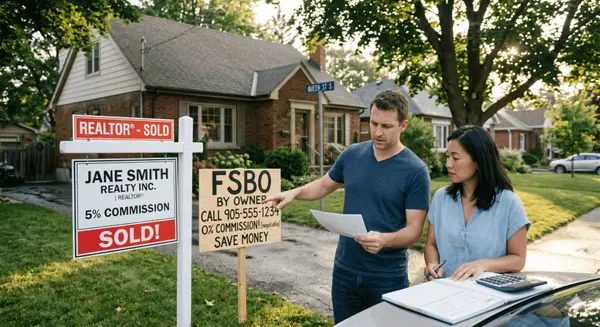
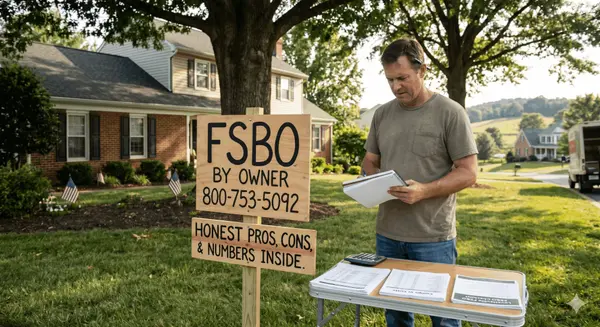
FSBO at the luxury tier is a difficult path. The buyer agent network, MLS syndication, professional photography, staging coordination, appraisal-defense prep, negotiation leverage, and closing coordination that a full-service agent provides are not optional at $1M+ — they're the difference between a $2M sale and a $1.85M sale. FSBO sellers in Fairfax County historically net 10–15% less than full-service listed sellers. At a $2M price point, that's $200K–$300K — far more than any commission.
iBuyers and Cash Offers
iBuyers (Opendoor, etc.) generally do not play in the luxury band. Their algorithms target $300K–$800K homes in standardized suburban subdivisions. For a $2M McLean estate or $3M Great Falls custom home, iBuyer offers either don't materialize or come in 15–25% below market. That said, certain cash-offer networks and institutional buyers do look at $1M–$2M move-in-ready luxury homes for quick-close, certainty-first sellers — pre-divorce sales, inherited estate sales, PCS timing. If speed and certainty matter more than maximum price, explore your cash offer options first so you have a baseline before deciding.
Off-Market / Pocket Listings
Off-market sales make sense for a small percentage of luxury sellers — primarily those with genuine privacy concerns (high-profile individuals, estate sales, divorces) or trophy properties that benefit from a quiet-launch to a curated buyer network before MLS exposure. For most luxury sellers, going public on BrightMLS and syndicating fully produces higher sale prices than off-market — the larger the qualified buyer pool, the more competitive the offers. An experienced luxury listing agent can pre-launch to a broker network for 7–14 days before going live on MLS, capturing whatever off-market interest exists without sacrificing the MLS pool.
If timing, condition, or certainty matters more than maximum price, a cash offer may be the right fit. We'll walk you through your full range of options — no pressure.
Frequently Asked Questions
How long does it take to sell a $1M+ home in McLean or Great Falls?
Homes priced $1.5M–$3M typically go under contract in 40–90 days in McLean and 60–120 days in Great Falls, with an additional 30–45 days to close. Properties priced $3M+ often require 90–180 days to reach ratified contract, and trophy homes ($4M+) can take 6–12 months. Accurate pricing at launch is the single biggest factor shortening the timeline — homes priced within 2–5% of market value move roughly twice as fast as aspirationally-priced listings.
What are the typical closing costs for a luxury seller in Virginia?
A Virginia luxury seller typically pays the state grantor tax ($1 per $1,000 sale price), the Northern Virginia regional congestion tax ($0.15 per $100 sale price), Fairfax County recordation fees (roughly $0.0833 per $100), settlement/attorney fees ($800–$1,500), HOA transfer fees where applicable, pro-rated property tax, and mortgage payoff. On a $2.5M sale, total seller closing costs (excluding commission) typically run $8,000–$12,000 before any negotiated repair credits. A comprehensive seller net sheet should itemize each one.
How is real estate commission structured post-NAR settlement for luxury homes?
Following the 2024 NAR settlement, buyer-agent compensation is no longer embedded in the listing commission and is fully negotiable. Sellers in 2026 now make two separate decisions: what to pay their listing agent, and whether (and how much) to offer toward the buyer's agent compensation. At the luxury tier, typical listing agent fees range from 1.5% to 3%, and buyer-agent compensation is typically offered at 2–2.5%, though both are negotiable. The Jamil Brothers Realty Group charges 1.5% for full-service listing, and coordinates buyer-agent compensation based on each seller's strategic situation.
How do I choose a listing agent for my McLean or Great Falls luxury home?
Evaluate listing agents on objective criteria: number of $1.5M+ closings in the last 24 months within 22101, 22102, or 22066 specifically; average days-on-market vs. the MLS average for that price band; list-to-sale ratio on luxury listings (97%+ is strong); a written marketing plan with named vendors; clear written commission structure; and a specific playbook for low-appraisal scenarios. Request references from three recent luxury sellers and actually call them. The Jamil Brothers Realty Group (Saad Jamil and Arslan Jamil) meets each of these criteria and offers a 1.5% full-service listing fee, backed by 840+ homes sold, 500+ five-star reviews, and NVAR Lifetime Top Producer status.
Will I owe capital gains tax when I sell my luxury home?
Almost certainly yes, if you've owned your McLean or Great Falls home for more than a decade and have significant appreciation. The IRS Section 121 primary-residence exclusion covers up to $500,000 of gain for married couples filing jointly ($250,000 for single filers), but luxury sellers typically exceed that. Gains above the exclusion are taxed at federal long-term capital gains rates (15% or 20%), plus the 3.8% Net Investment Income Tax where applicable, plus Virginia's 5.75% state income tax on the full gain. Documenting capital improvements (renovations, additions, major systems) reduces your taxable gain meaningfully — consult your CPA and start the documentation process early.
How is the McLean real estate market in 2026?
McLean's luxury segment (22101 and 22102) remains active and resilient in 2026, with median sale prices around $1.85M–$2.1M for 22101 and $1.5M–$1.75M for 22102. Days-on-market for the $1.5M–$3M band runs 40–75 days, with list-to-sale ratios of 96–99%. Demand is driven by Tysons tech and corporate relocations, federal and defense executive buyers, international DMV-inbound buyers, and local move-up buyers from Vienna, Arlington, and Reston. The $3M+ band is more selective and typically requires 90–180 days, while trophy homes ($5M+) often transact through agent-network channels over 6–12 months.
How is Great Falls (22066) different from McLean for luxury sellers?
Great Falls trades slightly slower than McLean at the luxury tier, with days-on-market running 60–120 days in the $1.5M–$3M band. Typical lot sizes are larger (1–5+ acres), many homes are on well and septic, and the buyer pool leans more toward privacy-seekers, equestrian buyers, and custom-home enthusiasts. Trophy properties ($4M+) with waterfront or estate-scale features can command strong prices but often require 120–240 days and broker-network marketing. Inventory is thinner, comp analysis is harder, and every listing needs a more tailored pricing and marketing strategy than a standardized McLean subdivision home.
What are the biggest mistakes luxury sellers make in McLean and Great Falls?
The biggest mistakes are aspirational overpricing at launch (which then requires damaging price drops), skimping on staging and marketing at the $1M+ tier where presentation controls perceived value, failing to document capital improvements for cost-basis purposes (often costing $50K–$200K+ in avoidable capital gains tax), signing with an agent based on personal relationship rather than luxury track record in the specific ZIP, and assuming post-NAR settlement commission is still 5–6% "industry standard" when it is fully negotiable. Each of these can meaningfully reduce net proceeds — often by more than the agent's total commission.
How should I handle HOA and community rules when selling a luxury home?
For gated or HOA-managed communities in McLean and parts of Great Falls, sellers in Virginia must provide a resale disclosure package (including HOA financials, bylaws, rules, and a statement of account) within a statutory timeframe after ratification. Order the resale package early — it typically takes 7–14 business days and costs $250–$500. Unresolved HOA violations, assessments, or architectural-review issues must be cleared before settlement. For non-HOA estate properties in Great Falls, ensure septic inspections, well-water testing, and zoning documentation are complete before listing so buyers are not surprised during due diligence.
Is a 1.5% listing fee really full-service for a luxury home?
Yes. The Jamil Brothers Realty Group's 1.5% full-service listing program includes 4K professional photography, drone aerial video and stills, cinematic video tours, Matterport 3D tours, full BrightMLS syndication, luxury-portal placements, targeted paid reach, broker-network outreach, print and direct-mail placements for qualifying properties, expert negotiation, appraisal defense, and complete transaction coordination through closing. Nothing is reduced or removed — the 1.5% fee structure reflects operational efficiency, not service reduction. On a $2.5M McLean sale, the 1.5% structure saves roughly $37,500 compared to a traditional 3% listing fee, with identical marketing and service.
Should I sell in spring or is fall/winter viable for luxury?
Spring (March–June) remains the strongest luxury season in McLean and Great Falls, with peak buyer activity driven by school-year timing and relocation cycles. Early fall (September–October) is the second-strongest window, particularly for estate properties and buyers timing holiday moves. Winter (November–February) is the slowest stretch but can work for unique properties with motivated out-of-state or international buyers who are less driven by school calendars. The off-season upside is less competition from other luxury listings; the downside is fewer serious showings. A skilled listing agent can time your launch to match both your property type and personal timeline.
Can I browse current luxury listings in McLean and Great Falls?
Yes. You can view current McLean listings or browse luxury homes across Northern Virginia on TheJamilBrothers.com. Seeing active inventory at your price point is one of the most useful exercises before listing — it shows you exactly what you're competing against for marketing, presentation, and pricing.
Glossary
Adjusted Cost Basis
Your original purchase price plus qualifying capital improvements (renovations, additions, major systems). Used to calculate capital gains. Higher basis = lower taxable gain.
Grantor Tax
Virginia state tax on real estate sales, charged to the seller at $1 per $1,000 of sale price. On a $2M sale, grantor tax is $2,000.
NOVA Congestion Tax
Additional Northern Virginia regional transportation tax of $0.15 per $100 of sale price, charged to the seller in specific NOVA jurisdictions including Fairfax County.
Section 121 Exclusion
IRS rule allowing married couples to exclude up to $500K ($250K single) of gain on sale of a primary residence, if owned and lived in for 2 of the last 5 years.
List-to-Sale Ratio
The percentage of list price that a home actually sells for. A 98% ratio means a home listed at $2M sold for $1.96M. Luxury markets often run 94–99%.
Matterport / 3D Tour
An interactive 3D virtual tour that lets buyers walk through the home online. Critical for out-of-state and international buyers who can't tour in person.
NAR Settlement
2024 legal settlement that changed how buyer-agent compensation is handled. Compensation is now fully negotiable and disclosed separately, no longer embedded in listing commission.
Resale Disclosure Package
HOA document packet (financials, bylaws, rules, account status) that Virginia sellers must provide to buyers in HOA communities after ratification. Takes 7–14 business days to produce.
Your Next Steps
Selling a luxury home in McLean or Great Falls is a significant financial decision — often the largest single transaction of a household's life. The difference between a well-executed luxury sale and an average one frequently runs $100K–$300K in net proceeds. The three most valuable things you can do today, in order:
- Get a precise valuation — not a Zestimate, not a round-number guess. Street-level comp analysis from an agent who actively works 22101/22102/22066.
- Run a detailed net sheet — commission, grantor tax, congestion tax, estimated capital gains exposure, and HOA/recording fees. You can't make a pricing decision without knowing your actual bottom line.
- Interview 2–3 listing agents — with the objective checklist above, in writing. The difference between good and average is roughly 4–8% of sale price.
The Jamil Brothers Realty Group provides a no-cost, no-obligation seller consultation for every luxury inquiry in McLean and Great Falls. That includes a detailed valuation, a custom net sheet, and a written marketing plan specific to your property — whether you list now, list in six months, or decide not to list at all.
Know your equity, understand your costs, and see exactly what you'll walk away with — before you make any decisions. The Jamil Brothers provide a full luxury seller consultation at no cost or obligation.
Explore More
Browse Every Corner of the DMV Market
Whether you're searching by budget, neighborhood, or buying situation — find exactly what you need below.
Virginia Homes by Budget
Washington DC Homes by Budget
Maryland Homes
Explore Northern Virginia Communities
Loudoun County
Fairfax County & Surrounding
Ready to Make a Move?
Full-Service · No Tradeoffs
List for 1.5% & Keep More Equity
Professional photography, drone video, 3D tours, and expert negotiation — all included. On an $800K home, that's $12,000 more in your pocket vs. a 3% agent.
See the 1.5% Program →Need Speed or Certainty?
Get a No-Obligation Cash Offer
Skip the showings, skip the contingencies. If timing or condition matters more than top dollar, a cash offer may be the right fit. We'll walk you through every option.
Explore Cash Offers →Categories
Recent Posts






Let's Connect