Moving to Fairfax, VA: Cost of Living, Schools & Best Neighborhoods (2026 Guide)
Moving to Fairfax, VA: Cost of Living, Schools & Best Neighborhoods (2026 Guide)
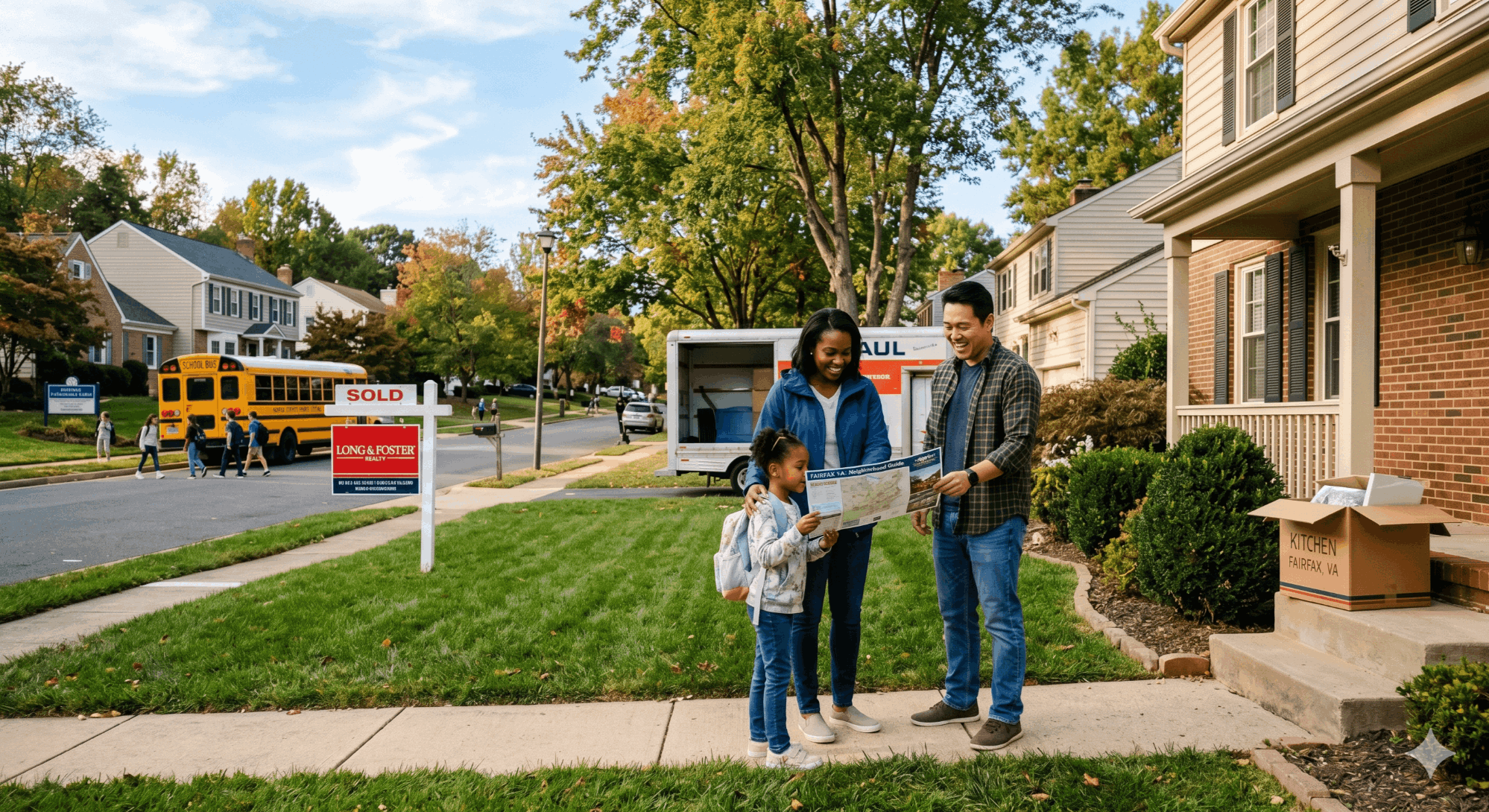
Quick Answer: Moving to Fairfax, VA in 2026 means settling into one of Northern Virginia's most established hubs — with median home prices around $702K inside the City of Fairfax and roughly $725K across Fairfax County, some of the strongest public schools in the country (FCPS class of 2025 posted a 93.3% graduation rate and 1183 average SAT), and a 30–45 minute drive to downtown DC. Expect higher-than-national cost of living offset by median household incomes above $132K in the city and $153K countywide.
Key Takeaways
- Market snapshot: Fairfax County's Q1 2026 median sold price is around $725,000, with NVAR forecasting a modest 1.9% price increase across the county for the full year.
- Schools: Fairfax County Public Schools is the 11th-largest district in the U.S., serves ~183,000 students, and holds a 93.3% on-time graduation rate.
- Commute: Plan on 30–45 minutes driving to downtown DC and 35–50 minutes on the Orange Line from Vienna/Fairfax-GMU Metro; Tysons is 10–20 minutes off-peak.
- Taxes: The City of Fairfax FY 2026 real estate tax rate is $1.055 per $100 of assessed value; Fairfax County's is $1.1225 per $100.
- Cost of living: Housing runs well above national averages, but median household income sits at ~$132,348 in the city and ~$153,637 in Fairfax County.
- Best fit: Fairfax works best for buyers who want top-tier schools, a walkable downtown, Metro access, and proximity to Tysons, Dulles, and DC without paying McLean or Arlington prices.
In This Guide
- Fairfax at a Glance
- Why People Are Moving to Fairfax
- The 2026 Fairfax Housing Market
- Cost of Living in Fairfax, VA
- Fairfax Schools & Education
- Best Neighborhoods In & Around Fairfax
- Commute & Transportation
- Dining, Shopping & Recreation
- Property Taxes: City vs. County
- Pros & Cons of Moving to Fairfax
- How to Buy a Home in Fairfax — Step by Step
- Frequently Asked Questions
- Glossary
Fairfax consistently ranks among the most-searched destinations for families and professionals moving to Northern Virginia — and for good reason. The area combines one of the most respected public school systems in the country with direct Orange Line Metro access, an affordable (by DMV standards) downtown, and a location that puts you 30 minutes from the Pentagon, 20 minutes from Tysons, and 15 minutes from Dulles International Airport.
This guide covers what it actually costs to live here in 2026, how Fairfax schools stack up, which neighborhoods fit which lifestyles, what your commute will really look like, and how to plan a relocation that avoids the most common buyer mistakes in Fairfax County's competitive market. Whether you're a federal worker transferring to the region, a tech professional moving for a job at Amazon's HQ2 or one of the major defense contractors headquartered here, or a family prioritizing school zones, the pages below walk you through it.
One important distinction upfront: "Fairfax" can mean two different things. The City of Fairfax is an independent city of roughly 27,000 residents with its own government, its own tax rate, and its own character — centered on historic Old Town Fairfax and home to George Mason University. Fairfax County surrounds the city and is the most populous county in Virginia, with over 1.1 million residents spanning everything from Tysons and McLean in the north to Lorton and Mount Vernon in the south. Most of this guide applies to both, but where the distinction matters (especially for property taxes and school assignment), we've flagged it.
Fairfax at a Glance
Fairfax Area at a Glance (2026)
$702K
Median Home Price (City)
30–45 min
Drive to Downtown DC
93.3%
FCPS Graduation Rate
$132K
Median Household Income (City)
~27,420
City of Fairfax Population
1.1M+
Fairfax County Population
The numbers tell the short version of the story: Fairfax is wealthy, educated, and expensive — but income levels support those costs. Roughly 62% of adults in the City of Fairfax hold a bachelor's degree or higher, nearly double the national rate, and the majority of working residents are employed in professional, technical, or public-administration roles that pay accordingly.
Why People Are Moving to Fairfax
Relocation traffic into Fairfax comes from five main directions, and understanding which group you belong to helps narrow down where in the area to focus your search.
1. Federal workers, contractors & defense professionals
Fairfax sits inside the DMV's dense federal-contracting corridor. Residents work across the Pentagon, CIA, Fort Belvoir, the National Geospatial-Intelligence Agency, and the major primes (Lockheed, Northrop, General Dynamics, Booz Allen, CACI). Public administration is the second-largest employment sector for Fairfax County residents, trailing only professional and technical services.
2. Tech professionals moving for Tysons, Reston & Amazon HQ2
The Tysons-Reston-Dulles tech corridor is 15–25 minutes from Fairfax, and Amazon's HQ2 in National Landing pulls daily commuters from here via the I-66 express lanes. Fairfax often reads as the "value play" for tech families who want McLean-style schools without McLean-level prices.
3. Military PCS moves
Fairfax is a popular landing zone for service members transferring to the Pentagon, Fort Belvoir, Quantico, or Joint Base Anacostia-Bolling. VA loans dominate this buyer pool, and several neighborhoods (Fairfax Station, Burke, Kingstowne) have strong military-family communities.
4. Families prioritizing schools
Families often pick Fairfax specifically because of the school system. Fairfax County Public Schools is nationally top-ranked, and buyers commonly build their entire home search around specific high school pyramids — Oakton, Woodson, Langley, Robinson Secondary, and Lake Braddock Secondary being the most searched.
5. Relocators from higher-cost metros
Buyers coming from New York, San Francisco, Boston, or Los Angeles often experience Fairfax as a step down in housing costs — even though it feels expensive to anyone moving from a lower-cost metro. A $1.2M home in Fairfax County buys materially more space than the same price point in those coastal markets.
Moving to the DMV for work, military PCS, or a fresh start? We'll match you with the right Fairfax-area neighborhoods based on your commute, budget, schools, and lifestyle — no pressure, no obligation.
The 2026 Fairfax Housing Market
The 2026 Regional Housing Market Forecast released by the Northern Virginia Association of Realtors (NVAR) and George Mason University's Center for Regional Analysis projects Fairfax County single-family prices to rise 1.9% year over year, with inventory climbing roughly 35.8%. That's a material shift from the frenetic 2021–2023 period — buyers in 2026 have more options and more time to make decisions, though the market is still technically supply-constrained with inventory running around 1.23–1.39 months of supply versus the 4–6 months considered balanced.
Current price snapshot
| Area | Median Sold Price | Reference Period |
|---|---|---|
| City of Fairfax | ~$702,000 | March 2026 (Redfin) |
| Fairfax County (Q1 2026 avg) | ~$725,000 | Q1 2026 median |
| Fairfax County (March 2026) | ~$768,000 | March 2026 (NVAR) |
| NVAR Region (broader NOVA) | ~$760,000 | March 2026 (NVAR) |
| Fairfax County (Q1 2026 avg) | ~$871,000 | Average sales price, Q1 2026 |
These numbers vary by source and month because Fairfax County is not one market — it's several, and a handful of luxury sales in McLean or Great Falls can pull the county average well above what buyers in Fairfax City, Burke, or Centreville are actually paying. For the Fairfax-area buyer specifically, expect to see:
- Single-family detached: roughly $750K–$1.3M depending on neighborhood and condition
- Townhomes: roughly $525K–$800K
- Condos: roughly $300K–$550K, with NVAR forecasting modest condo price declines in 2026
Mortgage rates in April 2026
As of the April 16, 2026 Freddie Mac Primary Mortgage Market Survey, the 30-year fixed-rate mortgage averaged 6.30% — a four-week low, and roughly half a point below where rates sat a year earlier. The 15-year fixed averaged 5.65%. NVAR's 2026 forecast anticipates rates hovering around 6% for much of the year.
For a Fairfax buyer putting 10% down on a $725,000 home, every quarter-point drop in rates translates to roughly $100/month off the principal-and-interest payment. That's real money in a market this price-sensitive, which is why strong buyer representation and a locked-in pre-approval matter more in 2026 than they did during the 2% rate era.
What the market actually feels like on the ground
The top-searched, well-priced homes in desirable Fairfax school zones still receive multiple offers — especially in the under-$750K range where move-in ready single-family homes are scarce. Fairfax City itself posted a sale-to-list ratio near 101.5% in January 2026, with about 42% of homes selling above list price that month. Overpriced homes, however, now sit on the market longer than they did 12 months ago, giving disciplined buyers real negotiation leverage for the first time in years.
Cost of Living in Fairfax, VA
The honest summary: Fairfax is more expensive than 85–90% of the country, and almost all of that cost premium is in housing. Groceries, gas, and day-to-day expenses are moderately above the national average; housing is dramatically above.
How Fairfax compares to national averages
Source: U.S. Census Bureau ACS 5-Year Estimates. Comparisons are City of Fairfax vs. U.S. national medians.
What your monthly housing payment actually looks like
Affordability Snapshot — Fairfax, VA (2026)
What Does a Fairfax Home Actually Cost Monthly?
| Home Price | Down Payment (10%) | Est. Monthly Payment* | Income Needed |
|---|---|---|---|
| $550,000 (condo/TH) | $55,000 | ~$3,850 | ~$132,000 |
| $725,000 (county median) | $72,500 | ~$5,050 | ~$173,000 |
| $900,000 (updated SFH) | $90,000 | ~$6,250 | ~$214,000 |
| $1,250,000 (luxury SFH) | $125,000 | ~$8,600 | ~$295,000 |
*Estimates assume a 30-year fixed at 6.30% (Freddie Mac PMMS, April 16, 2026), with property taxes at the Fairfax County FY 2026 rate of $1.1225 per $100, plus estimated homeowners insurance. Actual numbers vary based on credit profile, loan program, and final tax jurisdiction (City of Fairfax rates are lower). Talk to our team for a personalized estimate.
Note the "income needed" column assumes a conventional 28% front-end debt-to-income ratio. Most Fairfax buyers stretch further than that because VA loans, FHA loans, and jumbo conventional programs all allow higher DTIs for qualified borrowers. Your actual affordability depends on your credit score, down payment, and other monthly debt obligations.
Fairfax Schools & Education
Schools are the single biggest reason families move to Fairfax. Fairfax County Public Schools (FCPS) is the largest district in Virginia and the 11th-largest in the country, serving roughly 183,000 students across 195 schools — 141 elementary, 24 middle, 25 high schools, three secondary schools, and two centers for special education. The district has an operating budget of about $3.9 billion and student-teacher ratio near 14:1.
For the class of 2025, FCPS posted an on-time graduation rate of 93.3% and an average SAT score of 1183 — numbers that consistently land FCPS in the top tier of large public school districts nationwide. As of December 2025, all FCPS schools hold accreditation from the Virginia Department of Education.
Note on City of Fairfax schools: the City contracts with FCPS to operate its schools, so children living in the City of Fairfax attend FCPS schools — specifically Fairfax High School, Lanier Middle School, and one of several elementary schools depending on address.
Top-ranked FCPS high schools (2026)
| High School | Pyramid Area | VA Rank (US News) |
|---|---|---|
| Thomas Jefferson HS for Sci & Tech (magnet) | Regional STEM magnet — application required | #1 in VA |
| Langley HS | McLean / Great Falls | Top 5 in VA |
| Woodson HS | Oakton, Mantua, parts of Fairfax | Top 10 in VA |
| Oakton HS | Oakton, Vienna, parts of Fairfax | Top 15 in VA |
| Lake Braddock Secondary | Burke | Top 25 in VA |
| Robinson Secondary | Fairfax Station, Burke | Top 25 in VA |
| Fairfax HS | City of Fairfax, Mantua | #33 in VA |
Rankings fluctuate year to year, and the rank itself is less useful than the fit — a school's course offerings, AP/IB participation, magnet programs, and athletics all matter more for most families than a one-slot difference in the state list. What matters far more is confirming your specific address is assigned to the school you think it is. FCPS boundaries can split the same subdivision, and boundary changes happen. Always verify the assignment through the FCPS School Boundary Locator before writing an offer.
ℹ️ About Virginia's new school rating system
Beginning in 2025–26, Virginia transitioned to a new School Performance and Support Framework — a points-based system that emphasizes standardized test scores, graduation rates, and college/career/military readiness. Older "star" or letter ratings you may see on third-party real estate sites may be out of date; check the Virginia School Quality Profiles site for current data.
With 840+ homes sold across the DMV, we know which school boundaries are changing, which streets flood, which HOAs are well-run, and which Fairfax neighborhoods are about to appreciate. That intel is free when you work with us.
Best Neighborhoods In & Around Fairfax
"Fairfax" covers a lot of ground. Below are the neighborhoods that most relocators focus on — some inside the City of Fairfax, some in the surrounding county, all chosen because they cluster around the schools and commutes people typically prioritize.
Old Town Fairfax (City of Fairfax)
Vibe: Historic, walkable downtown with a genuine small-town main street, anchored by Old Town Square, independent restaurants, and the Fairfax courthouse complex. Short walk to George Mason University. Price range: $700K–$1.2M for detached, $550K–$800K for townhomes. Best for: Empty nesters, urbanists, GMU faculty, and anyone who wants a walkable lifestyle without paying Clarendon or Reston Town Center prices.
Mosaic District / Merrifield (Fairfax County)
Vibe: The Mosaic District is a planned mixed-use neighborhood with Angelika Film Center, a Target, weekly farmer's markets, and a dense restaurant scene. Surrounding Merrifield has more traditional SFHs. Short drive or walk to the Dunn Loring Metro. Price range: $600K–$950K for townhomes/condos in Mosaic; $850K–$1.4M for detached in Merrifield. Best for: Young professionals, DINKs, and families who want walkable retail plus Metro access.
Oakton (Fairfax County)
Vibe: Large-lot single-family homes, highly rated schools (Oakton High), and excellent access to I-66 and the Vienna Metro. Price range: $900K–$1.8M. Best for: Families with a target school pyramid (Oakton HS) and a budget above county median. A strong move-up destination.
Mantua (Fairfax County)
Vibe: Mid-century single-family neighborhood east of the Fairfax-Annandale line, tight-knit community, high-performing FCPS elementary (Mantua ES), easy Beltway access. Price range: $900K–$1.5M for detached. Best for: Families zoned to Woodson or Frost pyramids who want classic single-family homes on generous lots.
Fairfax Station (Fairfax County)
Vibe: Larger lots, more woods and open space than inside-the-Beltway neighborhoods. Roughly 25 miles from DC. Home to Robinson Secondary. Price range: $800K–$1.6M. Best for: Families who want suburban space, lower crime, and are willing to trade a longer commute for more house and land.
Burke & Burke Centre (Fairfax County)
Vibe: Planned community just south of Fairfax with VRE commuter rail access (Manassas Line to Union Station), mature trees, neighborhood pools, and strong schools. Price range: $650K–$1.1M. Best for: Commuters to Capitol Hill or downtown DC who prefer train over Metro, and anyone seeking the best value in the Lake Braddock Secondary pyramid.
Fair Oaks & Fair Lakes (Fairfax County)
Vibe: Shopping-centered suburb with townhome and condo communities surrounding Fair Oaks Mall. Good I-66 access. Price range: $500K–$850K, with many move-in-ready townhomes in the $600–$750K range. Best for: Buyers who prioritize price-per-square-foot and don't mind being 40+ minutes from downtown DC at peak.
Vienna (Fairfax County)
Vibe: Historically charming town adjacent to Fairfax, with a walkable Church Street, highly rated schools, and both Orange Line and Silver Line access nearby. Prices run higher than Fairfax proper. Price range: $950K–$1.8M for detached. Best for: Move-up buyers prioritizing schools (Madison HS pyramid) and willing to pay a premium for Vienna's character and Metro access.
Centreville & Chantilly (Fairfax County)
Vibe: Newer-build western Fairfax County with large planned communities, strong schools, and the best value per square foot in the county. Farther from DC, closer to Dulles. Price range: $650K–$1.2M. Best for: Dulles-corridor tech workers, families prioritizing newer construction, and anyone wanting more house for the money.
Commute & Transportation
Commute is where Fairfax either works beautifully or painfully — it depends heavily on where you're going and what time you're going there. The area has three commuter axes: the I-66 corridor into DC (Orange Line Metro parallels it), the I-495 Beltway for Tysons and Bethesda-bound travel, and I-95/VRE south toward Quantico/Fredericksburg.
Typical commute times from Fairfax
| Destination | Driving (off-peak) | Driving (rush hour) | Metro / VRE |
|---|---|---|---|
| Tysons Corner | 15–20 min | 25–40 min | Orange Line to Silver transfer |
| Downtown DC (Farragut Square) | 30–40 min | 45–70 min | 35–50 min (Vienna/Fairfax-GMU Orange Line) |
| Pentagon | 25–35 min | 40–55 min | 30–45 min via Metro |
| Dulles Airport (IAD) | 15–25 min | 25–40 min | Silver Line (with transfer) |
| Reagan National (DCA) | 25–35 min | 40–55 min | Orange Line to Blue/Yellow transfer |
| Amazon HQ2 (National Landing) | 25–35 min | 40–60 min via I-66 express lanes | Metro w/ transfer |
| Fort Belvoir | 25–35 min | 35–50 min | Limited transit |
| Union Station / Capitol Hill | 35–45 min | 50–75 min | VRE from Burke Centre (~50 min) |
Times are typical ranges and vary with weather, construction, WMATA service advisories, and time of day. Average commute time in Fairfax County is 28.9 minutes per the U.S. Census.
Metro: Orange Line and Silver Line access
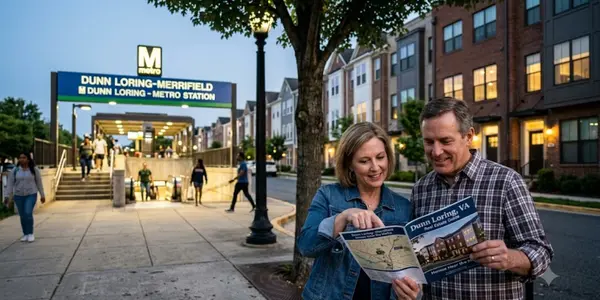
The Orange Line's end-of-line station, Vienna/Fairfax-GMU, is inside the Fairfax area and offers parking, bus connections, and direct service to Rosslyn, Foggy Bottom, Metro Center, L'Enfant Plaza, and Federal Center SW. The Silver Line extends farther west through Tysons, Reston, Herndon, and out to Dulles — reachable via transfer at Rosslyn or East Falls Church. For families, one practical test is whether you can walk or drive-and-park at either Vienna or Dunn Loring station within 15 minutes.
VRE: Virginia Railway Express
For buyers headed to Capitol Hill or Union Station, VRE's Manassas Line stops in Burke Centre — making Burke and Fairfax Station realistic options for a train commute that's more predictable than driving or Metro. VRE runs during AM/PM peak hours and isn't useful for non-traditional schedules.
I-66 Express Lanes
The I-66 Express Lanes connect Fairfax to the Beltway and continue inside the Beltway toward DC. Tolls are dynamic and can be expensive at peak (often $15–$30 one way), but they can meaningfully cut commute times for drivers willing to pay. HOV-3+ vehicles with E-ZPass Flex ride free during rush hours.
Our home search pulls directly from the MLS with live updates — no stale Zillow listings, no outdated data. Filter by price, school district, neighborhood, and more.
Dining, Shopping & Recreation
Fairfax punches above its weight on food and retail thanks to its proximity to major shopping hubs and a genuinely diverse population — roughly 30% of City of Fairfax residents are foreign-born, and that's reflected in everything from Korean BBQ on Route 50 to one of the strongest Afghan and Persian restaurant scenes in the country along Backlick Road and out toward Tysons.
Local essentials
What's nearby
- ✓ Shopping: Fair Oaks Mall, Fairfax Corner, Mosaic District, Tysons Corner Center & Tysons Galleria (10–20 min)
- ✓ Grocery: Wegmans, Whole Foods, Trader Joe's, H Mart, Costco, Giant, Safeway — all within 15 minutes
- ✓ Parks: Burke Lake Park, Lake Accotink, Fountainhead Regional Park, Daniels Run Park, Van Dyck Park (Old Town Fairfax)
- ✓ Arts & entertainment: Wolf Trap National Park (10 min), Capital One Hall (10 min), Eagle Bank Arena at GMU, Angelika Film Center at Mosaic
- ✓ Universities: George Mason University (Fairfax campus), Northern Virginia Community College (Annandale campus)
- ✓ Hospitals: INOVA Fairfax Hospital (major Level I trauma center, ~15 min), INOVA Fair Oaks Hospital
- ✓ Outdoors: Washington & Old Dominion Trail, Occoquan Regional Park, Great Falls Park, Shenandoah National Park (90 min west)
Property Taxes: City vs. County
This is where the City of Fairfax vs. Fairfax County distinction hits your wallet directly. The two jurisdictions set separate tax rates, and on a $900,000 home the difference is roughly $600 a year — small enough to be invisible in a monthly mortgage payment, meaningful enough to mention.
| Jurisdiction | FY 2026 Base Rate | On a $900K Home |
|---|---|---|
| City of Fairfax | $1.055 per $100 assessed | ~$9,495/yr |
| Fairfax County (base) | $1.1225 per $100 assessed | ~$10,102/yr |
| Fairfax County + stormwater district | ~$1.155 effective | ~$10,395/yr |
Several Fairfax County special tax districts add small levies on top of the base rate — stormwater (countywide, $0.0325), the Reston Community Center district (for properties in Reston only), and transportation districts in Tysons/Dulles corridors. The City of Fairfax levies additional fees for services like refuse collection that show up on a separate bill. Your real estate agent and closing attorney will walk you through exactly what applies to the property you're buying.
Both jurisdictions reassess properties annually as of January 1. The 2026 average residential assessment increase in Fairfax County was 3.99%. Assessment notices in the county are mailed in mid-February; appeals must be filed by April 1 each year for the administrative appeal or June 1 for the Board of Equalization.
⚠️ Know your true monthly cost
At a Fairfax County median tax rate, a $900K home costs about $840–$870/month in property tax alone — paid through your escrow. When you compare Fairfax to Maryland or lower-rate Loudoun County, factor in taxes plus HOA, not just the sticker price. A seemingly "equal" monthly payment can hide a $200+ tax gap.
Pros & Cons of Moving to Fairfax
| ✓ Pros | ✗ Cons |
|---|---|
| Top-tier public schools — FCPS is a nationally recognized district | Housing costs run roughly 177% above national median home value |
| Direct Orange Line Metro access to DC plus VRE options to Union Station | Rush-hour traffic on I-66, I-495, and Fairfax County Parkway is routinely heavy |
| Median household incomes well above the U.S. average ($132K city, $154K county) | Property tax bills are high in dollar terms — median Fairfax County bill is ~$7,669 |
| Strong, diversified job market: federal, tech, defense, healthcare, higher education | Desirable school zones still see multiple-offer situations, especially under $750K |
| Genuinely diverse population, strong international food and cultural scene | Condo segment has been softer, with NVAR forecasting modest county condo price declines in 2026 |
| Low unemployment (~4.5%) and high educational attainment (~62% bachelor's+ in city) | Virginia is a caveat emptor state — inspection and due diligence are critical |
| Access to Wolf Trap, Smithsonian, major hospital systems, two international airports | Older housing stock in some neighborhoods (1960s–80s) may need updates |
How to Buy a Home in Fairfax — Step by Step
For a typical relocation buyer, expect the full process to take 8–16 weeks from the day you seriously start searching to the day you get keys. The timeline assumes you're already clear on what area you want and have basic pre-qualification in place — if you're still at the "we might move" stage, add another 4–8 weeks at the front end.
Buyer strategy session — Week 1
Meet with a buyer agent, map your budget and school priorities, understand post-NAR settlement buyer-agent compensation and sign a written buyer-broker agreement before touring any homes. This is a legal requirement in Virginia as of 2024.
Full mortgage pre-approval — Weeks 1–2
Pre-approval (not pre-qualification) is non-negotiable in Fairfax. Sellers don't take offers seriously without it. Compare conventional, FHA, VA, and jumbo programs depending on your profile. 2026 DC-metro conforming loan limit is $1,249,125.
Neighborhood research & school-zone verification — Weeks 2–3
Narrow to 3–5 neighborhoods. Drive commutes at actual peak times. Verify school assignments through the FCPS School Boundary Locator before committing to a search radius.
Active search & tours — Weeks 3–8
Relocators often tour 8–15 homes before offering. Out-of-state buyers commonly tour virtually and use a single in-person weekend for finalists. Your agent should be walking inspection red flags with you on every tour.
Offer, negotiation & ratified contract — Weeks 6–9
In Fairfax's best school zones, expect to compete on at least one or two offers before winning. Strong earnest money deposit (2–3% of price), tight contingency timelines, and well-structured escalation clauses win deals. Never skip the inspection contingency — Virginia's caveat emptor stance makes it your main protection.
Inspection, appraisal, and loan processing — Weeks 8–14
Home inspection typically occurs within the first 7–10 days after ratification. Appraisal and underwriting run in parallel. Title search, survey, and HOA resale packet review all happen here. Your agent should flag any inspection negotiation items and coordinate repairs or credits.
Closing & keys — Week 12–16
Virginia closings typically happen in an attorney's or title company's office. Bring a certified or wired cashier's check for closing costs, government-issued ID, and the final loan documents. Buyer closing costs in Virginia typically run 2–3% of the purchase price.
Get pre-qualified, explore down payment assistance programs, and compare VA, FHA, and conventional loan options with our local financing team. Then match your purchasing power to real Fairfax neighborhoods.
Frequently Asked Questions
Is Fairfax, VA a good place to move in 2026?
Fairfax is one of the most consistently recommended relocation destinations in Northern Virginia for families, federal workers, tech professionals, and military PCS moves. The combination of top-ranked Fairfax County Public Schools, direct Orange Line Metro access, strong median household incomes (~$132,348 in the City, ~$153,637 in the County), and central location between DC, Tysons, and Dulles make it a durable long-term investment. The trade-off is cost — housing runs well above national averages — but incomes and resale values in this market have held up through multiple cycles.
What is the median home price in Fairfax, VA in 2026?
In March 2026, the median sold price in the City of Fairfax was approximately $702,000 according to Redfin, while Fairfax County posted a March 2026 median around $768,000 per NVAR, with a broader Q1 2026 median around $725,000. Expect most Fairfax-area single-family homes to fall between $750,000 and $1.3 million, with townhomes ranging roughly $525,000 to $800,000 and condos from the mid-$300,000s.
How much income do I need to buy a house in Fairfax?
At current rates (6.30% on a 30-year fixed as of April 16, 2026) and with 10% down, you'd need roughly $173,000 in gross household income to comfortably afford a $725,000 home using a 28% front-end debt-to-income ratio. Aggressive VA and FHA programs can qualify households earning materially less, and dual-income Fairfax households commonly stretch further than the 28% rule. The most reliable way to know your true purchasing power is a full mortgage pre-approval rather than an online calculator.
What are the best neighborhoods in Fairfax for families?
For families prioritizing schools and traditional single-family homes, the strongest neighborhoods in and around Fairfax are Mantua (Woodson pyramid), Oakton (Oakton HS pyramid), Fairfax Station (Robinson Secondary), and Burke/Burke Centre (Lake Braddock Secondary). For walkable, amenity-rich settings, Old Town Fairfax and the Mosaic District are strong choices. Vienna offers premium schools at a premium price. The right neighborhood depends on your target school pyramid, commute destination, and whether you prefer established or newer-build housing.
How are Fairfax County Public Schools ranked?
Fairfax County Public Schools is consistently ranked among the top large public school districts in the country. FCPS is the 11th-largest district in the U.S. and the largest in Virginia, serving approximately 183,000 students. For the class of 2025, FCPS reported an on-time graduation rate of 93.3% and an average SAT score of 1183. Top-ranked high schools in the district include Thomas Jefferson High School for Science and Technology (a selective regional STEM magnet), Langley, Woodson, Oakton, Lake Braddock Secondary, and Robinson Secondary.
What is the commute like from Fairfax to DC?
Driving from Fairfax to downtown DC typically takes 30–40 minutes off-peak and 45–70 minutes at rush hour, using I-66 or the I-66 express lanes (toll-based). The Vienna/Fairfax-GMU Metro station on the Orange Line provides a 35–50 minute ride to Metro Center or Farragut West, with no transfer needed for most downtown destinations. VRE from Burke Centre reaches Union Station in about 50 minutes during peak hours.
How do property taxes work in Fairfax?
The City of Fairfax and Fairfax County set separate real estate tax rates. The FY 2026 rate for the City of Fairfax is $1.055 per $100 of assessed value, while the Fairfax County base rate is $1.1225 per $100, with small additional levies for stormwater management and, in some areas, special tax districts. Both jurisdictions reassess annually as of January 1, with the 2026 Fairfax County average residential assessment increase at 3.99%. The median annual property tax bill in Fairfax County is approximately $7,669.
Do I need a buyer's agent to buy a home in Fairfax?
You're not legally required to hire a buyer's agent, but going without one in Fairfax County's competitive market is risky. Following the 2024 NAR settlement, buyers must sign a written buyer-broker agreement before touring homes, and buyer-agent compensation is now explicitly negotiable — it may be paid by the seller, the buyer, or split. A local buyer's agent provides access to off-market inventory, experience with school-boundary verification, contract structuring in a multiple-offer environment, and inspection negotiation. The Jamil Brothers Realty Group offers a free buyer strategy session covering these topics with no obligation.
Is it a buyer's market or seller's market in Fairfax in 2026?
Fairfax is still technically a seller's market, though much less intensely than in 2021–2023. NVAR reported Northern Virginia inventory at roughly 1.39 months of supply in March 2026 — well below the 4–6 months typically associated with a balanced market. Well-priced, move-in-ready homes in desirable school zones still attract multiple offers, while overpriced listings sit longer than they would have 24 months ago. Disciplined buyers who come in with pre-approval and clear priorities have real negotiation leverage on the right properties.
What mortgage rate can I expect in Fairfax right now?
According to the Freddie Mac Primary Mortgage Market Survey, the 30-year fixed-rate mortgage averaged 6.30% as of April 16, 2026 — a four-week low, and roughly half a percentage point below where rates sat a year earlier. The 15-year fixed averaged 5.65%. Actual quotes vary based on credit score, loan-to-value ratio, loan program, and lender. NVAR's 2026 forecast expects rates to hover around 6% for much of the year.
What mistakes should I avoid when buying in Fairfax?
The five most costly mistakes Fairfax buyers make are: (1) skipping the inspection contingency to win a bidding war — Virginia is a caveat emptor state with limited seller disclosure requirements; (2) assuming a subdivision is zoned to a specific school without verifying through the FCPS boundary tool; (3) relying on pre-qualification instead of a full pre-approval, which gets offers rejected; (4) not accounting for HOA fees and property tax escrow when calculating the true monthly payment; and (5) underestimating commute times by touring neighborhoods on weekends instead of weekday rush hour. A local buyer agent helps avoid all five.
When is the best time to buy a home in Fairfax?
Fairfax inventory peaks between April and early June and again in September — that's when you see the most active listings. Competition also peaks in those same windows, so the strategic sweet spot for many buyers is late July through early August and mid-October through early December, when inventory is still meaningful but other buyers have paused. Winter months (December–February) historically offer the most negotiating leverage, though inventory is thinner. The "best" time depends more on your personal timeline, interest rate environment, and your willingness to compete than on any single seasonal window.
Glossary
Caveat Emptor
"Let the buyer beware." Virginia follows this doctrine for residential property, meaning sellers have limited disclosure obligations. A thorough home inspection is your main protection.
Conforming Loan Limit
The maximum loan amount eligible for purchase by Fannie Mae/Freddie Mac. The 2026 DC-metro limit (including Fairfax) is $1,249,125. Loans above this are "jumbo" loans.
Earnest Money Deposit (EMD)
Good-faith money submitted with an offer, typically 1–3% of the purchase price in Fairfax. Applied to closing costs or down payment at settlement.
Escalation Clause
A contract provision that automatically raises your offer over competing bids, up to a cap. Common in multiple-offer Fairfax situations.
FCPS
Fairfax County Public Schools — the school district serving both Fairfax County and, by contract, the City of Fairfax.
HOA Resale Packet
A document package the HOA is required to provide when a home sells. Contains governing documents, financial statements, and meeting minutes. Buyers have a statutory review window.
Pre-Approval
A lender's conditional commitment after verifying income, assets, and credit. Distinct from pre-qualification, which is an unverified estimate. Required to win in competitive Fairfax offers.
School Pyramid
FCPS term for the elementary-middle-high feeder pattern. "Buying into the Oakton pyramid" means the home is zoned to schools that feed Oakton HS.
Explore Fairfax-Area Communities
Fairfax Vienna McLean Reston Herndon Centreville Chantilly Ashburn Leesburg AlexandriaKnow your budget, your negotiation position, and exactly what's available in Fairfax — before you tour a single home. The Jamil Brothers Realty Group provide a full buyer consultation at no cost or obligation, covering your target neighborhoods, school pyramids, financing options, and negotiation strategy.
Explore More
Browse Every Corner of the DMV Market
Whether you're searching by budget, neighborhood, or buying situation — find exactly what you need below.
Virginia Homes by Budget
Washington DC Homes by Budget
Maryland Homes
Explore Northern Virginia Communities
Loudoun County
Fairfax County & Surrounding
Ready to Make a Move?
Full-Service · No Tradeoffs
List for 1.5% & Keep More Equity
Professional photography, drone video, 3D tours, and expert negotiation — all included. On an $800K home, that's $12,000 more in your pocket vs. a 3% agent.
See the 1.5% Program →Need Speed or Certainty?
Get a No-Obligation Cash Offer
Skip the showings, skip the contingencies. If timing or condition matters more than top dollar, a cash offer may be the right fit. We'll walk you through every option.
Explore Cash Offers →Categories
- All Blogs (1235)
- Buyer Guide (7)
- Buying a home (2)
- Buying Strategies (30)
- festivals (1)
- General Blog (65)
- Market Intelligence (28)
- Market Updates (7)
- Notable Properties For Sale (32)
- Real Estate Tips, News, and More (396)
- Seller Guides (58)
- Selling Your Home (523)
- Top Realtors in Northern Virginia (58)
Recent Posts




Let's Connect