NAR Settlement: What Changed for West Virginia Home Sellers in 2026
NAR Settlement: What Changed for West Virginia Home Sellers in 2026

Quick Answer: The National Association of Realtors (NAR) settlement took effect nationwide on August 17, 2024, and the new rules apply to every West Virginia market — Charleston, Morgantown, the Eastern Panhandle, and beyond. Two core changes affect sellers: offers of buyer-agent compensation can no longer be published in the MLS, and buyers must sign written representation agreements before touring homes. As a West Virginia seller, you are no longer expected to automatically pay the buyer's agent — it's now fully negotiable, and that shift is reshaping how smart sellers protect their net proceeds.
Key Takeaways
- The rules changed nationally, but WV coverage has been thin — most sellers in Charleston, Martinsburg, and Morgantown only hear about the settlement through their agent, not local media.
- Buyer-agent compensation is no longer advertised in the MLS. Kanawha Valley, Huntington, and Eastern Panhandle MLS boards all removed the field in August 2024.
- Sellers are not required to pay the buyer's agent. You can offer 0%, 1%, 2%, 2.5%, or anything else — it's a strategic pricing decision, not a default.
- Buyers must now sign a buyer-agency agreement before touring homes in West Virginia, which changes how offers are structured and negotiated.
- Total seller commission costs have room to compress — working with a 1.5% full-service listing agent and negotiating a reduced buyer-agent contribution can save West Virginia sellers thousands on a typical $400K Eastern Panhandle home.
- Listings with clear, competitive compensation strategies are still winning. Being smart about buyer-agent offers is not the same as offering nothing.
In This Guide
- What the NAR Settlement Actually Is
- Timeline: How We Got Here
- What Actually Changed for West Virginia Sellers
- How the New Rules Work in Practice
- The Three Biggest Shifts for WV Sellers
- Commission Negotiation in WV Post-Settlement
- Savings Calculator: See Your Real Numbers
- How Buyer Agreements Work in WV Now
- Should You Still Offer Buyer-Agent Compensation?
- Charleston vs. Eastern Panhandle: Regional Differences
- Common Mistakes WV Sellers Are Making
- How to Choose a Listing Agent Under the New Rules
- Frequently Asked Questions
- Glossary
If you've been trying to piece together what the NAR settlement means for selling your home in West Virginia, you're not imagining the confusion. The national story moved fast in 2024, and most coverage focused on metro markets — the Washington Post covering DC, the Baltimore Sun covering Maryland, NVAR publishing guidance for Northern Virginia. Meanwhile, West Virginia sellers in Charleston, Huntington, Morgantown, and the Eastern Panhandle were often left reading national headlines and wondering which parts applied to them.
The short answer: all of it applies. The settlement is federal in scope, the National Association of Realtors implemented the rule changes across every state, and West Virginia MLS boards — the Kanawha Valley Board of Realtors (KVBR), the Huntington Board of Realtors, the Eastern Panhandle Board of Realtors (EPBOR), and the North Central West Virginia Real Estate Information Network — all rolled out the required changes by August 17, 2024.
What is different in West Virginia is how much room the new rules create for sellers to keep more of their equity. Home prices here are lower than in Northern Virginia or Montgomery County, which means every percentage point of commission matters more as a share of your net. This guide explains exactly what changed, what it means for you, and how to use the new landscape to your advantage.
What the NAR Settlement Actually Is
The NAR settlement resolved a set of antitrust class-action lawsuits — the most well-known being Burnett v. NAR (originally Sitzer v. NAR), decided by a federal jury in Missouri in October 2023. The plaintiffs argued that the longstanding industry practice of "cooperative compensation" — where the listing agent's commission was split with the buyer's agent and that split was broadcast in the MLS — effectively inflated what sellers paid. The jury agreed and awarded $1.78 billion in damages.
To resolve the litigation without more trials, NAR agreed to a settlement that changed two core practices: the way compensation is communicated between agents, and the way buyer-agent relationships are formalized. These changes are what took effect August 17, 2024 — and they apply to every MLS in West Virginia because every state association is bound by NAR policy.
ℹ️ A Critical Distinction
The settlement did NOT ban sellers from paying buyer agents. It banned the MLS from publishing those offers. Sellers can still voluntarily offer compensation — they just have to negotiate it directly with the buyer's side, outside the MLS.
Timeline: How We Got Here
Understanding the timeline helps explain why West Virginia sellers listing in 2026 are working with a system that was still being refined as recently as late 2024.
October 2023 — Burnett v. NAR Verdict
A Kansas City federal jury returns a $1.78 billion verdict against NAR and major brokerages. The ruling signals that the industry's longstanding compensation structure is legally vulnerable.
March 2024 — Settlement Announced
NAR agrees to a $418 million settlement and — more importantly for the industry — agrees to rule changes affecting MLS practices and buyer-agency documentation.
August 17, 2024 — Rules Take Effect
Every NAR-affiliated MLS in West Virginia implements the new rules. Compensation fields are removed from MLS listings, and written buyer-agency agreements become mandatory before home tours.
Late 2024 Through 2025 — Market Adjustment
Early data shows wide variation in how sellers and buyers respond. Some sellers keep offering 2.5–3% buyer-agent compensation out of habit; more sophisticated sellers begin negotiating 0–2% offers with surprisingly little market resistance.
2026 — Stabilized New Normal
West Virginia sellers who treat the new rules as a negotiation opportunity — instead of defaulting to old practices — are seeing meaningfully higher net proceeds. This is the year the smart-seller playbook became fully mainstream.
What Actually Changed for West Virginia Sellers
Before the settlement, a West Virginia seller listing a home in Martinsburg, Shepherdstown, or South Charleston would typically sign a 6% listing agreement. That 6% was then split — usually 3% to the listing agent and 3% to whichever agent brought the buyer — with the split published inside the MLS for every buyer's agent to see. The convention was so deeply embedded that most sellers didn't realize there was any other option.
Two specific mechanics changed on August 17, 2024, and the effect ripples through every listing in West Virginia today.
| Practice | Before August 17, 2024 | After August 17, 2024 |
|---|---|---|
| MLS compensation field | Buyer-agent compensation openly published (e.g., "2.5% BAC") | Field removed. No compensation displayed to buyer agents via MLS. |
| How buyer agents learn compensation | Visible in MLS the moment a listing went live | Must ask the listing agent directly or negotiate at offer time |
| Buyer-agency agreements | Optional in many WV markets; often signed at offer | Required in writing before first home tour |
| Who pays the buyer's agent | Almost always the seller — by long-standing convention | Negotiable between buyer, seller, and their agents |
| Seller commission disclosure | Implicit in the "6%" listing agreement | Explicit — listing fee and buyer-agent offer are separate line items |
Change #1: Compensation Is No Longer Published in the MLS
Every MLS in West Virginia — whether you're listing through the Kanawha Valley board, the Eastern Panhandle board, or the system serving Morgantown and the north-central region — removed the "buyer-agent compensation" field from public and agent-facing listing displays. A buyer's agent pulling up your home can see the price, photos, square footage, and taxes, but they cannot see what you're offering their side until they ask.
This matters for sellers because it removes the anchoring effect. Before, if a listing didn't show 2.5–3% buyer-agent compensation, it looked like an outlier. Now, every listing in every West Virginia market starts from a blank slate, and buyer's agents have no expectation set until they initiate a conversation.
Change #2: Written Buyer-Agency Agreements Are Required
Before August 2024, many West Virginia buyers toured homes without signing any formal agreement with an agent — they simply called whichever agent their neighbor recommended or whoever was sitting at the open house. That's no longer allowed under NAR's rules. Buyers must now sign a written buyer-agency agreement before touring, and that agreement has to specify what the buyer will pay their own agent.
From a seller's perspective, this is actually good news. Buyers are arriving with pre-negotiated fee structures, which makes offer negotiations more transparent and the compensation conversation much less mysterious.
How the New Rules Work in Practice
When you list your West Virginia home today, here's the actual workflow — and it's different from what many sellers remember from 2023 and earlier.
You sign a listing agreement with your agent
The listing agreement now separates the listing fee (what you pay your agent to sell your home) from any offer of compensation to a buyer's agent. Both numbers are explicit, disclosed, and negotiable.
Your home goes live in the MLS — without a compensation field
Buyer's agents see your listing but see no dollar figure for their compensation. If your agent has a marketing strategy, that strategy often includes how and when to communicate the offer of compensation off-MLS.
Buyers sign agency agreements before touring
Every buyer walking into your open house or booking a private tour through a buyer's agent has signed a written agreement that specifies what that buyer owes their agent. The buyer's side comes to the offer table with a clear compensation expectation already set.
Offers now include a buyer-agent compensation request
Most offers on your home will include a line asking you to contribute toward the buyer's agent fee. You can accept, counter, or decline — just like any other term. This is one of the biggest changes: compensation is now an explicit, negotiable term inside the offer.
The contract specifies exactly who pays what
Your final purchase agreement will show the listing fee, the buyer-agent contribution (if any), and any other seller concessions as separate line items. The days of a single "6% commission" with everything bundled are over.
Get a personalized home valuation from The Jamil Brothers — real local comps from Charleston, Martinsburg, Morgantown, or your specific West Virginia market, not automated estimates. Response within 24 hours.
The Three Biggest Shifts for West Virginia Sellers
Out of all the settlement mechanics, three shifts disproportionately affect your net proceeds as a West Virginia home seller. These are the ones worth understanding deeply.
Shift #1: Total Commission Is No Longer Anchored at 6%
For decades, the "standard" West Virginia listing ran at 6% total — 3% to the listing agent, 3% to the buyer's agent. That anchor has softened. Today a seller can reasonably negotiate:
- A 1.5% full-service listing fee instead of 3%, without giving up marketing quality.
- A 2–2.5% buyer-agent offer (or less, depending on market conditions) instead of the automatic 3%.
- In strong seller's markets, an even lower or zero buyer-agent offer, with the buyer covering their own agent's fee.
The resulting total commission can range from about 3% to 4.5%, compared with the old 6% default. On a $400,000 Eastern Panhandle home, that's the difference between paying $24,000 in commission under the old system and $12,000–$18,000 under a modernized structure.
Shift #2: Marketing Matters More Than Ever
When buyer agents could see compensation in the MLS, they had a clear reason to show your home even if presentation was mediocre. Now that compensation is invisible upfront, your listing has to win on its own merits: photography, video, staging advice, copywriting, online presence, and the story the listing agent tells about the home.
This is why listing-agent selection now carries more weight than it used to. A listing at 1.5% with professional 4K photography, drone video, and a 3D walkthrough will outperform a 3% listing with iPhone photos every time. If you want to see what a full marketing package looks like, review our 1.5% full-service listing program.
Shift #3: Net Proceeds Are More Transparent
Because everything is separated now — listing fee, buyer-agent offer, WV transfer taxes, closing costs — sellers can actually see what they'll walk away with before signing anything. The pre-settlement "6% off the top" model hid real numbers behind a blanket percentage. The post-settlement model forces every cost into the open, which is a big win for sellers who take the time to run a personalized net sheet.
Commission Negotiation in WV Post-Settlement
Here's how the commission conversation breaks down today for a West Virginia seller. Every dollar is now a separate decision.
| Line Item | Typical Pre-Settlement | Typical Post-Settlement (WV 2026) | Leverage You Have |
|---|---|---|---|
| Listing agent fee | 3.0% | 1.5%–3.0% | High — full-service 1.5% programs now widely available |
| Buyer-agent contribution | 3.0% (automatic) | 0%–2.5% (negotiated) | Medium-High — depends on local market conditions |
| WV transfer tax (state + county) | ~$3.30 per $1,000 | ~$3.30 per $1,000 | None — statutory |
| Settlement/title fees | $400–$900 | $400–$900 | Low — shop settlement companies |
| HOA/document prep (if applicable) | $150–$400 | $150–$400 | None |
Visualizing Total Commission by Strategy
On a typical $400,000 Eastern Panhandle West Virginia home, here's how total commission burden compares across common strategies:
Total commission — $400K WV home
The strategic question isn't "which row looks best on paper" — it's "which row will actually attract strong offers in your specific West Virginia market?" Charleston and the Eastern Panhandle are different, and so is Morgantown. We cover that below.
Savings Calculator: See Your Real Numbers
Use the calculator below to see the impact of a 1.5% listing fee vs. a traditional 3% fee on West Virginia price points. Default is set to $400K, which approximates an Eastern Panhandle median. Use the tabs to select a price point closer to your home's value.
WV Seller Savings Calculator
How much more do you keep with our 1.5% listing fee?
Select your home's estimated value to see your real net proceeds — side by side.
Traditional Agent — 3%
Our Fee — Only 1.5%
Extra in your pocket
$6,000
vs. a traditional 3% listing agent — with zero reduction in service or marketing.
Traditional Agent — 3%
Our Fee — Only 1.5%
Extra in your pocket
$7,500
vs. a traditional 3% listing agent — with zero reduction in service or marketing.
Traditional Agent — 3%
Our Fee — Only 1.5%
Extra in your pocket
$9,000
vs. a traditional 3% listing agent — with zero reduction in service or marketing.
Traditional Agent — 3%
Our Fee — Only 1.5%
Extra in your pocket
$11,250
vs. a traditional 3% listing agent — with zero reduction in service or marketing.
Traditional Agent — 3%
Our Fee — Only 1.5%
Extra in your pocket
$15,000
vs. a traditional 3% listing agent — with zero reduction in service or marketing.
Estimates only. Closing costs vary. Buyer's agent commission is negotiable.
Professional 4K photography, drone video, 3D tours, expert negotiation, and full MLS marketing — all included at 1.5%. No hidden fees, no service reductions, no surprises.
How Buyer Agreements Work in WV Now
Buyers walking into your West Virginia home today have already signed an agency agreement that specifies the minimum they're willing to pay their own agent. This is a real shift from the pre-2024 era, when many buyers toured homes informally.
A typical WV buyer-agency agreement now includes:
What's in a standard buyer-agency agreement
- ✓ The exact commission rate the buyer agrees to pay their agent (e.g., 2.5%)
- ✓ Whether the buyer will ask the seller to cover that amount through a concession
- ✓ The duration of the agreement (usually 30–180 days)
- ✓ The geographic scope (county, region, or specific areas)
- ✓ What happens if the buyer finds a home where the seller is not offering compensation
When an offer comes in, your listing agent can see the buyer's expectation clearly. If the buyer's agreement says 2.5% and you're only willing to contribute 2%, the buyer has to either cover the 0.5% gap themselves, ask their agent to take a reduced fee, or renegotiate — or walk away. In most WV markets, buyers have been willing to make up gaps rather than lose a home they want.
Should You Still Offer Buyer-Agent Compensation?
This is the question every West Virginia seller now faces. There's no universal answer — the right offer depends on your market, price point, condition, and goals. Here are the factors that actually matter.
| ✓ Reasons to Offer Buyer-Agent Compensation | ✗ Reasons to Offer Less (or Nothing) |
|---|---|
| Low-demand local market with longer days on market | Strong seller's market with multiple-offer activity |
| Standard-condition home competing with similar inventory | Unique or highly desirable property that will attract direct interest |
| You want to widen the pool of agents showing your home | You have cash offers lined up that don't involve a buyer's agent |
| You want to minimize friction during offer negotiations | You'd rather keep cash and negotiate concessions case-by-case |
| You're selling at a higher price point where 2% is meaningful to agents | You're at a lower price point where flat-fee structures make more sense |
⚠️ The "$0 Offer" Mistake
Some sellers have tried listing with zero buyer-agent compensation, assuming the market has fully adjusted. In most West Virginia markets, this still hurts. Buyer agents aren't legally required to avoid your home, but if they can show three similar homes that all offer competitive compensation and yours doesn't, yours often ends up lower on the tour list. The goal isn't zero — it's right-sized.
Charleston vs. Eastern Panhandle: Regional Differences
West Virginia isn't one market — it's at least three distinct ones, and post-settlement negotiation behavior varies noticeably between them. Here's a simplified picture.
| Region | Typical Market Dynamic | Buyer-Agent Offer Pattern |
|---|---|---|
| Eastern Panhandle (Martinsburg, Charles Town, Shepherdstown, Ranson) | DC commuter spillover; competitive with moderate inventory | 1.5%–2.5% — buyers often have agents from NOVA expectations |
| Kanawha Valley (Charleston, South Charleston, Hurricane) | Steadier, slower-moving market with longer days on market | 2%–2.5% — traditional expectations still strong |
| North Central (Morgantown, Fairmont, Clarksburg) | University-adjacent, seasonal swings around WVU calendar | 2%–2.5% — typical university-town patterns |
| Huntington/Cabell (Huntington, Barboursville) | Similar dynamics to Charleston; regional employer base | 2%–2.5% — traditional |
| Southern WV (Beckley, Princeton) | Smaller, slower market; longer marketing timelines | 2.5% often still expected to attract agent interest |
The Eastern Panhandle is especially interesting. Because so many Panhandle buyers are coming from Loudoun County, Montgomery County, or Prince William County — where they've already gotten used to post-settlement dynamics — they often show up more sophisticated about compensation. If you're selling in Martinsburg or Charles Town, your listing strategy needs to account for that.
Our seller net sheet calculator breaks down every cost — commission, West Virginia transfer taxes, closing fees — so you know your real bottom line before you list.
Common Mistakes WV Sellers Are Making
Because West Virginia coverage of the NAR settlement was relatively limited, many sellers are still operating on incomplete or outdated information. These are the patterns we see most often.
Mistake #1: Signing a 6% Listing Agreement Out of Habit
If your listing agent is quoting 6% or "3% and 3%" without walking through why, that's a signal they haven't fully adjusted their business to the new rules. The total might still come out to 6% after negotiation — but the conversation should be explicit, and every line item should be defensible.
Mistake #2: Assuming the Market Forces You to Offer 3%
Buyer's agents in West Virginia have adapted. Many now expect 2–2.5%, and more sophisticated buyers negotiate their own fee structures upfront. Offering 3% by default is often overpaying.
Mistake #3: Trying to Offer $0 Without a Strategy
The opposite extreme is equally costly. Offering $0 in buyer-agent compensation when your listing isn't uniquely desirable often means fewer showings and a longer marketing timeline. The goal is strategic — not minimal.
Mistake #4: Not Running a Pre-Listing Net Sheet
With the old 6% convention, sellers knew roughly what they'd net. Under the new rules — with listing fees, buyer-agent offers, WV transfer taxes (state + county), and settlement fees all as separate decisions — skipping a net sheet means walking into closing blind. A pre-listing net sheet takes minutes and protects real money.
Mistake #5: Confusing a Flat-Fee MLS Service with Full-Service Representation
Flat-fee MLS services will get your home into the MLS for a few hundred dollars, but they don't include photography, staging advice, negotiation, or contract coordination. Full-service 1.5% listing programs — like the one The Jamil Brothers offers across VA, MD, DC, and WV — include the full service package; the difference is how the fee is structured, not what you get.
How to Choose a Listing Agent Under the New Rules
The old way of choosing a listing agent — "who's most experienced in my neighborhood?" — is still valid, but it's now incomplete. Post-settlement, you need an agent who understands the negotiation landscape deeply, not just the local comps.
Questions to ask any WV listing agent before signing
- ✓ How has your commission structure changed since August 2024?
- ✓ What's the minimum listing fee you'll offer for full service?
- ✓ How do you recommend structuring the buyer-agent offer for my home?
- ✓ What's your marketing package — and what's actually included at your quoted fee?
- ✓ How many homes have you sold in my specific West Virginia market in the past 12 months?
- ✓ Can you walk me through a net sheet based on my home's likely sale price?
- ✓ How will you handle offers that request buyer-agent compensation above what I want to offer?
- ✓ What does your listing presentation look like compared to traditional 3% listings?
The Jamil Brothers Realty Group offers a 1.5% full-service listing program throughout West Virginia, including Charleston, Martinsburg, Morgantown, Huntington, and the broader Eastern Panhandle. The program includes professional 4K photography, drone video, 3D walkthroughs, expert negotiation, and full MLS syndication — the same marketing package a 3% listing includes, at half the listing fee. Saad Jamil and Arslan Jamil are licensed brokers in all four DMV jurisdictions (VA, MD, DC, WV), and the team has closed 840+ homes with 500+ five-star reviews.
The Bottom Line for West Virginia Sellers
The NAR settlement didn't destroy the real estate industry — it just forced the commission conversation into the open. For West Virginia sellers who lean into that transparency, the new rules create real leverage. You can list for 1.5% with full-service marketing, negotiate a right-sized buyer-agent offer based on your specific market, and keep meaningfully more of your equity at closing.
The sellers who lose under the new rules are the ones who default to pre-2024 habits — signing 6% listing agreements, offering 3% buyer-agent compensation automatically, and skipping the pre-listing net sheet. The sellers who win are the ones who treat every line item as a decision.
Know your equity, understand your costs, and see exactly what you'll walk away with — before you make any decisions. The Jamil Brothers provide a full West Virginia seller consultation at no cost or obligation.
Frequently Asked Questions
Did the NAR settlement apply to West Virginia?
Yes. The National Association of Realtors settlement is federal in scope and applies to every NAR-affiliated MLS in the country, including every MLS in West Virginia. The Kanawha Valley Board of Realtors, the Huntington Board of Realtors, the Eastern Panhandle Board of Realtors, and the MLS serving Morgantown and north-central West Virginia all implemented the required changes by August 17, 2024.
Do I still have to pay the buyer's agent when I sell in West Virginia?
No, it's no longer required. Under the new rules, the buyer-agent commission is fully negotiable between you, the buyer, and the agents involved. You can choose to offer 0%, 1%, 2%, 2.5%, or any other amount as an incentive in your listing. In most West Virginia markets in 2026, offers in the 2%–2.5% range are still the most common way to attract strong buyer interest, but offering less — or nothing — is entirely allowed.
How much can I realistically save on commission in West Virginia today?
A typical West Virginia seller working with a 1.5% full-service listing agent instead of a 3% traditional agent saves about 1.5% of the sale price on the listing fee alone. On a $400,000 Eastern Panhandle home, that's $6,000; on a $600,000 luxury property, it's $9,000. Additional savings are possible by negotiating a lower buyer-agent contribution — but those vary based on your specific market and home.
How long does selling a home in West Virginia typically take after the settlement?
The settlement didn't materially change timelines. Eastern Panhandle properties typically go under contract in 15–40 days with another 30–45 days to close; Charleston, Morgantown, and Huntington markets run a bit longer with 30–60 days to contract. What has changed is that offer negotiations now routinely include a buyer-agent compensation discussion, which can add a day or two to finalizing the contract.
How do I choose the right listing agent for a post-settlement West Virginia sale?
Look for an agent who can clearly articulate how their commission structure has changed since August 2024, walks you through a personalized net sheet before you sign anything, and demonstrates a marketing package that matches or exceeds what traditional 3% agents provide. Track record matters too — ask how many homes they've sold in your specific market in the last 12 months. The Jamil Brothers Realty Group, licensed in VA, MD, DC, and WV, offers a 1.5% full-service listing program with all those elements.
What is the post-NAR settlement commission convention in West Virginia today?
There's no single "convention" anymore — that's the whole point. Typical listing fees range from 1.5% (full-service discount-fee structure) to 3% (traditional), and typical buyer-agent offers range from 0% to 2.5% depending on market conditions and the specific property. Total commission burden for West Virginia sellers now typically falls between 3% and 5.5%, compared to the pre-2024 near-universal 6%.
Is the Charleston WV market behaving differently from the Eastern Panhandle post-settlement?
Yes. The Eastern Panhandle (Martinsburg, Charles Town, Shepherdstown, Ranson) is more competitive because many buyers are DC-area professionals who've already adjusted to post-settlement expectations. Charleston, Huntington, and Morgantown markets move more traditionally, with buyer-agent offers in the 2%–2.5% range still common. Your listing strategy should reflect which region your home is in.
What are the biggest mistakes West Virginia sellers are making right now?
The four most common mistakes are: signing a 6% listing agreement out of habit, assuming the market forces you to offer 3% buyer-agent compensation, trying to offer $0 without a supporting marketing strategy, and failing to run a pre-listing net sheet. Each of these costs West Virginia sellers real money. Working with an agent who understands the post-settlement landscape — and who can walk you through every line item — is the single best protection.
What are West Virginia's typical closing costs for sellers?
West Virginia sellers typically pay the state transfer tax of $1.10 per $500 of sale price plus the county transfer tax of approximately $0.55 per $500 — roughly $3.30 per $1,000 total in most counties. Add settlement/title company fees of $400–$900, HOA document preparation fees if applicable ($150–$400), and any prorated property taxes. On a $400,000 home, these non-commission closing costs typically total about $2,000–$3,500 before any commission.
Do buyers in West Virginia now have to sign a contract before seeing a home?
Yes. Under the NAR settlement rules effective August 17, 2024, any buyer working with an agent affiliated with an NAR member MLS must sign a written buyer-agency agreement before touring homes. This includes every MLS in West Virginia. From a seller's perspective, this means every buyer coming through your home has a formalized relationship with their agent and a pre-negotiated fee expectation — which actually makes offer negotiations more transparent than before.
Does HOA documentation work differently in West Virginia post-settlement?
No — the settlement didn't affect HOA processes. If your West Virginia home is in an HOA (common in newer Eastern Panhandle developments, condos, and some planned communities around Charleston and Morgantown), you'll still need to provide the buyer with a resale certificate or HOA disclosure package, typically prepared for $150–$400. This is separate from commission costs and wasn't touched by the NAR rules.
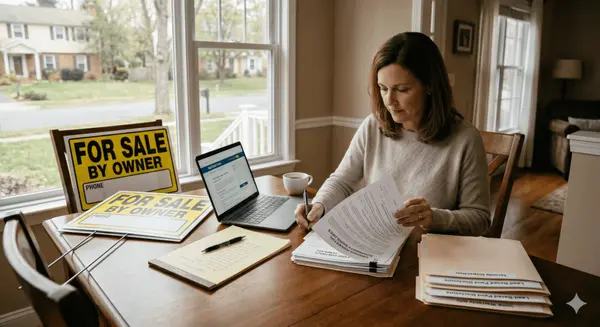
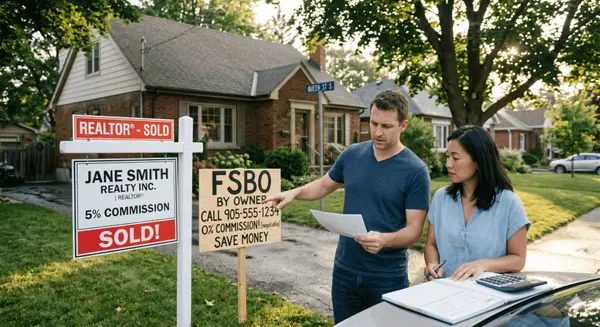
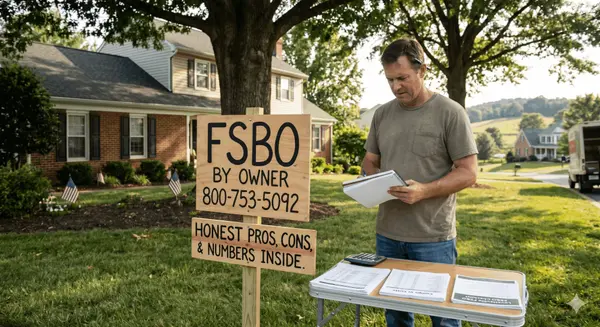
Can I still sell my West Virginia home "For Sale By Owner" to avoid commissions entirely?
Yes, FSBO is legal in West Virginia and still an option. The settlement actually makes it slightly easier in some ways because compensation is now fully negotiable — but it introduces a new wrinkle: you'll still encounter buyers who have signed agency agreements with their own agent and may request that you cover some or all of their agent's fee as part of the offer. Most FSBO sellers end up saving less than they expect once these negotiations factor in. A 1.5% full-service listing agent often produces a better net outcome than FSBO while still keeping total commission costs low.
Glossary
NAR Settlement
The 2024 resolution of antitrust lawsuits against the National Association of Realtors, which changed how buyer-agent compensation is communicated and how buyer-agency agreements are formalized. Effective nationwide on August 17, 2024.
Cooperative Compensation
The pre-settlement practice of the listing agent splitting commission with the buyer's agent, with the split amount broadcast in the MLS. This practice ended on August 17, 2024.
Buyer-Agency Agreement
A written contract a buyer signs with their agent before touring homes, specifying the agent's fee and what happens if the seller doesn't cover it.
Offer of Compensation
The amount a seller voluntarily offers to contribute toward the buyer's agent fee. Can be a percentage or a flat dollar amount; no longer published in the MLS.
Seller Concession
Any credit a seller gives a buyer at closing, including buyer-agent compensation, repair credits, or closing-cost assistance. Now more transparent under the post-settlement model.
WV Transfer Tax
West Virginia's state tax on real estate sales at $1.10 per $500 of sale price, plus county tax of approximately $0.55 per $500, totaling roughly $3.30 per $1,000 in most counties. Typically paid by the seller at closing.
1.5% Listing Program
A full-service listing fee structure at 1.5% of sale price, including professional photography, drone video, 3D tours, negotiation, and full MLS marketing — with no reduction in service compared to traditional 3% listings.
MLS (Multiple Listing Service)
The regional database where real estate agents list homes for sale. West Virginia has several, including KVBR (Charleston), Huntington Board, EPBOR (Eastern Panhandle), and the Morgantown/north-central system.
Explore More WV & DMV Seller Guides
1.5% Listing Program Seller Net Sheet Free Home Valuation Cash Offers Homes for Sale Ashburn Fairfax LeesburgExplore More
Browse Every Corner of the DMV Market
Whether you're searching by budget, neighborhood, or buying situation — find exactly what you need below.
Virginia Homes by Budget
Washington DC Homes by Budget
Maryland Homes
Explore Northern Virginia Communities
Loudoun County
Fairfax County & Surrounding
Ready to Make a Move?
Full-Service · No Tradeoffs
List for 1.5% & Keep More Equity
Professional photography, drone video, 3D tours, and expert negotiation — all included. On an $800K home, that's $12,000 more in your pocket vs. a 3% agent.
See the 1.5% Program →Need Speed or Certainty?
Get a No-Obligation Cash Offer
Skip the showings, skip the contingencies. If timing or condition matters more than top dollar, a cash offer may be the right fit. We'll walk you through every option.
Explore Cash Offers →Categories
Recent Posts


Let's Connect