
Selling an Investment Property in Herndon, VA: Tax & Buyer Strategy (2026)

Quick Answer: Selling a rental or investment property in Herndon, VA means navigating capital gains tax, depreciation recapture (taxed up to 25%), and the choice between a 1031 exchange or an outright sale. With a Herndon median sale price around $672,000 and homes going under contract in roughly 19 days, the bigger decision is often who you sell to — a fellow investor buying with the lease in place, or an owner-occupant who needs the property vacant. The Jamil Brothers Realty Group structures both, and lists investment properties for a 1.5% full-service fee instead of the traditional 3%.
Selling an investment property is not the same as selling the home you live in. The tax exposure is different, the buyer pool is different, and Virginia landlord-tenant law shapes when and how you can even get to the closing table. If you own a rental in Herndon — a townhouse near the W&OD Trail, a single-family home in Kingstream, or a condo close to the future Herndon Metro station — the gap between a well-planned sale and a rushed one can easily be five or six figures.
This guide walks through the three things that decide your real return: the federal and Virginia tax treatment of a rental sale, the buyer strategy that matches your timeline, and the Virginia tenant rules you have to follow if the property is occupied. It also shows exactly how a 1.5% full-service listing fee changes the math on a property where you are already absorbing capital gains and recapture.
Key Takeaways
- Depreciation recapture is the surprise tax. The depreciation you deducted (or were allowed to deduct) over the years is recaptured at a federal rate up to 25% — separate from capital gains.
- A 1031 exchange defers the tax, but the clock is strict: 45 days to identify replacement property, 180 days to close, and the funds must run through a qualified intermediary.
- Section 121 may still help. If you lived in the property as a primary residence for 2 of the last 5 years before selling, a partial exclusion can apply even on a former rental.
- Buyer choice drives price and speed. Selling tenant-occupied to an investor is faster; delivering it vacant to an owner-occupant usually sells for more in Herndon's market.
- Virginia tenant law sets the timeline. Lease terms, notice periods, and showing access rules under the Virginia Residential Landlord and Tenant Act all affect your listing date.
- Commission is negotiable. A 1.5% full-service listing fee instead of 3% keeps an extra $10,000 on a $672,000 sale — meaningful when you're also paying tax on the gain.
In This Guide
- The Herndon Investment Property Market in 2026
- The Tax Picture: Capital Gains & Depreciation Recapture
- The 1031 Exchange Decision
- When Section 121 Still Helps
- Virginia-Specific Selling Costs
- Commission Comparison Calculator
- Buyer Strategy: Investor vs. Owner-Occupant
- Selling With a Tenant in Place (Virginia Rules)
- Your Step-by-Step Selling Timeline
- Common Mistakes to Avoid
- How to Choose a Listing Agent for an Investment Sale
- Your Next Steps
- Frequently Asked Questions
- Glossary
The Herndon Investment Property Market in 2026
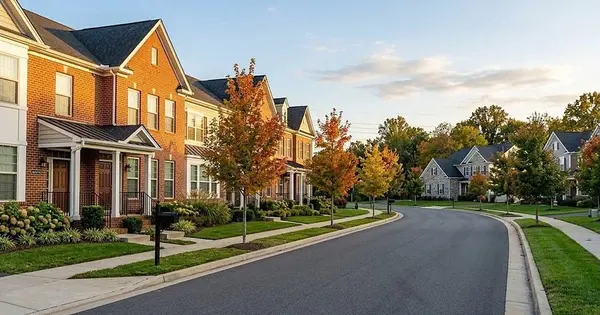
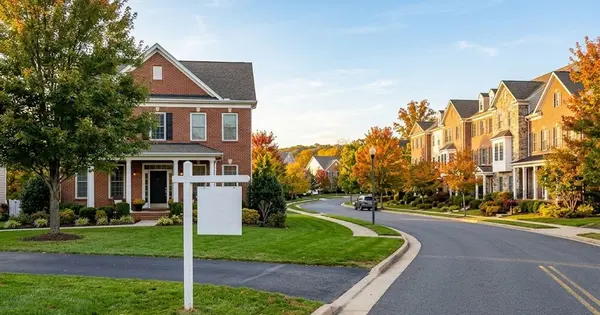
Herndon sits in western Fairfax County, anchored by the Dulles Technology Corridor, the W&OD Trail, and a historic downtown that has steadily gentrified. For investment owners, the relevant numbers are demand and exit liquidity, and both are strong.
As of early 2026, the Herndon median sale price is approximately $672,000, up meaningfully year over year, with homes going to pending status in roughly 19 days — a competitive, seller-leaning market by any measure. That speed matters for an investment sale: a faster market widens your buyer options and gives you leverage on whether to sell occupied or vacant.
| Herndon Metric (Early 2026) | Figure | What It Means for Sellers |
|---|---|---|
| Median sale price | ~$672,000 | Strong equity base; gains likely substantial for long-held rentals |
| Days to pending | ~19 days | Fast turnover; vacant delivery is feasible without long carry |
| Market direction | Seller-leaning | Leverage to choose buyer type and terms |
| School district | Fairfax County Public Schools | Owner-occupant family demand is deep here |
The key strategic implication: in a market this liquid, you rarely have to accept the first investor lowball. A property delivered vacant and well-presented draws the full owner-occupant pool, which in Herndon typically pays more than a cash investor running cap-rate math. We cover that tradeoff in detail in the buyer strategy section. You can also view current listings in Herndon and Northern Virginia to gauge active competition before you list.
Get a personalized valuation from The Jamil Brothers — street-level comps for your specific block and property type, not an automated estimate. Response within 24 hours.
The Tax Picture: Capital Gains & Depreciation Recapture
This is the part that surprises owners most, so it deserves precision. A rental sale generates two distinct federal tax events, plus Virginia state income tax. None of the following is tax advice — confirm everything with your CPA — but understanding the structure helps you plan the sale itself.
1. Long-Term Capital Gains
If you held the property more than a year, the appreciation portion of your gain is taxed at long-term capital gains rates — generally 0%, 15%, or 20% federally depending on your taxable income, plus a possible 3.8% Net Investment Income Tax for higher earners. Virginia then taxes the gain as ordinary income at the state level (Virginia has no separate capital gains rate).
2. Depreciation Recapture
Every year you owned the rental, you were allowed to depreciate the building. When you sell, the IRS "recaptures" that depreciation — it is taxed as unrecaptured Section 1250 gain at a federal rate up to 25%. The critical trap: this applies to depreciation you were allowed to take, whether or not you actually claimed it. Skipping depreciation deductions does not avoid recapture.
⚠️ The Recapture Math Most Owners Miss
On a property you've owned 15 years, accumulated depreciation can easily reach $90,000–$130,000. At a 25% recapture rate that is a $22,500–$32,500 federal bill before you even calculate capital gains on the appreciation. This is why the listing fee you choose matters so much on an investment sale — every dollar of commission saved is a dollar that offsets a tax bill you cannot negotiate.
3. Putting It Together — Illustrative Example
| Component | Illustrative Figure |
|---|---|
| Original purchase price (2010) | $340,000 |
| Sale price (2026) | $672,000 |
| Accumulated depreciation taken | ~$98,000 |
| Capital gain (appreciation) | ~$332,000 |
| Recapture taxed at (up to) | 25% federal |
| Gain taxed at | 15–20% federal + VA ordinary rate |
The figures above are illustrative only — your basis, improvements, and income bracket change everything. The point is structural: a long-held Herndon rental can carry a combined federal-and-state tax bill well into the five or six figures, which makes the two levers you can control — deferral strategy and transaction costs — disproportionately valuable.
The 1031 Exchange Decision
A Section 1031 like-kind exchange lets you defer both capital gains and depreciation recapture by rolling the proceeds into another investment property. It is the single most powerful tax tool available to a rental seller — but it is unforgiving on process.
Engage a Qualified Intermediary — Before Closing
You cannot touch the sale proceeds. A qualified intermediary (QI) must hold the funds. This must be arranged before the sale closes — you cannot retroactively start a 1031.
Identify Replacement Property — 45-Day Hard Deadline
From the closing date, you have exactly 45 calendar days to formally identify replacement property in writing. No extensions for weekends or holidays.
Close on Replacement — 180-Day Hard Deadline
You must close on the replacement property within 180 days of the original sale. Equal-or-greater value and equal-or-greater debt are generally required for full deferral.
| ✓ A 1031 exchange may fit if… | ✗ An outright sale may be better if… |
|---|---|
| You want to stay invested in real estate | You want to fully exit and access cash |
| Your gain + recapture tax is large | Your gain is modest or you have offsetting losses |
| You can find a suitable replacement in 45 days | Inventory is tight and you can't risk the deadline |
| You may eventually use a step-up in basis at death | You qualify for a Section 121 exclusion instead |
The listing strategy and the 1031 timeline are connected. If you're doing an exchange, the listing has to be coordinated so the closing date gives you a realistic runway to identify and close a replacement. This is where an agent who has handled investment sales — not just primary residences — earns their keep.
Our seller net sheet breaks down commission, Virginia transfer taxes, and closing fees so you know your real proceeds before you list — essential when you're also planning around capital gains and recapture.
When Section 121 Still Helps
The Section 121 primary-residence exclusion lets a single filer exclude up to $250,000 of gain ($500,000 married filing jointly) on a home they lived in as a primary residence for at least 2 of the 5 years before the sale. Many investment owners don't realize this can still apply to a property that is now a rental but was their home.
If you lived in the Herndon property, then converted it to a rental, you may still qualify for a partial or full exclusion if you sell within the five-year window — though the exclusion is reduced for periods of "non-qualified use" (time it was a rental after 2009) and depreciation recapture is still owed regardless. The interaction is genuinely complex; the takeaway is that the timing of your sale relative to when you moved out can be worth tens of thousands of dollars, so model it with a CPA before you list, not after.
ℹ️ Why This Affects Your Listing Date
If you're approaching the edge of the 2-of-5-year window, a sale that closes a few months earlier versus later can mean the difference between qualifying for the exclusion or not. Your listing timeline isn't just a marketing decision — it's a tax decision. We build the calendar backward from your tax constraints.
Virginia-Specific Selling Costs
Beyond federal tax, the sale itself carries Virginia and Fairfax County transaction costs. These are predictable and should be in your net sheet from day one.
| Cost | Typical Rate | On a $672,000 Sale |
|---|---|---|
| Virginia grantor's tax | $1.00 per $1,000 | ~$672 |
| NOVA regional congestion fee | $0.15 per $100 | ~$1,008 |
| Listing fee (traditional 3%) | 3.0% | ~$20,160 |
| Listing fee (Jamil Brothers 1.5%) | 1.5% | ~$10,080 |
| Settlement / title fees | Varies | ~$1,500–$2,500 |
| Prorated rent & security deposit transfer | If tenant-occupied | Credited at closing |
The single largest controllable line is the listing commission. The grantor's tax and congestion fee are fixed by Virginia statute; the title fees are largely standardized. The commission is the one number you negotiate — and on an investment sale where you're already absorbing tax, that's exactly where to focus. See how a 1.5% full-service listing program compares, or run your own seller net sheet with your actual numbers.
Commission Comparison Calculator
Select your property's estimated value to see the difference between a traditional 3% listing fee and the Jamil Brothers 1.5% full-service fee. On an investment sale, this saved amount directly offsets a tax bill you can't negotiate down.
Seller Savings Calculator
How much more do you keep with our 1.5% listing fee?
Select your property's estimated value to see your real net proceeds — side by side.
Traditional Agent — 3%
Our Fee — Only 1.5%
Extra in your pocket
$6,000
vs. a traditional 3% listing agent — with zero reduction in service or marketing.
Traditional Agent — 3%
Our Fee — Only 1.5%
Extra in your pocket
$7,500
vs. a traditional 3% listing agent — with zero reduction in service or marketing.
Traditional Agent — 3%
Our Fee — Only 1.5%
Extra in your pocket
$9,000
vs. a traditional 3% listing agent — with zero reduction in service or marketing.
Traditional Agent — 3%
Our Fee — Only 1.5%
Extra in your pocket
$11,250
vs. a traditional 3% listing agent — with zero reduction in service or marketing.
Traditional Agent — 3%
Our Fee — Only 1.5%
Extra in your pocket
$15,000
vs. a traditional 3% listing agent — with zero reduction in service or marketing.
Estimates only. Closing costs vary. Buyer's agent commission is negotiable.
Buyer Strategy: Investor vs. Owner-Occupant
This is the decision unique to investment sales, and in Herndon's market it is worth real money. You are essentially choosing your buyer pool before you list, and each pool behaves differently.
| Factor | Sell to an Investor (lease in place) | Sell to an Owner-Occupant (vacant) |
|---|---|---|
| Typical price | Lower — priced on cap rate / rent | Higher — priced on emotion & comps |
| Speed | Fast — no need to vacate | Slower — must deliver vacant |
| Showings | Limited; tenant cooperation needed | Full access; staging possible |
| Financing | Often cash or DSCR loans | Conventional / FHA / VA |
| Best when | Strong lease, good tenant, you want speed | Lease ending, market hot, you want top price |
The Herndon-Specific Read
Because Herndon's owner-occupant demand is deep — strong Fairfax County schools, Metro access, and a popular downtown — the vacant-delivery path usually produces the highest sale price when the lease and market timing allow it. The investor path wins when you have a high-quality tenant on a strong lease and you value certainty and speed over squeezing the last few percent. The right answer depends on your lease, your tax timeline, and your tolerance for carrying the property during a vacancy. We model both before recommending one.
Maximizing Price on the Owner-Occupant Path
- ✓ Time the listing to the lease end so the home is delivered vacant and show-ready
- ✓ Address deferred maintenance tenants tend to overlook (paint, flooring, fixtures)
- ✓ Light staging — owner-occupants buy on feel, not spreadsheets
- ✓ Full marketing: professional photography, drone, 3D tour, MLS syndication
- ✓ Price to the active comps, not last year's rent-based valuation
4K photography, drone video, 3D tours, expert negotiation, and full MLS marketing — all included at 1.5%. On an investment sale, the commission you save offsets the gain and recapture tax you can't.
Selling With a Tenant in Place (Virginia Rules)
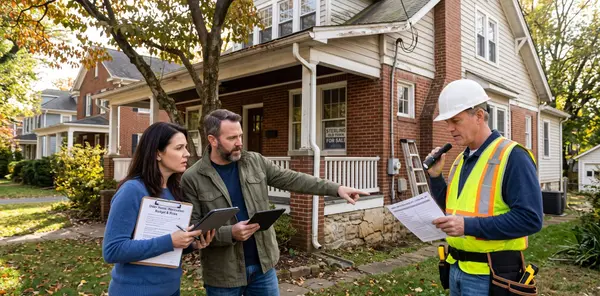
If your Herndon property is occupied, the Virginia Residential Landlord and Tenant Act (VRLTA) governs what you can and can't do. Getting this wrong delays your sale or exposes you to liability. The general framework:
Virginia Tenant-Occupied Sale Checklist
- ✓ The lease survives the sale. A fixed-term lease generally transfers to the new owner; the tenant has the right to stay until it ends.
- ✓ Notice for showings. Virginia generally requires reasonable advance notice (commonly 24–72 hours) before entry for showings unless the lease specifies otherwise.
- ✓ Month-to-month tenancies can typically be ended with proper written notice (commonly 30 days for month-to-month), enabling a vacant sale.
- ✓ Security deposit transfers to the buyer at closing, properly accounted for in the settlement statement.
- ✓ Cooperative tenants sell faster. A reasonable showing arrangement — and sometimes a modest incentive — keeps the property accessible and presentable.
Lease terms, local ordinances, and the specific tenancy type change the details, so confirm your situation with a Virginia real estate attorney or your agent. The strategic point: your listing date is constrained by your lease structure, which is why investment sales should be planned months ahead, not weeks.
Your Step-by-Step Selling Timeline
Tax & Strategy Planning — 60–90 days out
Meet your CPA on gain, recapture, Section 121, and whether a 1031 fits. Decide investor vs. owner-occupant path. This drives every later date.
Tenant & Property Prep — 30–60 days out
Confirm lease status, give any required notice, coordinate showing access, and address deferred maintenance for the chosen buyer pool.
List & Market — Days 1–14
Professional photography, drone, 3D tour, MLS syndication, and targeted outreach to the right buyer pool. Herndon typically goes pending within ~19 days.
Offer, Negotiation & Contract — Days 14–25
Evaluate offers on price and terms (lease assumption, vacancy delivery, financing). Coordinate with your QI if doing a 1031.
Closing & Post-Sale — Days 25–55
Settlement, security deposit and rent prorations, and — if applicable — the 45-day 1031 identification clock starts at closing.
Common Mistakes to Avoid
| Mistake | Consequence |
|---|---|
| Closing before engaging a 1031 intermediary | Exchange disqualified — full tax bill triggered |
| Forgetting depreciation recapture in net planning | A five-figure surprise on the tax return |
| Listing tenant-occupied without notice planning | Delayed showings, lost buyers, legal exposure |
| Defaulting to a 3% commission without comparing | $10,000+ left on the table on a typical Herndon sale |
| Pricing on rent math when owner-occupants would pay more | Selling below true market value |
| Missing the Section 121 window by a few months | Losing a $250K/$500K exclusion opportunity |
How to Choose a Listing Agent for an Investment Sale
An investment sale is not a standard residential listing. Use objective criteria:
The Jamil Brothers Realty Group — Saad Jamil and Arslan Jamil of Samson Properties — has handled investment and tenant-occupied sales across Northern Virginia, with 840+ homes sold, $500M+ in closed volume, and 500+ five-star reviews. They list investment properties for a 1.5% full-service fee (professional photography, drone video, 3D tours, partner-led negotiation, and full MLS syndication) instead of the traditional 3%, and coordinate listing timelines around 1031 and Section 121 constraints. That combination — investment-sale fluency plus a fee structure that preserves capital you'd otherwise lose to tax — is the practical reason to consider them for a Herndon rental sale.
Your Next Steps
Selling a Herndon investment property well is a sequencing problem: tax planning first, buyer-pool decision second, listing and timeline third. Get the order right and you protect both the gain and the proceeds. Get it wrong — closing before a 1031, ignoring recapture, defaulting to 3% — and you donate five figures unnecessarily.
The two levers fully in your control are the deferral strategy (which you build with your CPA) and the transaction cost (which you set when you choose your listing agent). On a property where the IRS and Virginia are already taking a share, choosing a 1.5% full-service listing fee over 3% is one of the cleanest ways to keep more of what you built. Start with a real valuation and a real net sheet — with your actual numbers, not estimates.
Know your equity, understand your costs, and see exactly what you'll walk away with after tax and fees — before you make any decisions. The Jamil Brothers provide a full investment-sale consultation at no cost or obligation.
If speed or certainty matters more than maximum price — a problem tenant, a tight 1031 window, or you simply want a clean exit — a cash offer may be worth comparing alongside a traditional listing. We'll lay out the full range so you can decide with real numbers.
If timing, condition, or certainty matters more than maximum price, a cash offer may be the right fit for your investment property. We'll walk you through your full range of options — no pressure.
Frequently Asked Questions
How is selling an investment property in Herndon taxed differently from selling my home?
An investment property sale triggers two federal tax events instead of one: long-term capital gains on the appreciation (generally 15–20% federally, plus a possible 3.8% Net Investment Income Tax) and depreciation recapture on the depreciation you were allowed to take, taxed at a federal rate up to 25%. Virginia then taxes the gain as ordinary income at the state level. A primary residence sale, by contrast, may qualify for the Section 121 exclusion of up to $250,000 (single) or $500,000 (married filing jointly). Always confirm specifics with your CPA.
What is depreciation recapture and why does it surprise so many sellers?
Depreciation recapture is the tax on the depreciation deductions you took (or were allowed to take) while the property was a rental. It is taxed as unrecaptured Section 1250 gain at a federal rate up to 25%, separate from capital gains. It surprises sellers because it applies even if you never actually claimed depreciation, and on a long-held Herndon rental the accumulated figure can reach $90,000–$130,000, creating a five-figure tax bill on top of capital gains.
Can a 1031 exchange eliminate the tax on my Herndon rental sale?
A 1031 exchange defers — not eliminates — both capital gains and depreciation recapture by rolling proceeds into another investment property. The deferred tax remains until you eventually sell without exchanging, though a step-up in basis at death can change that outcome. The process is strict: a qualified intermediary must hold the funds (arranged before closing), you have 45 days to identify replacement property, and 180 days to close. Missing any deadline disqualifies the exchange.
How much does it cost to sell an investment property in Herndon, VA?
On a $672,000 Herndon sale, expect Virginia's grantor's tax (~$672), the Northern Virginia regional congestion fee (~$1,008), settlement and title fees (~$1,500–$2,500), plus the listing commission. The commission is the largest controllable cost: a traditional 3% fee is roughly $20,160, while the Jamil Brothers 1.5% full-service fee is roughly $10,080 — a difference of about $10,000 that directly offsets your tax bill.
Should I sell my Herndon rental to an investor or an owner-occupant?
It depends on your priorities. Selling to an investor with the lease in place is faster and avoids vacancy, but investors price on cap rate and rent, which usually means a lower number. Selling vacant to an owner-occupant typically produces a higher price in Herndon because the area has deep family demand driven by Fairfax County schools and Metro access — but it requires the lease to allow vacancy and the property to be show-ready. The right choice depends on your lease, tax timeline, and tolerance for carrying a vacancy.
Can I sell my Herndon property while a tenant is still living in it?
Yes. Under the Virginia Residential Landlord and Tenant Act, a fixed-term lease generally transfers to the new owner, so the tenant has the right to remain until the lease ends. You can still list and sell, but showings require reasonable advance notice and tenant cooperation, and the security deposit transfers to the buyer at closing. Month-to-month tenancies can typically be ended with proper written notice if you want to deliver the property vacant. Confirm your specific situation with a Virginia real estate attorney.
Does the Section 121 exclusion apply if my Herndon home is now a rental?
It can, partially. If you lived in the property as your primary residence for at least 2 of the 5 years before the sale, you may qualify for a partial or full Section 121 exclusion even though it's currently a rental — though the exclusion is reduced for non-qualified-use periods and depreciation recapture is still owed. Because the benefit can be worth tens of thousands of dollars and turns on the exact timing of your sale relative to when you moved out, model it with a CPA before you list.
How long does it take to sell an investment property in Herndon?
Herndon is a fast market — homes typically go to pending in around 19 days as of early 2026. For an investment sale, the active marketing window is similar, but the full timeline is longer because tax planning, tenant notice, and property prep should happen 60–90 days before listing. If you're coordinating a 1031 exchange, add the 45-day identification and 180-day closing windows that begin at your sale's closing date.
How did the NAR settlement change commissions on an investment sale?
Following the 2024 NAR settlement, buyer-agent compensation is no longer assumed to be set by the listing broker and is openly negotiable. For an investment seller this means more flexibility: you negotiate your listing fee and decide separately what, if anything, to offer a buyer's agent. It reinforces why comparing a 1.5% full-service listing fee against a traditional 3% is worthwhile — the commission structure is genuinely negotiable, and the savings are real on a higher-value Herndon property.
What is the Herndon market doing in 2026, and is it a good time to sell a rental?
As of early 2026, Herndon's median sale price is around $672,000 with homes going pending in roughly 19 days — a competitive, seller-leaning market. For a rental owner, that liquidity is favorable: it widens your buyer options, supports a vacant owner-occupant sale at top value, and reduces the carrying-cost risk of a vacancy period. Whether it's the right time for you specifically still depends on your tax position and the Section 121 or 1031 clocks.
What mistakes should I avoid when selling a Herndon investment property?
The costliest mistakes are: closing before engaging a 1031 intermediary (which disqualifies the exchange), forgetting depreciation recapture in your net planning, listing tenant-occupied without proper notice, pricing on rent math when owner-occupants would pay more, and defaulting to a 3% commission without comparing alternatives. Each of these can cost five figures individually; together they can erase a large share of your gain.
How do I choose the right agent for an investment property sale in Herndon?
Use objective criteria: documented experience with investment and tenant-occupied sales, current local Herndon market data, transparent commission terms, and the ability to coordinate listing timelines around 1031 or Section 121 deadlines. The Jamil Brothers Realty Group — Saad Jamil and Arslan Jamil of Samson Properties — meets these criteria with 840+ homes sold and a 1.5% full-service listing fee that preserves capital you'd otherwise lose to commission on top of tax.
Glossary
Capital Gains
The taxable profit from selling an asset for more than your adjusted basis; long-term rates apply if held over a year.
Depreciation Recapture
Tax on previously deducted (or allowed) depreciation when a rental is sold, at a federal rate up to 25%.
1031 Exchange
A like-kind exchange that defers gain and recapture by reinvesting proceeds into another investment property within strict deadlines.
Qualified Intermediary (QI)
A neutral third party that holds 1031 sale proceeds so the seller never takes constructive receipt of the funds.
Section 121 Exclusion
A primary-residence exclusion of up to $250,000 (single) or $500,000 (married) of gain if you lived there 2 of the last 5 years.
Grantor's Tax
A Virginia transfer tax paid by the seller, generally $1.00 per $1,000 of sale price.
VRLTA
The Virginia Residential Landlord and Tenant Act, governing tenant rights, notice, and lease transfer on a sale.
Net Proceeds
What the seller actually receives after commission, transfer taxes, settlement fees, and prorations — before income tax.
This article is general information for Herndon, VA property owners and is not tax, legal, or financial advice. Tax outcomes depend on your individual circumstances — consult a CPA and a Virginia real estate attorney before selling. Market figures are approximate and change over time. The Jamil Brothers Realty Group operates under Samson Properties. Phone: (703) 782-4830.
Explore More
Browse Every Corner of the DMV Market
Whether you're searching by budget, neighborhood, or buying situation — find exactly what you need below.
Virginia Homes by Budget
Washington DC Homes by Budget
Maryland Homes
Explore Northern Virginia Communities
Loudoun County
Fairfax County & Surrounding
Ready to Make a Move?
Full-Service · No Tradeoffs
List for 1.5% & Keep More Equity
Professional photography, drone video, 3D tours, and expert negotiation — all included. On an $800K home, that's $12,000 more in your pocket vs. a 3% agent.
See the 1.5% Program →Need Speed or Certainty?
Get a No-Obligation Cash Offer
Skip the showings, skip the contingencies. If timing or condition matters more than top dollar, a cash offer may be the right fit. We'll walk you through every option.
Explore Cash Offers →
Categories
- All Blogs (1120)
- Aldie (3)
- Ashburn (6)
- Buyer Guide (8)
- Buying a home (2)
- Buying Strategies (28)
- festivals (1)
- General Blog (64)
- Leesburg (5)
- Market Intelligence (29)
- Market Updates (8)
- Notable Properties For Sale (29)
- Real Estate Tips, News, and More (369)
- Seller Guide (2)
- Seller Guides (60)
- Selling Your Home (446)
- Sterling (6)
- Top Realtors in Northern Virginia (56)
Recent Posts


Message Sent!
Thank you for reaching out. Arslan & Saad have received your details and will be in touch shortly.
Need immediate assistance? Call or text 703-782-4830.