
How Much Does Home Staging Cost Before Selling Your Home in Northern Virginia?
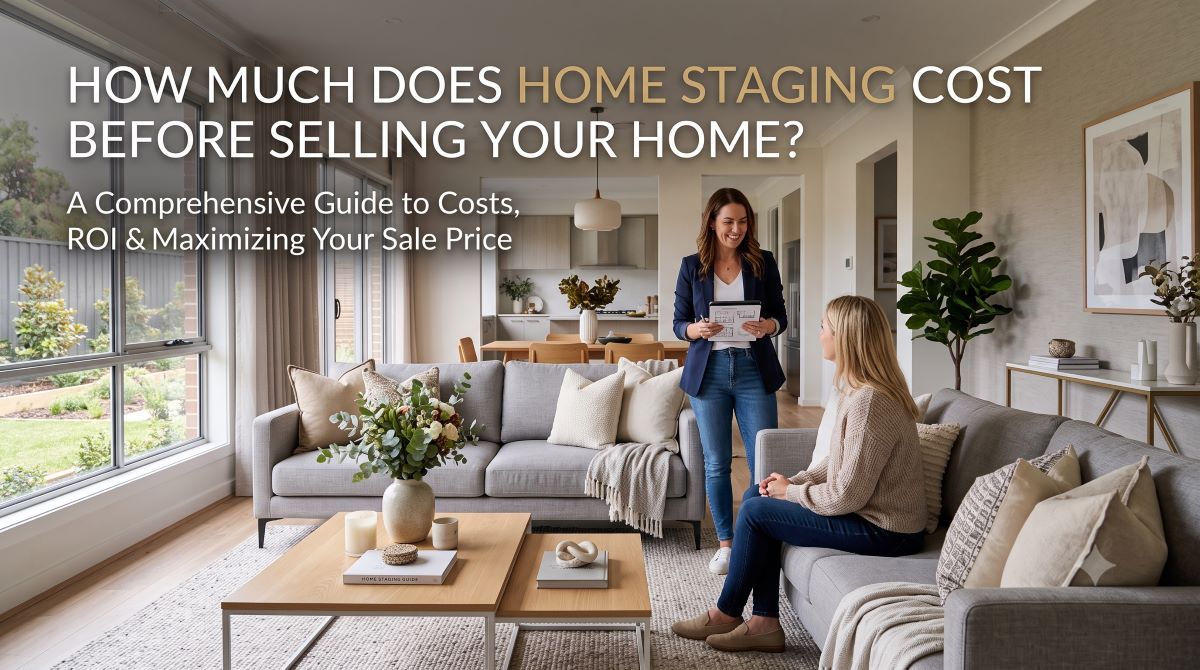
Quick Answer: Most Northern Virginia sellers pay $1,500 to $5,000 to professionally stage a home before listing, with the national average landing near $1,849. Costs run from a few hundred dollars for a consultation to $15,000+ for large luxury properties. Your final home staging cost depends on home size, whether it's occupied or vacant, how many rooms you stage, and how long the home stays on the market.
Key Takeaways
- Professional home staging typically runs about 0.5%–1% of your list price for an average home, and up to 2%–3% for a luxury property.
- A stand-alone staging consultation costs roughly $150–$600 — the most budget-friendly way to get expert guidance you can execute yourself.
- Vacant homes cost more to stage ($2,000–$6,000+) than occupied homes ($1,000–$3,000) because all furniture is rented.
- Virtual staging is far cheaper ($35–$200 per room) but only helps online photos — not in-person showings.
- NAR data shows 81% of buyers' agents say staging helps buyers picture a home as their own, and staged listings often sell faster and closer to asking.
- Some sellers can skip or reduce staging altogether — a quick as-is cash offer or a strong pricing strategy may make more sense for your situation.
In This Guide
- How Much Does Home Staging Cost in Northern Virginia?
- What Factors Affect Your Home Staging Cost?
- Occupied vs. Vacant Home Staging Costs
- Home Staging Cost Breakdown by Service Type
- Virtual Staging vs. Professional Staging
- Is Home Staging Worth It When You Sell?
- How to Lower Your Home Staging Cost
- Who Pays for Staging — and How We Help
- Frequently Asked Questions
- Glossary
If you're getting ready to list, one of the first budget questions is straightforward: how much does home staging cost before you sell? In Northern Virginia, most sellers spend between $1,500 and $5,000 to professionally stage a home, though the true range stretches from a few hundred dollars for a walk-through consultation to $15,000 or more for a large luxury property. The exact home staging cost comes down to your home's size, whether it's occupied or vacant, how many rooms you stage, and how many months it stays on the market.
Staging matters because buyers form an impression in the first few seconds of walking through the door — and 99% of them start their search online, where photos of well-styled rooms decide whether they book a showing at all. Done right, staging can help your home stand out, sell faster, and hold its price. Done wrong (or skipped when a home really needs it), a listing can sit, age, and eventually take a permanent price cut that costs far more than staging ever would.
Below, we break down real 2026 staging prices, exactly what pushes them up or down, and whether staging pays off when you sell in the DMV. When you're ready to think about your bottom line, our team can pair a free home valuation with a personalized cost plan so you know what staging — and selling — will actually net you. As a Northern Virginia real estate team that lists homes across Fairfax, Loudoun, Arlington, and Prince William, we've seen what presentation is worth here firsthand.
How Much Does Home Staging Cost in Northern Virginia?
Nationally, the average home staging cost sits around $1,849, with most projects falling between roughly $832 and $2,927, according to HomeAdvisor data. But those national numbers understate what many Northern Virginia sellers pay. This is a higher-cost-of-living metro with higher furniture-rental and labor rates and higher home values — so full-service staging here frequently lands in the $2,000–$5,000+ range, and considerably more for large or luxury homes in areas like McLean, Great Falls, and Vienna.
A useful rule of thumb professionals use: budget roughly 0.5% to 1% of your list price for staging an average home, rising to 2% or even 3% for a luxury property. On a $650,000 Northern Virginia home, that's about $3,250–$6,500 at the top end — though most sellers land well below that by staging only key rooms.
| Staging Approach | Typical Cost | Best For |
|---|---|---|
| Consultation only | $150–$600 (one-time) | Sellers who'll do the work themselves |
| Occupied home staging | $1,000–$3,000 | Still living in the home; some good furniture |
| Vacant home staging | $2,000–$6,000+ setup, then monthly rental | Empty homes; relocations; new construction |
| Per-room staging | $300–$800 per room / month | Staging only the high-impact rooms |
| Luxury home staging | $5,000–$15,000+ | High-end estates needing premium furnishings |
| Virtual (digital) staging | $35–$200 per room / image | Online listing photos only |
ℹ️ Staging is only part of your prep budget
Staging sits alongside other pre-listing costs — professional photography, minor repairs, paint, and deep cleaning — plus your closing costs and commission. To see the full picture before you spend a dollar, run the numbers with a seller net sheet and pair it with a free valuation.
What Factors Affect Your Home Staging Cost?
Two homes on the same street can have very different staging bills. Here's what moves the needle most, ranked roughly by how much they influence your total home staging cost.
Home size and number of rooms
More square footage means more furniture, more accessories, and more labor. But you rarely need to stage every room. Stagers consistently recommend focusing on the highest-impact spaces — the living room, primary bedroom, and kitchen — because that's where buyers spend the most time and form the strongest impressions. Staging just three to five rooms instead of the whole house can cut costs by 40–60%.
Length of time on the market
Most professional stagers charge a setup fee plus a monthly furniture-rental fee, because the pieces stay in your home until it sells. A home that sells in two weeks costs far less to stage than one that lingers for three months. This is exactly why smart pricing and marketing matter — the faster you sell, the lower your carrying and staging costs.
Add-on services
Your quote may grow with extras. Common ones include decluttering and packing ($650–$1,000+), a storage unit to hold your belongings (around $180/month), plus deep cleaning, minor repairs, and paint. These aren't strictly "staging," but they're often bundled into the prep conversation because a spotless, depersonalized home is what makes staging shine.
Before you decide how much to invest in staging, know your number. Get a personalized home valuation from The Jamil Brothers — street-level comps, not automated estimates — with a response within 24 hours.
Occupied vs. Vacant Home Staging Costs
Whether you're still living in the home is the single biggest cost factor. When a home is occupied and already has quality furniture, a stager can work with what you have — rearranging, editing, and adding a few accent pieces. When a home is vacant, the stager has to source and rent every item, from sofas and beds down to lamps, rugs, and wall art, which adds monthly rental fees on top of the setup cost.
| Detail | Occupied Home | Vacant Home |
|---|---|---|
| Typical total | $1,000–$3,000 | $2,000–$6,000+ setup |
| Furniture rental | Minimal — uses your pieces | $500–$2,000+ per month |
| Main work | Edit, rearrange, accent | Source, deliver, fully furnish |
| Photo & showing impact | Good | Very high — empty rooms photograph poorly |
Empty homes are the classic case for physical staging. Bare rooms feel cold, make it hard for buyers to judge scale, and let every scuff and outlet stand out. That's why vacant staging — while pricier — often delivers the strongest return, especially for relocations, estate sales, and new construction. If you're selling an empty home you inherited or a property you no longer live in, our team can walk you through both staging and a no-prep cash offer option so you can compare paths side by side.
Home Staging Cost Breakdown by Service Type
Not all staging is full-service. Understanding the tiers helps you match the spend to what your home actually needs.
Staging consultation ($150–$600)
The best-value option for many sellers. A professional walks your home and gives a room-by-room punch list — furniture placement, what to store, lighting fixes, paint colors, and quick updates. You then do the work yourself. Some stagers offer this walk-through free when you book fuller services.
Occupied ("soft") staging ($1,000–$3,000)
The stager blends your existing furniture with a handful of rented pieces and fresh accessories. Because there's a base to work with, this is usually the most cost-effective full-service route for people still living in the home.
Full vacant staging ($2,000–$6,000+)
The stager designs and furnishes the key rooms from scratch. Expect a setup fee for design, delivery, and installation, plus a monthly rental fee that continues until the home closes. Furniture rental is almost always the largest line item.
Luxury staging ($5,000–$15,000+)
High-end homes need furnishings that match their caliber — designer pieces, original art, and layered styling. For a multi-million-dollar estate, staging can approach 2–3% of the list price, but the buyers at that level expect a polished, move-in-ready presentation.
Virtual Staging vs. Professional Staging: Which Costs Less?
Virtual staging — where a designer digitally adds furniture and decor to photos of empty rooms — costs a fraction of the physical kind, usually $35 to $200 per room (some AI tools run even less). It looks great online and can dramatically lift a listing's click-through. The catch: buyers who tour in person still see empty rooms, so it can create a jarring disconnect if not handled honestly. Any virtual staging should always be clearly disclosed.
| ✓ Where Virtual Wins | ✗ Where Physical Wins |
|---|---|
| Lowest cost by far ($35–$200/room) | Rooms feel real during in-person showings |
| Great for online photos and social sharing | No "empty room" letdown after the listing |
| Fast turnaround, easy to test styles | Helps buyers feel scale and flow in person |
| Ideal for hot markets or tight budgets | Strongest for higher-priced, competitive homes |
A practical rule for Northern Virginia: for a well-priced home under $400K in a fast-moving segment, virtual staging (or none at all) may be plenty. Above that — or for vacant, dated, or higher-end homes — physical staging of a few key rooms usually earns its cost back through better photos, more showings, and stronger offers.
Is Home Staging Worth It When You Sell?
For the right home, staging is one of the highest-leverage dollars a seller can spend. The data from the National Association of REALTORS® (NAR) and the Real Estate Staging Association (RESA) is consistent on the direction, even if exact figures vary:
What the research shows
- ✓ 81% of buyers' agents say staging makes it easier for buyers to picture a property as their own.
- ✓ About 20% of agents report staging raised a home's value by up to 5%; roughly 14% saw gains up to 10%.
- ✓ RESA tracking has shown staged homes selling near or above list, and spending fewer days on market than unstaged comps.
- ✓ Vacant, dated, or higher-priced homes benefit most; a well-priced, updated home in a hot segment benefits least.
ℹ️ A note on those ROI numbers
Impressive "staged homes sold for $X over asking" figures are averages, and staged listings are often also freshly painted, repaired, and priced sharply — so it's hard to credit staging alone. Treat staging as one lever in a coordinated plan, not a guaranteed payout. The clearest financial case is usually avoided price cuts: a listing that sits and gets reduced pays a permanent penalty that's recorded in its history forever.
Here's how the speed-and-presentation advantage tends to stack up. These are directional, not guarantees — every home and micro-market is different:
The takeaway: staging is a strategy, not a reflex. The right move depends on your specific home, price point, and neighborhood — which is exactly the kind of honest, numbers-first advice a good listing agent should give you before you spend a cent. That's also where keeping more of your equity through a 1.5% full-service listing fee can free up budget for the prep that actually moves your sale.
4K photography, drone video, 3D tours, expert negotiation, and full MLS marketing — all included at 1.5%. Keep more in your pocket to invest in staging, repairs, or your next move.
See what you keep with a lower listing fee
Staging is money spent to net more at closing — and so is choosing the right commission structure. Pick your home's estimated value below to see how much more you keep with our 1.5% full-service listing fee versus a traditional 3% agent. That difference alone can more than cover your entire staging budget.
Seller Savings Calculator
How much more do you keep with our 1.5% listing fee?
Select your home's estimated value to see your real net proceeds — side by side.
Traditional Agent — 3%
Our Fee — Only 1.5%
Extra in your pocket
$6,000
vs. a traditional 3% listing agent — enough to fund most of a full staging job.
Traditional Agent — 3%
Our Fee — Only 1.5%
Extra in your pocket
$7,500
vs. a traditional 3% listing agent — with zero reduction in service or marketing.
Traditional Agent — 3%
Our Fee — Only 1.5%
Extra in your pocket
$9,000
vs. a traditional 3% listing agent — the median NoVA sale, and enough to cover premium staging.
Traditional Agent — 3%
Our Fee — Only 1.5%
Extra in your pocket
$11,250
vs. a traditional 3% listing agent — several times the cost of a full staging job.
Traditional Agent — 3%
Our Fee — Only 1.5%
Extra in your pocket
$15,000
vs. a traditional 3% listing agent — luxury-level staging paid for many times over.
Estimates only. Closing costs vary. Buyer's agent commission is negotiable.
How to Lower Your Home Staging Cost Without Hurting Your Sale
You don't need to spend top dollar to get most of the benefit. These proven tactics keep your home staging cost down while protecting your presentation.
Smart ways to save on staging
- ✓ Book a consultation, not full service. Pay for expert recommendations, then execute the punch list yourself.
- ✓ Stage only high-impact rooms. Living room, primary bedroom, and kitchen deliver the most for the money.
- ✓ Use your own furniture where you can. "Soft staging" adds a few rented accents instead of a full set.
- ✓ Declutter, depersonalize, and deep-clean first. Free (or cheap) and often the single highest-return step.
- ✓ Brighten with light, not money. Clean windows, fresh white paint, and updated bulbs make rooms feel bigger.
- ✓ Consider virtual staging for empty rooms in listing photos when a fast, low-cost lift is the goal.
When staging pays off — a simple 4-step timeline
Strategy & valuation — before you spend
Get an accurate value and a clear-eyed read on whether your home even needs staging, and how much.
Declutter & prep — the free wins first
Depersonalize, deep-clean, and handle minor repairs before any furniture arrives.
Stage the key rooms — then photograph
Style the highest-impact spaces and capture professional photos while everything looks its best.
Price sharp & launch — sell before rentals add up
A well-priced, well-presented launch shortens time on market, which keeps monthly staging fees low.
Our seller net sheet breaks down every cost — commission, transfer taxes, closing fees, and prep — so you know your real bottom line before you invest in staging or list.
Who Pays for Home Staging — and How We Help Sellers Save
In most cases, the seller pays for staging as a pre-listing expense. Some agents offer a consultation or partial staging as part of their service, and a few will advance staging costs and deduct them at closing. The important thing is to weigh staging inside your overall plan — not as a random line item, but against your list price, timeline, and target buyer.
That's where working with the right team changes the math. The Jamil Brothers Realty Group is a full-service Northern Virginia real estate team with a 1.5% full-service listing fee — professional 4K photography, drone video, 3D tours, expert negotiation, and full MLS marketing all included. Because you're paying half the traditional 3% listing side, the savings frequently cover your entire staging budget and then some, letting you present your home beautifully without eating into your equity. Prefer to structure your fee differently? Our flexible commission options let you match the plan to your situation.
And if staging doesn't make sense for you at all — an inherited property, a fast relocation, or a home that needs work — we'll show you every route, including a no-prep cash offer so you can sell as-is and skip staging entirely. When you're ready, you can also start your home sale with a no-obligation consultation, browse current listings across the DMV, or search available homes on ExploreVAHomes. Buyers planning their next move can also book a Northern Virginia buyer strategy session.
Frequently Asked Questions
How much does home staging cost before selling your home?
Most sellers pay a national average of about $1,849, with typical projects between $832 and $2,927. In a higher-cost market like Northern Virginia, full-service staging more often lands in the $2,000–$5,000+ range, while a stand-alone consultation runs $150–$600 and large luxury homes can reach $15,000 or more. A common rule of thumb is to budget 0.5%–1% of your list price.
Is home staging worth the cost when selling?
For many homes, yes. NAR reports that 81% of buyers' agents say staging helps buyers picture a property as their own, and staged listings tend to sell faster and closer to asking. The strongest cases are vacant, dated, or higher-priced homes. That said, results are averages, not guarantees — a well-priced, updated home in a fast-moving segment may need little or no staging. The clearest financial win is often avoiding a price cut on a listing that sits too long.
Does staging a vacant home cost more than an occupied home?
Yes. Occupied staging typically runs $1,000–$3,000 because the stager works with your existing furniture. Vacant staging runs $2,000–$6,000+ for setup plus a monthly rental fee of roughly $500–$2,000, since every piece must be rented. Empty homes photograph poorly and feel cold, so vacant staging — while pricier — often delivers the biggest presentation improvement.
How much does virtual staging cost compared to physical staging?
Virtual staging runs about $35–$200 per room (some AI tools cost even less), versus thousands for physical staging. It's excellent for online listing photos and social sharing, but it only works on screen — buyers who tour in person will see the actual empty rooms. Any virtual staging should always be clearly disclosed so it never misrepresents the property.
Which rooms should I stage first to save money?
Prioritize the living room, primary bedroom, and kitchen — NAR data consistently shows the living room has the most impact on buyers, followed by the primary bedroom and kitchen. Staging just three to five key rooms instead of the entire home can reduce your staging cost by 40–60% while still creating a strong first impression in photos and showings.
Who pays for home staging — the buyer or the seller?
The seller pays for staging as a pre-listing expense in almost every case. Some agents include a consultation or partial staging in their services, and a few will advance the cost and deduct it at closing. Buyers are never expected to pay for staging — it's a marketing investment the seller makes to help the home sell faster and for more.
Is home staging tax deductible?
Staging costs are generally treated as a selling expense that can be deducted from your proceeds when the home sells, which may reduce your taxable gain. Tax situations vary, so confirm the details with a qualified tax professional — The Jamil Brothers are real estate advisors, not tax or legal advisors.
How long do I have to keep rented staging furniture?
Most stagers charge a setup fee for the first month or two, then a monthly rental fee until the home closes. That's why time on market matters so much to your total cost — a home that sells in two weeks is far cheaper to stage than one that lingers for three months. Sharp pricing and strong marketing are the best way to keep those monthly fees down.
Can I skip staging and still sell for a good price in Northern Virginia?
Sometimes. A well-priced, updated, move-in-ready home in a competitive Northern Virginia segment can sell quickly with strong photos and light prep. But vacant, dated, or higher-end homes usually benefit from at least partial staging. The right answer depends on your specific property and neighborhood — which is exactly what a listing agent should assess with you before you spend anything.
How should I choose a home stager or listing agent?
Ask for a clear cost breakdown, look at before-and-after photos of recent local sales, and confirm exactly what's included (setup, rental period, add-ons). For your listing agent, look for local track record, transparent fees, and marketing that photographs and prices your home to sell fast. The Jamil Brothers Realty Group brings a strong local track record and a 1.5% full-service model that helps free up budget for the prep that matters.
What mistakes should I avoid with staging?
The most common mistakes are staging every room instead of the high-impact ones, over-personalizing the space, skipping the free wins (declutter, clean, depersonalize) before spending on furniture, and treating staging as a rescue for an overpriced listing. Staging works best as a pre-listing strategy paired with sharp pricing — not as a fix applied after a home has already sat on the market.
Glossary
Home Staging
Preparing and styling a home — furniture, decor, lighting — so it appeals to the widest range of buyers.
Occupied Staging
Staging a home you still live in, using mostly your existing furniture plus a few rented accents.
Vacant Staging
Fully furnishing an empty home with rented pieces so buyers can gauge scale and flow.
Virtual Staging
Digitally adding furniture and decor to listing photos of empty rooms; must be disclosed.
Staging Consultation
A paid walk-through where a stager gives a room-by-room punch list you can execute yourself.
Days on Market (DOM)
How long a listing is active before going under contract; longer DOM often leads to price cuts.
Net Proceeds
What you actually keep after commission, closing costs, and prep expenses are subtracted from the sale price.
Depersonalize
Removing family photos and personal items so buyers can picture themselves in the space.
The Bottom Line on Home Staging Cost in Northern Virginia
Home staging cost isn't one number — it's a range that flexes with your home's size, occupancy, room count, and time on market. Most Northern Virginia sellers land between $1,500 and $5,000 for professional staging, but you can spend far less with a smart consultation, key-room-only styling, and the free wins of decluttering and cleaning. What matters most is matching the spend to what your specific home actually needs, then launching at the right price so it sells before monthly fees pile up.
The best way to make that call is to start with real numbers: your home's value, your likely net proceeds, and an honest read on whether — and how much — to stage. The Jamil Brothers provide all three in one free, no-obligation consultation, and our 1.5% full-service listing fee helps keep more of your equity where it belongs: with you.
Know your equity, understand your prep and closing costs, and see exactly what you'll walk away with — before you spend on staging or list. The Jamil Brothers provide a full seller consultation at no cost or obligation.
Categories
- All Blogs (1148)
- Aldie (3)
- Ashburn (6)
- Buyer Guide (8)
- Buying a home (2)
- Buying Strategies (28)
- festivals (1)
- General Blog (66)
- Leesburg (5)
- Market Intelligence (29)
- Market Updates (8)
- Notable Properties For Sale (29)
- Real Estate Tips, News, and More (376)
- Seller Guide (2)
- Seller Guides (60)
- Selling Your Home (459)
- Sterling (6)
- Top Realtors in Northern Virginia (58)
Recent Posts
Message Sent!
Thank you for reaching out. Arslan & Saad have received your details and will be in touch shortly.
Need immediate assistance? Call or text 703-782-4830.