
Tapping Into Home Equity in Sterling: HELOC, Cash-Out Refi & Sale Options

Quick Answer: Sterling homeowners with significant accumulated equity have three primary ways to access that value — a HELOC (flexible draw-as-needed credit line at variable rates), a cash-out refinance (one lump sum at a new fixed mortgage rate), or selling the home outright (the only option that releases 100% of equity). With Sterling single-family medians near $725K and the typical owner sitting on $250K–$450K in equity, a sale through a 1.5% full-service listing program often nets meaningfully more than borrowing against the same equity at 2026 interest rates.
If you have owned a home in Sterling for several years, appreciation and mortgage principal payments may have created meaningful equity—but the smartest way to access it depends on what you need the money for and how long you plan to keep the property. Your usable equity is not simply the home’s estimated value minus the mortgage balance; lender limits, appraisal results, closing costs, existing liens, and required equity reserves can reduce the amount available.
A HELOC preserves your existing first mortgage and provides a reusable credit line, but it commonly carries a variable rate and uses your home as collateral. A cash-out refinance replaces the current mortgage with a larger loan, which may be less appealing if your existing rate is significantly lower than today’s offer. Selling converts your net equity into available proceeds after paying the mortgage and transaction costs, but it also means giving up the property and planning your next housing move. The CFPB’s home-equity guide recommends comparing rates, payment changes, fees, repayment terms, and worst-case risks before borrowing.
The decision should also reflect the local property. A Sterling Park detached home, Cascades townhome, Countryside property, or Dulles-area condo may have a different valuation, HOA structure, buyer pool, and resale outlook within the broader Loudoun County real estate. Drawing on our team’s neighborhood-level pricing experience, this guide compares HELOCs, cash-out refinancing, and selling using realistic Sterling scenarios.
Begin with a professional home valuation, confirm borrowing terms with qualified lenders, and consult a tax professional about your circumstances. If selling provides the stronger outcome, a flexible, full-service listing starting at 1.5% may reduce the listing-side fee. Use a seller net sheet to compare estimated sale proceeds with the cash, monthly payments, and long-term costs associated with borrowing.
Key Takeaways
- Median Sterling SFH equity in 2026 is roughly $280K–$450K for owners who bought before 2022, driven by Loudoun County price appreciation and principal pay-down.
- HELOCs typically allow access to 80–85% combined loan-to-value, charge variable interest (currently 8–10%), and require monthly interest payments during the draw period.
- Cash-out refinances reset your mortgage at current 2026 rates — often 1.5–2.5 percentage points higher than rates locked in 2020–2021 — adding hundreds to thousands per month in interest cost.
- Selling unlocks 100% of equity with no ongoing debt; on a $750K Sterling sale, a 1.5% full-service listing fee saves $11,250 vs. a 3% agent, which compounds into meaningfully more take-home.
- HELOC interest is only tax-deductible when funds are used for substantial home improvements (post-2017 TCJA rules); other uses lose that benefit.
- The right choice depends on three variables: how much equity you need, how long you plan to stay, and your current mortgage rate vs. today's rates.
In This Guide
- The Sterling Equity Landscape in 2026
- The Three Equity Access Options at a Glance
- HELOC: Flexible Access, Variable Risk
- Cash-Out Refinance: Lump Sum, New Mortgage Terms
- Selling Your Sterling Home: Maximum Equity Release
- Side-by-Side Comparison on a Sterling Home
- Calculate What You'd Walk Away With From a Sale
- Tax Implications of Each Option
- Timing and Life-Stage Considerations
- Common Mistakes Sterling Homeowners Make
- How The Jamil Brothers Help With Your Equity Decision
- Your Sterling Equity Action Plan
- Frequently Asked Questions
- Glossary
The Sterling Equity Landscape in 2026
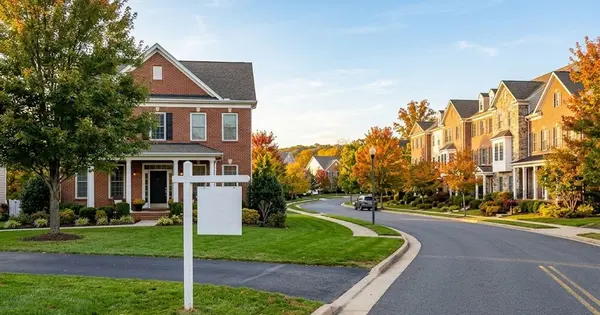
Sterling sits in eastern Loudoun County and has been one of the strongest equity-building markets in Northern Virginia over the past decade. Bordered by the Potomac to the north, Herndon to the south, and just minutes from Dulles International Airport, Sterling's mix of single-family homes in Cascades, Countryside, Sugarland Run, Lowes Island, and the original Sterling Park has consistently outpaced inflation while keeping a relatively accessible price point compared to McLean, Vienna, or Great Falls.
For homeowners who purchased before the 2022 rate spike, the equity math is dramatic. A Sterling single-family home bought for $480K in 2017 with 20% down likely carries a current market value of $725K–$775K in 2026 — and after eight years of principal pay-down on a 30-year mortgage, the remaining loan balance is in the low $300Ks. That's roughly $400K of equity for an owner who put $96K down. Townhomes in Cascades, Countryside, and Potomac Falls have followed a similar trajectory, with $350K purchases in 2017 now closer to $525K–$575K.
Typical Sterling Home Values by Type (Early 2026)
| Property Type | Typical 2026 Value Range | 5-Year Appreciation | Common Equity Position |
|---|---|---|---|
| Single-family detached (Cascades, Lowes Island) | $725K–$925K | ~38% | $280K–$475K |
| Single-family (Sterling Park, Sugarland Run) | $575K–$725K | ~42% | $220K–$375K |
| Townhomes (Countryside, Cascades) | $475K–$625K | ~36% | $165K–$285K |
| Condos (Cascades, Countryside) | $325K–$425K | ~30% | $110K–$185K |
Ranges reflect typical neighborhood medians per BrightMLS data for ZIP codes 20164, 20165, and 20166; individual property values vary based on lot, condition, and finishes.
Where Sterling Equity Compares — Visual Snapshot
The size of that equity matters because it changes which option makes sense. A homeowner with $150K of equity has different choices than one with $400K — both in terms of what each option can deliver and what each option costs to use.
The Three Equity Access Options at a Glance
Before drilling into each option, here's the framework: there are exactly three legitimate ways to convert Sterling home equity into usable cash. Each has a different cost, risk profile, and ongoing obligation.
| Option | How It Works | % of Equity You Can Access | Ongoing Obligation |
|---|---|---|---|
| HELOC | A revolving credit line secured by your home; you draw what you need, when you need it | Typically up to 80–85% combined LTV | Interest payments during draw period, full P+I after |
| Cash-Out Refinance | Replaces your existing mortgage with a larger one; the difference goes to you at closing | Typically up to 80% LTV (conventional) | New, larger mortgage payment for 15–30 years |
| Sell the Home | List, market, and sell on the open market; receive net proceeds at closing | 100% — full equity less costs | None; mortgage paid off at closing |
The right choice isn't about which option is "best" in the abstract — it's about which option matches what you actually need to do with the money and how long you plan to stay in Sterling. The next three sections walk through each option in detail.
Before you compare HELOC rates or refinance quotes, you need an accurate market value for your Sterling home. The Jamil Brothers provide street-level comps based on real recent sales — not automated Zestimate guesses. Response within 24 hours.
HELOC: Flexible Access, Variable Risk
A Home Equity Line of Credit (HELOC) is a second loan secured by your Sterling home, structured as a revolving credit line — similar to a credit card, but with your home as collateral. You're approved for a credit limit (typically based on 80–85% combined loan-to-value), and you can draw from that line during a "draw period" of usually 10 years. After the draw period ends, you enter a "repayment period" (typically 10–20 years) during which you pay back principal and interest on whatever balance you've used.
How a Sterling HELOC Math Works
Suppose your Sterling home is worth $750K and your remaining mortgage balance is $320K. At 85% combined LTV, a lender will approve up to $637,500 in total debt against your home. Subtract your existing mortgage ($320K), and your maximum HELOC line is $317,500. Many lenders cap practical HELOCs lower — often $200K–$250K for typical Sterling owners.
HELOC Pros — When It Makes Sense
- ✓ Your existing low-rate mortgage stays untouched
- ✓ You only pay interest on what you actually borrow
- ✓ Flexibility to draw funds across multiple projects or years
- ✓ Closing costs typically $0–$500 (much lower than a refinance)
- ✓ Interest may be tax-deductible if used for substantial home improvements
HELOC Cons — The Real Risks
- ✗ Variable interest rate — your payment can rise significantly
- ✗ 2026 rates typically 8–10% APR — well above 2020–2021 first-mortgage rates
- ✗ Lender can freeze or reduce your credit line if home values drop
- ✗ Default risk — you can lose your Sterling home to foreclosure
- ✗ Limited to roughly 80–85% combined LTV — not full equity access
HELOCs work well when you need flexible access for projects like a kitchen renovation, finishing a basement, or covering tuition over several years — and when you don't need to extract more than 80–85% of your home's value. They become punishing when interest rates rise or when the borrower draws large balances without a clear repayment plan.
Cash-Out Refinance: Lump Sum, New Mortgage Terms
A cash-out refinance replaces your existing mortgage with a new, larger one. The difference between your old loan balance and the new loan amount goes to you as cash at closing. Unlike a HELOC, this isn't a second loan — it's a full replacement of your primary mortgage.
The Sterling Cash-Out Refi Math
Using the same Sterling example — $750K home value, $320K current mortgage balance — a cash-out refinance at 80% LTV would let you borrow up to $600K total. Subtract the old balance ($320K), and you receive $280K in cash. But your new mortgage is now $600K instead of $320K.
The critical issue for Sterling owners: this replaces a mortgage you may have at 2.75–3.5% (if originated in 2020–2021) with a new mortgage at 2026 market rates — which have been running in the 6–7% range. On a $600K loan, that rate increase can mean an additional $1,200–$1,800 per month in interest expense compared to keeping the old loan untouched.
| ✓ Cash-Out Refi Pros | ✗ Cash-Out Refi Cons |
|---|---|
| Fixed interest rate — predictable monthly payment | Loses your existing low-rate mortgage |
| Lump sum delivered at closing — useful for large one-time needs | Closing costs typically 2–5% of new loan (often $12K–$30K) |
| Single monthly payment instead of two debts | Resets amortization — more interest paid over loan life |
| Potential to consolidate high-interest debt | Limited to ~80% LTV — not full equity access |
| Interest may be deductible for home improvement use | 30–45 day underwriting process |
Cash-out refinances make the most sense when the gap between your existing rate and current rates is small (or even favorable), when you need a large lump sum with a fixed payment, and when you plan to stay in the home long enough to absorb closing costs. They're almost always the wrong choice when you locked in a 3% mortgage in 2020 and current rates are running 6.5%+.
Our seller net sheet breaks down every cost — commission, transfer taxes, closing fees — so you can compare net sale proceeds directly against HELOC or cash-out refi math for your Sterling home.
Selling Your Sterling Home: Maximum Equity Release
Selling is the only option that releases 100% of your equity in a single transaction — no ongoing debt, no variable interest exposure, no risk of foreclosure on the home you used to live in. For Sterling homeowners who don't need to stay in the property (whether downsizing, relocating, retiring, or repositioning their wealth), a sale typically produces meaningfully more usable cash than borrowing against the same equity at 2026 rates.
What "Net Proceeds" Actually Means
When you sell your Sterling home, the gross sale price isn't what you walk away with. Several costs come out at closing: listing commission, buyer's agent commission (negotiable post-NAR settlement), Virginia grantor tax, Northern Virginia regional WMATA congestion tax, HOA transfer fees if applicable, title and settlement charges, and your remaining mortgage payoff. What's left is your net proceeds.
This is where the listing commission you negotiate has an outsized impact. On a $750K Sterling sale, a traditional 3% listing fee costs $22,500. A 1.5% full-service listing fee — the same professional marketing, photography, MLS syndication, drone video, 3D tours, and partner-led negotiation — costs $11,250. That's $11,250 more in your pocket for the identical service and identical sale price.
Selling Pros & Cons
| ✓ Sale Pros | ✗ Sale Cons |
|---|---|
| 100% equity release — no remaining mortgage | You give up the home itself |
| No ongoing interest, payments, or debt service | Need somewhere to live next (rent or buy) |
| $500K married / $250K single capital gains exclusion (Section 121) | Move costs and transition timing |
| No variable rate exposure | If buying again, you face 2026 mortgage rates |
| Frees full equity for reinvestment, downsize, or relocation | 30–60 day timeline from listing to closing |
For Sterling homeowners considering a downsize to a smaller property, a relocation out of the DMV, retirement positioning, or simply repositioning equity into other investments, the math on a sale almost always beats the math on a HELOC or cash-out refi — especially when paired with a 1.5% full-service listing program that keeps more proceeds in your pocket.
Side-by-Side Comparison on a Sterling Home
Here's how the three options compare on a typical Sterling single-family home — $750K market value, $320K existing mortgage balance at 3.25% locked in 2020, and a homeowner who needs roughly $200K for whatever the next chapter looks like.
| Factor | HELOC | Cash-Out Refi | Sale (1.5% Listing) |
|---|---|---|---|
| Cash to homeowner | $200,000 | $200,000 | ~$382,000 (full net equity) |
| Upfront cost | ~$0–$500 | ~$12K–$24K closing | All costs deducted from gross proceeds |
| Interest rate | ~9% variable | ~6.5% fixed (new full balance) | N/A — no debt |
| New monthly payment | ~$1,500/mo (interest only) | ~$3,800/mo P+I (vs ~$1,400 today) | $0 |
| Risk to home | Default = foreclosure | Default = foreclosure | None (already sold) |
| Timeline | 2–4 weeks to approval | 30–45 days | 30–60 days listing to close |
| Keeps the home? | Yes | Yes | No |
The visual gap between options is striking when you look at total cash unlocked vs. ongoing debt burden.
Equity Unlocked at Each Option
Sale net assumes $750K price, $320K mortgage payoff, 1.5% listing fee, 2.5% buyer agent, $7,500 closing costs and transfer taxes. Cash-out refi net deducts ~$16K closing costs from $200K gross extraction.
Calculate What You'd Walk Away With From a Sale
Use the interactive calculator below to see how a 1.5% full-service listing program changes your Sterling net proceeds compared to a traditional 3% commission. Click any home value to see the side-by-side comparison.
Sterling Seller Savings Calculator
How much more do you keep with our 1.5% listing fee?
Select your home's estimated value to see your real net proceeds — side by side.
|
Jamil Brothers — 1.5%
|
||||||||||||||||||||||||
|
Jamil Brothers — 1.5%
|
||||||||||||||||||||||||
|
Jamil Brothers — 1.5%
|
||||||||||||||||||||||||
|
Jamil Brothers — 1.5%
|
||||||||||||||||||||||||
|
Jamil Brothers — 1.5%
|
||||||||||||||||||||||||
Estimates only. Closing costs vary. Buyer's agent commission is negotiable.
Tax Implications of Each Option
Tax treatment differs significantly across the three options — and most homeowners underestimate how much that gap matters in the final math. The Jamil Brothers are not tax advisors and always recommend confirming specifics with a qualified CPA, but here's the general framework Sterling homeowners need to understand.
| Option | Cash Received Taxable? | Interest Deductible? | Other Tax Notes |
|---|---|---|---|
| HELOC | No — loan proceeds aren't income | Only if used for substantial home improvements (post-TCJA) | Combined debt cap: $750K (married filing jointly) |
| Cash-Out Refi | No — loan proceeds aren't income | Same rule: home improvement use only | Closing costs typically not deductible in year paid |
| Sale (Primary Residence) | Capital gain may be taxable above exclusion | N/A — no ongoing interest | $500K/$250K Section 121 exclusion if owned + lived 2 of last 5 years |
For most long-term Sterling owners, the Section 121 primary residence exclusion ($500K married, $250K single) means a sale generates zero or very limited federal tax exposure. Sellers who've owned for a decade or more should run their specific numbers — if your gain exceeds the exclusion, capital gains taxes at 15% or 20% can change the calculus.
ℹ️ A Note on the 2017 TCJA Interest Deduction Rule
The 2017 Tax Cuts and Jobs Act ended interest deductibility on home equity debt used for non-home purposes. Using HELOC or cash-out refi proceeds to pay off credit cards, fund college, or buy a car generally produces no deduction. Using the same proceeds to "buy, build, or substantially improve" your home preserves the deduction (subject to the $750K combined debt cap).
Timing and Life-Stage Considerations
The "right" option also depends heavily on where you are in life. A 35-year-old Sterling couple raising kids in Cascades has a different optimal answer than a 62-year-old empty-nester in Lowes Island.
Decision Timeline by Situation
Funding a Renovation You'll Use for 5+ Years — Consider HELOC
If you're improving your Sterling home and plan to stay long enough to amortize the project benefit, a HELOC keeps your existing low-rate mortgage intact and preserves the home improvement interest deduction. The variable rate exposure is acceptable when balances are paid down quickly.
Large One-Time Need + Existing Rate Already Above Market — Consider Cash-Out Refi
If your current mortgage rate is already at or above 2026 market rates (e.g., you bought in 2023–2024), a cash-out refinance doesn't penalize you the way it would penalize a 2.75% mortgage holder. A fixed-rate lump sum can be the cleanest answer.
Downsizing, Relocating, or Repositioning — Consider Selling
If the home no longer fits — too big after kids leave, wrong location for new job, or you want to free equity for investments or retirement — selling unlocks the full equity position with no ongoing debt. Pair with a 1.5% full-service listing to maximize net proceeds.
Needing Speed and Certainty Over Maximum Price — Consider a Cash Offer
If timing, condition issues, or certainty matter more than top dollar, a cash offer through The Jamil Brothers' network can close in days rather than weeks. We always present this alongside the traditional listing option so you can compare net proceeds honestly.
4K photography, drone video, 3D tours, expert negotiation, and full MLS marketing — all included at 1.5%. On a $750K Sterling home, you keep an extra $11,250 compared to a traditional 3% agent.
Common Mistakes Sterling Homeowners Make
After working with hundreds of Loudoun County sellers, certain patterns repeat. Avoiding these saves real money.
Equity Decision Pitfalls — Avoid These
- ✗ Refinancing a 3% mortgage at 6.5% to extract cash. The lifetime interest cost almost always exceeds the cash extracted.
- ✗ Using a HELOC for consumer debt at 9% variable. You've now collateralized credit card debt against your home with no tax benefit.
- ✗ Listing with a 3% agent because that's "what everyone does." On a typical Sterling sale, that's $10K–$15K out of your pocket for no incremental service.
- ✗ Skipping a market valuation before deciding. Without an accurate home value, every equity calculation is guesswork.
- ✗ Failing to budget for closing costs in a refi. Sterling owners are sometimes surprised by $15K–$25K in closing fees that erode the cash extracted.
- ✗ Ignoring the Section 121 capital gains exclusion clock. If you're close to two years of ownership/use, waiting can save tens of thousands in capital gains tax.
How The Jamil Brothers Help With Your Equity Decision
The Jamil Brothers Realty Group — Saad Jamil and Arslan Jamil — work with Loudoun County homeowners through every stage of the equity decision, including the conversations where the answer turns out to be "don't sell." If a HELOC or cash-out refinance is the better fit for your situation, we'll tell you that. We work with trusted local lender partners on a RESPA-compliant referral basis, so a single conversation can give you all three options modeled in real numbers for your Sterling home.
When a sale is the right answer, we list Sterling homes through our 1.5% full-service listing program — the same professional photography, drone video, 3D tours, MLS syndication, broker-led negotiation, and contract management you'd get from any top NOVA listing agent, with $10K–$15K more equity in your pocket on a typical Sterling sale.
Our background: 840+ homes sold, $500M+ in closed transaction volume, 500+ five-star reviews across Google, Zillow, and Realtor.com, NVAR Lifetime Top Producer honors, and recognition in Northern Virginia Magazine. Saad and Arslan are licensed associate brokers with Samson Properties, serving sellers in Virginia, Maryland, DC, and West Virginia.
Other Sterling and Loudoun Resources
Explore More Guides
Sterling Community Guide Ashburn Leesburg Herndon 1.5% Listing Program Seller Net Sheet Free Valuation Cash Offer Options Search Loudoun HomesYour Sterling Equity Action Plan
Choosing between a HELOC, cash-out refinance, and a sale isn't a leap-of-faith decision — it's a math exercise once you have three pieces of information: the current market value of your Sterling home, your existing mortgage rate and balance, and what you actually need the money for. The right move follows from those three numbers more often than not.
For Sterling owners considering whether selling is the right path, the starting point is always a free, no-obligation valuation — not a Zestimate, but a real comp-based assessment from agents who closed transactions on streets like yours this quarter. From there, a personalized seller net sheet tells you exactly what you'd walk away with at today's market value, and the comparison against HELOC or cash-out refi math becomes straightforward.
If a sale isn't right for you, we'll say so. If it is, our 1.5% full-service listing program keeps significantly more equity in your hands than the traditional 3% model — for the same marketing, the same negotiation, and the same closing support.
Know your equity, understand your real options, and see exactly what each path produces — before you make any decisions. The Jamil Brothers provide a full seller consultation at no cost or obligation.
Frequently Asked Questions
How much equity does a typical Sterling homeowner have in 2026?
A Sterling single-family homeowner who purchased between 2015 and 2020 typically holds $280K–$450K in equity in 2026, driven by Loudoun County appreciation of roughly 38% over that period and standard mortgage principal pay-down. Townhome owners in Cascades, Countryside, and Potomac Falls typically hold $165K–$285K, and condo owners typically hold $110K–$185K. Your exact equity depends on purchase price, down payment, mortgage rate, and current market value — start with a free home valuation to get an accurate figure.
Is a HELOC or cash-out refi cheaper than selling my Sterling home?
It depends on what you call "cost." A HELOC has lower upfront costs ($0–$500) than a sale or cash-out refi, but it adds variable-rate debt at roughly 8–10% APR in 2026. A cash-out refi has high upfront closing costs ($12K–$30K) and locks in a new mortgage rate that's typically higher than rates many Sterling owners have. A sale releases 100% of your equity with no ongoing debt — and on a 1.5% full-service listing, costs $10K–$15K less than a traditional 3% sale on the same price. The right answer depends on whether you want to keep the home.
How long does each option take in Sterling?
A HELOC typically takes 2–4 weeks from application to funding approval. A cash-out refinance takes 30–45 days through full underwriting. A traditional Sterling home sale typically takes 30–60 days from listing to closing, depending on market conditions and buyer demand. For sellers who need speed over maximum price, a cash offer through The Jamil Brothers' network can close in as little as 7–14 days.
How do I choose the right listing agent in Sterling?
Strong listing agents in Sterling share four objective characteristics: documented recent closings in your specific neighborhood (Cascades, Countryside, Sugarland Run, Sterling Park, etc.), a marketing package that includes professional photography, drone video, 3D tours, and MLS syndication, transparent fee structure with no hidden costs, and verifiable client reviews from comparable Sterling sellers. The Jamil Brothers Realty Group offers a 1.5% full-service listing fee with the same marketing as traditional 3% agents, 840+ closed homes, 500+ five-star reviews, and NVAR Lifetime Top Producer status — making them one option worth comparing against any other Sterling listing agent.
What changed with commissions after the NAR settlement?
As of August 2024, the NAR settlement ended the practice of automatically including buyer's agent compensation in the listing commission posted on the MLS. Buyer's agent compensation is now openly negotiable between the seller, listing agent, and buyer. In practice for Sterling sellers, this means the listing fee and buyer's agent fee can be discussed and structured separately — and the Jamil Brothers 1.5% listing fee is a true 1.5% to The Jamil Brothers, with buyer's agent compensation negotiated transaction by transaction based on what the market supports.
Will tapping my home equity affect my Sterling property taxes?
Loudoun County reassesses property values annually, and the assessment is based on market value — not on your debt or equity position. A HELOC or cash-out refinance has no direct effect on your property tax bill. A sale obviously ends your property tax obligation entirely (the new owner becomes responsible at closing). If you sell and buy a different home in Sterling, your new property's tax bill is based on its assessed value, not on transaction structure.
Does my Sterling HOA affect the sale option?
Yes, most Sterling neighborhoods — Cascades, Countryside, CountrySide, Lowes Island, and most Potomac Falls communities — have HOAs that require resale documents and may charge transfer fees at closing. Typical HOA transfer and resale package fees range from $300 to $800 in Sterling, paid by the seller. The HOA must also be in good standing for the sale to close, so any unpaid dues or violations need to be cleared. The Jamil Brothers handle HOA coordination as part of the standard 1.5% full-service listing process.
Can I avoid capital gains tax when selling my Sterling home?
Under IRS Section 121, married couples filing jointly can exclude up to $500,000 of capital gain on the sale of a primary residence, and single filers can exclude up to $250,000 — provided you've owned and lived in the home for at least two of the last five years. For most Sterling sellers, this exclusion covers the entire gain. Owners with gains above the exclusion (often long-term holders in higher-priced Cascades or Lowes Island properties) should consult a CPA — the excess gain is typically taxed at 15% or 20% federally, plus Virginia state income tax.
What are the biggest mistakes Sterling homeowners make when accessing equity?
The most expensive mistakes are: refinancing out of a 2020–2021 low-rate mortgage at today's higher rates just to access cash, using a HELOC to consolidate consumer debt without addressing the underlying spending issue, listing with a 3% agent when a 1.5% full-service option produces identical marketing for thousands less, and making the equity decision without an accurate current home valuation. Each of these can cost $10,000–$50,000+ depending on circumstances.
What does the 1.5% full-service listing program actually include?
The Jamil Brothers 1.5% listing program includes professional 4K photography, drone video, 3D Matterport virtual tours, full MLS syndication across BrightMLS and partner platforms, syndication to Zillow, Realtor.com, Redfin, and 100+ aggregator sites, broker-led negotiation directly by Saad or Arslan, pre-listing strategy and pricing analysis, contract-to-close coordination, and HOA document management. It's the same marketing and service offered by traditional 3% listing agents — at a 1.5% listing fee instead of 3%.
What's the current Sterling real estate market doing in 2026?
Sterling continues to be one of Loudoun County's most active submarkets in early 2026. Days on market for well-priced, well-prepared single-family homes typically run 15–30 days, with inventory remaining tight in the popular Cascades and Lowes Island subdivisions. Median single-family list prices sit in the $695K–$775K range, while townhome inventory in Countryside and Cascades is moving quickly in the $475K–$575K range. The seller's market remains favorable, though market conditions can shift — a current valuation from an active local agent is the only reliable indicator for your specific property.
Glossary
HELOC
A Home Equity Line of Credit. A revolving line secured by your home, with a draw period and a repayment period. Variable interest rate.
Cash-Out Refinance
A new mortgage that replaces your existing one with a larger loan; the difference is paid to you in cash at closing.
Combined LTV (CLTV)
Combined Loan-to-Value: the total of your first mortgage plus any HELOC or second loan, expressed as a percentage of home value.
Net Proceeds
The cash a seller walks away with after subtracting commission, transfer taxes, closing costs, and mortgage payoff from the gross sale price.
Section 121 Exclusion
IRS rule allowing up to $500K (married) or $250K (single) of capital gain on a primary residence sale to be tax-free if you owned and lived there 2 of the last 5 years.
Grantor Tax
Virginia state tax on the seller at $1 per $1,000 of sale price, plus a $0.50/$1,000 regional WMATA congestion tax in Northern Virginia jurisdictions.
TCJA
The 2017 Tax Cuts and Jobs Act, which limited mortgage interest deductions to a combined $750K of qualifying debt and restricted home-equity interest deductions to home-improvement use.
Draw Period
The phase of a HELOC (typically 10 years) during which you can borrow against your credit line and pay interest only on the outstanding balance.
The Jamil Brothers Realty Group · Samson Properties · Licensed in VA, MD, DC, WV · (703) 782-4830 · thejamilbrothers.com
This article is for general informational purposes and is not tax, legal, or financial advice. Consult a qualified CPA, mortgage lender, and attorney for guidance specific to your situation.
Explore More
Browse Every Corner of the DMV Market
Whether you're searching by budget, neighborhood, or buying situation — find exactly what you need below.
Virginia Homes by Budget
Washington DC Homes by Budget
Maryland Homes
Explore Northern Virginia Communities
Loudoun County
Fairfax County & Surrounding
Ready to Make a Move?
Full-Service · No Tradeoffs
List for 1.5% & Keep More Equity
Professional photography, drone video, 3D tours, and expert negotiation — all included. On an $800K home, that's $12,000 more in your pocket vs. a 3% agent.
See the 1.5% Program →Need Speed or Certainty?
Get a No-Obligation Cash Offer
Skip the showings, skip the contingencies. If timing or condition matters more than top dollar, a cash offer may be the right fit. We'll walk you through every option.
Explore Cash Offers →
Categories
- All Blogs (1228)
- Aldie (3)
- Ashburn (6)
- Buyer Guide (8)
- Buying a home (2)
- Buying Strategies (30)
- festivals (1)
- General Blog (67)
- Leesburg (5)
- Market Intelligence (29)
- Market Updates (8)
- Notable Properties For Sale (32)
- Real Estate Tips, News, and More (385)
- Seller Guide (2)
- Seller Guides (60)
- Selling Your Home (523)
- Sterling (6)
- Top Realtors in Northern Virginia (58)
Recent Posts




Message Sent!
Thank you for reaching out. Arslan & Saad have received your details and will be in touch shortly.
Need immediate assistance? Call or text 703-782-4830.