
Selling an Investment Property in Tysons: Tax & Buyer Strategy

Quick Answer: Selling an investment property in Tysons, VA means navigating federal capital gains tax (15–20%), depreciation recapture (taxed at up to 25%), Virginia state income tax (5.75%), and a non-resident-friendly buyer mix dominated by 1031 exchange investors, owner-occupant downsizers, and corporate professionals relocating into the Silver Line corridor. The right strategy minimizes taxes through a Section 1031 like-kind exchange, properly times the sale around tenant occupancy, and prices the property to attract both investor and end-user buyers in Fairfax County's highest-density market.
Key Takeaways
- Tysons investment property sales face federal long-term capital gains (15–20%) plus 25% depreciation recapture plus Virginia's 5.75% income tax — combined tax bills of $80K–$200K+ are typical on properties held 8–15 years.
- A properly executed Section 1031 exchange defers all federal and state capital gains and depreciation recapture if you reinvest in a like-kind property within 180 days using a qualified intermediary.
- Tysons attracts the most diverse investor-buyer pool in Fairfax County: 1031 buyers from DC and Maryland, owner-occupant condo buyers tied to Capital One, MITRE, Hilton, and Booz Allen, plus relocating tech professionals via the Metro Silver Line.
- Selling tenant-occupied vs. vacant changes your buyer pool dramatically — vacant sales typically clear 4–7% higher because they unlock the owner-occupant FHA, VA, and conventional buyer pool.
- Listing with The Jamil Brothers' 1.5% full-service program on a typical $750K Tysons condo saves $11,250 versus a traditional 3% listing — capital that can offset depreciation recapture or fund your 1031 replacement.
In This Guide
- The Tysons Investment Property Market
- Tax Overview: What You'll Actually Owe
- Capital Gains on Investment Properties
- Depreciation Recapture Explained
- Using a Section 1031 Exchange
- Virginia State Tax & Non-Resident Withholding
- Who's Buying Tysons Investment Properties
- Sell Occupied or Vacant?
- Pricing & Marketing Strategy
- Savings Calculator
- Closing Costs & Net Proceeds
- Common Mistakes to Avoid
- Next Steps: A Smart Tysons Exit
- Frequently Asked Questions
- Glossary
Tysons is unlike any other neighborhood in Fairfax County. What was once a suburban office park has become Northern Virginia's densest urban core — with four Metro Silver Line stations, 28 million square feet of office space, and a residential population that has more than doubled since 2010. For real estate investors, that growth created a uniquely liquid market: condos, townhomes, and rental properties trade quickly to a buyer pool that mixes 1031 exchange investors, corporate relocators, and downsizers from McLean and Vienna.
But Tysons investment property sales come with tax friction most sellers underestimate. A condo bought for $400,000 a decade ago that now sells for $720,000 doesn't put $320,000 in your pocket — federal capital gains, depreciation recapture, Virginia state income tax, and closing costs can absorb $80,000 to $150,000 of that gain before you ever see a wire. The good news: with proper planning, much of it is deferrable or avoidable.
This guide walks through the full tax structure, the 1031 exchange option, the unique buyer dynamics in Tysons, and the pricing and marketing strategies that maximize your net proceeds. Whether you're a long-time landlord ready to exit or a syndicator pulling equity to redeploy elsewhere, the framework here applies to townhomes, condos, and small multifamily properties throughout the Tysons corridor and adjacent McLean and Vienna submarkets.
Get a personalized valuation from The Jamil Brothers — street-level comps from active and sold Tysons listings, not automated estimates. Knowing your equity is step one for every tax and 1031 decision in this guide. Response within 24 hours.
The Tysons Investment Property Market
Tysons sits at the intersection of two Fairfax County submarkets: the higher-end residential corridor of McLean and Vienna to the north and west, and the dense Metro-adjacent urban core that has grown up around the Silver Line. That dual identity is exactly why the investment property market here is so resilient. Demand comes from multiple non-overlapping buyer pools simultaneously, and each pool responds to different price tiers.
2026 Tysons Investment Property Snapshot
| Property Type | Median Sale Price | Typical Days on Market | Rental Yield (Gross) |
|---|---|---|---|
| 1-bed condo (Tysons Galleria area) | $425,000–$525,000 | 18–32 days | 4.8–5.4% |
| 2-bed condo (high-rise w/ amenities) | $650,000–$825,000 | 22–38 days | 4.2–4.8% |
| Townhome (Tysons / W. Vienna) | $825,000–$1,150,000 | 14–28 days | 3.6–4.2% |
| Small multifamily (2–4 unit, adj. McLean) | $1.2M–$2.1M | 35–65 days | 4.5–5.2% |
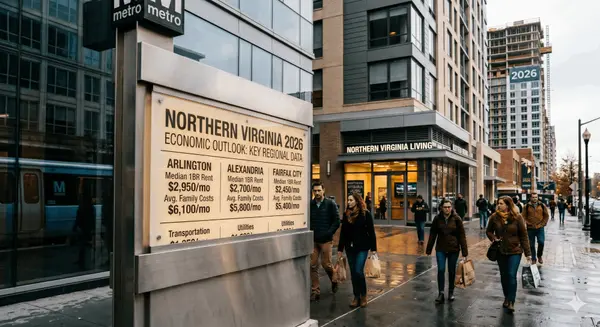
Three structural factors keep the Tysons investment market liquid: employment density (Capital One, Hilton, MITRE, Booz Allen, Tegna, and 100+ other corporate tenants drive continuous renter demand); Metro access (four Silver Line stations within Tysons proper — McLean, Tysons, Greensboro, and Spring Hill); and limited new supply for sale (most new construction is purpose-built rental, which constrains for-sale condo inventory and supports prices for existing investment stock).
Tax Overview: What You'll Actually Owe
When you sell an investment property in Virginia, three federal tax events trigger simultaneously, plus state income tax. Unlike a primary residence — which qualifies for the $250,000 (single) or $500,000 (married filing jointly) capital gains exclusion — a pure rental property has no built-in shelter. The IRS treats the full gain as taxable, and the depreciation you took during ownership gets clawed back at a separate rate.
The Three Tax Components
The Net Investment Income Tax (NIIT) applies to sellers with modified adjusted gross income above $200,000 (single) or $250,000 (married filing jointly) — a threshold that captures the majority of Tysons-area investment property owners. Layered on top of federal capital gains and state tax, NIIT can push the effective rate on a gain north of 30%.
Capital Gains on Investment Properties
For property held longer than one year, the federal long-term capital gains rate applies. The rate depends on your filing status and total taxable income for the year of sale. Most Tysons investment property owners — whose ownership profile skews toward dual-income professional households — land in the 15% or 20% bracket.
2026 Federal Long-Term Capital Gains Brackets
| Filing Status | 0% Bracket | 15% Bracket | 20% Bracket |
|---|---|---|---|
| Single | Up to $48,350 | $48,351–$533,400 | Over $533,400 |
| Married filing jointly | Up to $96,700 | $96,701–$600,050 | Over $600,050 |
| Head of household | Up to $64,750 | $64,751–$566,700 | Over $566,700 |
Calculating Your Capital Gain
Your taxable gain isn't simply sale price minus purchase price. The IRS allows several adjustments — and one major reduction — to arrive at your true gain.
The Capital Gain Formula
- ✓ Start: Net sale price (sale price minus commission, closing costs, and any seller concessions)
- ✓ Subtract: Adjusted basis (original purchase price + capital improvements − total depreciation taken)
- ✓ Result: Total realized gain (taxed as long-term capital gain at 15% or 20%)
- ✓ Plus: Depreciation recapture (the depreciation portion is taxed separately at up to 25%)
Capital improvements that increase your basis include kitchen remodels, bathroom renovations, HVAC replacement, new windows, structural repairs, and additions. Routine maintenance (painting, carpet replacement on the same grade, repairs) does not increase basis — those are already deducted annually as operating expenses.
Depreciation Recapture Explained
Depreciation recapture is the single biggest surprise for first-time investment property sellers. While you owned the property, the IRS allowed you to depreciate the building (not the land) over 27.5 years for residential rentals — a non-cash deduction that reduced your taxable rental income annually. When you sell, the IRS recaptures that benefit by taxing the depreciation portion of your gain separately, at a maximum rate of 25%.
Here's the part that catches sellers off guard: recapture applies whether you actually took the depreciation or not. The IRS treats depreciation as "allowed or allowable" — meaning if you should have depreciated but didn't, you still owe recapture on the amount you should have taken. This is why working with a CPA who specializes in real estate is critical before listing.
Recapture in Practice — Tysons Condo Example
| Item | Amount |
|---|---|
| Original purchase price (2014) | $425,000 |
| Capital improvements over 12 years | + $38,000 |
| Total depreciation taken (12 yrs × ~$11,300) | − $135,600 |
| Adjusted basis | $327,400 |
| 2026 net sale price (after closing) | $695,000 |
| Total realized gain | $367,600 |
| → Depreciation recapture portion (25%) | $33,900 tax |
| → Long-term capital gain portion ($232,000 × 15%) | $34,800 tax |
| → Virginia state tax (5.75% of full gain) | $21,137 tax |
| Total federal + state tax bill | ~$89,837 |
That's a real-world example of a Tysons 2-bedroom condo held for 12 years. Without planning, nearly $90,000 of the gain disappears to taxes. With a Section 1031 exchange, the same seller defers all of it indefinitely — and can keep deferring through successive exchanges until death, at which point the heirs receive a stepped-up basis and the deferred tax effectively vanishes.
Using a Section 1031 Exchange
A Section 1031 like-kind exchange is the single most powerful tax-deferral tool available to real estate investors. Properly executed, it defers 100% of federal capital gains, federal depreciation recapture, Virginia state income tax, and NIIT — letting you redeploy the full pre-tax proceeds into a replacement property. For a Tysons seller with $90,000 in projected taxes, that's $90,000 of additional buying power on the next property.
The Three Critical 1031 Rules
1031 Exchange Requirements
- ✓ Like-kind property: Any U.S. real estate held for investment or business purposes qualifies — a Tysons condo can be exchanged for a Loudoun County multifamily, a Maryland medical office, a West Virginia rental, or land.
- ✓ 45-day identification: Within 45 calendar days of closing the sale, you must identify potential replacement properties in writing — up to three properties, or more if they meet the 200% or 95% rules.
- ✓ 180-day closing: The replacement property must close within 180 calendar days of the original sale (or your tax filing deadline, whichever comes first).
- ✓ Qualified Intermediary required: Proceeds must go directly to a QI — never to the seller — and from the QI to the replacement purchase. Touching the cash, even briefly, blows up the exchange.
- ✓ Equal or greater value & debt: To defer 100% of the tax, the replacement property must be of equal or greater value AND carry equal or greater debt. Any "boot" (cash or relief of debt) is taxable in the year of sale.
1031 Timeline — From Listing to Replacement
Pre-listing — Engage QI & CPA (weeks before)
Select your Qualified Intermediary and CPA before you list. Begin building a shortlist of replacement properties — Loudoun County multifamily, West Virginia rentals, and DSTs (Delaware Statutory Trusts) are common Tysons-investor targets. Underwriting takes time.
Sale closing — Funds flow to QI (Day 0)
At closing, the title company wires net proceeds directly to your QI's escrow account. Your name appears nowhere on the receiving wire instructions. The QI holds the funds for the duration of the exchange.
Identification — Submit list to QI (Day 45)
By Day 45, deliver written identification of replacement properties to your QI. Most investors identify 3 properties — the maximum under the "three-property rule" — giving themselves backup options if a primary target falls through.
Replacement closing — Acquire new property (Day 180)
Close on the replacement property by Day 180. The QI wires funds directly to the new closing. Your name returns to title only at the replacement acquisition — never in between.
Our seller net sheet breaks down every line item — commission, transfer tax, recordation, settlement fees, capital gains, and depreciation recapture — so you know exactly what hits your bank account (or your 1031 escrow) before you sign a listing agreement.
Virginia State Tax & Non-Resident Withholding
Virginia taxes capital gains as ordinary income at the state's top marginal rate of 5.75% — there's no special long-term rate. For a Tysons investment property with a $367,000 gain, that's roughly $21,000 in state tax on top of federal. Unlike states with no income tax (Florida, Tennessee, Texas), Virginia's full 5.75% applies to every dollar of gain.
If You're Selling From Out of State: Non-Resident Withholding
Many Tysons investment property owners have relocated — to Florida for retirement, to California for tech jobs, or to other states post-pandemic. If you no longer file as a Virginia resident, the title company is required to withhold a portion of the sale proceeds and remit them to the Virginia Department of Taxation as a prepayment toward your estimated state tax liability.
The current Virginia non-resident withholding rate is 5% of the sale price (not the gain), with exemptions available for sales below $100,000, transfers to spouses, and 1031 exchanges with proper documentation. You can claim the withheld amount as a credit when you file your Virginia non-resident return for the year of sale — but the money is gone from your settlement statement until that refund processes, often 6–9 months later.
⚠️ Non-Resident Sellers: Plan the Withholding Hit
On a $750,000 Tysons condo sale, Virginia withholds $37,500 at closing if you're a non-resident — even if your actual state tax owed is far less. A 1031 exchange with proper Form R-5 filing exempts you from this withholding entirely, preserving full liquidity for your replacement property.
Who's Buying Tysons Investment Properties
The Tysons buyer pool is unusually diverse — and understanding which buyer types are active for your specific property dictates how to price, when to list, and what to fix before going live. Pricing a property for an investor buyer is very different from pricing it for an owner-occupant.
The Five Active Tysons Buyer Profiles
| Buyer Type | Property Preference | Sensitivity |
|---|---|---|
| 1031 exchange investors | Condos & townhomes with strong rental history; sometimes prefer occupied | Cap rate, lease term remaining, recapture math |
| Corporate professionals (Capital One, MITRE, Hilton) | 2-bed condos near Silver Line; turnkey condition | Move-in ready, walkability, HOA fee |
| Downsizers from McLean/Vienna | High-amenity 2- or 3-bed condos; concierge buildings | Building reputation, parking, secure access |
| Foreign / out-of-state investors | Condos with rental management infrastructure | Property manager availability, FIRPTA compliance |
| First-time buyers (Silver Line proximity) | Entry-level 1-bed condos under $475K | FHA/conventional approvable; HOA reserves |
A common Tysons mistake is pricing a property as if there's only one buyer pool. The right strategy considers all five — and structures the listing (price, marketing, showings) to attract whichever pool yields the highest net. For high-end 2-bed condos in concierge buildings, that's often the downsizer pool, who pay top dollar for quality and amenities. For 1-bed condos with strong rental history, the 1031 investor pool may pay more because they're racing a 45-day clock.
Sell Occupied or Vacant?
This is the single biggest pricing lever for most Tysons investment property sellers. Vacant properties open up to the full buyer pool — owner-occupants using FHA, VA, or conventional financing — which is roughly 70% of all Fairfax County purchasers. Tenant-occupied properties limit you to investor buyers willing to inherit the existing lease, a smaller pool that typically pays 4–7% less.
| ✓ Selling Vacant — Advantages | ✗ Selling Vacant — Tradeoffs |
|---|---|
| Access to full owner-occupant buyer pool | Lost rental income during listing & closing period |
| Easier showings — no tenant coordination | Carrying costs: HOA, taxes, utilities continue |
| Professional staging possible — meaningful price lift | Need to manage move-out, cleaning, repairs |
| FHA/VA buyers can purchase — expands pool | Property sits visibly empty during marketing |
| Typically 4–7% higher sale price | Tenant termination may require notice or buyout |
Virginia Tenant Notice Rules
If your tenant is on a fixed-term lease, you cannot terminate them simply to sell — the lease transfers with the property. If they're month-to-month, Virginia law requires a minimum of 30 days' written notice. Many Tysons investors offer a "cash for keys" arrangement — typically $2,000–$5,000 in exchange for an early voluntary move-out — which is often cheaper than the price hit of selling occupied.
When tenants stay through showings, set clear expectations in writing about access windows, lockbox use, and condition standards. The Virginia Residential Landlord and Tenant Act gives landlords reasonable access for showings with proper notice, but cooperative tenants make or break the sale experience.
Pricing & Marketing Strategy
Pricing a Tysons investment property is not a simple comp pull. The right list price reflects (1) which buyer pool you're targeting, (2) tenant occupancy status, (3) current Metro corridor velocity, and (4) the property's specific position within its building or community. Two condos in the same building can fairly trade at $50,000 different prices based purely on floor, view, and parking.
Three Pricing Approaches for Investment Property
When to Use Each Strategy
- ✓ Aggressive (price at the top of comp range): Use when you have strong owner-occupant appeal — vacant, staged, premium floor/view, low HOA. Expect longer days on market but higher final price.
- ✓ Market-rate (price at recent median): Best for properties with mixed appeal — some owner-occupant interest, some investor interest. Balances speed and price.
- ✓ Strategic underprice (5–8% below market): Generates multiple offers from investor and owner-occupant pools simultaneously. Works best in fast-moving submarkets and for properties priced under $550K where the buyer pool is deepest.
Marketing Channels That Matter for Investment Property
| Channel | Why It Matters |
|---|---|
| BrightMLS & syndication | Reaches all licensed agents in DMV — covers 100% of professional buyer pool |
| 4K photography + drone (Metro/skyline context) | Tysons-specific value driver — proximity to Silver Line is the #1 buyer search filter |
| 3D Matterport tour | Essential for out-of-state investors and corporate relocators making remote offers |
| Investor-targeted listing copy | For tenant-occupied sales: include rent roll, lease terms, expense breakdown, and cap rate |
| 1031 buyer network outreach | Direct contact with QIs and 1031 buyers actively looking for replacement property — bypasses MLS lag |
Savings Calculator
Select your Tysons investment property's estimated value to see your real net proceeds — side by side, traditional 3% listing vs. our 1.5% full-service listing. Same marketing, same negotiation, same MLS reach. Just a lower listing fee that puts $6,000–$15,000 back in your pocket — capital you can apply to closing-cost taxes, depreciation recapture, or your 1031 replacement down payment.
Seller Savings Calculator
How much more do you keep with our 1.5% listing fee?
Select your home's estimated value to see your real net proceeds — side by side.
|
Traditional Agent — 3% Sale price$400,000
Listing fee (3%)−$12,000
Buyer's agent (2.5%)−$10,000
Est. closing (1%)−$4,000
Net Proceeds$374,000
|
Jamil Brothers — 1.5%
Our Fee — Only 1.5% Sale price$400,000
Listing fee (1.5%)−$6,000
Buyer's agent (2.5%)−$10,000
Est. closing (1%)−$4,000
Net Proceeds$380,000
|
|
Traditional Agent — 3% Sale price$500,000
Listing fee (3%)−$15,000
Buyer's agent (2.5%)−$12,500
Est. closing (1%)−$5,000
Net Proceeds$467,500
|
Jamil Brothers — 1.5%
Our Fee — Only 1.5% Sale price$500,000
Listing fee (1.5%)−$7,500
Buyer's agent (2.5%)−$12,500
Est. closing (1%)−$5,000
Net Proceeds$475,000
|
|
Traditional Agent — 3% Sale price$600,000
Listing fee (3%)−$18,000
Buyer's agent (2.5%)−$15,000
Est. closing (1%)−$6,000
Net Proceeds$561,000
|
Jamil Brothers — 1.5%
Our Fee — Only 1.5% Sale price$600,000
Listing fee (1.5%)−$9,000
Buyer's agent (2.5%)−$15,000
Est. closing (1%)−$6,000
Net Proceeds$570,000
|
|
Traditional Agent — 3% Sale price$750,000
Listing fee (3%)−$22,500
Buyer's agent (2.5%)−$18,750
Est. closing (1%)−$7,500
Net Proceeds$701,250
|
Jamil Brothers — 1.5%
Our Fee — Only 1.5% Sale price$750,000
Listing fee (1.5%)−$11,250
Buyer's agent (2.5%)−$18,750
Est. closing (1%)−$7,500
Net Proceeds$712,500
|
|
Traditional Agent — 3% Sale price$1,000,000
Listing fee (3%)−$30,000
Buyer's agent (2.5%)−$25,000
Est. closing (1%)−$10,000
Net Proceeds$935,000
|
Jamil Brothers — 1.5%
Our Fee — Only 1.5% Sale price$1,000,000
Listing fee (1.5%)−$15,000
Buyer's agent (2.5%)−$25,000
Est. closing (1%)−$10,000
Net Proceeds$950,000
|
Estimates only. Closing costs vary. Buyer's agent commission is negotiable.
4K photography, drone video, 3D Matterport tours, expert negotiation, and full BrightMLS marketing — all included at 1.5%. No hidden fees, no service reductions, no surprises. The savings can offset depreciation recapture or fund your 1031 replacement down payment.
Closing Costs & Net Proceeds in Fairfax County
Beyond the agent commissions, Virginia and Fairfax County add their own closing-cost layer to every investment property sale. Most are paid by the seller, though a handful are negotiable.
| Closing Cost Item | Rate / Typical Amount | Paid By |
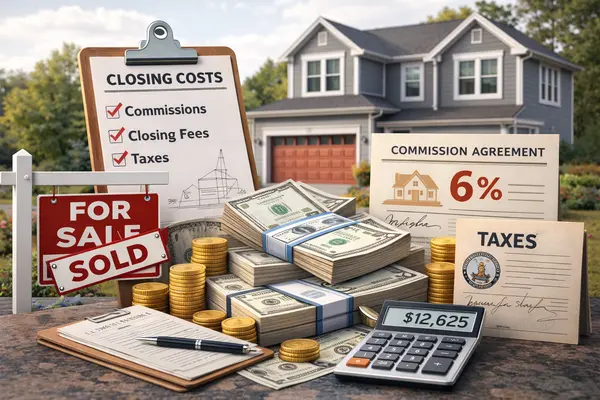
|---|---|---|
| Virginia grantor tax | $1 per $1,000 of sale price | Seller |
| NOVA regional congestion tax | $0.15 per $100 of sale price | Seller |
| Settlement / title company fee | $800–$1,400 | Seller |
| HOA / condo resale package & transfer | $300–$650 (most Tysons high-rises) | Seller |
| Mortgage payoff / wire fee | $25–$50 | Seller |
| Pro-rated property taxes & HOA dues | Varies by closing date | Seller (credit to buyer) |
| Non-resident withholding (if applicable) | 5% of sale price | Seller (refundable) |
For a typical $750,000 Tysons 2-bedroom condo, expect total seller closing costs (excluding agent commissions) in the range of $2,800–$4,200 — modest compared to the commission line item, but enough to be worth modeling on a proper net sheet before signing a listing agreement.
Common Mistakes to Avoid
Five Costly Errors Tysons Investment Sellers Make
- ✗ Touching the cash before the 1031 closes. Even briefly receiving proceeds — by personal check or direct wire — disqualifies the exchange. Funds must flow QI to QI.
- ✗ Missing the 45-day identification deadline. No extensions, no grace period, no exceptions for hurricanes or family emergencies. Plan the replacement search before listing.
- ✗ Underestimating depreciation recapture. Sellers regularly model their tax bill on capital gains alone and discover at closing that recapture adds another $30K–$50K.
- ✗ Selling tenant-occupied without considering vacant. The 4–7% price gap can easily exceed several months of foregone rent plus a modest "cash for keys" payment.
- ✗ Hiring an agent unfamiliar with investment property. Investment sales require comfort with rent rolls, cap rates, 1031 timelines, and tenant communication. A residential-only agent will under-market the property to the investor pool.
If your 1031 clock is ticking, your tenant situation is complicated, or you simply need certainty over maximum price, a cash offer may be the right fit. We'll walk you through your full range of options — no pressure, no obligation.
Next Steps: A Smart Tysons Investment Property Exit
Selling an investment property is fundamentally different from selling a primary residence — the tax structure is heavier, the buyer pool is more specialized, and the planning timeline is longer. The sellers who walk away with the most equity are those who treat the sale as a multi-month financial project: engaging a CPA and Qualified Intermediary before listing, deciding on tenant strategy early, pricing for the right buyer pool, and choosing a listing partner with documented investment property experience in the Tysons corridor.
The Jamil Brothers Realty Group has handled investment property transactions across Tysons, McLean, Vienna, and the broader Fairfax County market — coordinating with QIs, CPAs, property managers, and 1031 buyer networks to move properties at the highest defensible price. Whether you're heading into a 1031 exchange, taking gain off the table at retirement, or simply rebalancing your portfolio, the right team makes the tax, timing, and marketing decisions easier and the net proceeds higher.
Know your equity, model your tax exposure, and see exactly what you'll walk away with — before you make any decisions. The Jamil Brothers provide a full investment-property seller consultation at no cost or obligation, including 1031 timeline planning and buyer-pool strategy.
Frequently Asked Questions
How much tax will I owe when I sell my Tysons investment property?
Total tax depends on your gain, depreciation taken, and income bracket, but for a typical Tysons condo held 10–12 years with a $300,000–$400,000 gain, expect combined federal and Virginia taxes of $75,000–$110,000 before any 1031 planning. That includes long-term capital gains at 15–20%, depreciation recapture at up to 25%, Virginia income tax at 5.75%, and potentially Net Investment Income Tax at 3.8%. A properly structured Section 1031 exchange defers 100% of all federal and state taxes if you reinvest in like-kind real estate within 180 days.
Can I use a 1031 exchange if I bought the property as a primary residence and converted it to a rental?
Yes — as long as the property has been held for investment or business purposes at the time of sale. The IRS doesn't have a strict "minimum rental period" rule, but practitioners generally recommend documenting at least two years of bona fide rental use before exchanging. You can also combine the Section 121 primary residence exclusion ($250K/$500K) with a 1031 exchange in some hybrid scenarios — but the structure is complex and requires a CPA familiar with the partial-exclusion rules.
How long does it take to sell an investment property in Tysons?
In 2026, Tysons investment properties typically spend 18–38 days on market depending on price tier and condition. Vacant, staged, properly priced 1-bed and 2-bed condos near the Silver Line move fastest — often within three weeks. Tenant-occupied properties take longer because the buyer pool narrows to investors, and small multifamily properties can take 35–65 days due to the more specialized buyer profile and longer underwriting cycles. Total close timeline from listing to settlement averages 60–90 days.
Do I have to use a Qualified Intermediary for a 1031 exchange, or can my attorney handle it?
You must use a Qualified Intermediary (QI), and your attorney typically cannot serve as one if they've represented you in any capacity within the prior two years. The QI is a specialized neutral third party whose sole role is to hold and transfer the exchange funds. Reputable QIs in the DMV market include Asset Preservation, IPX1031, and Accruit. Fees typically run $750–$1,500 per exchange, which is negligible compared to the tax savings.
How do I choose the right listing agent for an investment property sale in Tysons?
Look for an agent with documented investment property transaction history in Fairfax County — not just general residential sales. Key questions: How many investment properties have you closed in the past 24 months? Do you maintain a list of active 1031 buyers? Can you market to both owner-occupant and investor pools simultaneously? Are you comfortable with rent rolls, cap rates, and tenant communication? The Jamil Brothers Realty Group has handled investment property sales across Fairfax, Loudoun, and Arlington counties, and the 1.5% full-service listing program preserves marketing depth (4K photography, drone video, 3D tours, BrightMLS syndication) while saving sellers $7,500–$15,000 on a typical Tysons-priced property.
Has the NAR settlement changed how investment property commissions work?
Yes. As of August 2024, buyer agent compensation is no longer automatically embedded in the listing commission, and listing agreements must clearly separate listing-side and buyer-side fees. For Tysons investment property sellers, this means more transparency — you decide separately what to pay your listing agent and what (if anything) to offer a buyer's agent as a concession. In practice, most Tysons sellers still offer 2–3% to buyer's agents to keep the property accessible to the broadest buyer pool, but the offer is now negotiable and visible.
What's the current Tysons investment property market like for sellers in 2026?
It's a balanced-to-favorable seller market. Median days on market for condos is 18–38 days, list-to-sale ratios run 97–101% depending on tier, and 1-bed condo inventory remains tight due to strong continued demand from Capital One, Hilton, MITRE, and Booz Allen Hamilton employees. Higher price tiers (above $850K) are more sensitive to interest rates and require sharper pricing strategy. The biggest market shift versus 2022–2023 is a normalization of bidding wars — most properties now receive one to three competitive offers rather than seven to ten.
Can I do a partial 1031 exchange and take some cash out?
Yes, but the cash you take out (called "boot") becomes immediately taxable in the year of sale at standard rates — capital gains plus depreciation recapture proportionally. For example, if you sell for $750K and reinvest $600K, the $150K of boot would trigger tax. Partial exchanges are useful when you want to redeploy most equity but free up some liquidity for personal use or non-real-estate investments. Run the numbers carefully with your CPA before deciding — sometimes the cleaner choice is a full exchange now and a refinance of the replacement property later.
My condo has special HOA assessments coming — how does that affect the sale?
Pending or announced special assessments must be disclosed to buyers, and most contracts allow the buyer to require the seller to pay them at closing. In Tysons high-rises, common reasons for special assessments include facade repairs, garage waterproofing, HVAC system replacements, and amenity upgrades. If an assessment is imminent and large, factor it into your pricing strategy — either pay it off pre-listing (cleaner sale, slight basis adjustment) or price the property accordingly with a clear disclosure. Reviewing the condo resale package before listing helps avoid late-stage renegotiation.
What if I'm a foreign owner selling a Tysons property? Does FIRPTA apply?
Yes. The Foreign Investment in Real Property Tax Act (FIRPTA) requires the title company to withhold 15% of the gross sale price (not the gain) at closing if the seller is a foreign person. On a $750,000 Tysons sale, that's $112,500 sent directly to the IRS as a prepayment toward the seller's actual federal tax liability. The seller can apply for a reduced withholding certificate (Form 8288-B) in advance if the actual tax owed is materially lower than 15% — a planning step worth taking with a CPA experienced in cross-border real estate.
Is it worth fixing up the property before listing, or should I sell as-is?
Most Tysons investment properties benefit from targeted, high-ROI improvements rather than a full renovation. Fresh paint, professional cleaning, light fixture upgrades, and minor kitchen and bathroom refreshes typically return 2–4x the investment. Major renovations (full kitchen, full bath gut) rarely make sense for investor buyers, who prefer to renovate to their own standards. The right strategy depends on which buyer pool you're targeting — owner-occupant buyers reward higher finish quality; investor buyers don't.
Glossary
1031 Exchange
A tax-deferral strategy that lets investors swap one investment property for another like-kind property without recognizing capital gains, provided strict IRS timeline and structure rules are followed.
Adjusted Basis
The starting cost of a property adjusted upward for capital improvements and downward for depreciation. Used to calculate taxable gain on sale.
Boot
Any cash, debt relief, or non-like-kind property received in a 1031 exchange. Boot is immediately taxable in the year of sale.
Depreciation Recapture
The portion of a property's gain attributable to prior depreciation deductions, taxed at up to 25% under Section 1250 of the tax code.
FIRPTA
Foreign Investment in Real Property Tax Act — requires 15% withholding at closing on sales by non-U.S. persons, applied to the gross sale price.
Grantor Tax
Virginia's seller-paid transfer tax of $1 per $1,000 of sale price, plus a $0.15 per $100 NOVA regional congestion add-on for Fairfax County properties.
NIIT
Net Investment Income Tax — a 3.8% additional federal tax on investment income for high earners (over $200K single / $250K married filing jointly).
Qualified Intermediary (QI)
A specialized neutral third party that holds 1031 exchange proceeds between sale and replacement to preserve tax deferral. Required by IRS.
Explore More Fairfax County Guides
McLean Vienna Fairfax Reston Herndon Ashburn 1.5% Listing Program Net Sheet Tool Cash OffersExplore More
Browse Every Corner of the DMV Market
Whether you're searching by budget, neighborhood, or buying situation — find exactly what you need below.
Virginia Homes by Budget
Washington DC Homes by Budget
Maryland Homes
Explore Northern Virginia Communities
Loudoun County
Fairfax County & Surrounding
Ready to Make a Move?
Full-Service · No Tradeoffs
List for 1.5% & Keep More Equity
Professional photography, drone video, 3D tours, and expert negotiation — all included. On an $800K home, that's $12,000 more in your pocket vs. a 3% agent.
See the 1.5% Program →Need Speed or Certainty?
Get a No-Obligation Cash Offer
Skip the showings, skip the contingencies. If timing or condition matters more than top dollar, a cash offer may be the right fit. We'll walk you through every option.
Explore Cash Offers →Categories
- All Blogs (1243)
- Buyer Guide (8)
- Buying a home (2)
- Buying Strategies (31)
- festivals (1)
- General Blog (67)
- Market Intelligence (29)
- Market Updates (8)
- Notable Properties For Sale (32)
- Real Estate Tips, News, and More (395)
- Seller Guide (2)
- Seller Guides (60)
- Selling Your Home (527)
- Top Realtors in Northern Virginia (58)
Recent Posts




Let's Connect