
Selling an Investment Property in Ashburn: Tax & Buyer Strategy

Quick Answer: Selling an investment property in Ashburn, VA in 2026 typically triggers federal long-term capital gains tax (0–20%), depreciation recapture (up to 25%), Virginia state income tax (up to 5.75%), and possibly the 3.8% Net Investment Income Tax. Smart sellers offset these by considering a 1031 like-kind exchange, timing the sale around tenant turnover, and choosing between investor buyers (faster, often cash) or owner-occupant buyers (typically higher price). The Jamil Brothers Realty Group offers a 1.5% full-service listing fee in Ashburn — keeping more of your equity after taxes.
Key Takeaways
- Three taxes hit at closing: federal capital gains, depreciation recapture (max 25% federal), and Virginia state income tax — plus possible 3.8% NIIT for higher earners.
- 1031 exchange defers all of it — but only if you reinvest in like-kind property within 180 days using a qualified intermediary. The Section 121 primary-residence exclusion does not apply to pure investment properties.
- Ashburn investors face a unique choice: sell occupied to investor buyers (faster, lower price), or vacate and stage for owner-occupants (3–8% higher sale price typically, but 30–60 day vacancy cost).
- Median Ashburn townhome sales in the typical investment-property range have run $550K–$700K through the past year, with single-family rentals trending higher in master-planned subdivisions.
- Listing at 1.5% instead of the traditional 3% saves roughly $9,000 on a $600K Ashburn investment property — money that goes straight against your taxable gain at closing.
- Full-service still applies: 4K photography, drone video, 3D tours, MLS syndication, expert negotiation, and tenant-coordination at the lower fee.
In This Guide
- Why Ashburn Investment Property Sales Are Different
- Tax Implications: Capital Gains, Depreciation Recapture & 1031 Exchanges
- The Three Buyer Pools — and How to Choose
- Should You Sell Occupied or Vacant?
- Pricing an Investment Property in Ashburn
- Seller Savings Calculator
- Pre-Listing Checklist for Investment Properties
- Step-by-Step Selling Timeline
- How to Market an Investment Property
- Closing Costs & Net Proceeds in Loudoun County
- How to Choose a Listing Agent
- Common Mistakes to Avoid
- Frequently Asked Questions
- Glossary
Selling an investment property in Ashburn requires a different strategy from selling a primary residence. Your net proceeds may be affected by adjusted tax basis, capital improvements, selling expenses, capital gains, and depreciation claimed—or allowable—during the rental period. According to the IRS, depreciation can reduce the property’s basis, and the gain attributable to depreciation may receive different tax treatment. That is why investors should estimate the tax impact before choosing a list date or accepting an offer. Review the IRS guidance on rental-property gains.
The buyer strategy matters just as much. A vacant, move-in-ready property may appeal to owner-occupants, while a leased home with reliable income and clear records may attract another investor. Within the Ashburn real estate market, demand can vary by property type, HOA leasing restrictions, tenant status, condition, school assignment, and proximity to the Silver Line or major employment corridors. Lease terms, security deposits, showing access, and required tenant notices should all be reviewed before marketing begins.
Drawing on our team’s neighborhood-level pricing and seller experience, this guide explains how to calculate potential proceeds, decide whether to sell occupied or vacant, target the right buyer pool, and evaluate whether a Section 1031 exchange may fit your plans. Because a qualifying exchange involves strict rules and coordination, consult a tax professional and qualified intermediary before closing or taking control of the proceeds. See the IRS overview of like-kind exchanges.
If selling is the right move, a flexible, full-service listing starting at 1.5% may reduce the listing-side fee and preserve more equity. Other expenses—including any buyer-agent compensation, taxes, settlement charges, repairs, and tenant-related costs—remain separate and should be included in your net-proceeds calculation.
Why Ashburn Investment Property Sales Are Different
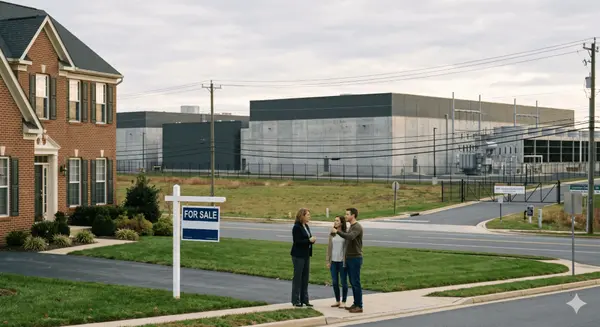
Ashburn sits in eastern Loudoun County and is the heart of what real estate professionals call "Data Center Alley" — the highest concentration of data center infrastructure in the world. That single fact explains a lot about the local rental market. Tech firms, federal contractors, and engineers servicing the data center corridor want short-to-medium-term housing within commuting distance. Many of them prefer to rent rather than buy, especially when their assignments run 12–36 months.
The result, over the past several years, has been steady rental absorption, low vacancy in the townhome and single-family categories, and rents that have generally outpaced national averages. For an owner who bought before the surge — say, between 2014 and 2020 — the combination of price appreciation and rental cash flow has produced significant equity. Selling that equity, though, requires understanding what makes Ashburn investment properties unique:
Five factors specific to Ashburn investment sales
- ✓ Strong appreciation base. Ashburn townhomes and single-family homes have appreciated meaningfully over the past decade, meaning longer-held investment properties typically have substantial unrealized gain — and a corresponding tax exposure at sale.
- ✓ HOA-heavy housing stock. Most Ashburn investment properties sit in master-planned communities (Ashburn Village, Brambleton, Belmont Country Club, Loudoun Valley Estates, Broadlands, Ashburn Farm). HOA documents, resale packages, and any open violations need to be cleared before listing.
- ✓ Active tenant rights under Virginia law. Tenants on a fixed-term lease have the right to remain through the end of the lease, even if the property sells. Month-to-month tenants generally require 30 days' written notice. These rules shape your timeline and your buyer pool.
- ✓ Two distinct buyer pools. Owner-occupants (often dual-income tech professionals) typically pay full retail and want move-in ready. Investor buyers underwrite to a cap rate and often want a property already producing rent. The marketing strategy differs significantly.
- ✓ Loudoun County transfer taxes. Virginia's grantor tax of $1 per $1,000 of sale price plus the Northern Virginia regional congestion tax apply at closing. On a $600K sale, that's roughly $600 in state grantor tax plus an additional regional fee.
Tax Implications: Capital Gains, Depreciation Recapture & 1031 Exchanges
This is where investment property sales diverge most sharply from primary residence sales. The Section 121 home sale exclusion ($250K single / $500K married) does not apply to pure investment properties — only to homes you've used as your primary residence for at least two of the past five years. If your Ashburn property has been a rental the entire holding period, you're looking at three potential tax buckets at closing.
⚠️ This is general information, not tax advice
Investment property tax outcomes depend heavily on your individual income bracket, holding period, depreciation history, and state of residency. Before listing, work with a CPA or tax attorney who handles real estate transactions. The numbers below are illustrative — your actual figures will vary.
The three tax buckets at closing
| Tax Bucket | Rate (2026) | Applied To |
|---|---|---|
| Federal long-term capital gains | 0%, 15%, or 20% | Sale price minus adjusted basis (excluding depreciation portion). Rate depends on taxable income. |
| Federal depreciation recapture | Up to 25% | Cumulative depreciation you took (or were entitled to take) during the holding period — recaptured under IRC Section 1250. |
| Virginia state income tax | Up to 5.75% | Total taxable gain (capital gain + recapture) at Virginia's top marginal rate for most investment property sellers. |
| Net Investment Income Tax (NIIT) | 3.8% (if applicable) | Higher-income filers above the IRS threshold ($200K single / $250K married joint) pay an additional surcharge on investment income. |
A simplified example — $600K Ashburn townhome
Let's say you bought an Ashburn townhome in 2014 for $375,000, took $100,000 of cumulative depreciation over the holding period, and are now selling for $600,000 (after 6% in selling costs at a traditional commission). This is illustrative only and ignores some adjustments a CPA would refine:
| Sale price | $600,000 |
| Less: selling costs (~6%) | −$36,000 |
| Net sale proceeds | $564,000 |
| Original cost basis | $375,000 |
| Less: cumulative depreciation | −$100,000 |
| Adjusted basis | $275,000 |
| Total taxable gain | $289,000 |
| ↳ Recapture portion (taxed up to 25%) | $100,000 |
| ↳ Capital gain portion (taxed at 15–20%) | $189,000 |
Add federal capital gains, recapture, Virginia income tax, and possible NIIT, and the combined tax bill on this hypothetical sale could approach $70,000–$90,000 depending on your bracket. That number is exactly why two strategies become important: reducing selling costs (lower commission) and considering a 1031 exchange.
Section 1031 like-kind exchange — the deferral option
A Section 1031 exchange lets you defer all federal capital gains tax and depreciation recapture by reinvesting the proceeds into another investment property of equal or greater value. The deferral isn't forgiveness — your basis carries over to the new property — but it lets you redeploy the full pre-tax proceeds into a larger or higher-yielding asset.
The key 1031 rules for an Ashburn investment property sale:
- ✓ Like-kind property: any U.S. real estate held for investment qualifies — you can swap an Ashburn townhome for an apartment building in Texas, vacation rental in Florida, or commercial property anywhere.
- ✓ 45-day identification window: from the closing date of your sale, you have 45 calendar days to identify (in writing) up to three potential replacement properties.
- ✓ 180-day closing window: you must close on the replacement property within 180 days of selling the original — no extensions.
- ✓ Qualified intermediary required: proceeds cannot pass through your hands. A QI holds the funds between transactions; their fee is typically $750–$1,500.
- ✓ Equal or greater value rule: to defer 100% of the gain, the replacement property must be equal or greater in value, with equal or greater debt and equal or greater equity reinvested.
When a 1031 exchange makes sense — and when it doesn't
1031 exchanges work brilliantly when you want to stay in real estate, scale up to a larger property, or shift markets (e.g., trading a single Ashburn townhome for a small multifamily in a higher cap-rate region). They make less sense when you want to fully exit real estate, when your gain is small enough that the deferral benefit doesn't justify the friction, or when finding a quality replacement property in 45 days isn't realistic for your investment thesis.
Get a personalized valuation from The Jamil Brothers Realty Group — street-level comps for both owner-occupant and investor-buyer pricing. Response within 24 hours, no automated estimates.
The Three Buyer Pools — and How to Choose
Most sellers think of "the buyer" as one person. With investment properties, three distinct buyer types exist, and each pays a different price for very different reasons. The right marketing strategy depends entirely on which pool you're targeting.
| Buyer Type | What They Pay | What They Want | Speed |
|---|---|---|---|
| Owner-occupant | Full retail (highest) | Move-in ready, vacant, staged, financed | 30–45 days |
| 1031 / cap-rate investor | Slightly below retail | Tenant in place, lease assignment, clean books | 21–45 days |
| Cash / iBuyer | 5–12% below retail | As-is, fast close, no contingencies | 7–21 days |
Buyer pool relative pricing — visualized
Typical net to seller (% of full retail) — illustrative
General benchmarks based on Northern Virginia investment-property transactions; actual results vary by property condition, neighborhood, and market timing.
Choosing your target pool
If your tenant has 8+ months remaining on a fixed-term lease and the property is in solid rentable condition, your most natural buyer is a 1031 investor or cap-rate buyer who will appreciate the in-place income. If your tenant is on month-to-month or the lease ends within 90 days, vacating and marketing to owner-occupants typically yields the highest sale price — even after factoring in 30–60 days of lost rent during the marketing window.
If you need speed or certainty above all else (PCS orders, divorce, estate liquidation, or the need to free up capital for a 1031 replacement), a cash offer option can close in as little as 7 days and remove every contingency. The tradeoff is typically 5–12% below open-market retail.
Should You Sell Occupied or Vacant?
This is one of the highest-stakes decisions an investment property seller makes. The difference between selling occupied and selling vacant can be 5–10% of the sale price — but vacating costs you 30–60 days of rent and possibly turnover expenses. Run the numbers both ways before deciding.
| ✓ Selling Occupied | ✗ Tradeoffs |
|---|---|
| Continued rental income through closing | Limited showings (tenant cooperation required by VA law) |
| Appeals to investor / 1031 buyers | Smaller buyer pool — many owner-occupants pass |
| No vacancy or turnover costs | Photos, condition, and showing-readiness depend on tenant |
| In-place lease can be a value-add for cap-rate buyers | Sale price typically 3–8% below vacant-market price |
Virginia tenant-rights essentials when selling
ℹ️ Key Virginia Residential Landlord and Tenant Act rules
Tenants on a fixed-term lease have the right to remain through the lease end date, even if the property changes hands — the lease transfers to the new owner. Month-to-month tenants generally require at least 30 days' written notice to terminate. Showings require reasonable advance notice (typically 24–72 hours per the lease terms). A buyer who plans to occupy can't generally force an early move-out unless the lease specifically allows for sale-related termination, which is rare. Always review your specific lease and consult a Virginia real estate attorney for your situation.
A "tenant cooperation incentive" often pays for itself
If you decide to sell with the tenant in place, offering a small monthly rent reduction or a one-time bonus (commonly $500–$2,000) in exchange for showing flexibility and minor staging cooperation is one of the most effective tactics in this market. The marginal cost is small relative to the value of full marketing access. Document everything in writing as a lease addendum.
Pricing an Investment Property in Ashburn
Ashburn pricing breaks roughly along housing type and subdivision. Investment properties most commonly fall in the townhome and entry-level single-family ranges. Here's a general orientation — actual list prices should always come from a current comparative market analysis pulling the most recent 90 days of sold comps:
| Property Type / Subdivision | Typical Range | Investor Notes |
|---|---|---|
| Older Ashburn Village townhome | $500K–$625K | Strong rental absorption, established HOA |
| Brambleton townhome | $575K–$725K | Premium school zones, newer build, higher rents |
| Loudoun Valley Estates SFH | $700K–$900K+ | Larger lot, family rentals, longer-term tenants |
| Broadlands SFH | $750K–$1.0M | Mature community, steady appreciation, good rental ratios |
| Ashburn Farm SFH | $650K–$850K | Family-oriented, multiple amenities, broad rental appeal |
| Belmont Country Club SFH | $900K–$1.3M+ | Higher-end, executive rentals, larger CapEx considerations |
The pricing approach for an investment property differs from a primary home in two ways. First, you'll want both an owner-occupant value (full retail comp) and an investor value (a cap-rate calculation based on net operating income). Second, your starting list price should account for which buyer pool you're primarily targeting — list slightly above the investor cap-rate value if your goal is to attract owner-occupants, and ensure the in-place rent supports the price for an investor.
For a deeper view of Ashburn-specific market activity, browse our current Ashburn community page or view current Northern Virginia listings.
Seller Savings Calculator
One of the largest controllable costs in selling your Ashburn investment property is the listing commission itself. The traditional 3% listing fee on a $600K Ashburn townhome is $18,000. The Jamil Brothers full-service 1.5% fee on the same property is $9,000 — a $9,000 difference at closing. Slide through the price points below to see the savings at your value:
Seller Savings Calculator
How much more do you keep with our 1.5% listing fee?
Select your home's estimated value to see your real net proceeds — side by side.
Traditional Agent — 3%
| Sale price | $400,000 |
| Listing fee (3%) | −$12,000 |
| Buyer's agent (2.5%) | −$10,000 |
| Est. closing (1%) | −$4,000 |
| Net Proceeds | $374,000 |
Our Fee — Only 1.5%
| Sale price | $400,000 |
| Listing fee (1.5%) | −$6,000 |
| Buyer's agent (2.5%) | −$10,000 |
| Est. closing (1%) | −$4,000 |
| Net Proceeds | $380,000 |
Extra in your pocket
$6,000
vs. a traditional 3% listing agent — with zero reduction in service or marketing.
Traditional Agent — 3%
| Sale price | $500,000 |
| Listing fee (3%) | −$15,000 |
| Buyer's agent (2.5%) | −$12,500 |
| Est. closing (1%) | −$5,000 |
| Net Proceeds | $467,500 |
Our Fee — Only 1.5%
| Sale price | $500,000 |
| Listing fee (1.5%) | −$7,500 |
| Buyer's agent (2.5%) | −$12,500 |
| Est. closing (1%) | −$5,000 |
| Net Proceeds | $475,000 |
Extra in your pocket
$7,500
vs. a traditional 3% listing agent — with zero reduction in service or marketing.
Traditional Agent — 3%
| Sale price | $600,000 |
| Listing fee (3%) | −$18,000 |
| Buyer's agent (2.5%) | −$15,000 |
| Est. closing (1%) | −$6,000 |
| Net Proceeds | $561,000 |
Our Fee — Only 1.5%
| Sale price | $600,000 |
| Listing fee (1.5%) | −$9,000 |
| Buyer's agent (2.5%) | −$15,000 |
| Est. closing (1%) | −$6,000 |
| Net Proceeds | $570,000 |
Extra in your pocket
$9,000
vs. a traditional 3% listing agent — with zero reduction in service or marketing.
Traditional Agent — 3%
| Sale price | $750,000 |
| Listing fee (3%) | −$22,500 |
| Buyer's agent (2.5%) | −$18,750 |
| Est. closing (1%) | −$7,500 |
| Net Proceeds | $701,250 |
Our Fee — Only 1.5%
| Sale price | $750,000 |
| Listing fee (1.5%) | −$11,250 |
| Buyer's agent (2.5%) | −$18,750 |
| Est. closing (1%) | −$7,500 |
| Net Proceeds | $712,500 |
Extra in your pocket
$11,250
vs. a traditional 3% listing agent — with zero reduction in service or marketing.
Traditional Agent — 3%
| Sale price | $1,000,000 |
| Listing fee (3%) | −$30,000 |
| Buyer's agent (2.5%) | −$25,000 |
| Est. closing (1%) | −$10,000 |
| Net Proceeds | $935,000 |
Our Fee — Only 1.5%
| Sale price | $1,000,000 |
| Listing fee (1.5%) | −$15,000 |
| Buyer's agent (2.5%) | −$25,000 |
| Est. closing (1%) | −$10,000 |
| Net Proceeds | $950,000 |
Extra in your pocket
$15,000
vs. a traditional 3% listing agent — with zero reduction in service or marketing.
Estimates only. Closing costs vary. Buyer's agent commission is negotiable.
Our seller net sheet calculator breaks down every cost — commission, transfer taxes, closing fees, capital gains exposure — so you know your real bottom line before you list.
Pre-Listing Checklist for Investment Properties
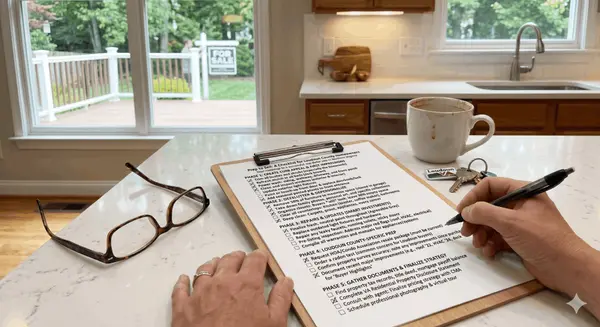
Investment property prep is different from primary-residence prep. The biggest swing items are tenant coordination, document gathering for investor buyers, and HOA paperwork. Use this checklist 30–60 days before your target list date:
Investment Property Pre-Listing Checklist
- ✓ Notify your tenant in writing (per lease and Virginia law) of intent to list
- ✓ Negotiate showing protocol and (if useful) a tenant cooperation incentive
- ✓ Order the HOA resale package (Loudoun-area HOAs typically take 14–30 days)
- ✓ Gather Schedule E for the past 2 years (investor buyers will request)
- ✓ Compile depreciation schedule from your tax preparer
- ✓ Pull rent roll, lease agreement, and any addenda
- ✓ Document recent capital improvements (roof, HVAC, water heater dates)
- ✓ Resolve any open HOA violations or pending architectural review items
- ✓ If considering a 1031, engage a qualified intermediary before closing
- ✓ Brief your CPA on timing and run preliminary tax projections
Step-by-Step Selling Timeline
A typical Ashburn investment property sale, from decision to listing to closing, runs 90–120 days. Here's how the timeline usually breaks down:
Strategy & tax planning — Days 1–14
Meet with your listing agent and CPA. Decide between selling for cash exit, 1031 exchange, or staged sale. Gather depreciation schedule, lease, and HOA documents. Get a comparative market analysis from both an owner-occupant and investor angle.
Tenant communication & HOA prep — Days 14–30
Notify the tenant per lease and Virginia law. Order the HOA resale package. If selling occupied, finalize the showing protocol. If selling vacant, schedule the tenant move-out and turnover work.
Listing prep & marketing launch — Days 30–45
Professional 4K photography, drone video, 3D virtual tour, MLS listing, and dual marketing strategy (owner-occupant and investor channels). For investor-targeted listings, include cap rate, rent roll, and Schedule E summary.
Active marketing & offer review — Days 45–75
Showings, open houses (if vacant), broker tour, offer review, and negotiation. In a strong Ashburn market, well-priced and well-marketed properties typically receive offers within 1–3 weeks of listing.
Under contract — Days 75–105
Inspections, appraisal, loan processing (if buyer is financing), title work, and HOA document delivery. If 1031 exchange: identify replacement properties within 45 days of the original sale closing.
Closing & tax follow-through — Days 105–120+
Settlement, key handoff (or lease assignment to new owner if occupied), final accounting with your CPA, and Form 1099-S filing. If 1031: close on replacement property within 180 days of original closing.
How to Market an Investment Property
Marketing an investment property well means running two campaigns at once: one for the owner-occupant pool and one for the investor pool. The MLS listing and visuals serve both. The supplemental documents and the listing copy speak to each audience differently.
| Marketing Element | Owner-Occupant Channel | Investor Channel |
|---|---|---|
| Photography | 4K wide-angle, lifestyle staging, dusk shots | Standard MLS photos, condition documentation |
| Drone video / 3D tour | Yes — high engagement | Helpful but not critical |
| Listing copy emphasis | Schools, commute, neighborhood lifestyle | Cap rate, rent roll, NOI, cash-on-cash return |
| Supplemental documents | HOA package, school zone summary | Schedule E, lease, rent roll, expense history |
| Distribution channels | MLS, Zillow syndication, social, open houses | MLS, investor brokerage networks, 1031 exchange networks, off-market lists |
| Lead negotiation angle | Emotional fit, lifestyle, future-oriented | Numbers-driven, return-on-investment |
If you're under timeline pressure for a 1031 exchange, dealing with a difficult tenant situation, or simply want certainty over maximum price, a cash offer may be the right fit. We'll walk you through your full range of options — no pressure.
Closing Costs & Net Proceeds in Loudoun County
On top of the listing commission, Ashburn investment property sellers face a predictable set of closing costs. Here's the typical breakdown for a $600K Loudoun County sale (illustrative — your actual costs will vary):
| Closing Cost Item | Typical Amount on $600K | Notes |
|---|---|---|
| Listing commission (1.5% w/ JB) | $9,000 | vs. $18,000 at 3% traditional |
| Buyer's agent compensation (negotiable) | $0–$15,000 | Negotiable post-NAR settlement; typically 2–2.5% |
| Virginia state grantor tax | ~$600 | $1 per $1,000 of sale price |
| Northern Virginia regional congestion tax | ~$900 | Applied in NOVA jurisdictions including Loudoun |
| HOA resale package & transfer fee | $200–$600 | Varies by community; typically seller-paid |
| Settlement / title fees | $1,200–$2,000 | Depending on settlement company |
| Mortgage payoff (if applicable) | Varies | Includes prorated interest |
| Prorated property tax | Varies | Loudoun bills semi-annually; prorated to closing date |
| Qualified intermediary fee (1031 only) | $750–$1,500 | Only if executing a 1031 exchange |
Approximate cost spread — visualized
Cost as % of $600K sale (1.5% listing fee scenario)
How to Choose a Listing Agent for an Investment Property
Investment property sales reward agents who understand both sides of the transaction — the residential listing process and the numbers-driven mindset of investor buyers. When interviewing potential listing agents, evaluate them against these objective criteria:
- ✓ Local Ashburn market depth. Look for agents who can pull comparables across both owner-occupant and investor sale channels in your specific subdivision.
- ✓ Investor network reach. Does the agent have an active network of 1031 buyers, cap-rate investors, and property management companies they regularly transact with?
- ✓ Tenant-relationship handling. Strong investment-property agents know how to coordinate showings respectfully, structure incentives, and avoid conflicts that derail deals.
- ✓ Transparent fee structure. A clear listing fee (1.5% full-service vs. legacy 3%) tells you exactly what you'll keep at closing.
- ✓ Marketing capabilities. 4K photography, drone video, 3D virtual tour, MLS distribution, social campaigns, and dual-audience listing copy should all be included — not upsells.
- ✓ Proven track record. Verified reviews and a long list of recent closings speak louder than marketing claims.
The Jamil Brothers Realty Group has closed 840+ homes across Northern Virginia, including substantial volume in Ashburn investment properties. The team is composed of NVAR Lifetime Top Producers ranked in the top 1% nationwide, and full-service marketing — 4K photography, drone video, 3D tours, expert negotiation, and MLS syndication — is included at the 1.5% listing fee.
Common Mistakes to Avoid
Investment property sellers tend to make different mistakes than primary-residence sellers. Most of them stem from underestimating the tax bill or overestimating market timing.
| ✓ Smart Moves | ✗ Avoid |
|---|---|
| Run tax projections with your CPA before listing | Discovering depreciation recapture at closing |
| Engage a qualified intermediary if doing a 1031 | Touching the proceeds — disqualifies the 1031 |
| Run dual valuations (occupant + investor) | Listing only at investor cap rate when owner-occupant value is higher |
| Order HOA documents 30+ days early | Closing delays from late HOA package delivery |
| Negotiate showing access in writing with tenant | Limited showings or hostile tenant interactions |
| Compare commission structures (1.5% vs 3%) | Defaulting to the legacy 3% fee without asking |
| Document every capital improvement | Missing basis adjustments that reduce taxable gain |
4K photography, drone video, 3D tours, expert negotiation, dual-audience marketing, and full MLS syndication — included at 1.5%. The savings go straight against your taxable gain.
Frequently Asked Questions
How is selling an investment property in Ashburn taxed differently from a primary home?
A primary residence sale in Virginia qualifies for the federal Section 121 exclusion of up to $250,000 of gain (single) or $500,000 (married filing jointly), provided you used the home as your primary residence for at least two of the past five years. An investment property doesn't qualify for that exclusion — the full gain is taxable. You'll owe federal long-term capital gains tax (0%, 15%, or 20% depending on your income), depreciation recapture of up to 25% on the cumulative depreciation taken, Virginia state income tax up to 5.75%, and possibly the 3.8% Net Investment Income Tax for higher earners. Total combined tax exposure on a typical Ashburn investment property sale can run 20–35% of the gain.
What is depreciation recapture and how does it affect my Ashburn sale?
Depreciation recapture is the IRS reclaiming the tax benefit you received from depreciating the rental property each year you owned it. Under IRC Section 1250, the cumulative depreciation you took (or were entitled to take, even if you didn't claim it) is recaptured at a federal rate of up to 25% — separate from your capital gains rate. For example, if you owned an Ashburn rental for 10 years and took $100,000 of depreciation, that $100,000 is taxed at up to 25% federal at sale, in addition to the capital gains tax on the remaining gain. This is one of the most overlooked costs by investment property sellers.
Can I do a 1031 exchange to defer all the tax?
Yes — Section 1031 of the Internal Revenue Code lets you defer federal capital gains tax and depreciation recapture by reinvesting the proceeds into a like-kind investment property. The key rules are: identify potential replacement properties in writing within 45 days of closing on your Ashburn sale, close on the replacement within 180 days, work through a qualified intermediary (proceeds cannot pass through your hands), and reinvest equal or greater value with equal or greater debt. The deferral isn't forgiveness — your basis carries to the new property — but it lets you redeploy the full pre-tax proceeds. Engage your QI before closing, not after.
Should I sell my Ashburn rental occupied or vacant?
It depends on your tenant situation and your target buyer. Selling vacant typically yields 3–8% higher sale prices because owner-occupants make up the largest buyer pool and they generally won't buy with a tenant in place. The tradeoff is 30–60 days of lost rent during the marketing window plus possible turnover costs. Selling occupied works well when you have 8+ months remaining on a fixed-term lease and the tenant is cooperative — investor and 1031 buyers actually prefer in-place income. A tenant cooperation incentive of $500–$2,000 in exchange for showing flexibility usually pays for itself in marketing reach.
What does it cost to sell an investment property in Ashburn?
On a $600,000 Ashburn investment property sale, total seller costs typically run 5–7% of the sale price when listing with The Jamil Brothers at 1.5%, or 7–9% with a traditional 3% listing agent. The breakdown includes the listing commission ($9,000 at 1.5% vs. $18,000 at 3%), buyer's agent compensation (negotiable post-NAR settlement, typically 2–2.5%), Virginia grantor tax (~$600), Northern Virginia regional congestion tax (~$900), HOA resale package and transfer fees ($200–$600), settlement fees ($1,200–$2,000), and prorated property taxes. Selling occupied removes most marketing prep cost but rarely changes the closing-cost line items.
How long does it take to sell an investment property in Ashburn?
A typical Ashburn investment property sale runs 90–120 days from the decision to list through closing. The breakdown is roughly two weeks for strategy and tax planning, two weeks for tenant communication and HOA package preparation, two weeks for listing preparation and marketing launch, three to four weeks of active marketing and offer negotiation, and 30–45 days under contract through closing. Cash sales can close in as little as 7–21 days but typically come 5–12% below open-market value. If executing a 1031 exchange, the 45-day identification and 180-day closing windows for the replacement property run in parallel.
What's the post-NAR settlement impact on selling an investment property?
After the National Association of Realtors settlement that took effect in August 2024, buyer agent compensation is no longer embedded in the listing commission — it's separately negotiated between the buyer and their agent, and is now disclosed on the MLS only when the seller chooses to offer it. Sellers can offer to pay the buyer's agent (most still do, especially for owner-occupant deals), require the buyer to pay it directly, or negotiate split arrangements. For investor-targeted listings, many cap-rate buyers come unrepresented or with a flat-fee buyer agent, which can reduce overall commission costs further.
How do I choose a listing agent for an Ashburn investment property?
Look for objective criteria: local Ashburn track record (recent closed transactions in your specific subdivision), an investor network the agent can market to directly, experience handling tenant coordination and Virginia landlord-tenant law, transparent fee structure, and full-service marketing included rather than upsold. Verified Google, Zillow, and Realtor.com reviews matter more than marketing claims. The Jamil Brothers Realty Group meets these criteria with 840+ homes sold, 500+ five-star verified reviews, NVAR Lifetime Top Producer status, and a 1.5% full-service listing fee that includes 4K photography, drone video, 3D tours, expert negotiation, and complete MLS syndication.
What about the Ashburn HOA — anything specific to know?
Most Ashburn investment properties sit inside master-planned communities such as Ashburn Village, Brambleton, Belmont Country Club, Loudoun Valley Estates, Broadlands, and Ashburn Farm. Each HOA has its own resale package, transfer fees (typically $200–$600), and architectural review history. Order the resale package at least 30 days before listing — Loudoun-area HOAs commonly take 14–30 days to deliver. Resolve any open violations or pending architectural items before going live. The HOA documents must be delivered to the buyer per Virginia Property Owners' Association Act requirements, and the buyer has a statutory right to cancel the contract within a specified period after receiving them.
What mistakes should I avoid when selling my Ashburn rental?
The five most common mistakes: not running tax projections with a CPA before listing (and being shocked by depreciation recapture at closing), failing to engage a qualified intermediary before closing if planning a 1031 exchange (which disqualifies the exchange), pricing only against investor cap-rate comps when owner-occupant value is higher, ordering the HOA resale package late and causing closing delays, and accepting the legacy 3% listing fee without comparing to the 1.5% full-service alternative — which alone costs roughly $9,000 of net proceeds on a $600K Ashburn sale.
Can I sell my Ashburn rental for cash quickly?
Yes — cash sales typically close in 7–21 days with no contingencies, no inspections (or as-is inspections), and no appraisal. The tradeoff is price: cash buyers in Ashburn typically pay 5–12% below open-market value because they're absorbing condition risk and providing speed. Cash sales work well for sellers facing 1031 timing pressure, divorce or estate timelines, military PCS orders, or properties needing significant repairs that would otherwise scare off financed buyers. The Jamil Brothers Realty Group can run an open-market versus cash-offer comparison for your specific Ashburn property so you can see the real numbers side by side before deciding.
What's happening in the Ashburn rental and resale market right now?
Ashburn has remained one of Northern Virginia's strongest markets, anchored by the data center economy along Route 28, the Silver Line metro extension to Ashburn Station, and one of the highest-rated public school systems in the state. Resale demand has stayed steady across townhomes and single-family homes, and the rental market has continued to absorb supply with low vacancy and rent growth. For an investment property seller, this combination has produced strong appreciation on assets bought before 2020 and a rental income stream that supports both owner-occupant and investor pricing. For real-time market data, browse our Ashburn community page.
Glossary
Adjusted Basis
Original purchase price plus capital improvements, minus cumulative depreciation taken. Used to calculate taxable gain at sale.
Capital Gains Tax
Federal tax on the profit from selling an asset held over one year — 0%, 15%, or 20% depending on income.
Cap Rate
Net operating income divided by purchase price. Investor benchmark for property returns; higher cap rate = higher yield.
Depreciation Recapture
IRS reclaiming the tax benefit of prior depreciation deductions at sale. Up to 25% federal under IRC Section 1250.
Grantor Tax
Virginia state transfer tax of $1 per $1,000 of sale price, paid by the seller at closing.
NIIT
Net Investment Income Tax — 3.8% federal surcharge on investment income for higher earners (above $200K single / $250K married joint).
Qualified Intermediary (QI)
Independent third party who holds 1031 exchange proceeds between the sale and replacement purchase. Required for valid 1031.
Section 1031 Exchange
IRS provision allowing deferral of capital gains and recapture by reinvesting proceeds into like-kind investment property within 180 days.
Section 121 Exclusion
Federal exclusion of $250K (single) or $500K (married joint) of gain on a primary residence — does not apply to pure investment properties.
Schedule E
IRS tax form reporting rental income and expenses. Investor buyers commonly request 1–2 years of Schedule E during due diligence.
Next Steps
Selling an Ashburn investment property well isn't about chasing the highest list price — it's about engineering the highest net after taxes, commission, and timing costs. The decisions that move the needle the most are the ones you make before listing: tax planning with your CPA, choosing between owner-occupant and investor positioning, the occupied-versus-vacant question, and the listing fee you accept.
The Jamil Brothers Realty Group provides a free, no-obligation seller consultation specifically tailored to investment property owners. We'll run dual valuations (owner-occupant and investor), build a personalized net sheet that includes your tax projection, walk through 1031 exchange logistics if relevant, and show you exactly what listing at 1.5% full-service looks like compared to a traditional 3% agent.
Know your equity, understand your tax exposure, and see exactly what you'll walk away with — before you make any decisions. The Jamil Brothers Realty Group provides a full investment property seller consultation at no cost or obligation.
Explore More Northern Virginia Guides
Ashburn Leesburg Sterling Reston Herndon 1.5% Listing Net Sheet Cash Offers Free Valuation Homes for SaleExplore More
Browse Every Corner of the DMV Market
Whether you're searching by budget, neighborhood, or buying situation — find exactly what you need below.
Virginia Homes by Budget
Washington DC Homes by Budget
Maryland Homes
Explore Northern Virginia Communities
Loudoun County
Fairfax County & Surrounding
Ready to Make a Move?
Full-Service · No Tradeoffs
List for 1.5% & Keep More Equity
Professional photography, drone video, 3D tours, and expert negotiation — all included. On an $800K home, that's $12,000 more in your pocket vs. a 3% agent.
See the 1.5% Program →Need Speed or Certainty?
Get a No-Obligation Cash Offer
Skip the showings, skip the contingencies. If timing or condition matters more than top dollar, a cash offer may be the right fit. We'll walk you through every option.
Explore Cash Offers →
Categories
- All Blogs (1237)
- Buyer Guide (7)
- Buying a home (2)
- Buying Strategies (30)
- festivals (1)
- General Blog (66)
- Market Intelligence (28)
- Market Updates (7)
- Notable Properties For Sale (32)
- Real Estate Tips, News, and More (396)
- Seller Guide (1)
- Seller Guides (58)
- Selling Your Home (525)
- Top Realtors in Northern Virginia (58)
Recent Posts






Let's Connect