First-Time Home Buyer Guide for Virginia: Programs, Loans, and Steps for 2026
First-Time Home Buyer Guide for Virginia: Programs, Loans, and Steps for 2026
Quick Answer: First-time home buyers in Virginia have access to some of the most generous state programs in the country in 2026, including Virginia Housing down payment grants of up to 2.5% of the purchase price, closing cost assistance, and a high-cost conforming loan limit of $1,249,125 in the DC metro area. This guide walks you through every program, loan type, and step — from pre-approval to closing day.
Key Takeaways
- Virginia defines "first-time buyer" as anyone who hasn't owned a primary residence in the past three years — including single parents and displaced homemakers.
- Virginia Housing offers non-repayable down payment grants of 2–2.5% of the purchase price that never have to be paid back.
- The 2026 DC metro conforming loan limit is $1,249,125, giving Northern Virginia buyers significant purchasing power without jumbo financing.
- Virginia is a "buyer beware" (caveat emptor) state — home inspections are critical because seller disclosures are limited by law.
- Since the 2024 NAR settlement, all Virginia buyers must sign a written buyer-broker agreement before touring homes.
- County-specific programs in Fairfax, Loudoun, Prince William, and Alexandria provide additional DPA on top of state programs.
In This Guide
- Who Qualifies as a First-Time Buyer in Virginia?
- Virginia Housing Programs and Down Payment Grants
- Loan Types Compared: Conventional, FHA, VA, and USDA
- 2026 Loan Limits for Virginia's DC Metro Counties
- County-Level First-Time Buyer Programs
- 10 Steps to Buying Your First Home in Virginia
- What Buyers Actually Pay at Closing
- Working With a Buyer's Agent After the NAR Settlement
- 7 Mistakes Virginia First-Time Buyers Make
- Best Virginia Neighborhoods for First-Time Buyers
- Frequently Asked Questions
- Glossary
Buying your first home in Virginia can feel overwhelming. Between choosing the right loan, figuring out down payment assistance, and navigating one of the most competitive housing markets on the East Coast, there's a lot to sort through — and most of the information online is either outdated or too generic to be useful.
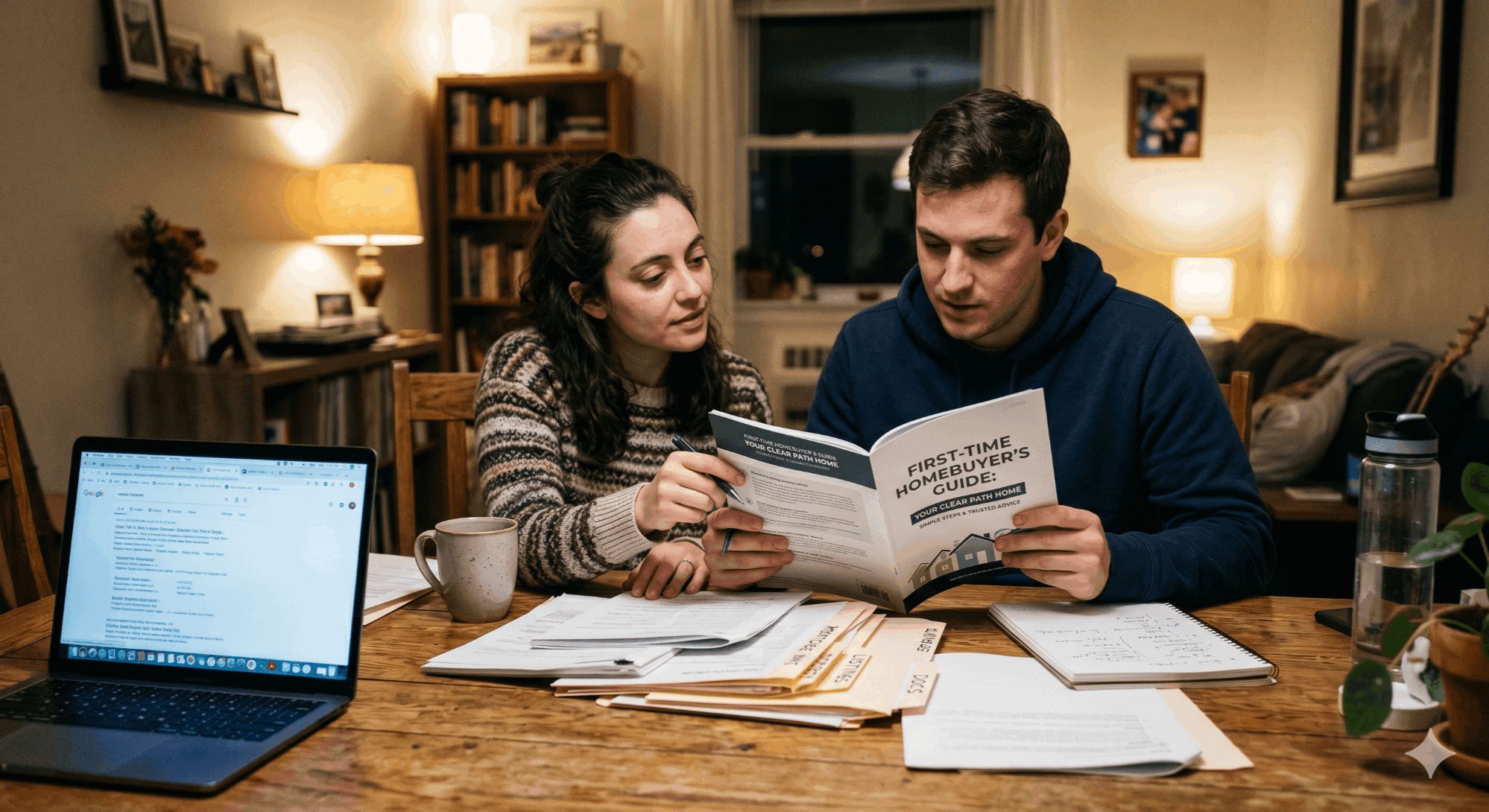
This guide is built specifically for 2026 and tailored to Virginia's unique market conditions. Whether you're looking in Northern Virginia, the Shenandoah Valley, or the Eastern Panhandle of West Virginia, you'll find the exact programs, loan limits, and step-by-step process you need to buy smart and buy with confidence.
Virginia sits at the intersection of three distinct housing economies — Northern Virginia (one of the most expensive suburban markets in the country), Richmond (where prices are rising but remain affordable relative to NOVA), and Hampton Roads (which offers the best entry-level value). Understanding where you're buying changes everything about your strategy, your loan options, and the programs available to you.
Who Qualifies as a First-Time Home Buyer in Virginia?
Virginia's definition of "first-time home buyer" is broader than most people realize. You qualify if you haven't owned a primary residence in the past three years. That means if you owned a home before 2023 and have been renting since, you're eligible for most Virginia programs in 2026.
Several additional groups also qualify under this definition:
Who Qualifies as "First-Time" in Virginia
- ✓ Anyone who hasn't owned a primary residence in the past 3 years
- ✓ Single parents who only owned with a former spouse
- ✓ Displaced homemakers who only owned with a partner
- ✓ Veterans purchasing with VA loans through certain Virginia Housing programs
- ✓ Buyers purchasing in HUD-designated targeted areas of economic opportunity
ℹ️ Important Distinction
Virginia Housing programs have income and purchase price limits that vary by county. Northern Virginia's limits are significantly higher than the rest of the state because of elevated housing costs. Always check the current limits on Virginia Housing's website before assuming you don't qualify.
Virginia Housing Programs and Down Payment Grants
Virginia Housing (formerly VHDA) runs one of the most generous state assistance programs for first-time buyers east of the Mississippi. Here's a breakdown of the major programs available in 2026:
Virginia Housing Down Payment Assistance (DPA) Grant
This is the flagship program. Qualified first-time buyers receive 2–2.5% of the home's purchase price as a non-repayable grant — meaning the money never has to be paid back. On a $500,000 home, that's $10,000–$12,500 toward your down payment at no cost.
Virginia Housing Closing Cost Assistance Grant
Buyers using a USDA or VA loan can receive an additional grant of up to 2% of the purchase price to cover closing costs. This can be applied toward the VA funding fee or the USDA guarantee fee, which are two of the largest upfront costs for government-backed loans.
Virginia Housing Plus Second Mortgage
This program pairs a Virginia Housing first mortgage with a 30-year fixed-rate second mortgage covering 3–5% of the purchase price. Buyers with credit scores of 680 or higher can use it to finance both the down payment and part of their closing costs.
DHCD HOMEownership Down Payment Assistance
The Virginia Department of Housing and Community Development offers a separate DPA program targeting low-to-moderate income first-time buyers. This program starts as a loan but functions as a grant over time — if you stay in the home, the balance is forgiven.
| Program | Assistance Amount | Repayment Required? | Min. Credit Score |
|---|---|---|---|
| Virginia Housing DPA Grant | 2–2.5% of purchase price | No — it's a grant | 620–680 |
| Closing Cost Assistance Grant | Up to 2% of purchase price | No — it's a grant | 620–680 |
| Virginia Housing Plus Second Mortgage | 3–5% of purchase price | Yes — 30-year fixed | 680 |
| DHCD HOMEownership DPA | Varies by locality | Forgiven over time | Varies |
| Granting Freedom (Veterans) | Up to $8,000 | No — it's a grant | N/A |
⚠️ Virginia Housing MCC Is Suspended
The Virginia Housing Mortgage Credit Certificate (MCC) program, which provided a federal tax credit on mortgage interest, has been suspended since May 2023. As of April 2026, it has not been reinstated. Do not rely on this benefit in your homebuying budget.
Know your budget, your timeline, and your negotiation position before you step into a single home. Our buyer strategy session is free and covers everything you need to compete in Northern Virginia.
Loan Types Compared: Conventional, FHA, VA, and USDA
Choosing the right mortgage is one of the most consequential decisions you'll make as a first-time buyer. Here's how the four main loan types stack up for Virginia purchasers in 2026:
| Feature | Conventional | FHA | VA | USDA |
|---|---|---|---|---|
| Min. Down Payment | 3% | 3.5% | 0% | 0% |
| Min. Credit Score | 620–640 | 580 (3.5% down) | No VA minimum (lenders: 580–620) | 640 typical |
| Mortgage Insurance | PMI (drops at 20% equity) | MIP (life of loan) | None | Guarantee fee (financed) |
| 2026 NOVA Loan Limit | $1,249,125 | $1,209,750 | No limit (full entitlement) | No cap (income limits apply) |
| Best For | Strong credit, want PMI removal | Lower credit, limited savings | Veterans / active military | Rural / suburban eligible areas |
| ✓ Conventional Loan Pros | ✗ Conventional Loan Cons |
|---|---|
| PMI cancels automatically at 20% equity | Higher credit score required than FHA |
| Higher loan limits in NOVA ($1,249,125) | 3% minimum down (not zero) |
| No upfront funding fee like VA/FHA | Stricter DTI requirements for approval |
| Pairs with Virginia Housing DPA grants | Higher PMI costs with low credit scores |
Which Loan Should You Choose?
If you're a veteran or active-duty service member, the VA loan is almost always the right answer — zero down, no PMI, and the lowest market rates. For non-military buyers with credit scores above 680, a conventional loan paired with Virginia Housing's DPA grant is typically the strongest combination. FHA works best for buyers with credit challenges, while USDA opens the door for buyers willing to look outside urban cores into eligible suburban and rural areas of Virginia.
2026 Loan Limits for Virginia's DC Metro Counties
Understanding loan limits is critical because staying under the conforming limit means better rates, lower down payments, and an easier approval process compared to jumbo financing. The Federal Housing Finance Agency (FHFA) sets these limits annually.
| County / City | Conforming Limit (1-Unit) | Classification |
|---|---|---|
| Fairfax County / City | $1,249,125 | High-Cost |
| Loudoun County | $1,249,125 | High-Cost |
| Arlington County | $1,249,125 | High-Cost |
| Prince William County | $1,249,125 | High-Cost |
| Alexandria City | $1,249,125 | High-Cost |
| Washington, D.C. | $1,249,125 | High-Cost |
| Most other VA counties | $832,750 | Baseline |
Down Payment by Loan Type on a $600,000 NOVA Home
*Conventional with 3% down ($18,000) minus Virginia Housing DPA grant of 2.5% ($15,000) = $3,000 net out of pocket for down payment.
County-Level First-Time Buyer Programs
Virginia's state programs can often be stacked with county-level assistance. Here are the major local programs available in Northern Virginia's core counties:
Fairfax County First-Time Homebuyers Program
Fairfax County offers below-market-price homes to qualified first-time buyers through a drawing system. Applicants must complete a Virginia Housing homebuyer education course, obtain a lender pre-approval, and meet income and residency requirements. Properties are allocated via lottery drawings administered by the Fairfax County Redevelopment and Housing Authority.
Loudoun County Housing Programs
Loudoun County provides four distinct programs for first-time buyers who have lived or worked in the county for at least six months:
| Program | Assistance | Key Details |
|---|---|---|
| DPCC | Up to 10% of sale price or $70,000 | Forgivable over 15 years |
| DPCC Plus | Similar to DPCC | Additional flexibility on terms |
| PEG Grant | $25,000 grant | Income limits: $49,200–$114,750 |
| SPARC | Reduced interest rates | $8M allocated for 2026 (first-come, first-served) |
Prince William County First-Time Homebuyer Program
Prince William County offers DPA loans of up to 6% of the purchase price for low-to-moderate-income buyers (80% AMI) in Prince William County, Manassas, and Manassas Park. Funding comes from federal HOME allocations and is processed first-come, first-served during open application periods.
City of Alexandria Homebuyer Resources
Alexandria offers affordable homeownership units through shared equity programs and below-market-rate housing. Qualified buyers must attend Virginia Housing homebuyer education classes and can access SPARC reduced-rate financing, which lowers interest rates by approximately 1%. Units are allocated through application lotteries.
Get a clear picture of your purchasing power before you start your search. We'll walk you through pre-approval, budget planning, and what to expect at each price point in NOVA.
10 Steps to Buying Your First Home in Virginia
Here's the step-by-step process from initial planning to closing day, tailored specifically for Virginia first-time buyers in 2026:
Check Your Credit and Financial Health — 6+ Months Before
Pull your credit reports from all three bureaus and review your debt-to-income ratio. Most Virginia loan programs require a minimum score of 620–680. Pay down high-balance credit cards and avoid opening new credit lines.
Complete a Virginia Housing Homebuyer Education Course — Free
This free course is required for all Virginia Housing programs and many county DPA programs. It's available online and in-person, and you'll receive a certificate of completion. Start at virginiahousing.com/homebuyers.
Get Pre-Approved — Not Just Pre-Qualified
A pre-approval letter tells sellers you're a serious buyer with verified financial backing. It's different from a pre-qualification, which is just an estimate. In Northern Virginia's competitive market, offers without a pre-approval letter are rarely considered.
Sign a Written Buyer-Broker Agreement
Since the 2024 NAR settlement, Virginia buyers must sign a written agreement with their buyer's agent before touring homes. This agreement outlines the agent's duties, the compensation structure, and the scope of representation. It protects you and ensures transparency.
Define Your Must-Haves and Search Criteria
Work with your agent to narrow your search by location, price, school district, commute time, and home type. Use tools like ExploreVAHomes.com to search every active listing in the DMV, updated in real time from BrightMLS.
Tour Homes and Identify Your Top Pick
Tour with a critical eye. Your agent should point out potential issues with the home's condition, layout, lot, and resale potential — not just what's attractive. In NOVA, expect to move quickly; well-priced homes often receive multiple offers within days.
Submit a Competitive Offer
Your agent will help you craft an offer that balances competitiveness with protection. This includes price, contingencies, settlement timeline, and earnest money deposit. In competitive NOVA situations, strategy around escalation clauses and contingency flexibility is critical.
Schedule a Home Inspection — This Is Non-Negotiable
Virginia is a "buyer beware" state (caveat emptor), which means seller disclosures are legally limited compared to most other states. A thorough home inspection is your primary protection against hidden issues. Budget $400–$600 for a standard inspection, plus additional costs for radon, termite, and sewer scope testing if applicable.
Finalize Your Loan and Lock Your Rate
Your lender will order the appraisal and work through final underwriting. This is when you'll lock in your interest rate. Stay in close contact with your lender — do not make large purchases, change jobs, or open new credit accounts during this period.
Closing Day — Sign, Fund, and Get Your Keys
At the settlement table (Virginia uses a "closing" rather than "escrow" process), you'll sign final loan documents, wire your remaining funds, and receive your keys. Your agent will do a final walk-through beforehand to confirm the home's condition matches your expectations.
What Buyers Actually Pay at Closing
In Virginia, buyers should budget 2–4% of the purchase price for closing costs, depending on the loan type and jurisdiction. Here's a breakdown of what Virginia first-time buyers typically pay:
| Cost | Typical Range | Notes |
|---|---|---|
| Recording fees | $100–$250 | Paid to the county clerk |
| Owner's title insurance (optional) | $800–$2,000+ | Strongly recommended |
| Home inspection | $400–$600 | Paid before closing |
| Appraisal | $400–$700 | Required by lender |
| Lender origination / underwriting | $1,000–$2,500 | Varies by lender |
| Prepaid taxes and insurance | $2,000–$5,000+ | Depends on property tax rate |
| Settlement / attorney fee | $600–$1,200 | Virginia uses attorneys for settlement |
ℹ️ Negotiating Seller Credits
In many Virginia transactions, buyers can negotiate a seller credit toward closing costs as part of the purchase agreement. A knowledgeable buyer's agent can help structure an offer that includes a closing cost credit without weakening your competitiveness.
Working With a Buyer's Agent After the NAR Settlement
The 2024 NAR settlement changed how buyer agent compensation works across the country, and Virginia was no exception. Here's what you need to know as a first-time buyer:
Written agreements are now mandatory. Before your buyer's agent can show you a single property, you must sign a written buyer-broker agreement. This document spells out exactly what services the agent provides, how they're compensated, and for how long the agreement lasts.
Buyer agent compensation is negotiable. Compensation is no longer automatically set by the listing agent or the MLS. It can be paid by the seller, the buyer, or a combination — and it's all negotiable. A strong buyer's agent will walk you through these options and help you understand the cost structure before you commit.
What to look for in a buyer's agent: Local market expertise in the specific neighborhoods you're targeting, strong negotiation skills backed by a verifiable track record, transparent communication about compensation, and a willingness to advocate for your interests — even when that means telling you something you don't want to hear about a property.
Search every active listing in the DMV — updated in real time from BrightMLS. Filter by city, price, school district, and more.
7 Mistakes Virginia First-Time Buyers Make
Avoid These Common Pitfalls
- 1. Skipping the home inspection — Virginia's caveat emptor law means sellers have limited disclosure obligations. Never waive your inspection, especially as a first-time buyer.
- 2. Not using Virginia Housing programs — Free grants of 2–2.5% of your purchase price shouldn't be left on the table. Many buyers don't know these exist.
- 3. Shopping for a home before getting pre-approved — You risk falling in love with homes outside your budget, and your offers won't be taken seriously.
- 4. Ignoring county-level DPA programs — Fairfax, Loudoun, and Prince William all have programs that stack on top of state assistance.
- 5. Making big financial changes during underwriting — Switching jobs, financing furniture, or co-signing a loan can derail your mortgage approval at the worst possible time.
- 6. Not budgeting for HOA fees and property taxes — In NOVA, property taxes alone can add $500+ per month to your housing costs. HOA dues on condos and townhomes add further.
- 7. Choosing an agent based on the lowest commission instead of the best strategy — Your buyer's agent is your advocate, negotiator, and advisor. In a competitive market, the difference between a good and great agent often shows up as tens of thousands of dollars in purchase price or concessions.
Best Virginia Neighborhoods for First-Time Buyers
Where you buy matters as much as what you buy. Here's a snapshot of Northern Virginia communities that offer the strongest combination of value, commute access, schools, and future appreciation for first-time buyers:
| Community | Entry-Level Price Range | Best For | Metro/Transit Access |
|---|---|---|---|
| Centreville | $400K–$550K | Families, townhome value | I-66 / future Metro access |
| Sterling | $380K–$520K | Commuters to Dulles corridor | Silver Line Metro (nearby) |
| Herndon | $420K–$600K | Young professionals, Reston Town Center proximity | Herndon Metro Station |
| Ashburn | $450K–$650K | Families, Loudoun County schools | Ashburn Metro Station |
| Fairfax City | $350K–$500K (condos/TH) | Urban walkability, GMU proximity | Vienna Metro (short drive) |
| Prince William County | $350K–$480K | Affordability, space | VRE commuter rail |
Explore Communities
Fairfax McLean Vienna Reston Herndon Centreville Chantilly Ashburn Leesburg Sterling Alexandria Prince WilliamTiming a sale and purchase in a competitive market takes expert coordination. We help you navigate both sides — and save on the listing side with our 1.5% full-service program.
Frequently Asked Questions
What programs are available for first-time home buyers in Virginia in 2026?
Virginia offers several state-level programs through Virginia Housing, including a non-repayable down payment assistance grant of 2–2.5% of the purchase price, a closing cost assistance grant of up to 2% for VA and USDA loan borrowers, and a Plus Second Mortgage program covering 3–5% of the purchase price. The Virginia DHCD also offers a separate HOMEownership DPA program with forgiveness provisions. Additionally, Fairfax, Loudoun, Prince William, and Alexandria all operate county-level first-time buyer programs that can be stacked with state assistance.
How much down payment do I need to buy a home in Virginia?
The amount depends on your loan type. Conventional loans require as little as 3% down, FHA loans require 3.5%, and both VA and USDA loans offer zero-down options. When you combine a conventional loan with Virginia Housing's DPA grant, your net out-of-pocket down payment on a $500,000 home could be as low as $2,500–$5,000. Veterans with full VA entitlement can purchase with zero down and no private mortgage insurance regardless of the home's price.
How long does it take to buy a home in Virginia?
From the time you go under contract, the average closing timeline in Virginia is 30–45 days. However, the full process — including credit preparation, pre-approval, home search, and offer acceptance — typically takes 3–6 months for first-time buyers. In Northern Virginia's competitive market, the search phase can be shorter (weeks) or longer (months) depending on your price range, flexibility, and the current level of inventory.
How do I choose a buyer's agent in Virginia?
Look for an agent with deep local market knowledge in the specific areas you're targeting, a verifiable track record of closed transactions (not just listings), strong negotiation skills, and transparent communication about their compensation structure. Ask for references from recent buyer clients, review their online reviews, and ensure they can explain the new buyer-broker agreement process clearly. The Jamil Brothers Realty Group has helped 840+ families buy and sell homes across VA, MD, DC, and WV, with 500+ five-star reviews.
What is the buyer-broker agreement required after the NAR settlement?
Since the 2024 NAR settlement took effect, all Virginia buyers must sign a written buyer-broker agreement before an agent can show them properties. This agreement outlines the agent's services, how they'll be compensated, and the duration of the relationship. Buyer agent compensation is now fully negotiable and can be paid by the seller, the buyer, or split between both parties. The agreement protects buyers by creating transparency about exactly what services they'll receive and what they'll cost.
Is Northern Virginia a buyer's or seller's market in 2026?
Northern Virginia has remained a competitive market through early 2026, characterized by limited inventory and sustained demand, particularly in Fairfax and Loudoun counties. Well-priced homes in desirable neighborhoods often receive multiple offers within the first week. However, the degree of competition varies significantly by price point and location — properties above $800,000 and those in outer suburbs tend to see less intense competition than entry-level homes in metro-accessible locations. A buyer strategy session can help you understand the competitive dynamics in your specific target area.
What mistakes should first-time buyers avoid in Virginia?
The most common mistakes include skipping the home inspection (especially dangerous in Virginia's caveat emptor legal environment), not researching state and county down payment assistance programs, shopping for homes before securing a pre-approval, making large financial changes during underwriting, and underestimating the true monthly cost of ownership including property taxes, HOA fees, and maintenance. Working with an experienced local agent who can guide you through Virginia-specific pitfalls is one of the most effective ways to avoid costly errors.
What are the best school districts for first-time buyers in Northern Virginia?
Fairfax County Public Schools (FCPS) and Loudoun County Public Schools (LCPS) are consistently ranked among the top school systems in Virginia and nationally. Within FCPS, the magnet program at Thomas Jefferson High School for Science and Technology is one of the most competitive in the country. For first-time buyers balancing school quality with affordability, communities like Centreville, Chantilly, and Ashburn offer strong school access at lower entry-level prices than areas closer to the Beltway.
What loan types are available for first-time buyers in Virginia?
Virginia first-time buyers can choose from four primary loan types: conventional loans (3% minimum down, best for buyers with strong credit), FHA loans (3.5% down, more flexible credit requirements), VA loans (zero down for veterans and active military, no PMI), and USDA loans (zero down for eligible rural and suburban areas). Virginia Housing also offers its own conventional and FHA loan products that come bundled with down payment grants, closing cost assistance, and free homebuyer education. The 2026 conforming loan limit in the DC metro area is $1,249,125, meaning most NOVA purchases can be financed without jumbo rates.
Should I waive contingencies to make my offer more competitive?
As a first-time buyer, you should be very cautious about waiving contingencies — especially the home inspection. Virginia is a caveat emptor state, meaning the seller has limited legal obligation to disclose property defects. Your inspection contingency is your primary protection. While some contingency flexibility (such as shortened timelines or pre-inspections) can make your offer stronger, completely waiving the inspection is a significant risk. A skilled buyer's agent can help you structure a competitive offer that protects your interests without putting you at unnecessary financial risk.
What closing costs do buyers pay in Virginia?
Virginia buyers typically pay 2–4% of the purchase price in closing costs. These include recording fees, owner's title insurance (optional but recommended), the home inspection fee, the appraisal, lender origination charges, prepaid property taxes and homeowner's insurance, and the settlement attorney fee. On a $500,000 purchase, expect $10,000–$20,000 in total closing costs. Virginia Housing's closing cost assistance grant (up to 2% for VA and USDA borrowers) and seller credits negotiated in the contract can significantly reduce this amount.
Can I buy a home in Virginia with no money down?
Yes — in two scenarios. Veterans and active-duty military members can use a VA loan with zero down payment and no private mortgage insurance. Buyers purchasing in USDA-eligible rural or suburban areas can also qualify for zero-down financing. Even with conventional or FHA loans, Virginia Housing's DPA grants cover most or all of the required down payment, making near-zero out-of-pocket purchases possible for qualifying buyers. Keep in mind that even with zero down, you'll still need funds for closing costs, the inspection, and the appraisal — though some of these can be covered by seller credits or additional assistance programs.
Glossary
Pre-Approval
A lender's written commitment to lend you a specific amount based on verified income, assets, and credit — stronger than a pre-qualification and required for serious offers in NOVA.
Conforming Loan Limit
The maximum loan amount Fannie Mae and Freddie Mac will purchase. In 2026, it's $832,750 (baseline) or $1,249,125 in high-cost DC metro counties.
Caveat Emptor
"Buyer beware" — Virginia's legal standard meaning sellers have limited disclosure obligations regarding property defects. Makes home inspections essential.
Earnest Money Deposit (EMD)
A good-faith deposit (typically 1–3% of the purchase price in NOVA) submitted with your offer, held in escrow until closing. Demonstrates you're a serious buyer.
PMI (Private Mortgage Insurance)
Insurance required on conventional loans when your down payment is less than 20%. It protects the lender and is automatically cancelled once you reach 20% equity.
Buyer-Broker Agreement
A written contract between a buyer and their agent outlining services, compensation, and duration. Required in Virginia since the 2024 NAR settlement before touring homes.
DPA (Down Payment Assistance)
Grants or low-interest loans from state and local programs that help cover your down payment. Virginia Housing's DPA grant of 2–2.5% never has to be repaid.
BrightMLS
The Multiple Listing Service covering the Mid-Atlantic region including Virginia, Maryland, and DC. All active home listings in the DMV are published through BrightMLS.
Next Steps: Start Your Virginia Home Search the Right Way
Buying your first home in Virginia doesn't have to feel overwhelming. With the right preparation — understanding your loan options, applying for every grant you qualify for, getting a proper pre-approval, and working with an experienced local agent — you can navigate this market with confidence.
The two most impactful steps you can take right now: first, explore active listings across Northern Virginia on ExploreVAHomes.com to get a feel for what's available in your price range. Second, book a free buyer strategy session to map out your budget, timeline, and neighborhood targets with a team that knows this market inside and out.
Last Updated: April 2026. Data sourced from Virginia Housing, FHFA, Fairfax County FTHB, Loudoun County Housing, Prince William County HCD, and BrightMLS. Program details and eligibility requirements are subject to change — always verify current terms directly with the administering agency.
Know your budget, your negotiation position, and exactly what's available — before you tour a single home. The Jamil Brothers provide a full buyer consultation at no cost or obligation.
Explore More
Browse Every Corner of the DMV Market
Whether you're searching by budget, neighborhood, or buying situation — find exactly what you need below.
Virginia Homes by Budget
Washington DC Homes by Budget
Maryland Homes
Explore Northern Virginia Communities
Loudoun County
Fairfax County & Surrounding
Ready to Make a Move?
Full-Service · No Tradeoffs
List for 1.5% & Keep More Equity
Professional photography, drone video, 3D tours, and expert negotiation — all included. On an $800K home, that's $12,000 more in your pocket vs. a 3% agent.
See the 1.5% Program →Need Speed or Certainty?
Get a No-Obligation Cash Offer
Skip the showings, skip the contingencies. If timing or condition matters more than top dollar, a cash offer may be the right fit. We'll walk you through every option.
Explore Cash Offers →
Categories
- All Blogs (1168)
- Aldie (3)
- Ashburn (6)
- Buyer Guide (8)
- Buying a home (2)
- Buying Strategies (28)
- festivals (1)
- General Blog (66)
- Leesburg (5)
- Market Intelligence (29)
- Market Updates (8)
- Notable Properties For Sale (29)
- Real Estate Tips, News, and More (376)
- Seller Guide (2)
- Seller Guides (60)
- Selling Your Home (479)
- Sterling (6)
- Top Realtors in Northern Virginia (58)
Recent Posts
Message Sent!
Thank you for reaching out. Arslan & Saad have received your details and will be in touch shortly.
Need immediate assistance? Call or text 703-782-4830.