
Buying a House in Virginia: Complete Step-by-Step Guide for 2026

Quick Answer: Buying a house in Virginia in 2026 involves nine key steps: assessing your finances, getting pre-approved, choosing the right loan type, hiring a buyer's agent, searching for homes, making an offer, completing inspections and appraisal, reviewing closing costs, and closing. Virginia buyers in the DC metro can borrow up to $1,209,750 with conventional financing, and several down payment assistance programs remain available through Virginia Housing. Plan for 30–60 days from accepted offer to closing in most Northern Virginia markets.
Key Takeaways
- Virginia's 2026 conforming loan limit reaches $1,209,750 in the DC metro — giving buyers substantially more conventional borrowing power than most states.
- Post-NAR settlement rules (effective August 2024) require buyers to sign a written buyer-agent agreement before touring homes; understanding compensation terms upfront protects you.
- Virginia buyer closing costs typically run 2–4% of the purchase price, covering lender fees, title insurance, government recording taxes, and prepaid items.
- Virginia Housing (VHDA) offers down payment grants and down payment assistance loans — eligible buyers can receive up to 3–5% of the purchase price in grant funds.
- The Northern Virginia market remains competitive: median days on market is under 20 in most Fairfax and Loudoun County submarkets, and well-priced homes still attract multiple offers.
- Getting pre-approved — not just pre-qualified — before touring is non-negotiable in NOVA. Sellers routinely reject offers without a solid pre-approval letter.
In This Guide
- Is Now a Good Time to Buy in Virginia?
- Step 1: Assess Your Finances & Set Your Budget
- Step 2: Get Pre-Approved for a Mortgage
- Step 3: Choose the Right Loan for Your Situation
- Step 4: Find a Buyer's Agent (Post-NAR Rules)
- Step 5: Start Your Home Search
- Step 6: Make an Offer & Negotiate
- Step 7: Under Contract — Inspections, Appraisal & Financing
- Step 8: Virginia Closing Costs — What Buyers Pay
- Step 9: Final Walk-Through & Closing Day
- Down Payment Assistance Programs in Virginia (2026)
- Common Mistakes Virginia Home Buyers Make
- Buying in Virginia: Honest Pros & Cons
- Frequently Asked Questions
- Glossary
Buying a home in Virginia in 2026 is entirely achievable — but it demands a sharper strategy than it did even two years ago. The Northern Virginia market in particular has been defined by persistently low inventory, strong demand from federal workforce and tech sector buyers, and a financing landscape reshaped by both higher interest rates and post-NAR settlement rule changes. Walking in unprepared means competing against buyers who already have their financing locked, their agent retained, and their priorities mapped before stepping through a front door.
This guide walks you through every step of the Virginia homebuying process — from the first financial self-audit through closing day. We cover state-specific closing costs, loan limit differences by county, available down payment assistance programs, and what the post-NAR buyer agent rules actually mean for you as a buyer. Whether you are relocating to Northern Virginia, buying your first home, or upgrading from a condo to a single-family home, the steps are the same — the variables are just your price point, your financing, and your market.
Wherever you are in the process, a free buyer strategy session with The Jamil Brothers takes less than 30 minutes and gives you a clear roadmap before you ever tour a home.
Before you tour a single home, know your budget, your timeline, and your negotiation position. Our buyer strategy session is free and covers everything you need to compete — and win — in the Virginia market.
Is Now a Good Time to Buy a House in Virginia?
The honest answer is: it depends on your financial position more than on the market. Waiting for rates to drop significantly before buying is a strategy that has cost many Northern Virginia buyers dearly over the past two years — prices continued rising while would-be buyers sat on the sidelines. In most NOVA submarkets, every month of waiting has historically cost more in appreciation than it saved in rate movement.
That said, here is where the 2026 Virginia market stands:
| Market Indicator | Northern Virginia | What It Means for Buyers |
|---|---|---|
| Inventory | Tight — below 2-month supply in most areas | Competition remains; move fast on well-priced homes |
| Days on Market | Under 20 days (Fairfax, Loudoun) | Homes sell quickly; pre-approval is non-negotiable |
| Interest Rates | 30-yr fixed ~6.5–7% range (2026) | Refinance later if rates drop; buy now to lock in price |
| Price Trajectory | Steady appreciation, slower than 2021–22 pace | Prices unlikely to fall; early movers capture equity |
| Buyer Leverage | Moderate — more than 2022, less than 2019 | Contingencies possible; inspection concessions negotiable |
The single most important factor in deciding whether now is right for you is not the rate environment — it is your financial readiness. Let's walk through that first.
Step 1: Assess Your Finances & Set Your Budget
Your budget has three components: what you can afford monthly, what you have for upfront costs, and what your credit profile says about your risk. Lenders and sellers both care about all three. Virginia buyers in the DC metro who rush past this step frequently find themselves competing for homes they're not actually qualified to buy — or worse, getting under contract and then losing the deal at appraisal or financing.
How Much House Can You Afford in Virginia?
Use the 28/36 rule as your starting guardrail: your housing costs should not exceed 28% of gross monthly income, and all debt (housing + car + student loans + credit cards) should not exceed 36%. In practice, many lenders in Northern Virginia will approve at 43–50% DTI, but living at the edge of your debt-to-income ratio leaves no margin for unexpected repairs, HOA assessments, or life changes.
Affordability Snapshot
What Does a Home in Northern Virginia Actually Cost Monthly?
| Home Price | Down (5%) | Down (20%) | Est. Monthly Payment | Income Needed |
|---|---|---|---|---|
| $450,000 | $22,500 | $90,000 | ~$3,100–$3,400 | ~$100,000+ |
| $600,000 | $30,000 | $120,000 | ~$4,100–$4,500 | ~$135,000+ |
| $800,000 | $40,000 | $160,000 | ~$5,400–$5,900 | ~$180,000+ |
| $1,000,000 | $50,000 | $200,000 | ~$6,700–$7,400 | ~$225,000+ |
Estimates based on 30-year fixed at ~6.75% with taxes and insurance included. Actual rates vary. Talk to our team for a personalized estimate.
Documents to Gather Before You Apply
Pre-Approval Document Checklist
- ✓ Last 2 years of federal tax returns (W-2s and/or 1099s)
- ✓ Last 2 months of pay stubs (or most recent 2 years' P&L for self-employed)
- ✓ Last 2–3 months of all bank and investment account statements
- ✓ Photo ID (driver's license or passport)
- ✓ Social Security number for credit pull authorization
- ✓ Addresses for the past 2 years of residence
- ✓ Gift letter (if any portion of the down payment is gifted)
- ✓ DD-214 (veterans) or Certificate of Eligibility (for VA loan)
Step 2: Get Pre-Approved for a Mortgage
There is a critical distinction between pre-qualification and pre-approval that matters enormously in Northern Virginia's competitive market. Pre-qualification is an informal estimate based on self-reported income and assets. Pre-approval is a formal underwriting review of verified documents, resulting in a commitment letter with a specific dollar amount. Sellers in NOVA routinely reject offers accompanied by pre-qualification letters or incomplete pre-approvals — especially in multiple-offer situations.
⚠ Don't Confuse Pre-Qualification with Pre-Approval
Pre-qualification is a 5-minute online estimate. Pre-approval is a verified underwriting decision based on real documents. In Northern Virginia, listing agents will ask your agent to clarify which type you have. Always pursue a full pre-approval before scheduling a single tour.
When shopping lenders, compare at least three options. Look at the Annual Percentage Rate (APR), not just the interest rate — the APR includes points and lender fees that significantly affect your true cost. Ask specifically about rate lock terms, because interest rates can move while you're under contract. A 45–60 day lock is standard for Northern Virginia closings; shorter locks may not cover you if there are appraisal or title delays.
Step 3: Choose the Right Loan for Your Situation
Virginia buyers in 2026 have four primary loan paths. The right one depends on your credit, military status, down payment, and the purchase price relative to county loan limits. Here is a direct comparison:
| Loan Type | Min. Down Payment | Min. Credit Score | 2026 VA/DC Metro Limit | Best For |
|---|---|---|---|---|
| VA Loan | 0% | 620 (lender minimum) | No set limit* | Veterans, active duty, surviving spouses |
| FHA Loan | 3.5% (credit 580+) | 580 (500 with 10% down) | Up to $1,209,750 (high-cost) | First-time buyers, lower credit scores |
| Conventional | 3% (first-time) / 5%+ | 620 minimum | Up to $1,209,750 (high-cost) | Strong credit, 20%+ down to skip PMI |
| Virginia Housing (VHDA) | As low as 0–3% | 620+ | Varies by program | First-time buyers within income limits |
| Jumbo Loan | 10–20% | 700+ (typically) | Above conforming limits | High-price purchases above $1,209,750 |
*VA loans have no set loan limit for veterans with full entitlement since January 2020. Lenders may impose their own ceilings — confirm with your lender before assuming a limit. The 2026 conforming loan limit baseline is $806,500; high-cost DC metro counties (Arlington, Fairfax, Loudoun, Alexandria, Falls Church) have a ceiling of $1,209,750.
What About PMI?
Private Mortgage Insurance (PMI) is required on conventional loans when the down payment is less than 20%. In Northern Virginia, where median home prices sit well above $600,000 in many submarkets, PMI can add $150–$400 per month to your payment. Once you reach 20% equity, you can request PMI cancellation. FHA loans carry Mortgage Insurance Premiums (MIP) for the life of the loan if you put less than 10% down — refinancing into a conventional loan later is often the exit strategy.
Get pre-qualified, explore down payment assistance programs, and compare VA, FHA, and conventional loan options — all with local expert guidance from our buyer team.
Step 4: Find a Buyer's Agent (Understanding the Post-NAR Rules)
The August 2024 NAR settlement changed how buyer agent compensation works across the country, including Virginia. Understanding these changes protects you and ensures you have proper representation throughout the transaction.
What Changed After August 2024?
Before August 2024, buyer agent compensation was typically embedded in the seller's side of the transaction as a listing concession. Post-settlement, that automatic arrangement no longer applies. Here is what Virginia buyers need to know today:
| Rule | What It Means for You |
|---|---|
| Written Buyer Agreement Required | You must sign a Buyer Representation Agreement before touring with a licensed agent. This document defines the scope of representation and the agreed-upon compensation. |
| Compensation Is Negotiable | Buyer agent compensation is now openly negotiated — between you and your agent, and optionally requested from the seller as a concession in the offer. |
| Sellers May Still Offer Concessions | Many Virginia sellers still offer buyer concessions toward agent compensation to attract more offers. This is common practice in NOVA. Your agent can advise on what the specific listing is offering. |
| Transparency Is Better for You | The new rules mean you know exactly what representation costs and can evaluate it. Always ask how your agent is being compensated before signing any agreement. |
ℹ️ How to Choose a Buyer's Agent in Virginia
Look for an agent with demonstrable local market knowledge (specific neighborhoods, not just the region), strong buyer-side transaction experience, and clear communication about how they are compensated. Ask: How many buyers have you represented in the past 12 months? What is your average list-to-sale ratio for your buyer clients? The Jamil Brothers Realty Group provides full buyer representation across Northern Virginia, Maryland, Washington DC, and West Virginia, with a dedicated buyer strategy session at no cost or obligation before any agreement is signed.
Step 5: Start Your Home Search in Virginia
With pre-approval in hand and your agent retained, your active home search begins. The most common mistake Virginia buyers make at this stage is starting too broadly — searching all of Northern Virginia rather than narrowing to the 2–4 submarkets that genuinely fit their commute, school, and lifestyle priorities. Time spent in the wrong neighborhoods is time you're not available to move fast on the right property.
Matching Budget to Northern Virginia Markets
| Budget Range | Best-Fit NOVA Communities | Property Type to Expect |
|---|---|---|
| Under $450K | Centreville, Herndon, Sterling | Condos, townhomes in outer suburbs |
| $450K–$700K | Ashburn, Chantilly, Reston | Townhomes, small SFH, newer condos |
| $700K–$1M | Fairfax, Vienna, Leesburg | SFH, established neighborhoods |
| $1M+ | McLean, Alexandria, Vienna | Luxury SFH, new construction |
For live, MLS-sourced listings that update every 15 minutes — with no stale Zillow data — search homes for sale in Northern Virginia. Filter by price, school district, property type, and neighborhood to build a targeted search list.
Our home search platform pulls directly from BrightMLS with real-time updates — no stale listings, no outdated data. Filter by price, school district, neighborhood, and property type.
Step 6: Make an Offer & Negotiate
In Virginia, a residential purchase offer is submitted using the Northern Virginia Association of Realtors (NVAR) standard contract or the Keller Williams / Samson Properties proprietary form, depending on your brokerage. Every offer contains several components beyond price — understanding them is what separates buyers who win contracts from those who repeatedly lose.
Key Offer Components in Virginia
| Component | What It Is | Virginia Norms |
|---|---|---|
| Purchase Price | Your offer price | At or above list price in competitive submarkets; 1–3% below in slower markets |
| Earnest Money Deposit (EMD) | Good-faith deposit held in escrow | Typically 1–3% of purchase price; higher EMD signals commitment |
| Financing Contingency | Protects you if your loan falls through | Standard to include; waiving it is high-risk |
| Home Inspection Contingency | Right to inspect and negotiate repairs | Include it; waiving fully adds significant risk |
| Appraisal Contingency / Gap Coverage | What happens if the home appraises below offer price | Competitive buyers often offer partial or full appraisal gap coverage |
| Settlement Date | Proposed closing date | 30–45 days is standard; seller may prefer a specific timeline |
| Seller Concessions | Seller contributions toward closing costs or agent fees | 2–3% of price; less common in multiple-offer scenarios |
Step 7: Under Contract — Inspections, Appraisal & Financing
Once your offer is accepted, the due diligence period begins. In Virginia, this is the most active phase of the transaction — and where buyers without experienced representation often make costly errors.
Home Inspection — What to Expect
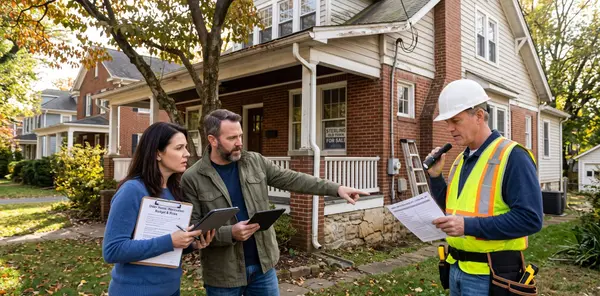
A home inspection in Northern Virginia typically costs $400–$700 for a standard single-family home and $300–$500 for a townhome or condo. Inspectors examine structural components, roofing, HVAC, plumbing, electrical, and visible defects. In Virginia, inspectors can also flag issues with septic systems, well water, and radon — all of which are common in certain Loudoun and Prince William County properties. Budget for a radon test (approximately $150–$200) if the property is in a zone 1 or zone 2 radon area.
Typical Due Diligence Checklist — Under Contract
- ✓ General home inspection (schedule within 5–7 days of ratification)
- ✓ Radon testing (especially Loudoun, Fauquier, Fairfax outer suburbs)
- ✓ Wood-destroying insect (WDI/termite) inspection
- ✓ Chimney inspection (if applicable)
- ✓ HOA document review (if applicable — look for special assessments, reserves, rules)
- ✓ Lender appraisal (ordered by lender — typically 5–10 business days)
- ✓ Title search and title insurance commitment review
What Happens If the Appraisal Comes in Low?
In Northern Virginia's competitive market, buyers sometimes offer above the likely appraised value to win a bidding war. When the appraisal comes in below the purchase price, you have three options: (1) cover the gap in cash yourself (appraisal gap coverage), (2) renegotiate the price with the seller, or (3) exercise your appraisal contingency to exit the contract. Your agent's guidance on setting realistic appraisal gap expectations — and writing contract language that protects you — is one of the most valuable things a skilled buyer's agent provides.
Step 8: Virginia Closing Costs — What Buyers Pay
Closing costs in Virginia are among the more detailed and itemized in the country. As a buyer, expect to pay between 2–4% of the purchase price in closing costs, depending on the loan type, lender, and jurisdiction. On a $700,000 home, that translates to $14,000–$28,000 — a significant cash requirement beyond your down payment.
| Closing Cost Item | Who It Goes To | Typical Range |
|---|---|---|
| Loan Origination Fee | Lender | 0.5–1% of loan amount |
| Appraisal Fee | Appraiser / Lender | $600–$900 (NOVA) |
| Credit Report Fee | Lender | $30–$75 |
| Title Search & Insurance (Lender) | Title Company | $600–$900 |
| Owner's Title Insurance (optional but recommended) | Title Company | $700–$1,500+ |
| Settlement / Closing Fee | Title / Attorney | $300–$600 |
| Virginia State & Local Recording Tax | State / County | $0.25 per $100 of purchase price (plus county taxes; varies) |
| Regional Congestion Tax (Northern Virginia) | State (NOVA jurisdictions) | Additional recording surcharge applies in Fairfax, Arlington, Loudoun, PWC, etc. |
| Prepaid Interest | Lender (daily interest to month-end) | Varies by closing date |
| Homeowners Insurance (first year upfront) | Insurance Company | $1,200–$2,500+ depending on home value |
| Escrow Reserves (taxes + insurance) | Lender Escrow Account | 2–3 months of tax and insurance prepayment |
The single most effective way to reduce your out-of-pocket closing cost burden is to request seller concessions in your offer. A seller concession of 2–3% of the purchase price applied to buyer closing costs can dramatically reduce the cash required at closing. Your agent's ability to negotiate this — especially in a market where the home has been sitting — can be worth thousands.
With 840+ homes sold across the DMV, we know which streets have deferred maintenance patterns, which HOAs are well-run, and which neighborhoods are about to appreciate. That intel is free when you work with us.
Step 9: Final Walk-Through & Closing Day
Your final walk-through typically happens 24–48 hours before closing. This is not a second inspection — it is a verification that the property is in the agreed-upon condition, that all items included in the sale are present, and that any negotiated repairs were completed. Walk-throughs are commonly rushed or skipped by inexperienced buyers, which can lead to post-closing disputes that have no clean resolution.
On closing day, you'll sign a substantial stack of loan documents at the title company's office (or, increasingly, via remote online notarization). Virginia permits remote online notarization for real estate transactions, which means you can close from virtually anywhere — critical for out-of-state buyers relocating to Northern Virginia. You'll bring a cashier's check or wire transfer for your down payment plus closing costs (confirm the exact amount with your lender 48 hours in advance — wire fraud is common in real estate; verify wire instructions by phone directly with the title company).
Virginia Homebuying Timeline at a Glance
Financial Assessment — Weeks 1–2
Pull credit, gather documents, run budget numbers using the 28/36 rule. Identify any credit issues that need 30–60 days to resolve before applying.
Pre-Approval — Days 3–10
Apply with 2–3 lenders simultaneously. Full underwrite, not just pre-qual. Receive commitment letter with max purchase price and monthly payment estimate.
Retain Buyer's Agent — Day 7–14
Interview agents, sign a Buyer Representation Agreement per post-NAR rules. Set up active MLS search notifications for your target criteria.
Active Home Search — Weeks 2–8 (average)
Tour targeted properties. In NOVA, serious buyers need to be available to tour within 24–48 hours of a new listing. Set up home search alerts for your criteria.
Offer & Ratification — Days 1–3
Submit offer, negotiate terms. Upon acceptance, the contract is "ratified" — the official start of your due diligence period.
Due Diligence — Days 1–14 after ratification
Schedule and complete inspections. Submit inspection response / repair request to seller. Order radon and termite if not already included in general inspection.
Appraisal & Loan Processing — Days 7–21
Lender orders appraisal. Underwriting reviews final loan file. You may be asked for additional documentation ("conditions") — respond within 24–48 hours to avoid delays.
Clear to Close — Days 25–35
Underwriting issues "clear to close." Title company prepares closing disclosure (CD). Review the CD carefully — it lists every fee you're expected to pay at closing.
Closing Day — Day 30–45
Final walk-through 24–48 hours before closing. Sign loan documents at title company (or via remote notarization). Wire funds or bring cashier's check. Keys are yours.
Down Payment Assistance Programs in Virginia (2026)
Several down payment assistance (DPA) programs remain available to Virginia buyers in 2026. These programs are income and purchase price limited, and the eligibility rules change periodically. Always verify current income limits, available funds, and program status directly with Virginia Housing before relying on a specific program in your purchase plan.
| Program | Assistance Amount | Type | Key Requirements |
|---|---|---|---|
| Virginia Housing Down Payment Assistance Grant | 2–2.5% of loan amount | Grant (no repayment) | Income limits apply; must use Virginia Housing first mortgage; homebuyer education required |
| Virginia Housing Plus Second Mortgage | Up to 3–5% of purchase price | Deferred/low-interest second loan | Paired with Virginia Housing first mortgage; income limits apply by county |
| Fannie Mae HomeReady | 3% down payment | Low down payment conventional | Income at or below 80% AMI; homebuyer education required; reduced PMI |
| Freddie Mac Home Possible | 3% down payment | Low down payment conventional | Income at or below 80% AMI; flexible qualifying criteria |
| Employer Assisted Housing (various employers) | Varies — $5K–$25K | Forgivable loan or grant | Employer-specific; available at some NOVA federal agencies, hospitals, and universities |
⚠ Note on the VHDA Mortgage Credit Certificate (MCC)
The VHDA Mortgage Credit Certificate program, which provided a federal tax credit of up to 20% of annual mortgage interest, was suspended in May 2023 due to insufficient federal tax credit authority. As of early 2026, the MCC program has not been reinstated. Do not plan your purchase around the MCC without first confirming reinstatement with Virginia Housing directly at virginiahousing.com.
Timing a sale and purchase in a competitive market takes expert coordination. We help you navigate both sides — and save on the listing side with our 1.5% full-service program.
Common Mistakes Virginia Home Buyers Make
After 840+ transactions in the DMV market, The Jamil Brothers Realty Group has seen every mistake a buyer can make. These are the ones that cost the most — financially and emotionally.
| Mistake | Why It Hurts | What to Do Instead |
|---|---|---|
| Shopping for homes before getting pre-approved | You fall in love with homes outside your actual budget. Sellers won't take you seriously without a letter. | Get pre-approved first; know your ceiling before you look at a single listing. |
| Making large purchases or opening new credit between pre-approval and closing | New debt changes your DTI and can cause your loan to be denied at the finish line. | No new credit, no large purchases, no job changes between pre-approval and closing. |
| Waiving the home inspection to win a bidding war | HVAC, roof, and structural issues can cost $20K–$100K+ after closing with no seller recourse. | Use an information-only inspection or reduce inspection contingency scope — but never fully waive without an expert opinion. |
| Underestimating total cash needed at closing | Down payment + closing costs + reserves can easily total 7–10% of purchase price. Cash-short buyers face last-minute scrambles. | Budget 7–10% of purchase price in liquid funds before making an offer. |
| Ignoring HOA financials | Underfunded HOA reserves mean surprise special assessments — sometimes $10,000+ per unit after purchase. | Always request and review the HOA disclosure packet and financial statements before removing your contingency. |
| Using only Zillow or Redfin for home search | Third-party portals can lag the MLS by 24–48 hours — critical in a market where homes go under contract in days. | Search homes for sale for real-time MLS data and browse available listings here. |
Virginia Market Readiness Indicators (2026)
How Buyer-Friendly Is Each Factor Right Now?
Buying in Virginia in 2026: Honest Pros & Cons
| ✓ Pros | ✗ Cons / Watch-Outs |
|---|---|
| Strong long-term appreciation — NOVA has outperformed national averages over every 10-year period on record | High entry prices; median home prices in most NOVA counties exceed $650,000 |
| $1,209,750 conforming loan ceiling in DC metro — more conventional financing options than most markets | Interest rates remain elevated at 6.5–7%; monthly payments are significantly higher than 2020–2021 |
| Federal and defense employment base creates exceptional market stability — Virginia has one of the lowest unemployment rates in the nation | Property tax rates in Fairfax County (~1.09%) add thousands annually to ownership cost |
| VA loan benefit: military buyers can purchase with 0% down with no loan limit under full entitlement | Inventory remains tight; expect competition on well-priced homes in most Northern Virginia submarkets |
| Multiple DPA programs available through Virginia Housing with no-repayment grant options | HOA fees are common and substantial in NOVA (many communities run $300–$700/month) |
| No state-mandated attorney requirement at closing — settlement is handled by the title company, keeping closing costs lower than attorney-required states | NOVA grantor and regional congestion taxes add to the seller's closing burden, which can reduce seller willingness to give buyer concessions |
Explore Northern Virginia Communities
Fairfax McLean Vienna Reston Herndon Ashburn Leesburg Sterling Alexandria Centreville ChantillyFrequently Asked Questions
How do I buy a house in Virginia — what are the key steps?
Buying a house in Virginia follows nine core steps: assess your finances and credit, get a full mortgage pre-approval (not just a pre-qualification), choose the right loan type for your situation, retain a licensed buyer's agent under a written representation agreement per post-August 2024 NAR rules, search for homes using live MLS data, submit an offer and negotiate, complete inspections and appraisal during the due diligence period, review and prepare for Virginia closing costs (typically 2–4% of the purchase price), and close at a title company — which can now be done remotely in Virginia. The typical timeline from pre-approval to closing runs 45–75 days in Northern Virginia.
How much money do I need to buy a house in Virginia?
Plan for 7–12% of the purchase price in total upfront cash. This covers your down payment (3–20% depending on loan type), closing costs (2–4%), and an emergency reserve. On a $600,000 home in Northern Virginia, that is roughly $42,000–$72,000 in liquid funds. Veterans using a VA loan can eliminate the down payment, reducing total cash needs to 2–4% for closing costs. First-time buyers using Virginia Housing programs may be eligible for grants covering 2–2.5% of the loan amount, which partially offsets closing costs.
What is the 2026 conforming loan limit in Northern Virginia?
The 2026 conforming loan limit for high-cost DC metro counties — including Fairfax, Arlington, Loudoun, Alexandria, Falls Church, and Prince William — is $1,209,750 for a single-family home. This means buyers can borrow up to that amount with a conventional loan at standard conforming rates, rather than being pushed into a jumbo loan with stricter qualification requirements. The national baseline conforming limit is $806,500; Northern Virginia qualifies for the higher ceiling due to median home prices exceeding the national threshold. FHA loan limits in the same high-cost counties also reach $1,209,750.
Do I need a buyer's agent in Virginia?
You are not legally required to use a buyer's agent in Virginia, but doing so is strongly advisable — particularly in Northern Virginia where transactions routinely involve multiple offers, inspection contingency negotiations, appraisal gap clauses, and HOA due diligence. A skilled buyer's agent has fiduciary duties to you that the listing agent explicitly does not have. Post-NAR settlement (August 2024), you must now sign a written buyer representation agreement before touring with an agent, which formalizes the relationship and compensation terms upfront. The Jamil Brothers Realty Group provides free buyer strategy sessions to explain how representation works before any agreement is required.
When is the best time to buy a house in Virginia?
The spring market (March through June) sees the highest inventory but also the most competition in Northern Virginia — expect multiple offers and faster decision-making on desirable properties. Fall (September through November) often offers better negotiating conditions: sellers who haven't sold in spring become more flexible, and fewer competing buyers are active. The slowest and most buyer-favorable period is typically mid-November through February, when inventory is low but so is competition, and sellers tend to be more motivated. That said, the "best time" for an individual buyer is whenever their financial position is ready — trying to time the Virginia market has historically cost more than it's saved.
What are the best neighborhoods for families in Northern Virginia?
Northern Virginia has several outstanding family-friendly areas differentiated by price point and commute profile. Ashburn in Loudoun County is consistently ranked among the top family communities in the region, with access to strong LCPS schools, community amenities, and suburban spaces at more accessible price points than Fairfax County. Vienna and McLean in Fairfax County offer exceptional FCPS schools and established neighborhoods, with Vienna running slightly more affordable than McLean. Reston is ideal for families who want a pedestrian-friendly, walkable lifestyle with access to multiple parks, paths, and the Silver Line Metro. For deeper analysis of specific neighborhoods by school zone and price range, request a neighborhood mapping session with our buyer team.
What are Virginia's buyer closing costs in 2026?
Virginia buyer closing costs typically run 2–4% of the purchase price, though the exact amount varies by loan type, lender, county, and negotiated seller concessions. Key line items include loan origination fees (0.5–1% of loan amount), appraisal ($600–$900), title insurance (lender's policy required; owner's optional but recommended), settlement/closing fee ($300–$600), state recording taxes, and prepaid items including homeowners insurance (first year upfront), prepaid mortgage interest to month-end, and 2–3 months of escrow reserves for property taxes and insurance. Northern Virginia buyers should also budget for the regional transportation congestion tax, which applies in Fairfax, Loudoun, Arlington, Prince William, and several other NOVA jurisdictions and adds to recording tax costs. Requesting seller concessions of 2–3% is a common and effective strategy for reducing out-of-pocket closing costs.
What changed for buyers after the NAR settlement?
The August 2024 NAR settlement introduced two key changes for Virginia homebuyers. First, licensed REALTORS® must now present and obtain a signed Buyer Representation Agreement before showing property — this agreement specifies the scope of representation and how the buyer's agent will be compensated. Second, buyer agent compensation is now openly negotiated: it is not automatically embedded in the seller's listing commission. Many Virginia sellers still offer buyer agent concessions as part of their listing strategy, but these terms must be explicitly negotiated. In practice, this creates more transparency for buyers about what representation costs — which is a net positive for informed consumers. If you have questions about how buyer agent compensation works in a specific transaction, our team explains it clearly during the free buyer strategy session.
What down payment assistance programs are available in Virginia in 2026?
Virginia Housing (formerly VHDA) administers the primary state DPA programs for Virginia buyers. The Down Payment Assistance Grant provides 2–2.5% of the loan amount as a true grant (no repayment required) when paired with a Virginia Housing first mortgage. The Virginia Housing Plus Second Mortgage program offers additional DPA funds as a deferred or low-interest second loan covering up to 3–5% of the purchase price. Both programs have income limits that vary by county and household size. The Mortgage Credit Certificate (MCC) program was suspended in May 2023 and had not been reinstated as of early 2026 — verify current MCC status directly at virginiahousing.com before planning your purchase. Fannie Mae HomeReady and Freddie Mac Home Possible conventional loans also offer 3% down payment options for income-qualified buyers.
Is Virginia a good state to buy a home in 2026?
Virginia — and Northern Virginia specifically — has historically been one of the most resilient real estate markets in the country, supported by a federal government and defense industry employment base that insulates it from the boom-bust cycles seen in more speculative markets. The DC metro has never experienced a sustained home price decline of more than 5–10% even during the 2008–2009 national housing crisis, and values recovered within 18–24 months. In 2026, prices continue to appreciate at a moderate pace, inventory remains tight, and the long-term supply-demand imbalance in Northern Virginia has not resolved. For buyers with stable employment and adequate down payment, Virginia remains one of the most financially sound states in which to purchase residential real estate.
What is the difference between a VA loan and a conventional loan in Virginia?
A VA loan is a mortgage benefit available to eligible veterans, active-duty service members, and surviving spouses, backed by the U.S. Department of Veterans Affairs. VA loans require no down payment, no private mortgage insurance (PMI), and have no set loan limit for buyers with full entitlement — making them one of the most powerful financing tools available in Northern Virginia's high-priced market. A conventional loan is a standard mortgage backed by Fannie Mae or Freddie Mac, available to any qualifying buyer, with down payments as low as 3–5% but PMI required until 20% equity is reached. VA loans typically offer competitive interest rates and more flexible qualifying standards for credit. The main trade-off is a VA funding fee (typically 1.25–3.3% of the loan amount, though waived for veterans with service-connected disability), paid at closing or rolled into the loan.
Glossary
Pre-Approval
A formal, lender-issued commitment based on verified documents (income, assets, credit) stating a maximum mortgage amount. Stronger than pre-qualification and required by most Virginia sellers before accepting an offer.
Earnest Money Deposit (EMD)
A good-faith deposit (typically 1–3% of purchase price in NOVA) submitted with an offer and held in escrow. If the buyer defaults without a valid contractual out, the seller may keep the EMD as liquidated damages.
Appraisal Gap
The difference between an offer price and the property's appraised value when the offer exceeds appraisal. Buyers may choose to cover this gap in cash to keep the contract together at the agreed-upon price.
Contingency
A condition that must be satisfied for the contract to remain binding. Common contingencies in Virginia: financing (loan approval), home inspection, and appraisal. Removing contingencies increases risk but can strengthen your offer in competitive situations.
Title Insurance
Protection against claims on property ownership arising from past events (liens, ownership disputes, recording errors). Lender's title insurance is required by virtually all lenders; owner's title insurance is optional but strongly recommended for buyers.
DTI (Debt-to-Income Ratio)
The percentage of your gross monthly income that goes toward total monthly debt payments (housing + all recurring debts). Most conventional lenders allow a maximum DTI of 43–50%; VA and FHA may allow up to 50–57%.
Virginia Housing (VHDA)
Virginia Housing (formerly Virginia Housing Development Authority) is the state's housing finance agency, offering below-market first mortgage products and down payment assistance programs to qualified Virginia homebuyers within income limits.
Ratification
In Virginia real estate, the moment when all parties have signed and dated the purchase contract and all addenda. The ratification date is the official start of the due diligence period and triggers all contract deadlines.
Conclusion: Your Next Step Toward Buying a Home in Virginia
Buying a house in Virginia in 2026 is a well-defined process — but succeeding in the Northern Virginia market requires more than knowing the steps. It requires financial preparation that starts before you ever search a listing, an agent who understands the specific negotiation dynamics of your target submarkets, and the ability to move decisively when the right property becomes available.
Whether you're a first-time buyer trying to understand how much you can afford, a military buyer exploring your VA loan benefit, or a relocating professional who needs to understand which Northern Virginia neighborhoods fit your commute and lifestyle — the first and most important step is the same: get a clear strategy in place before you tour your first home. Browse current Virginia homes for sale and search live MLS listings — then book a free session with the Jamil Brothers buyer team to build your plan.
Know your budget, your negotiation position, and exactly what's available — before you tour a single home. The Jamil Brothers Realty Group provides a full buyer consultation at no cost or obligation across Virginia, Maryland, DC, and West Virginia.
Explore More
Browse Every Corner of the DMV Market
Whether you're searching by budget, neighborhood, or buying situation — find exactly what you need below.
Virginia Homes by Budget
Washington DC Homes by Budget
Maryland Homes
Explore Northern Virginia Communities
Loudoun County
Fairfax County & Surrounding
Ready to Make a Move?
Full-Service · No Tradeoffs
List for 1.5% & Keep More Equity
Professional photography, drone video, 3D tours, and expert negotiation — all included. On an $800K home, that's $12,000 more in your pocket vs. a 3% agent.
See the 1.5% Program →Need Speed or Certainty?
Get a No-Obligation Cash Offer
Skip the showings, skip the contingencies. If timing or condition matters more than top dollar, a cash offer may be the right fit. We'll walk you through every option.
Explore Cash Offers →Categories
- All Blogs (1177)
- Aldie (3)
- Ashburn (6)
- Buyer Guide (8)
- Buying a home (2)
- Buying Strategies (29)
- festivals (1)
- General Blog (66)
- Leesburg (5)
- Market Intelligence (29)
- Market Updates (8)
- Notable Properties For Sale (29)
- Real Estate Tips, News, and More (376)
- Seller Guide (2)
- Seller Guides (60)
- Selling Your Home (487)
- Sterling (6)
- Top Realtors in Northern Virginia (58)
Recent Posts

Message Sent!
Thank you for reaching out. Arslan & Saad have received your details and will be in touch shortly.
Need immediate assistance? Call or text 703-782-4830.