Best Time to Sell a House in the Eastern Panhandle WV — 2026 Data
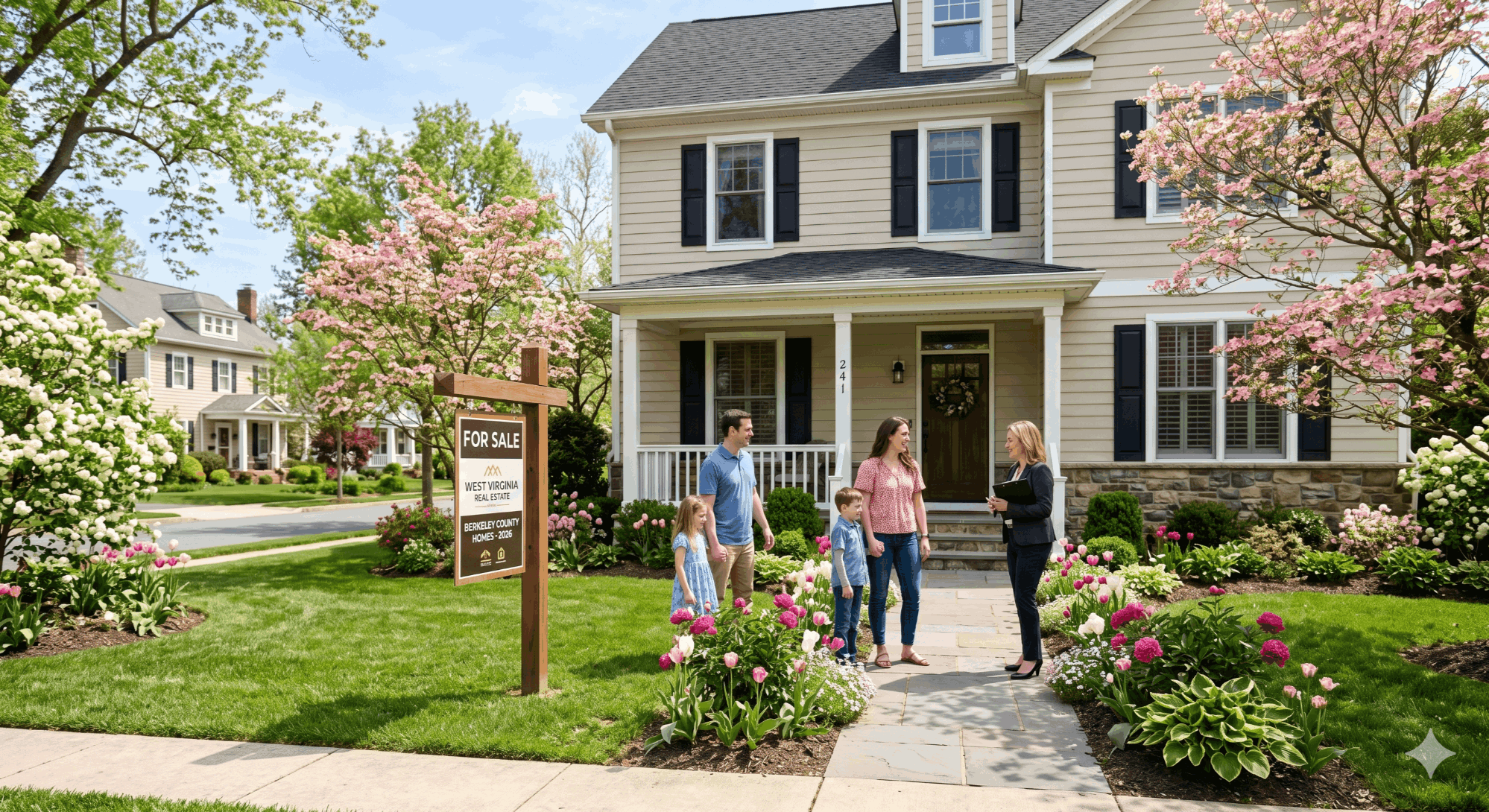
Quick Answer: The best window to list a home in the Eastern Panhandle of West Virginia in 2026 is mid-March through late May, when DC-area commuter buyers drive up both showing activity and list-to-sale ratios across Berkeley, Jefferson, and Morgan counties. Homes listed during this window historically sell 14–21 days faster and net 2–3% more than homes listed between November and January.
Key Takeaways
- Spring (March–May) is the peak selling window across all three Eastern Panhandle counties — driven heavily by DC-area commuter buyers who start home searches after the winter holidays.
- The Eastern Panhandle follows a different seasonal pattern than the rest of West Virginia because MARC train access to Washington, D.C. pulls in Northern Virginia buyers priced out of NoVA.
- Jefferson County (Charles Town, Shepherdstown, Ranson) has the highest seasonal premium — spring listings typically sell for 3–4% more than comparable winter listings.
- Summer slows slightly due to heat and family vacations, but early fall (September–October) produces a strong secondary window for commuter-priced homes.
- Winter is the slowest period but has the least competition — relocating federal employees and PCS-driven buyers remain active year-round.
- Pricing strategy matters more than calendar timing. A well-priced home in February can outperform an overpriced home in May.
In This Guide
- Eastern Panhandle 2026 market at a glance
- Why Eastern Panhandle seasonality differs from the rest of WV
- Month-by-month seasonal data for 2026
- Best months to list by county
- How the DC commuter pipeline shapes the listing calendar
- The real cost of selling in the Eastern Panhandle
- Pre-listing prep timeline
- Should you list now or wait?
- Alternatives for sellers who need speed
- Frequently asked questions
- Glossary
If you own a home in Berkeley, Jefferson, or Morgan County, you already know the Eastern Panhandle plays by its own rules. Median prices sit well below Northern Virginia. Commutes are long but workable by MARC train. And buyer demand doesn't follow the same calendar as Charleston, Morgantown, or the rest of West Virginia — it follows the federal hiring cycle, the DC school calendar, and the PCS rotations out of Fort Detrick, Fort Meade, and the Pentagon.
That creates a narrow but powerful seasonal window. List during the right four to six weeks in spring and you'll typically see stronger offers, faster contracts, and higher list-to-sale ratios than sellers who list in the wrong month. List during the wrong window and you can sit on market for 60–90 days with reduced buyer traffic — even if your home is competitively priced.
This guide breaks down the 2026 seasonal data for the Eastern Panhandle, explains why the pattern is different from the rest of the state, and gives you a month-by-month framework for deciding when to list. It also walks through the real costs of selling in West Virginia, the paperwork and prep timeline, and how our 1.5% full-service listing program helps Eastern Panhandle sellers keep more of their equity.
Eastern Panhandle 2026 Market at a Glance
The Eastern Panhandle of West Virginia refers to Berkeley County, Jefferson County, and Morgan County — the three easternmost counties tucked between the Shenandoah and Potomac rivers. This is the fastest-growing region in the state, driven almost entirely by migration from the DC metro.
Here is a snapshot of the 2026 market across the three counties, based on BrightMLS and West Virginia Association of REALTORS data:
| County | Median Sale Price | Avg. Days on Market | List-to-Sale Ratio |
|---|---|---|---|
| Berkeley County (Martinsburg, Inwood, Falling Waters, Hedgesville) |
~$345,000 | 32–42 days | 98.1% |
| Jefferson County (Charles Town, Ranson, Shepherdstown, Harpers Ferry) |
~$415,000 | 28–38 days | 98.6% |
| Morgan County (Berkeley Springs, Great Cacapon, Paw Paw) |
~$265,000 | 48–65 days | 96.8% |
The pattern across all three counties is consistent: Jefferson County commands the highest prices and moves the fastest because it sits closest to DC and has direct MARC commuter access at Duffields and Harpers Ferry. Berkeley County runs a close second, anchored by the Martinsburg MARC station. Morgan County moves more slowly because it's further from federal employment centers and attracts more second-home and retirement buyers rather than commuters.
ℹ️ What is the Eastern Panhandle?
The Eastern Panhandle is the three-county strip of West Virginia that extends east between Maryland and Virginia. It is part of the Washington–Arlington–Alexandria metropolitan statistical area, which explains why its housing market behaves more like a DMV submarket than like the rest of West Virginia.
Get a personalized home valuation from The Jamil Brothers — street-level comps from Berkeley, Jefferson, and Morgan counties, not automated Zestimates. Response within 24 hours.
Why Eastern Panhandle Seasonality Differs From the Rest of WV
In most of West Virginia, spring and early summer bring modest seasonal boosts to buyer activity — but the swings aren't dramatic. Local buyers drive most transactions, timing is flexible, and sellers can usually find reasonable offers in any month.
The Eastern Panhandle is different. Here's why the seasonal swing is so much sharper:
1. DC-area buyers dominate the pipeline
Between 55% and 70% of closed purchases in Berkeley and Jefferson counties in recent years involved a buyer either relocating from Northern Virginia, Montgomery County MD, or DC proper — or a buyer currently commuting to those areas. This pool of buyers follows the DC real estate calendar, which is rigidly tied to the federal fiscal year (October 1), the DC public school calendar, and congressional/executive hiring cycles.
DC-area buyers begin serious searches in late February and March, write the most offers in April and May, and aim to close before the school year starts in late August. This creates a pronounced buyer wave that doesn't exist in Charleston, Morgantown, or other parts of the state.
2. MARC train schedules influence buyer search radius
The MARC Brunswick Line runs from Martinsburg through Duffields, Harpers Ferry, and Brunswick MD into DC's Union Station. For federal employees and consultants who need to be in DC two to three days per week, the Eastern Panhandle represents the last stop where detached-home affordability still exists under $500,000. When spring comes and NoVA buyers realize a comparable Fairfax or Loudoun home is $750K+, they start searching here.
3. Federal PCS and hiring cycles layer on top
Fort Detrick (Frederick MD), Fort Meade, the Pentagon, and the various federal agencies in the DC region all operate on predictable rotation cycles. Summer is peak PCS season for military families. Federal hiring freezes often lift in Q2. Congressional staff turnover happens in January. Each of these creates discrete waves of Eastern Panhandle buyers.
What this means for sellers
- ✓ Timing your listing to match the DC buyer wave is more impactful here than anywhere else in WV.
- ✓ Commuter-friendly features (walkability to MARC, high-speed internet, a dedicated home office) command stronger premiums than in non-commuter WV markets.
- ✓ Pricing to attract out-of-state DC-area buyers — who benchmark against NoVA, not local comps — can unlock higher offers than a purely local pricing strategy.
- ✓ You need an agent who understands both the WV closing process and the DC-area buyer psychology.
Month-by-Month Seasonal Data for 2026
Here is what each month typically looks like in the Eastern Panhandle, based on multi-year BrightMLS data and 2026 market signals:
| Month | Buyer Activity | Competition (Active Listings) | Recommended Action |
|---|---|---|---|
| January | Low, but motivated (PCS, new hires) | Low | Prep — don't list yet |
| February | Rising (DC buyers start searching) | Low–Moderate | Strong "early" window if prepped |
| March | High | Moderate | ⭐ Prime listing month |
| April | Peak | Moderate–High | ⭐ Prime listing month |
| May | Peak | High | ⭐ Prime listing month (earlier is better) |
| June | Strong but tapering | High | Good — PCS buyers active |
| July | Moderate (heat + vacations) | High | Acceptable if must-list |
| August | Low (school prep) | Moderate | Weakest summer month |
| September | Strong secondary wave | Moderate | ⭐ Excellent secondary window |
| October | Good (federal FY-end hiring) | Moderate | Good — price sharply |
| November | Declining | Low | Only for urgent sellers |
| December | Lowest | Lowest | Hold — list after Jan 15 |
Relative seasonal strength — when Eastern Panhandle buyers actually show up
Best Months to List by County
The overall Eastern Panhandle pattern is consistent, but each county has nuances based on buyer mix and price range.
Berkeley County (Martinsburg, Inwood, Falling Waters, Hedgesville)
Berkeley County is the workhorse of the Eastern Panhandle — the largest inventory, the deepest buyer pool, and the most active MARC commuter station. Spring listings in Berkeley County (especially March and April) tend to receive 25–40% more showings per week than winter listings. Entry-level homes under $325K move fastest, often with multiple offers during peak weeks.
Best months: Mid-March through early May, with September as the strong secondary window. Homes near Interstate 81 and within 10 minutes of the Martinsburg MARC station command the largest seasonal premiums.
Jefferson County (Charles Town, Ranson, Shepherdstown, Harpers Ferry)
Jefferson County produces the sharpest seasonal price swings in the Eastern Panhandle because its buyer mix skews most heavily toward higher-earning DC professionals. Spring listings typically sell 3–4% above winter equivalents, and well-positioned homes in Shepherdstown or near Harpers Ferry often receive offers within 10–14 days of listing during peak weeks.
Best months: Late March through mid-May. A strong secondary window runs from early September through mid-October, when federal fiscal year hiring resumes and families who missed the spring push re-enter the market.
Morgan County (Berkeley Springs, Great Cacapon, Paw Paw)
Morgan County behaves differently from its two neighbors. The buyer mix includes more retirees, second-home buyers, and escape-to-the-country purchasers — which means the seasonal swings are less severe, but the peak-season premium is also smaller. Spring still outperforms winter, but by 1.5–2% rather than 3–4%.
Best months: April through early June, with a second window in October for buyers looking to close before winter. Unique features (river frontage, mountain views, farm acreage) matter more than season in Morgan County.
| County | Peak Months | Secondary Window | Spring vs Winter Premium |
|---|---|---|---|
| Berkeley | Mar–Early May | September | 2–3% |
| Jefferson | Late Mar–Mid May | Early Sep–Mid Oct | 3–4% |
| Morgan | April–Early June | October | 1.5–2% |
How the DC Commuter Pipeline Shapes the Listing Calendar
Understanding how DC-area buyers search for Eastern Panhandle homes is the single biggest edge a local seller can gain. Here's the typical decision timeline for a DC-based buyer considering a move to Berkeley or Jefferson County:
Late January – February: Research Phase
DC buyers start reading neighborhood guides, comparing commute times, and narrowing to Berkeley County vs. Jefferson County vs. staying in Loudoun. Homes listed this early but photographed professionally start building saved-search momentum.
March: First Weekend Visits
Serious buyers ride the MARC train down on a weekday morning to simulate the commute, then tour homes on Saturday and Sunday. This is the first month of heavy showing traffic for well-prepped listings.
April – May: Offer Peak
Offers surge as buyers lock in financing and race to close before the DC school year ends. Multiple-offer situations are most common during these weeks, especially for homes under $450K in Jefferson and Berkeley counties.
June – July: PCS and Relocation Wave
Military families with orders to Fort Detrick, Fort Meade, or Pentagon-area commands begin house hunting. VA loan buyers dominate this wave. Sellers willing to accommodate 30–45 day closings benefit most.
September – October: Federal FY-End Wave
New hires onboarded after October 1 start househunting. Buyers who "lost" homes in spring multiple-offer situations return with pre-approvals and higher budgets.
Our seller net sheet calculator breaks down every cost — commission, WV transfer taxes, closing fees, and payoff — so you know your real bottom line before you list.
The Real Cost of Selling in the Eastern Panhandle
Before you decide on timing, you need to know what selling will actually cost you. West Virginia has some of the lowest transfer taxes in the DMV region, but commissions typically still run 5–6% under a traditional full-service model — which on a $400,000 Jefferson County home means $20,000–$24,000 in agent fees alone.
Here's a typical seller cost breakdown in West Virginia:
| Cost Category | Typical Range | Notes |
|---|---|---|
| Listing agent commission | 1.5%–3% of sale price | Jamil Brothers 1.5% vs. traditional 3% |
| Buyer's agent commission | 2–3% (negotiable post-NAR) | Separate conversation — not required, but standard |
| WV state excise tax (seller) | $1.10 per $500 of sale price | ~$0.0022 of sale price — very low vs. VA/MD |
| County transfer tax | Varies by county (typically $1.65 per $500) | Berkeley, Jefferson, and Morgan each set their own rate |
| Title insurance / settlement fees | ~$400–$900 | Often split with buyer depending on contract |
| HOA/condo documents (if applicable) | $150–$400 | Required for Spring Mills, Snowy Creek, Locust Hill, etc. |
| Pre-listing repairs + staging | $500–$5,000 | ROI typically 2–4x on cosmetic fixes |
| Existing mortgage payoff | Remaining loan balance + per-diem interest | Request exact payoff letter from lender 10 days pre-closing |
Eastern Panhandle Seller Savings Calculator
Here's exactly how much more you keep when you list with The Jamil Brothers at 1.5% versus a traditional 3% agent. Slide across the common Eastern Panhandle price bands:
Seller Savings Calculator
How much more do you keep with our 1.5% listing fee?
Select your home's estimated value to see your real net proceeds — side by side.
Traditional Agent — 3%
| Sale price | $400,000 |
| Listing fee (3%) | −$12,000 |
| Buyer's agent (2.5%) | −$10,000 |
| Est. closing (1%) | −$4,000 |
Our Fee — Only 1.5%
| Sale price | $400,000 |
| Listing fee (1.5%) | −$6,000 |
| Buyer's agent (2.5%) | −$10,000 |
| Est. closing (1%) | −$4,000 |
Extra in your pocket
$6,000
vs. a traditional 3% listing agent — with zero reduction in service or marketing.
Traditional Agent — 3%
| Sale price | $500,000 |
| Listing fee (3%) | −$15,000 |
| Buyer's agent (2.5%) | −$12,500 |
| Est. closing (1%) | −$5,000 |
Our Fee — Only 1.5%
| Sale price | $500,000 |
| Listing fee (1.5%) | −$7,500 |
| Buyer's agent (2.5%) | −$12,500 |
| Est. closing (1%) | −$5,000 |
Extra in your pocket
$7,500
vs. a traditional 3% listing agent — with zero reduction in service or marketing.
Traditional Agent — 3%
| Sale price | $600,000 |
| Listing fee (3%) | −$18,000 |
| Buyer's agent (2.5%) | −$15,000 |
| Est. closing (1%) | −$6,000 |
Our Fee — Only 1.5%
| Sale price | $600,000 |
| Listing fee (1.5%) | −$9,000 |
| Buyer's agent (2.5%) | −$15,000 |
| Est. closing (1%) | −$6,000 |
Extra in your pocket
$9,000
vs. a traditional 3% listing agent — with zero reduction in service or marketing.
Traditional Agent — 3%
| Sale price | $750,000 |
| Listing fee (3%) | −$22,500 |
| Buyer's agent (2.5%) | −$18,750 |
| Est. closing (1%) | −$7,500 |
Our Fee — Only 1.5%
| Sale price | $750,000 |
| Listing fee (1.5%) | −$11,250 |
| Buyer's agent (2.5%) | −$18,750 |
| Est. closing (1%) | −$7,500 |
Extra in your pocket
$11,250
vs. a traditional 3% listing agent — with zero reduction in service or marketing.
Traditional Agent — 3%
| Sale price | $1,000,000 |
| Listing fee (3%) | −$30,000 |
| Buyer's agent (2.5%) | −$25,000 |
| Est. closing (1%) | −$10,000 |
Our Fee — Only 1.5%
| Sale price | $1,000,000 |
| Listing fee (1.5%) | −$15,000 |
| Buyer's agent (2.5%) | −$25,000 |
| Est. closing (1%) | −$10,000 |
Extra in your pocket
$15,000
vs. a traditional 3% listing agent — with zero reduction in service or marketing.
Estimates only. WV transfer taxes and closing costs vary by county. Buyer's agent commission is negotiable.
A $9,000 difference on a Berkeley County home — or a $15,000 difference on a higher-end Jefferson County property — is real money that stays with you, not a brokerage. And because our 1.5% program is fully full-service (professional 4K photography, drone video, 3D tours, MLS syndication, and partner-led negotiation), you don't trade any marketing firepower for the savings.
4K photography, drone video, 3D tours, expert negotiation, and full MLS marketing — all included at 1.5%. No hidden fees, no service reductions, no surprises.
Pre-Listing Prep Timeline — Start 4–6 Weeks Ahead
To capture the March–May window, start preparing in late January or early February. Here's a realistic Eastern Panhandle prep timeline:
6 Weeks Before Listing
- ✓ Schedule a listing consultation and walkthrough with a local agent
- ✓ Request a free home valuation to establish a realistic target price
- ✓ Identify any major repair issues (septic, well, roof, HVAC) and decide: fix or disclose
- ✓ Begin decluttering and deep cleaning
4 Weeks Before Listing
- ✓ Complete any planned cosmetic repairs (paint, caulk, patch walls)
- ✓ Pre-order well and septic inspections if required by your county
- ✓ Request HOA/condo documents if applicable
- ✓ Plan landscaping refresh (mulch, trim, spring color)
2 Weeks Before Listing
- ✓ Professional photography, drone video, and 3D tour
- ✓ Finalize pricing strategy and MLS description
- ✓ Complete seller disclosures under WV law
- ✓ Plan where to go during showings (hotel, family, Airbnb)
Should You List Now or Wait for Spring?
The "best time to sell" question almost always has a follow-up: "Should I wait?" The answer depends on where you are in the calendar, your personal situation, and your risk tolerance. Here's a simple framework:
| ✓ List Now (January–March) | ✗ Wait Until Spring |
|---|---|
| You need to close by a specific date (job, PCS, divorce, family) | Your home needs 2–3 months of prep and repairs |
| Your home is already in show-ready condition | You're currently renting it out and the lease ends in April/May |
| You're in a unique property (equestrian, historic, Potomac frontage) where timing matters less | Local competitive inventory is very low and you expect spring appreciation |
| You want less competition from other listings | You can genuinely wait without financial strain |
| Mortgage rates are expected to rise | Mortgage rates are expected to fall meaningfully in 6–12 months |
⚠️ A word on "waiting for the perfect market"
In 20 years of tracking Eastern Panhandle housing cycles, the sellers who lost the most money weren't the ones who listed in December — they were the ones who kept waiting for a slightly better quarter and watched rates, inventory, and buyer psychology shift against them. If you need to move, the "best time" is the time when your personal situation aligns with a reasonably strong market window.
Alternatives for Sellers Who Need Speed
Not every Eastern Panhandle seller can wait for the spring wave. If speed or certainty matters more than maximum price, here are your alternatives:
Cash offer programs
Cash offers can close in 7–21 days, skip most contingencies, and often don't require any repairs or prep work. The tradeoff: the offer price is typically 8–15% below what you'd likely get on the open market in peak season. For sellers dealing with inherited property, a divorce, relocation on a tight timeline, or a home that needs significant work, this can still make sense on a net basis after accounting for carrying costs, repair expenses, and commission savings.
FSBO (For Sale By Owner)
Selling without an agent is legal in all three Eastern Panhandle counties, but it comes with real costs: no MLS exposure, no BrightMLS syndication to Zillow/Redfin/Realtor.com, no professional photography or video, no access to the DC-area buyer pipeline, and full responsibility for disclosures, inspection negotiation, and contract execution. FSBO homes in WV historically sell for 8–12% less than agent-listed homes and take significantly longer to close.
iBuyers
Major iBuyer platforms (instant-offer companies that buy homes algorithmically) have limited operations in the Eastern Panhandle — most focus on higher-density metros. If you do receive an iBuyer offer, expect 5–10% below market value plus service fees of 5–8%, which effectively puts the net at 15%+ below an open-market sale.
If timing, condition, or certainty matters more than maximum price, a cash offer may be the right fit. We'll walk you through your full range of options — no pressure.
Frequently Asked Questions
What is the single best month to sell a house in Berkeley County WV?
Historically, April produces the strongest combination of buyer activity, list-to-sale ratio, and speed-to-contract in Berkeley County. Late March and early May are nearly as strong. Homes listed the first week of April tend to benefit from the full DC-area buyer wave without facing the peak competing inventory that arrives by mid-May.
Is it better to sell in Jefferson County or Berkeley County?
You sell in whichever county your home is in — but the question behind the question is usually "which moves faster?" Jefferson County generally produces slightly faster days-on-market and a sharper seasonal premium because it's closer to DC and has more MARC-accessible neighborhoods. Berkeley County offers more inventory depth and a broader buyer pool, including local move-up buyers. Neither is universally "better"; both are strong markets when priced and marketed correctly.
How long does it take to sell a house in the Eastern Panhandle in 2026?
In peak spring months, well-prepped and well-priced homes in Berkeley and Jefferson counties typically go under contract within 14–28 days. Morgan County runs slightly slower, typically 30–55 days in peak season. From contract acceptance to closing, expect another 30–45 days for conventional financing and 45–60 days for VA or USDA loans — which matter a lot here given the military and rural buyer mix.
Do DC buyers really pay more than local WV buyers?
In the same home and the same price range, a DC-area buyer and a local West Virginia buyer will typically submit similar offers. But the DC-area buyer pool has higher household incomes, higher down payments, and higher budgets overall — meaning they're more likely to stretch toward the top of your price range or waive minor contingencies. That's why marketing explicitly to the DC-area search radius during peak spring weeks tends to produce stronger net results.
What are typical seller closing costs in West Virginia?
Excluding commissions, West Virginia seller closing costs are among the lowest in the DMV region — typically 1% to 1.5% of sale price. The state excise tax is $1.10 per $500 of sale price, each county adds its own transfer tax (generally $1.65 per $500), and settlement and title fees run a few hundred dollars. For a $400,000 Berkeley County home, expect total non-commission closing costs in the $4,000–$5,500 range before any agreed seller concessions.
How do I choose the right listing agent for the Eastern Panhandle?
Look for agents who actively sell in both West Virginia and the DC metro — the DC side matters because that's where most of your buyers are. Ask about their media package (professional photography, drone, 3D tour), their MLS and syndication footprint, their commission structure, and their negotiation approach on appraisal gaps and home-inspection issues. The Jamil Brothers Realty Group is licensed in Virginia, Maryland, DC, and West Virginia, runs a 1.5% full-service listing program, and has sold 840+ homes with $500M+ in closed volume across the DMV.
How has the NAR settlement changed the way I pay agent commissions?
The 2024 NAR settlement made buyer's agent compensation explicitly negotiable and removed it from being embedded in the listing agreement by default. Today, sellers and buyers can choose how buyer agent compensation is handled — some sellers still offer it as part of the listing to maximize exposure, others leave it to be negotiated in each offer. In the Eastern Panhandle, most buyers still expect some level of seller-paid buyer-agent compensation because VA and USDA financing structures often make it difficult for buyers to pay their own agent separately.
What pricing mistakes do Eastern Panhandle sellers make most often?
The two biggest are overpricing for peak spring based on Zillow Zestimates (which often lag 4–8 weeks behind the actual market) and underpricing a commuter-accessible home based only on local WV comps when the real buyer is a DC-area professional willing to pay a commute premium. Both errors can cost 3–6% of sale price. A local listing consultation with street-level comps corrects for both.
Does HOA status affect when I should list?
Yes — indirectly. Homes in active HOA communities like Spring Mills, Snowy Creek, Cress Creek, Locust Hill, and Huntfield generally carry faster showing velocity in spring because DC-area buyers prioritize maintained neighborhoods with pools, trails, or amenities. Start requesting HOA resale documents 3–4 weeks before listing — delays in HOA packages are one of the top causes of missed spring listing windows.
What if my home is on a well and septic system?
Well and septic systems are common across rural Berkeley, Jefferson, and Morgan counties. Plan for a pre-listing septic inspection and a well water test — both are routinely requested by buyers and required for many loan programs. Healthy systems can actually become a selling point when marketed correctly; unaddressed issues discovered at the buyer's inspection stage often trigger 5-figure credit requests and closing delays.
Should I wait until 2027 if mortgage rates are still high?
Rates affect buyer purchasing power, but the Eastern Panhandle's DC-adjacent demand has remained stubbornly resilient even through rate cycles because federal-employment-driven buyers are less rate-sensitive than discretionary buyers. If rates fall meaningfully, your home will likely appreciate — but inventory will also surge as pent-up sellers list. That typically offsets price gains. The better question is: does your personal timeline work for 2026, and is your home ready to compete? Those usually matter more than the macro rate forecast.
Can I list my Eastern Panhandle home with an agent based in Northern Virginia?
Yes — as long as the agent is licensed in West Virginia. The Jamil Brothers Realty Group holds active real estate licenses in Virginia, Maryland, DC, and West Virginia, which is uncommon among DMV teams and particularly useful when a seller is relocating across state lines or when the buyer pool is expected to come primarily from NoVA.
Glossary
BrightMLS
The primary multiple listing service covering the DMV region including the Eastern Panhandle. Real estate data in this guide is drawn from BrightMLS.
DOM (Days on Market)
The number of days between when a home is listed and when it goes under contract.
List-to-Sale Ratio
The final sale price divided by the original list price. A ratio of 98% means homes sold for 2% under list on average.
MARC Brunswick Line
The commuter rail line that connects Martinsburg, Duffields, and Harpers Ferry to Washington DC's Union Station.
PCS (Permanent Change of Station)
Military relocation orders. PCS season peaks in summer and drives a distinct wave of DMV-area buyers.
WV Excise Tax
West Virginia's state-level real estate transfer tax: $1.10 per $500 of sale price. One of the lowest in the DMV.
County Transfer Tax
An additional transfer tax levied by each of Berkeley, Jefferson, and Morgan counties. Rates vary but typically run around $1.65 per $500 of sale price.
1.5% Full-Service Listing
The Jamil Brothers listing program: a 1.5% listing fee including 4K photography, drone video, 3D tours, full MLS marketing, and partner-led negotiation.
Ready to Time Your Eastern Panhandle Sale Right?
The best-timed sale in the Eastern Panhandle combines three things: the right listing window for your county, a price that's calibrated to both local comps and DC-area buyer psychology, and full-service marketing that reaches NoVA-priced-out buyers during their active search window. Miss any one of the three and you leave money on the table.
The Jamil Brothers Realty Group has helped sellers across Berkeley, Jefferson, and Morgan counties list, market, and close on their homes — often netting thousands more than traditional 3% listings and capturing the DC-area buyer wave during peak spring weeks. Start with a free valuation and a complete net sheet, and you'll have the data you need to make the right call for your situation.
Know your equity, understand your costs, and see exactly what you'll walk away with — before you make any decisions. The Jamil Brothers provide a full seller consultation at no cost or obligation.
Explore More Guides
1.5% Listing Program Seller Net Sheet Free Home Valuation Cash Offers Homes for SaleThe Jamil Brothers Realty Group · Samson Properties · Licensed in VA, MD, DC & WV
(703) 782-4830 · thejamilbrothers.com
Explore More
Browse Every Corner of the DMV Market
Whether you're searching by budget, neighborhood, or buying situation — find exactly what you need below.
Virginia Homes by Budget
Washington DC Homes by Budget
Maryland Homes
Explore Northern Virginia Communities
Loudoun County
Fairfax County & Surrounding
Ready to Make a Move?
Full-Service · No Tradeoffs
List for 1.5% & Keep More Equity
Professional photography, drone video, 3D tours, and expert negotiation — all included. On an $800K home, that's $12,000 more in your pocket vs. a 3% agent.
See the 1.5% Program →Need Speed or Certainty?
Get a No-Obligation Cash Offer
Skip the showings, skip the contingencies. If timing or condition matters more than top dollar, a cash offer may be the right fit. We'll walk you through every option.
Explore Cash Offers →
Categories
- All Blogs (1138)
- Aldie (3)
- Ashburn (6)
- Buyer Guide (8)
- Buying a home (2)
- Buying Strategies (28)
- festivals (1)
- General Blog (66)
- Leesburg (5)
- Market Intelligence (29)
- Market Updates (8)
- Notable Properties For Sale (29)
- Real Estate Tips, News, and More (376)
- Seller Guide (2)
- Seller Guides (60)
- Selling Your Home (450)
- Sterling (6)
- Top Realtors in Northern Virginia (57)
Recent Posts

Message Sent!
Thank you for reaching out. Arslan & Saad have received your details and will be in touch shortly.
Need immediate assistance? Call or text 703-782-4830.