West Virginia First-Time Home Buyer Programs 2026 (WVHDF Explained)
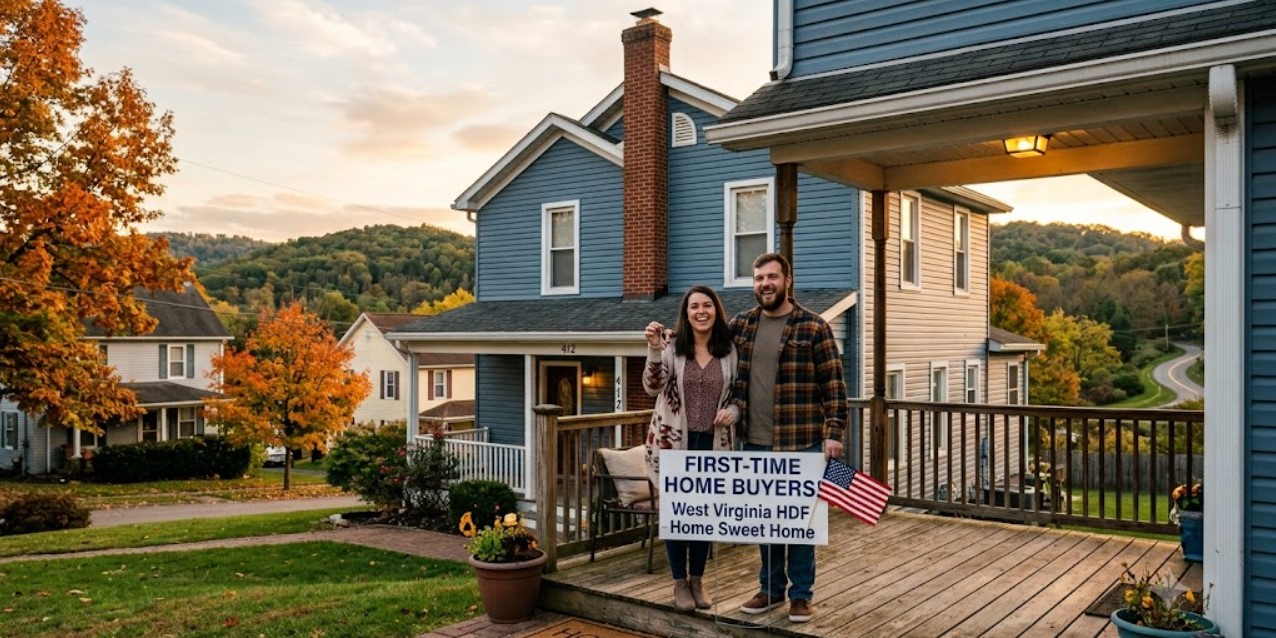
If you are buying your first home in West Virginia, the single most useful thing you can do before you shop is understand the West Virginia Housing Development Fund. Locals call it the WVHDF, and it is the state agency that quietly makes homeownership reachable for thousands of West Virginians every year.
This 2026 guide explains every WVHDF program in plain language: the low-rate Homeownership Program, the Movin' Up Program for repeat and higher-income buyers, and the Low Down Home Loan that puts up to $12,000 toward your down payment and closing costs. If you are weighing whether to keep renting or buy, understanding these programs first can change the math entirely. Working with experienced West Virginia real estate agents who know how WVHDF loans move through closing keeps the process from stalling.
Quick Answer: The West Virginia Housing Development Fund (WVHDF) offers 30-year fixed-rate mortgages at below-market rates, plus a separate second loan called the Low Down Home Loan that provides up to $12,000 for down payment and closing costs.
The flagship Homeownership Program is aimed at first-time buyers and carried a rate of 6.200% (6.811% APR) in 2026. It can finance up to 100% of the purchase price. The Movin' Up Program has no first-time requirement and allows higher incomes (up to $171,120) and prices (up to $350,000).
To qualify for the Homeownership Program, your income and the home price must fall under the limits for your county, and you generally cannot have owned your primary residence in the past three years. Homebuyer education is required on conventional loans.
Key Takeaways
- Low fixed rates: The WVHDF Homeownership Program offered 6.200% (6.811% APR) on a 30-year fixed loan in 2026, below typical market pricing for first-time buyers.
- Up to $12,000 in help: The Low Down Home Loan is a 15-year second mortgage at 2% interest that covers down payment and closing costs when your loan-to-value is at or above 80%.
- Two main programs: Homeownership is for first-time buyers with lower incomes; Movin' Up drops the first-time rule and raises the income ceiling to $171,120 and the price ceiling to $350,000.
- County-based limits: Income and purchase-price caps for the Homeownership Program are set per county and updated every year, so a buyer in Jefferson County has different limits than one in Mercer County.
- Eastern Panhandle buyers benefit most: In Charles Town, Martinsburg, and Harpers Ferry, where prices run higher than the state average, the $12,000 assistance and low rate close a real affordability gap for DC-area commuters.
- Real people, real rules: Minimum credit is generally in the low-to-mid 600s, no cosigners are allowed, and only doublewide manufactured homes qualify.
In This Guide
- What Is the WVHDF?
- The Homeownership Program
- The Low Down Home Loan: Up to $12,000
- The Movin' Up Program
- How Much You Could Save With WVHDF
- Who Qualifies: Income, Price & Credit
- WVHDF in the Eastern Panhandle
- Local City & County Assistance
- Grants vs. Loans: Free Money?
- Step-by-Step: Using a WVHDF Loan
- WVHDF vs. FHA, VA & USDA
- Can You Buy With No Money Down?
- Homebuyer Education & Requirements
- Mistakes First-Time WV Buyers Make
- Frequently Asked Questions
- Glossary
What Is the WVHDF (West Virginia Housing Development Fund)?
The West Virginia Housing Development Fund is a state agency created by the Legislature in 1968 with a single mission: to provide safe, decent, affordable housing to West Virginians. It is not a bank you walk into, and it is not a grant charity. It is a housing finance agency, which means it raises money through tax-exempt bonds and uses that money to fund mortgages at rates lower than a typical retail lender can offer.
In practice, you do not apply at the WVHDF directly. You apply through one of the Fund's approved partner lenders, who originate the loan using the Fund's programs and terms. The Fund then buys and services the loan from its Charleston office. That structure is why the rates are low and the rules are specific: the money is public, so the eligibility bar is set to steer it toward buyers who actually need it.
For a first-time buyer, the value is simple. A WVHDF loan can mean a lower interest rate, a smaller amount of cash needed at closing, and a clear path to homeownership that a conventional loan alone may not provide.
One agency, several programs. The WVHDF runs multiple single-family programs. The three that matter most to a first-time buyer are the Homeownership Program, the Movin' Up Program, and the Low Down Home Loan. The rest (septic repair loans, Habitat funding, Section 8) serve different needs.
The Homeownership Program: WVHDF's Flagship for First-Time Buyers
The Homeownership Program is the one most first-time buyers use. It is built specifically to make that first purchase affordable, and it generally carries the Fund's lowest interest rate along with access to down payment assistance.
These are 30-year, fixed-rate loans, and they can finance up to 100% of the home's purchase price. In 2026 the program rate was 6.200%, with an annual percentage rate (APR) of 6.811%. Rates change with the market, so the number you get quoted may differ, but the point holds: the Fund's rate is set to undercut what a first-time buyer typically finds on the open market.
What the Homeownership Program offers
- 30-year fixed rate: Your rate and principal-and-interest payment never change for the life of the loan.
- Up to 100% financing: The program can finance the full purchase price, which is unusual and valuable for a buyer without a large down payment saved.
- Lowest WVHDF rate: 6.200% (6.811% APR) in 2026, generally the Fund's best pricing.
- Down payment assistance access: Pairs with the Low Down Home Loan for up to $12,000 toward down payment and closing costs.
- Flexible insurance: The Fund accepts FHA, VA, USDA, and private mortgage insurance, so the program works with several loan types.
The trade-off for that low rate is eligibility. The Homeownership Program is designed for first-time buyers with incomes under the county limit, and it applies a three-year rule discussed in the eligibility section below. If your income is above the county cap, the Movin' Up Program is the alternative.
The Low Down Home Loan: Up to $12,000 for Down Payment and Closing Costs
For most first-time buyers, the hardest part of buying is not the monthly payment. It is the pile of cash needed to get to the closing table. If you are still sizing up that number, our guide to how much down payment you really need is a useful companion to this section. The Low Down Home Loan is the WVHDF's answer to that problem, and it is the single most valuable piece of the puzzle for a cash-tight buyer.
The Low Down Home Loan is a 15-year, fixed-rate second mortgage at 2% interest. It provides up to $12,000 toward your down payment and closing costs when your loan-to-value ratio is at or above 80%. It is offered exclusively alongside the Fund's Homeownership and Movin' Up first mortgages, so you cannot pair it with a loan from an outside lender.
It is a loan, not a grant. The $12,000 is real money toward your purchase, but it is a second mortgage you repay over 15 years at 2% interest. That is still an excellent rate, and it turns a large upfront barrier into a small, predictable monthly line item.
How the Low Down Home Loan changes your cash to close
Consider a straightforward example. On a $250,000 home, a conventional buyer putting 5% down needs $12,500 for the down payment plus roughly $7,500 in closing costs, about $20,000 in cash. A WVHDF buyer using the Homeownership Program with the Low Down Home Loan can cover a large share of that with the $12,000 second loan, shrinking the out-of-pocket requirement to a few thousand dollars. The calculator further down lets you see the gap at several price points.
Cash Needed To Reach Closing
Estimated cash to close on a $300,000 Eastern Panhandle home, by path
Illustration assumes about 3% closing costs and up to $12,000 in Low Down Home Loan assistance. Your figures depend on loan type, credit, and the property.
One important rule to plan around: because the Low Down Home Loan is a second lien, it has to be paid off if you later refinance your first mortgage. The Fund will not subordinate the second loan behind a new first mortgage, so a future refinance must satisfy the outstanding balance. That is manageable, but it is worth knowing before you sign.
The Movin' Up Program: For Repeat Buyers and Higher Incomes
Not every buyer fits the first-time, lower-income profile of the Homeownership Program, and the WVHDF built the Movin' Up Program for exactly that reason. Movin' Up has no first-time homebuyer requirement, which makes it a strong option for current homeowners who want to move, as well as for first-time buyers whose income runs above the Homeownership limits.
The eligibility ceilings are higher and simpler than the county-by-county Homeownership limits. In 2026, Movin' Up allowed borrower income up to $171,120 and a home sales price up to $350,000. The home must be in West Virginia, and unlike the Homeownership Program, there is no acreage limit.
Movin' Up rates and the Movin' Up Special
Movin' Up carried a rate of 7.000% (7.633% APR) in 2026. There is also a Movin' Up Special for applicants whose qualifying income is at or below 80% of the Area Median Income (AMI) for their federally designated census tract. The Special offered a reduced rate of 6.875% (7.577% APR) and lower-cost private mortgage insurance, which can meaningfully cut the monthly payment for a moderate-income buyer.
| Program | 2026 Rate | APR | Best For |
|---|---|---|---|
| Homeownership | 6.200% | 6.811% | First-time buyers under county income limits |
| Movin' Up Special | 6.875% | 7.577% | Buyers at or below 80% AMI |
| Movin' Up | 7.000% | 7.633% | Repeat buyers or incomes above Homeownership caps |
Movin' Up also accepts a wide range of property types: single-family homes, townhomes, units in approved planned unit developments or condominiums, and new or existing (post-1976) doublewide manufactured homes. Permanent financing is available for newly constructed homes, though the Fund does not offer construction financing itself.
How Much You Could Save With WVHDF
The clearest way to see the value of a WVHDF loan is in cash needed at closing. The interactive estimator below compares a conventional 5%-down purchase against a WVHDF path using the Homeownership Program and the Low Down Home Loan. Pick a price close to your target and watch the upfront-cash gap. If the terms here are new to you, our explainer on earnest money versus your down payment clears up two costs buyers often confuse.
WVHDF Cash-To-Close Estimator
Your upfront cash, two paths compared
Conventional 5% down versus WVHDF Homeownership plus the Low Down Home Loan. Select a home price.
on a $200,000 home, upfront, versus a conventional 5%-down purchase
Conventional, 5% Down
Homeownership + Low Down
on a $250,000 home, upfront, versus a conventional 5%-down purchase
Conventional, 5% Down
Homeownership + Low Down
on a $300,000 home, upfront, versus a conventional 5%-down purchase
Conventional, 5% Down
Homeownership + Low Down
on a $325,000 home, upfront, versus a conventional 5%-down purchase
Conventional, 5% Down
Homeownership + Low Down
on a $350,000 home, upfront, versus a conventional 5%-down purchase
Conventional, 5% Down
Homeownership + Low Down
Estimates for illustration only. Assumes 3% closing costs and up to $12,000 Low Down Home Loan. Actual down payment, rate, and costs depend on loan type, credit, and property. Confirm figures with a WVHDF-approved lender.
The pattern is consistent: across every price point, a WVHDF buyer reaches closing with roughly $15,000 to $17,000 less cash than a conventional buyer. For a first-time buyer who has been saving for years, that difference can be the line between buying this year and waiting three more.
Who Qualifies? Income Limits, Price Limits, and Credit
WVHDF eligibility is specific, and the details matter because they decide which program you can use. Here is what the Homeownership Program requires.
Income and purchase-price limits (by county)
Your gross household income cannot exceed the income limit for the county where you are buying, and the home's price cannot exceed the sales-price limit for that county. Both are set by the WVHDF and updated every year, and both vary widely across the state. A county near the DC job market carries higher limits than a rural county, because the Fund adjusts them to local conditions. Always pull the current figure for your specific county before assuming you qualify.
Check your county first. Because the limits change annually and differ by county, the number you find on a third-party site may be out of date. The WVHDF publishes a current income-and-price-limit report, and an approved lender can confirm your county's exact caps in minutes.
The three-year rule
The Homeownership Program is for first-time buyers, but the definition is broader than it sounds. You count as a first-time buyer if you have not held an ownership interest in your principal residence at any time during the three years ending on the day your loan closes. So if you owned a home years ago, sold it, and have rented for the past three years, you can qualify again. Buyers purchasing in a designated targeted county may be exempt from the three-year rule entirely. Buyers weighing a move across the line can also compare this against our first-time homebuyer guide for Virginia to see how the two states line up.
Credit, property, and other rules
- Credit score: Generally a score in the low-to-mid 600s can be acceptable. As a rule of thumb, conventional loans want around 620, while FHA-insured loans can go as low as 580 with a 3.5% down payment. Several factors affect approval, so a pre-qualification with a loan officer is the real test.
- Property location and size: The home must be in West Virginia on a lot of five acres or smaller for the Homeownership Program. Movin' Up has no acreage limit.
- Manufactured homes: Only doublewide manufactured homes may be considered. Singlewides do not qualify.
- No cosigners: WVHDF loan programs do not allow cosigners. The people on the loan are the people on the deed.
WVHDF in the Eastern Panhandle: Where It Matters Most
West Virginia's statewide median home price is one of the lowest in the country, but that average hides a sharp regional split. In the Eastern Panhandle, the counties closest to the Washington, DC job market, prices run well above the state norm. That is precisely where WVHDF programs deliver the most value, because they close a real affordability gap for buyers who commute east.
Jefferson and Berkeley Counties have become popular with buyers priced out of Northern Virginia and Maryland. Towns like Charles Town, Ranson, Martinsburg, Harpers Ferry, and Shepherdstown offer a lower cost of living within reach of the MARC commuter rail and I-81. A buyer working in the DC area can own a home in the Panhandle for a fraction of what the same commute would cost across the state line, and a WVHDF loan makes that first purchase easier still.
If you are moving over from Virginia, it helps to know the WVHDF is West Virginia's version of what you may already recognize across the line. Virginia buyers lean on the state's VHDA first-time buyer loan programs for the same reasons, low rates and down payment help, so the concept carries directly from one state to the other.
The commuter math: A DC-area worker who cannot afford Loudoun or Frederick County can often buy in Jefferson or Berkeley County using a WVHDF loan, keep a manageable commute, and reach closing with far less cash than a conventional purchase would demand.
If you are moving from Virginia, Maryland, or DC into the Panhandle, the affordability difference is dramatic, but the market still moves fast on well-priced homes. Knowing your WVHDF eligibility before you shop lets you make a clean, credible offer. Our team works both sides of the state line and can point Panhandle buyers toward the right lender and the right neighborhoods. Compare what your money buys against nearby Northern Virginia communities and the gap speaks for itself.
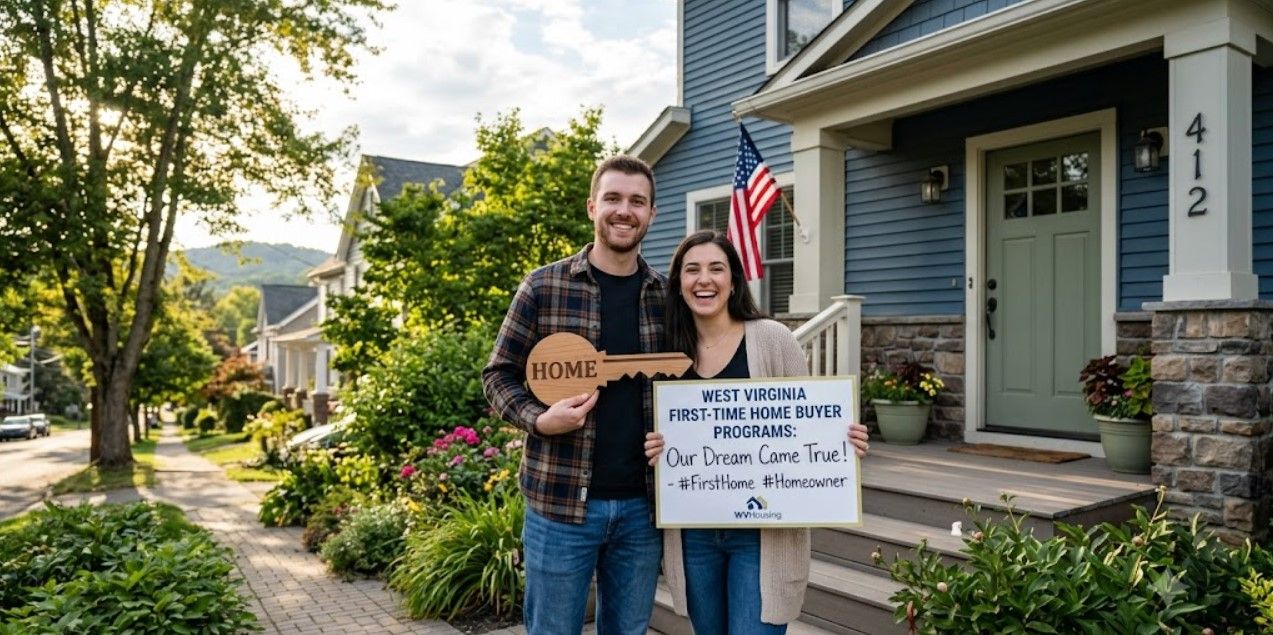
Explore The Region
Buying Near the WV State Line
Local City and County Assistance That Can Stack With WVHDF
The WVHDF is statewide, but it is not the only source of help. Many West Virginia cities and counties run their own down payment and closing-cost programs, and in the right situation these can layer on top of a WVHDF loan. For a first-time buyer in the Eastern Panhandle, this is where some of the largest assistance in the state is available.
City of Martinsburg Homebuyer Assistance Program
Martinsburg runs one of the most generous local programs in West Virginia. Qualifying first-time buyers can receive a deferred, no-interest loan of up to $24,500 toward down payment and closing costs. The amount is based on the buyer's need, and the loan is fully forgiven if you stay in the home for the five-year term. That is real money that never has to be paid back if you simply live in the house.
Eastern Panhandle HOME Consortium
The Eastern Panhandle HOME Consortium pools federal HOME funds across Berkeley, Jefferson, and Morgan Counties along with the City of Martinsburg. Its homebuyer assistance provides forgivable down payment help for income-eligible first-time buyers who occupy the home as their primary residence for at least five years. Purchase-price caps apply and differ for existing versus newly built homes, so confirm the current limits for your county.
Other West Virginia city programs
Beyond the Panhandle, cities run their own programs too. The City of Wheeling, in the northern part of the state, offers qualified first-time buyers up to $10,000 toward down payment and closing costs, and Charleston has periodically run similar assistance. These programs are separate from the WVHDF, have their own income limits and applications, and are typically funded in limited rounds.
| Program | Area | Assistance | Structure |
|---|---|---|---|
| Martinsburg Homebuyer Assistance | City of Martinsburg | Up to $24,500 | Deferred, no-interest, forgiven after 5 years |
| Eastern Panhandle HOME Consortium | Berkeley, Jefferson, Morgan + Martinsburg | Forgivable DPA | Forgiven with 5-year owner-occupancy |
| Wheeling First-Time Homebuyer | City of Wheeling | Up to $10,000 | Loan for down payment and closing |
| WVHDF Low Down Home Loan | Statewide | Up to $12,000 | 15-year second mortgage at 2% |
These funds run out. Local programs are funded in limited rounds and are often first-come, first-served. If you are buying in Martinsburg or the wider Panhandle, ask your lender to check availability early, because the biggest assistance is also the fastest to be claimed.
Grants vs. Loans: What "Free Money" Really Means in West Virginia
Buyers searching for first-time homebuyer grants often expect a check that never has to be repaid. In West Virginia, true grants are rare. Almost all assistance is structured as a loan, and the terms decide whether it ever comes out of your pocket. Understanding the three categories keeps you from being surprised at closing.
- Repayable second loans: The WVHDF Low Down Home Loan is a real loan. You repay the up-to-$12,000 over 15 years at 2% interest. The rate is excellent, but it is a monthly payment, and it must be paid off if you refinance.
- Forgivable or deferred loans: Local programs like the Martinsburg Homebuyer Assistance and the Eastern Panhandle HOME Consortium are forgivable. There are no monthly payments, and the balance is wiped out once you have lived in the home long enough (typically five years). Until then, it sits as a lien on the property, so selling or refinancing early can trigger repayment.
- True grants: Money you never repay under any condition. These exist but are uncommon and usually tied to a specific employer, nonprofit, or narrow eligibility window.
The practical takeaway for a West Virginia buyer: the forgivable local loans are the closest thing to free money most people will find, and pairing one with a WVHDF first mortgage is the strongest combination available. Just read the forgiveness terms before you sign, and plan to stay put long enough to earn the forgiveness.
Step-by-Step: How to Use a WVHDF Loan to Buy Your First Home
The process is not complicated once you see the order of operations. Here is the path from curious renter to WVHDF homeowner.
- Check your county's income and price limitsPull the current WVHDF limits for the county where you want to buy. This tells you immediately whether the Homeownership Program or Movin' Up is your lane.
- Contact a WVHDF-approved lenderYou cannot apply at the Fund directly. Call a WVHDF Loan Originator at 800-933-8511 or find an approved partner lender to start a pre-qualification.
- Get pre-qualified and pick your programThe lender confirms your credit, income, and which program and rate you qualify for, including whether the Low Down Home Loan applies to your purchase.
- Complete homebuyer educationOn conventional loans, WVHDF requires a homebuyer education or counseling course. On FHA, VA, or USDA loans, you follow that agency's education rules.
- Shop with an agent and make an offerWork with a local agent to find a qualifying home (in West Virginia, five acres or smaller for the Homeownership Program) and submit a strong, pre-qualified offer. Doing homework on a specific property first? Here is how to look up who owns a property in West Virginia and nearby states.
- Close and move inThe lender finalizes the first mortgage and any Low Down Home Loan second lien. The Fund services the loan from Charleston after closing.
WVHDF vs. FHA, VA, and USDA: How They Work Together
A common point of confusion: is a WVHDF loan an alternative to FHA, VA, and USDA loans, or something else? The answer is that they work together. The WVHDF is the funding source and the program layer; FHA, VA, USDA, and private mortgage insurance are the insurance types the Fund accepts underneath its programs. In other words, you might have a WVHDF Homeownership loan that is FHA-insured, with a Low Down Home Loan on top.
| Feature | WVHDF Homeownership | FHA | VA | USDA |
|---|---|---|---|---|
| Who runs it | WV state housing agency | Federal (HUD) | Federal (VA) | Federal (USDA) |
| Down payment help | Up to $12,000 Low Down | Not built in | 0% down loan | 0% down loan |
| Rate advantage | Below-market (6.200% in 2026) | Market | Market | Market |
| Who qualifies | WV first-time buyers under limits | Most buyers | Veterans, service members | Rural, income-limited |
| Can combine with WVHDF | Is the program | Yes | Yes | Yes |
The takeaway: you do not have to choose between a WVHDF loan and an FHA or VA loan. A good loan officer stacks them so you get the Fund's low rate and assistance with the insurance type that fits your situation. A veteran, for example, might pair WVHDF program pricing with VA insurance for a zero-down purchase.
Down Payment Required By Loan Type
Minimum down payment on a $300,000 home, before any assistance is applied
WVHDF Homeownership can finance up to 100% of the price, and VA and USDA are zero-down loans. Conventional shown at 5%; FHA at 3.5%.
Can You Buy a Home in West Virginia With No Money Down?
One of the most common searches from West Virginia first-time buyers is whether they can buy with nothing down. The answer, more often than people expect, is yes. Between the state's rural geography and the WVHDF's financing, there are three legitimate zero-down or near-zero-down paths.
USDA Rural Development loans (0% down)
The USDA 502 Guaranteed loan lets eligible buyers in rural areas purchase with no down payment, and West Virginia is one of the most USDA-friendly states in the country because so much of it qualifies as rural. This is not just deep-country coverage: all of Berkeley County in the Eastern Panhandle is USDA-eligible, and over 82% of USDA loans there have gone to first-time buyers. Income limits apply and vary by county and household size (in Berkeley County the 2026 limit was about $96,150 for a household of up to four).
VA loans (0% down for veterans)
If you or your co-buyer is a veteran, active-duty service member, or eligible spouse, a VA loan offers zero down with no monthly mortgage insurance. Because the WVHDF accepts VA insurance, you can pair the Fund's program pricing with a VA loan for a genuinely zero-down purchase.
WVHDF up to 100% financing
Even without USDA or VA eligibility, the WVHDF Homeownership Program can finance up to 100% of the purchase price, and the Low Down Home Loan can cover much of your closing costs. That combination gets many buyers to the table with only a few thousand dollars, and sometimes less.
Check the address, not the county name. USDA eligibility is mapped street by street. Many West Virginia towns that do not feel rural still qualify, so it is worth checking a specific property's address with a lender before assuming it is out.
Homebuyer Education and Other Requirements
Homebuyer education is a requirement worth planning for, not a surprise at closing. For both the Homeownership and Movin' Up programs, homebuyer education or counseling is required on conventionally insured or uninsured loans. On government-insured loans (FHA, VA, and USDA), you follow the insuring agency's guidelines for education instead.
In West Virginia, a common approved provider is CommunityWorks in West Virginia, which partners with eHome America to offer the course fully online for buyers who cannot attend an in-person session. The course typically runs about $100, and you receive a homebuyer education certificate on completion, which is required for many down payment assistance programs and can qualify you for lower-cost mortgage insurance. The HomeOwnership Center in Elkins is another established provider. Your lender can point you to the right one for your loan and any assistance program you are using.
The course is not a hurdle so much as a benefit. It walks first-time buyers through budgeting, credit, the mortgage process, and what to expect at closing, and it tends to make the whole transaction smoother.
WVHDF Strengths
- Below-market fixed rate for first-time buyers
- Up to $12,000 toward down payment and closing costs
- Up to 100% financing on the Homeownership Program
- Works with FHA, VA, USDA, and PMI
- Movin' Up option for higher incomes and repeat buyers
Things To Plan Around
- County income and price limits on the Homeownership Program
- Three-year rule for non-targeted counties
- Low Down second lien must be paid off at refinance
- No cosigners allowed
- Only doublewide (not singlewide) manufactured homes
Common Mistakes First-Time West Virginia Buyers Make
Most WVHDF problems are avoidable. These are the ones we see most often.
- Assuming the income limit disqualifies them. Buyers often self-reject based on a stale number from a third-party site. County limits change yearly and are higher than many expect, especially in the Eastern Panhandle. Check the current figure before ruling yourself out.
- Skipping pre-qualification. The only way to know your rate, program, and assistance is a pre-qualification with an approved lender. Shopping first and financing later is backwards.
- Forgetting the refinance rule. The Low Down Home Loan is a second lien that must be satisfied if you refinance. Buyers who plan to refinance quickly should factor that in.
- Waiting for a bigger down payment. With up to 100% financing and $12,000 in assistance, the down payment barrier is far smaller than most renters assume. Waiting can cost more than it saves as prices rise.
- Not lining up an agent early. A buyer's agent who understands WVHDF timelines keeps the deal from stalling on eligibility paperwork. Bring one in before you fall for a house.
Frequently Asked Questions
What is the WVHDF?
The West Virginia Housing Development Fund (WVHDF) is a state housing finance agency created in 1968. It funds below-market-rate mortgages and down payment assistance for West Virginia buyers through a network of approved partner lenders, and it services those loans from its Charleston office.
What interest rate does the WVHDF Homeownership Program offer?
In 2026, the Homeownership Program carried a rate of 6.200% with an APR of 6.811% on a 30-year fixed loan. Rates change with the market, so confirm the current rate with a WVHDF-approved lender, but the program is designed to price below what a first-time buyer typically finds on the open market.
How much down payment assistance can I get in West Virginia?
The WVHDF Low Down Home Loan provides up to $12,000 toward down payment and closing costs when your loan-to-value ratio is at or above 80%. It is a 15-year second mortgage at 2% interest, available only alongside the Fund's Homeownership or Movin' Up first mortgage.
Who counts as a first-time home buyer for WVHDF?
You qualify as a first-time buyer if you have not held an ownership interest in your principal residence at any point during the three years before your loan closes. Buyers in designated targeted counties may be exempt from the three-year rule, and the Movin' Up Program has no first-time requirement at all.
What are the income limits for WVHDF programs?
For the Homeownership Program, income limits are set per county and updated annually, so they vary across the state. The Movin' Up Program uses a single ceiling: borrower income up to $171,120 in 2026. Always check the current limit for your specific county before assuming you qualify.
What is the maximum home price under WVHDF programs?
The Homeownership Program sets sales-price limits by county, updated yearly. The Movin' Up Program allows a home price up to $350,000 statewide. The home must be located in West Virginia.
What credit score do I need for a WVHDF loan?
Generally, a credit score in the low-to-mid 600s can be acceptable, but multiple factors affect qualification. The most reliable way to know is to complete a pre-qualification with a loan officer, who reviews your full financial picture.
What is the difference between the Homeownership and Movin' Up programs?
The Homeownership Program targets first-time buyers with lower incomes and offers the Fund's lowest rate. Movin' Up has no first-time requirement, allows higher income (up to $171,120) and higher prices (up to $350,000), and suits repeat buyers or first-time buyers whose income exceeds Homeownership limits.
Can I use a WVHDF loan with an FHA or VA loan?
Yes. The WVHDF accepts FHA, VA, USDA, and private mortgage insurance. The Fund provides the program and rate; the FHA, VA, or USDA provides the insurance underneath it. A veteran, for instance, can pair WVHDF pricing with VA insurance for a zero-down purchase.
Is homebuyer education required for WVHDF loans?
Homebuyer education or counseling is required on conventionally insured or uninsured loans for both the Homeownership and Movin' Up programs. On government-insured loans (FHA, VA, USDA), you follow the insuring agency's education guidelines instead.
Do WVHDF programs work in the Eastern Panhandle?
Yes, and that is where they often matter most. In higher-priced counties like Jefferson and Berkeley, near the DC job market, the low rate and up to $12,000 in assistance close a real affordability gap for commuters buying in Charles Town, Martinsburg, Harpers Ferry, and Shepherdstown.
Can I get down payment help if my mortgage is with a different lender?
No. The Low Down Home Loan is available only alongside a WVHDF first mortgage through the Homeownership or Movin' Up programs. It cannot be paired with a loan from an outside lender. You also cannot use a cosigner on WVHDF loans.
Can I buy a home in West Virginia with no money down?
Often, yes. USDA Rural Development loans offer zero down and cover most of West Virginia, including all of Berkeley County. VA loans offer zero down for veterans and service members. And the WVHDF Homeownership Program can finance up to 100% of the price, with the Low Down Home Loan covering much of your closing costs.
Are there down payment grants in West Virginia?
True grants that never have to be repaid are rare. Most West Virginia assistance is a loan. The best deals are forgivable local loans: the City of Martinsburg offers up to $24,500 that is forgiven after five years in the home, and the Eastern Panhandle HOME Consortium offers similar forgivable help. The statewide WVHDF Low Down Home Loan is a repayable 2% second mortgage.
What are the requirements to be a first-time homebuyer in West Virginia?
For the WVHDF Homeownership Program you generally must not have owned your primary residence in the past three years, your income must be under your county's limit, the home's price must be under the county limit, and you need roughly a 620 credit score (580 possible on FHA loans). Homebuyer education is required on conventional loans.
How much does homebuyer education cost in West Virginia?
It is inexpensive. A common approved provider, CommunityWorks in West Virginia, offers the course online through eHome America for about $100. You receive a certificate on completion that is required for many down payment assistance programs and can qualify you for lower-cost mortgage insurance.
Is West Virginia offering money to move there?
Separate from home-buying programs, West Virginia has run remote-worker relocation incentives such as Ascend WV, which has offered cash and perks to people who move to the state and work remotely. Those programs are distinct from WVHDF mortgage assistance, but an eligible remote worker could potentially benefit from both.
Is buying with a WVHDF loan a good idea in 2026?
For an eligible first-time buyer, it usually is, because you get a below-market rate plus up to $12,000 in assistance, which lowers both the monthly payment and the cash needed at closing. Whether it is right for you depends on your income, credit, and the county you are buying in, so start with a pre-qualification and a buyer strategy consultation to run your specific numbers.
Glossary
WVHDF: West Virginia Housing Development Fund, the state agency that funds below-market mortgages and down payment assistance for WV buyers.
Homeownership Program: WVHDF's flagship 30-year fixed-rate loan for first-time buyers, with its lowest rate and up to 100% financing.
Movin' Up Program: A WVHDF loan with no first-time requirement, higher income and price limits, for repeat or higher-income buyers.
Low Down Home Loan: A 15-year second mortgage at 2% offering up to $12,000 toward down payment and closing costs when LTV is at or above 80%.
APR: Annual percentage rate, the yearly cost of a loan including interest and certain fees, always a bit higher than the note rate.
Loan-to-value (LTV): The loan amount divided by the home's value or price. A 96.5% LTV means a 3.5% down payment.
Three-year rule: WVHDF's first-time-buyer test: no ownership interest in a primary residence during the three years before closing.
Targeted county: A federally designated area where WVHDF may waive the three-year first-time-buyer rule and adjust limits.
Buying your first home in West Virginia is more reachable than most renters believe, and the WVHDF is the reason. Between a below-market rate, up to 100% financing, and $12,000 toward your closing costs, the barriers that keep people renting are smaller than they look. The next step is simple: confirm your county's limits, get pre-qualified with an approved lender, and let us help you find the home. Start with a free home buying consultation or reach our team at (703) 782-4830.
Categories
- All Blogs (1168)
- Aldie (3)
- Ashburn (6)
- Buyer Guide (8)
- Buying a home (2)
- Buying Strategies (28)
- festivals (1)
- General Blog (66)
- Leesburg (5)
- Market Intelligence (29)
- Market Updates (8)
- Notable Properties For Sale (29)
- Real Estate Tips, News, and More (376)
- Seller Guide (2)
- Seller Guides (60)
- Selling Your Home (479)
- Sterling (6)
- Top Realtors in Northern Virginia (58)
Recent Posts
Message Sent!
Thank you for reaching out. Arslan & Saad have received your details and will be in touch shortly.
Need immediate assistance? Call or text 703-782-4830.