Buy vs. Rent in Northern Virginia: What Actually Makes Sense in 2026
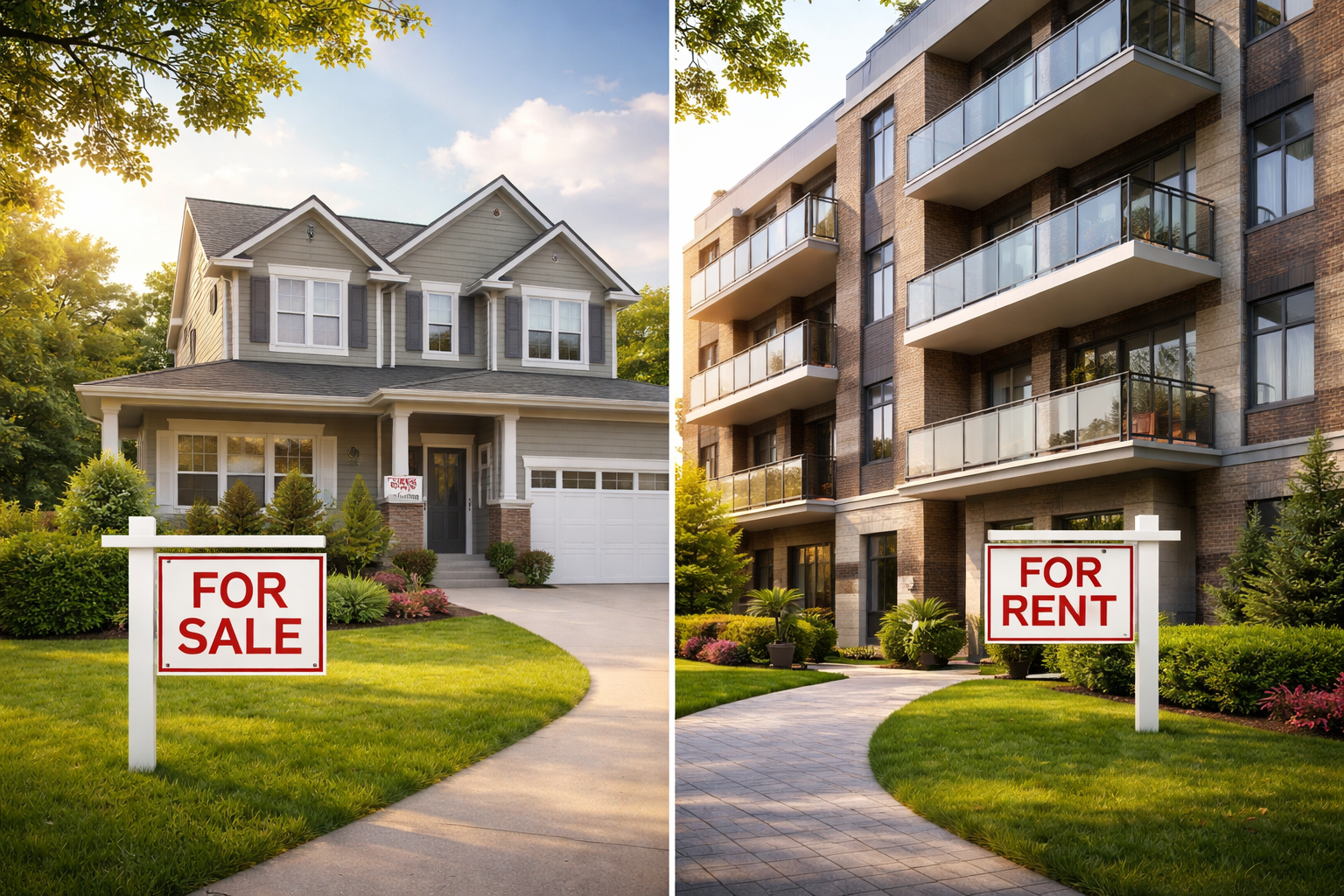
For many DMV residents, deciding whether to rent or buy is no longer a simple choice. With Northern Virginia home prices around $650,000 in many areas and rents for a two-bedroom apartment often exceeding $2,400 per month, both options require a substantial budget. Buying can help build equity and provide greater housing stability, while renting may offer lower upfront costs, flexibility, and fewer maintenance responsibilities.
The right decision depends on more than comparing rent with a mortgage payment. Interest rates, down payment, property taxes, insurance, HOA fees, maintenance, closing costs, expected time in the home, and future plans all affect the calculation. A knowledgeable Northern Virginia real estate agent can help you compare realistic ownership costs with your current rent rather than relying on broad market averages.
This 2026 guide examines the financial and lifestyle factors that should shape your decision, along with differences between local markets. Whether you are renting in Arlington, considering a home in Loudoun County, or evaluating a property as an investment, the goal is to help you choose the option that fits your budget, timeline, and priorities. When you are ready, create a personalized Northern Virginia home-buying strategy based on current listings and your long-term plans.
📊 Quick Facts at a Glance
- Median Home Price (NoVA): Approximately $650,000 to $700,000 in early 2026
- Average 2BR Rent: $2,400 to $2,800/month depending on location
- Mortgage Rates: Hovering between 6.5% and 7.0% for 30-year fixed
- Price-to-Rent Ratio (NoVA): Approximately 20 to 24 (varies by submarket)
- Break-Even Horizon: Typically 4 to 6 years for most Northern Virginia purchases
- Homeownership Rate (Fairfax County): Estimated at 67%
📑 Table of Contents
- The Buy vs. Rent Debate in 2026
- Northern Virginia Housing Market Snapshot
- The True Cost of Renting vs. Buying
- The Break-Even Point
- Where the Numbers Shift by County
- The Investment Angle
- Beyond the Numbers: Lifestyle Factors
- Who Should Buy in Northern Virginia in 2026
- Who Should Rent in Northern Virginia in 2026
- Making Your Move
🏠 The Buy vs. Rent Debate in Northern Virginia for 2026
The buy-versus-rent conversation has shifted dramatically over the past few years. A decade ago, the math was simpler: mortgage rates were low, home prices were more accessible, and the monthly cost of owning often undercut renting. In 2026, those dynamics have flipped in many markets, and Northern Virginia sits at the center of this national recalculation.
Higher mortgage rates mean larger monthly payments even as home prices have stabilized. Meanwhile, rental inventory in the DMV has expanded with new luxury apartment construction, putting downward pressure on rent growth in some corridors. The result? The financial gap between owning and renting has narrowed, and in some cases, reversed.
But this isn't just a spreadsheet decision. Buying a home is also about building equity, locking in housing costs, and creating stability. Renting offers flexibility, lower upfront costs, and freedom from maintenance headaches. Understanding your priorities, not just your budget, is essential to making the right call.
📈 Northern Virginia Housing Market Snapshot for 2026
Before diving into the rent-vs-buy math, let's look at where the Northern Virginia housing market stands heading into 2026.
| Market Indicator | Current Status (Early 2026) |
|---|---|
| Median Home Price (NoVA) | $650,000 to $700,000 |
| Year-Over-Year Price Change | +2% to +4% (moderate appreciation) |
| 30-Year Mortgage Rate | 6.5% to 7.0% |
| Average Rent (2BR Apartment) | $2,400 to $2,800/month |
| Rent Growth (YoY) | +1% to +3% (slowing) |
| Inventory Levels | Still below historical norms (tight supply) |
| Days on Market (Median) | 18 to 30 days depending on area |
The key takeaway: home prices remain elevated but aren't surging. Mortgage rates have settled into a higher-for-longer pattern. And while rents have increased, the pace has slowed thanks to new supply hitting the market, particularly along the Silver Line Metro corridor through Tysons and Reston, and in emerging Loudoun County submarkets near Ashburn.
💰 The True Cost of Renting vs. Buying a Home in Northern Virginia
Most rent-vs-buy comparisons oversimplify the math. They compare your rent payment to a mortgage payment and call it a day. But the true cost of homeownership includes far more than principal and interest, and the real monthly cost of living here adds another layer that most online calculators leave out.
🧮 True Monthly Cost of Owning a Northern Virginia Home (Example: $650K Home)
- Mortgage Payment (P&I): ~$3,500/month (20% down, 6.75% rate)
- Property Taxes: ~$550/month (Fairfax County ~1.02%)
- Homeowner's Insurance: ~$150/month
- HOA Fees (if applicable): $100 to $400/month
- Maintenance/Repairs: ~$400 to $600/month (rule of thumb: 1% of value annually)
- Total Estimated: $4,700 to $5,200/month
Compare that to renting a comparable property in the same area, perhaps $2,800/month all-in. The difference of $1,900 to $2,400 per month isn't "thrown away" when you rent; it's available for investment, savings, or lifestyle choices. Of course, as a homeowner, a portion of your payment builds home equity, but the gap isn't as simple as "renting = waste."
Here's what renters don't pay for: roof replacements, HVAC failures, appliance breakdowns, lawn maintenance, and the opportunity cost of a large down payment tied up in an illiquid asset. These factors must be weighed against the wealth-building potential of homeownership.
⏱️ The Break-Even Point: When Buying Beats Renting in NoVA
The break-even point is the number of years you need to own a home before buying becomes financially advantageous over renting. In Northern Virginia, this typically ranges from 4 to 6 years, but it varies based on purchase price, down payment, interest rate, rent growth assumptions, and home appreciation.
A quick gut-check before you run a full break-even calculation is the price-to-rent ratio: divide a home's purchase price by its annual rent. A ratio under 15 generally favors buying, 16 to 20 is a toss-up, and above 21 tilts toward renting. Most Northern Virginia submarkets sit in the 20 to 24 range, which is exactly why timeline and intent matter so much in the DMV.
Here's a simplified breakdown:
- Years 1 to 2: Renting usually wins. Transaction costs (closing costs, moving expenses) and mortgage interest front-loading make buying expensive early.
- Years 3 to 4: Buying starts catching up. Equity builds, and rent increases erode the renter's advantage.
- Years 5+: Buying typically pulls ahead, assuming moderate home appreciation and consistent rent growth.
- Years 7 to 10+: The gap widens significantly in favor of ownership, especially in appreciating markets like NoVA.
💡 Key Insight: If you're confident you'll stay in Northern Virginia for at least 5 years, buying is likely the better financial move. If your timeline is uncertain or shorter, renting preserves flexibility and minimizes risk.
🗺️ Where the Numbers Shift: Rent vs. Buy by Northern Virginia County and Submarket
Northern Virginia isn't a monolith. The buy-vs-rent math varies significantly depending on where you're looking. Here's how the calculation shifts across key submarkets:
Arlington & Alexandria (Urban Core): High purchase prices ($700K to $1M+ for condos and townhomes) meet relatively high rents ($2,800 to $3,500 for comparable units). The price-to-rent ratio here is elevated, meaning buying is expensive relative to renting. The same dynamic holds when you're buying in a premium market like McLean, where elevated entry prices reward a longer ownership horizon. Best for buyers who plan to stay 7+ years or value urban amenities and Metro access enough to pay the premium.
Fairfax County (Suburban Balance): The sweet spot for many buyers. Median prices around $625K to $700K with strong Fairfax County Public Schools, Metro access in many areas, and rents that make ownership competitive over a 5-year horizon. Areas like Vienna, Reston, and Burke offer solid long-term value.
Loudoun County (Growth Corridor): Prices have risen sharply ($700K to $850K median in some areas), but so has demand, driven by Amazon HQ2 spillover, data center growth, and new Metro stations. Rents here have also climbed, making buying more competitive than you might expect. For a strong-value family buying in Ashburn, walkable mixed-use communities and top-rated Loudoun County schools often tip the decision toward ownership. With so much new development in this corridor, it's worth weighing the new construction vs. resale tradeoffs before you decide. Strong appreciation potential for patient buyers.
Prince William County (Value Play): The most affordable entry point ($500K to $600K median), with lower rents to match ($2,000 to $2,400). The break-even horizon is often shorter here, sometimes just 3 to 4 years. Ideal for buyers prioritizing affordability over commute time.
📊 The Investment Angle: Home Equity vs. Investing the Down Payment in Northern Virginia
One argument for buying: your home is a forced savings account. Every mortgage payment builds equity (even if slowly in early years), and over time, that equity compounds alongside home appreciation.
But here's the counterargument: that $130,000 down payment (20% of $650K) could be invested in a diversified portfolio. Historically, the stock market has returned 7% to 10% annually over the long term. In some scenarios, investing the down payment and renting can actually outperform buying, especially if home appreciation is modest and mortgage rates are high.
⚠️ Important Caveat: This comparison assumes disciplined investing. If you wouldn't actually invest the difference between renting and owning, the "invest the down payment" strategy is theoretical, and buying becomes a better wealth-building vehicle by default.
For anyone weighing rental yields as an investor, Northern Virginia remains attractive. Rental yields (cap rates) typically range from 4% to 6% depending on the property and location, with strong tenant demand from the region's federal workforce, government contractors, and tech employees.
🌳 Beyond the Numbers: Lifestyle Factors in the Northern Virginia Buy vs. Rent Decision
Spreadsheets don't capture everything. Here's what else to weigh:
Stability vs. Flexibility: Buying anchors you. That's great if you love your neighborhood and your job is stable. It's risky if your industry is volatile or you're considering a career pivot that could take you elsewhere.
Control Over Your Space: Owners can renovate, paint, landscape, and customize without landlord approval. Renters trade that control for simplicity: no fixing the furnace at 2 a.m. or budgeting for a new roof.
School Districts: In NoVA, school quality drives home values. If you have kids (or plan to), buying in a top-rated school district locks in access, and historically, these areas appreciate faster.
Commute & Lifestyle: Where you can afford to buy may differ from where you can afford to rent. A $3,000/month rental in Arlington might become a $600K purchase in Woodbridge, with a very different commute and lifestyle.
Peace of Mind: Some people sleep better owning their home outright (eventually). Others prefer the liquidity and simplicity of renting. Neither is wrong; it's about knowing yourself.
✅ Who Should Buy a Home in Northern Virginia in 2026
Buying makes sense if most of these apply to you:
- You plan to stay in Northern Virginia for at least 5 to 7 years
- You have a stable income and job security (federal, defense, tech, healthcare)
- You've saved at least 10% to 20% for a down payment plus closing costs and reserves
- Your total housing costs (PITI + maintenance) won't exceed 30% to 35% of gross income
- You value building equity and long-term wealth over short-term flexibility
- You're emotionally ready for the responsibilities of homeownership
If you check most of these boxes, the 2026 market offers opportunity, especially if you're strategic about location and patient about finding the right property. Many buyers in this region also qualify for VA loans or Virginia first-time homebuyer programs that reduce the cash needed upfront, so it's worth confirming your eligibility before assuming you need a full 20% down.
🔄 Who Should Rent in Northern Virginia in 2026
Renting is the smarter choice if:
- You may relocate within 1 to 3 years for career, family, or lifestyle reasons
- You haven't saved enough for a down payment without depleting emergency funds
- Your income is variable or your job situation is uncertain
- You're new to the area and still learning which neighborhoods fit your lifestyle
- You want to prioritize investing in the market over tying capital to real estate
- You value simplicity and don't want the hassles of maintenance and repairs
Renting isn't failure; it's a strategic choice when circumstances favor flexibility. With new apartment inventory coming online across NoVA, renters have more negotiating power than they did a few years ago.
🚀 Making Your Buy vs. Rent Move in Northern Virginia
Whichever direction you lean, here's how to set yourself up for success:
If You're Leaning Toward Buying:
- Get pre-approved early and calculate how much house you can afford so you understand your true budget before you start touring
- Work with an agent who knows Northern Virginia's micro-markets
- Don't stretch to the top of your approval; leave room for rate changes and unexpected costs
- Consider buying down your rate if you plan to stay long-term
If You're Leaning Toward Renting:
- Negotiate; landlords are more flexible now than in peak-demand years
- Set up automatic investing for the money you're not putting toward a down payment
- Revisit the buy-vs-rent decision annually as rates and prices evolve
- Use this time to strengthen your credit and savings position
🎯 Bottom Line: There's no universally "right" answer to the buy-vs-rent question. The right answer depends on your timeline, finances, risk tolerance, and life goals. Run your own numbers, be honest about your priorities, and don't let social pressure push you into a decision that doesn't fit your situation.
Ready to Make Your Move?
The Jamil Brothers Realty Group helps DMV residents navigate the buy-vs-rent decision with data-driven guidance and local expertise.
Whether you're exploring homeownership for the first time or considering selling your current home, we're here to help you make the smartest housing decision in 2026.
Search Homes for Sale · Get a Free Home Valuation · Learn About Our 1.5% Listing Program
Categories
- All Blogs (1227)
- Aldie (3)
- Ashburn (6)
- Buyer Guide (8)
- Buying a home (2)
- Buying Strategies (30)
- festivals (1)
- General Blog (67)
- Leesburg (5)
- Market Intelligence (29)
- Market Updates (8)
- Notable Properties For Sale (32)
- Real Estate Tips, News, and More (385)
- Seller Guide (2)
- Seller Guides (60)
- Selling Your Home (522)
- Sterling (6)
- Top Realtors in Northern Virginia (58)
Recent Posts

Message Sent!
Thank you for reaching out. Arslan & Saad have received your details and will be in touch shortly.
Need immediate assistance? Call or text 703-782-4830.