
How to Find Out Who Owns a Property (VA, MD, DC & WV)

Property ownership is public record in all four of these jurisdictions. You are allowed to look it up, it is usually free, and it usually takes about two minutes.
The catch is that each jurisdiction built its own system, they are not remotely equal, and the largest market of the four is the worst of them. Here is exactly where to look in Virginia, Maryland, D.C. and West Virginia, plus the wall most searches hit, from us as a real estate agency working across Virginia, Maryland, D.C. and West Virginia that lists homes for a 1.5% full-service listing fee.
Quick Answer: Start with the tax assessment record, which names the owner, then pull the deed if you need proof. Every jurisdiction here publishes ownership free.
Maryland is the easiest: SDAT Real Property Data Search covers all 24 jurisdictions, no account needed. Deeds are on mdlandrec.net with a free account.
D.C. has one database for 200,000-plus parcels via the Office of Tax and Revenue, plus the Recorder of Deeds. West Virginia has a genuinely good statewide tool at mapwv.gov covering all 55 counties, and it is the only one here that lets you search by owner name.
Virginia is the hard one. There is no statewide portal at all. Every county and independent city runs its own assessment search, and deeds live with each Circuit Court Clerk, sometimes behind a paid subscription. And in every jurisdiction, if the owner is an LLC, the trail usually stops.
Key Takeaways
- Ownership is public record in VA, MD, DC and WV. Looking it up is legal, normal and generally free.
- Maryland has one statewide search covering all 24 jurisdictions. It is the easiest of the four by a distance.
- West Virginia's tool is the best, all 55 counties, and the only one that searches by owner name.
- Virginia has no statewide portal. County by county, city by city, and some deeds sit behind subscriptions.
- The assessment names the owner. The deed proves it. They are different records and they disagree more than you would think.
- If it is an LLC, expect a dead end. Members are generally not public record in any of these four.
- A registered agent is not an owner. Finding one tells you far less than most guides imply.
On This Page
- The four jurisdictions, compared
- Two records, two different answers
- Maryland: the easy one
- Washington, D.C.: one database
- West Virginia: the surprise
- Virginia: the hard one
- When the owner is an LLC
- What the records will not tell you
- What you may and may not do with this
- Using this to buy off-market
- Looking up your own home
- Frequently asked questions
- Glossary
The Four Jurisdictions, Compared
Before the detail, the shape of it. These four systems are not variations on a theme. They are genuinely different animals.
Free public ownership lookup, by jurisdiction:
Read that again and enjoy the irony. West Virginia, the smallest market of the four, has the best free public ownership search. Virginia, the largest, has none. If you are used to looking up a property in Charleston and then try the same thing in Fairfax, you will think you have done something wrong. You have not.
Two Records, Two Different Answers
Almost every guide on this topic blurs two completely different things. Get this straight first and the rest is simple.
| The assessment record | The deed | |
|---|---|---|
| Kept by | The taxing authority | The land records office or court clerk |
| Its actual job | Working out who to send the tax bill to | Recording the legal transfer of title |
| What it gives you | Owner name, assessed value, size, use code | Legal proof of ownership, price, liens, restrictions |
| Speed | Instant, free | Slower, sometimes paid |
| How current | Lags. Updated on the assessor's cycle. | Current as of recording |
| Use it when | You just want the name | You need certainty, or the chain of title |
Why they disagree: a property sells in March, and the assessment record may still show the previous owner months later. The deed changed hands on day one. If a name looks wrong, you are probably reading a stale assessment. For a quick question the assessment is fine. For anything with money or a dispute attached, go to the deed.
Maryland: The Easy One
Maryland decided, sensibly, that one search should cover the whole state.
Step 1: SDAT Real Property Data Search
The Maryland State Department of Assessments and Taxation runs a free Real Property Data Search covering all 24 jurisdictions, meaning every county plus Baltimore City. No account, no fee. It returns the owner name, assessed value, legal description and the property's characteristics.
One important limitation that trips people up: you cannot search by owner name. You search by address, by account number, or by the map and parcel reference from a tax bill, and the owner name comes back as a result. If your starting point is a person rather than an address, SDAT will not help you.
SDAT search quirks worth knowing, because the interface is unforgiving. Leave out street directions like N, S, E or W. Leave out suffixes like Ave, St or Blvd. Leave off the street number entirely and it returns every property on that street, which is often exactly what you want. And it takes an asterisk as a wildcard, so "301 Pr*" will return Preston, President and Pratt.
Step 2: mdlandrec.net for the deed
Once you have the property, mdlandrec.net holds the actual recorded deeds and mortgages. It is free but requires you to create an account and sign in, then pick the same county and search the land records there. It is maintained as a joint effort of the Maryland State Archives and the state's Clerks of Court.
Washington, D.C.: One Database
D.C. has the structural advantage of being a single jurisdiction. One assessor, one recorder, one database.
The Office of Tax and Revenue's Real Property Tax Database Search covers more than 200,000 parcels and returns the property value, the owner's name and address, square footage and use code. It is free and needs no account.
Alongside it:
- MyTax.DC.gov for bills and account-level property detail.
- Real Property Public Extract, which is the bulk file: location, size, use, value, assessment and billing for the whole District. If you want data rather than a single answer, start here.
- The Recorder of Deeds for the land records themselves: deeds, many leases, and easements.
- The Real Property Assessment Map, a mapping application if you would rather click a parcel than type an address.
The D.C. advantage: because there is only one jurisdiction, there is no "which county am I in" problem, the thing that makes Virginia painful and makes Maryland's statewide search valuable. If OTR's database does not have it, it is not in D.C.
West Virginia: The Surprise
Here is the finding that will annoy anyone who has spent an afternoon fighting a Virginia county website.
West Virginia has the best free ownership search of the four. The WV Property Assessment portal at mapwv.gov covers all 55 counties in one interface, and it is the only tool here that lets you search by owner name directly. You can also search by street name, map number, parcel, sub-parcel, property class, tax class and land use.
It exists because of an unusual bit of infrastructure. It is a joint project of the WV Property Tax Division and the WV GIS Technical Center, and it pulls from the statewide Integrated Assessment System that county assessors already use to track every taxable parcel. Because the counties feed one system, the state can publish one search. Virginia's counties do not, so it cannot.
Two tools, same family:
- WV Real Estate Assessment at mapwv.gov/assessment, the search. Start here if you have a name or an address.
- WV Property Viewer at mapwv.gov/parcel, the map. Parcel boundaries, ownership, assessed values, without a courthouse visit.
For deeds and recorded documents, go to the county clerk for the county the property sits in. The statewide portal handles assessment and ownership; it does not hold the land records.
Virginia: The Hard One
There is no gentle way to put this: Virginia has no statewide property records portal. None. If you want to know who owns a property in Virginia, the first thing you must establish is which of 133 counties and independent cities it sits in, and then go to that specific jurisdiction's website.
The reason is structural. Recorded documents including deeds and mortgages, along with tax and assessment records, are managed by each county and by each independent city acting as a county equivalent. Virginia has more independent cities than any other state, and each one is its own recording jurisdiction. There is no central spine to publish from.
How to actually do it
- Establish the jurisdiction first. A "Fredericksburg" or "Springfield" mailing address can sit in a completely different jurisdiction from the one the postmark implies. Get this wrong and you will search the right name in the wrong database and conclude the property does not exist.
- Find that jurisdiction's real estate assessment search. Almost every county and city runs one. They are free, they return the owner name, and every single one has a different interface.
- For the deed, go to the Circuit Court Clerk for that jurisdiction. This is where it gets expensive.
The subscription wall. Many Virginia Circuit Court Clerks publish land records through Secure Remote Access, which is subscription only. Pricing varies by jurisdiction and some require a multi-month commitment paid in advance. For one lookup this is absurd, and the free alternative is to physically visit the courthouse, where the public terminals are genuinely free. Virginia is the only one of these four where "just look it up online" can reasonably end in "or drive there."
The upside is that the county assessment searches themselves are free and generally decent once you find the right one. We have walked through the largest jurisdiction in the state step by step in how to look up Fairfax County property records.
Loudoun runs an entirely different system, as does every other jurisdiction, which is rather the point. Our walkthrough of how to look up Loudoun County property records covers that one separately, because nothing you learn on the Fairfax site transfers.
When the Owner Is an LLC
This is where most searches actually end, and where most articles on this topic quietly mislead you.
You look up the property. The owner is "1234 Maple Street LLC." Every guide now tells you, cheerfully, to search the state's business registry. So you do:
- Virginia: the State Corporation Commission's business search.
- Maryland: SDAT's business entity search.
- D.C.: the Department of Licensing and Consumer Protection's corporate registry.
- West Virginia: the Secretary of State's business search.
And you find... the registered agent. Possibly the organiser. A formation date. An address that is frequently a law office or a paid agent service in another state entirely.
The part nobody tells you: a registered agent is not an owner. They are two separate roles. A registered agent is simply the party designated to receive legal service on the entity's behalf, and it is very often a commercial service being paid a small annual fee. Finding the registered agent tells you almost nothing about who benefits from the property.
LLC members are generally not public record in any of these four jurisdictions. An LLC must keep a current list of its members' names and addresses, but that is an internal record it is required to maintain, not something published to a searchable database. There is a federal beneficial-ownership reporting regime, but it is not a public search tool for ordinary members of the public, and its scope has been in flux.
So what actually works when you hit an LLC:
- Read the deed, not the registry. The signature block on the recorded deed often names an actual human being as a member or manager. This is the single most productive move and almost nobody makes it.
- Check the deed of trust. If there is a mortgage, a lender required someone to sign. That someone has a name.
- Look at the tax mailing address, not the property address. Bills go where someone opens them.
- Search the entity name itself. "Smith Family Holdings LLC" is not a hard puzzle.
- Accept the dead end. Sometimes ownership is deliberately opaque and no amount of free searching will fix it. That is a legitimate choice the owner made.
What the Records Will Not Tell You
Worth knowing before you spend an evening on this.
- Whether they want to sell. Ownership records contain no motivation. None.
- What they paid, reliably. The deed usually shows consideration, but transfers between family members, into trusts, or for zero consideration will not reflect market value at all.
- Who lives there. The owner and the occupant are different questions, and the records answer only one.
- A working phone number. You get a name and a mailing address. That is the whole package.
- Whether the assessment is current. It lags. Always assume it lags.
- Who is behind an LLC, as above.
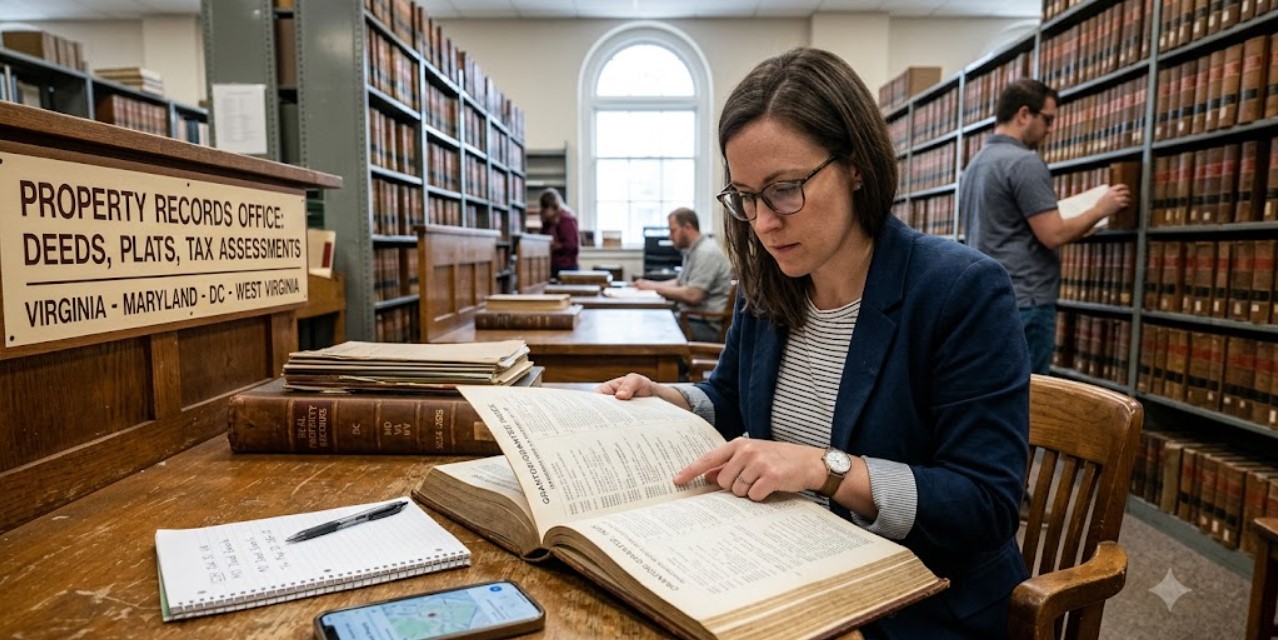
What You May and May Not Do With This
Looking up a property owner is entirely legal. These are public records, deliberately so, because a functioning property market depends on being able to establish who owns what. Nobody is doing anything wrong by searching.
What you do afterwards is a different question, and it is where people get themselves into trouble.
The line, in practice: a single polite letter asking whether someone would consider selling is ordinary and lawful. Repeated unwanted contact after being told to stop is harassment, and the fact that you obtained the address legally is no defence at all. Marketing contact also runs into rules on unsolicited calls and texts that have nothing to do with property records. If you are doing this at any scale, get advice before you start rather than after.
We are agents, not lawyers, and none of this is legal advice. If your reason for searching involves a dispute, a boundary, an estate, or anything you might one day have to explain to a judge, talk to an attorney in the relevant jurisdiction first.
Using This to Buy Off-Market
The most common honest reason for this search: you want a house that is not for sale.
It works, occasionally. It is also the reason those records exist in a form you can reach. But be realistic about the odds and the etiquette.
- Most owners are not selling, and a letter will not change that. You are playing a numbers game or a very specific one.
- One letter, well written, beats ten. Say who you are, that you like their house specifically, and that you will not contact them again unless they want you to. Then honour that.
- Expect to pay for the privilege. Off-market rarely means cheap. An owner who was not selling has no reason to accept a discount, and you have removed their competition, not yours.
- You lose the comparison. No listing means no other buyers, but also no market test of the price. That cuts both ways and mostly against you.
- Check the record for a reason it is quiet. An estate mid-administration, a recent transfer into a trust, or a lien can all explain why a house sits untouched, and each one changes how you should approach it.
If the record shows the property recently passed through an estate, that is a genuinely different transaction with its own timelines and its own emotional weight. Our guide to selling an inherited house explains what the other side is dealing with, which is useful to understand before you post a letter.
Looking Up Your Own Home
The use case that makes us the most money for our clients, and the one nobody thinks of.
Before you list, pull your own record. Ten minutes, free, and it tells you what a buyer's agent is going to find before they find it.
- Is every owner on the deed the person you think? An ex-spouse, a deceased parent, or an adult child added years ago for estate planning is a seller too, and finding that out at settlement is a bad day.
- What liens are recorded? Including the HELOC you never drew on, a solar loan, or an old judgment.
- Does the permit history match the house? A finished basement with no permit on record is a conversation you want to have on your terms.
- Is the assessment wildly off? It is not market value, but a buyer will look at it anyway and form an opinion.
- Is the recorded square footage right? If the record undersells your house, that is worth fixing before an appraiser leans on it.
Unpermitted work is the one that most often surfaces late and costs the most, and it is sitting right there in the public record for anyone to find. Our guide to selling a house with unpermitted work covers what happens when a buyer's inspector spots what the county never approved.
And once you know what the record says, the next question is what the house is actually worth to you. Our walkthrough of how much equity you really have covers why the number on a website is not the number in your pocket.
Seller Savings Calculator
How much more do you keep with our 1.5% listing fee?
Select your home's estimated value to see your net proceeds, side by side.
At a 3% Listing Fee
Our Fee, Only 1.5%
Extra in your pocket
$6,000
Compared with a 3% listing fee, with no reduction in service or marketing.
At a 3% Listing Fee
Our Fee, Only 1.5%
Extra in your pocket
$8,250
Compared with a 3% listing fee, with no reduction in service or marketing.
At a 3% Listing Fee
Our Fee, Only 1.5%
Extra in your pocket
$10,500
Compared with a 3% listing fee, with no reduction in service or marketing.
At a 3% Listing Fee
Our Fee, Only 1.5%
Extra in your pocket
$12,750
Compared with a 3% listing fee, with no reduction in service or marketing.
At a 3% Listing Fee
Our Fee, Only 1.5%
Extra in your pocket
$16,500
Compared with a 3% listing fee, with no reduction in service or marketing.
The Bottom Line
Who owns a property is public information in Virginia, Maryland, D.C. and West Virginia, and in three of those four you can have the answer in about two minutes for free. Maryland gives you one statewide search across all 24 jurisdictions. D.C. gives you one database for the whole District. West Virginia gives you all 55 counties and, uniquely here, a search by owner name.
Virginia gives you 133 separate jurisdictions, no central portal, and a subscription wall on the deeds. Establish the jurisdiction first or you will waste an evening.
And whichever one you are in, the honest ceiling is the same. The assessment names the owner. The deed proves it. And if the name is an LLC, the registry will hand you a registered agent who is not the owner, because members are not public record. The most productive move at that point is the one almost nobody makes: read the signature block on the deed.
If your search is really about a property you want, or one you own and are thinking about selling, that is what we do. Our guides to communities across Northern Virginia lay the markets out side by side.
And whichever one you land in, the number that matters is not the price, it is what survives the transaction. Our seller net sheet shows what any sale would actually put in your pocket once every cost has come out.
When you are ready, our Sell My Home page lays out exactly how a 1.5% full-service listing works.
Explore the Region
Looking Up a Property in One of These?
Frequently Asked Questions
How do I find out who owns a property?
Start with the tax assessment record for the jurisdiction the property sits in, which names the owner and is free. In Maryland use the SDAT Real Property Data Search, in D.C. the Office of Tax and Revenue's Real Property Tax Database, and in West Virginia the WV Real Estate Assessment portal at mapwv.gov. Virginia has no statewide portal, so you must identify the county or independent city first and use its own assessment search. If you need proof rather than a name, pull the recorded deed.
Is it legal to look up who owns a property?
Yes. Property ownership is public record in Virginia, Maryland, D.C. and West Virginia, deliberately so, because a functioning property market depends on being able to establish who owns what. Searching is lawful and free in most cases. What you do afterwards is a separate matter: a single polite enquiry is ordinary, while repeated unwanted contact after being asked to stop is harassment, and obtaining the address legally is no defence.
Can I find out who owns a property for free?
In most cases yes. Maryland's SDAT search, D.C.'s OTR database and West Virginia's mapwv.gov portal are all free and need no account. Maryland's deed archive at mdlandrec.net is free but requires you to register. Virginia is the exception: the county and city assessment searches are free, but many Circuit Court Clerks put land records behind a paid Secure Remote Access subscription, though courthouse public terminals remain free.
Does Virginia have a statewide property records search?
No. Virginia has no statewide property records portal. Deeds, mortgages and assessment records are managed separately by each county and by each independent city acting as a county equivalent, and Virginia has more independent cities than any other state. There is no central system to publish from, so you must establish which of roughly 133 jurisdictions the property is in and go to that specific jurisdiction's website.
What is the SDAT Real Property Data Search?
It is Maryland's free statewide property lookup, run by the State Department of Assessments and Taxation, covering all 24 jurisdictions including Baltimore City. No account is needed. It returns the owner name, assessed value, legal description and property characteristics. Its main limitation is that you cannot search by owner name: you search by address, account number, or map and parcel reference, and the owner comes back as a result.
Why is my SDAT address search returning nothing?
Usually because you gave it too much. Leave out street directions such as N, S, E or W, and leave out suffixes such as Ave, St or Blvd. It also accepts an asterisk as a wildcard, so "301 Pr*" returns Preston, President and Pratt. If you leave the street number off entirely, it returns every property on that street, which is often more useful than a single hit.
Can I search property records by owner name?
It depends entirely on the jurisdiction. West Virginia's statewide portal supports owner name search directly, which makes it the most capable of the four. Maryland's SDAT does not: you must start from an address, account number or parcel reference. D.C. returns the owner's name and address from a property search. Virginia varies by county and city, since each runs its own system with its own capabilities.
How do I find who owns an LLC that owns a property?
Often you cannot, and most guides are misleading about this. Searching the state business registry will typically give you a registered agent, an organiser and a formation address, but a registered agent is not an owner and is frequently a paid commercial service. LLC members are generally not public record in any of these four jurisdictions. The most productive move is to read the recorded deed itself, since the signature block often names a human member or manager.
What is the difference between the assessment record and the deed?
The assessment record exists so the taxing authority knows who to bill. It gives you the owner name, assessed value and property characteristics instantly and free, but it lags behind reality and updates on the assessor's cycle. The deed is the legal instrument recording the transfer of title. It is current as of recording and gives you proof of ownership, the consideration paid, and any liens or restrictions. For a quick question use the assessment; for anything consequential use the deed.
Why does the assessment show the wrong owner?
Almost always because it is stale rather than wrong. A property can sell in March and the assessment record may still show the previous owner for months afterwards, because it updates on the assessor's schedule rather than at closing. The deed changed hands on day one. If a name looks out of date, check the land records, which reflect the transfer as soon as it is recorded.
Where are D.C. property records kept?
The Office of Tax and Revenue runs the Real Property Tax Database Search covering more than 200,000 parcels, returning property value, the owner's name and address, square footage and use code. MyTax.DC.gov holds bills and account detail, the Real Property Public Extract offers the data in bulk, and the Real Property Assessment Map lets you click a parcel instead of typing an address. For the land records themselves, deeds, many leases and easements, use the Recorder of Deeds.
How do I look up property ownership in West Virginia?
Use the WV Property Assessment portal at mapwv.gov, which covers all 55 counties in one interface. The WV Real Estate Assessment search supports owner name, street name, map number, parcel, sub-parcel, property class, tax class and land use, and the WV Property Viewer gives you the same data on a map. It is a joint project of the WV Property Tax Division and the WV GIS Technical Center, drawing on the statewide Integrated Assessment System. For deeds, go to the county clerk.
Can I find out how much someone paid for their house?
Usually, with caveats. The recorded deed generally states the consideration, and many assessment records show a sale price and date. But treat the figure carefully: transfers between family members, transfers into or out of trusts, and deeds recorded for zero or nominal consideration reflect no market value at all. A low recorded price often means a family transfer rather than a bargain.
Should I look up my own property before selling?
Yes, and very few sellers do. It takes ten minutes and shows you what a buyer's agent will find. Check that everyone named on the deed is who you expect, since an ex-spouse, a deceased parent or an adult child added for estate planning is legally a seller too. Check every recorded lien, including an undrawn HELOC. Check whether the permit history matches the house, because unpermitted work found late is expensive. Finding these on your own timetable is always cheaper than at settlement.
Glossary
SDAT: Maryland's Department of Assessments and Taxation. Runs the free statewide Real Property Data Search.
mdlandrec.net: Maryland's free digital land records archive. Free account required to view deeds.
OTR: D.C.'s Office of Tax and Revenue. Runs the Real Property Tax Database for 200,000-plus parcels.
mapwv.gov: West Virginia's statewide assessment portal. All 55 counties, and searchable by owner name.
Independent city: A Virginia city belonging to no county. Each one is its own recording jurisdiction.
Circuit Court Clerk: Who holds land records in Virginia. There is no statewide alternative.
Secure Remote Access: Subscription online access to Virginia land records. Courthouse terminals are free.
Registered agent: Who receives legal service for an entity. Not an owner, and often a paid service.
Consideration: The price stated on a deed. Meaningless on family or trust transfers.
Parcel ID: The assessor's unique reference for a property. More reliable than an address.
Ready to Make a Move?
List for 1.5%. Keep the Difference.
Whether you found a property you want or you are checking your own record before listing, we work across all four of these jurisdictions, for a 1.5% listing fee.
Explore More
Browse Every Corner of the DMV Market
Whether you're searching by budget, neighborhood, or buying situation, find exactly what you need below.
Virginia Homes by Budget
Washington DC Homes by Budget
Maryland Homes
Explore Fairfax County & Surrounding Northern Virginia
Ready to Make a Move?
Full-Service · No Tradeoffs
List for 1.5% & Keep More Equity
Professional photography, drone video, 3D tours, and expert negotiation, all included. On an $800K home, that's $12,000 more in your pocket vs. a 3% agent.
See the 1.5% Program →Need Speed or Certainty?
Get a No-Obligation Cash Offer
Skip the showings, skip the contingencies. If timing or condition matters more than top dollar, a cash offer may be the right fit. We'll walk you through every option.
Explore Cash Offers →
Categories
- All Blogs (1197)
- Aldie (3)
- Ashburn (6)
- Buyer Guide (8)
- Buying a home (2)
- Buying Strategies (30)
- festivals (1)
- General Blog (66)
- Leesburg (5)
- Market Intelligence (29)
- Market Updates (8)
- Notable Properties For Sale (29)
- Real Estate Tips, News, and More (378)
- Seller Guide (2)
- Seller Guides (60)
- Selling Your Home (504)
- Sterling (6)
- Top Realtors in Northern Virginia (58)
Recent Posts

Message Sent!
Thank you for reaching out. Arslan & Saad have received your details and will be in touch shortly.
Need immediate assistance? Call or text 703-782-4830.