Baltimore Real Estate Market Trends 2026: What Home Sellers Should Know
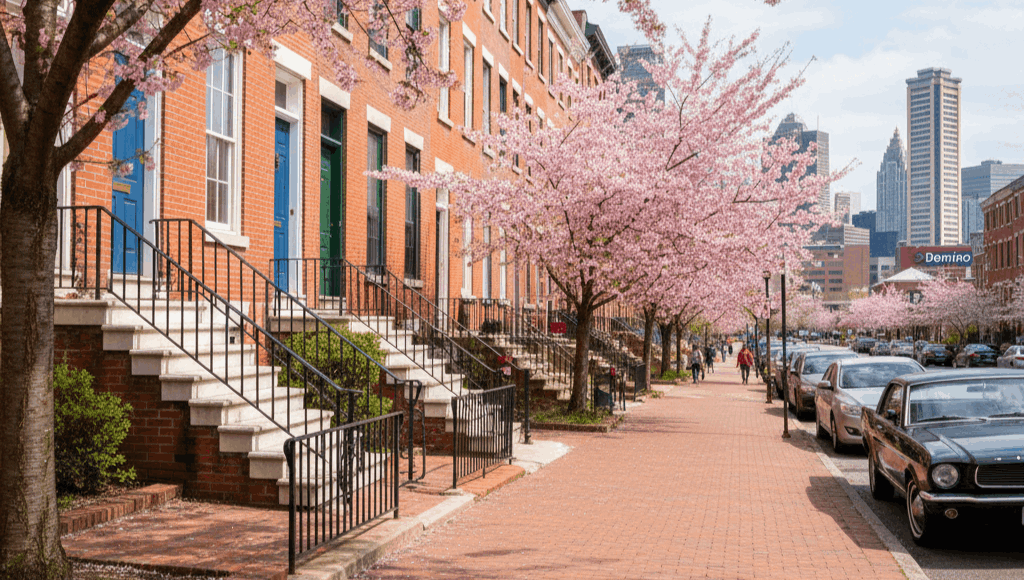
Baltimore’s housing market is moving into a more balanced phase in 2026. Home prices are still showing strength in many areas, but buyers have more choices and are taking additional time to compare condition, location, financing costs, and overall value. For sellers, this means strong results remain possible, but accurate pricing and thoughtful preparation matter more than they did during the intense market of 2021 and 2022.
Conditions can vary significantly across the Baltimore real estate market. A rowhome in Canton, a historic property in Federal Hill, a condo near the Inner Harbor, and a detached home in another part of the city may attract different buyers and sell at different speeds. Recent comparable sales, active competition, property condition, seasonal demand, and Baltimore-specific closing costs can all influence your outcome.
This 2026 guide examines the market trends Baltimore home sellers should understand before listing, including prices, inventory, mortgage rates, days on market, buyer behavior, and neighborhood-level differences. Begin with a professional home valuation to see how your property compares with current listings and recent sales across the broader Maryland real estate market
This guide breaks down everything Baltimore sellers need to know: current price data by neighborhood, closing cost specifics unique to the city, optimal listing windows, common pitfalls, and practical strategies to maximize your net proceeds in 2026.
Quick Answer
Baltimore home prices rose approximately 3.8% year-over-year as of January 2026, reaching a median sale price of $218,000 citywide. The market is balanced, with homes averaging 65 days on market and selling at roughly 99.7% of asking price. Sellers who list between late March and June and price strategically stand to capture the strongest returns. Closing costs in Baltimore City run higher than most Maryland jurisdictions due to the city's 1.5% local transfer tax and 1.72% property tax rate — so understanding your net proceeds before listing is essential.
Key Takeaways
- Median sale price: $218,000 citywide (January 2026), up 3.8% year-over-year
- Neighborhood gap: Prices range from under $100K in some West Baltimore areas to $450K+ in Federal Hill and Canton
- Days on market: 65 days average, up from 52 days last year — a shift toward balance
- Best listing window: Late March through June for highest prices; April for fastest sales
- Closing costs: Budget 3.75%–4% of sale price before commissions (Baltimore City has Maryland's highest combined transfer/recordation taxes)
- 2026 forecast: 2–4% price appreciation expected with no signs of a market crash
- Growth catalyst: Baltimore could attract 20,000+ new households over the next five years per a new Live Baltimore report
Table of Contents
- Baltimore Market Snapshot: Where Things Stand
- Neighborhood-by-Neighborhood Price Breakdown
- What's Driving Baltimore's Market in 2026
- Best Time to Sell a House in Baltimore
- Baltimore Seller Closing Costs Breakdown
- Preparing Your Baltimore Home for Sale
- Pricing Strategy in a Balanced Market
- Common Mistakes Baltimore Sellers Make
- What This Means for Sellers vs. Buyers
- Alternatives to a Traditional Sale
- FAQ
- Glossary
1. Baltimore Market Snapshot: Where Things Stand
Baltimore's real estate market in early 2026 looks fundamentally different from the frenzy of 2021–2022 and the stagnation fears of late 2023. The city has settled into a balanced rhythm where prices continue climbing modestly, inventory is growing but not overwhelming, and buyers are engaged but deliberate.
Key Numbers At-a-Glance: Baltimore City (January 2026)
| Median Sale Price | $218,000 |
| Year-over-Year Price Change | +3.8% |
| Average Days on Market | 65 days |
| Days on Market (Last Year) | 52 days |
| Homes Sold (Jan 2026) | 485 |
| Sale-to-List Price Ratio | ~99.7% |
| Average Offers Per Home | 2 |
| 2026 Price Forecast | +2% to +4% |
Sources: Redfin, Zillow, Houzeo — data as of January–February 2026. Figures are estimates and may vary by source.
What do these numbers actually tell you as a seller? Homes are still appreciating, but buyers have more leverage than they did two years ago. The average home receives about two offers and sells within nine to ten weeks. Properties that are priced right and show well still move faster — desirable homes in hot neighborhoods can go pending in under 30 days — but overpriced listings are sitting longer and facing price cuts.
The Baltimore metro area (including Baltimore County, Howard County, and surrounding suburbs) shows a higher median around $444,000 — reflecting the significant price gap between city and county properties. This spread is actually one of Baltimore City's strongest selling points: buyers priced out of $600K Howard County or $500K+ Baltimore County neighborhoods can find comparable quality of life in the city's top neighborhoods at a fraction of the cost.
Baltimore City Price Trend (Year-over-Year)
Estimated year-over-year median price change. Sources: Redfin, Norada Real Estate, Zillow.
2. Neighborhood-by-Neighborhood Price Breakdown
Baltimore's citywide median of $218,000 masks enormous variation. The gap between the city's highest-priced neighborhoods and its most affordable areas is among the widest of any major American city. This means your selling strategy, pricing approach, and expected timeline depend heavily on where your property sits.
| Neighborhood | Approx. Median | YoY Trend | Avg. DOM | Market Vibe |
|---|---|---|---|---|
| Federal Hill | $430K–$460K | +5–7% | 28–35 days | Strong seller market |
| Canton | $360K–$385K | -2–4% | 40–45 days | Cooling slightly |
| Locust Point | $400K–$430K | +3–5% | 30–38 days | Strong demand |
| Bolton Hill | $390K–$420K | +3–5% | 35–42 days | Steady, stable |
| Hampden | $330K–$365K | +3–4% | 32–40 days | Growing demand |
| Charles North / Station North | $250K–$340K | +6–8% | 35–45 days | Rising fast |
| Riverside / Pigtown | $200K–$280K | +4–6% | 38–48 days | Emerging hotspot |
| Belair-Edison | $140K–$190K | +5–8% | 40–55 days | Investor-active |
| Mount Vernon | $190K–$310K | Flat to +2% | 45–60 days | Condo-heavy, mixed |
| West Baltimore (various) | $40K–$110K | Varies widely | 70–120+ days | Buyer's market |
Data compiled from Redfin, Zillow, Live Baltimore, and local MLS reports. All figures are approximate ranges and subject to change. Individual property values vary based on condition, size, and specific location.
What the Neighborhood Gaps Mean for Sellers
If you own property in Federal Hill, Locust Point, or Hampden, you're selling in a micro-market that behaves very differently from the city average. These neighborhoods draw professionals, families, and move-up buyers who can afford $350K–$500K. Properties here tend to move within five to six weeks, and well-staged homes in spring can attract multiple offers.
Canton — long Baltimore's sales volume leader with 400+ transactions annually — is experiencing a minor correction. Prices dipped roughly 3–4% from their 2024 peak. This doesn't signal decline; it reflects a natural recalibration after years of very rapid appreciation. Canton sellers should price competitively and avoid the temptation to test the top of the range.
The most compelling story in 2026 may be the emerging neighborhoods. Charles North, Station North, Greenmount West, Riverside, and Washington Village/Pigtown are seeing accelerating price growth as arts-linked revitalization and infrastructure investment draw new residents. Sellers in these areas often benefit from positioning their property as an affordable alternative to the $400K+ neighborhoods just a mile or two away.
What's Your Baltimore Home Worth Right Now?
Neighborhood-level pricing matters. Get a complimentary home valuation based on current data in your specific area of Baltimore.
Get Your Free Home Value →3. What's Driving Baltimore's Market in 2026
Several macro and local forces are shaping what sellers can expect this year. Understanding which factors push prices up versus which create drag helps you time and position your sale effectively.
| Factors Pushing Prices Up ↑ | Factors Creating Drag ↓ |
|---|---|
| Mortgage rates easing toward 5.9%–6.3%, expanding buyer pool | Inventory growing 10–18% YoY, giving buyers more options |
| 20,000+ household growth projected over 5 years (Live Baltimore) | Baltimore City's 1.72% property tax rate — highest in Maryland — deters some buyers |
| Relative affordability vs. DC, Howard County, and other East Coast metros | Public safety concerns in certain neighborhoods affect perception |
| Diverse employment base (Johns Hopkins, healthcare, government, tech) | Condo market underperforming — first price drops since 2020 in some buildings |
| Neighborhood revitalization investments (Station North arts district, Port Covington) | Buyer caution due to elevated rates keeps some first-timers on sidelines |
| New investor surtax (SB 582) redirecting purchases toward individual buyers | Days on market rising (65 vs. 52 last year) — sellers need more patience |
The Affordability Advantage
Baltimore City's most powerful tailwind is affordability. The citywide median of $218,000 is roughly 48% below the national average. For context, Howard County's median hovers near $585,000 and Baltimore County sits around $363,000. Buyers who work in Baltimore, at Johns Hopkins, or at any of the city's major employers can afford a far more spacious home within city limits than in the surrounding counties.
Live Baltimore's data shows the city holds approximately 46% of the entire Baltimore region's available housing inventory, giving it a unique position as the metro area's affordable entry point. This dynamic benefits sellers, particularly in neighborhoods that combine walkability, transit access, and strong amenities.
The New Investor Surtax
Senate Bill 582, effective July 2025, increased the state transfer tax from 0.5% to 1.5% for single-family home sales to institutional investors (entities owning 120+ properties or $12M+ in assessed value). A separate excise tax and penalty structure targets large investment funds. The practical effect for everyday sellers: your buyer pool is now slightly more weighted toward individual owner-occupant buyers, which can mean cleaner offers and fewer competing investors in neighborhoods like Belair-Edison and Pigtown where investors have historically been active.
4. Best Time to Sell a House in Baltimore
Timing your Baltimore home sale correctly can mean the difference between selling above asking in four weeks and sitting on the market for three months with a price cut. Baltimore follows the same seasonal patterns as most Mid-Atlantic markets, but with local nuances worth understanding.
Baltimore Selling Season Timeline
Preparation Window
Complete repairs, stage, and photograph. Serious buyers start searching. Early listings face less competition.
Peak Selling Season ★
Highest prices, fastest sales. April averages 43 days to close statewide. May–June deliver prices 3–5% above annual averages.
Strong but Tapering
Families push to close before school. Activity dips mid-July as vacations interfere. Baltimore humidity reduces showing enthusiasm.
Moderate Activity
Fall mini-surge from buyers who missed spring. Fewer listings mean less competition. Prices stabilize.
Slowest Period
Fewest buyers. Holidays and cold weather depress activity. Listings sit longer. However, buyers in this window are highly motivated.
✓ Timing Decision Checklist
- ☐ Is my home listing-ready by mid-March? → Target April listing
- ☐ Do I need maximum price? → List late April through early June
- ☐ Do I need to sell fast regardless of price? → Consider a cash offer option
- ☐ Am I competing against many similar listings? → Off-peak months may reduce competition
- ☐ Is my property a condo? → Spring is even more important, as condo demand drops sharply in winter
- ☐ Do I need to buy simultaneously? → Plan your buyer strategy before listing
5. Baltimore Seller Closing Costs Breakdown
Closing costs in Baltimore City are among the highest in Maryland due to the city's unique tax structure. Understanding these costs before you list is critical for setting realistic expectations about your net proceeds.
| Cost Item | Rate / Amount | On a $300K Sale |
|---|---|---|
| State Transfer Tax (seller's half) | 0.25%* | $750 |
| Baltimore City Transfer Tax | 1.5% | $4,500 |
| Recordation Tax (seller's portion) | $5.00 per $500 (1%) | $1,500–$3,000** |
| Title Insurance / Settlement Fees | ~$1,500–$2,500 | $1,500–$2,500 |
| Prorated Property Taxes | 1.72% of assessed value (prorated) | Varies |
| Recording Fees | ~$100–$300 | $100–$300 |
| Estimated Total (before commissions) | $8,350–$11,050 | |
| + Agent Commissions (varies) | $4,500–$15,000+ |
*State transfer tax is typically split between buyer and seller, though negotiable. **Recordation tax split varies by negotiation. Amounts are estimates only. Consult a title company for exact figures. Yield Tax applies to transactions over $1M.
Why Baltimore City Costs More Than the Suburbs
Baltimore City's 1.5% local transfer tax is the highest in Maryland (tied with Baltimore County). Combined with the state's 0.5% transfer tax and the recordation tax of $5 per $500, the total recording tax burden on a typical Baltimore City transaction can reach approximately 3.5%–3.75% of the sale price — and up to 3.75% on transactions exceeding $1 million due to the yield tax surcharge.
The city also carries Maryland's highest property tax rate at $2.248 per $100 of assessed value (approximately 1.72% effective rate). While sellers pay prorated property taxes through their closing date, this rate affects buyer demand — some purchasers factor in the ongoing tax burden when deciding how much to offer.
Closing Cost Comparison: Baltimore City vs. Nearby Jurisdictions
Approximate combined transfer + recordation taxes as a percentage of sale price. Does not include commissions, title fees, or prorated property taxes.
Know Your Numbers Before You List
Baltimore's higher closing costs make understanding your net proceeds essential. Use our free seller net sheet calculator to see what you'll actually walk away with.
Calculate Your Net Proceeds →6. Preparing Your Baltimore Home for Sale
In a balanced market, presentation separates the homes that sell in four weeks from those that linger for four months. Baltimore's housing stock — heavily rowhouse-based — presents specific preparation challenges and opportunities.
Rowhouse-Specific Preparation Tips
Baltimore's iconic rowhomes require a tailored approach. The typical rowhouse buyer is weighing your property against dozens of visually similar alternatives on the same block. Making yours stand out requires attention to details that buyers in this market particularly notice.
✓ Baltimore Home Preparation Checklist
- ☐ Curb appeal: Power-wash steps and facade (Formstone or brick). Paint the front door. Replace dated house numbers.
- ☐ Basement waterproofing: Baltimore's aging infrastructure means buyers inspect basements closely. Address moisture, disclose honestly.
- ☐ Roof certification: Get a roofer's inspection letter. Baltimore rowhouse roofs are often flat or low-slope — a known weak point.
- ☐ Kitchen and bath refresh: Full renovations aren't always necessary. New hardware, fresh grout, and modern lighting can shift buyer perception.
- ☐ Outdoor space: Maximize backyard or patio staging. Rowhome buyers prize any outdoor living area.
- ☐ Pest inspection: Get ahead of termite and rodent concerns. Proactive clearance letters build buyer confidence.
- ☐ Professional photography: Schedule on a sunny day. Bright interior photos are essential for narrow rowhouse floor plans.
- ☐ Parking documentation: If your property includes a pad, garage, or assigned permit zone, highlight this prominently — parking is a major differentiator.
Renovation ROI in Baltimore
Not every improvement pays for itself. In Baltimore's current market, the highest-return upgrades are those that address buyer concerns rather than add luxury.
| Improvement | Typical Cost | Estimated ROI |
|---|---|---|
| Basement waterproofing | $3,000–$8,000 | High — removes deal-killer |
| Kitchen refresh (cosmetic) | $3,000–$6,000 | 70–85% |
| Fresh interior paint (neutral) | $2,000–$4,000 | 100%+ |
| Roof replacement | $6,000–$12,000 | 50–65% (but prevents lost deals) |
| Full luxury kitchen gut reno | $25,000–$50,000 | 40–55% (often over-capitalized) |
ROI ranges are estimates based on Baltimore market conditions. Actual returns vary by neighborhood, property condition, and market timing.
7. Pricing Strategy in a Balanced Market
The most common mistake Baltimore sellers make in 2026 is pricing as if it's still 2022. With homes averaging 65 days on market and the sale-to-list ratio sitting at 99.7%, there's minimal room for aspirational pricing. Homes are selling essentially at asking price — not above it.
A data-driven comparative market analysis (CMA) is non-negotiable. Your pricing should be anchored to closed sales from the past 60–90 days in your specific neighborhood, not Zestimates or what your neighbor told you they turned down last year.
| Strategy | Pros | Cons |
|---|---|---|
| Price at market value | Attracts serious buyers quickly. Multiple offers possible in hot neighborhoods. | Requires accurate comp analysis. May leave money on table in spring surge. |
| Price 2–3% above comps | Room to negotiate. May work in Federal Hill, Locust Point during peak season. | Risk of going stale. Overpriced homes in Canton and Hampden sit 60+ days. |
| Price 2–3% below comps | Creates urgency. Can trigger bidding wars. Fastest time to contract. | Only works when inventory is tight. Risky in buyer-favorable neighborhoods. |
Sell Your Baltimore Home for a 1.5% Listing Fee
Get full-service representation — professional marketing, expert negotiation, and complete support — at a 1.5% listing fee instead of the traditional 2.5–3%. On a $350,000 sale, that's over $3,500 saved.
Learn About the 1.5% Listing Fee →8. Common Mistakes Baltimore Sellers Make
Even in a favorable market, certain errors consistently cost Baltimore sellers money and time. Here are the ones agents in this market see most often.
⚠ Top Seller Mistakes in Baltimore
1. Pricing based on the metro median, not the city median. Baltimore City's $218K median is vastly different from the $444K Baltimore-Columbia-Towson metro median. Using the wrong data set leads to drastic overpricing — or underpricing in premium neighborhoods.
2. Ignoring Baltimore-specific closing costs. Sellers who budget 2% for closing costs (a national rough average) are shocked to discover Baltimore City's taxes alone can exceed 3.5%. Run the numbers with a seller net sheet before setting your price.
3. Neglecting basement and roof issues. Baltimore's rowhouse construction means these two areas are the most common deal-killers. Buyers who see moisture in a basement or a questionable flat roof will either walk or demand steep concessions.
4. Listing during the holidays. November through January is Baltimore's slowest market. Unless you must sell, waiting for late March can net you a significantly higher price with fewer days on market.
5. Underestimating neighborhood perception gaps. A property on the "right" side of a neighborhood boundary — even one block — can mean a $50K+ difference in perceived value. Work with an agent who understands Baltimore's micro-market geography.
6. Skipping professional photography. Baltimore's rowhouse inventory is visually repetitive. Professional photos (especially of interior light, outdoor space, and any unique architectural details) are what stop a buyer from scrolling past your listing.
9. What This Means for Sellers vs. Buyers
| If You're Selling | If You're Buying |
|---|---|
| Prices are still rising 2–4%, so you're selling into an appreciating market — no need to panic | More inventory gives you negotiating room that didn't exist in 2022 |
| Days on market are rising — be realistic about timelines (plan 60–90 days) | Rates projected to dip toward 5.9% could expand your buying power mid-year |
| Overpricing in a balanced market leads to stale listings and eventual price cuts | Baltimore City remains 48% below the national median — strong value play |
| Spring (April–June) remains your strongest selling window — prepare in winter | Off-peak months (fall, winter) give you leverage for better concessions |
| Budget 3.5–4%+ in closing costs specific to Baltimore City — higher than most Maryland jurisdictions | First-time buyers get a 50% state transfer tax reduction — ask your agent |
If you're both selling and buying, the timing dance becomes more complex. Coordinating a sale in spring with a purchase in the same market requires careful planning around contingencies, bridge financing, and offer strength. Having a clear buyer strategy mapped out before you list your current home can prevent costly gaps.
Buying After You Sell? Plan Your Next Move
Coordinate your sale and purchase with a clear strategy. We'll help you navigate timing, bridge gaps, and avoid contingency complications.
Get Your Buyer Strategy →10. Alternatives to a Traditional Sale
A traditional MLS listing isn't the only path. Depending on your timeline, property condition, and priorities, other options may make more sense.
| Option | Best For | Speed | Net Proceeds |
|---|---|---|---|
| Traditional MLS listing | Maximum price, time flexibility | 60–90 days | Highest |
| Full-service 1.5% listing | Same exposure, lower commission cost | 60–90 days | Highest (lower cost) |
| Cash offer / direct sale | Speed, certainty, as-is condition | 7–21 days | Lower (typically 70–85% of market) |
| FSBO (For Sale By Owner) | Experienced sellers, simple transactions | Unpredictable | Varies widely |
| Rent-then-sell | Waiting for better conditions or building equity | 12+ months | Depends on market |
For sellers who need speed or have properties in as-is condition, exploring a cash offer option can eliminate the uncertainty of a traditional sale. You'll typically receive less than full market value, but the trade-off is speed, certainty, and zero repair costs.
Frequently Asked Questions
Is the Baltimore housing market going to crash in 2026?
No, a crash is highly unlikely based on current indicators. Baltimore's market shows stable, modest price growth of 2–4% with balanced supply and demand. The city's affordability relative to the region, diversified employment base, and gradual inventory expansion all point toward continued stability rather than a downturn.
What is the best month to sell a house in Baltimore?
For maximum price, May and June historically deliver 3–5% above annual averages. For the fastest sale, April typically has the shortest days-on-market in Maryland, averaging about 43 days to close. If you're targeting both speed and price, listing in late April offers the best combination.
How much are closing costs for sellers in Baltimore City?
Baltimore City sellers should budget approximately 3.5–4% of the sale price in closing costs before agent commissions. This includes the city's 1.5% transfer tax, the state's 0.5% transfer tax (typically split), recordation taxes, title fees, and prorated property taxes. For transactions over $1 million, the yield tax adds further cost. Use our seller net sheet calculator for a personalized estimate.
Why are Baltimore City property taxes so high?
Baltimore City operates as an independent city (not part of Baltimore County), meaning it funds all city and county-level services through a single property tax levy. The effective rate of approximately 1.72% is the highest in Maryland. City officials have periodically discussed reductions, but the rate remains a significant factor in buyer decisions and overall housing affordability.
Are condos a good sell in Baltimore right now?
Condos are underperforming relative to single-family and rowhouse properties. Some Baltimore condo markets have seen their first price declines since 2020. If you're selling a condo, expect longer days on market (especially in Mount Vernon and downtown buildings), and price competitively. Spring timing is even more important for condos, as demand drops sharply in winter months.
Which Baltimore neighborhoods are appreciating the fastest?
As of early 2026, the fastest appreciation is occurring in revitalizing neighborhoods like Station North, Charles North/Greenmount West, Riverside, and Washington Village/Pigtown — areas seeing 5–8%+ annual gains. Established premium neighborhoods like Federal Hill and Locust Point continue steady 3–7% growth. Canton, while still a high-value area, has experienced a slight price correction of 2–4% from its 2024 peak.
What will mortgage rates do in Baltimore in 2026?
While mortgage rates are national (not Baltimore-specific), forecasts project 30-year fixed rates averaging between 5.9% and 6.3% through 2026, with possible dips below 6% if inflation continues cooling. Fannie Mae projects rates ending the year around 5.9%. For sellers, this potential easing could expand the buyer pool, particularly in the spring and summer selling windows.
How do I choose the best real estate agent to sell my home in Baltimore?
Look for an agent with deep knowledge of Baltimore's micro-markets — someone who can explain the pricing differences between Canton and Hampden, or between Federal Hill and Pigtown, with recent closed sale data. Key criteria include: volume of recent Baltimore City transactions, familiarity with rowhouse-specific issues (basements, roofing, parking), transparent commission structure, professional marketing capabilities (photography, staging advice, online exposure), and strong negotiation track record. Jamil Brothers Realty Group, for example, offers a full-service 1.5% listing fee model backed by $500M+ in career sales across the Maryland market.
How does Baltimore's market compare to nearby DC and suburban Maryland?
Baltimore City's median of $218,000 is dramatically lower than Montgomery County (~$618,000), Howard County (~$585,000), and the D.C. metro average. This price gap is Baltimore's competitive advantage: buyers get significantly more home for their money. Many first-time buyers and remote workers are choosing Baltimore over the D.C. suburbs, contributing to the city's projected 20,000+ household growth over five years.
What is Baltimore's yield tax and does it affect my sale?
Baltimore City's yield tax is a surcharge that applies only to real estate transactions exceeding $1 million. It adds 15% of the recordation tax collected and 40% of the Baltimore City transfer tax collected. If your property is selling for under $1 million, the yield tax does not apply. For luxury property sellers, this tax represents an additional cost that should be factored into your pricing and net proceeds calculations.
Should I sell my Baltimore home now or wait until 2027?
If your home is in a desirable neighborhood and you can list during the spring 2026 window, conditions are favorable. Prices are appreciating, mortgage rates are projected to ease (potentially expanding the buyer pool), and Baltimore's affordability advantage continues to attract regional buyers. Waiting until 2027 isn't necessarily a bad strategy — forecasts show continued modest growth — but there's no data suggesting dramatically better conditions are coming. The best time to sell is when your personal circumstances and the seasonal market align.
Glossary
Days on Market (DOM): The number of days between when a property is listed for sale and when it goes under contract. Lower DOM indicates higher buyer demand.
Sale-to-List Price Ratio: The final sale price divided by the original listing price, expressed as a percentage. A ratio of 100% means homes sell at exactly asking price. Above 100% indicates a seller's market.
Transfer Tax: A state and/or local tax charged when property ownership changes hands. In Baltimore City, the combined city (1.5%) and state (0.5%) transfer tax totals 2% of the sale price.
Recordation Tax: A Maryland tax on the recording of deeds and mortgages. Baltimore City's rate is $5.00 per $500 of consideration (effectively 1%).
Yield Tax: A Baltimore City surcharge on real estate transactions exceeding $1 million, adding 15% to the recordation tax and 40% to the city transfer tax collected. Funds go to the Affordable Housing Trust Fund.
Comparative Market Analysis (CMA): An evaluation of recently sold properties similar to yours in location, size, and condition, used to determine an appropriate listing price.
Months of Supply: The number of months it would take to sell all current inventory at the current pace of sales. Under 5 months favors sellers; over 6 months favors buyers. Baltimore City currently has approximately 1.5–2 months of supply.
Senate Bill 582 (SB 582): Maryland legislation effective July 2025 that increased the state transfer tax to 1.5% for single-family home purchases by institutional real estate investors, plus added a new excise tax and per-unit penalty for large investment entities.
Ready to Sell Your Baltimore Home?
Start with a complimentary home valuation, review your estimated net proceeds, and explore how our 1.5% full-service listing fee can save you thousands without sacrificing marketing, negotiation, or support.
The Bottom Line
Baltimore's 2026 housing market rewards sellers who do their homework. Prices are rising, but the days of listing high and letting the market come to you are over. Neighborhood-level pricing, seasonal timing, proper preparation, and a clear understanding of Baltimore City's unique closing cost structure are what separate a smooth, profitable sale from a frustrating one.
The city's long-term trajectory is encouraging. With projected household growth, improving affordability relative to surrounding markets, and continued infrastructure investment, Baltimore sellers are positioned well — particularly in the premium and emerging neighborhoods that are drawing new residents from across the region.
Whether you're selling a $450,000 Federal Hill townhome or a $180,000 rowhome in an emerging neighborhood, the fundamentals are the same: price based on data, list in the right window, present your home at its best, and work with someone who understands Baltimore's block-by-block market dynamics.
Explore available Baltimore-area homes for sale to see what's currently on the market in your neighborhood.
Disclaimer: This article is for informational purposes only and does not constitute legal, tax, or financial advice. Market data referenced is sourced from Redfin, Zillow, Houzeo, Live Baltimore, Baltimore City Department of Finance, and Maryland REALTORS® as of early 2026. Figures are estimates and may vary. Consult a licensed real estate professional for guidance specific to your situation.
Categories
- All Blogs (1227)
- Aldie (3)
- Ashburn (6)
- Buyer Guide (8)
- Buying a home (2)
- Buying Strategies (30)
- festivals (1)
- General Blog (67)
- Leesburg (5)
- Market Intelligence (29)
- Market Updates (8)
- Notable Properties For Sale (32)
- Real Estate Tips, News, and More (385)
- Seller Guide (2)
- Seller Guides (60)
- Selling Your Home (522)
- Sterling (6)
- Top Realtors in Northern Virginia (58)
Recent Posts
Message Sent!
Thank you for reaching out. Arslan & Saad have received your details and will be in touch shortly.
Need immediate assistance? Call or text 703-782-4830.