
Selling a Home in Vienna, VA: The Complete Neighborhood Market Guide
Selling a Home in Vienna, VA: The Complete Neighborhood Market Guide
Updated February 2026 · 18-minute read · Selling Your Home
Vienna, Virginia, is one of Northern Virginia's most sought-after towns — and selling a home here is a completely different experience than listing in most other markets. Median sale prices hover near $1.2 million, school ratings routinely rank among the state's highest, and buyer demand stays resilient even when national headlines suggest otherwise.
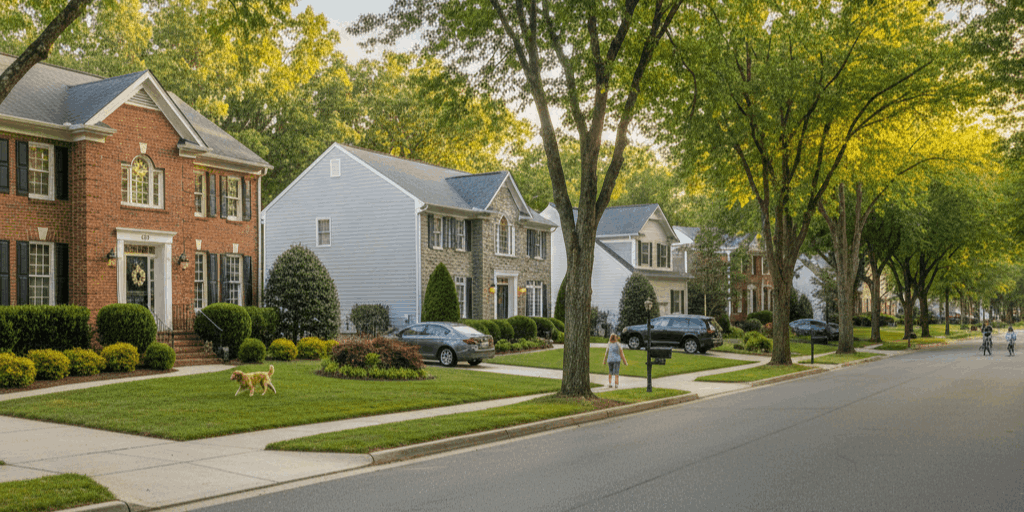
But "desirable" doesn't guarantee "easy." Pricing a Vienna home correctly, understanding which neighborhood drives premiums, timing your listing around seasonal demand, and accounting for Northern Virginia's layered closing costs all take strategic planning. Missteps on any one of those fronts can cost you tens of thousands of dollars in net proceeds.
This guide covers every variable Vienna sellers face — neighborhood by neighborhood, cost by cost, step by step — so you can make informed decisions and walk away with the strongest possible outcome.
Quick Answer
Selling a home in Vienna, VA, in 2026 means navigating a market where median prices sit around $1.2 million, homes average roughly 40–60 days on market depending on property type and season, and total seller costs — including commissions and closing fees — typically run 7% to 9% of the sale price. Strategic pricing, school-zone awareness, and pre-listing prep are the biggest levers you can pull to maximize your net proceeds.
Key Takeaways
- Vienna's median sold price is approximately $1.2M, though individual ZIP codes range widely — from just over $1M in 22181 to $1.3M+ in 22182.
- School assignments (Fairfax County Public Schools) directly influence pricing. Homes zoned for top-rated elementaries can carry a 5–10% premium.
- Seller closing costs in Northern Virginia — including the regional grantor's tax — typically total 3% to 3.5% of the sale price before commission.
- Spring (March–May) consistently produces the highest sale-to-list ratios, but fall offers less competition from other sellers.
- Flexible commission structures, including 1.5% full-service listing fee options, can save Vienna sellers $10,000–$20,000+ on a typical sale.
- A seller net sheet is the single most useful tool for understanding what you'll actually take home.
Table of Contents
- Why Vienna Homes Command a Premium
- Vienna Market Snapshot: Current Numbers
- Neighborhood-by-Neighborhood Pricing Guide
- How Schools Affect Your Home's Value
- Best Time to Sell in Vienna
- Pricing Your Vienna Home Correctly
- Pre-Listing Preparation Checklist
- Closing Costs and Commission in Northern Virginia
- Step-by-Step Selling Timeline
- Common Mistakes Vienna Sellers Make
- Alternatives to a Traditional Sale
- Frequently Asked Questions
- Glossary of Key Terms
1. Why Vienna Homes Command a Premium
Before you plan your sale, it helps to understand why buyers pay more for a Vienna address. This isn't just civic pride — these are the factors that directly support your home's value and give you leverage in negotiations.
Location and commute access. Vienna sits roughly 15 miles west of Washington, D.C., along the I-66 corridor. The Vienna/Fairfax-GMU Metro station offers Orange Line access straight into the District. Tysons Corner — one of the largest employment centers on the East Coast — is a five-to-ten minute drive. For federal employees, contractors, and tech workers, this combination of Metro access and highway proximity is hard to beat.
School quality. Fairfax County Public Schools is consistently ranked among the top public school systems in the country, and Vienna's attendance zones include nationally recognized schools like James Madison High School, Oakton High School, and Louise Archer Elementary. School quality is one of the single strongest predictors of home value appreciation in suburban markets — and Vienna benefits enormously from this dynamic.
Community character. Vienna retains a walkable, small-town identity that's increasingly rare this close to a major metro. Church Street's local shops, the year-round Farmers' Market, Viva! Vienna festival, and the W&OD Trail system create lifestyle value that isn't easily replicated in neighboring areas like Fairfax or Reston.
Vienna's Core Value Drivers for Sellers
| Factor | Why It Matters to Buyers | Impact on Price |
|---|---|---|
| Metro access (Orange Line) | Direct commute to D.C. without driving | High |
| Tysons Corner proximity | Major employers within 10 min | High |
| FCPS school ratings | Top-rated K–12 options | Very High |
| Walkable downtown | Lifestyle amenities, character | Moderate |
| W&OD Trail / parks | Recreation, outdoor living | Moderate |
| 83% owner-occupancy rate | Stable, invested community | Moderate |
High owner-occupancy. Roughly 83% of Vienna households are owner-occupied. That signals a stable, invested community — and it reassures buyers that the neighborhood will maintain its character and value over time.
All of these factors create a floor under Vienna home prices that insulates the market from the kind of deep corrections you might see in less anchored suburban markets. For sellers, it means you're likely working from a position of strength — but it doesn't eliminate the need for strategy.
2. Vienna Market Snapshot: Current Numbers
Understanding the current state of the market is the foundation of every good pricing and timing decision. Here's where Vienna stands as of the most recent available data.
Key Numbers At-a-Glance
~$1.2M
Median Sold Price
40–60
Average Days on Market
+1% to +4%
YoY Price Change (varies by ZIP)
Low 6%
Prevailing Mortgage Rate
The Vienna market in late 2025 and into early 2026 has shifted from the frenzied, sub-30-day pace of previous years to a more measured environment. Homes still sell — and sell well — but buyers have more breathing room than they did during the bidding-war era. Days on market have stretched to the 40–60 range depending on price point and season, up from 20–35 days just a year or two earlier.
That said, this isn't a "cooling" market in the way national headlines might suggest. Demand remains durable because Vienna's core drivers — schools, jobs, location — haven't changed. What has changed is the urgency. Mortgage rates in the low-to-mid sixes have priced out some marginal buyers, which means fewer bidding wars but not fewer qualified buyers.
Pricing by ZIP Code
Vienna spans three primary ZIP codes, and each behaves differently. Treating all of Vienna as one market is a pricing mistake that costs sellers real money.
| ZIP Code | Approx. Median Price | YoY Trend | Notes |
|---|---|---|---|
| 22180 | ~$1.0M–$1.05M | Up ~8–10% | Strongest appreciation; core Vienna Woods area |
| 22181 | ~$1.0M | Flat to slight dip | Mixed signals; opportunity for value buyers |
| 22182 | ~$1.3M+ | Up ~4–8% | Premium area near Tysons; luxury skews averages |
Note: Figures are approximate ranges based on multiple data sources. Actual sold prices vary by property type, condition, and lot size. Request a comparative market analysis for home-specific pricing.
Days on Market: Then vs. Now
Spring 2024 (peak pace)
Fall 2025 (current pace)
Condos / Townhouses (faster segment)
The takeaway for sellers: a well-priced Vienna home still moves, but the margin for overpricing is thinner than it was. Homes that sit become stale quickly in a market where buyers have options.
What will you actually net from your Vienna home sale?
Knowing your likely sale price is only half the equation. Commissions, taxes, and closing fees all reduce your take-home. Get a clear picture before you list.
3. Neighborhood-by-Neighborhood Pricing Guide
Vienna is not one market — it's a collection of distinct neighborhoods, each with its own character, price range, and buyer profile. Understanding where your home sits in this landscape is critical for accurate pricing and effective marketing.
Wolf Trap
One of Vienna's most prestigious addresses. Large lots, mature trees, proximity to Wolf Trap National Park for the Performing Arts, and access to top-rated Wolftrap Elementary. Homes here routinely trade between $900,000 and well over $2 million depending on lot size and whether the home has been renovated. Buyers in this neighborhood are often move-up purchasers looking for long-term family homes.
Westwood Country Club
Custom-built estates with access to a private golf course, clubhouse, and tennis facilities. This is one of Vienna's most exclusive enclaves, with home values typically starting around $1.5M and reaching $3M+. Marketing strategy here requires luxury positioning — professional staging, cinematic photography, and targeted reach to high-net-worth buyers.
Vienna Woods
One of the most active neighborhoods for transactions. The mix of original mid-century homes and tear-down-to-new-construction makes pricing complex. A well-maintained 1960s rambler might sell for $750K–$900K, while a newly built colonial on the same street could fetch $1.4M+. Proximity to Cunningham Park and the W&OD Trail adds lifestyle appeal.
Maple Avenue Corridor
The walkability corridor. Homes within a short walk of Church Street shops, restaurants, and the Vienna Farmers' Market carry a premium with buyers who prioritize walkable living. Property types range from townhouses to updated colonials.
East Vienna / Tysons Edge
Properties on the eastern side of Vienna benefit from quick access to I-495, Tysons Corner, and the Silver Line Metro. Larger lots are common here. Buyers are often dual-income professionals who want suburban space without a long commute.
Westbriar / Southwest Vienna
Family-friendly with strong school assignments, Metro proximity, and a quiet residential feel. Home values tend to be in the $850K–$1.3M range. Westbriar Elementary consistently earns strong reviews and adds to the area's appeal for families relocating to the region.
| Neighborhood | Price Range | Top Buyer Segment | Key Selling Point |
|---|---|---|---|
| Wolf Trap | $900K–$2M+ | Move-up families | Large lots, top elementary |
| Westwood CC | $1.5M–$3M+ | Luxury / executives | Golf course, exclusivity |
| Vienna Woods | $750K–$1.4M+ | Families, new-build buyers | Active market, trail access |
| Maple Ave Corridor | $700K–$1.3M | Walkability seekers | Downtown shops & dining |
| East Vienna | $900K–$1.5M+ | Commuter professionals | Tysons & Beltway access |
| Westbriar / SW Vienna | $850K–$1.3M | Young families | Strong schools, Metro nearby |
If you're curious about current listings in these neighborhoods, browse active Vienna homes for sale to see how comparable properties are positioning themselves.
4. How Schools Affect Your Home's Value
In Vienna — arguably more than in most Northern Virginia communities — school assignments are a central driver of home pricing. This isn't anecdotal; multiple studies have shown that proximity to highly rated schools can add a measurable premium to home values, often in the range of 5% to 10%.
Vienna is served by Fairfax County Public Schools (FCPS), which is the largest school system in Virginia and one of the largest in the country. Within Vienna, the specific schools your home is zoned for depend on your exact address.
Key Vienna-Area Schools (Selected)
| School | Level | GreatSchools / Niche | Pricing Impact |
|---|---|---|---|
| Louise Archer Elementary | Elementary | A / 8+ | Strong premium |
| Wolftrap Elementary | Elementary | A / 7+ | Notable premium |
| Westbriar Elementary | Elementary | A / 7+ | Notable premium |
| James Madison High School | High School | A / Top 25 in VA | Strong premium |
| Oakton High School | High School | A / Top 25 in VA | Strong premium |
Ratings are approximate and subject to annual updates. Always verify your home's specific school assignments via the FCPS boundary locator before marketing.
How to Use School Data in Your Listing
If your home is zoned for a top-rated school, highlight it early in the listing description. Many buyers searching in Vienna are doing so specifically for the schools, and search portals often let buyers filter by school boundaries.
A practical tip: work with your agent to confirm exact school assignments before going to market. Boundary lines can be surprising — two homes on the same street can feed into different schools. Getting this wrong in your marketing creates trust issues with buyers and agents.
5. Best Time to Sell in Vienna
Timing matters — but it's more nuanced than simply saying "sell in spring." Here's how seasonal dynamics play out specifically in the Vienna market.
| Season | Buyer Activity | Seller Competition | Typical Sale-to-List Ratio |
|---|---|---|---|
| Spring (Mar–May) | Highest | Highest | 99–102% |
| Summer (Jun–Aug) | High (families before school) | Moderate | 98–100% |
| Fall (Sep–Nov) | Moderate | Lower | 97–99% |
| Winter (Dec–Feb) | Lowest | Lowest | 95–98% |
Spring delivers the highest buyer volume and typically the highest prices, but you're also competing with the most listings. Fall is underrated — you face less competition, and buyers who are active in September through November are often more motivated (relocation deadlines, end-of-year timelines).
A critical Vienna-specific factor: families with school-age children often want to close by mid-summer so their kids start the school year settled. If your home's biggest selling point is its school assignment, listing by late March or early April captures this audience at peak motivation.
Optimal Listing Timeline for School-Driven Buyers
Jan–Feb
Prep & stage
Mar–Apr
List & market
Apr–May
Under contract
Jun–Jul
Close & settle
6. Pricing Your Vienna Home Correctly
In a market where the gap between ZIP codes can be $200K+, accurate pricing is more important than aggressive pricing. Here's a framework for getting it right.
Start with a Comparative Market Analysis (CMA)
Online home value estimates (Zillow's Zestimate, Redfin estimates) are useful starting points, but they're often inaccurate in markets like Vienna where renovation quality, lot size, and school assignments create huge value differences between homes that look similar on paper. A proper CMA from a local agent accounts for these nuances.
You can request a free home evaluation to get a data-backed pricing estimate that goes beyond algorithm-driven guesses.
Pricing Strategies Compared
| Strategy | Pros | Cons |
|---|---|---|
| At Market Value | Draws serious buyers fast; strongest negotiating position | Requires accurate data and discipline |
| Slightly Below Market | Can trigger multiple offers; creates urgency | Risk of leaving money on the table if market doesn't respond |
| Above Market ("Testing") | Higher ceiling if a buyer bites | Often backfires; stale listings sell for less than properly priced ones |
Price Adjustments and the "Days on Market" Effect
In Vienna, the first two weeks on market generate the most buyer attention. If your home is overpriced and sits for 30+ days without serious interest, subsequent price drops often net you less than pricing accurately from day one would have. Buyer agents notice price reductions and use them as negotiation leverage.
This effect is amplified in higher price points. A $1.5M home that drops to $1.4M after 45 days will raise questions that a home priced at $1.4M from the start never faces.
Curious what your Vienna home could sell for?
Get a no-obligation home valuation based on current Vienna comps, your specific neighborhood, and your property's unique features.
7. Pre-Listing Preparation Checklist
Vienna buyers expect a certain standard, and the homes that sell fastest (and for the most money) tend to be the ones that show well from day one. Here's a practical checklist organized by priority.
High-Impact Pre-Listing Checklist
☐ Essential (Do These First)
- Deep clean the entire home, including windows, baseboards, and fixtures
- Declutter and depersonalize — remove family photos, excess furniture, collectibles
- Address deferred maintenance: fix leaky faucets, replace burned-out lights, patch drywall
- Professional photography (non-negotiable at Vienna price points)
☐ High ROI Upgrades
- Fresh neutral paint in main living areas
- Kitchen refresh (hardware, fixtures, backsplash) — not a full remodel
- Curb appeal: fresh mulch, trimmed landscaping, clean driveway, painted front door
- Professional staging (full or partial)
☐ Paperwork
- Gather HOA documents, covenants, and contact info (if applicable)
- Locate your original survey, permits for any additions, and warranty documents
- Verify school assignments via FCPS boundary locator
- Order a pre-listing home inspection (optional but increasingly common)
What About Major Renovations Before Selling?
This is one of the most common questions Vienna sellers ask. In general, full kitchen or bathroom remodels before selling rarely return 100% of their cost. The exception is if your home has a glaring deficiency — for example, an unrenovated kitchen in a neighborhood where every comparable sale has updated kitchens. In that case, even a moderate refresh can close a value gap.
The better approach for most sellers: invest in cosmetic updates and presentation rather than structural changes. A $5,000 investment in staging and professional photography typically generates a stronger return than a $30,000 kitchen remodel you won't fully recoup.
Estimated ROI on Pre-Sale Improvements
| Improvement | Typical Cost | Estimated ROI |
|---|---|---|
| Professional staging | $2,500–$6,000 | 150–300% |
| Interior paint (neutral) | $3,000–$6,000 | 100–200% |
| Landscaping refresh | $1,500–$4,000 | 100–150% |
| Kitchen cosmetic refresh | $5,000–$12,000 | 75–120% |
| Full kitchen remodel | $30,000–$75,000 | 50–70% |
Estimates are general ranges. Actual ROI depends on your home's condition, neighborhood, and the quality of the work.
8. Closing Costs and Commission in Northern Virginia
Understanding your total costs is essential for setting realistic expectations about what you'll walk away with. Virginia seller closing costs are structured differently than many states, and Northern Virginia adds a regional layer that doesn't apply elsewhere in the commonwealth.
Seller Closing Costs Breakdown
Excluding agent commissions, Virginia sellers typically pay roughly 3% to 3.5% of the sale price in closing costs. On a $1.2M Vienna home, that's approximately $36,000–$42,000 before commission is factored in.
| Cost Item | Typical Range | Notes |
|---|---|---|
| Virginia Grantor's Tax (state) | $1 per $1,000 (0.1%) | Mandatory statewide |
| Regional Congestion Tax (NOVA) | $0.15 per $100 (0.15%) | Applies in Fairfax County |
| Title insurance & settlement | $2,000–$3,500 | Title search, transfer, doc prep |
| Recording fees | $200–$500 | County recorder's office |
| Prorated property tax | Varies by closing date | Fairfax County rate ~$1.11 per $100 |
| HOA transfer / estoppel fees | $200–$600 | If applicable |
| Home warranty (optional) | $400–$600 | Sometimes offered to buyer as incentive |
Agent Commission: Understanding Your Options
Following the 2024 NAR settlement, commission structures have become more flexible and more transparent. Sellers now negotiate their listing agent fee separately, and buyer agent compensation is no longer automatically bundled into the listing.
The average total commission in Virginia hovers around 5.5% to 5.7%, split between listing and buyer's agents. However, many full-service teams now offer competitive listing fees that can significantly reduce your costs without cutting the quality of marketing, negotiation, or representation.
Commission Scenario on a $1.2M Vienna Home
| Scenario | Listing Fee | Buyer Agent | Total Commission | You Save |
|---|---|---|---|---|
| Traditional (3% + 2.5%) | $36,000 | $30,000 | $66,000 | — |
| 1.5% full-service + 2.5% buyer | $18,000 | $30,000 | $48,000 | $18,000 |
The 1.5% full-service listing fee model provides the same marketing, professional photography, staging guidance, negotiation support, and hands-on representation as a traditional commission structure. The difference is in how the listing side is priced — not in what you receive.
To see exactly how commission and closing costs affect your bottom line, use the seller net sheet calculator to model different scenarios.
Where Your Sale Proceeds Go ($1.2M Example)
Commission (4%–5.5%)
Closing costs & taxes (~3%)
Mortgage payoff (varies)
Your net proceeds
9. Step-by-Step Selling Timeline
From initial planning to closing day, here's a realistic timeline for selling a home in Vienna. The total process typically takes 8–14 weeks from decision to close, depending on how quickly you prepare and how the market responds.
Vienna Home Selling Timeline
Interview agents & choose your team. Get a CMA, discuss pricing strategy, review commission options, and set a target listing date.
Pre-listing prep. Complete repairs, paint, declutter, stage, and schedule professional photography and video.
Go live on MLS. Your home hits the market. First showings, open houses, and digital marketing launch simultaneously.
Showings & negotiations. Review offers, negotiate terms, handle inspection requests, and go under contract.
Under contract → closing. Buyer's appraisal, inspection responses, title work, final walkthrough, and settlement.
Sign, receive funds, hand over keys. In Virginia, closings are typically handled by a settlement company or attorney. Funds are wired to you, usually within 1–2 business days.
Ready to start your Vienna home sale?
List with full-service representation at a 1.5% listing fee — same marketing, same negotiation, more in your pocket.
10. Common Mistakes Vienna Sellers Make
Even in a strong market, mistakes happen — and in Vienna's price range, each one can cost $10,000 or more. Here are the patterns we see most often.
Costly Seller Mistakes to Avoid
1. Overpricing based on Zillow or "what the neighbor got." Online estimates don't account for renovation quality, lot position, or school boundaries. And your neighbor's sale may have had circumstances (bidding war, unique features) that don't apply to your home.
2. Skipping professional photography. At Vienna price points, buyers expect magazine-quality listing photos. Cell phone photos signal that the seller isn't serious — and serious buyers move on.
3. Listing at the wrong time without a strategy for it. Listing in December isn't inherently bad, but it requires different pricing and marketing than listing in April. The mistake is using a spring strategy in a winter market.
4. Ignoring the first two weeks. The biggest surge in buyer attention comes immediately after listing. If your home isn't ready — staging incomplete, photos pending, price too high — you've wasted your highest-traffic window.
5. Not understanding post-2024 commission rules. Some sellers assume they no longer need to offer buyer agent compensation. While that's technically correct, not offering it in a market like Vienna — where many buyers expect it — can shrink your buyer pool and ultimately cost more than you save.
6. Choosing an agent based solely on the highest suggested price. Some agents will tell you what you want to hear to get your listing. The better question is: what does the data say, and what's your plan if the market doesn't respond at that price?
11. Alternatives to a Traditional Sale
A traditional MLS-listed sale with an agent typically nets the highest price in Vienna. But it's not the only option, and some situations call for a different approach.
| Option | Best For | Trade-offs |
|---|---|---|
| Traditional MLS Sale | Maximizing sale price | Requires prep time, showings, 8–14 week process |
| Cash Offer | Speed, certainty, as-is condition | Typically 10–20% below market value |
| For Sale By Owner (FSBO) | Saving on listing commission | Significant time investment; limited exposure; FSBO homes often sell for less |
| Off-Market / Pocket Listing | Privacy, discretion | Smaller buyer pool; may not achieve full market value |
If you need to sell quickly or prefer certainty over maximum price, exploring a cash offer option can be a practical starting point. Some sellers request both a cash offer and a traditional CMA, then choose the path that fits their timeline and financial goals.
If you're buying your next home after selling, timing the two transactions is often the trickiest part. A buyer strategy consultation can help you plan the sequence — bridge financing, rent-backs, contingent offers — so you're not stuck between two closings.
12. Frequently Asked Questions
How much is my home worth in Vienna, VA?
The median sold price in Vienna is approximately $1.2 million as of late 2025, but individual home values vary widely based on ZIP code, lot size, condition, renovation level, and school zone. Online estimates can be off by 10% or more in Vienna. The most accurate way to determine your home's value is through a comparative market analysis from a local agent who knows the neighborhood-level data.
What are the total costs of selling a home in Vienna?
Expect total seller costs of roughly 7% to 9% of the sale price when you include agent commissions and closing fees. On a $1.2M sale, that's approximately $84,000–$108,000 at traditional rates. Working with a team that offers a 1.5% listing fee with full-service representation can reduce this significantly.
What is the best month to list a home in Vienna?
March through May typically produces the highest sale prices and fastest contracts. However, fall (September–November) offers less competition from other sellers. The "best" month depends on your specific situation — if you're targeting families with school-age children, listing by early April captures peak demand from that buyer segment.
Do I need to stage my Vienna home before selling?
Staging is not strictly required, but it's highly recommended at Vienna price points. Staged homes tend to sell faster and for more money because they help buyers visualize themselves in the space. At minimum, decluttering and depersonalizing is essential. Full professional staging is most impactful for vacant homes or properties that show dated.
How long does it take to sell a house in Vienna, VA?
From listing to contract, Vienna homes currently average 40–60 days on market depending on property type and season. From contract to closing, expect an additional 30–45 days. Total timeline from listing to keys-handed-over is typically 10–14 weeks, though well-priced homes in desirable neighborhoods can move much faster.
Does my school zone really affect my home's sale price?
Yes, significantly. In Vienna, homes zoned for top-rated elementaries like Louise Archer or Wolftrap Elementary can command a 5–10% premium over similar homes zoned for lower-rated schools. This is one of the most important factors to verify before pricing your home.
Should I offer to pay the buyer's agent commission?
Since the 2024 NAR settlement changes, offering buyer agent compensation is optional. However, in practice, most Vienna sellers still offer it because doing so keeps the buyer pool as wide as possible. The key is to be strategic: discuss the right amount with your listing agent based on current market norms, your price point, and your competition.
Can I sell my Vienna home as-is?
Yes, you can sell as-is — but expect your price to reflect the cost buyers will need to invest in updates or repairs. In Vienna's market, as-is homes typically sell at a discount of 5–15% below comparable updated homes. If speed and simplicity matter more than price, an as-is sale or a cash offer may be the right path.
What is the grantor's tax in Virginia, and how does it work?
Virginia's grantor's tax is a state transfer tax of $1 per $1,000 of the sale price (0.1%). In Northern Virginia — including Fairfax County — an additional regional congestion tax of $0.15 per $100 (0.15%) applies. Combined, this means Vienna sellers pay 0.25% of the sale price in transfer taxes. On a $1.2M sale, that's $3,000.
How do I find the best real estate agent to sell my home in Vienna?
Look for an agent or team with verifiable transaction history in Vienna specifically — not just "Northern Virginia." Ask for a CMA before signing anything, review their marketing plan, check recent sold data, and understand their commission structure. Credentials like NVAR Top Producer status, strong local review profiles, and experience across Vienna's price tiers all matter. For example, Jamil Brothers Realty Group has handled $500M+ in Northern Virginia real estate sales and has extensive experience in Fairfax County, including Vienna, with a full-service 1.5% listing fee option.
Is Vienna's housing market going to crash?
Based on current data, a significant price correction in Vienna is unlikely. The fundamentals — school quality, employment access, limited supply, high owner-occupancy — keep demand structurally resilient. What's more realistic is slower price growth and longer days on market compared to the peak frenzy of 2021–2023. Vienna tends to correct by slowing, not falling.
13. Glossary of Key Terms
| Term | Definition |
|---|---|
| CMA (Comparative Market Analysis) | A detailed pricing report prepared by an agent that compares your home to recently sold properties with similar features in your area. |
| Days on Market (DOM) | The number of days a home is listed on the MLS before going under contract. |
| Grantor's Tax | A Virginia state transfer tax paid by the seller at closing, calculated as $1 per $1,000 of the sale price. |
| Regional Congestion Tax | An additional transfer tax applied in Northern Virginia localities (including Fairfax County) of $0.15 per $100 of sale price. |
| Seller Net Sheet | A worksheet that calculates your estimated take-home amount after subtracting commissions, closing costs, mortgage payoff, and other expenses from the sale price. |
| Sale-to-List Ratio | The final sale price divided by the listing price, expressed as a percentage. A ratio above 100% means the home sold for more than asking. |
| Settlement / Closing | The final step in a home sale where documents are signed, funds are transferred, and ownership changes hands. In Virginia, this is typically handled by a title/settlement company. |
| Estoppel Letter | A document from an HOA confirming the current financial standing of the property, including any outstanding dues or assessments. |
| Buyer Agent Concession | A payment offered by the seller to cover the buyer's agent commission, negotiated as part of the sale contract. |
Thinking About Selling Your Vienna Home?
Whether you're ready to list next month or just starting to explore your options, the right data makes all the difference. Start with a clear picture of your home's value, your likely costs, and what you'll actually walk away with.
Published by Jamil Brothers Realty Group · Serving Vienna, Fairfax County, and Northern Virginia · thejamilbrothers.com
Categories
- All Blogs (1148)
- Aldie (3)
- Ashburn (6)
- Buyer Guide (8)
- Buying a home (2)
- Buying Strategies (28)
- festivals (1)
- General Blog (66)
- Leesburg (5)
- Market Intelligence (29)
- Market Updates (8)
- Notable Properties For Sale (29)
- Real Estate Tips, News, and More (376)
- Seller Guide (2)
- Seller Guides (60)
- Selling Your Home (459)
- Sterling (6)
- Top Realtors in Northern Virginia (58)
Recent Posts

Message Sent!
Thank you for reaching out. Arslan & Saad have received your details and will be in touch shortly.
Need immediate assistance? Call or text 703-782-4830.