
Lis Pendens Explained: What It Means When a Property Is in Litigation
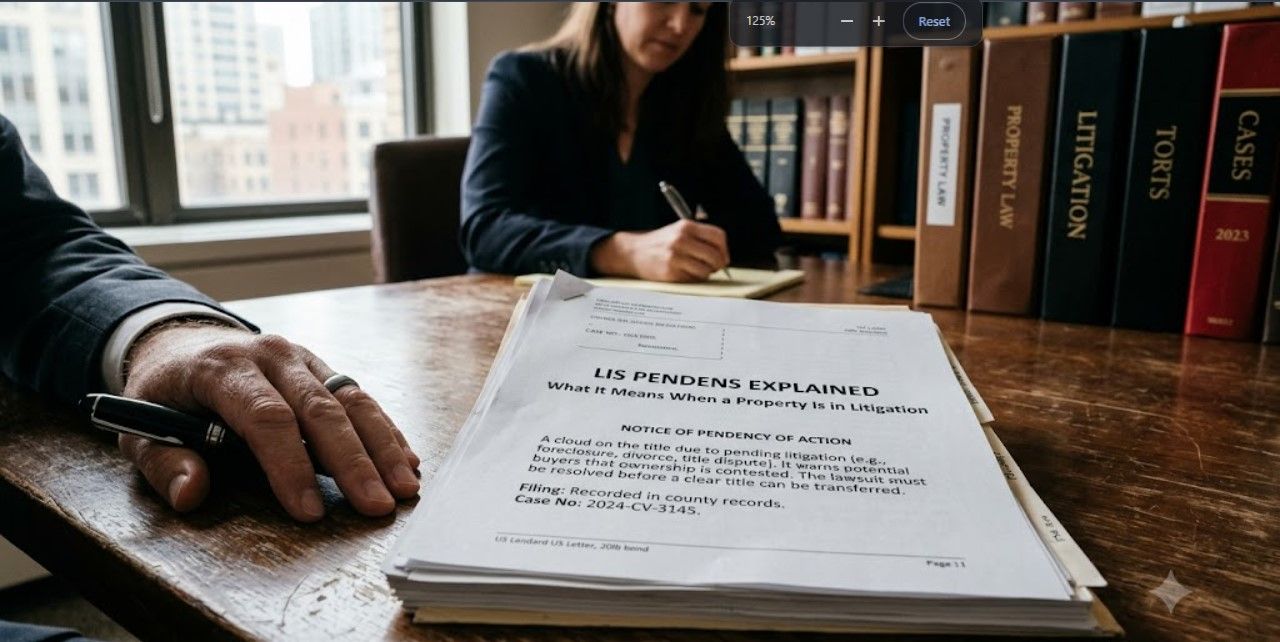
If you have found the phrase "lis pendens" attached to a property, in a title search, a listing, or a public record, here is the short version: a lawsuit is pending that affects that property, and it has been formally recorded against the land for the whole world to see.
That single recorded notice can stop a sale, freeze a refinance, and follow the property until the lawsuit ends. This guide explains what a lis pendens is in plain English, what it does to a real estate transaction, how Virginia in particular regulates it, and what your options are on either side of the closing table, from us as a real estate agency working across the DMV. We are agents rather than attorneys, so treat this as an explainer and take anything specific to a real estate lawyer.
Quick Answer: "Lis pendens" is Latin for "suit pending." It is a recorded public notice that a lawsuit is underway which could affect the title to a specific piece of real property.
Its effect is practical and immediate: it puts a cloud on the title. Because anyone can now find the notice, a buyer or lender cannot claim they did not know, so almost nobody will buy, finance, or refinance the property until the notice is gone.
Anyone who does buy takes the property subject to the outcome of the lawsuit. If the plaintiff wins, the new owner can inherit that result. That is why a lis pendens is so effective at stopping a sale.
It is not permanent. It ends when the case is resolved, released, dismissed, or settled. In Virginia the rules on what a valid lis pendens must contain, and when it must be released, are set by statute. This is general information, not legal advice.
Key Takeaways
- Lis pendens means "suit pending." It is a recorded notice that litigation affecting a property's title is underway.
- It clouds the title, which in practice makes the property very hard to sell, finance, or refinance until it clears.
- A buyer takes subject to the lawsuit's outcome, because the recorded notice means they cannot claim they did not know.
- Common triggers include foreclosure, divorce, partition suits, quiet-title actions, estate disputes and contract disputes.
- Virginia limits it by statute. A memorandum must contain specific facts, and only certain kinds of suits qualify.
- It is temporary. It is released on dismissal, settlement, or final judgment, and Virginia sets deadlines for release.
- A wrongful lis pendens has consequences. Virginia courts can impose sanctions for an improper one.
On This Page
- What "lis pendens" actually means
- The three meanings of lis pendens
- What it does to a property
- Why a buyer takes the risk
- What kinds of cases trigger one
- A concrete example
- Lis pendens and foreclosure
- Virginia's specific rules
- What happens after one is filed
- How to find out if a property has one
- How a lis pendens gets removed
- If you are buying such a property
- If one is filed against your property
- Frequently asked questions
- Glossary
What "Lis Pendens" Actually Means
The term is Latin. Lis means "suit" or "dispute," and pendens means "pending" or "hanging." Put together, lis pendens is simply "a suit pending," and in real estate it refers to a specific document: a recorded notice that such a suit exists and that it concerns a particular property.
It is pronounced roughly "lis PEN-denz" (also heard as "lees PEN-denz"), and you will see it written both as two words and, less often, hyphenated. However it is spelled or said, it points to the same thing.
The key word is recorded. A lawsuit by itself does not create a lis pendens. What creates it is the filing of a memorandum or notice in the land records of the jurisdiction where the property sits, the same records that hold deeds and mortgages. Once it is recorded and properly indexed, it becomes part of the property's public chain of title, and anyone who looks will find it.
That is the entire mechanism, and it is elegantly simple. A lis pendens does not decide anything. It does not transfer the property or freeze a bank account. It just tells the world, formally and permanently on the record, that this specific piece of land is the subject of a fight, and that anyone dealing with it does so with their eyes open.
The Three Meanings of "Lis Pendens"
Here is a subtlety that trips people up, and that the leading legal references are careful about: "lis pendens" is used in more than one sense. If you are reading about it, it helps to know which one an author means. There are three.
- The general principle (the court's control). In its broadest sense, lis pendens refers to the jurisdiction, power, or control a court acquires over property that is involved in a lawsuit, from the start of the action until final judgment. This is the underlying idea: while a case about a property is running, the court's authority over that property is in play.
- The lis pendens notice. This is the one that matters most in real estate, and the one this guide is mainly about. It is the notice recorded in a property's chain of title, designed to let interested third parties discover that litigation affecting the title, or asserting a mortgage, lien, security interest, or other interest in the property, is pending. It warns everyone that any interest they acquire while the suit is pending is subject to its outcome.
- The lis pendens doctrine. This one is different and often confused with the others. It permits a court to dismiss a later lawsuit when two or more suits are pending on the same matter, to protect a defendant from defending the same cause twice at once. It requires proof that the prior case is the same, the parties are substantially the same, and the relief sought is the same. It is a procedural rule about duplicate litigation, not a property notice.
Why flag this: if you searched "lis pendens" and landed on an article about dismissing parallel lawsuits, or one about a court's general control over disputed property, that is not the same thing as the recorded notice sitting on a house you want to buy or sell. For a real estate transaction, the meaning you care about is the second one, the recorded notice, and that is what the rest of this guide covers.
What It Does to a Property
A lis pendens does one enormously consequential thing: it creates a cloud on the title.
A "cloud" is any recorded claim or encumbrance that casts doubt on clean ownership. A cloud does not mean the owner has lost the property. It means a buyer, and more importantly a buyer's lender and title insurer, cannot be certain the title is clear. And in a real estate transaction, uncertainty is the same as a stop sign.
The practical effect is close to a freeze. A recorded lis pendens makes it very difficult, often effectively impossible, to sell, finance, or refinance the property until the notice is removed. No mainstream lender will write a new loan against a title in active litigation, and no title company will insure it without an exception that a buyer will not accept. The property is not seized, but it is stuck.
This is exactly why a lis pendens is such a powerful tool for a plaintiff. It does not require a judge to freeze anything. Simply by recording the notice, the plaintiff can bring any sale or refinance of the property to a halt, and keep it halted, for as long as the litigation runs. That power is also precisely why the law places limits on who may file one and for what, which is where Virginia's rules come in below.
Why a Buyer Takes the Risk
To understand why a lis pendens stops sales, you have to understand the idea of a bona fide purchaser, sometimes shortened to BFP.
Normally, someone who buys a property in good faith, for fair value, and without knowing about a hidden claim against it, is protected. This "good faith purchaser" generally takes the property free of claims they had no way of knowing about. It is a cornerstone of why people can safely buy real estate at all.
A recorded lis pendens destroys that protection, on purpose. Because the notice is public and part of the record, the law treats every later buyer as having constructive notice of the lawsuit, meaning they are deemed to know about it whether they actually looked or not. A buyer who proceeds anyway cannot claim to be an innocent purchaser. They become, in the old phrase, a purchaser pendente lite, one who buys "during the litigation."
What "subject to the outcome" really means: if you buy a property with a live lis pendens and the plaintiff then wins the case, you can be bound by that result. If the suit was to establish that the plaintiff actually owns part of the property, you may find you bought less than you thought, or nothing at all. You are stepping into the shoes of the seller in a fight that is not yet over, and you inherit whatever the court decides. That is a risk almost no ordinary buyer, and no ordinary lender, will accept.
What Kinds of Cases Trigger One
A lis pendens only belongs in a lawsuit that genuinely affects title to or an interest in real property. It is not a tool for a general money dispute that happens to involve someone who owns a house. The recurring situations look like this.
The disputes that most often produce a recorded lis pendens:
The common thread is that in every one of these, the lawsuit could change who owns the property or what interests exist in it. A dispute that is purely about money, with no claim on the land itself, generally does not qualify, and filing a lis pendens in that situation is improper.
A Concrete Example
Abstract definitions only get you so far. Here is how one plays out in practice.
Two siblings inherit their late mother's house in Fairfax County. One wants to sell and split the money; the other wants to keep it and buy the first out, but the two cannot agree on a value or a timeline. Frustrated, the sibling who wants to sell files a partition suit asking a court to order the property sold and the proceeds divided. Because that lawsuit directly seeks to affect the property, their attorney records a memorandum of lis pendens in the Circuit Court land records.
From that moment:
- The house has a cloud on its title. Anyone searching the records finds the notice.
- The sibling who wanted to keep the home cannot quietly sell or refinance it to fund a buyout, because no lender or title company will touch a property in active litigation.
- A neighbour who offers to buy it privately would take it subject to the outcome of the partition suit, so no sensible buyer proceeds.
- The dispute now has to be resolved or settled before the property can transact cleanly. When it is, the lis pendens is released and the title clears.
That is the whole point of the tool. The recording sibling did not win anything by filing the notice, but they made sure the property could not be sold out from under the lawsuit while it was pending. Swap the facts for a divorce, a disputed deed, or a thwarted buyer suing to force a sale, and the mechanics are the same.
Lis Pendens and Foreclosure
Foreclosure deserves its own note, because nationally it is one of the most common contexts in which people encounter the term, and it works differently depending on where you are.
In judicial foreclosure states, where a lender must sue in court to foreclose, a lis pendens is typically recorded at the start of that lawsuit. It is often the first public, on-the-record signal that a foreclosure has begun, which is why investors and data services watch new lis pendens filings as an early indicator of distressed property.
The Virginia wrinkle: Virginia is primarily a non-judicial foreclosure state, meaning most foreclosures proceed through a trustee under a deed of trust rather than through a lawsuit. Because there is no lawsuit, a routine Virginia foreclosure often does not involve a lis pendens at all. So if you are researching this because of a foreclosure in Virginia, do not be surprised to find no lis pendens; the process usually runs a different track. Where litigation does arise, for example a borrower suing to stop a sale, a lis pendens can appear. Confirm the specifics with an attorney.
The takeaway is that "lis pendens" and "foreclosure" are linked in the public imagination largely because of how judicial-foreclosure states work, and that link is weaker in a non-judicial state like Virginia. Seeing one does not automatically mean the other.
Virginia's Specific Rules
Virginia does not leave lis pendens to custom. It is governed by statute, in Chapter 6 of Title 8.01 of the Code of Virginia, and the rules are stricter and more specific than many people expect. If you are dealing with a Virginia property, these are the details that matter.
What a valid memorandum must contain
Under § 8.01-268, a lis pendens does not bind a later good-faith purchaser until a memorandum is recorded in the clerk's office of the circuit court where the property sits, and that memorandum must set out specific facts:
- The title of the cause, meaning the name of the lawsuit.
- The general object of the suit.
- The court in which it is pending.
- The amount of the claim asserted by the plaintiff.
- A description of the property.
- The name of the person whose estate is intended to be affected.
The statute is also explicit that the memorandum is not treated as recorded unless and until it is indexed. A document sitting in a file but not indexed does not do the job.
Only certain suits qualify
This is the part that surprises people, and it is a real protection. Virginia's § 8.01-268(B) states that no memorandum of lis pendens may be filed unless the underlying action seeks one of a limited set of outcomes:
- To establish an interest by the filing party in the real property described;
- To sell the property to enforce a lien for delinquent taxes or a docketed judgment lien;
- The partition of real property; or
- To enforce a zoning ordinance.
What this rules out: because the suit must actually seek an interest in the land (or fall into those other narrow categories), a plaintiff in Virginia generally cannot slap a lis pendens on your house just because they are suing you over an unrelated debt. The claim has to be about the property itself. Virginia also provides that a lis pendens recorded to enforce a zoning ordinance expires after 180 days, which no other category automatically does.
Virginia's release rules
Under § 8.01-269, when the case is dismissed, or the lis pendens is quashed, or judgment goes for the defendant, the court is to direct that the lis pendens be released, and it may in an appropriate case impose sanctions. And where the underlying debt is satisfied by payment, the statute requires the creditor to provide the clerk with a release within 10 days of payment. In other words, once it should come off, Virginia law expects it to come off promptly.
This is not legal advice. Statutes change, the facts of your situation matter enormously, and the difference between a proper and an improper lis pendens is exactly the kind of question that needs a lawyer. If a lis pendens touches a property you own, are buying, or are selling, consult a Virginia real estate attorney before you act. Maryland, D.C. and West Virginia each have their own separate rules, which differ from Virginia's and from each other.
What Happens After a Lis Pendens Is Filed
People often ask what actually happens once one is on the record. Here is the arc, from filing to release.
The Life of a Lis Pendens
From recording to release. Timing and detail vary by jurisdiction and case.
General illustration only, not legal advice. The steps, timing and available defences depend on the jurisdiction and the specific facts.
How to Find Out If a Property Has One
Because a lis pendens lives in the land records, you find it the same way you find a deed or a lien: through the recording office for the jurisdiction the property sits in. In practice, three routes cover most situations.
- A title search. This is the definitive method, and it is what happens automatically in any normal purchase. A title company or real estate attorney searches the records and a properly recorded lis pendens will show up as an exception on the title commitment.
- The land records yourself. You can search the recording office directly. In Virginia that means the Circuit Court Clerk for the county or independent city; in Maryland, the land records system; and so on. Our guide to how to find out who owns a property across VA, MD, D.C. and WV walks through the specific portals for each.
- The assessment and records portal. County property-record systems can flag related documents. For the largest Virginia jurisdiction, our walkthrough of how to look up Fairfax County property records shows where to look.
The reassuring part for ordinary buyers: you are very unlikely to buy a property with a hidden lis pendens by accident, because the title search exists precisely to catch it. The danger is not the notice you find; it is the deal where someone tries to rush you past a proper title search. A recorded lis pendens is one of the strongest arguments for never skipping that step, and for the owner's title insurance that backs it up.
How a Lis Pendens Gets Removed
A lis pendens is tied to the life of the lawsuit, so it comes off when the lawsuit resolves, one way or another. The routes, in general terms:
| Route | What happens |
|---|---|
| The case ends | Final judgment or a decree concludes the litigation, and the lis pendens is released as part of wrapping up. |
| Dismissal or quashing | The suit is dismissed or the lis pendens is quashed. In Virginia the court directs its release. |
| Settlement | The parties settle, and the plaintiff releases the notice as part of the agreement. |
| Payment | Where a debt is satisfied, Virginia requires the creditor to record a release within 10 days. |
| Court order on the merits of the notice | A court finds the lis pendens improper (for example, the suit does not actually seek an interest in the land) and orders it removed. |
The important nuance is timing. Virginia's release statute notes that where an appeal could still be taken, the clerk generally waits until the appeal window closes or the appeal concludes before recording the release. So even a "won" case can leave the cloud in place a little longer while the deadline to appeal runs. If you are trying to sell on a schedule, that lag is worth planning around with your attorney.
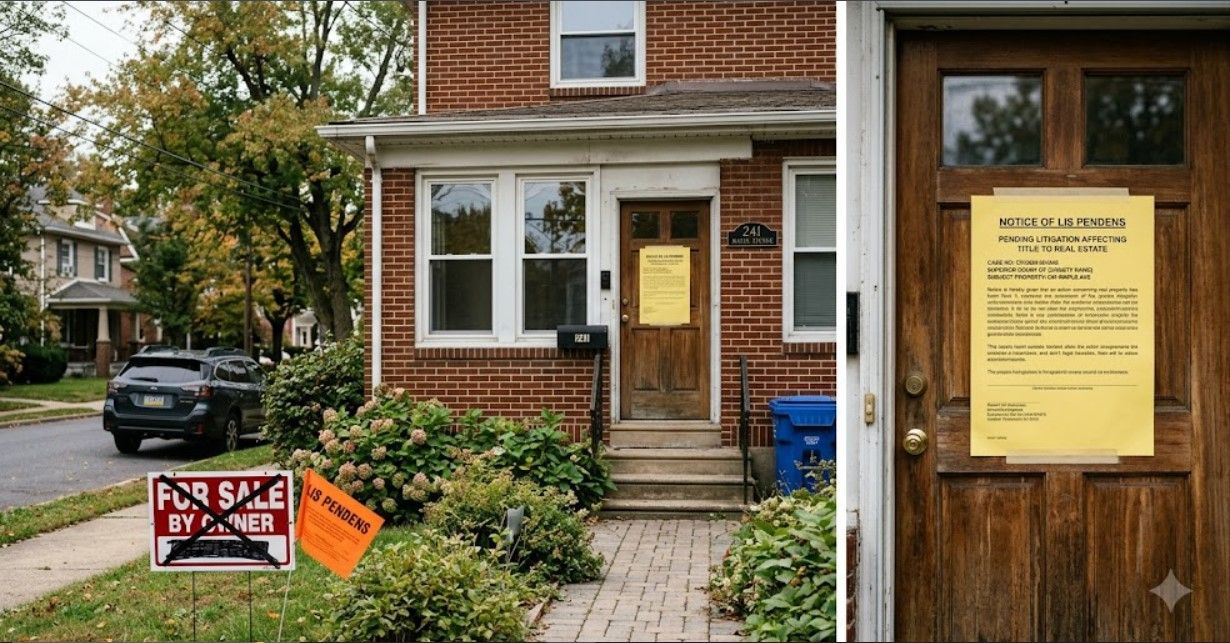
If You Are Buying Such a Property
Every so often a property with a lis pendens looks like an opportunity: often priced to move, sometimes a distressed situation. Sometimes it genuinely is. Far more often it is a trap for anyone who does not slow down.
- Do not close over a live, unresolved lis pendens without an attorney who has read the actual complaint. The notice tells you a fight exists; only the underlying case tells you how bad it is.
- Insist on owner's title insurance, and read the exceptions. If the policy carves out the litigation, you are not protected against it, and that changes the deal entirely.
- Understand you may buy the lawsuit with the house. Taking subject to the outcome is not a formality; if the plaintiff prevails, the result can land on you.
- Prefer resolution before closing. The cleanest version of buying one of these is buying it after the lis pendens has been released and the title is clear, even if that means waiting.
- Match the price to the risk. A discount is only a discount if it is larger than the cost and uncertainty of the litigation you are inheriting. Often it is not.
These properties frequently arrive through distressed or inherited situations, where the seller is untangling something difficult. Our guide to selling an inherited house covers the estate side of that, which is a common backdrop to a title fight.
If One Is Filed Against Your Property
The harder scenario: you own a home, you want or need to sell, and someone records a lis pendens against it. Now the sale you were planning is frozen. Two things to hold onto.
First, a lis pendens is not a judgment. Nobody has decided anything. It is a notice that a claim exists, and claims can be wrong, weak, or improperly filed. In Virginia specifically, because the suit must actually seek an interest in the property, a lis pendens filed over an unrelated dispute may not belong there at all, and § 8.01-269 allows a court to impose sanctions for an improper one. That is a matter for your attorney, and it can be a strong lever.
Second, your job is to get the title clear so you can sell. Depending on the case, that can mean resolving or settling the underlying dispute, having a wrongful notice released, or in some situations posting security so the property can transact while the case continues. Every one of those paths runs through a real estate attorney, not an agent.
Where we fit, honestly: we cannot remove a lis pendens; only the litigation process can. What we can do is have you list-ready for the moment the title clears, so no time is lost between resolution and getting the home on the market. When that day comes, the largest cost you control on the sale is the commission, and our flat 1.5% full-service listing keeps thousands more of your equity than a 3% fee. That matters even more when litigation has already been expensive.
Once the cloud is gone and you can transact, the numbers work like any other sale. Here is what the fee difference looks like across common Northern Virginia price points.
Seller Savings Calculator
Once the title clears, how much more do you keep at 1.5%?
Select your home's estimated value to see your net proceeds, side by side.
At a 3% Listing Fee
Our Fee, Only 1.5%
Extra in your pocket
$6,000
Compared with a 3% listing fee, with no reduction in service or marketing.
At a 3% Listing Fee
Our Fee, Only 1.5%
Extra in your pocket
$8,250
Compared with a 3% listing fee, with no reduction in service or marketing.
At a 3% Listing Fee
Our Fee, Only 1.5%
Extra in your pocket
$10,500
Compared with a 3% listing fee, with no reduction in service or marketing.
At a 3% Listing Fee
Our Fee, Only 1.5%
Extra in your pocket
$12,750
Compared with a 3% listing fee, with no reduction in service or marketing.
At a 3% Listing Fee
Our Fee, Only 1.5%
Extra in your pocket
$15,000
Compared with a 3% listing fee, with no reduction in service or marketing.
Before you price anything, our seller net sheet itemises every cost between sale price and final proceeds.
And once the property is free to sell, it helps to see where your market sits. Our overview of communities across Northern Virginia lays the local markets out side by side.
The Bottom Line on Lis Pendens
Strip away the Latin and a lis pendens is a simple, powerful thing: a recorded public notice that a lawsuit affecting a property's title is underway. It does not decide the case, but by clouding the title it can freeze a sale or refinance until the case ends, and it warns every would-be buyer that they would take the property subject to whatever the court decides.
Virginia regulates it more tightly than most people realise: the memorandum must contain specific facts, only certain kinds of suits qualify, and the law sets deadlines and sanctions for getting an improper notice off the record. Maryland, D.C. and West Virginia each do it differently. In every case the real answer to a lis pendens is legal, not agentic: a real estate attorney who has read the complaint.
Where we come in is after the cloud clears. When the title is clean and you are ready to sell, that is what we do as a real estate agency working across the DMV, and we do it for a flat 1.5% full-service listing fee rather than the traditional 3%.
When you reach that point, our Sell My Home page lays out exactly how it works.
And to plan around a real figure rather than a guess, our home valuation gives you an honest read on what the property is actually worth.
Once the Title Is Clear
Selling in One of These Markets?
Frequently Asked Questions
What does lis pendens mean in simple terms?
Lis pendens is Latin for "suit pending." In real estate it is a recorded public notice that a lawsuit is underway which could affect the title to a specific property. It does not decide anything or transfer ownership; it simply warns the world, on the official record, that the property is tied up in litigation, so anyone who buys or lends against it does so knowing the risk. It stays on the record until the case resolves.
Can you sell a house with a lis pendens on it?
In practice, almost never until it is removed. A recorded lis pendens clouds the title, and mainstream lenders will not finance, and title companies will not cleanly insure, a property in active litigation. A buyer would take the property subject to the outcome of the lawsuit, which few will accept. The realistic path is to resolve the underlying case, obtain a release of the notice, or in some situations post security, and then sell once the title is clear. A real estate attorney should guide that.
Does a lis pendens mean the owner lost the property?
No. A lis pendens is only a notice that a lawsuit exists, not a judgment and not a foreclosure. Nothing has been decided. The claim behind it may be strong, weak, or even improperly filed. The owner still owns the property; what they have lost, at least temporarily, is the practical ability to sell or refinance it cleanly while the litigation is pending.
How long does a lis pendens last?
It lasts as long as the underlying lawsuit, so there is no fixed term in most cases. It is released when the case ends in final judgment, is dismissed or quashed, or is settled, or when a court finds it improper and orders it removed. In Virginia there are some specific timing rules: a lis pendens recorded to enforce a zoning ordinance expires after 180 days, and where a debt is paid the creditor must record a release within 10 days.
What kinds of lawsuits can create a lis pendens?
Only lawsuits that genuinely affect title to or an interest in the specific property. Common examples are foreclosure, divorce where the home's ownership is in dispute, partition suits between co-owners, quiet-title actions, estate and inheritance disputes, boundary and easement disputes, claims that a deed is fraudulent, and a thwarted buyer suing for specific performance. A pure money dispute with no claim on the land itself generally does not qualify.
What are Virginia's rules for a lis pendens?
Virginia governs it by statute in Chapter 6 of Title 8.01. Under Section 8.01-268, a valid memorandum must state the title of the cause, its general object, the court, the amount claimed, a description of the property, and the name of the person whose estate is affected, and it must be indexed to count as recorded. It may only be filed where the suit seeks to establish an interest in the property, to sell it to enforce a tax or judgment lien, to partition it, or to enforce a zoning ordinance. Section 8.01-269 governs release and allows sanctions for an improper filing. This is general information, not legal advice.
How do I find out if a property has a lis pendens?
Through the land records for the jurisdiction where the property sits, which is the same place deeds and mortgages are recorded. The definitive method is a professional title search, which happens automatically in a normal purchase and will surface a properly recorded notice as a title exception. You can also search the recording office yourself, such as the Circuit Court Clerk in a Virginia county or independent city. This is one of the strongest reasons never to skip a title search or owner's title insurance.
Can a lis pendens be filed wrongfully, and what happens then?
Yes. Because a lis pendens is powerful and easy to record, it can be misused, for example filed over a dispute that does not actually seek an interest in the land. Virginia limits valid filings to specific categories precisely to curb this, and Section 8.01-269 allows a court to impose sanctions in an appropriate case where a lis pendens is quashed, dismissed, or resolved for the defendant. If you believe one was filed improperly against your property, that is a matter to raise with a real estate attorney quickly.
Should I buy a property that has a lis pendens?
Only with real caution and legal advice. The notice means you could take the property subject to the outcome of the litigation, so you may be buying the lawsuit along with the house. Do not close over a live, unresolved notice without an attorney who has read the actual complaint, insist on owner's title insurance and read its exceptions, and strongly prefer buying only after the lis pendens has been released and the title is clear. Any discount is only worth it if it exceeds the cost and uncertainty of the litigation.
Is a lis pendens the same as a lien?
No, though both are recorded and both can cloud title. A lien is a claim for a debt secured against the property, such as a mortgage, a tax lien, or a mechanic's lien. A lis pendens is a notice that a lawsuit affecting the property is pending; it is not itself a debt. They can overlap, for instance a suit to enforce a lien can be accompanied by a lis pendens, but they are different instruments doing different jobs.
Does a lis pendens affect the rest of the DMV the same way?
The core concept is similar across Virginia, Maryland, D.C. and West Virginia, since lis pendens is a widely recognised doctrine, but the specific rules differ by jurisdiction. Virginia has detailed statutory requirements and category limits. Maryland, D.C. and West Virginia each have their own procedures for what qualifies, how it is recorded, and how it is released. Never assume the Virginia rules apply elsewhere; confirm the local law with an attorney in the relevant jurisdiction.
How do you pronounce lis pendens?
It is pronounced roughly 'lis PEN-denz,' with the stress on the first syllable of 'pendens.' You will also hear 'lees PEN-denz,' reflecting the Latin. Both are understood. It is Latin for 'suit pending,' written usually as two words and occasionally hyphenated, and however it is said it refers to the same thing: a recorded notice that a lawsuit affecting a property is underway.
Can you give an example of a lis pendens?
A common one: two siblings inherit a house and cannot agree whether to sell it. One files a partition suit asking a court to order the property sold and the proceeds divided, and records a memorandum of lis pendens in the land records. The house now has a clouded title, so the other sibling cannot quietly sell or refinance it, and any private buyer would take it subject to the outcome of the suit. The notice comes off once the dispute is resolved. The same pattern appears in divorces, disputed-deed cases, and suits to force a promised sale.
What happens after a lis pendens is filed?
Once a qualifying lawsuit is filed and the memorandum is recorded and indexed in the land records, the property's title is clouded: any later buyer or lender is on constructive notice and would take subject to the outcome. In practice the property freezes, because mainstream lenders will not finance and title companies will not cleanly insure it. The case then proceeds to settlement, judgment, dismissal, or a challenge that the notice is improper, and when it resolves the lis pendens is released and the title clears, sometimes after an appeal window closes.
What does a lis pendens form or notice contain?
The recorded document, often called a memorandum of lis pendens, identifies the lawsuit and the property so third parties can find it. In Virginia, Section 8.01-268 requires it to state the title of the cause, the general object of the suit, the court where it is pending, the amount of the claim, a description of the property, and the name of the person whose estate is affected, and it must be indexed to count as recorded. Other jurisdictions have their own required contents. The document is prepared in connection with the litigation, typically by the filing party's attorney, not by a real estate agent.
Is a lis pendens the same as the lis pendens doctrine?
No, and this is a frequent confusion. The lis pendens notice is the recorded document that clouds a property's title. The 'lis pendens doctrine' is a separate procedural rule that lets a court dismiss a later lawsuit when two or more suits are pending on the same matter, protecting a defendant from litigating the same cause twice at once. It requires the prior case, the parties, and the relief sought to be substantially the same. In everyday real estate, the relevant meaning is the recorded notice, not the doctrine.
Does a Virginia foreclosure involve a lis pendens?
Often not. Virginia is primarily a non-judicial foreclosure state, meaning most foreclosures proceed through a trustee under a deed of trust rather than through a lawsuit, so there is no court case to attach a lis pendens to. In judicial-foreclosure states, by contrast, a lis pendens is commonly recorded when the foreclosure suit is filed and is watched as an early distress signal. In Virginia, a lis pendens tends to appear only where actual litigation arises, such as a borrower suing to stop a sale. Confirm the specifics with an attorney.
Where does the term lis pendens come from?
It is Latin. 'Lis' means a suit, dispute, or litigation, and 'pendens' means pending or hanging, so lis pendens literally means 'a suit pending' or 'pending litigation.' The concept is old and appears across common-law and civil-law systems in various forms. In modern United States real estate it has settled into its most familiar use: a recorded notice in a property's chain of title warning that litigation affecting that property is underway.
Glossary
Lis pendens: Latin for "suit pending." A recorded notice that litigation affecting a property's title is underway.
Cloud on title: Any recorded claim that casts doubt on clean ownership and can block a sale or loan.
Bona fide purchaser: A good-faith buyer for value without notice of a claim. A recorded lis pendens removes this protection.
Constructive notice: Being legally deemed to know something because it is on the public record, whether you looked or not.
Pendente lite: "During the litigation." A buyer who takes a property while a lis pendens is active takes pendente lite.
Quiet title: A lawsuit to resolve competing ownership claims and confirm who holds clear title.
Partition: A suit by co-owners to divide a shared property or force its sale. A recognised basis for lis pendens in Virginia.
Memorandum of lis pendens: The document actually recorded. In Virginia it must contain specific facts and be indexed.
Specific performance: A remedy forcing a party to complete a promised sale, a common lis pendens trigger.
Lis pendens doctrine: A procedural rule allowing dismissal of a duplicate later lawsuit. Distinct from the recorded notice.
Judicial foreclosure: Foreclosure through a court suit, where a lis pendens is commonly filed. Virginia mostly uses the non-judicial route.
Title search: An examination of the land records that surfaces deeds, liens and a recorded lis pendens.
Ready to Make a Move?
List for 1.5%. Keep the Difference.
We cannot untangle a lawsuit, but when your title is clear we will get you sold for a flat 1.5% full-service listing fee, keeping thousands more of your equity than a 3% agent.
Free, no-obligation consult. All commissions are negotiable and not set by law.
Disclaimer: This article is an independent educational guide for informational purposes only and is not legal advice and does not create an attorney-client relationship. The Jamil Brothers Realty Group is a licensed real estate team, not a law firm, and is not affiliated with, endorsed by, or sponsored by any court or government agency. Lis pendens is a legal instrument governed by statute and case law that varies significantly by jurisdiction; references to the Code of Virginia, including Sections 8.01-268 and 8.01-269, are general summaries as published at the time of writing and are subject to change, and the rules in Maryland, Washington D.C. and West Virginia differ. The application of any of these rules depends entirely on the specific facts of a case. Nothing here should be relied upon as a substitute for advice from a licensed real estate attorney in the relevant jurisdiction, and you should consult one before taking or refraining from any action regarding a lis pendens, a title dispute, or a property in litigation. Figures and worked examples are illustrative only and are not appraisals, valuations, or price quotes; all real estate commissions are negotiable and are not set by law. The Jamil Brothers Realty Group is a licensed real estate team with Samson Properties serving Virginia and the greater DMV. Equal Housing Opportunity.
Explore More
Browse Every Corner of the DMV Market
Whether you're searching by budget, neighborhood, or buying situation, find exactly what you need below.
Virginia Homes by Budget
Washington DC Homes by Budget
Maryland Homes
Explore Fairfax County & Surrounding Northern Virginia
Ready to Make a Move?
Full-Service · No Tradeoffs
List for 1.5% & Keep More Equity
Professional photography, drone video, 3D tours, and expert negotiation, all included. On an $800K home, that's $12,000 more in your pocket vs. a 3% agent.
See the 1.5% Program →Need Speed or Certainty?
Get a No-Obligation Cash Offer
Skip the showings, skip the contingencies. If timing or condition matters more than top dollar, a cash offer may be the right fit. We'll walk you through every option.
Explore Cash Offers →Message Sent!
Thank you for reaching out. Arslan & Saad have received your details and will be in touch shortly.
Need immediate assistance? Call or text 703-782-4830.