
How Much Does It Cost to Sell a Home in Loudoun County?
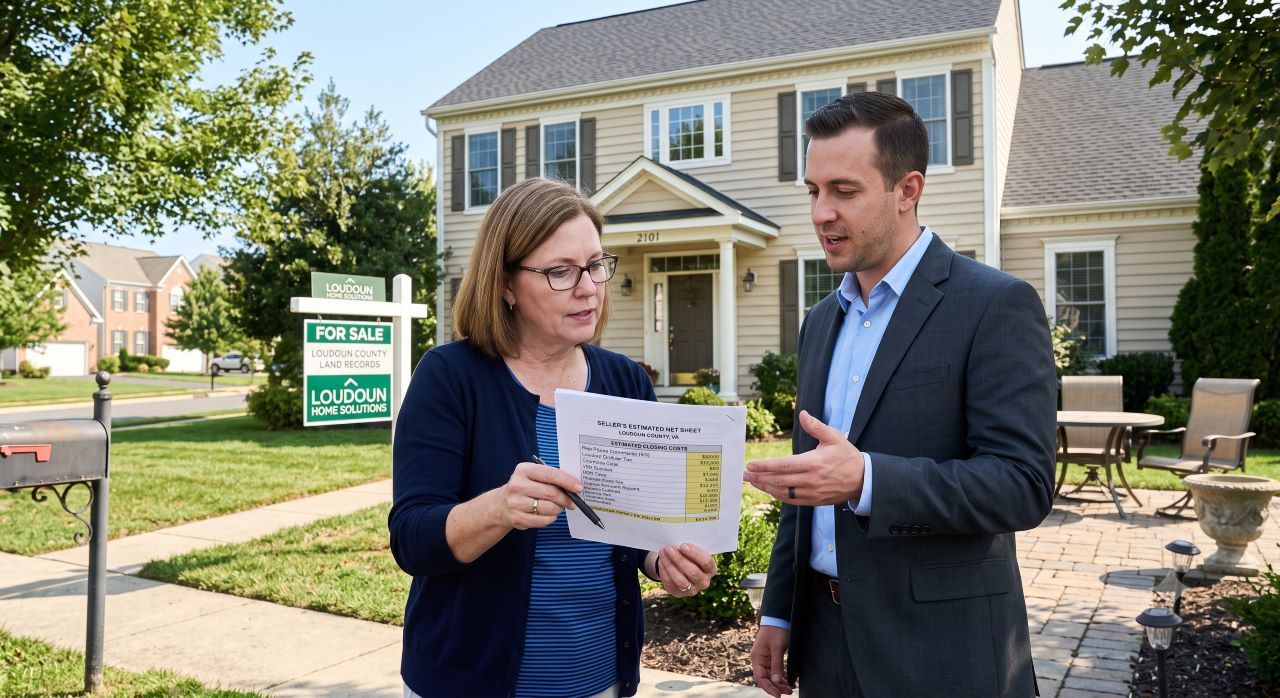
If you are planning to sell your home in Loudoun County, the first question on your mind is usually the simplest one: how much is this actually going to cost? Between agent commission, closing costs, Virginia grantor and transfer taxes, and the prep work needed to get your home market-ready, most Loudoun County sellers can expect total selling costs to fall somewhere between 6% and 10% of the final sale price. In one of Northern Virginia's highest-priced housing markets, that percentage adds up quickly — which is exactly why partnering with an experienced Loudoun County Real Estate Agent who understands Loudoun County Real Estate can put thousands of dollars back in your pocket at closing. Below, we break down every seller cost line by line, so you know precisely what to expect before you list.
Quick Answer: Total selling costs in Loudoun County typically range from 8-10% of the sale price, or $60,000-$75,000 on a $750,000 home. The breakdown: real estate commissions 4-6% ($30,000-$45,000 with traditional rates, potentially $22,500-$33,750 with competitive structures), Virginia grantor's tax 0.25% ($1,875), Loudoun County regional congestion relief fee 0.10% ($750), title insurance and settlement fees 0.5-1% ($3,750-$7,500), and miscellaneous costs 0.5-1% ($3,750-$7,500). You may also face seller concessions averaging 1-3% in the current Loudoun County Housing Market, pre-sale improvements, and prorated taxes/HOA fees. The most controllable cost is commission—working with agents offering competitive rates like 1.5% listing fees (versus traditional 2.5-3%) can save $7,500-$11,250+ while still receiving full professional service. For a property-specific starting point, request a Home Valuation before comparing your likely costs.
Key Takeaways
- Total costs average 8-10%: On current Loudoun County Home Prices near the $750,000 median, expect $60,000-$75,000+ in total selling expenses
- Commission is largest and most controllable: Traditional 5-6% versus competitive 4-4.5% total saves $7,500-$11,250+
- Virginia transfer taxes fixed: Grantor's tax ($2.50/$1,000) plus regional fee ($1.00/$1,000) equals 0.35% mandatory
- Title/settlement relatively fixed: Expect $3,000-$6,000 regardless of sale price for most transactions
- Concessions increasingly common: Current balanced market sees 1-3% seller concessions for buyer closing costs or repairs
- Pre-sale costs vary widely: $0-$25,000+ depending on property condition and chosen improvement strategy
- Calculate net proceeds carefully: What matters is money in your pocket after ALL costs, not gross sale price
Table of Contents
- Total Cost Overview
- Real Estate Commissions
- Virginia Transfer Taxes and Fees
- Title Insurance and Settlement Costs
- Mortgage Payoff and Related Costs
- Prorated Taxes, HOA, and Utilities
- Pre-Sale Improvements and Repairs
- Buyer Concessions and Credits
- Optional and Situational Costs
- Complete Cost Comparison Table
- How to Reduce Selling Costs
- Calculating Your Net Proceeds
- Common Cost Mistakes to Avoid
- Frequently Asked Questions
- Selling Cost Terms Glossary
Total Cost Overview
Understanding the complete picture of selling costs helps Loudoun County homeowners plan effectively, compare real net proceeds, and avoid closing day surprises.
The 8-10% Rule
Total selling costs in Loudoun County typically consume 8-10% of the sale price, sometimes more when significant concessions or pre-sale improvements are involved. On Loudoun County's approximately $750,000 median home price, this translates to $60,000-$75,000+ in total costs before you see a dollar of proceeds. Understanding where this money goes empowers sellers to make strategic decisions about which costs are negotiable, which are fixed, and how changing Loudoun County Property Values affect your likely bottom line.
The breakdown by category: real estate commissions represent the largest chunk at 4-6% (potentially less with competitive structures), transfer taxes and government fees add 0.35%, title and settlement costs add 0.5-1%, and miscellaneous costs (prorations, preparation, potential concessions) add another 1-3%+ depending on circumstances.
Fixed vs. Variable Costs
Some selling costs are essentially fixed regardless of decisions you make. Virginia grantor's tax, regional congestion relief fee, and basic title/settlement fees fall into this category—you'll pay approximately the same amount regardless of which agent or title company you choose. Other costs are highly variable based on your choices: commission structures vary significantly between brokerages, pre-sale improvements can range from $0 to $30,000+, and concessions depend on Loudoun County Real Estate Market Trends, buyer urgency, and negotiation outcomes.
Strategic sellers focus negotiating energy and cost-reduction efforts on variable costs where decisions actually affect outcomes, while understanding and budgeting appropriately for fixed costs that simply must be paid.
Loudoun County vs. Other Markets
Loudoun County selling costs run slightly higher than national averages due to Virginia's grantor's tax (many states have lower or no transfer taxes), regional congestion relief fee (Northern Virginia-specific), higher median prices amplifying percentage-based costs, and a competitive Northern Virginia Real Estate market where guidance from a Northern Virginia Realtor can still help sellers avoid unnecessary concessions. However, Loudoun County also offers advantages: strong buyer demand for Loudoun County Neighborhoods, school access, commute options, and established Loudoun County Communities can reduce the need for excessive concessions in many situations.Real Estate Commissions
Commission represents the largest single selling cost and offers the greatest opportunity for savings through informed choices.
Traditional Commission Structure
Historically, real estate commissions in Northern Virginia totaled 5-6% of the sale price, typically split between listing agent (representing seller) and buyer's agent. On $750,000 sale, traditional 5-6% commission equals $37,500-$45,000—the single largest cost by far. This traditional structure emerged decades ago when agents provided services difficult for consumers to access independently; the market has evolved substantially since then.
Traditional split typically allocated 2.5-3% to listing agent and 2.5-3% to buyer's agent, though this split was always negotiable despite industry practices suggesting otherwise.
Competitive Commission Options
Today's market offers competitive alternatives to traditional commission structures. Listing-side commissions are now commonly negotiable, with experienced Loudoun County Realtors offering full-service representation at 1.5-2% versus traditional 2.5-3%. This listing-side savings alone represents $7,500-$11,250 on $750,000 sale—meaningful dollars that flow directly to your net proceeds.
Important distinction: competitive commission doesn't mean reduced service. Quality agents offering 1.5% listing fees provide the same professional photography, comprehensive marketing, MLS exposure, negotiation expertise, and transaction management as agents charging 3%. The difference reflects evolved business models and market competition, not service quality reduction.
Buyer Agent Commission Considerations
Following 2024 real estate industry changes, buyer agent compensation structures have evolved. Sellers may still offer buyer agent compensation (typically 2-2.5% in Loudoun County) to maintain competitiveness and ensure buyers can afford representation. Some sellers choose to offer less or none, though this may reduce buyer pool in practice. Market norms currently show many Homes for Sale in Loudoun County VA still offering competitive buyer agent compensation to maximize buyer exposure.
Commission Cost Examples
| Sale Price | Traditional 5.5% | Competitive 4% | Savings |
|---|---|---|---|
| $600,000 | $33,000 | $24,000 | $9,000 |
| $750,000 | $41,250 | $30,000 | $11,250 |
| $900,000 | $49,500 | $36,000 | $13,500 |
| $1,200,000 | $66,000 | $48,000 | $18,000 |
Save Thousands with a 1.5% Listing Fee
Why pay 2.5-3% listing commission when full professional service is available for 1.5%? Start with a seller plan designed for Loudoun County VA Real Estate and save $7,500-$11,250+ on typical Loudoun County sales while still receiving comprehensive marketing, professional photography, and expert negotiation.
Virginia Transfer Taxes and Fees
Transfer taxes and government fees represent fixed costs that all Loudoun County sellers must pay regardless of other decisions.
Virginia Grantor's Tax
Virginia charges grantor's tax of $2.50 per $1,000 of sale price (equivalent to 0.25%) on all residential property transfers. This tax is paid by sellers and cannot be avoided or negotiated. On $750,000 sale: $750,000 ÷ $1,000 × $2.50 = $1,875. The grantor's tax has remained stable for years and is unlikely to change; budget for this amount regardless of market conditions or transaction specifics.
Regional Congestion Relief Fee
Loudoun County (and other Northern Virginia localities) charges an additional regional congestion relief fee of $1.00 per $1,000 of sale price (0.10%) on property transfers. This fee funds transportation improvements in the region. On $750,000 sale: $750,000 ÷ $1,000 × $1.00 = $750. Like grantor's tax, this fee is mandatory and non-negotiable.
Combined Transfer Tax Impact
Total transfer taxes in Loudoun County equal $3.50 per $1,000 or 0.35% of sale price. This combined impact: $600,000 sale = $2,100, $750,000 sale = $2,625, $900,000 sale = $3,150, $1,200,000 sale = $4,200. While these amounts seem modest compared to commissions, they represent real money that must be budgeted—there's no way to reduce or avoid these taxes on standard residential transactions.
Recording Fees and Document Stamps
Additional small fees include recording fees for deed and other documents (typically $50-$100 total) and any applicable document preparation fees. These minor costs are usually included in settlement company charges rather than listed separately.
Title Insurance and Settlement Costs
Title and settlement costs cover the administrative and legal aspects of transferring property ownership.
Title Insurance Premium
Virginia requires title insurance protecting buyers and lenders from title defects discovered after closing. While buyers typically pay for lender's title insurance, sellers often pay for owner's title insurance in Loudoun County transactions—this is negotiable but commonly expected. Owner's title insurance on $750,000 home typically costs $1,500-$2,500. Some title companies offer lower rates, so shopping around can save several hundred dollars.
Settlement/Escrow Fees
Settlement companies charge fees for conducting closings, preparing documents, and managing escrow. Typical settlement fees range from $800-$1,500 in Loudoun County depending on company and transaction complexity. These fees are relatively consistent across providers with modest variation—shopping around may save $200-$400 but won't dramatically reduce this cost category.
Title Search and Related Fees
Title search fees (researching property ownership history and liens), document preparation fees, courier and wire transfer fees, and miscellaneous settlement charges typically add $300-$600 to title/settlement costs. Total title and settlement costs generally range from $3,000-$5,000 for typical Loudoun County transactions, varying based on sale price, complexity, and chosen providers.
Who Pays What
In Loudoun County, customary (though negotiable) allocation: seller pays owner's title insurance ($1,500-$2,500), seller pays half of settlement fee ($400-$750), and seller pays grantor's tax and regional fee (required). Buyer pays lender's title insurance, their half of settlement fee, and buyer-related fees. These customs are starting points for negotiation—actual allocation depends on contract terms and market conditions affecting negotiating leverage.
Mortgage Payoff and Related Costs
Most sellers have mortgages that must be paid off at closing, with associated costs beyond the principal balance.
Payoff Amount vs. Current Balance
Your mortgage payoff amount differs from your current balance statement. Payoff includes principal balance as of payoff date, accrued interest from last payment to closing date (typically $50-$150 per day on larger mortgages), and any applicable fees (payoff statement fee, wire fee, etc.). Request payoff statement from your lender 2-3 weeks before expected closing to verify exact amount.
Prepayment Penalties
Most conventional mortgages don't have prepayment penalties, but some loans (particularly certain adjustable-rate mortgages, jumbo loans, or loans from certain periods) may charge penalties for early payoff. Review your loan documents or contact lender to verify—prepayment penalties can range from 1-3% of balance on affected loans. If you have prepayment penalty, factor this into net proceeds calculations.
Second Mortgages and HELOCs
If you have home equity line of credit (HELOC) or second mortgage, these must also be paid off at closing. Payoff procedures similar to primary mortgage—request payoff statement and ensure balance paid before or at closing. Some HELOCs have balance reinstatement or early closure fees; verify with lender.
Short Sale Considerations
If your mortgage balance exceeds likely sale price (underwater), you may need lender approval for short sale—selling for less than owed with lender agreeing to accept shortfall. Short sales involve additional complexity, timeline extensions, and potential tax implications. If your situation approaches this territory, consult with experienced agent and possibly tax advisor before proceeding.
Calculate Your Exact Net Proceeds
Know exactly what you'll walk away with after all costs. If you are selling and buying in the same move, a clear Northern Virginia Buyer Strategy helps you plan timing, proceeds, and your next purchase before you list.
Use your payoff, likely sale price, and closing cost estimates to build a realistic proceeds range before making the next move.
Prorated Taxes, HOA, and Utilities
Various costs are prorated between seller and buyer based on closing date, affecting your net proceeds.
Property Tax Proration
Loudoun County property taxes are billed semi-annually (due June 5 and December 5). At closing, taxes are prorated so seller pays their share through closing date. If taxes already paid for period extending past closing, seller receives credit. If taxes not yet paid, seller owes their proportional share. Example: closing July 15 with $8,000 annual taxes—seller owes approximately January 1-July 15 (6.5 months) proportional share, roughly $4,300, minus any payments already made.
HOA Fee Proration
Most Loudoun County communities have HOAs with monthly or quarterly dues. Fees are prorated at closing similar to taxes. Additionally, HOA may charge transfer fee ($100-$400 typical) and/or capital contribution ($500-$2,000 in some communities) upon sale—these are sometimes negotiable between buyer and seller. Request the HOA resale package early in the listing process, especially in communities where amenities, rules, and Loudoun County School Districts are part of the buyer decision.
Utility Prorations
Utilities are typically transferred to buyer rather than prorated, but final bills remain seller responsibility. Arrange for final readings on closing date, transfer service to buyer, and pay final bills promptly to avoid liens. Propane or oil tanks may require proration if fuel remains at closing—verify current fill level and agree on credit amount.
Escrow Account Credits
If your mortgage includes escrow for taxes and insurance, lender will refund remaining escrow balance after loan payoff—typically 2-4 weeks after closing. This isn't a closing cost but rather money returning to you; factor into your overall financial planning. Contact lender to understand their escrow refund timeline.
Pre-Sale Improvements and Repairs
Costs incurred preparing your home for market can range from minimal to substantial depending on property condition and chosen strategy.
Essential Repairs
Some repairs are essentially necessary for marketability: safety issues (electrical hazards, structural problems, major code violations), systems at end of life that would fail inspection (failing HVAC, leaking roof, non-functional water heater), and obvious defects buyers will demand credits for anyway. Budget $2,000-$10,000 for typical essential repairs on older Loudoun County homes. Addressing these before listing often costs less than buyer-demanded credits during negotiation.
Strategic Improvements
Strategic improvements enhance presentation and potentially increase sale price. Common strategic improvements: fresh paint throughout ($2,000-$4,000 professional), deep cleaning and decluttering ($300-$800), carpet cleaning or replacement ($500-$4,000), minor cosmetic updates ($500-$2,000), curb appeal enhancement ($500-$3,000), and professional staging ($1,500-$4,000). Total strategic improvement budget typically ranges from $3,000-$15,000 for most homes, whether you are marketing Townhomes in Loudoun County, Single Family Homes Loudoun County, or higher-end Luxury Homes Loudoun County.
Professional Photography and Marketing
Quality agents include professional photography and comprehensive marketing in their services—no additional cost to sellers. If working with an agent who charges separately or doesn't include these services, budget $400-$800 for professional photography and $200-$500 for additional marketing materials. These should be considered essential rather than optional; poor photography dramatically reduces showing activity, online clicks, and the number of serious buyers comparing your home against other Loudoun County Homes for Sale.
Pre-Sale Inspection
Some sellers commission pre-listing inspection ($400-$600) to identify issues before buyers discover them, allowing proactive repairs and reducing negotiation surprises. This cost is optional but can save significant money and stress by addressing problems before they become negotiation leverage for buyers demanding excessive credits.
Buyer Concessions and Credits
In the current balanced Loudoun County market, buyer concessions represent a significant potential cost many sellers don't anticipate, especially when affordability pressures shape Buying a Home in Loudoun County.
Closing Cost Concessions
Buyers frequently request sellers contribute toward closing costs, especially when interest rates affect affordability. Typical closing cost concessions range from 1-3% of sale price in current market—$7,500-$22,500 on $750,000 home. These concessions reduce your net proceeds directly; what you think you're selling for and what you actually net differ by the concession amount.
Repair Credits
After inspection, buyers typically request credits for discovered issues. Common credit requests: HVAC concerns ($2,000-$10,000 depending on age/condition), roof issues ($5,000-$20,000), plumbing problems ($500-$5,000), electrical concerns ($500-$3,000), and miscellaneous repairs ($1,000-$5,000). Total repair credits averaging $5,000-$15,000 are common in current market, though well-prepared homes with pre-listing inspections often negotiate lower amounts.
Rate Buy-Down Requests
With elevated interest rates, some buyers request seller-funded interest rate buy-downs (temporary or permanent), reducing buyer's effective interest rate. These concessions function similarly to closing cost credits but are structured differently. Buy-down costs vary based on rate reduction and loan term but can add 1-3% to seller costs when requested by buyers Moving to Loudoun County who are trying to keep monthly payments predictable.
Minimizing Concession Costs
Strategies to minimize concessions: price accurately from start (avoiding desperation pricing situations), prepare property thoroughly (reducing inspection issues), market comprehensively (creating competition among buyers), and negotiate strategically (understanding when to accept reasonable requests versus pushing back on excessive demands). Experienced agents skilled in negotiation often save sellers thousands in concession costs through strategic management of these discussions.
Optional and Situational Costs
Additional costs may apply depending on your specific situation and choices.
Home Warranty
Some sellers provide home warranties covering major systems and appliances for buyer's first year. Cost: $400-$600 for basic coverage, $600-$800 for comprehensive. Home warranties can help close deals with hesitant buyers and reduce post-sale complaint risk. This cost is entirely optional and negotiable—often included in initial listing strategy or added during negotiation if needed to close deal.
Attorney Fees
Virginia doesn't require attorney involvement in standard residential transactions, but complex situations (estate sales, divorce proceedings, title issues, unusual contract terms) may benefit from legal review. Attorney fees for real estate review typically range from $500-$1,500 if needed. Most straightforward Loudoun County transactions proceed without attorney involvement.
Moving Costs
While not technically a selling cost, moving expenses are part of your overall transaction budget. Local moves within Loudoun County: $500-$1,500 for professional movers. Long-distance moves: $3,000-$10,000+ depending on distance and belongings. If you are selling while also evaluating the Best Places to Live in Loudoun County for your next chapter, budget for temporary storage, overlap, and a more flexible timeline.
Storage Costs
If timing requires storing belongings between selling and purchasing new home, budget $150-$400 monthly for typical storage unit depending on size needed. Extended storage periods can accumulate significant costs; coordinating sale and purchase timing reduces or eliminates this expense.
Capital Gains Tax Considerations
While not a closing cost, capital gains tax may apply if your gain exceeds IRS exclusion ($250,000 single/$500,000 married for primary residence owned and occupied 2+ of past 5 years). Most Loudoun County primary residence sellers remain under exclusion thresholds, but significant appreciation or rental history may trigger tax liability. Consult tax advisor if your situation involves substantial gains, rental periods, or multiple property ownership.
Complete Cost Comparison Table
Comprehensive view of all potential selling costs helps with budget planning.
| Cost Category | Typical Amount | On $750K Sale | Controllable? |
|---|---|---|---|
| Listing Commission | 1.5-3% | $11,250-$22,500 | Yes |
| Buyer Agent Commission | 2-2.5% | $15,000-$18,750 | Partially |
| Virginia Grantor's Tax | 0.25% | $1,875 | No |
| Regional Congestion Fee | 0.10% | $750 | No |
| Title Insurance | $1,500-$2,500 | $1,500-$2,500 | Slightly |
| Settlement Fees | $800-$1,500 | $800-$1,500 | Slightly |
| HOA Transfer/Fees | $200-$2,000 | $200-$2,000 | No |
| Pre-Sale Improvements | $0-$20,000+ | $3,000-$10,000 | Yes |
| Buyer Concessions | 0-3% | $0-$22,500 | Partially |
| Miscellaneous | $500-$2,000 | $500-$2,000 | Varies |
| TOTAL RANGE | 6-11% | $45,000-$82,500 | — |
How to Reduce Selling Costs
Strategic approaches can meaningfully reduce total selling costs while maintaining sale quality.
Negotiate Listing Commission
The most significant savings opportunity: listing commission. Traditional 2.5-3% listing commissions are negotiable, not mandatory. Quality agents increasingly offer 1.5-2% listing fees with full professional service—same comprehensive marketing, professional photography, skilled negotiation, and transaction management. On $750,000 sale, choosing 1.5% versus 3% listing commission saves $11,250 directly to your bottom line, which is why many sellers compare 1.5% Commission Real Estate NoVA options before listing. Don't sacrifice quality for lowest price—choose experienced agents offering competitive rates with proven results rather than inexperienced discount brokers who may cost more through poor pricing or weak negotiation.
Price Accurately from Start
Overpricing leads to extended market time, eventual price reductions, and often lower final prices than accurate initial pricing would achieve. Extended time costs carrying expenses ($4,000-$6,000+ monthly), creates "stale listing" perception, and weakens negotiating position when offers finally arrive. Additionally, desperate sellers after price reductions often accept larger concessions than properly-positioned sellers. Accurate initial pricing based on professional Loudoun County VA Real Estate analysis reduces total transaction costs even though it doesn't appear on closing statement.
Prepare Property Strategically
Well-prepared homes command better prices and require fewer concessions. Strategic pre-sale improvements (paint, cleaning, curb appeal) costing $3,000-$8,000 often return 150-200% through higher sale prices and reduced repair credit demands. Conversely, unprepared homes sell for less and face larger concession requests—the money you "save" by skipping preparation often costs 2-3x in reduced sale price or increased concessions.
Address Known Issues Proactively
Known issues buyers will discover anyway cost less to address proactively than through inspection-negotiation credits. If you know HVAC is 18 years old, roof has 3 years life remaining, or electrical panel needs updating, consider: addressing before listing (you control cost, timing, contractor), disclosing and pricing accordingly (transparent approach), or waiting for buyer discovery (usually most expensive through inflated credit demands). Pre-listing inspections ($400-$600) help identify what buyers will find, enabling strategic decisions about proactive versus reactive approaches.
Negotiate Concessions Strategically
When buyers request concessions, experienced negotiation often reduces amounts significantly. Counter-offers splitting differences, prioritizing certain credits over others, or offering alternatives (home warranty versus cash credit) can save thousands. Agents skilled in negotiation prove their value here—potential commission savings from discount agents often pale compared to concession differences achieved by skilled negotiators.
Explore All Your Options
Not sure about timing or want to compare approaches? Cash Offers can provide a guaranteed sale option with no repair requirements, no showings, and a predictable closing timeline—then you can compare that path against traditional sale proceeds.
This is especially useful when repair costs, timing pressure, or a move-out deadline matter more than testing the open market.
Calculating Your Net Proceeds
Net proceeds—what you actually keep—is the number that matters for financial planning.
Net Proceeds Formula
Net proceeds calculation: Sale Price minus Mortgage Payoff minus Selling Costs equals Net Proceeds. Example: $750,000 sale price, minus $350,000 mortgage payoff, minus $55,000 selling costs (8% including all categories), equals $345,000 net proceeds. This $345,000 is what funds your next home down payment, pays off debt, or goes into savings—not the $750,000 headline sale price.
Sample Net Proceeds Calculation
Detailed example for $750,000 Loudoun County sale with $350,000 mortgage:
Sale Price: $750,000
Less: Mortgage Payoff: -$350,000
Less: Listing Commission (1.5%): -$11,250
Less: Buyer Agent Commission (2.5%): -$18,750
Less: Grantor's Tax + Regional Fee (0.35%): -$2,625
Less: Title/Settlement: -$3,500
Less: HOA Transfer Fees: -$500
Less: Buyer Concessions (2%): -$15,000
Less: Pre-Sale Improvements: -$5,000
Net Proceeds: $343,375
In this example, total costs equal $56,625 (7.6% of sale price), leaving $343,375 net proceeds from $400,000 equity position. If using traditional 3% listing commission instead of 1.5%, net proceeds would be $332,125—$11,250 less.
Using Net Proceeds for Planning
Accurate net proceeds calculation enables financial planning: down payment for next home (verify you'll have sufficient funds for target price point), debt payoff plans (ensure proceeds cover intended payoffs plus remaining costs), relocation budgeting (understand available funds for moving, temporary housing, etc.), and investment allocation (know actual capital available for investment decisions). It also helps you decide whether to stay local, downsize, or explore New Construction Homes Loudoun County buyers are comparing today.
Get professional net proceeds estimate before making financial commitments dependent on sale proceeds—don't discover shortfall after signing purchase contract for next home.
Common Cost Mistakes to Avoid
Loudoun County sellers frequently make costly mistakes that proper planning prevents.
Underestimating Total Costs
Many sellers mentally calculate only commission and mortgage payoff, forgetting transfer taxes, title fees, concessions, and preparation costs. Assuming 5% total costs when actual costs reach 8-10% creates $22,500-$37,500 budget shortfall on $750,000 sale. Always calculate comprehensive costs from a realistic sale price, recent Loudoun County Home Prices, and an itemized closing estimate rather than quick mental math.
Ignoring Concession Probability
In the current balanced market, many transactions involve seller concessions—yet sellers often don't budget for them. Planning for 0% concessions when 2-3% is common creates $15,000-$22,500 surprise cost reduction. Budget conservatively using current Loudoun County Real Estate Market Trends; if you avoid concessions, that's bonus proceeds.
Skimping on Preparation
Attempting to save $3,000-$5,000 on preparation often costs $10,000-$20,000+ through lower sale price and larger concession demands. Properties showing poorly sell for less than prepared equivalents—the "savings" from skipping paint and cleaning evaporate many times over. Invest strategically in preparation to maximize net proceeds.
Choosing Agents on Commission Alone
Lowest commission doesn't mean lowest cost. Discount brokers lacking marketing capability, pricing expertise, or negotiation skill may "save" 1% commission while costing 3-5% through lower sale price or higher concessions. Choose agents offering competitive commission AND demonstrated competence—the combination maximizes net proceeds.
Overpricing to "Leave Room"
Overpricing to "leave negotiation room" or "see what happens" extends market time, increases carrying costs, and often results in lower final prices than accurate initial pricing. Additionally, desperate sellers after price reductions often accept unfavorable concession terms. Price accurately from start—it minimizes total costs even though psychology suggests otherwise.
Frequently Asked Questions
How much does it cost to sell a house in Loudoun County?
Total selling costs in Loudoun County typically range from 8-10% of sale price, or $60,000-$75,000+ on the county's approximately $750,000 median home. Major cost categories: real estate commissions (4-6% total, though 3.5-4% achievable with competitive listing rates), Virginia grantor's tax (0.25%), regional congestion relief fee (0.10%), title insurance and settlement fees (0.5-1%), and potential buyer concessions (0-3% depending on market conditions and negotiation). Additional costs may include pre-sale improvements ($0-$20,000+), prorated taxes and HOA fees, and miscellaneous closing costs. The most controllable expense is listing commission—choosing agents offering 1.5% listing fees versus traditional 2.5-3% saves $7,500-$11,250 directly on a typical Loudoun County sale. A current property valuation and written cost estimate are the best way to narrow the number for your home and position it against active Loudoun County Homes for Sale.
What are typical closing costs for sellers in Loudoun County?
Seller closing costs in Loudoun County (excluding commissions) typically total 1.5-2.5% of sale price, or $11,250-$18,750 on $750,000 sale. Breakdown: Virginia grantor's tax at $2.50 per $1,000 (0.25% or $1,875 on $750K), regional congestion relief fee at $1.00 per $1,000 (0.10% or $750), owner's title insurance policy ($1,500-$2,500), settlement/escrow fees ($400-$750 seller portion), title search and document fees ($300-$500), and HOA transfer fees ($200-$2,000 depending on community). Additional costs may include prorated property taxes (credit or debit depending on payment timing), prorated HOA dues, and miscellaneous recording and document fees. These closing costs are relatively fixed regardless of agent or title company chosen—savings opportunities are limited. The significant variable cost is commission structure, where choosing 1.5% listing fee versus traditional rates saves substantially more than any closing cost negotiation.
What is the Virginia grantor's tax?
Virginia grantor's tax is a state transfer tax of $2.50 per $1,000 of sale price (equivalent to 0.25%) charged on all residential property transfers. It's paid by sellers and is not negotiable or avoidable. Examples: $600,000 sale = $1,500 grantor's tax; $750,000 sale = $1,875; $900,000 sale = $2,250; $1,200,000 sale = $3,000. Loudoun County (and all Northern Virginia localities) also charges an additional regional congestion relief fee of $1.00 per $1,000 (0.10%) on top of state grantor's tax, funding transportation improvements. Combined transfer taxes in Loudoun County total $3.50 per $1,000 or 0.35% of sale price—$2,625 on $750,000 sale. These taxes have remained stable for years and represent non-negotiable cost all Loudoun County sellers must pay.
Can I negotiate real estate commission in Loudoun County?
Yes, real estate commissions are fully negotiable in Loudoun County and throughout Virginia. Traditional 5-6% total commission (split between listing and buyer agents) is not required or standard—it's simply what some brokerages charge. Competitive alternatives exist: listing commissions of 1.5-2% (versus traditional 2.5-3%) are available from experienced, full-service agents who have adjusted business models to today's market. On $750,000 sale, 1.5% listing commission saves $11,250 versus 3%. Buyer agent compensation (typically 2-2.5% in current market) is also negotiable, though offering competitive buyer agent compensation helps ensure your property reaches the broadest buyer pool. When negotiating, prioritize proven competence alongside competitive pricing—agents who combine fair rates with strong marketing, pricing expertise, and negotiation skill deliver best net proceeds. Avoid inexperienced discount brokers who may "save" commission while costing more through lower sale prices or weaker negotiation.
What seller concessions are common in Loudoun County?
In current balanced Loudoun County market (2026), seller concessions averaging 1-3% of sale price are common—$7,500-$22,500 on $750,000 home. Common concession types: closing cost contributions (buyer requests seller pay portion of their closing costs to reduce cash needed at closing), repair credits (based on inspection findings, buyer requests credits for identified issues rather than seller making repairs), rate buy-downs (seller pays points to reduce buyer's mortgage interest rate, helping affordability in elevated rate environment), and home warranty provision ($400-$600 cost to seller). Concession likelihood depends on market conditions (stronger seller's markets see fewer concessions), property condition (well-maintained homes face smaller repair credit requests), pricing (overpriced properties often require concessions to close), and negotiation skill (experienced agents often negotiate lower concessions through strategic counter-offers). Budget 2% for concessions in planning; skilled preparation and negotiation may reduce actual amounts.
How much should I spend preparing my home to sell?
Strategic pre-sale preparation budget: $3,000-$15,000 for most Loudoun County homes, potentially more for properties needing significant work. Typical allocation: professional deep cleaning ($300-$600), fresh neutral paint throughout ($2,000-$4,000), carpet cleaning or replacement if needed ($500-$4,000), minor repairs and cosmetic updates ($500-$2,000), curb appeal enhancement ($500-$2,000), and optional staging ($1,500-$4,000). This investment typically returns 150-200%—$8,000 preparation spend might generate $12,000-$16,000 additional sale price through better presentation and reduced concession demands. Properties needing significant repairs (HVAC, roof, major systems) face larger preparation decisions: address proactively (you control cost and contractor), price accordingly (disclose and adjust price), or wait for buyer discovery (usually most expensive through inflated credit demands). Pre-listing inspection ($400-$600) helps identify what buyers will find, enabling informed preparation decisions. Avoid skimping on visible improvements buyers notice when comparing Homes for Sale in Loudoun County VA—poorly prepared homes sell for meaningfully less than presentable equivalents.
Who pays title insurance in Loudoun County?
In Loudoun County (and Virginia generally), sellers customarily pay for owner's title insurance policy protecting buyers from title defects discovered after closing. Cost: approximately $1,500-$2,500 for typical Loudoun County sale prices, calculated as rate per $1,000 of purchase price. Buyers separately pay for lender's title insurance required by their mortgage company. This allocation is customary but negotiable—some transactions shift owner's policy cost to buyer as negotiated term, though this is uncommon. Settlement fees (conducting closing, preparing documents) are typically split between buyer and seller, with each paying approximately $400-$750. Total title-related seller costs typically range $2,000-$3,500 including title insurance, settlement fee share, and associated document fees. Shopping among title companies can save $200-$500 on fees, but significant savings in this category are limited—focus cost-reduction efforts on commission structure where much larger savings exist.
What is my net proceeds from selling my home?
Net proceeds equals sale price minus mortgage payoff minus all selling costs. Example calculation for $750,000 Loudoun County sale with $350,000 mortgage: $750,000 sale price minus $350,000 mortgage payoff minus approximately $55,000 total selling costs (commission, transfer taxes, title, concessions, preparation) equals $345,000 net proceeds. Key variables affecting your specific net proceeds: your mortgage balance (larger balance = lower proceeds), chosen commission structure (1.5% versus 3% listing fee represents $11,250 difference on $750K), concession amounts (0-3% depending on circumstances), and preparation investments. Common mistake: assuming net proceeds equals sale price minus mortgage only, forgetting 8-10% selling costs. This underestimate can create $45,000-$75,000 budget shortfall. For an accurate personalized estimate, combine your mortgage payoff, expected sale price, and all cost categories before deciding when to list.
Are there ways to sell without paying commissions?
Options to reduce or eliminate commissions exist but involve tradeoffs. For Sale By Owner (FSBO): eliminates listing commission (saves 1.5-3%) but requires you to handle pricing, marketing, legal compliance, and negotiation yourself. FSBO homes statistically sell for 5-10% less than agent-represented homes, often negating commission "savings." You may still offer buyer agent commission to access buyers working with agents. Flat-fee MLS services: pay $300-$500 for MLS listing only, handling everything else yourself. Same tradeoffs as FSBO. Limited-service brokers: reduced commission (often 1%) with reduced services—you may handle showings, negotiations, or paperwork. Cash buyer/investor sale: avoids traditional marketing and commission but typically involves 10-20% below-market sale prices. Best approach: work with experienced agents offering competitive rates (like 1.5% listing fee) that provide full professional service at fair price rather than eliminating expertise that typically increases net proceeds despite commission cost.
What happens if I owe more than my home is worth?
If your mortgage balance exceeds your home's market value (underwater or negative equity), standard sale isn't possible without bringing money to closing or lender agreement to accept less. Options: short sale—selling for less than owed with lender approval to accept shortfall. Requires hardship documentation, lender negotiation (often 3-6 months process), and may involve deficiency judgment or tax implications (forgiven debt may be taxable income). Waiting—if market is appreciating and you can afford payments, waiting for equity to build may enable future standard sale. Refinancing—if you have good credit and income but are underwater, some programs allow refinancing into more manageable terms. Renting—if you must relocate, renting your home until values recover may be preferable to short sale implications. Cash to close—if shortfall is modest and you have savings, bringing cash to cover difference enables clean sale without short sale complications. If you suspect underwater situation, get professional market analysis and consult with experienced agent about options before making decisions.
How do I choose the right real estate agent to minimize costs?
Optimal agent selection balances competitive commission with demonstrated competence that protects and enhances your net proceeds. Evaluation criteria: (1) Commission structure—look for experienced agents offering 1.5-2% listing fees with full professional service, saving $7,500-$11,250+ versus traditional rates. (2) Marketing capability—professional photography, comprehensive online presence, and strategic exposure should be included regardless of commission. (3) Pricing accuracy—agents who price correctly from start minimize costly extended market time and desperate-situation concessions. (4) Negotiation track record—skilled negotiators often save far more in concession reduction than any commission difference. (5) Local expertise—agents with demonstrated Loudoun County experience understand market nuances affecting your property's positioning, from schools and commute patterns to Living in Loudoun County VA. (6) Client references—speak with recent clients about experience and outcomes. Avoid: agents offering highest price estimates (often "buying your listing" with unrealistic promises), agents charging high commission without demonstrated value, and inexperienced discount agents who may cost more through mistakes than they save in fees. Jamil Brothers Realty Group offers 1.5% listing fees with full professional service, comprehensive marketing, and experienced representation across Loudoun County—competitive pricing combined with expertise that maximizes your net proceeds.
Do I have to pay capital gains tax when selling my home?
Most Loudoun County primary residence sellers pay zero capital gains tax due to generous IRS exclusions. Rules: you can exclude up to $250,000 gain (single filers) or $500,000 gain (married filing jointly) from federal capital gains tax if you owned the home 2+ of past 5 years AND lived in it as primary residence 2+ of past 5 years. Example: purchased for $500,000, selling for $750,000, $250,000 gain—fully excluded for married couples, fully excluded for single filers. Situations where taxes may apply: gains exceeding exclusion limits (unusual but possible with long ownership and significant appreciation), rental period history (time used as rental may affect exclusion), multiple property ownership (only one primary residence exclusion per 2-year period), and very short ownership (less than 2 years may disqualify exclusion). If your situation involves potential taxable gains, consult tax advisor before closing. Virginia doesn't have separate capital gains tax—any federal liability is your primary concern. Most Loudoun County primary residence sellers fall well within exclusion limits and owe nothing in capital gains.
Selling Cost Terms Glossary
Understanding terminology helps navigate selling cost discussions with agents, title companies, and lenders.
Net Proceeds: Amount seller receives after all costs—sale price minus mortgage payoff minus all selling expenses. The actual money in your pocket from the transaction.
Grantor's Tax: Virginia state transfer tax of $2.50 per $1,000 of sale price (0.25%) paid by sellers on all residential property transfers. Cannot be avoided or negotiated.
Regional Congestion Relief Fee: Northern Virginia-specific fee of $1.00 per $1,000 (0.10%) funding transportation improvements. Added to grantor's tax for total 0.35% transfer tax in Loudoun County.
Title Insurance: Insurance policy protecting property buyer and lender from title defects or claims discovered after closing. Seller customarily pays owner's policy in Loudoun County.
Settlement/Escrow Fees: Charges for conducting closing, preparing documents, and managing transaction funds. Typically split between buyer and seller.
Seller Concessions: Credits or payments seller makes to buyer—may include closing cost contributions, repair credits, rate buy-downs, or other financial assistance negotiated during transaction.
Proration: Division of ongoing costs (property taxes, HOA dues) between buyer and seller based on ownership period through closing date.
Mortgage Payoff: Total amount required to satisfy existing mortgage at closing, including principal balance, accrued interest, and any applicable fees.
Listing Commission: Fee paid to listing agent/brokerage for representing seller—traditionally 2.5-3% but negotiable, with competitive 1.5% options available.
Buyer Agent Commission: Compensation offered to buyer's agent—traditionally 2.5-3%, now evolving following 2024 industry changes, with sellers choosing what to offer.
HOA Transfer Fee: Fee charged by homeowners association when property transfers ownership—varies by community, typically $100-$400, some communities charge capital contributions of $500-$2,000+.
Short Sale: Sale where lender agrees to accept less than mortgage balance owed—used when property value is less than mortgage balance and seller cannot bring cash to closing.
Final Thoughts: Maximizing Your Net Proceeds
Understanding the complete cost picture empowers Loudoun County sellers to make strategic decisions that maximize net proceeds rather than just sale price.
The fundamental cost realities for Loudoun County sellers:
- Total costs average 8-10% of sale price—$60,000-$75,000+ on median Loudoun County home
- Commission is largest and most controllable cost—1.5% versus 3% listing fee saves $11,250 on $750,000 sale
- Transfer taxes and basic closing costs are fixed—budget approximately 1.5-2% regardless of other decisions
- Concessions are increasingly common—budget 2% conservatively for current market conditions
- Strategic preparation costs $3,000-$15,000 but often returns 150-200% through better prices and fewer concessions
- Net proceeds—not sale price—determines your financial outcome and planning capacity
The strategic approach combines: choosing experienced agents with competitive commission structures (1.5% listing fee delivers full service at fair price), pricing accurately from start (avoiding extended market time and desperate negotiations), preparing properties strategically (well-presented homes command better prices and fewer concessions), understanding fixed costs you must pay (transfer taxes, basic closing costs), and negotiating variable costs effectively (concessions, repair credits, optional expenses).
Successful Loudoun County sellers focus on net proceeds optimization rather than minimizing any single cost in isolation. An agent saving $5,000 in commission who achieves $15,000 less in sale price or accepts $10,000 more in concessions costs you money despite lower commission. Conversely, skilled pricing and negotiation can increase net proceeds by showing buyers why your home stands out among nearby Loudoun County Communities.
Calculate your specific situation using professional tools and analysis rather than rough estimates—the difference between careful planning and assumptions can exceed $20,000-$30,000 on typical Loudoun County transactions.
Maximize Your Net Proceeds with Expert Guidance
Don't leave money on the table. Jamil Brothers Realty Group helps Loudoun County sellers maximize net proceeds through competitive 1.5% listing fees combined with comprehensive marketing, accurate pricing, and skilled negotiation—saving $7,500-$11,250+ in commission while achieving optimal sale results.
Our approach: professional photography and marketing that attracts qualified buyers, data-driven pricing that minimizes market time and maximizes offers, expert negotiation that protects your interests on concessions and terms, and full-service support from listing through closing—all at 1.5% listing fee versus traditional 2.5-3%.
Start with accurate analysis to understand your market position, then compare your likely proceeds, timing, and commission options before you list.
This comprehensive guide to Loudoun County selling costs provides educational information based on current market practices, tax rates, and typical transaction structures. Actual costs vary based on specific property characteristics, negotiated terms, market conditions, and individual circumstances. Transfer tax rates reflect current Virginia statutes and may change. Commission structures are negotiable and vary by brokerage. Title and settlement fees vary by provider. Concession amounts depend on market conditions and negotiation outcomes. This guide should not be considered legal, tax, or financial advice for specific situations. Consult licensed real estate professionals, tax advisors, and attorneys for guidance on your particular circumstances. Information current as of early 2026 and subject to change.
Categories
- All Blogs (1177)
- Aldie (3)
- Ashburn (6)
- Buyer Guide (8)
- Buying a home (2)
- Buying Strategies (29)
- festivals (1)
- General Blog (66)
- Leesburg (5)
- Market Intelligence (29)
- Market Updates (8)
- Notable Properties For Sale (29)
- Real Estate Tips, News, and More (376)
- Seller Guide (2)
- Seller Guides (60)
- Selling Your Home (487)
- Sterling (6)
- Top Realtors in Northern Virginia (58)
Recent Posts


Message Sent!
Thank you for reaching out. Arslan & Saad have received your details and will be in touch shortly.
Need immediate assistance? Call or text 703-782-4830.