What's the Typical Timeline to Sell a House in West Virginia?
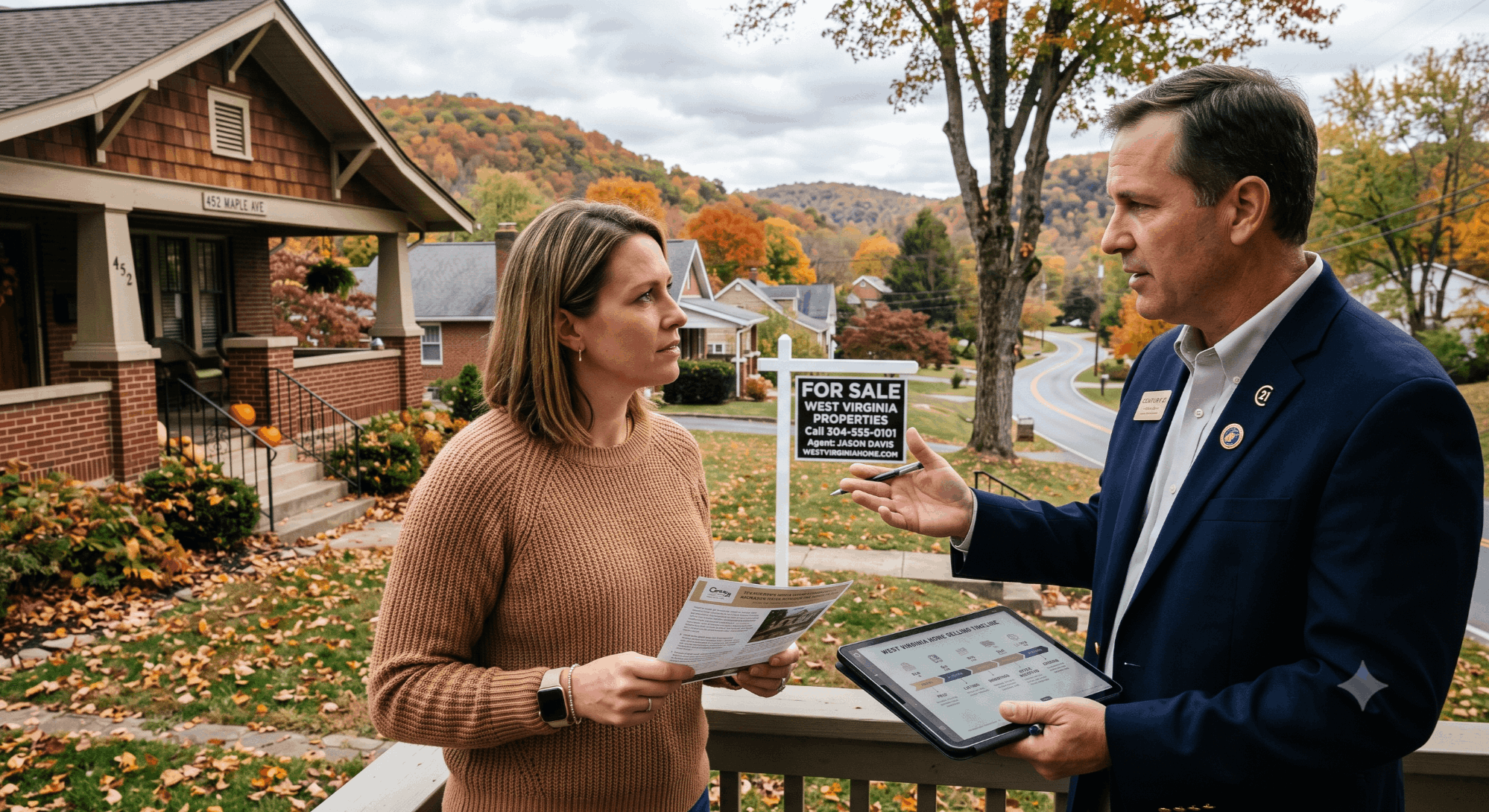
Most homes in West Virginia take roughly 75 to 96 days to sell from the day they hit the market to the day you hand over the keys, though the honest answer depends heavily on where your property sits. A move-in ready home near Martinsburg can go under contract in under three weeks, while a remote parcel in the southern coalfields might wait three months or more for the right buyer. Understanding the typical timeline to sell a house in West Virginia helps you plan your move, line up your finances, and price with confidence from day one. A seasoned West Virginia realtor who tracks your local numbers can pinpoint exactly where your home fits within these ranges.
This guide breaks down every stage of the process, from pre-listing prep through closing, and shows how the timeline shifts between fast metros like Morgantown and the quieter mountain communities. You will also find practical, field-tested strategies to help you sell your home faster without leaving money on the table.
Quick Answer
West Virginia homes spend an average of 42 to 62 days on market before going under contract, followed by a 30 to 35 day closing period. That puts the total timeline from listing to keys at roughly 75 to 96 days. Location changes everything: the Eastern Panhandle averages about 18 days to contract, while rural southern counties can take 85 to 110 days or longer.
Key Takeaways
- Statewide average: 42 to 62 days on market plus 30 to 35 days to close, or about three months total.
- Fastest markets: the Eastern Panhandle (around 18 days), the Charleston metro, and Morgantown.
- Slowest markets: rural and southern counties (85 to 110 days) and remote mountain properties.
- Price matters: homes under $200K in desirable areas move in about 21 days; homes above $400K average closer to 76 days.
- Condition matters: move-in ready homes sell about 52% faster than those needing significant work.
- Fastest month: April, at roughly 50 days; the slowest is January at about 73 days.
- Top-dollar month: June listings tend to fetch about 5.8% more than the annual average.
Table of Contents
- 1. The Complete West Virginia Selling Timeline
- 2. West Virginia Market Numbers at a Glance
- 3. Urban Markets: Charleston, Morgantown, and Huntington
- 4. The Eastern Panhandle Advantage
- 5. Selling Rural and Mountain Property
- 6. What Affects Your Selling Timeline
- 7. Best Time of Year to Sell in West Virginia
- 8. How to Sell Your West Virginia Home Faster
- 9. Common Mistakes That Delay WV Home Sales
- 10. Faster Alternatives When You Need to Sell Quickly
- 11. Understanding the West Virginia Closing Process
- 12. Getting Your Home Sold on Your Timeline
- 13. Frequently Asked Questions
- 14. Glossary of Key Terms
The Complete West Virginia Selling Timeline
Selling a home in West Virginia happens in three distinct phases, and each one has its own typical duration. When you know what each phase involves, the process feels far less unpredictable. From the moment you decide to sell to the day you sign at the closing table, most Mountain State homeowners are looking at three to five months. If you want the full walkthrough of every stage, our step-by-step guide to selling a house in West Virginia lays out each phase in detail.
West Virginia Home Sale Timeline
Pre-Listing Preparation: choosing an agent, setting your price, prepping and staging, professional photography, and completing your seller disclosures.
Active Listing Period: your home goes live on the MLS, showings and open houses happen, and offers come in and get negotiated. (*This range swings widely by region.)
Under Contract to Close: inspections, appraisal, title search, loan underwriting, final walkthrough, and closing.
Total average timeline: 75 to 96 days, or roughly 2.5 to 3.5 months.
Keep in mind that these are statewide averages. Your real timeline hinges on where in West Virginia your property sits, its condition and price point, the current balance of buyers and sellers, and how sharply your home is priced and marketed from the very first day it goes live.
West Virginia Market Numbers at a Glance
Before we get into regional differences, here is where the West Virginia housing market stands right now. Conditions have settled into a more balanced pattern, with steady price growth and slightly improved inventory compared with the frantic seller's market of recent years. Tracking current West Virginia real estate market trends helps you read buyer demand before you settle on a list price.
West Virginia Housing Market Snapshot
$242,900
Median Sale Price
up 3.9% year over year
62
Median Days on Market
Balanced market range
0.7
Months of Supply
Low inventory statewide
99%
Sale-to-List Price Ratio
Sellers near asking price
These statewide figures hide an enormous amount of regional variation. The Eastern Panhandle behaves almost like a Washington D.C. suburb, with fast sales and higher prices, while coal country and the remote mountain communities march to a completely different beat. Reading your specific submarket correctly is what keeps your expectations realistic.
| Market Type | Avg. Days to Contract | Typical Price Range | Competition Level |
|---|---|---|---|
| Eastern Panhandle | 18 days | $245K to $335K | High |
| Charleston Metro | 35 to 42 days | $162K to $245K | Moderate |
| Morgantown Area | 30 to 40 days | $267K to $425K | High |
| Huntington Area | 45 to 55 days | $80K to $157K | Moderate |
| Rural / Southern Counties | 85 to 110+ days | $80K to $175K | Low |
Timeline planning starts with an accurate number. Get a data-driven valuation based on real comparable sales in your specific county, not an automated guess. Response within 24 hours.
Urban Markets: Charleston, Morgantown, and Huntington
West Virginia's cities and inner suburbs move much like other mid-sized metros, just at lower price points that keep homeownership within reach. Here is what sellers can realistically expect in the state's three largest markets.
How Long Homes Take to Sell in Charleston
As the state capital and largest city, Charleston runs a fairly active market powered by state government, healthcare, and professional services. Sought-after pockets like South Hills, Kanawha City, and the East End each carry their own demand patterns.
Priced correctly, Charleston homes typically go under contract within 35 to 42 days. The median value sits around $162,000, though premium neighborhoods reach $375,000 and up. Steady appreciation has made Charleston one of the more stable places to sell in the state.
Charleston Quick Stats
Median home value: about $162,000 | Days to contract: 35 to 42 | Competition: moderate | Inventory: rising steadily.
Selling a House in Morgantown
Home to West Virginia University, Morgantown enjoys reliable demand from a student body of more than 27,000, a strong healthcare sector anchored by WVU Medicine, and a growing tech scene. That mix creates a dual market of owner-occupied homes and investment properties.
Morgantown commands the highest median prices among the state's major cities at roughly $267,000, with premium areas near Cheat Lake pushing past $425,000. Homes here usually sell within 30 to 40 days, and the area has posted the strongest appreciation of any major West Virginia metro, driven by tight inventory and consistent demand.
The Huntington-Ashland Timeline
Huntington tells a different story. Marshall University and Cabell Huntington Hospital anchor the local economy, but the market moves more slowly than Charleston or Morgantown. Plan on 45 to 55 days on market for a well-priced home.
The upside is genuine affordability. With a median price near $157,000 and steady appreciation, Huntington offers one of the lowest barriers to homeownership in the eastern United States. Expect fewer showings here, but the buyers who do show up tend to be serious.
The Eastern Panhandle Advantage
If you are selling in Berkeley, Jefferson, or Morgan County, you are working in West Virginia's fastest and most competitive market. The Eastern Panhandle functions less like traditional West Virginia and more like an outer D.C. suburb, pulling in commuters, remote workers, and retirees leaving the higher-cost markets of Maryland and Northern Virginia.
Eastern Panhandle Market Performance
18
Days on Market (Avg)
9.3%
Annual Appreciation
$335K
Median Price (Berkeley)
23.6%
Charles Town YoY Growth
Martinsburg and Charles Town lead the activity in Berkeley and Jefferson Counties. Charles Town in particular has seen striking growth, with a roughly 23.6% year-over-year jump in sale prices. Shepherdstown, the historic college town, has posted some of the strongest long-term appreciation of any smaller community in the state.
A few forces make this corner of the state stand apart:
- D.C. and Baltimore commuter demand: many buyers work in the capital region and commute by MARC train or along I-81.
- Remote-work migration: the area drew a wave of remote workers chasing lower costs and more space.
- Strong schools: Jefferson County schools rank among the best in West Virginia, a major draw for families.
- Consistent showing activity: commuter buyers often tour on weekday evenings, keeping demand steady all week.
Selling here, you can reasonably expect multiple showings within days of listing, the possibility of competing offers, and a timeline closer to three or four weeks to contract rather than the two-month statewide average.
Selling Rural and Mountain Property in West Virginia
Rural property runs on a completely different clock. If you are selling in McDowell, Logan, Mingo, Wyoming, or another southern or remote mountain county, prepare for a longer road with fewer buyers, though the ones who do come are usually serious.
Rural listings often need 85 to 110 days on market, and sometimes more. Several factors stretch the timeline:
Why Rural West Virginia Homes Take Longer to Sell
- A smaller buyer pool, as most rural counties have lost population.
- Limited financing for homes with wells, septic systems, or non-standard features.
- Buyer concern about mine subsidence in coal regions.
- Access challenges such as steep driveways and unpaved roads.
- Spotty high-speed internet, a dealbreaker for remote workers.
- Distance from jobs, healthcare, and everyday amenities.
- Extra documentation for wells, septic, and private road maintenance.
On the other hand, rural property attracts a specific kind of buyer who values privacy, land, and lower cost over convenience. Your ideal buyer may be a retiree, a remote worker, a vacation-home seeker, or someone building a homestead, and your marketing should speak directly to those groups.
| Factor | Urban / Suburban WV | Rural WV |
|---|---|---|
| Avg. Days on Market | 18 to 42 days | 85 to 110+ days |
| Showings Per Week | 5 to 15 | 1 to 3 |
| Buyer Financing | Conventional, FHA, VA | Often cash or USDA |
| Inspection Concerns | Standard | Well, septic, mine surveys |
| Negotiating Position | Balanced to seller | Often buyer |
Before you commit to a timeline, run your seller net sheet. It breaks down commissions, transfer taxes, and closing fees so there are no surprises at the closing table.
What Affects How Long It Takes to Sell a House in West Virginia?
Location sets the baseline, but several other variables decide how fast your home actually sells. The good news is that most of them are within your control.
Your Price Point Drives Everything
Price and time on market move together. The sweet spot in West Virginia sits below $200,000 in desirable areas, where homes average just 21 days on market. As the price climbs, the timeline stretches. Choosing a low commission realtor who still delivers full-service marketing lets you keep more of your equity while your home is priced to move.
Days on Market by Price Point
The luxury segment has tightened considerably as demand for higher-end homes has grown.
Property Condition and Turnkey Appeal
Move-in ready homes sell about 52% faster than those needing significant work. That gap has widened as buyers increasingly want turnkey properties they can settle into right away. In West Virginia, where older housing stock is common, condition can make or break your timeline.
A few West Virginia-specific condition issues tend to slow sales:
- Foundation movement tied to clay soil, common around Charleston, Huntington, and Parkersburg.
- Mine subsidence concerns, since much of southern West Virginia sits over abandoned mines.
- Septic system age and condition, which matters most on rural parcels.
- Well water quality and flow documentation.
- Radon levels, which can run high in coal-seam areas.
- Flood zone designation and related insurance costs.
Pricing Strategy and Your Listing Agent
Overpricing is the number one reason homes sit. Agents across the state consistently see that homes priced right from day one sell faster, and often for more, than those that start high and grind through price cuts. Starting with an accurate realtor home valuation keeps you from guessing.
The statewide sale-to-list ratio near 99% tells you that sellers who price well are getting close to their asking price. It also tells you that buyers expect fair pricing and will not overpay by much. Lean on an agent who backs up the number with a thorough comparative market analysis specific to your neighborhood.
Best Time of Year to Sell a House in West Virginia
Like most markets, West Virginia real estate follows a seasonal rhythm. The state's terrain and weather just make those seasonal swings more pronounced than in flatter, milder regions. If your timing is flexible, our guide to the best time to sell a house in West Virginia breaks down how each month affects both speed and price.
| Month | Avg. Days on Market | Best For | Notes |
|---|---|---|---|
| January | 73 days | Serious buyers only | Slowest month; winter weather limits showings. |
| April | 50 days | Selling fast | Fastest month; spring buyers are active. |
| June | 55 days | Maximum price | About 5.8% higher prices than the annual average. |
| September | 58 days | Family buyers | Post-summer push before the holidays. |
| November | 68 days | Motivated buyers | Lower competition as the holiday slowdown begins. |
For rural and recreational property, the seasonal effect is even stronger. Mountain access roads can be impassable in deep winter, and homes simply show better when foliage and outdoor features are on display. Spring and early summer usually deliver the best results for land and cabin-style listings.
How to Sell Your West Virginia Home Faster
You cannot control the market, but you can absolutely control the moves that shorten your time on market and pull in qualified buyers sooner. For a deeper playbook, our tips to sell your house fast in West Virginia cover the fastest levers in more detail.
1. Price It Right From Day One
This is the single biggest lever. Homes priced correctly at launch consistently sell faster and for more than those that need reductions. Once a listing sits past 30 days, buyers assume something is wrong and start floating lowball offers.
2. Invest in Professional Photography
In a spread-out market like West Virginia, buyers often drive a long way for a showing. Your photos decide whether they make that trip. Dark, amateur phone shots translate directly into fewer showings and longer market times.
3. Handle Major Issues Before You List
A pre-listing inspection surfaces the problems that tend to derail a deal later. In West Virginia, that checklist usually includes:
Pre-Listing Inspection Priorities for WV Sellers
- ✓ Septic inspection and pump records for rural properties.
- ✓ Well water testing and flow-rate documentation.
- ✓ Radon testing, especially in coal regions.
- ✓ HVAC service history.
- ✓ Roof inspection for older homes.
- ✓ Foundation assessment in clay-soil areas.
- ✓ Mine subsidence documentation in southern WV.
4. Stage for Your Most Likely Buyer
Every West Virginia submarket draws a different buyer. Morgantown pulls young professionals and families, the Eastern Panhandle attracts D.C. commuters, and rural areas appeal to retirees and remote workers. Stage your home to fit whoever is most likely to buy it.
5. Stay Flexible With Showings
In the Eastern Panhandle, commuter buyers frequently want weekday evening slots. In rural areas, weekends may be the only realistic window. Say yes to as many showings as you can, especially during the crucial first two weeks. It also pays to understand your real estate commission options before you sign a listing agreement, so your marketing budget and your net proceeds are both working in your favor.
Every sale is different. Whether you want full-service listing at a 1.5% fee or a plan tailored to a unique property, it helps to see all your options side by side before you decide.
Common Mistakes That Delay West Virginia Home Sales
These are the missteps that reliably keep homes on the market longer than they should be.
Top Timeline-Killing Mistakes
Overpricing based on what you need
The market does not care what you owe or hope to net. Price against comparable sales, not your personal math. A home priced even 5% too high can sit for months.
Neglecting curb appeal
Many West Virginia homes come with large lots and mature landscaping. Overgrown yards, peeling paint, and cluttered porches read as "neglected" before a buyer ever steps inside.
Hovering during showings
Buyers cannot picture themselves in your home while you watch from the corner. Leave during showings and let them explore freely.
Hiding known problems
West Virginia law requires disclosure of known defects. Concealing issues does not make them vanish; it makes deals collapse during inspection and can expose you to legal trouble.
Limiting showing availability
Every showing you turn down is a potential buyer lost. Stay flexible, particularly in the first two weeks when your listing has peak visibility.
Faster Alternatives When You Need to Sell Quickly
Sometimes life demands a faster exit than the open market allows. Here are your realistic options, with an honest look at the tradeoffs of each.
| Option | Timeline | Expected Price | Best For |
|---|---|---|---|
| Traditional Sale | 75 to 96 days | 100% market value | Maximum price, flexible timeline |
| Cash Buyer Company | 7 to 14 days | 65% to 75% market value | Urgent situations, distressed homes |
| iBuyer | 14 to 30 days | 85% to 95% market value | Move-in ready homes, convenience |
| Aggressive Pricing | 14 to 30 days | 95% to 98% market value | Good homes, faster timeline needed |
Cash buyers and iBuyers typically pay 15% to 35% below market value in exchange for speed and certainty. That can make sense for a property in rough condition or a genuinely urgent situation, but most sellers still come out ahead on the open market, even when pricing aggressively for a quick sale.
If speed is your priority and you are exploring a cash offer for my house type of sale, make sure you understand exactly what you are trading away in price before you commit. Comparing a few offers against your estimated market value keeps the decision grounded in numbers rather than pressure.
If timing, condition, or certainty matters more than squeezing out the last dollar, a cash offer may fit. We will walk you through the full range of options so you can compare with clear eyes, no pressure.
Understanding the West Virginia Closing Process
Once you accept an offer, closing in West Virginia usually takes 30 to 35 days with conventional financing. Here is what happens during that stretch. For a dollar-by-dollar look at what you will owe at the table, review our breakdown of West Virginia seller closing costs.
West Virginia Closing Process Timeline
Days 1 to 3: Contract execution
The signed contract goes to the title company and earnest money is deposited into escrow.
Days 3 to 10: Inspection period
The buyer inspects and any repair requests get negotiated. West Virginia contracts commonly use a 10-day inspection contingency.
Days 5 to 15: Title search
The title company confirms ownership, checks for liens, and prepares the title commitment.
Days 10 to 25: Appraisal and loan processing
The lender orders the appraisal, processes documents, and underwrites the mortgage.
Days 28 to 32: Final preparations
The lender issues the clear to close, documents are prepared, and the final walkthrough is scheduled.
Days 30 to 35: Closing day
The seller signs the deed and affidavit, the buyer signs loan documents, funds are disbursed, and the deed is recorded.
In West Virginia, a title company or real estate attorney typically oversees closing. The seller usually signs first, and you can often complete your part electronically. Your seller closing cost generally runs about 1.5% to 2% of the sale price, separate from agent commissions, covering transfer taxes, title fees, and prorated property taxes.
The state charges specific transfer taxes: $1.10 per $1,000 of sale price at the state level, plus an additional county share that ranges from $2.20 to $6.60 per $1,000 depending on where the property sits.
Seller Savings Calculator
How much more do you keep with our 1.5% listing fee?
Select your home's estimated value to see your real net proceeds, side by side.
Traditional Agent, 3%
Our Fee, Only 1.5%
Extra in your pocket
$6,000
vs. a traditional 3% listing agent, with zero reduction in service or marketing.
Traditional Agent, 3%
Our Fee, Only 1.5%
Extra in your pocket
$7,500
vs. a traditional 3% listing agent, with zero reduction in service or marketing.
Traditional Agent, 3%
Our Fee, Only 1.5%
Extra in your pocket
$9,000
vs. a traditional 3% listing agent, with zero reduction in service or marketing.
Traditional Agent, 3%
Our Fee, Only 1.5%
Extra in your pocket
$11,250
vs. a traditional 3% listing agent, with zero reduction in service or marketing.
Traditional Agent, 3%
Our Fee, Only 1.5%
Extra in your pocket
$15,000
vs. a traditional 3% listing agent, with zero reduction in service or marketing.
Estimates only. Closing costs vary by county. Buyer's agent commission is negotiable.
Getting Your West Virginia Home Sold on Your Timeline
Selling a house in West Virginia averages 75 to 96 days from listing to closing, but your real timeline lives or dies on location. The Eastern Panhandle's roughly 18-day pace sits worlds apart from the rural southern counties, where crossing 100 days is routine.
The pieces you control, pricing, condition, marketing, and showing flexibility, carry real weight. Homes that are priced right and presented well consistently beat the market averages, no matter which county they sit in.
Whatever your timeline looks like, start with an accurate read on your home's value and your local conditions. From there, you can make clear-eyed decisions about pricing, timing, and whether the open market or a faster alternative serves you best.
From the fast-moving Eastern Panhandle to a quiet mountain community, the right strategy is what sets your timeline. Get full-service listing at a 1.5% fee and keep more of your equity, without giving up marketing, negotiation, or support.
Frequently Asked Questions
How long does it take to sell a house in Charleston, WV?
Charleston homes usually go under contract within 35 to 42 days when priced correctly. Premium neighborhoods like South Hills can move faster, while properties needing updates take longer. Adding the closing period, plan on a total of roughly 70 to 80 days from listing to keys changing hands.
Why do rural West Virginia homes take so much longer to sell?
Rural properties face a smaller buyer pool, limited financing for homes with wells and septic systems, buyer concerns about mine subsidence or access, and distance from employment centers. Together these push timelines to 85 to 110 days or more, though the serious buyers who do make offers tend to be highly motivated.
What is the best month to sell a house in West Virginia?
For speed, list in April, when homes average about 50 days on market. For top dollar, June listings tend to fetch roughly 5.8% more than the annual average. Try to avoid January, when homes sit about 73 days and winter weather limits showings, especially for rural and mountain properties.
How much faster does a move-in ready home sell compared to one needing work?
Move-in ready homes in West Virginia sell about 52% faster than those needing significant updates, and that gap keeps widening as buyers favor turnkey properties. Even modest improvements such as fresh paint, updated fixtures, and a deep clean can meaningfully cut your time on market.
Is the Eastern Panhandle housing market different from the rest of West Virginia?
Significantly. The Eastern Panhandle, made up of Berkeley, Jefferson, and Morgan counties, behaves more like a Washington D.C. suburb than traditional West Virginia. Homes sell in about 18 days on average, prices run 30% to 40% above statewide averages, and appreciation has been the strongest in the state. Selling here, expect multiple showings within days of listing.
How do I choose the best real estate agent to sell my house in West Virginia?
Look for an agent with hands-on experience in your specific local market, not just statewide, a track record with homes like yours, strong marketing including professional photography, and clear communication. Ask about their average days on market versus the local average, their sale-to-list ratio, and recent client references. Teams like The Jamil Brothers Realty Group, with 840 homes sold and recognition as NVAR Lifetime Top Producers, bring the market knowledge and resources that help sellers move faster.
What closing costs do sellers pay in West Virginia?
West Virginia sellers typically pay 1.5% to 2% of the sale price in closing costs, separate from agent commissions. That includes the state excise tax of $1.10 per $1,000, county transfer tax of $2.20 to $6.60 per $1,000, title fees, prorated property taxes, and any negotiated concessions. On a $250,000 sale, expect roughly $3,500 to $5,000 in closing costs before commissions.
Can I sell my West Virginia home faster by accepting a cash offer?
Yes, cash sales can close in as little as 7 to 14 days since they skip mortgage approval. The tradeoff is price: cash buyers usually offer 65% to 75% of market value. For most sellers, that 15% to 35% discount is not worth the speed. Consider a cash offer mainly when your timeline is urgent, your home needs repairs that would fail financing, or the local market is unusually slow.
How does mine subsidence affect selling a home in southern West Virginia?
A large share of southern West Virginia sits above abandoned mines, and subsidence concerns can complicate a sale. Buyers often request a mine survey, lenders may hesitate to finance affected properties, and mine subsidence insurance may be required. Homes with documented subsidence can face significant grouting or repair costs. If your property sits in a mine area, disclose it upfront and consider a pre-listing survey to address concerns early.
What happens if my West Virginia home does not sell within 60 days?
If your home has not sold in 60 days, it is time to reassess. The most common culprit is overpricing, so consider a reduction of 3% to 5%. Also review your photos, marketing reach, showing feedback, and condition. Your agent should be giving you weekly updates with specific recommendations, and refreshing the listing with new photos and a rewritten description can restart buyer interest.
Is the West Virginia housing market good for sellers right now?
Conditions favor sellers in most areas, with low inventory near 0.7 months of supply, prices up 3% to 4% year over year, and sale-to-list ratios close to 99%. It is more balanced than the extreme seller's market of recent years, so pricing correctly matters more than ever. The Eastern Panhandle and Morgantown remain the strongest seller's markets, while rural areas hand more negotiating power to buyers.
How long does the West Virginia closing process take?
Once you accept an offer, expect 30 to 35 days to close with conventional financing, or 7 to 14 days for a cash transaction. The process covers inspections, appraisal, title search, loan processing, and final document preparation. A title company or real estate attorney typically oversees closing, and sellers can often sign their documents electronically.
Glossary of Key Terms
Days on Market (DOM)
The number of days from when a property is listed until it goes under contract. It does not include the closing period.
Months of Supply
How long it would take to sell all current listings at the present pace. Under four months signals a seller's market; over six months signals a buyer's market.
Sale-to-List Price Ratio
The final sale price divided by the original list price, shown as a percentage. At 100%, homes sell at asking; above 100% points to bidding wars.
Comparative Market Analysis (CMA)
A report comparing your home to similar recently sold properties to set an accurate list price, usually prepared by your agent.
Earnest Money
A good-faith deposit the buyer makes when an offer is accepted. It is held in escrow and applied toward closing costs.
Mine Subsidence
Ground settling or sinking caused by the collapse of underground mine voids, a common concern across southern West Virginia's coal regions.
Title Search
An examination of public records to confirm ownership and uncover any liens, claims, or encumbrances on the property.
Escrow
A neutral third party that holds funds and documents during the transaction, releasing them only once all contract conditions are met.
Market figures are drawn from public real estate data sources and industry reporting. Timelines and prices are estimates based on current conditions and will vary by property. Consult a local real estate professional for guidance specific to your situation.
Explore More
Browse Every Corner of the DMV Market
Whether you're searching by budget, neighborhood, or buying situation — find exactly what you need below.
Virginia Homes by Budget
Washington DC Homes by Budget
Maryland Homes
Explore Northern Virginia Communities
Loudoun County
Fairfax County & Surrounding
Ready to Make a Move?
Full-Service · No Tradeoffs
List for 1.5% & Keep More Equity
Professional photography, drone video, 3D tours, and expert negotiation — all included. On an $800K home, that's $12,000 more in your pocket vs. a 3% agent.
See the 1.5% Program →Need Speed or Certainty?
Get a No-Obligation Cash Offer
Skip the showings, skip the contingencies. If timing or condition matters more than top dollar, a cash offer may be the right fit. We'll walk you through every option.
Explore Cash Offers →Categories
- All Blogs (1235)
- Buyer Guide (7)
- Buying a home (2)
- Buying Strategies (30)
- festivals (1)
- General Blog (66)
- Market Intelligence (28)
- Market Updates (7)
- Notable Properties For Sale (32)
- Real Estate Tips, News, and More (396)
- Seller Guides (58)
- Selling Your Home (523)
- Top Realtors in Northern Virginia (58)
Recent Posts










Let's Connect