
How Fast Can You Sell a House in Washington, DC?
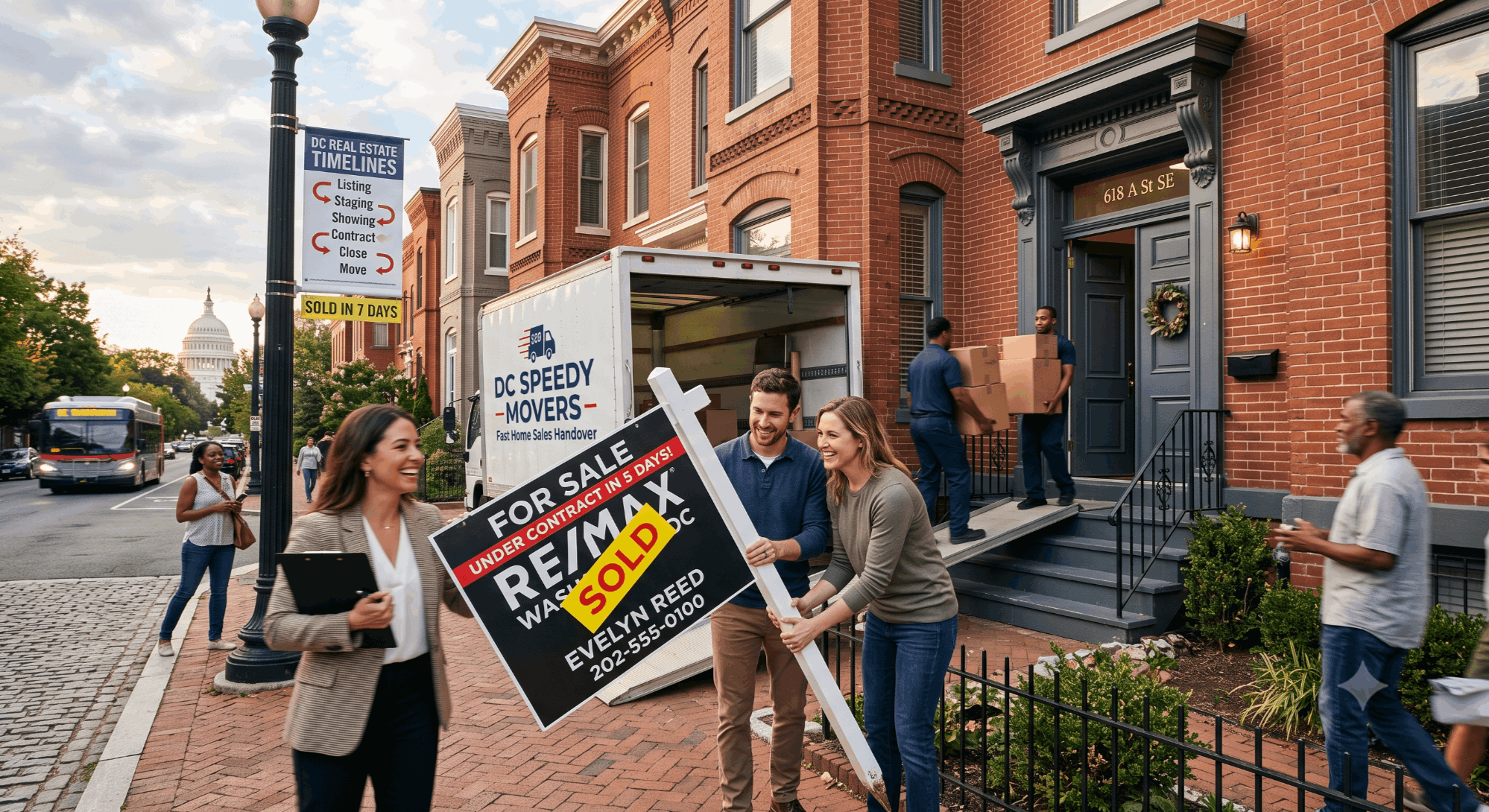
If you need to sell your house quickly in Washington, DC, here is the honest answer: a well-prepared, accurately priced home in a high-demand neighborhood can go under contract in as little as two to four weeks, with closing following another 30 to 45 days later. How fast your sale actually moves comes down to a handful of factors you can mostly control: your asking price, the condition of the property, how easy it is to show, and the type of buyer you attract. Partnering with an experienced Washington real estate agent who understands the District's hyperlocal micro-markets is one of the strongest levers you have for compressing that timeline.
Speed and price are linked, but they are not always in conflict. The same groundwork that helps a home sell fast, namely sharp pricing, strong presentation, and flexible showing access, also tends to protect your final sale price. Below, we break down the fastest realistic timeline for a DC home sale, what speeds a sale up or slows it down, which neighborhoods move quickest, and the fast-sale options worth knowing about when you are working against a hard deadline.
Quick Answer: A move-in-ready, accurately priced home in a sought-after DC neighborhood can go under contract in roughly 2 to 4 weeks, then close in another 30 to 45 days, for a total of about 6 to 9 weeks from listing to keys. Accept a strong cash offer and the entire process can wrap in 2 to 3 weeks. Homes that are overpriced, hard to access, or in slower segments can take 80 days or more just to find a buyer.
Key Takeaways
- Fastest realistic timeline: a well-priced, show-ready DC home can go under contract in 2 to 4 weeks.
- Cash offers compress the full sale to roughly 2 to 3 weeks, usually at a lower net price.
- Pricing accuracy is the single biggest factor in how fast a home sells.
- Condition and access matter: move-in-ready homes with parking and Metro proximity sell fastest.
- Fastest neighborhoods: Capitol Hill, Navy Yard, and the Logan Circle and Shaw corridor.
- Closing adds 30 to 45 days after you accept an offer, and less for cash buyers.
- You can sell fast without slashing your price when preparation is done right.
In This Guide
- How Fast Can You Realistically Sell?
- The Fastest DC Home Sale Timeline
- What Makes a DC Home Sell Fast?
- How to Sell Fast Without Slashing Price
- Pricing for Speed in DC
- Which DC Neighborhoods Sell Fastest?
- Fast-Sale Options for Tight Deadlines
- Mistakes That Slow Down a Sale
- Selling Quickly the Smart Way
- Frequently Asked Questions
- Glossary of Key Terms
How Fast Can You Realistically Sell a House in Washington, DC?
When sellers ask how fast they can sell a house in Washington, DC, they usually mean one of two things: the fastest a buyer can be found, or the fastest the whole deal can close. Both matter, and they stack on top of each other. Finding a buyer is the marketing window. Closing is the settlement window. Add them together and you get your true door-to-door timeline.
In a healthy DC market, a sharply priced, well-presented home often attracts serious interest within the first week and goes under contract inside three to four weeks. The fastest-moving listings, those in turnkey condition in popular neighborhoods, can secure an offer in under two weeks. On the other end, a home that is priced ahead of the market or difficult to show can sit for two to three months before the right buyer appears.
Time to Find a Buyer by Sale Type (DC)
Estimated marketing windows based on recent Bright MLS and Redfin DC metro data. Closing time is additional.
If your priority is a fast sale, the most useful first step is knowing exactly where your property stands today. Request an accurate home value estimate grounded in current comparable sales, not an automated guess, so you can price for speed from day one instead of chasing the market down later.
Get a street-level home valuation from The Jamil Brothers, based on real comparable sales in your neighborhood, not an algorithm. A correct starting price is the fastest path to a quick, clean sale.
The Fastest DC Home Sale Timeline, Step by Step
A fast sale is not an accident. It is the result of front-loading the work so the marketing window stays short and the settlement window runs without surprises. For context on the normal pace, see how long a DC home typically takes to sell before you compress the timeline. Here is what an accelerated, well-managed DC home sale looks like from start to finish.
Prep and Price (Days 1-5)
Declutter, handle quick repairs, complete professional photography, and set an accurate, speed-focused list price before going live.
Go Live and Show (Days 6-14)
List on the MLS, launch marketing, and open the calendar wide for showings and an opening-weekend open house to concentrate buyer traffic.
Review Offers (Days 10-21)
A priced-right home in a strong DC neighborhood often receives offers within two to three weeks. Setting an offer deadline can compress this further.
Under Contract (Day 21)
Accept the strongest offer, sign the contract, and enter the settlement period. Buyer financing strength heavily influences how smoothly this runs.
Close (Days 35-65)
Inspection, appraisal, financing, and title work wrap up over 30 to 45 days. Cash buyers can close in as few as 14 days. Then you hand over the keys.
Total fast-track timeline: roughly 6 to 9 weeks from listing to closing for a strong, well-priced home, or about 2 to 3 weeks if you accept a cash offer. Once you understand the steps, the next move is to get the listing process started while buyer demand is on your side. Learn how our home selling process keeps each stage tight and predictable so nothing stalls between contract and closing.
From pricing and prep to marketing and the closing table, we map out a step-by-step timeline built around your deadline. No guesswork, no wasted days on market.
What Makes a DC Home Sell Fast?
Two homes on the same block can sell weeks apart. The difference usually comes down to a short list of features and decisions that either widen or narrow the pool of ready buyers. Timing is one of those levers, and listing during the best time of year to sell in DC puts more active buyers in front of your home from day one. Understanding these levers helps you focus your time and money where they actually move the needle on speed.
| Speeds Up Your Sale | Slows Down Your Sale |
|---|---|
| Move-in-ready, updated condition | Dated finishes and deferred maintenance |
| Dedicated parking (a major draw in DC) | No parking or street-only parking |
| Within walking distance of Metro | High HOA fees or pending assessments |
| Professional photos and staging | Cluttered rooms and weak listing photos |
| Flexible, easy showing access | Restricted showings or tenant occupancy |
| Accurate, market-aligned pricing | Aspirational pricing above comparable sales |
Condition and Presentation Win the First Week
Most buyers form an opinion in the first few photos and the first 30 seconds of a showing. Homes that are clean, decluttered, well-lit, and professionally photographed generate more showings, and more showings in a short window create the competition that produces fast, full-price offers. Small investments such as fresh paint, deep cleaning, and minor repairs almost always pay for themselves in speed.
Buyer Pool Size Drives Speed
Property type matters too. Rowhouses and single-family homes in DC tend to sell faster than condos because they appeal to a wider audience, including families and buyers who want to skip HOA fees. Entry and mid-level price points move quickest because more qualified buyers can afford them. Luxury homes above one million dollars naturally take longer simply because fewer buyers shop in that range.
How to Sell Your DC House Fast Without Slashing the Price
Speed does not have to mean a discount. The goal is to make your home the obvious best choice for the buyers who are already shopping, so it sells quickly at a strong number. These are the moves that consistently shorten the marketing window in the DC market.
Fast-Sale Action Checklist
- ✓ Get a pre-listing inspection to find and fix issues before buyers do.
- ✓ Price at or just below comparable sales to generate competing offers.
- ✓ Invest in professional photography and light staging before launch.
- ✓ Go live on a Thursday to capture peak weekend showing traffic.
- ✓ Keep showing availability wide open, especially the first two weeks.
- ✓ Set an offer-review deadline when traffic is strong to create urgency.
- ✓ Respond to offers fast so momentum never cools off.
- ✓ Favor buyers with strong, verified financing for a smoother close.
Keeping more of your equity is part of selling smart, not just fast. A full-service listing at a 1.5% fee gives you the same professional marketing, photography, and negotiation that drive a quick sale, while leaving more money in your pocket compared with a traditional 3% listing commission. Use the calculator below to see the difference at your price point.
Seller Savings Calculator
How much more do you keep with our 1.5% listing fee?
Select your home's estimated value to see your real net proceeds, side by side.
Traditional Agent, 3%
Our Fee, Only 1.5%
Extra in your pocket
$6,000
vs. a traditional 3% listing agent, with zero reduction in service or marketing.
Traditional Agent, 3%
Our Fee, Only 1.5%
Extra in your pocket
$7,500
vs. a traditional 3% listing agent, with zero reduction in service or marketing.
Traditional Agent, 3%
Our Fee, Only 1.5%
Extra in your pocket
$9,000
vs. a traditional 3% listing agent, with zero reduction in service or marketing.
Traditional Agent, 3%
Our Fee, Only 1.5%
Extra in your pocket
$11,250
vs. a traditional 3% listing agent, with zero reduction in service or marketing.
Traditional Agent, 3%
Our Fee, Only 1.5%
Extra in your pocket
$15,000
vs. a traditional 3% listing agent, with zero reduction in service or marketing.
Estimates only. Closing costs vary. Buyer's agent commission is negotiable.
Pricing for Speed in the Washington, DC Market
Pricing is where most fast sales are won or lost. The instinct to price high and leave room to negotiate almost always backfires, because it pushes your home into a quieter price band and lets sharper-priced competitors win the early traffic. Factoring your DC seller closing costs into the math from the start keeps your list price realistic and your net on target. In a market where buyers can compare every recent sale online, the listings that move fastest are the ones that look like clear value on day one.
How Time on Market Affects Your Final Price
Based on national and DC metro research. Individual results vary.
The pattern is consistent: homes priced correctly from the start sell faster and often net more than homes that start high and require reductions. A stale listing with multiple price cuts signals trouble to buyers, who then offer below asking, the opposite of what overpricing was meant to achieve. Before you settle on a number, it helps to map out the full picture of what you will actually walk away with. Run your estimated net proceeds so your pricing decision is built on real take-home figures, not just the headline sale price.
Our seller net sheet breaks down commission, transfer taxes, and closing costs so you can set a speed-focused price with confidence and no surprises at the closing table.
Which Washington, DC Neighborhoods Sell Fastest?
DC real estate is hyperlocal, and a few blocks can change both your price and your speed. Neighborhoods with strong transit access, walkable retail, and a mix of attainable price points tend to draw the deepest, fastest-moving buyer pools. Reviewing the current Washington, DC market trends helps you read where buyer demand is strongest before you list. Here is how some of the District's better-known areas typically compare.
| Neighborhood | Typical Time to Contract | Sale Speed |
|---|---|---|
| Navy Yard / Capitol Riverfront | 30-45 days | Fast |
| Capitol Hill | 35-50 days | Fast |
| Logan Circle / Shaw | 40-55 days | Fast |
| Dupont Circle | 45-60 days | Moderate |
| Brookland | 45-60 days | Moderate |
| Georgetown | 55-75 days | Moderate |
| Friendship Heights / Chevy Chase DC | 60-80 days | Slower |
| Downtown condos | 60-90 days | Slower |
Estimates reflect recent market data and represent typical timelines. Individual properties vary with condition, pricing, and micro-location.
The fast movers share common traits: transit access, walkable dining and retail, and price points that welcome both first-time and move-up buyers. Luxury enclaves and downtown condos tend to be slower because their buyer pools are smaller and more deliberate, and because condos face extra scrutiny over HOA fees and assessments.
Fast-Sale Options When You Need to Move Quickly
Sometimes a deadline leaves no room for a standard marketing window. A job relocation, a financial squeeze, a divorce, or an inherited property you cannot maintain may call for certainty over top dollar. If the home needs work, selling your DC home as-is can remove repair delays from the timeline entirely. Each path below trades price, speed, and control differently, so it helps to weigh them side by side.
| Option | Timeline | Net Proceeds | Best For |
|---|---|---|---|
| Fast-track MLS sale | 6-9 weeks | Highest | Strong price plus reasonable speed |
| Cash offer / iBuyer | 2-4 weeks | Lower (85-95%) | Speed, certainty, as-is sale |
| Auction | 30-60 days | Variable | Unique properties, motivated sellers |
| For sale by owner | Often slower | Mixed | Experienced sellers in hot markets |
For most DC sellers, a fast-track sale with a skilled agent still delivers the best balance of speed and price. When certainty truly outweighs maximizing the number, though, a cash sale can be the right call. You can explore a cash offer on your property and compare it against a traditional listing before you commit to either route.
If timing, condition, or certainty matters more than maximum price, a cash sale may fit. We will show you a real cash number alongside what a traditional sale could net, so you can choose with full information and no pressure.
Mistakes That Slow Down a DC Home Sale
Many slow sales come down to a few avoidable errors. Sidestep these and you remove the most common reasons DC homes linger on the market.
Common Speed Killers
Overpricing to leave room. Buyers skip overpriced homes instead of negotiating, which forces price cuts that read as desperation.
Skipping staging and cleaning. Cluttered rooms and weak photos cut showing requests before a buyer ever walks in.
Restricting showings. Busy DC buyers need flexibility. Limited windows quietly cost you serious offers.
Ignoring early feedback. If the first showings all flag the same issue, that is data. Adjust quickly instead of waiting.
Picking an agent on the highest estimate. An inflated number wins the listing, not the sale. The market sets value, so choose on strategy and track record.
Choosing the right partner protects your timeline as much as your price. The structure of your listing agreement matters too, and reviewing flexible commission options up front helps you align your costs with your goals before a single showing happens.
Every sale is different. We will walk you through full-service listing options designed around your timeline, your equity, and how fast you need to move, with no service tradeoffs.
Selling Your DC Home Quickly, the Smart Way
How fast you can sell a house in Washington, DC depends far more on preparation than on luck. A well-priced, show-ready home in a desirable neighborhood can go under contract in two to four weeks and close within a couple of months. A cash sale can move even faster when certainty matters most. The same fundamentals that produce a quick sale, accurate pricing, sharp presentation, and easy access, also protect your final number.
If speed is your priority, build your plan around the factors you control and lean on local expertise for the rest. The District's market rewards sellers who come in prepared, price with discipline, and stay flexible during the first crucial weeks on the market. Get those pieces right and a fast sale stops being a gamble and starts being a strategy.
Frequently Asked Questions
How fast can you realistically sell a house in Washington, DC?
A move-in-ready, accurately priced home in a high-demand DC neighborhood can go under contract in roughly two to four weeks, then close in another 30 to 45 days, for a total of about six to nine weeks. The fastest turnkey listings can secure an offer in under two weeks, while overpriced or hard-to-show homes may take 80 days or more to find a buyer.
What is the fastest way to sell a house in DC?
The fastest route is usually a cash offer, which can close in as little as two to three weeks because it skips financing and appraisal delays, though it typically nets a lower price. If you want speed without giving up much value, the next fastest option is a fast-track MLS sale with accurate pricing, professional marketing, and wide-open showing access.
Can you sell a house in DC in 30 days?
Yes, but it requires the right conditions. A turnkey home priced sharply in a fast-moving neighborhood can go under contract within the first one to two weeks, and a cash buyer can then close inside the remaining time. With a traditional financed buyer, a 30-day door-to-door close is tight because the settlement period alone usually runs 30 to 45 days.
How long does closing take after accepting an offer in DC?
The typical settlement period in DC is 30 to 45 days from contract acceptance. That window covers the home inspection, appraisal, buyer financing approval, and title work. Cash buyers can sometimes close in as few as 14 to 21 days when all parties are organized and ready.
Does pricing low actually make a DC home sell faster?
Pricing at or slightly below recent comparable sales tends to generate more showings and competing offers, which often produces a fast sale at or above asking. The bigger mistake is overpricing, which slows everything down and usually leads to price cuts and a lower final number. The goal is accurate pricing, not a giveaway.
What makes a house sell fast in Washington, DC?
The fastest sales combine move-in-ready condition, accurate pricing, professional photography, and easy showing access. In DC specifically, dedicated parking and proximity to a Metro station are strong accelerators. Property type matters too, since rowhouses and single-family homes usually move faster than condos that carry HOA fees.
Is a cash offer the fastest way to sell a DC home?
A cash offer is generally the fastest path because it removes lender financing and appraisal contingencies, allowing a close in about two to three weeks. The tradeoff is price, since most cash and iBuyer offers land somewhere between 85 and 95 percent of full market value. It is best suited to sellers who value certainty and an as-is sale over maximum proceeds.
Which DC neighborhoods sell the fastest?
Navy Yard, Capitol Hill, and the Logan Circle and Shaw corridor consistently rank among the fastest-selling areas in the District. They share strong transit access, walkable dining and retail, and a mix of price points that attracts a deep buyer pool. Luxury enclaves like Georgetown and Friendship Heights, along with downtown condos, generally take longer.
What slows down a home sale in DC?
The most common culprits are overpricing, poor presentation, and restricted showing access. Other drags include high HOA fees on condos, deferred maintenance, lack of parking, and choosing an agent based on an inflated price estimate. If a home is getting showings but no offers, the issue is usually price or condition relative to the competition.
How much does it cost to sell a house quickly in DC?
Typical seller costs include real estate commissions, transfer taxes in the range of 1.1 to 1.45 percent depending on price, title fees, and any negotiated closing credits. Choosing a full-service 1.5 percent listing fee instead of a traditional 3 percent commission can keep more equity in your pocket without reducing the marketing that drives a fast sale. A net sheet is the best way to see your real bottom line.
How do I choose an agent to sell my DC home fast?
Look for an agent with a proven record in your specific neighborhood, not just DC broadly. Ask about their average days on market, list-to-sale price ratio, and exactly how they market for speed. Interview two or three agents and be cautious of anyone who simply quotes the highest price to win the listing. The Jamil Brothers Realty Group has sold 840 or more homes with over 500 million dollars in volume across DC and Northern Virginia, earning recognition as NVAR Lifetime Top Producers.
How does the full-service 1.5% listing fee work?
The 1.5 percent listing fee is a full-service offering that includes professional photography, MLS syndication, marketing, showing coordination, negotiation, and representation through closing. It delivers the same quality service as a traditional listing at a lower commission rate, with the buyer's agent commission handled separately and negotiable. It is designed for sellers who want to move quickly and keep more of their equity.
Glossary of Key Terms
Days on Market (DOM)
The number of days a home is actively listed before it goes under contract. A core measure of sale speed.
Pre-Listing Inspection
An inspection ordered by the seller before listing, used to fix issues early and avoid delays during a buyer's inspection.
Under Contract / Pending
A home with an accepted offer that is working through settlement. It is no longer actively marketed but has not yet closed.
Settlement Period
The window between contract acceptance and closing, usually 30 to 45 days, covering inspection, appraisal, financing, and title work.
Cash Offer
An offer with no mortgage financing, which removes appraisal and lender delays and enables the fastest possible closing.
List-to-Sale Price Ratio
The final sale price divided by the list price. A ratio near 100 percent signals strong, fast-moving demand.
Comparable Sales (Comps)
Recently sold homes similar to yours in location, size, and condition, used to set an accurate, speed-focused price.
Pre-Approval
A lender's written commitment showing how much a buyer can borrow. Buyers with strong pre-approval close faster and more reliably.
Explore More
Browse Every Corner of the DMV Market
Whether you're searching by budget, neighborhood, or buying situation — find exactly what you need below.
Virginia Homes by Budget
Washington DC Homes by Budget
Maryland Homes
Explore Northern Virginia Communities
Loudoun County
Fairfax County & Surrounding
Ready to Make a Move?
Full-Service · No Tradeoffs
List for 1.5% & Keep More Equity
Professional photography, drone video, 3D tours, and expert negotiation — all included. On an $800K home, that's $12,000 more in your pocket vs. a 3% agent.
See the 1.5% Program →Need Speed or Certainty?
Get a No-Obligation Cash Offer
Skip the showings, skip the contingencies. If timing or condition matters more than top dollar, a cash offer may be the right fit. We'll walk you through every option.
Explore Cash Offers →Categories
- All Blogs (1237)
- Buyer Guide (7)
- Buying a home (2)
- Buying Strategies (30)
- festivals (1)
- General Blog (66)
- Market Intelligence (28)
- Market Updates (7)
- Notable Properties For Sale (32)
- Real Estate Tips, News, and More (396)
- Seller Guide (1)
- Seller Guides (58)
- Selling Your Home (525)
- Top Realtors in Northern Virginia (58)
Recent Posts





Let's Connect