How Do You Sell Your Home in Falls Church, VA for Top Dollar?
Selling for top dollar in Falls Church comes down to three things working together: pricing your home precisely, presenting it so buyers see real value, and keeping the costs of the sale from quietly eroding your final check. This independent city is one of the most competitive seller markets in Northern Virginia, with limited inventory, top-rated schools, and a deep pool of well-qualified buyers. If you want a clear, local read on what your property can command, start by reviewing our Falls Church real estate services and the strategies that consistently move homes here at the highest price.
The catch is that leverage only pays off when you use it correctly. Overpricing in a small market can leave a home sitting and lead to reductions that signal weakness, while underpreparing leaves money on the table even in a seller's market. This guide walks you through the full playbook for selling a Falls Church home for the strongest possible price, from setting the right list number to negotiating competing offers and protecting your net proceeds.
Quick Answer: To sell your home in Falls Church, VA for top dollar, price it accurately against recent local comparable sales, invest in cost-effective preparation like fresh paint, staging, and professional photography, and launch with full marketing during a high-demand window. Falls Church inventory is tight and buyer demand is strong, so a well-prepared, correctly priced home often draws multiple offers within the first one to two weeks. Just as important, control your selling costs, especially commission, so the strong sale price actually reaches your bottom line.
Key Takeaways
- Accurate pricing, not aggressive pricing, is the single biggest driver of a top-dollar sale in a low-inventory market like Falls Church.
- Cosmetic upgrades such as paint, staging, and refinished floors deliver the highest return on investment, often far more than major renovations.
- The first one to two weeks on the market are your most valuable selling days, so the listing must launch fully prepared and marketed.
- Virginia seller closing costs, excluding commission, typically run about 1 to 3 percent of the sale price, and commission is usually the largest single expense.
- Choosing a full-service listing agent with a competitive commission structure can protect tens of thousands of dollars of your equity without weakening your marketing.
In This Guide
- What Top Dollar Really Means in the Falls Church Market
- Why Falls Church Homes Command a Premium
- How to Price Your Falls Church Home for Top Dollar
- Preparing Your Home to Maximize Sale Price
- Marketing That Attracts Top-Dollar Buyers
- Best Time to List for the Highest Price
- Seller Costs and Commission That Affect Your Net
- Seller Savings Calculator
- Negotiating Offers for the Highest Net Proceeds
- Mistakes That Cost Falls Church Sellers Top Dollar
- Choosing an Agent Who Sells for Top Dollar
- Your Falls Church Top-Dollar Game Plan
- Frequently Asked Questions
- Glossary of Key Terms
What Top Dollar Really Means in the Falls Church Market
Selling for top dollar does not mean naming the highest number you can imagine and hoping a buyer agrees. In a market with only a handful of comparable sales each month, top dollar is the highest price the current pool of buyers will actually pay for a home like yours, in its condition, on its street, right now. The goal is to capture every realistic dollar of that range rather than chasing a fantasy figure that scares qualified buyers away.
Falls Church rewards this kind of precision. Because demand consistently outpaces supply, a correctly positioned home frequently attracts competing offers that push the final price above the list. A home that launches too high, by contrast, tends to sit, accumulate days on market, and eventually sell for less than a sharply priced listing would have earned in week one. Top dollar is a strategy, not a wish.
The Falls Church City versus Greater Falls Church Distinction
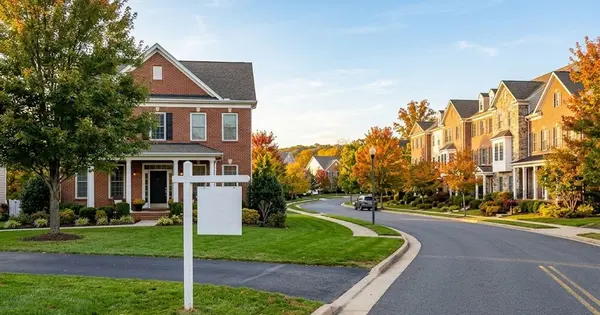
The City of Falls Church is a small independent city of roughly two square miles with its own government, tax rate, and school system. The broader Falls Church mailing area extends into Fairfax County, covering neighborhoods like Pimmit Hills and Jefferson Village that share the address but follow Fairfax County schools and taxes. Homes inside the independent city typically carry a meaningful premium, so knowing which side of the line your home sits on is the first step toward an accurate price.
Why Falls Church Homes Command a Premium
Understanding what makes buyers pay more here helps you lean into the features that justify a top-dollar price. Several factors keep demand strong even when the wider Northern Virginia market cools.
Chronically Limited Inventory
The independent city holds only a few thousand housing units across its tiny footprint, and in any given month just a small number of single-family homes come up for sale. When supply is this thin, a well-priced listing can spark genuine competition, which is the foundation of a sale above asking.
A Powerful School-System Premium
Falls Church City Public Schools operate independently and rank among the strongest districts in Virginia, with schools like Mary Ellen Henderson Middle School and Meridian High School drawing families from across the region. Buyers routinely pay a six-figure premium to live inside the city boundary, so if your home feeds into that system, it is one of your most valuable selling points.
Affluent, Well-Qualified Buyers
The city has one of the highest median household incomes in the country, and most buyers are dual-income professionals in government, defense, technology, or consulting. Financing rarely falls through, which makes deals more reliable, but these buyers are also sophisticated and expect sharp pricing and polished presentation before they stretch to the top of their budget.
Walkability and Metro Access
Direct access to the West Falls Church Metro station, plus walkable restaurants, shops along Broad Street, and a popular Saturday farmers market, adds a lifestyle premium that suburban competitors struggle to match. These amenities give your listing a story that supports a higher number.
How to Price Your Falls Church Home for Top Dollar
Pricing is the most consequential decision you will make. With only a few comparable sales each month and wide variation between a compact mid-century rambler and a new four-thousand-square-foot build on the next block, generic online estimates simply cannot capture your home's true value. Accurate pricing requires a local expert who can adjust for lot size, condition, renovation quality, and the all-important city boundary. Getting the number right from day one matters more here than almost anywhere, because an unrealistic list price is the leading reason a Falls Church home sits unsold and eventually trades below its true value.
Three Pricing Approaches Compared
| Strategy | How It Works | Best When |
|---|---|---|
| Aspirational Pricing | List 5 to 10 percent above recent comps and wait for a motivated buyer. | Rarely advisable. In a thin market, overpricing is punished quickly. |
| Market-Value Pricing | List at or just below the adjusted comp range to draw immediate interest. | Most situations. Generates the strongest first-week traffic. |
| Strategic Underpricing | List 3 to 5 percent below value to spark a bidding war. | High-demand seasons when several buyers are competing. |
In Falls Church, market-value pricing usually produces the best outcome, and in peak season a deliberate, slightly-below-market list price can ignite competing offers that carry the final number well past asking. Homes that are priced accurately from day one sell faster and often for more than those that start high and cut later. The most reliable way to anchor your number is a data-driven home valuation built from street-level comparable sales rather than an automated guess.
⚠️ Pricing Red Flags to Watch For
Be cautious if an agent prices based on what you "need" rather than what the market supports, leans on comps older than six months or from outside the city limits, makes no adjustments for renovation level or lot size, treats online estimates as the primary pricing tool, or recommends "testing the market" high. Each of these wastes your most valuable launch days.
Get a personalized valuation built on real, local comparable sales, not a generic algorithm. We respond within 24 hours with a price range tailored to your property.
Preparing Your Home to Maximize Sale Price
Falls Church buyers are detail-oriented and frequently compare resale homes against brand-new construction. You do not need a six-figure renovation to win, but you do need a property that feels move-in ready. The good news is that the highest returns come from relatively inexpensive cosmetic work, not gut remodels.
High-Return Improvements That Drive Top Dollar
| Improvement | Typical Cost | Estimated Return | Impact |
|---|---|---|---|
| Professional staging | $2,500 to $5,000 | 150 to 300 percent | High, buyers compare against new builds |
| Kitchen refresh (paint, hardware, lighting) | $3,000 to $8,000 | 100 to 200 percent | High, dated kitchens are the top objection |
| Interior paint (neutral palette) | $2,000 to $5,000 | 100 to 200 percent | High, makes any home feel fresh |
| Landscaping and curb appeal | $1,000 to $4,000 | 100 to 150 percent | Moderate, small lots mean every detail counts |
| Refinished hardwood floors | $1,500 to $4,000 | 100 to 175 percent | High, original hardwoods are a hidden asset |
| Full bathroom remodel | $10,000 to $25,000 | 50 to 80 percent | Moderate, only if bathrooms are severely dated |
The pattern is clear. A few thousand dollars in paint and staging on a high-value home can return many times that in additional sale price by creating a strong emotional first impression. Reserve big-ticket remodels for situations where a space is genuinely unsellable as-is. If you want a room-by-room starting point, these staging tips that help homes sell faster show where your prep budget works hardest.
Pre-Listing Preparation Checklist
- ✓ Declutter every room, aiming for 30 to 50 percent less than you live with daily
- ✓ Deep clean everything, including windows, grout, and appliances
- ✓ Address deferred maintenance such as leaky faucets, cracked caulk, and sticky doors
- ✓ Repaint in modern neutral tones like warm whites and soft grays
- ✓ Update lighting fixtures in the kitchen, entryway, and bathrooms
- ✓ Improve curb appeal with fresh mulch, trimmed hedges, and clean walkways
- ✓ Arrange professional staging, especially if the home is vacant or dated
- ✓ Hire a professional photographer, which is non-negotiable in this market
- ✓ Gather documents: survey, prior inspection reports, HOA papers, and permits
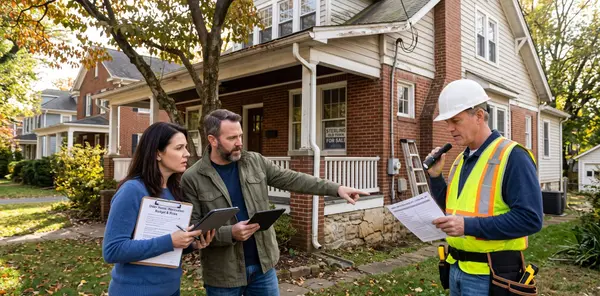
- ✓ Order a pre-listing inspection to handle surprises before buyers find them
Marketing That Attracts Top-Dollar Buyers
Preparation and pricing set the stage, but marketing is what fills your home with the competing buyers who push the price up. Because most buyers begin their search online, the quality of your first impression on the screen directly affects how many people walk through the door, and how much they are willing to offer.
What a Strong Listing Launch Includes
- ✓ Professional, high-resolution photography and twilight shots where the home suits it
- ✓ Video walkthrough and a 3D virtual tour for out-of-area and relocating buyers
- ✓ Full syndication to the regional MLS and every major home-search portal
- ✓ Targeted social and email campaigns to local buyer agents and active shoppers
- ✓ A coordinated first-weekend open house and broker tour to concentrate demand
Concentrating attention into a single, well-promoted launch window is what creates the urgency behind multiple offers. A listing that trickles out slowly, or relaunches after a price cut, loses that momentum and usually settles for less. If you want a full picture of how a professional launch fits into the larger sale, our overview of the step-by-step home selling process shows how each stage connects.
From pricing and prep to marketing and closing, see exactly how a top-dollar sale comes together and what to expect at each step.
Best Time to List for the Highest Price
Across Northern Virginia, spring usually brings the deepest buyer pool, and Falls Church follows that rhythm. The difference here is that scarce inventory keeps motivated buyers active all year, so the question is less about whether your home will sell and more about how much competition you can generate. The seasons below show where demand tends to peak, and the statewide data on the best time to sell a house in Virginia confirms the same spring-led pattern that shapes the local market.
Pre-Season Prep. Fewer active buyers, but far less competition from other sellers. A smart window for inspections, repairs, and staging.
Peak Season. The highest buyer volume and the most competitive offers, as families try to settle before the next school year. This is when homes typically sell fastest and for the most.
Summer Steady. Activity stays solid but a touch calmer. Buyers who missed spring keep searching, and inventory is marginally higher.
Second Wind. Motivated buyers who were not ready in spring resurface, and competition among sellers is lower.
Off-Peak. Fewer listings and fewer buyers, but the buyers who are shopping tend to be highly motivated by relocations or job changes.
If your timeline is flexible, listing from mid-March through mid-April usually maximizes both showing traffic and final price. That said, never let the calendar rush you onto the market before the home is truly ready. A well-prepared home in June will outperform an unprepared home in April every time.
Seller Costs and Commission That Affect Your Net
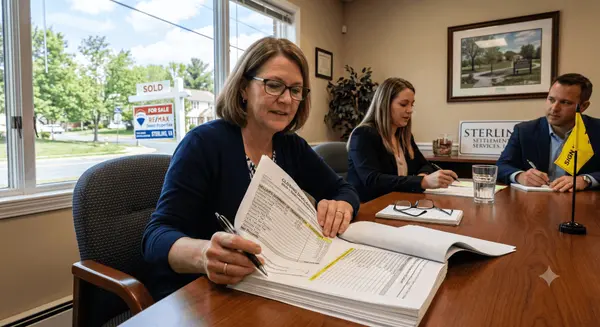
A high sale price only matters if it reaches your bank account. The gap between your sale price and your take-home proceeds is created by closing costs, transfer taxes, and commission. Knowing these numbers in advance lets you plan realistically and protect the top dollar you worked to earn. For a complete statewide breakdown of every line item, it helps to understand the full cost of selling a house in Virginia before you set your expectations.
Typical Seller Closing Costs in Falls Church
| Cost Item | Typical Range | On a $950,000 Sale |
|---|---|---|
| Virginia grantor's tax | $1 per $1,000 (0.1%) | $950 |
| Northern Virginia regional transfer tax | $1.50 per $1,000 (0.15%) | $1,425 |
| Title and settlement fees (seller portion) | $800 to $2,000 | about $1,200 |
| Recording fees | $100 to $300 | about $234 |
| Owner's title insurance (if seller pays) | $1,500 to $3,000 | about $2,200 |
| Prorated property taxes | Varies by closing date | about $2,800 to $5,700 |
| HOA transfer or resale package (if applicable) | $300 to $800 | about $500 |
| Subtotal (excluding commission) | about $9,300 to $12,300 |
Property tax rates differ by jurisdiction. Homes inside the independent city are taxed at the city rate, currently around $1.20 per $100 of assessed value, while homes with a Falls Church address that sit in Fairfax County follow the county rate. Prorated amounts depend on when you close relative to the tax calendar.
These costs alone run roughly 1 to 3 percent of the sale price. Add commission, and total selling costs often land in the 5 to 8 percent range. Before you list, run a seller net sheet so you can see the actual figure you will walk away with after every deduction.
Why Commission Is the Lever That Matters Most
Commission is by far the largest cost of selling. On a $950,000 sale, a traditional total commission can run into the tens of thousands of dollars, more than most sellers pay in every other closing cost combined. Since the recent changes to how commissions are negotiated and disclosed, sellers have more room than ever to keep listing costs down without losing service quality.
This is where a full-service 1.5% listing program protects your top-dollar result. Unlike limited-service models that cut corners, a true full-service listing at 1.5 percent still includes complete marketing, professional photography, expert negotiation, and transaction management. The savings come from efficiency, not from doing less for you.
Commission Models at a Glance
| Model | Listing Fee | Service Level |
|---|---|---|
| Traditional agent | 3% | Full service |
| Flat-fee MLS | A few hundred dollars | MLS entry only, you do the rest |
| Limited-service brokerage | 1 to 2% | Reduced marketing and support |
| Full-service at 1.5% | 1.5% | Full service, no tradeoffs |
Listing costs are not one-size-fits-all, and the right structure depends on your price point, timeline, and whether you are also buying. It is worth comparing flexible commission options side by side so the model you choose protects the most equity for your specific situation.
Where Your Sale Proceeds Go
Our seller net sheet breaks down every cost, from commission to transfer taxes, so you know your true bottom line before you list. Then compare the commission structures that fit your goals.
Seller Savings Calculator
Use the calculator below to see how a full-service 1.5 percent listing fee compares with a traditional rate at several Falls Church price points. Because most homes here sell well above the regional average, the default is set to a higher value, but you can switch tiers to match your situation.
Seller Savings Calculator
How much more do you keep with our 1.5% listing fee?
Select your home's estimated value to see your real net proceeds, side by side.
Traditional Agent, 3%
Our Fee, Only 1.5%
Extra in your pocket
$6,000
vs. a traditional 3% listing agent, with zero reduction in service or marketing.
Traditional Agent, 3%
Our Fee, Only 1.5%
Extra in your pocket
$7,500
vs. a traditional 3% listing agent, with zero reduction in service or marketing.
Traditional Agent, 3%
Our Fee, Only 1.5%
Extra in your pocket
$9,000
vs. a traditional 3% listing agent, with zero reduction in service or marketing.
Traditional Agent, 3%
Our Fee, Only 1.5%
Extra in your pocket
$11,250
vs. a traditional 3% listing agent, with zero reduction in service or marketing.
Traditional Agent, 3%
Our Fee, Only 1.5%
Extra in your pocket
$15,000
vs. a traditional 3% listing agent, with zero reduction in service or marketing.
Estimates only. Closing costs vary. Buyer's agent commission is negotiable.
Negotiating Offers for the Highest Net Proceeds
In a competitive market, the headline price on an offer is only part of the story. The strongest top-dollar outcome usually comes from weighing the full terms, not just the highest number. A slightly lower offer with a clean contract can net you more than a higher one loaded with contingencies that fall apart before closing.
What to Evaluate in Every Offer
- ✓ Price relative to your appraisal risk and recent comps
- ✓ Financing type and the strength of the buyer's pre-approval
- ✓ Inspection, appraisal, and financing contingencies, and any waivers
- ✓ Earnest money deposit size as a signal of buyer commitment
- ✓ Settlement date and any rent-back or possession flexibility you need
Traditional Sale vs. Speed-First Options
| Sale Type | Speed | Price vs. Market Value | Best For |
|---|---|---|---|
| Traditional MLS sale | 8 to 14 weeks | 95 to 105 percent | Maximizing sale price |
| Cash offer | 1 to 3 weeks | 80 to 92 percent | Speed, certainty, avoiding repairs |
| iBuyer | 2 to 4 weeks | 85 to 95 percent | Convenience, predictable closing |
| For sale by owner | Varies widely | Often below agent-listed homes | Sellers with real estate experience |
For most Falls Church homeowners, a traditional listing earns the highest price because demand here is so strong. Still, if a job relocation, an estate settlement, or a property that needs major repairs makes speed and certainty the priority, it can make sense to request a cash offer and compare it against what a full-market sale would likely net you.
If timing, condition, or certainty matters more than squeezing out every dollar, a cash offer may fit. We will show you both paths side by side, with no pressure.
Mistakes That Cost Falls Church Sellers Top Dollar
Even in a strong market, avoidable errors quietly reduce the final price. These are the ones that show up most often in this high-value, low-volume city, and you can review the full list of common Falls Church home-selling mistakes to make sure none of them quietly erode your bottom line.
| Mistake | Why It Costs You |
|---|---|
| Overpricing by 5 percent or more | In a market with only a handful of active listings, an overpriced home stands out, buyers skip it, days on market climb, and you reduce below where you should have started. |
| Skipping professional photography | Most buyers start online, and dark, amateur photos signal a home that is not worth a full-price look. |
| Ignoring the city boundary | Pricing a Fairfax County home off city comps, or the reverse, can create a five-figure pricing error in either direction. |
| Neglecting disclosure requirements | Virginia requires a Residential Property Disclosure Statement, and failing to disclose known defects can create liability after closing. |
| Choosing an agent on price alone | A low fee only helps if the agent can price, market, and negotiate well, since weak negotiation can cost far more than any fee saving. |
| Being inflexible on showings | Limiting showing times in a small market means missing the few qualified buyers who could bid your price up. |
Choosing an Agent Who Sells for Top Dollar
Not every Northern Virginia agent understands the nuances of selling in Falls Church. The city and county boundary alone trips up agents who mostly work larger suburban markets. Use the checklist below when interviewing listing agents, and weigh experience and strategy against fee.
- ✓ Local track record: Have they recently sold homes in Falls Church City or the surrounding area?
- ✓ Pricing accuracy: Ask for their list-to-sale-price ratio, with strong agents consistently near 98 percent or higher.
- ✓ Marketing plan: Do they include professional photography, staging guidance, video, and 3D tours?
- ✓ Fee transparency: Do they clearly explain the structure and exactly what is included?
- ✓ Negotiation approach: How have they handled multiple offers and inspection talks?
- ✓ Net sheet up front: A good agent runs a detailed net sheet before you ever sign a listing agreement.
| ✓ A Strong Listing Agent | ✗ A Weak One |
|---|---|
| Prices from verified local comps | Prices to win the listing, then pushes cuts |
| Full marketing included in the fee | Charges extra for basics like photos |
| Negotiates terms, not just price | Accepts the first offer to close fast |
| Transparent, competitive commission | Vague fees or hidden charges |
The Jamil Brothers Realty Group works throughout Falls Church and the broader Northern Virginia region, with experience across Fairfax, Loudoun, and Prince William counties. As NVAR Lifetime Top Producers with more than $500M in career sales, the team pairs hyperlocal pricing with full-service marketing and a competitive commission. Whichever agent you choose, compare their local experience, marketing plan, and fee structure side by side before you decide.
Your Falls Church Top-Dollar Game Plan
Falls Church is not a market where generic advice pays off. Its tiny footprint, standout schools, and affluent buyer pool create a dynamic that rewards precision and punishes guesswork. Price with hyperlocal data, prepare your home to compete with new construction, market it hard during a strong launch window, and choose an agent who can negotiate terms as skillfully as price.
The sellers who win here treat the sale like a project: methodical, data-driven, and well executed. Do that, and you give yourself the best possible shot at the highest price this exceptional market will support, while keeping more of it in your pocket at closing.
Know your equity, understand your costs, and see exactly what you will walk away with before you make any decisions. The Jamil Brothers provide a full seller consultation at no cost or obligation.
Frequently Asked Questions
How do you sell a home in Falls Church, VA for top dollar?
Selling for top dollar starts with precise pricing against recent local comparable sales, then layering on cost-effective preparation such as fresh neutral paint, professional staging, and high-quality photography. Launch with full marketing during a high-demand window so the home draws competing buyers in its first one to two weeks. Finally, evaluate offers on their full terms, not just price, and keep your selling costs in check so the strong price reaches your bottom line.
What is my Falls Church home worth?
Value depends heavily on whether your home sits inside Falls Church City limits or in the broader Falls Church mailing area within Fairfax County. Inside the city, single-family homes commonly range from around $900,000 to well over $1.5 million depending on lot size, condition, and proximity to schools, while the broader area tends to run lower. The most accurate estimate comes from a personalized home valuation that adjusts for your specific property rather than an automated online figure.
How can I increase my home's sale price before listing?
The highest-return moves are usually cosmetic: fresh neutral paint, professional staging, refinished hardwood floors, updated lighting, and strong curb appeal. These create the emotional first impression that pushes buyers toward stronger offers. Reserve big renovations for spaces that are genuinely unsellable as-is, since they rarely return their full cost in this market.
What are the closing costs for selling a home in Falls Church, VA?
Excluding commission, sellers in Falls Church typically pay about 1 to 3 percent of the sale price in closing costs. That includes Virginia's grantor's tax, the Northern Virginia regional transfer tax, title and settlement fees, recording fees, and prorated property taxes. On a $950,000 sale, plan for roughly $9,000 to $12,000 in non-commission closing costs, and use a seller net sheet to see the full breakdown for your situation.
How much does it cost to sell a house in Falls Church?
Total selling costs usually fall in the 5 to 8 percent range once commission and closing costs are combined. Commission is the largest single expense, which is why a full-service listing at 1.5 percent rather than a traditional 3 percent can protect a substantial share of your equity without reducing marketing or negotiation support. Running the numbers in advance helps you choose the structure that keeps the most money in your pocket.
When is the best time to sell a house in Falls Church for the highest price?
Spring, roughly March through May, usually brings the deepest buyer pool and the strongest prices, as families aim to settle before the school year. That said, Falls Church inventory is so limited that motivated buyers stay active all year, so a well-prepared, accurately priced home can sell strongly even in fall or winter. Readiness matters more than the calendar.
How long does it take to sell a home in Falls Church?
Properly priced homes often go under contract within two to five weeks, and many well-prepared listings receive offers in the first one to two weeks. From contract to settlement typically adds another 30 to 45 days. Total time from listing to closing is usually about 8 to 14 weeks, depending on the buyer's financing and inspection timelines.
Do I need to stage my home to sell in Falls Church?
Staging is not legally required, but it is strongly recommended here because buyers frequently compare resale homes against new construction. Staged homes tend to sell faster and for higher prices, since they help buyers picture themselves living in the space. At a minimum, declutter thoroughly and make sure every room has a clear, defined purpose.
What is the difference between Falls Church City and Falls Church, Virginia?
Falls Church City is a small independent city of about two square miles with its own government, tax rate, and school system. The broader Falls Church mailing address extends into Fairfax County and includes neighborhoods that use the Falls Church ZIP code but follow Fairfax County schools and taxes. Homes inside the independent city usually carry a significant premium, so the distinction directly affects pricing.
Can I sell my Falls Church home fast for cash?
Yes. A cash sale can close in as little as one to three weeks without the usual contingencies, which suits relocations, estate sales, or homes needing major repairs. Cash offers usually come in below full market value, often in the 80 to 92 percent range, so they work best when speed and certainty matter more than maximizing price. Comparing a cash offer against a likely full-market sale helps you decide.
How do I choose the best real estate agent to sell in Falls Church?
Look for agents with recent transaction history specifically in Falls Church rather than only the wider region, a strong list-to-sale-price ratio, a complete marketing plan, and a transparent commission structure. Interview at least two or three agents and ask each for a detailed comparative market analysis and a seller net sheet. Evaluate them on their plan for your specific property, not on credentials or fee alone.
Will I owe capital gains tax when I sell my Falls Church home?
If the home was your primary residence for at least two of the past five years, you can generally exclude up to $250,000 in profit from capital gains tax, or up to $500,000 for married couples filing jointly. Given the high home values in Falls Church, some long-term owners may exceed those thresholds, especially if they bought before the area's recent growth. Consult a tax professional to confirm how the rules apply to your situation.
Glossary of Key Terms
Comparative Market Analysis (CMA)
A report from an agent that estimates your home's value based on recent sales of similar nearby properties.
Days on Market (DOM)
How long a property is actively listed before going under contract. Lower numbers usually signal sharp pricing or strong demand.
List-to-Sale Ratio
The final sale price divided by the list price. A ratio near or above 100 percent reflects accurate pricing and strong demand.
Grantor's Tax
A Virginia transfer tax paid by the seller at closing, with an additional regional tax applied in Northern Virginia.
Net Proceeds
The money a seller actually receives after commission, closing costs, taxes, and mortgage payoff are deducted from the sale price.
Seller Net Sheet
A document estimating proceeds from a sale after all costs, used for planning before you list.
Contingency
A condition in a contract, such as inspection, appraisal, or financing, that must be met for the sale to proceed.
Residential Property Disclosure
A statement Virginia sellers provide to buyers regarding the property's known condition and material defects.
Explore More
Browse Every Corner of the DMV Market
Whether you're searching by budget, neighborhood, or buying situation — find exactly what you need below.
Virginia Homes by Budget
Washington DC Homes by Budget
Maryland Homes
Explore Northern Virginia Communities
Loudoun County
Fairfax County & Surrounding
Ready to Make a Move?
Full-Service · No Tradeoffs
List for 1.5% & Keep More Equity
Professional photography, drone video, 3D tours, and expert negotiation — all included. On an $800K home, that's $12,000 more in your pocket vs. a 3% agent.
See the 1.5% Program →Need Speed or Certainty?
Get a No-Obligation Cash Offer
Skip the showings, skip the contingencies. If timing or condition matters more than top dollar, a cash offer may be the right fit. We'll walk you through every option.
Explore Cash Offers →Categories
- All Blogs (1227)
- Aldie (3)
- Ashburn (6)
- Buyer Guide (8)
- Buying a home (2)
- Buying Strategies (30)
- festivals (1)
- General Blog (67)
- Leesburg (5)
- Market Intelligence (29)
- Market Updates (8)
- Notable Properties For Sale (32)
- Real Estate Tips, News, and More (385)
- Seller Guide (2)
- Seller Guides (60)
- Selling Your Home (522)
- Sterling (6)
- Top Realtors in Northern Virginia (58)
Recent Posts
Message Sent!
Thank you for reaching out. Arslan & Saad have received your details and will be in touch shortly.
Need immediate assistance? Call or text 703-782-4830.