
Selling a House in Richmond, VA: The Complete 2026 Seller's Guide
Selling a House in Richmond, VA: The Complete 2026 Seller's Guide
Updated February 2026 · 20-minute read
Richmond has earned its spot as one of the most competitive housing markets in the country for the second year running. Zillow ranked the metro area #9 on its 2026 hottest markets list, and Realtor.com projects existing-home sales here will climb 3.6% this year — more than double the national forecast of 1.7%. Whether you own a century-old row house in The Fan or a split-level in Chesterfield, this guide walks you through every step of selling a home in the Richmond metro — from pricing and preparation to closing costs, seasonality, and neighborhood-level strategy.

Quick Answer
Richmond remains a seller-friendly market in 2026 with homes going under contract in roughly 20–26 days and median sale prices in the $390K–$435K range depending on the source and area. The best window to list is February through July, when buyer demand peaks. Sellers should budget approximately 7%–10% of the sale price for total costs — including agent commissions, Virginia’s 0.1% grantor tax, title fees, and prorated property taxes. Preparing older homes with targeted updates (kitchen, bathrooms, curb appeal) and pricing competitively from day one are the two highest-impact moves you can make.
Key Takeaways
- Richmond ranked #9 on Zillow’s 2026 hottest housing markets — sellers have leverage.
- Median sale price in the metro sits between $390K and $435K; prices forecast to rise 2%–4% this year.
- Homes go pending in approximately 20–26 days on average — well under the 45-day balanced-market benchmark.
- February through July is the optimal listing window; November–January sees the slowest activity.
- Virginia sellers pay a 0.1% grantor tax, title/settlement fees, prorated property taxes, and agent commissions.
- City of Richmond’s property tax rate is $1.20/$100 assessed value — significantly higher than Henrico ($0.83) and Chesterfield ($0.89).
- Preparing older homes with pre-listing inspections, lead-paint disclosure compliance, and cosmetic updates can dramatically reduce days on market.
Table of Contents
- Richmond Housing Market Snapshot — 2026 Numbers
- Best Time to Sell in Richmond
- City vs. Suburbs: How Location Shapes Your Sale
- Neighborhood Spotlight: Where Homes Sell Fastest
- Pricing Your Richmond Home to Sell
- Preparing Older Homes for the Richmond Market
- Step-by-Step Selling Timeline
- Richmond Seller Closing Costs Breakdown
- Common Seller Mistakes in Richmond
- Alternatives to a Traditional Sale
- Frequently Asked Questions
- Glossary of Key Terms
1. Richmond Housing Market Snapshot — 2026 Numbers
Before you list, you need an honest read on the market. Richmond’s housing fundamentals continue to favor sellers heading into 2026, but the pace has moderated from the frenzied pandemic years. Here’s what the data shows.
Key Numbers At-a-Glance
| Median Sale Price (Richmond metro) | $395K – $435K |
| Average Home Value (Zillow ZHVI — City) | $371,213 |
| Year-Over-Year Price Change | +0.7% to +2.7% |
| 2026 Price Forecast | +2% to +6.9% |
| Median Days on Market | 20 – 26 days |
| Months of Supply | ~2.4 months |
| Sale-to-List Price Ratio | ~100% |
| Homes Sold Above Asking | ~30% – 43% |
| Projected 30-Year Fixed Mortgage Rate | ~6.1% – 6.3% |
Sources: Zillow, Redfin, Houzeo, Realtor.com, Axios Richmond — data as of late 2025/early 2026. Ranges reflect varying methodologies.
What’s Driving the Market
Richmond’s resilience comes down to three structural advantages: a diversified economy anchored by state government, VCU Health, Capital One, and Amazon; continued population inflow from higher-cost D.C. and Northern Virginia; and a persistent undersupply of inventory. The metro added over 22,000 jobs in the past year — a 3.1% growth rate that more than doubled the national average. That job growth translates directly into housing demand.
Mortgage rates are expected to hover near 6.1%–6.3% in 2026, according to Freddie Mac and Realtor.com projections. While that keeps some would-be buyers on the sidelines, Richmond’s relative affordability compared to Northern Virginia and the D.C. metro continues attracting remote workers and relocators. With only about 2.4 months of housing supply (well under the 6-month balanced benchmark), sellers still command the negotiating table in most neighborhoods.
Market Strength Indicators
Days on Market (lower = stronger for sellers)
~24 days avg. | Balanced market = 45–60 days
Months of Supply (lower = stronger for sellers)
~2.4 months | Balanced market = 6 months
Sale-to-List Ratio (higher = stronger for sellers)
100% of asking | Buyer’s market = below 97%
2. Best Time to Sell in Richmond
Seasonality matters in Richmond — perhaps more than sellers realize. The metro’s climate and lifestyle patterns create a predictable annual rhythm that directly affects how quickly your home sells and for how much.
| Season | Months | Market Conditions | Seller Advantage |
|---|---|---|---|
| Spring | Mar – May | Peak buyer demand, fast sales, multiple offers common | ★★★★★ |
| Early Summer | Jun – Jul | High activity, families closing before school year | ★★★★ |
| Late Summer | Aug – Sep | Demand softens slightly, more inventory enters market | ★★★ |
| Fall | Oct – Nov | Motivated buyers remain, less competition from other sellers | ★★★ |
| Winter | Dec – Feb | Slowest period, fewer showings, but less competition | ★★ |
The sweet spot for most Richmond sellers is listing between late February and early May. By the time spring foliage fills in and temperatures become comfortable for house-hunting, buyer activity surges. That said, Richmond’s low inventory means well-priced homes sell year-round. If you need to sell during the off-season, focus on pricing competitively and ensuring your home shows well with warm lighting, clean landscaping, and professional photography.
How much is your Richmond home worth right now?
Get a free, no-obligation home valuation based on current Richmond market data — updated for 2026 conditions.
Get Your Free Home Value →3. City vs. Suburbs: How Location Shapes Your Sale
The Richmond metro area encompasses the independent City of Richmond along with several surrounding counties — each with its own tax structure, buyer demographics, and market dynamics. Understanding where your property sits in this landscape directly affects your pricing strategy, preparation priorities, and timeline.
| Factor | City of Richmond | Henrico County | Chesterfield County |
|---|---|---|---|
| Property Tax Rate (per $100) | $1.20 | $0.83 | $0.89 |
| Median Home Price | $371K – $395K | ~$384K – $414K | ~$400K – $415K |
| Typical Home Age | 1890s – 1960s | 1960s – 2010s | 1970s – 2020s |
| Primary Buyer Pool | Young professionals, investors, empty nesters | Families, move-up buyers | First-time buyers, families |
| Preparation Focus | Historic details, modern systems, lead paint | Curb appeal, updated kitchens | Neutral updates, school-zone marketing |
| Avg. Days on Market | 20 – 26 days | 18 – 28 days | 20 – 30 days |
Property Tax Impact on Buyer Affordability
The City of Richmond’s $1.20/$100 rate is the highest among the three largest jurisdictions in the metro. On a $400,000 home, that’s $4,800 per year in property taxes — compared to $3,320 in Henrico or $3,560 in Chesterfield. This tax gap matters because it affects what buyers can afford at a given monthly payment, which in turn affects the offers you receive. If you’re selling in the city, factor this into your pricing strategy. Some buyers will compare a $400,000 city listing with a $420,000 suburban listing and find similar monthly costs.
Note that Richmond’s City Council voted in October 2025 to maintain the $1.20 rate for 2026 and also froze tax assessments until fiscal year 2027. This means property owners won’t see assessment increases until at least mid-2026, which provides some cost predictability when marketing your home.
4. Neighborhood Spotlight: Where Homes Sell Fastest
Richmond is a city of distinct neighborhoods, each with its own character and market profile. Here’s a closer look at how some of the most active areas are performing.
The Fan District
One of Richmond’s most iconic neighborhoods, The Fan is characterized by its tree-lined streets, late-Victorian row houses, and walkable access to restaurants, parks, and VCU. Median sale prices hover around $639K–$680K, and well-priced homes in the upper Fan (west of Meadow Street) continue to attract strong interest from professionals and investors. Homes currently average 29–48 days on market, depending on condition and renovation level.
The Museum District
Just west of The Fan, the Museum District offers a quieter residential feel while remaining steps from the Virginia Museum of Fine Arts and Carytown. Average sale prices have risen roughly 5% year-over-year to approximately $646K, and homes sell in about 14 days — among the fastest in the metro. Row houses here typically date to the early 1900s, so sellers should highlight original architectural details while demonstrating that major systems (HVAC, plumbing, electrical) are updated.
Church Hill
Church Hill has been one of Richmond’s fastest-revitalizing neighborhoods for the past decade. Blending historic character with modern energy, it appeals to buyers seeking affordable entry into city living. Homes typically range from the $400Ks to $900Ks depending on size and renovation, and the neighborhood’s unmatched views of the city skyline and James River add emotional appeal that photographs well.
Scott’s Addition
This former industrial district has transformed into one of RVA’s trendiest areas, known for its brewery scene, restaurants, and converted loft-style residences. Condos and townhomes dominate the inventory here, appealing primarily to young professionals and investors.
Suburban Markets: Short Pump, Midlothian, Moseley
Suburban communities in western Henrico (Short Pump) and southern Chesterfield (Midlothian, Moseley) attract families with strong school districts, newer construction, and resort-style community amenities. Prices range widely from the $400Ks to well over $1M, and new construction competes directly with resale homes — making preparation and pricing even more important for existing homeowners.
Neighborhood Quick Comparison
| Area | Price Range | Avg. DOM | Best For |
|---|---|---|---|
| The Fan | $500K – $1M+ | 29 – 48 | Walkable urban charm |
| Museum District | $450K – $900K+ | 14 – 30 | Culture + quiet living |
| Church Hill | $400K – $900K | 20 – 35 | Revitalization, views |
| Short Pump | $500K – $1M+ | 18 – 30 | Schools, amenities |
| Midlothian / Moseley | $400K – $1.5M+ | 20 – 35 | New construction, families |
5. Pricing Your Richmond Home to Sell
In a market where homes sell at or near asking price, your initial list price is arguably the most important decision you’ll make. Overpricing by even 5%–8% can cause your listing to stagnate, leading to price reductions that signal desperation to buyers. Underpricing in a competitive market can actually work in your favor by generating multiple offers and a bidding war — but it requires careful strategy and market knowledge.
Pricing Strategy Checklist
- ☐ Pull a comparative market analysis (CMA) with 3–6 comparable sales from the past 90 days
- ☐ Adjust for condition, upgrades, lot size, and location within the neighborhood
- ☐ Check active and pending listings — these are your direct competition
- ☐ Factor in the property tax differential if your home is in the city vs. counties
- ☐ Consider strategic pricing at just below a major threshold (e.g., $399,000 vs. $405,000) to capture search filters
- ☐ Review price-per-square-foot benchmarks for your neighborhood (city average: ~$237–$248/sq ft)
- ☐ Evaluate whether a “coming soon” preview strategy makes sense in your market segment
Data from late 2025 shows that approximately 30%–33% of Richmond homes had price reductions before selling — up from about 24% the prior year. This tells us that more sellers are initially overpricing. The sellers who price accurately from day one are the ones selling quickly and at full asking price, while overpriced listings chase the market down.
See what you’ll actually net after all costs
Use our free seller net sheet to estimate your true take-home amount after commissions, closing costs, and your remaining mortgage balance.
Calculate Your Net Proceeds →6. Preparing Older Homes for the Richmond Market
Richmond’s housing stock spans more than a century. In city neighborhoods like The Fan, Church Hill, and the Museum District, many homes date to the 1890s through 1940s. In first-ring suburbs like Henrico’s Lakeside or Tuckahoe, 1950s–1970s construction is common. Older homes carry unique appeal — and unique challenges — that require a different preparation playbook than newer suburban inventory.
Pre-Listing Inspection: A Must for Older Homes
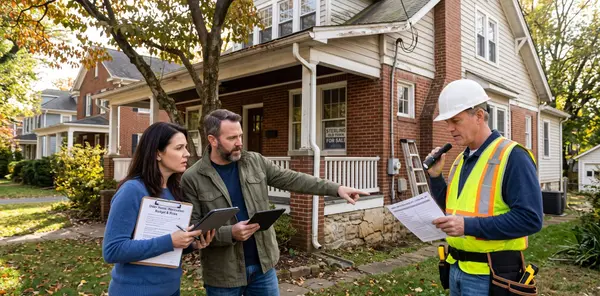
Don’t wait for the buyer’s inspector to uncover surprises. Ordering your own pre-listing inspection (typically $350–$600 in the Richmond metro) lets you address issues proactively, price accurately, and provide documentation that builds buyer confidence. For homes built before 1978, federal law requires a lead-based paint disclosure — but going beyond the minimum with a lead inspection or risk assessment can eliminate a major concern for families with young children.
Older Home Preparation Checklist
| Priority | Task | Est. Cost | ROI Impact |
|---|---|---|---|
| High | Pre-listing home inspection | $350 – $600 | Prevents price renegotiations |
| High | HVAC service or replacement | $150 – $8,000+ | Eliminates top buyer concern |
| High | Electrical panel update (if fuses/60-amp) | $1,500 – $4,000 | Required for many loan types |
| Medium | Kitchen cosmetic refresh (paint, hardware, lighting) | $500 – $5,000 | High visual impact |
| Medium | Bathroom updates (vanity, fixtures, re-caulk) | $300 – $3,000 | Strong buyer appeal |
| Medium | Lead-paint inspection (pre-1978 homes) | $300 – $500 | Builds family-buyer confidence |
| Standard | Fresh interior paint (neutral tones) | $2,000 – $6,000 | Fastest way to modernize |
| Standard | Landscaping and curb appeal refresh | $500 – $3,000 | First impression matters |
Preserve Character, Update Systems
Richmond buyers who search in The Fan, Museum District, or Church Hill want original details — heart pine floors, pocket doors, ornate mantels, plaster ceiling medallions. Stripping these elements in favor of generic modern finishes can actually hurt your value. The winning formula for older Richmond homes is to preserve and restore architectural character while ensuring that behind-the-walls systems (plumbing, electrical, HVAC, roof) meet modern standards. Buyers will pay a premium for “move-in ready historic charm.”
Staging Older Homes
Staging works in any market, but it’s especially impactful in older homes where room proportions and layouts may feel unfamiliar to suburban buyers. Professional staging helps buyers see how modern furniture fits in high-ceilinged parlors, how smaller bedrooms function with appropriately scaled pieces, and how a 1920s kitchen can still feel like the heart of the home. In Richmond, professional staging typically costs $1,500–$4,000 for a full-home stage (occupied or vacant) and pays for itself through faster sales and stronger offers.
7. Step-by-Step Selling Timeline
From first decision to final signature, here’s a realistic timeline for selling a home in the Richmond metro area.
Interview Agents & Set Strategy
Meet with 2–3 listing agents, review CMAs, discuss pricing strategy, commission structure, and marketing plan. Request a seller net sheet so you understand your estimated take-home.
Prepare & Repair
Order pre-listing inspection, make necessary repairs, declutter, deep clean, paint, and address curb appeal. For older homes, prioritize HVAC, electrical, and plumbing documentation.
Stage, Photograph & List
Professional staging (if applicable), professional photography, video walkthrough, and MLS listing go live. Your agent launches marketing across syndicated portals, social media, and targeted digital ads.
Showings, Offers & Negotiation
In Richmond’s current market, well-priced homes often receive offers within the first 1–3 weeks. Review offers, negotiate terms (price, contingencies, closing date), and execute a ratified contract.
Under Contract → Closing
Buyer conducts inspections (typically within 7–10 days), appraisal is ordered, title search completed, and any negotiated repairs addressed. Virginia requires a settlement agent (attorney or title company) to conduct the closing.
Closing Day
Sign documents at the settlement agent’s office, keys transfer to the buyer, and your net proceeds are wired — typically within 1–2 business days.
Sell your Richmond home for a 1.5% listing fee
The Jamil Brothers Realty Group offers a full-service 1.5% listing fee — with no reduction in marketing, negotiation, or representation quality. That means more of your equity stays in your pocket.
Learn About Our 1.5% Listing Fee →8. Richmond Seller Closing Costs Breakdown
Closing costs are the fees and taxes deducted from your sale proceeds at settlement. In Virginia, sellers can’t negotiate the tax amounts themselves, but understanding every line item helps you set realistic expectations for your net proceeds.
| Cost Category | Typical Amount | Notes |
|---|---|---|
| Agent Commissions | 4% – 6% of sale price | Negotiable; listing + buyer agent combined. 1.5% listing options available. |
| Virginia Grantor Tax | $1 per $1,000 (0.1%) | Paid by seller. On a $400K sale = $400. |
| Title & Settlement Fees | $1,500 – $3,000 | Includes title search, deed prep, settlement agent fees. |
| Owner’s Title Insurance | ~0.5% of sale price | Seller typically pays in Virginia; negotiable. |
| Prorated Property Taxes | Varies by closing date | City of Richmond: $1.20/$100. Henrico: $0.83/$100. Chesterfield: $0.89/$100. |
| Recording Fees | ~$234 | Varies by locality; may be negotiated to buyer. |
| HOA Transfer/Resale Package | $200 – $500 | Only if property is in an HOA community. |
| Buyer Concessions (if offered) | 0% – 3% of sale price | Credits toward buyer’s closing costs; common in negotiation. |
Example: Selling a $400,000 Home in Richmond
| Agent commissions (5.5%) | $22,000 |
| Grantor tax (0.1%) | $400 |
| Title & settlement fees | $2,200 |
| Owner’s title insurance | $2,000 |
| Prorated property taxes (est.) | $1,800 |
| Recording fees | $234 |
| Total Estimated Costs | ~$28,634 (7.2%) |
Note: With a 1.5% listing fee instead of the ~2.9% average, your commission savings alone would be approximately $5,600 on a $400K sale. Calculate your exact net proceeds →
Important note for Richmond city sellers: Unlike sellers in Northern Virginia, you do not pay the additional 0.15% congestion relief tax. The grantor tax in the Richmond metro area is the standard state rate of 0.1%. This saves you $600 on a $400,000 sale compared to a seller in Fairfax or Loudoun County.
9. Common Seller Mistakes in Richmond
Even in a seller-friendly market, avoidable mistakes can cost you thousands — or weeks of unnecessary time on market.
❌ Overpricing based on Zillow or emotional attachment
Online estimates can miss hyperlocal factors. A professional CMA based on sold comps within your micro-neighborhood is far more accurate. Homes that sit on market for 30+ days without offers typically need a 3%–5% price reduction to reset buyer interest.
❌ Skipping preparation on older city homes
Buyers in The Fan or Church Hill expect character — but they don’t want to inherit someone else’s deferred maintenance. An old boiler, knob-and-tube wiring, or a failing roof will torpedo negotiations or scare off lenders.
❌ Ignoring the property tax differential when pricing city homes
A $400K home in the city costs $1,480/year more in property taxes than the same-priced home in Henrico. Savvy buyers account for this. If you price at parity with suburban comps without this adjustment, you may attract fewer offers.
❌ Listing during the slowest months without a plan
November through January sees the fewest buyers. If you must list in winter, compensate with competitive pricing, professional photography with warm lighting, and generous showing availability.
❌ Choosing an agent based solely on the highest price suggestion
Some agents inflate their price recommendation to win the listing, then ask for reductions later. Focus on agents who show you data-backed comps, a clear marketing plan, and transparent communication — not just the biggest number.
❌ Failing to calculate net proceeds before accepting an offer
A higher offer with large concessions and a longer closing timeline may net you less than a lower offer with clean terms. Always run the numbers with a seller net sheet before making a decision.
10. Alternatives to a Traditional Sale
A traditional MLS listing with a real estate agent maximizes your sale price in most market conditions. But it’s not the only path. Depending on your situation — timeline, home condition, financial pressure, or life circumstances — one of these alternatives may make more sense.
| Option | Speed | Price vs. Market Value | Best For |
|---|---|---|---|
| Traditional MLS Sale | 6 – 12 weeks | 95% – 105% | Maximum price, flexible timeline |
| Cash Offer | 7 – 21 days | 70% – 90% | Speed, certainty, as-is condition |
| For Sale By Owner (FSBO) | Varies widely | 85% – 100% | Experienced sellers, simple transactions |
| Rent-to-Own / Lease Option | 12 – 36 months | 95% – 105% | Rental income + eventual sale |
A cash offer option may be worth exploring if you’re facing a job relocation, inherited a property you can’t maintain, or need to close on a tight deadline. Cash buyers typically purchase as-is, eliminating the need for repairs, staging, and extended showings.
Buying your next home after selling?
If you’re selling in Richmond and buying your next home, a buyer strategy session can help you navigate timing, financing, and negotiation — so neither transaction puts the other at risk.
Book a Free Buyer Strategy Session →11. Frequently Asked Questions
What is the best month to sell a house in Richmond, VA?
March through May is generally the strongest window, with high buyer demand, faster sales, and the best chance of multiple offers. June and July remain strong as families push to close before the school year. That said, Richmond’s low inventory means well-priced homes attract offers year-round.
How much are closing costs for sellers in Richmond, Virginia?
Sellers in the Richmond metro typically pay 7%–10% of the sale price in total closing costs when including agent commissions. Without commissions, fixed closing costs (grantor tax, title, settlement, recording fees) generally run about 2%–3.5% of the sale price. Use our free net sheet calculator for a personalized estimate.
Is Richmond, VA a seller’s market or buyer’s market in 2026?
As of early 2026, Richmond remains a seller’s market. With only about 2.4 months of housing supply (a balanced market has 6 months), homes selling at 100% of asking price, and approximately 30% selling above ask, sellers still hold the negotiating advantage in most neighborhoods.
Do I need an attorney to sell a house in Virginia?
Virginia requires a licensed attorney or title company to conduct the real estate closing (settlement). You don’t need to hire a separate attorney to represent you in negotiations, but many sellers — especially those with complex transactions — choose to do so.
What is the Virginia grantor tax and who pays it?
The grantor tax is Virginia’s state transfer tax, charged at $1 per $1,000 of the sale price (0.1%). By law, the seller pays this tax. In Northern Virginia jurisdictions, there is an additional 0.15% congestion relief tax — but this does not apply to Richmond metro sales.
What’s the property tax rate in Richmond vs. surrounding counties?
The City of Richmond’s rate is $1.20 per $100 of assessed value. Henrico County is $0.83, and Chesterfield County is $0.89. Hanover County sits at $0.81, and Goochland County at $0.53. These differences can significantly affect a buyer’s monthly payment, which in turn influences what your home is worth to the market.
How do I sell a historic home in The Fan or Church Hill?
Selling a home in one of Richmond’s historic neighborhoods requires balancing preservation with modern buyer expectations. Preserve original architectural details (heart pine floors, pocket doors, mantels), but ensure that major systems like HVAC, plumbing, and electrical are updated and documented. A pre-listing inspection is essential, and staging that complements the home’s period character (rather than fighting it) can make a significant difference.
Should I sell my Richmond home as-is?
Selling as-is can work when you have a property in poor condition, a tight timeline, or limited funds for repairs. However, you’ll typically receive 10%–25% less than market value for a comparable updated home. If speed and convenience are your top priorities, consider requesting a cash offer to compare against a traditional listing.
What capital gains taxes will I owe when selling my Richmond home?
If the home was your primary residence and you lived there for at least 2 of the last 5 years, you can exclude up to $250,000 in profit (single filers) or $500,000 (married filing jointly) from federal capital gains tax. Virginia does not impose a separate state capital gains tax beyond what you owe through state income tax. Consult a tax professional for your specific situation.
How do I choose the best real estate agent to sell my home in Richmond?
Look for an agent with verifiable experience selling in your specific neighborhood — not just general Richmond knowledge. Key criteria include: a track record of sales volume and comparable properties, a data-driven pricing approach, a transparent commission structure, a clear marketing plan (professional photography, online syndication, targeted digital marketing), and strong client reviews. The Jamil Brothers Realty Group, for example, has facilitated over $500M in total real estate sales across Northern Virginia and the Richmond metro, with a flexible commission structure including a full-service 1.5% listing fee option.
Can I sell my Richmond home and buy a new one at the same time?
Yes — though timing a simultaneous buy-sell requires careful planning. Options include negotiating a rent-back agreement (where you stay in your sold home for 30–60 days after closing), using a bridge loan, or structuring a sale contingency. A buyer strategy session can help you map out the logistics and financing so neither transaction falls through.
12. Glossary of Key Terms
| CMA (Comparative Market Analysis) | A report prepared by a real estate agent that compares your home to recently sold, pending, and active listings with similar features — used to determine a fair list price. |
| Days on Market (DOM) | The number of days between when a home is listed on the MLS and when it goes under contract. Lower DOM indicates stronger demand. |
| Grantor Tax | Virginia’s state-level transfer tax imposed on the seller at 0.1% of the sale price ($1 per $1,000). An additional 0.15% applies in Northern Virginia but not in Richmond. |
| Months of Supply | The number of months it would take to sell all current inventory at the current pace of sales. Below 4 months indicates a seller’s market; above 6 months favors buyers. |
| Net Sheet | A document that estimates the seller’s actual take-home amount after subtracting all closing costs, commissions, and the remaining mortgage balance from the sale price. |
| Ratified Contract | A purchase agreement that has been signed by both the buyer and seller, with all terms agreed upon. This is when the property is officially “under contract.” |
| Sale-to-List Price Ratio | The final sale price divided by the original list price, expressed as a percentage. A ratio of 100% means homes sell at asking price; above 100% means they sell above asking. |
| Seller Concession | A credit from the seller to the buyer at closing, typically used to cover the buyer’s closing costs. Common in negotiations, especially when the buyer is stretching on price. |
| Settlement Agent | The attorney or title company that conducts the real estate closing in Virginia. They prepare the closing documents, ensure all liens are satisfied, and disburse funds. |
Ready to Sell Your Richmond Home?
Whether you’re in The Fan, Church Hill, Henrico, or Chesterfield — the first step is understanding what your home is worth in today’s market. Get a free, no-obligation home valuation and see how our full-service 1.5% listing fee keeps more equity in your pocket without sacrificing marketing, negotiation, or representation quality.
Disclaimer: This article is for informational purposes only and does not constitute legal, financial, or tax advice. Market data is sourced from Zillow, Redfin, Houzeo, Realtor.com, Axios Richmond, the Richmond Association of Realtors, Virginia REALTORS®, and local government websites. All figures are estimates and may vary based on individual circumstances. Consult with a licensed real estate professional, attorney, or tax advisor for guidance specific to your situation.
Categories
- All Blogs (1227)
- Aldie (3)
- Ashburn (6)
- Buyer Guide (8)
- Buying a home (2)
- Buying Strategies (30)
- festivals (1)
- General Blog (67)
- Leesburg (5)
- Market Intelligence (29)
- Market Updates (8)
- Notable Properties For Sale (32)
- Real Estate Tips, News, and More (385)
- Seller Guide (2)
- Seller Guides (60)
- Selling Your Home (522)
- Sterling (6)
- Top Realtors in Northern Virginia (58)
Recent Posts



Message Sent!
Thank you for reaching out. Arslan & Saad have received your details and will be in touch shortly.
Need immediate assistance? Call or text 703-782-4830.