
Selling a Home in Capitol Hill, DC: 2026 Market Trends, Political Cycle Impacts, and Rowhouse Staging Tips
Selling a Home in Capitol Hill, DC: 2026 Market Trends, Political Cycle Impacts, and Rowhouse Staging Tips
Updated March 2026 | 18-Minute Read
Capitol Hill is one of the most recognizable neighborhoods in America — and one of the most nuanced places to sell a home. Between its historic-district regulations, the political cycles that ripple through the local economy, and a housing market shaped by federal workforce dynamics unlike anywhere else, getting the best outcome from a Capitol Hill home sale in 2026 takes more than just sticking a sign in the yard.
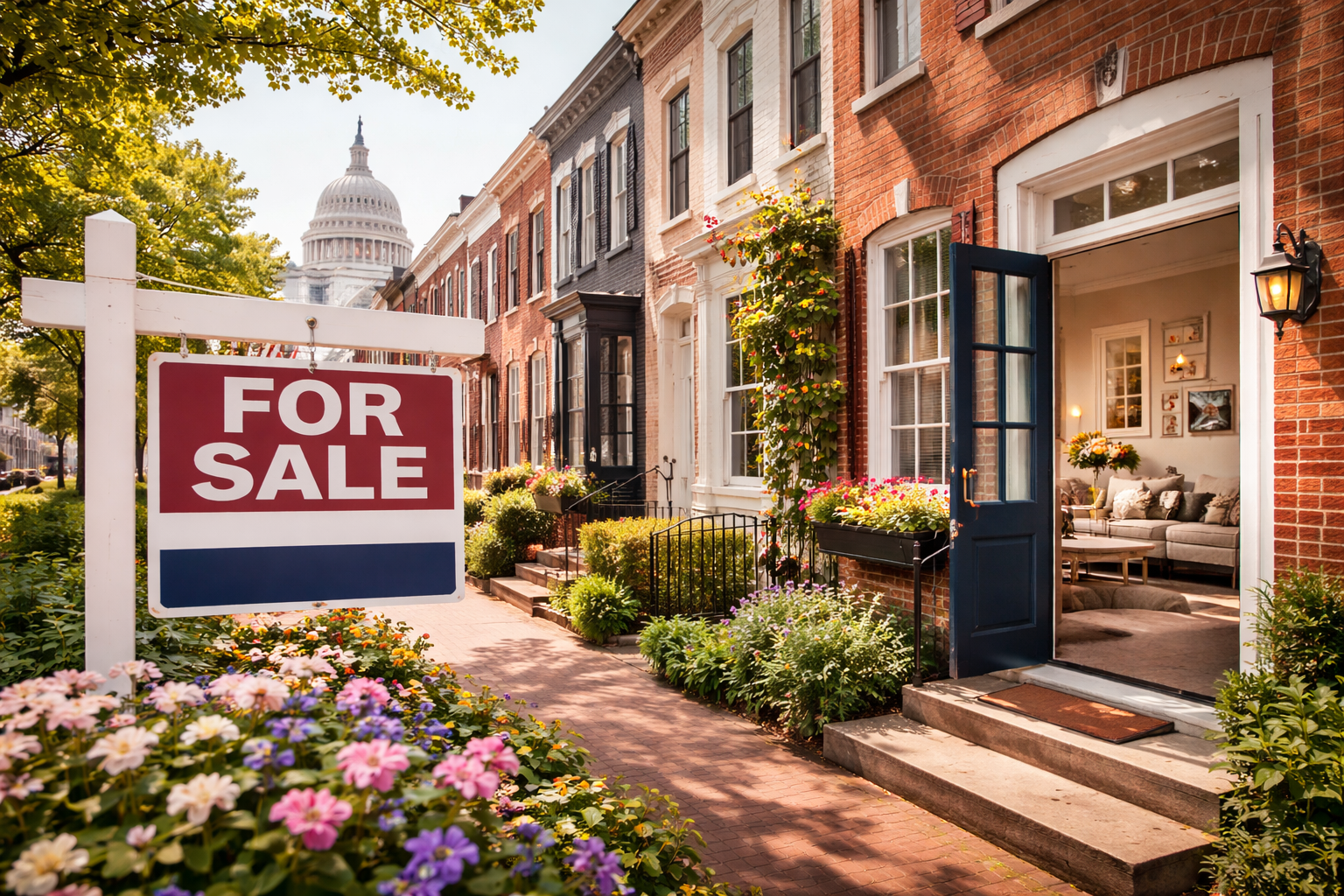
This guide is built for Capitol Hill homeowners who want real answers: What's the market actually doing right now? How are DOGE-driven federal cuts and administration turnover affecting values? What staging strategies work specifically for DC rowhouses? And what will it actually cost you to close?
Quick Answer
Capitol Hill homes are still selling — median prices hover near $875K–$925K depending on the season — but the market has shifted toward buyers in 2026. Federal workforce uncertainty has increased inventory by roughly 50% year-over-year in DC, homes are taking about 10 days longer to sell, and sellers need sharper pricing and better preparation to compete. Well-staged, properly priced rowhouses in prime blocks still attract multiple offers, but the days of minimal effort and maximum returns are behind us.
Key Takeaways
- Capitol Hill median sale prices ranged from $875K to over $1M in recent quarters, with per-square-foot costs around $565–$650.
- DC-wide inventory is up approximately 50% year-over-year — the largest increase of any major metro — driven significantly by federal workforce changes.
- Homes are averaging 43–55 days on market, up from the low 30s a year ago.
- The political cycle creates both challenges (uncertainty) and opportunities (incoming administration staff and luxury buyers).
- Rowhouse staging requires strategies specific to narrow floorplans, historic character, and natural-light optimization.
- DC sellers typically pay a 1.1%–1.45% transfer tax plus agent commissions, settlement fees, and prorated taxes.
- The Capitol Hill Historic District adds disclosure and permitting considerations that can affect your sale timeline.
Table of Contents
- Capitol Hill Market Snapshot: Where Things Stand in 2026
- How the Political Cycle Shapes Capitol Hill Real Estate
- Federal Workforce Cuts and DOGE: What Sellers Need to Know
- Neighborhood-Level Pricing Across Capitol Hill
- Best Time to Sell in Capitol Hill
- Rowhouse Staging Tips That Work in Capitol Hill
- Selling in a Historic District: Permits, Disclosures, and Pitfalls
- Capitol Hill Closing Costs for Sellers
- Pricing Strategy in a Shifting Market
- Common Mistakes Capitol Hill Sellers Make
- Alternatives to a Traditional Sale
- Step-by-Step Timeline to Sell Your Capitol Hill Home
- Frequently Asked Questions
- Glossary of Key Terms
1. Capitol Hill Market Snapshot: Where Things Stand in 2026
Capitol Hill remains one of DC's most sought-after neighborhoods, but the market in 2026 looks fundamentally different than it did even 18 months ago. The combination of rising inventory, federal-sector uncertainty, and mortgage rates hovering near 6% has shifted the balance toward buyers — though well-positioned sellers are still achieving strong outcomes.
Key Numbers At-a-Glance — Capitol Hill, 2026
| Median Sale Price | $875K – $925K |
| Median Price Per Sq. Ft. | $565 – $650 |
| Average Days on Market | 43 – 55 days |
| Median List Price (Feb 2026) | $799,000 |
| Active Listings (Feb 2026) | ~59 |
| Avg Days on Market (Capitol Hill) | 82 days (listed) |
| Inventory Change (DC-wide, YoY) | +50% |
Bright MLS, the region's primary listing service, projects a modest 1% price decline across DC in 2026 — making it the only Mid-Atlantic market expected to see negative price movement. However, this headline number masks significant micro-market variation. Renovated Capitol Hill rowhouses on desirable blocks near Eastern Market or Lincoln Park still attract competitive offers, while dated properties or those on fringe blocks are sitting longer.
Capitol Hill Market Direction — 2026
Seller Power ◂━━━━━━━━━━━━━━━━━━━━━━▸ Buyer Power
Leaning Buyer-Favorable (shifting from balanced)
Trend Drivers: What's Pushing Prices Up vs. Down
| Upward Pressure | Downward Pressure |
|---|---|
| Limited land supply in DC | Federal workforce layoffs and buyouts |
| Incoming political staff and contractors | 50% increase in DC inventory |
| Strong demand for renovated rowhouses | Mortgage rates near 6% |
| Historic district character premium | Buyer caution and longer decision cycles |
| Walkability and Metro access | Condo market oversupply dragging sentiment |
What This Means For Sellers vs. Buyers
| If You're Selling | If You're Buying |
|---|---|
| Pricing precision matters more than ever | More negotiating leverage than in years |
| Staging and preparation deliver real ROI | Contingencies (inspections, financing) are back |
| Expect 45–60 days to close, not 30 | Inventory selection is the best since 2019 |
What's Your Capitol Hill Home Worth Right Now?
Market conditions are shifting fast. Get a data-driven home valuation from a team that tracks Capitol Hill pricing block by block.
Get Your Free Home Value →2. How the Political Cycle Shapes Capitol Hill Real Estate
No other neighborhood in America is as directly linked to the federal government's political rhythm as Capitol Hill. It's estimated that roughly one-third of sitting members of Congress live in the neighborhood during sessions, and thousands of political appointees, staffers, lobbyists, and contractors circulate through Capitol Hill housing every election cycle.
The Election-Year Pattern
Historically, the National Association of Realtors has documented a 5–10% bump in DC-area home sales in the year following a presidential election. However, the pattern is more nuanced than most people realize. According to analysis from Corcoran McEnearney covering every election cycle since 2000, there is little direct correlation between Congressional turnover and regional real estate activity. The roughly 8,000 Executive Branch political appointments and 15,000 Congressional staff positions sound like a lot — but many of those individuals already live in the DC area and simply rotate between public and private sectors.
How Political Transitions Actually Affect Capitol Hill Housing
- ✦ Luxury tier surges — Incoming administration figures and high-net-worth political donors often target $3M+ properties in Kalorama, Georgetown, and premium Capitol Hill blocks
- ✦ Rental demand spikes first — Most new political arrivals rent before buying, often for 12–18 months, which indirectly supports home values
- ✦ Uncertainty pauses the mid-market — Buyers in the $600K–$1.2M range often adopt a "wait and see" approach during transition periods
- ✦ Fall slowdown, winter pickup — Seasonal slowdowns deepen in election years, then activity rebounds in January–March as new roles are filled
- ✦ Policy signals matter — Tariff plans, government-spending direction, and workforce policies have a bigger market effect than who moves in or out
The Current Administration's Unique Impact
The 2025–2026 period has broken from the typical political-transition playbook. Rather than the usual rotation of a few thousand positions, the current administration's aggressive approach to federal workforce reduction has created a level of market uncertainty that longtime DC agents describe as unprecedented. Combined with return-to-office mandates, this has created a simultaneous push and pull — some federal workers need to be closer to downtown, while others are being pushed out entirely.
For Capitol Hill sellers, the takeaway is strategic: the political cycle creates both headwinds and tailwinds, and the key is timing your sale to capture the tailwinds (incoming demand) while mitigating the headwinds (uncertainty-driven buyer caution).
3. Federal Workforce Cuts and DOGE: What Sellers Need to Know
The DOGE-driven federal workforce reductions have been the single largest variable in DC's 2025–2026 housing market. According to Bright MLS survey data, nearly 40% of DC-area agents reported working with clients whose decision to buy or sell was directly tied to federal layoffs or buyout offers. More than half of agents surveyed said the cuts were influencing housing activity in their local markets.
By the Numbers: Federal Cuts and DC Housing
| Agents with clients affected by DOGE | ~40% |
| Agents reporting increased seller activity | 43% |
| Agents reporting increased buyer activity | 3% |
| DC inventory increase (YoY, mid-2025) | +50.2% |
| National inventory increase (same period) | +30.7% |
| Spring sellers due to retirement (DC) | 15% (vs. 10% regionally) |
The data tells a clear story: there are significantly more sellers than buyers entering the market due to federal disruptions. Many of the sellers are older, higher-income federal employees who took buyout packages and have paid-off or high-equity homes. This is adding quality inventory to the market — which is good for buyers but creates more competition for sellers.
What This Means If You're Selling on Capitol Hill
The condo market has been hit hardest — DC condo inventory is up nearly 60% year-over-year — while single-family rowhouses have been more resilient. Capitol Hill's inherent advantages (walkability, Metro access, historic charm, proximity to the Capitol complex) create a floor under rowhouse values that condos in less established neighborhoods don't enjoy.
However, the key risk for Capitol Hill sellers is the second wave: Bright MLS chief economist Lisa Sturtevant has noted that families impacted by workforce cuts may wait until after the school year to list, potentially increasing competition through summer and fall 2026. If you're considering selling, getting ahead of that wave could work to your advantage.
Find Out What You'll Net After Closing Costs
Before you decide, run the numbers. Our free seller net sheet estimates your take-home proceeds after DC transfer taxes, commissions, and fees.
Calculate Your Net Sheet →4. Neighborhood-Level Pricing Across Capitol Hill
Capitol Hill spans a large area — from the Capitol complex west to 13th–14th Streets east, and from F Street north to the Southeast Freeway south. Within that footprint, values can vary by $200K or more between adjacent blocks. Proximity to landmarks like Eastern Market, Lincoln Park, Stanton Park, and Barracks Row commands a measurable premium.
| Sub-Area / Block Zone | Typical Rowhouse Range | Buyer Profile |
|---|---|---|
| Near Eastern Market / Barracks Row | $950K – $1.5M+ | Established professionals, Congressional staff |
| Lincoln Park / Stanton Park area | $850K – $1.3M | Young families, dual-income households |
| H Street Corridor edge (NE) | $700K – $1M | First-time buyers, investors |
| Pennsylvania Ave SE corridor | $800K – $1.2M | Walkability-focused buyers |
| Southeast expansion (south of Freeway) | $600K – $850K | Value-seekers, Navy Yard commuters |
The most important pricing factor in Capitol Hill isn't just the number of bedrooms — it's the combination of block quality, renovation status, and natural light. A fully renovated 3-bedroom rowhouse on a quiet, tree-lined street near Eastern Market can command 30–40% more per square foot than a comparable but dated home four blocks further east.
5. Best Time to Sell in Capitol Hill
Capitol Hill's seasonal patterns generally follow the broader DC market, but with a political overlay that creates unique windows of opportunity.
Capitol Hill Selling Calendar
March – May (Peak Spring)
Highest buyer activity, most competition from other sellers. Best for move-in-ready homes. List early March to get ahead of the wave.
June – August (Summer)
Congress recesses reduce foot traffic. Family buyers are motivated before the school year. In 2026, expect a second wave of DOGE-related listings.
September – October (Fall Window)
Brief window before election-year uncertainty kicks in. Serious buyers who missed spring re-enter.
November – February (Off-Season)
Fewer buyers, but also fewer competing listings. Post-election political arrivals create a niche window in January–February for well-priced homes.
In 2026 specifically, the strategic play for Capitol Hill sellers is to list during spring (before summer's expected inventory surge from federal-worker families) or to wait until early 2027 when that wave of listings has been absorbed and midterm-cycle staffing changes create fresh demand.
6. Rowhouse Staging Tips That Work in Capitol Hill
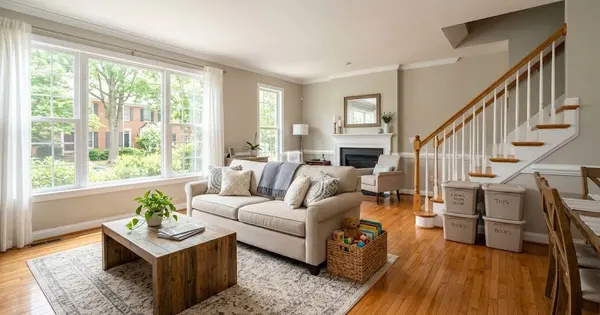
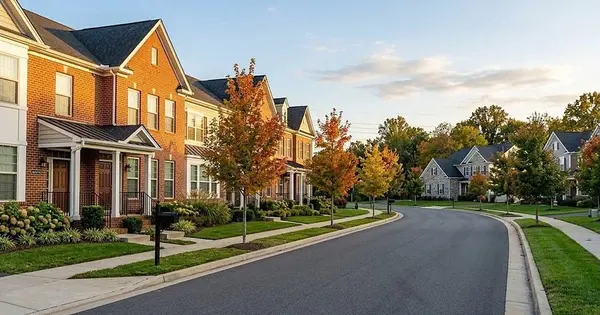
Capitol Hill is dominated by rowhouse architecture — narrow, multi-story homes with shared party walls, limited natural light from side-to-side, and floor plans that can feel either charming or claustrophobic depending on how they're presented. Staging a Capitol Hill rowhouse requires a fundamentally different approach than staging a suburban colonial or a modern condo.
The Rowhouse Staging Playbook
Capitol Hill Rowhouse Staging Checklist
| Maximize Light | Remove heavy drapes. Use sheer or no window treatments. Clean all front and rear windows inside and out. Light-colored walls amplify scarce sidelight in narrow rowhouses. |
| Scale Furniture Down | Replace oversized sectionals with apartment-scale pieces. Narrow rooms need furniture that leaves visible floor space. A room with 18 inches of clearance on each side feels 50% bigger. |
| Highlight Historic Details | Expose original hardwood floors, crown molding, transom windows, and mantels. Buyers pay a premium for preserved character — don't hide it behind furniture or decor. |
| Neutralize Bold Colors | Dark or vivid accent walls can make narrow rooms photograph poorly. Shift to warm neutrals — greige, soft white, pale sage — that read clean in listing photos. |
| Stage the Stoop | The front stoop is the first impression on Capitol Hill. Clean it, add two seasonal planters, and make sure the front door hardware is polished and the door freshly painted. |
| Open Up the Rear | Many Capitol Hill rowhouses have rear additions or garden-level access. Stage the back garden or patio as an "outdoor room" — even a small bistro set and string lights can transform the space. |
| Depersonalize Strategically | Remove family photos and personal items, but leave tasteful books or art that complement the home's character. A Capitol Hill buyer wants to feel like they're stepping into a lifestyle, not a blank box. |
Staging ROI in the Current Market
In a balanced or buyer-leaning market, staging becomes even more important. Local agents report that unstaged Capitol Hill homes are sitting 2–3 weeks longer than comparable staged properties, and the gap is widening as inventory rises. Professional staging for a typical Capitol Hill rowhouse runs $3,000–$6,000 for the first month, and the consensus among DC-area agents is that it delivers a return of 3–5x the investment in final sale price.
Staging Investment vs. Potential Return
Professional Staging Cost ($3K–$6K)
Potential Sale Price Increase ($10K–$25K+)
Estimated 3–5x return on staging investment based on local agent reports
Sell Your Capitol Hill Home for a 1.5% Listing Fee
Full-service listing — professional photography, staging consultation, MLS exposure, and expert negotiation — without the traditional commission structure. The 1.5% listing fee is a full-service offering with no reduction in marketing, representation, or negotiation quality.
Learn About the 1.5% Listing Program →7. Selling in a Historic District: Permits, Disclosures, and Pitfalls
Capitol Hill has been a designated historic district since 1976 — the largest residential historic district in DC. This designation is part of what makes the neighborhood so attractive to buyers, but it also creates specific obligations for sellers that can catch unprepared homeowners off guard.
What the Historic Designation Means for Your Sale
Any exterior change visible from a public right-of-way — including streets, sidewalks, and public alleys — requires review by the DC Historic Preservation Office (HPO). This includes window replacements, facade modifications, porch work, roof changes, additions, and even certain paint colors on visible surfaces. Interior work is generally not regulated unless the property has a specific interior landmark designation.
Historic District Designation: Seller Pros and Cons
| Pros for Sellers | Cons for Sellers |
|---|---|
| Neighborhood character is preserved, supporting values | Unpermitted exterior work can trigger stop-work orders or fines |
| Prevents pop-ups and incompatible development nearby | Buyers may ask about permit history, creating disclosure issues |
| Buyers seeking historic charm pay a premium | Pre-sale renovation timelines can be 3–6 months longer |
| Potential federal tax deductions for facade easement donations | Approved materials may cost more than standard alternatives |
Seller Action Items Before Listing
If you've made any exterior changes during your ownership, confirm whether they were properly permitted through HPO. If you discover unpermitted work, address it before listing — savvy Capitol Hill buyers and their agents will check, and unresolved permit issues can derail a deal during due diligence. The Capitol Hill Restoration Society (CHRS) is an excellent community resource for understanding what's expected in the district.
8. Capitol Hill Closing Costs for Sellers
DC's closing cost structure is distinct from neighboring Virginia and Maryland, and the transfer tax rates are among the highest in the country. Here's what Capitol Hill sellers can expect to pay.
| Cost Category | Typical Range | Notes |
|---|---|---|
| DC Transfer Tax (seller) | 1.1% – 1.45% | 1.1% for sales under $400K; 1.45% on entire amount for sales over $400K |
| Listing Agent Commission | 1.5% – 3% | Varies by agent and service model |
| Buyer Agent Commission | 2% – 3% | Negotiable; may be offered by seller |
| Settlement / Title Fees | $1,500 – $3,000 | Includes title search, settlement agent |
| Prorated Property Taxes | Varies | Based on closing date and DC tax rate ($0.85 per $100) |
| HOA / Condo Docs (if applicable) | $200 – $500 | For condos or homes with associations only |
| Miscellaneous (recording, courier, etc.) | $300 – $800 | Administrative closing items |
Example: Selling a $900,000 Capitol Hill Rowhouse
| DC Transfer Tax (1.45%) | $13,050 |
| Listing Agent (1.5% full-service) | $13,500 |
| Buyer Agent (2.5% offered) | $22,500 |
| Settlement / Title | $2,500 |
| Other Closing Costs | $1,000 |
| Estimated Total Costs | ~$52,550 |
| Estimated Net Proceeds (no mortgage) | ~$847,450 |
*Estimates only. Actual costs depend on your specific transaction. Use our free seller net sheet for a personalized calculation.
Note that the allocation of transfer taxes and recordation taxes is negotiable in your purchase contract, though DC custom is for the seller to pay the transfer tax and the buyer to pay the recordation tax. In a buyer-leaning market, sellers may also be asked to contribute credits toward the buyer's closing costs as part of negotiations.
9. Pricing Strategy in a Shifting Market
In a market where inventory is rising and buyers are taking their time, pricing is the single most consequential decision a Capitol Hill seller makes. Overpricing by even 3–5% can result in weeks of extra market time, repeated price reductions, and ultimately a lower final sale price than if the home had been priced correctly from the start.
Pricing Mistakes to Avoid
- Anchoring to your Zestimate or Redfin estimate — Automated valuations can miss renovation quality, block-level differences, and current market momentum
- Pricing based on what you paid + improvements — Your investment doesn't always equal market value, especially for highly personalized renovations
- Starting high "to leave room for negotiation" — Capitol Hill buyers are sophisticated; overpriced homes get skipped entirely, not negotiated down
- Ignoring recent comparable sales — In a fast-shifting market, comparable sales from 6+ months ago may no longer be reliable
The Smart Pricing Framework
The most effective approach in Capitol Hill's current environment is to price at or just below the most recent comparable sale in your micro-neighborhood. This creates urgency and can generate multiple offers, ultimately pushing the sale price above list. In a market where homes are averaging 43–55 days on market, a home that receives an offer in the first two weeks typically sells for a higher percentage of asking price than one that lingers.
A data-driven agent will pull comparable sales from the last 90 days (not 6 months), filter for properties within 2–3 blocks, and adjust for renovation level, lot position, and floor-plan differences. If you want a realistic preview of your net proceeds, run the numbers with a free seller net sheet.
Full-Service Listing at 1.5% — Keep More of Your Equity
On a $900K Capitol Hill rowhouse, a 1.5% listing fee saves you $13,500 compared to a 3% commission — with the same professional marketing, negotiation, and representation. That's real money back in your pocket.
Explore the 1.5% Listing Fee →10. Common Mistakes Capitol Hill Sellers Make
| Ignoring Historic District Rules | Unpermitted exterior work (even something as routine as window replacements) can surface during a buyer's due diligence and create deal-killing complications. Verify all work is permitted before listing. |
| Underestimating DC Transfer Taxes | The 1.45% transfer tax on a $900K sale is $13,050 — a significant line item that catches sellers off guard if they haven't done net-sheet planning in advance. |
| Skipping Staging for a Rowhouse | Narrow rowhouses need staged furniture to demonstrate that rooms are functional and spacious. Empty rooms photograph poorly — every wall and corner becomes visible, including imperfections. |
| Listing at the Wrong Time | In a year with anticipated inventory surges from DOGE-related sellers, timing your listing to avoid the heaviest competition could mean the difference between a quick sale and a protracted one. |
| Not Accounting for Buyer Financing Changes | With rates near 6%, buyers are more deliberate. Expect more inspections, appraisal negotiations, and financing contingencies than during the 2021–2022 frenzy. |
| Choosing an Agent Based on Highest Price Estimate | Some agents "buy" listings by suggesting inflated prices. The result is a stale listing and eventual price cuts. Choose an agent based on their market knowledge, marketing plan, and track record. |
11. Alternatives to a Traditional Sale
Not every Capitol Hill seller is looking for a traditional MLS listing. Depending on your situation — whether it's a need for speed, a desire for privacy, or the complexity of an inherited property — alternative paths may make more sense.
| Option | Best For | Trade-Offs |
|---|---|---|
| Traditional MLS Listing | Maximum exposure, highest price | Takes 45–90 days; requires preparation |
| Cash Offer | Speed, certainty, as-is condition | Typically below market value |
| Off-Market / Pocket Listing | Privacy, high-profile sellers | Less buyer competition, potentially lower price |
| Rent-Then-Sell | Waiting for better market conditions | Landlord responsibilities; tenant risk; carries cost |
For most Capitol Hill homeowners, a traditional listing with proper preparation and pricing will maximize your outcome. However, if you're facing a federal-workforce transition and need to move quickly, exploring a cash offer option or expedited listing can provide the certainty you need.
12. Step-by-Step Timeline to Sell Your Capitol Hill Home
6–8 Weeks Before Listing
Get a professional home valuation. Interview 2–3 agents. Check historic-district permit status for all exterior work.
4–6 Weeks Before Listing
Complete repairs and touch-ups. Paint neutral colors if needed. Deep clean including windows. Schedule staging consultation.
1–2 Weeks Before Listing
Professional staging installed. Professional photography (including twilight exteriors for rowhouse curb appeal). Pre-listing inspection if desired.
Week 1 — Go Live
List on MLS (Bright MLS). Syndicate to Zillow, Redfin, Realtor.com. Launch targeted digital marketing. Schedule open houses for first weekend.
Weeks 2–4 — Showings and Offers
Review and negotiate offers. If well-priced, expect initial interest within 2 weeks. Evaluate contingencies, financing strength, and timeline flexibility.
Weeks 4–8 — Under Contract to Close
Buyer inspections, appraisal, and financing. Navigate any repair requests. Clear title. Attend settlement at your DC title company.
Buying After Selling? Start Your Strategy Now
If you're selling on Capitol Hill and buying your next home — whether in NoVA, Maryland, or another DC neighborhood — a coordinated strategy saves time, money, and stress.
Build Your Buyer Strategy →13. Frequently Asked Questions
What is the average time to sell a home on Capitol Hill in 2026?
Homes are currently averaging 43–55 days on market from listing to contract, compared to the low 30s a year ago. Well-priced, staged homes in prime locations still sell in 20–30 days, while overpriced or dated properties may take 80+ days.
How are federal workforce cuts affecting Capitol Hill home values?
DC-wide inventory has surged roughly 50% year-over-year, with condos hit harder than rowhouses. Home prices on Capitol Hill have shown some softening (a mild 1–2% dip year-over-year in some quarters), but the neighborhood's fundamentals — walkability, transit, historic character — are providing more resilience than the broader DC market.
Do I need a special permit to sell a home in Capitol Hill's historic district?
No, you don't need a permit to sell. However, if you've done any exterior work during ownership, it should have been reviewed and approved by the DC Historic Preservation Office. Unpermitted exterior work can create complications during a buyer's due diligence.
What transfer tax do sellers pay in DC?
Sellers typically pay the DC transfer tax: 1.1% for sales under $400,000, or 1.45% of the full sale price for transactions over $400,000. On an $875K sale, that's approximately $12,688. This is negotiable in your contract, but the custom in DC is for the seller to cover the transfer tax.
Is it a good time to sell a rowhouse on Capitol Hill?
Rowhouses remain the strongest property type in DC's current market. While the overall market leans toward buyers, renovated Capitol Hill rowhouses in prime locations are outperforming condos and properties in less established neighborhoods. If you're prepared to price competitively and stage well, Capitol Hill rowhouses continue to attract strong buyer interest.
How much does it cost to stage a Capitol Hill rowhouse?
Professional staging typically costs $3,000–$6,000 for the first month, depending on the home's size and number of rooms being staged. Most agents recommend staging for at least the first 30–45 days on market. Virtual staging is a lower-cost alternative at $200–$500 per room but is less impactful than physical staging.
Does the political cycle affect when I should list my Capitol Hill home?
Historically, the DC market sees a bounce in sales in the year following a presidential election as new administration staff arrive. However, the current cycle is unusual due to federal workforce reductions. In 2026, listing in spring before the anticipated summer inventory wave may give you a competitive edge.
What are the best neighborhoods near Capitol Hill for buyers?
Buyers priced out of prime Capitol Hill often look at the H Street Corridor, Navy Yard, Hill East, and Barracks Row–adjacent areas for similar walkability at lower price points. For those relocating to Northern Virginia, browse current listings across the DC metro.
Can I make exterior changes to my Capitol Hill rowhouse before selling?
Yes, but exterior changes visible from public spaces require review by the DC Historic Preservation Office. Simple in-kind repairs (replacing damaged brick with matching brick, for example) can often be approved within a day. Larger changes like additions or window replacements may take 3–6 months for full review and permitting.
How do I choose the best real estate agent to sell my Capitol Hill home?
Look for an agent with documented experience selling in Capitol Hill specifically — not just "DC." Ask for recent comparable sales they've handled on the Hill, their marketing plan (photography quality, digital marketing, staging approach), their pricing methodology, and their commission structure. The Jamil Brothers Realty Group, for example, offers a full-service 1.5% listing fee model that includes professional marketing and expert negotiation — worth considering as you compare options.
What Capitol Hill rowhouse features add the most resale value?
The highest-value features include original hardwood floors, exposed brick, renovated kitchens with modern finishes, updated bathrooms, a finished lower level, parking (rare and valuable), and outdoor space — even a small rear patio. Preserved historic details like crown molding, transom windows, and original mantels also command a premium from buyers who seek Capitol Hill specifically for its character.
Should I sell my Capitol Hill condo or rowhouse first?
In the current market, condos face significantly more competition (inventory up ~60% in DC) and are taking longer to sell. If you own both, selling the condo first while the rowhouse market remains more resilient may be the stronger strategic play. Consult an agent familiar with both property types to map out the optimal sequence.
14. Glossary of Key Terms
| Transfer Tax | A DC government tax charged when property ownership changes hands. Sellers customarily pay this at closing. |
| Recordation Tax | A tax charged when the deed is officially recorded with DC's Office of Tax and Revenue. Buyers typically pay this. |
| Contributing Building | A property within a historic district that contributes to the district's historic character. Subject to stricter review for exterior changes. |
| HPO | Historic Preservation Office — the DC agency within the Office of Planning that reviews exterior changes to historic properties. |
| HPRB | Historic Preservation Review Board — the appointed board that decides major exterior-change applications in historic districts. |
| Bright MLS | The multiple listing service used in the Mid-Atlantic region, including DC, Maryland, and Virginia. The primary database for property listings. |
| Days on Market (DOM) | The number of days from when a property is listed on the MLS until it goes under contract. A key indicator of market speed. |
| Seller Net Sheet | A document estimating the seller's take-home proceeds after all costs — commissions, taxes, fees, and mortgage payoff. |
| Rowhouse | A narrow, multi-story attached home built in a continuous row with shared party walls. The dominant housing type on Capitol Hill. |
| Party Wall | A shared wall between two adjoining rowhouses. Ownership and maintenance responsibilities are sometimes governed by party-wall agreements. |
Next Steps: Selling Smart on Capitol Hill
Capitol Hill remains one of DC's most valuable and desirable neighborhoods. Even in a shifting market, homeowners who prepare strategically — pricing accurately, staging for the rowhouse format, understanding their closing costs, and timing around the political cycle — are achieving strong outcomes.
The window is open, but it won't stay the same. As more federal-sector families list their homes through summer and fall 2026, competition for buyers will intensify. Sellers who move early, prepare thoroughly, and partner with an agent who understands Capitol Hill's micro-market dynamics will be best positioned.
Ready to Explore Your Options?
Whether you're ready to list this spring or planning for later in the year, start with the data.
Categories
- All Blogs (1228)
- Aldie (3)
- Ashburn (6)
- Buyer Guide (8)
- Buying a home (2)
- Buying Strategies (30)
- festivals (1)
- General Blog (67)
- Leesburg (5)
- Market Intelligence (29)
- Market Updates (8)
- Notable Properties For Sale (32)
- Real Estate Tips, News, and More (385)
- Seller Guide (2)
- Seller Guides (60)
- Selling Your Home (523)
- Sterling (6)
- Top Realtors in Northern Virginia (58)
Recent Posts

Message Sent!
Thank you for reaching out. Arslan & Saad have received your details and will be in touch shortly.
Need immediate assistance? Call or text 703-782-4830.