Selling a Historic Home in Old Town Alexandria, VA: Tips for a Faster Sale
Selling a Historic Home in Old Town Alexandria, VA: Tips for a Faster Sale
Updated March 2026 | 18 min read
Old Town Alexandria is one of the most storied neighborhoods in the greater Washington, D.C. area — a place where 18th-century brick row houses line cobblestone streets just minutes from the Potomac River waterfront. If you own a historic home here, you already know it's a unique property. Selling it, however, requires a strategy that matches its character. From navigating the Board of Architectural Review to staging rooms with original heart-pine floors and five-panel doors, there are steps specific to heritage properties that simply don't apply to newer construction.
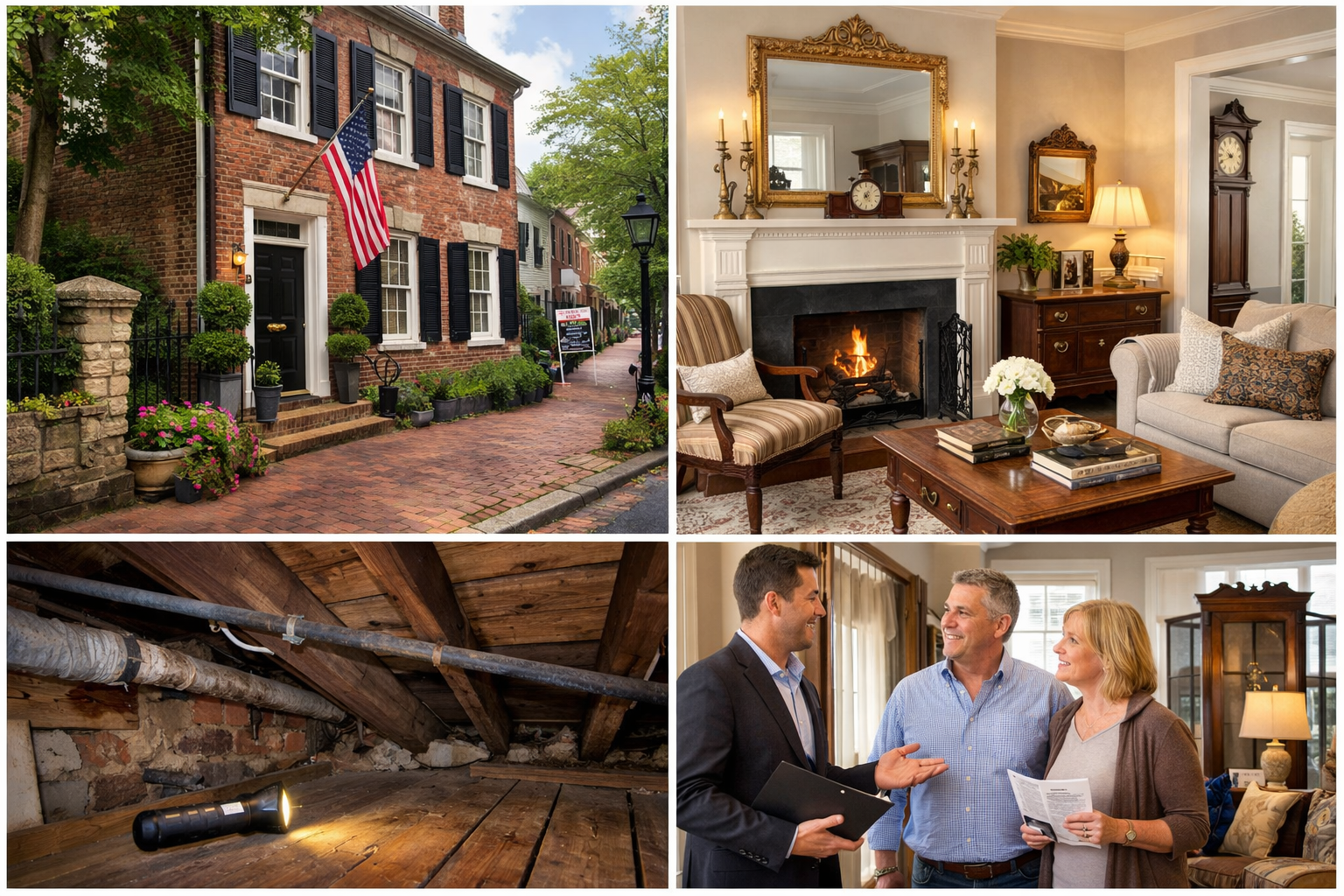
This guide walks you through everything: preparation, staging, pricing, regulatory compliance, closing costs, and what today's heritage buyers actually expect. Whether your home dates to the Federal period or the Victorian era, these tips are designed to help you sell faster and net more.
Quick Answer
Selling a historic home in Old Town Alexandria typically takes 22–30 days on market when priced correctly and staged to highlight original architectural details. The keys to a faster sale are BAR compliance verification before listing, strategic staging that balances period character with modern livability, a pre-listing inspection that addresses older-home concerns up front, and pricing informed by comparable historic-home sales — not just square footage.
Key Takeaways
- Old Town Alexandria's median sold price reached $870,500 in 2024, with an average just over $1 million — historic homes with updated interiors often exceed these figures.
- Any exterior change visible from a public way requires Board of Architectural Review (BAR) approval — verify compliance before you list.
- Heritage buyers in Old Town are increasingly diverse: federal professionals, dual-income households, downsizers, and lifestyle-driven purchasers seeking walkability and character.
- Staging should showcase original architectural details (mantels, mouldings, hardwood floors) while proving the home works for modern daily life.
- A pre-listing inspection is especially valuable for homes built before 1950, addressing concerns like lead paint, outdated electrical, and foundation settling proactively.
- Sellers in Alexandria typically pay 7–10% of the sale price in closing costs, including Virginia's grantor's tax and regional congestion relief tax.
Table of Contents
- Old Town Alexandria Market Snapshot (2025–2026)
- Why Selling a Historic Home Is Different
- BAR Compliance: What Every Seller Must Know
- Pre-Listing Preparation for Older Homes
- Staging a Historic Home: The Art of Old Meets New
- Curb Appeal for Historic Properties
- Understanding Heritage Buyers in Old Town
- Pricing Your Historic Home Right
- Photography and Marketing for Historic Listings
- Closing Costs and Seller Expenses in Alexandria
- Seller Timeline: Week-by-Week Action Plan
- Common Mistakes When Selling a Historic Home
- Alternatives to a Traditional Sale
- Frequently Asked Questions
- Glossary of Key Terms
- Next Steps
1. Old Town Alexandria Market Snapshot (2025–2026)
Before preparing your home for sale, it helps to understand exactly where the market stands. Old Town Alexandria (ZIP 22314) has continued to show resilience despite broader economic uncertainty — including attention on federal workforce shifts — with pricing and demand remaining strong through 2025 and into 2026.
📊 Key Numbers At-a-Glance (ZIP 22314)
| Closed Sales (2024) | ~650 |
| Median Sold Price | $870,500 |
| Average Sold Price | $1,000,000+ |
| Average Days on Market | 22 days |
| Sale-to-List Price Ratio | ~99% |
| Median List Price (Vintage Homes) | $1,060,000 |
| Real Estate Tax Rate (2025) | $1.135 per $100 |
Attached homes — including condominiums and townhomes — account for the majority of sales activity in Old Town, reflecting its appeal to buyers who prioritize walkability and proximity to D.C. Inventory constraints continue into 2026, especially for fee-simple townhomes and updated properties in prime locations. That limited supply is good news for sellers: well-prepared homes attract competitive offers relatively quickly.
⏱ Days on Market Comparison: Old Town vs. Broader Alexandria
Old Town (Historic) — 22 days avg.
Old Town (Vintage Homes) — 29 days avg.
Broader Alexandria Market — 35 days avg.
Sources: MLS data, Redfin (2025–2026 estimates). Old Town historic homes sell faster than the broader Alexandria average due to strong niche demand.
2. Why Selling a Historic Home Is Different
Selling in a historic district isn't the same as selling in a newer subdivision. The differences affect every step of the process — from what you can change before listing to who ultimately writes the offer. Here's a comparison:
| Factor | Historic Home (Old Town) | Standard Resale Home |
|---|---|---|
| Exterior changes | Require BAR approval | Standard building permits only |
| Window replacements | Must meet historic specs | Energy Star compliant; any brand |
| Buyer pool | Niche heritage + lifestyle buyers | Broader market |
| Staging approach | Highlight character + functionality | Neutral "blank canvas" |
| Inspection concerns | Lead paint, knob & tube, settling | Standard mechanical/structural |
| Marketing angle | Story-driven (provenance, era) | Feature-driven (beds, baths, sqft) |
The distinction matters because it shapes your entire go-to-market plan. You're not just selling square footage — you're selling a piece of Alexandria's colonial and architectural heritage. Buyers who seek out Old Town specifically are often willing to pay a premium for character, but they also expect transparency about older-home quirks and regulatory obligations.
3. BAR Compliance: What Every Seller Must Know
Alexandria's Board of Architectural Review (BAR) is the regulatory body that governs exterior changes to properties within two locally designated historic districts: the Old and Historic Alexandria District (OHAD) and the Parker-Gray District. The city established the OHAD in 1946, making it the third-oldest locally regulated historic district in the United States.
What the BAR Regulates
Any exterior alteration visible from a public right-of-way — including streets, alleys, and parks — requires a Certificate of Appropriateness from the BAR. Demolition of more than 25 square feet of exterior material requires a separate Permit to Demolish. Even painting previously unpainted masonry requires formal approval.
✅ Pre-Listing BAR Compliance Checklist
- Confirm your property falls within the OHAD or Parker-Gray district boundaries using the Historic Preservation Map viewer
- Review any past BAR approvals on file for your property — are all exterior changes documented?
- Check for unapproved alterations: replacement windows, painted brick, modified front door, shutters, or roofing
- Verify window replacements meet Alexandria's Replacement Window Performance Specifications
- If shutters exist, confirm they are operable (hinged, not screwed to the wall) and match the window opening
- Contact Historic Preservation staff at 703.746.3833 or preservation@alexandriava.gov to discuss any open questions
- Gather documentation for any approved renovations — buyers and their agents will ask
Why This Matters for Sellers
Unapproved exterior modifications can create serious complications during a sale. A savvy buyer's agent will review your home's compliance history. If changes were made without a Certificate of Appropriateness, the BAR can require you to reverse the work — at your expense. Addressing any compliance gaps before you list eliminates a potential deal-killer and signals to buyers that the home has been responsibly maintained within the district's guidelines.
What Will You Net After Selling in Old Town?
Between closing costs, transfer taxes, and potential compliance-related repairs, it's important to know your true bottom line before listing. Use our free Seller Net Sheet to see your estimated proceeds.
Calculate Your Net Proceeds →4. Pre-Listing Preparation for Older Homes
Older homes charm buyers — but they also raise specific concerns that modern construction simply doesn't. A pre-listing inspection is one of the smartest investments you can make before going to market, especially for homes built before 1950. Addressing issues proactively prevents surprise renegotiations and gives buyers confidence.
Top Older-Home Concerns to Address Before Listing
| Concern | Why It Matters | Action Step |
|---|---|---|
| Lead-based paint | Federal disclosure required for pre-1978 homes | Test and disclose; remediate if peeling |
| Outdated electrical | Knob-and-tube or ungrounded wiring deters buyers | Get an electrician's assessment; upgrade panel if needed |
| Plumbing | Galvanized steel or cast iron pipes may be failing | Scope sewer line; address visible corrosion |
| Foundation settling | Common in 100+ year-old homes; not always structural | Structural engineer evaluation; document findings |
| HVAC adequacy | Many historic homes were retrofitted with forced air | Service system; note age and capacity in disclosures |
| Moisture and drainage | Basement dampness is common with brick foundations | Address grading, downspouts; disclose any waterproofing |
You don't need to make every upgrade — but you do need to know the issues and present them honestly. In Old Town, experienced buyers expect character quirks like slightly uneven floors. What they don't tolerate is discovering undisclosed problems after going under contract. Transparency accelerates sales; concealment kills them.
Repairs That Offer the Best ROI for Historic Homes
- Refinished original hardwood floors — Heritage buyers want them; sand and seal rather than cover with carpet.
- Updated kitchen with period-sensitive design — Modern appliances in a kitchen that respects the home's era.
- Bathroom refresh — Replace dated tile and fixtures; keep proportions appropriate to the home's age.
- Repointed brick and cleaned masonry — Clean brick is the first thing visitors see; it signals care.
- Updated electrical panel — Removes a major red flag for lenders and inspectors.
5. Staging a Historic Home: The Art of Old Meets New
Staging a historic home is fundamentally different from staging a new-construction property. In new builds, the goal is typically a neutral "blank canvas." In a historic home, the goal is to tell a story — one that says, "This home has two centuries of character, and it works beautifully for how you actually live today."
The Golden Rule: Highlight, Don't Hide
Original mantels, exposed brick, heart-pine floors, wainscoting, pocket doors, and crown moulding are selling points. Staging should draw the eye toward these features — not cover them with oversized furniture or cluttered accessories.
✅ Do This
- Let original floors show — use small area rugs sparingly
- Stage fireplaces with simple, clean arrangements
- Use lighting to draw attention to architectural details
- Mix a few carefully chosen antiques with modern furniture
- Keep window treatments simple to let in natural light
- Place a framed note about the home's history on a side table
❌ Avoid This
- Wall-to-wall carpet over original hardwood
- Oversized furniture that makes rooms feel cramped
- Heavy drapes that block light in already-compact rooms
- All-white, sterile staging that strips out character
- Period costumes or props that feel like a museum
- Ignoring modern touches (smart thermostat, USB outlets)
Room-by-Room Staging Priorities
Not every room needs full staging. Prioritize the rooms that carry the most emotional weight for buyers:
| Room | Priority | Historic-Home Focus |
|---|---|---|
| Living Room / Parlor | High | Showcase mantel, mouldings, and floor; scale furniture to room proportions |
| Kitchen | High | Prove it's functional for modern cooking; highlight any updates alongside period elements |
| Primary Bedroom | High | Clean linens, bedside lighting, minimal clutter; let ceiling height and window character speak |
| Primary Bathroom | Medium | Fresh towels, updated fixtures; if a claw-foot tub exists, make it the centerpiece |
| Outdoor Space / Garden | Medium | Many Old Town homes have hidden courtyard gardens — stage with bistro set and greenery |
| Entryway / Foyer | Medium | First impression; clean, well-lit, uncluttered — let the front door and hallway architecture shine |
Curious About Your Home's Market Value?
Every historic home in Old Town is different — from Federal-era row houses on Captain's Row to Victorian-era townhomes near Yates Gardens. Get a personalized home evaluation based on comparable sales in your specific pocket of Old Town.
Get Your Free Home Valuation →6. Curb Appeal for Historic Properties
In Old Town, your home's exterior is the first chapter of its story. Because the BAR regulates visible changes, you'll want to maximize impact within the rules. Fortunately, the most effective curb-appeal upgrades for historic homes are often the simplest.
🏡 Historic Home Curb Appeal Checklist
- Power wash brick sidewalks and front steps
- Clean and repoint any deteriorating mortar joints
- Polish or replace door hardware (knobs, knockers, hinges)
- Add seasonal planters flanking the front door
- Ensure exterior lighting fixtures are clean and functional
- Trim any overgrowth from hedges, window boxes, or tree limbs
- If painting the front door (and it's been previously painted), choose a historically appropriate color
- Clean windows inside and out — sparkling glass amplifies natural light
One often-overlooked detail: if your home has a courtyard or rear garden (many Old Town townhomes do), stage it as a livable outdoor room. A bistro table, potted herbs, and string lighting can transform a modest brick patio into a selling feature. Heritage buyers in the D.C. area prize outdoor space, especially in a walkable urban setting.
7. Understanding Heritage Buyers in Old Town
Who buys historic homes in Old Town Alexandria? The buyer profile has evolved significantly over the past decade. While federal employees have long been a core segment, Old Town's buyer pool is now remarkably diverse — a factor that's helped buffer the market from federal workforce uncertainty.
Old Town Buyer Segments
| Buyer Type | What They Want | How to Appeal to Them |
|---|---|---|
| Federal professionals | Metro access, move-in ready, manageable maintenance | Highlight updated systems and King Street Metro proximity |
| Dual-income couples | Walkable lifestyle, restaurants, nightlife, culture | Emphasize Walk Score (96 in core Old Town), dining scene, waterfront |
| Downsizers | Single-level or low-maintenance living with charm | Stage for easy living; show how spaces can be simplified |
| History enthusiasts | Provenance, original features, architectural integrity | Prepare a property history packet; highlight original details in marketing |
| Private-sector professionals | D.C. proximity without D.C. taxes; quality of life | Mention Virginia's no-city-income-tax advantage and easy commute |
A key takeaway for sellers: your marketing strategy should speak to multiple segments simultaneously. Lead with lifestyle and character — these appeal broadly — and provide detail about systems, updates, and compliance documentation for the more analytical buyer.
8. Pricing Your Historic Home Right
Pricing a historic home requires a different approach than pricing a cookie-cutter colonial. Square footage matters, but so do intangible factors: the era the home was built, the quality of restoration work, which block you're on, and the home's provenance. Two properties with identical bedroom counts on the same street can differ by hundreds of thousands of dollars based on condition and character.
Pricing Factors Unique to Old Town Historic Homes
- Block location — Homes on Captain's Row, Prince Street, or near the waterfront command premium pricing
- Architectural period — Federal, Georgian, and Greek Revival homes attract specialized buyers willing to pay more
- Quality of restoration — Historically accurate renovations using appropriate materials add significant value
- Lot type — Fee-simple townhomes sell at a premium over condo-ownership structures
- Outdoor space — A courtyard garden, parking pad, or rooftop deck materially increases value in Old Town
- Updated systems — Modern HVAC, plumbing, and electrical behind historic walls is the ideal combination
💰 Average Price Per Square Foot — Old Town Row Houses
Unrenovated / Dated Interiors — ~$500–$600/sqft
Updated / Move-in Ready — ~$650–$800/sqft
Premium / Waterfront / Landmark — ~$800–$1,000+/sqft
Estimates based on recent Old Town row house sales. Actual values vary by specific location, condition, and features.
The single biggest pricing mistake historic-home sellers make is relying on automated online valuations (AVMs). These tools don't account for period-specific features, BAR-compliant renovations, or the emotional premium that comes with owning a property on a landmark block. A comparative market analysis from an agent who specializes in historic Northern Virginia properties is essential.
Sell Your Historic Home for a 1.5% Listing Fee
You shouldn't have to sacrifice marketing quality or negotiation strength to keep more of your equity. The Jamil Brothers Realty Group offers a full-service listing program at a 1.5% listing fee — with the same professional photography, strategic pricing, and hands-on representation you'd expect at any commission rate.
Learn About Our 1.5% Listing Program →9. Photography and Marketing for Historic Listings
Historic homes photograph differently than modern ones. Natural light is often uneven due to smaller windows. Rooms may be narrower. Ceiling heights can vary. A skilled real estate photographer who understands how to capture character — not just dimensions — can make an enormous difference in online engagement.
Photography Tips for Historic Properties
- Shoot during golden hour — Warm, low-angle light flatters brick facades and interior woodwork
- Capture details — A close-up of an original brass door knocker or hand-carved banister tells a story
- Show context — Include an exterior shot that captures the cobblestone street and neighboring historic homes
- Highlight the courtyard or garden — This is a differentiator; many buyers never expect a hidden outdoor space
- Use drone photography judiciously — An aerial showing the home's proximity to the waterfront and King Street adds perspective
Marketing the Story, Not Just the Specs
Heritage buyers respond to narrative. Your listing description should include the home's approximate construction date, notable architectural features (Federal period, Greek Revival details, etc.), any known historical associations, and the lifestyle that comes with the location. Mention proximity to the Torpedo Factory Art Center, Gadsby's Tavern, the waterfront promenade, and the King Street corridor. Browse current Alexandria listings to see how properties in your area are being marketed.
📜 What to Include in a Property History Packet
- Approximate date of original construction
- Architectural style and period-defining features
- Known previous owners or historical associations
- Summary of major renovations with dates and BAR approvals
- Historic plat map or survey (available through the Alexandria Library's Special Collections)
- Photos of the property from earlier decades (if available)
Tip: The Alexandria Library's Local History & Special Collections division has building permits dating to the 1890s and tax records from the 1960s that can help you research your home's past.
10. Closing Costs and Seller Expenses in Alexandria
Understanding your true closing costs is critical before you set an asking price. In the City of Alexandria, sellers typically pay between 7% and 10% of the sale price in total transaction costs. Here's how those expenses break down:
| Cost Item | Typical Amount | Who Pays |
|---|---|---|
| Virginia Grantor's Tax | $1 per $1,000 of sale price (0.1%) | Seller |
| NoVA Regional Congestion Relief Tax | $1.50 per $1,000 (0.15%) | Seller |
| City of Alexandria Additional Recordation | $0.083 per $100 | Typically Buyer |
| Title & Settlement Fees | $1,500 – $3,000 | Negotiable |
| Owner's Title Insurance | $800 – $2,500 | Typically Seller (VA custom) |
| Real Estate Agent Commission | Varies (negotiable) | Seller |
| Prorated Property Tax | Based on $1.135/$100 rate | Seller (to closing date) |
Sample Seller Cost Estimate: $900,000 Sale
| Line Item | Estimated Cost |
|---|---|
| Grantor's Tax (0.1%) | $900 |
| NoVA Congestion Relief Tax (0.15%) | $1,350 |
| Title & Settlement | $2,200 |
| Owner's Title Insurance | $1,500 |
| Listing Agent Commission (1.5%)* | $13,500 |
| Buyer's Agent Commission (est. 2.5%) | $22,500 |
| Prorated Property Taxes | $2,500 (est.) |
| Estimated Total Seller Costs | ~$44,450 |
*Based on the Jamil Brothers Realty Group's 1.5% full-service listing fee. Actual costs vary based on negotiation, sale price, and transaction specifics. Use our Seller Net Sheet for a personalized estimate.
11. Seller Timeline: Week-by-Week Action Plan
Selling a historic home takes more preparation than a standard resale. Plan for 4–6 weeks of pre-listing work to ensure a smooth launch and faster sale.
12. Common Mistakes When Selling a Historic Home
Even experienced sellers trip up when dealing with a historic property. Avoiding these pitfalls can save you weeks on market and thousands in unnecessary concessions.
⚠️ Mistakes to Avoid
- Skipping BAR compliance review — Unapproved exterior modifications discovered during due diligence can derail a sale or result in forced reversal of work at seller's expense.
- Over-renovating with modern materials — Installing vinyl windows or non-period siding in a historic district violates BAR guidelines and alienates heritage buyers.
- Relying on Zestimates for pricing — Automated valuations don't capture the nuance of historic property value. Priced incorrectly, your home sits; priced right, it sells fast.
- Covering up original features — Carpet over heart pine, drywall over exposed brick, or dropped ceilings that hide original plaster and moulding reduce value, not increase it.
- Neglecting the pre-listing inspection — Buyers of older homes hire aggressive inspectors. Getting ahead of issues preserves your negotiating power.
- Staging like a museum — Period costumes, antique clutter, and heavy Victorian drapes make the home feel like a relic rather than a livable space.
- Ignoring the outdoor space — That hidden courtyard garden could be the reason a buyer falls in love. Don't leave it as an afterthought.
- Not documenting your home's story — Heritage buyers want provenance. If you don't tell the story, the home is just old — not historic.
Planning to Buy After You Sell?
Many Old Town sellers are moving up, downsizing, or relocating within Northern Virginia. If you're buying your next home simultaneously, a solid strategy matters. Get a personalized buyer strategy plan to coordinate your sale and purchase seamlessly.
Build Your Buyer Strategy →13. Alternatives to a Traditional Sale
A traditional listing on the open market is usually the best way to maximize proceeds for a well-maintained historic home in Old Town. However, it's not the only path. Here's a quick comparison of alternatives:
| Option | Speed | Net Proceeds | Best For |
|---|---|---|---|
| Traditional MLS listing | 22–45 days | Highest | Sellers wanting maximum return |
| Cash offer option | 7–14 days | Lower (typically 70–85% of market) | Sellers needing speed or certainty |
| Off-market / pocket listing | Variable | Variable | Privacy-focused sellers |
| Lease-to-own | 12–36 months | Moderate | Sellers willing to wait for right buyer |
If speed is your primary concern — perhaps due to a job relocation or financial pressure — exploring a cash offer can provide certainty without the uncertainty of extended marketing. For most Old Town sellers, though, the traditional approach will yield the best financial outcome given the strong demand in this market.
14. Frequently Asked Questions
Do I need BAR approval before selling my Old Town Alexandria home?
You don't need BAR approval to sell. However, if you've made exterior changes without obtaining a Certificate of Appropriateness, those modifications may need to be disclosed or corrected before closing. It's wise to verify compliance before listing to avoid last-minute complications.
How long does it take to sell a historic home in Old Town Alexandria in 2026?
Well-prepared historic homes in Old Town are averaging 22–29 days on market. Properties that are priced correctly and staged to showcase both character and modern functionality tend to sell faster. Homes needing significant updates or with unresolved BAR issues may take longer.
Is staging a historic home worth the investment?
Yes. Staging is especially impactful for historic homes because it helps buyers envision modern living within a period setting. Industry data shows staged homes can sell up to 73% faster and for 1–10% more than unstaged comparable properties. In Old Town, where the buyer pool values both character and livability, that investment often pays for itself several times over.
What are the biggest deal-killers when selling a historic home?
The most common deal-killers are: unapproved BAR modifications that the buyer discovers during due diligence, major structural or electrical concerns revealed during inspection, and overpricing based on emotional attachment rather than market data. A pre-listing inspection and BAR compliance check eliminate the first two, while a professional comparative market analysis addresses the third.
Should I renovate my historic home before selling?
Not necessarily. Major renovations are rarely worth undertaking specifically to sell. However, targeted updates — refinishing original floors, updating a kitchen with period-appropriate design, refreshing a bathroom, servicing mechanical systems — can significantly improve your sale price and speed. Focus on repairs that remove red flags and cosmetic touches that photograph well.
How much are seller closing costs in Alexandria, VA?
Sellers in Alexandria typically pay 7–10% of the sale price in total closing costs. This includes agent commissions, Virginia's grantor's tax (0.1%), the Northern Virginia regional congestion relief tax (0.15%), title and settlement fees, owner's title insurance, and prorated property taxes. On a $900,000 sale, expect approximately $44,000–$55,000 in total seller costs depending on your commission arrangement.
Can I replace windows in my Old Town historic home before selling?
You can, but replacements must comply with Alexandria's Replacement Window Performance Specifications and require BAR review. In the Old and Historic Alexandria District, front-facing windows on pre-1932 homes must be repaired and retained wherever possible. Side and rear replacements have more flexibility but still cannot use vinyl, sandwich muntins, or tinted glass. Always consult Historic Preservation staff before ordering windows.
What's the best time of year to sell a historic home in Old Town?
Spring (April–June) is traditionally the strongest season, and Old Town's Garden Week home tours in April generate additional attention for the neighborhood. Fall (September–October) is also productive. That said, Old Town's year-round walkability and character mean there's always demand from relocating federal workers, lifestyle buyers, and people moving within the D.C. metro area.
Do historic homes in Old Town hold their value?
Historically, yes. Old Town Alexandria has demonstrated long-term price resilience, even during periods of broader market uncertainty. The limited supply of fee-simple historic homes, strict preservation regulations that maintain neighborhood character, and diverse buyer demand all contribute to sustained value. Properties that have been well-maintained and thoughtfully updated tend to appreciate steadily over time.
How do I choose the best real estate agent to sell my historic Old Town Alexandria home?
Look for an agent with demonstrable experience selling in Old Town's historic districts specifically — not just Alexandria broadly. Key criteria include: familiarity with BAR regulations, a portfolio of historic-home listings, strong local comparable sales knowledge, and a marketing approach that combines lifestyle storytelling with data-driven pricing. Ask how they'll market your home's unique character, not just its beds-and-baths specs. The Jamil Brothers Realty Group, for example, brings extensive experience across Northern Virginia including historic markets, paired with data-driven pricing and flexible commission structures such as their 1.5% full-service listing fee.
Are there tax benefits to owning a historic home in Alexandria?
Potentially. Property owners who place a historic preservation easement on their home may qualify for significant tax benefits, including federal income tax deductions and Virginia land-preservation tax credits. These easements restrict certain future alterations in exchange for the tax savings. Consult a tax professional to determine eligibility, as the specifics depend on your individual situation and the nature of the easement.
15. Glossary of Key Terms
| BAR (Board of Architectural Review) | A city-appointed committee that reviews and approves exterior changes to properties in Alexandria's locally regulated historic districts. |
| Certificate of Appropriateness | The approval document required from the BAR before making exterior alterations or new construction visible from a public way in a historic district. |
| OHAD | Old and Historic Alexandria District — the locally regulated historic district covering most of Old Town, established in 1946. |
| Fee Simple | Full ownership of both the building and the land it sits on, as opposed to condominium ownership where common areas are shared. |
| Grantor's Tax | A Virginia state transfer tax charged to the seller at $1 per $1,000 of the sale price. Northern Virginia properties are also subject to an additional regional congestion relief tax. |
| Preservation Easement | A voluntary legal agreement that restricts certain modifications to a historic property in exchange for potential tax benefits. |
| Permit to Demolish | Required BAR approval for demolishing or encapsulating more than 25 square feet of exterior material in a historic district, regardless of visibility. |
| Congestion Relief Tax | An additional transfer tax of $1.50 per $1,000 of sale price levied in Northern Virginia jurisdictions, paid by the seller. |
| Seller Net Sheet | A document that estimates the seller's take-home proceeds after subtracting all closing costs, commissions, taxes, and any outstanding mortgage balance from the sale price. |
16. Next Steps
Selling a historic home in Old Town Alexandria is equal parts preservation, marketing, and strategy. The buyers who seek out this neighborhood are motivated by character, walkability, and the unique lifestyle that comes with living in one of Virginia's most storied communities. Your job as a seller is to present the home in a way that honors its heritage while proving it meets modern expectations.
Here's what to do next:
- Get a realistic home valuation — Start with a free home evaluation based on comparable historic-home sales in Old Town.
- Understand your net proceeds — Run the numbers with our Seller Net Sheet to see what you'll take home after closing costs and taxes.
- Explore a 1.5% listing option — Save on commissions without sacrificing service quality through our full-service 1.5% listing program.
- Verify BAR compliance — Contact Alexandria Historic Preservation at 703.746.3833 or preservation@alexandriava.gov.
- Schedule a pre-listing consultation — Discuss timing, pricing strategy, and preparation steps with an agent who knows Old Town inside and out.
Old Town Alexandria rewards sellers who prepare thoughtfully. The demand is there. The buyer pool is diverse and motivated. With the right preparation, staging, and representation, your historic home can sell faster — and for more — than you might expect.
Ready to Sell Your Old Town Alexandria Home?
Get a free, no-obligation home valuation and learn how our 1.5% full-service listing program can help you keep more of your equity.
Get Your Free Valuation See Your Net Proceeds
Categories
- All Blogs (1177)
- Aldie (3)
- Ashburn (6)
- Buyer Guide (8)
- Buying a home (2)
- Buying Strategies (29)
- festivals (1)
- General Blog (66)
- Leesburg (5)
- Market Intelligence (29)
- Market Updates (8)
- Notable Properties For Sale (29)
- Real Estate Tips, News, and More (376)
- Seller Guide (2)
- Seller Guides (60)
- Selling Your Home (487)
- Sterling (6)
- Top Realtors in Northern Virginia (58)
Recent Posts
Message Sent!
Thank you for reaching out. Arslan & Saad have received your details and will be in touch shortly.
Need immediate assistance? Call or text 703-782-4830.