Is It Harder to Sell a Townhouse or Single-Family Home in Prince William County?
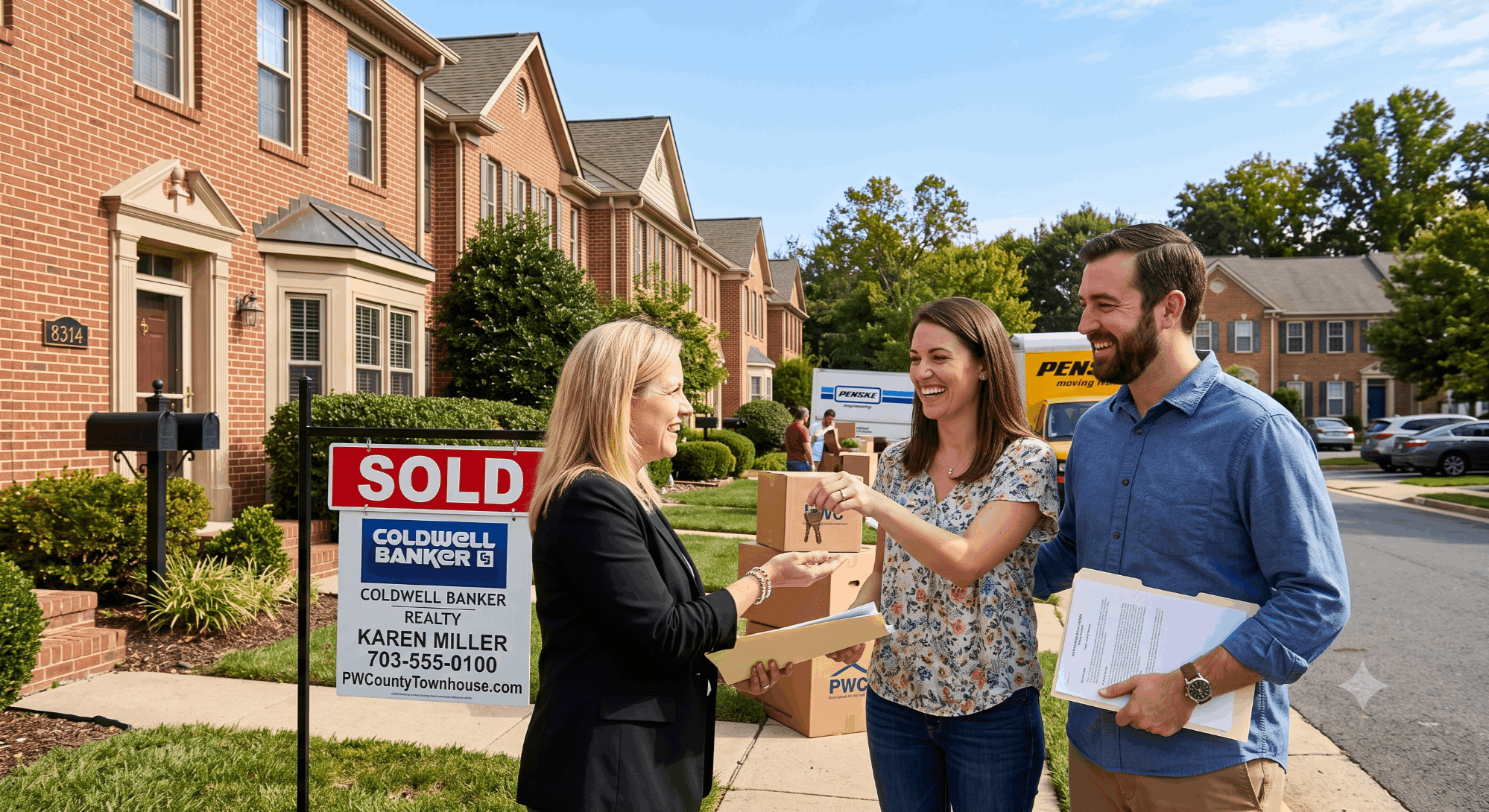
Quick Answer: Single-family homes in Prince William County generally sell faster than townhouses, with single-family homes averaging 28 to 42 days on market compared to 35 to 50 days for townhouses, roughly 15 to 25 percent faster. That gap comes from buyer pool size and pricing tolerance, not property quality. A well-priced townhouse in a desirable location with a reasonable HOA fee can still sell within a normal timeframe, while an overpriced single-family home can sit just as long as a mispriced townhouse.
Key Takeaways
- Single-family homes typically sell 15 to 25 percent faster than townhouses in Prince William County.
- Townhouse buyer pools are smaller and more price-sensitive, mainly first-time buyers, military households, and downsizers.
- Single-family homes tolerate modest overpricing better; townhouses punish it with extended days on market.
- High HOA fees can slow a townhouse sale more than almost any other single factor.
- Location and proximity to Quantico affect townhouse marketability more than they affect single-family marketability.
- Execution, pricing, presentation, and marketing, matters more to your actual outcome than property type alone.
Table of Contents
- Townhouse vs. Single-Family Home Sales: Current Market Comparison
- Who Buys Townhouses vs. Single-Family Homes in Prince William County?
- How Long Does It Take to Sell a Townhouse vs. a Single-Family Home?
- Pricing a Townhouse vs. Pricing a Single-Family Home
- Advantages of Selling a Townhouse in Prince William County
- Challenges of Selling a Townhouse in Prince William County
- Advantages of Selling a Single-Family Home in Prince William County
- Challenges of Selling a Single-Family Home in Prince William County
- How Location Affects Townhouse and Single-Family Sales
- How HOA Fees Impact Townhouse Marketability
- Military Buyer Preferences Near Quantico
- Selling Strategies by Property Type
- Common Mistakes Sellers Make by Property Type
- Which Property Type Should You Expect to Sell Faster?
- Frequently Asked Questions
- Property Type Terms Glossary
Prince William County homeowners frequently ask whether townhouses or single-family homes sell more easily, and the answer directly affects pricing strategy, timeline expectations, and marketing approach. In the Prince William County real estate market, single-family homes benefit from broader buyer appeal and larger buyer pools, while townhouses attract first-time buyers, military families relocating near Quantico, and downsizers seeking low-maintenance living. Understanding the specific advantages, challenges, and strategic approaches for each property type helps you set realistic expectations, price competitively, and market effectively regardless of which one you are selling.
This guide breaks down current days on market, buyer pool composition, pricing tolerance, HOA fee impact, and location-specific dynamics so you can see exactly why one property type tends to sell faster in Prince William County, and what that means for your own sale. For a broader look at listing, pricing, and marketing your property from start to finish, our complete guide to selling a home in Prince William County covers the full process in more depth.
Townhouse vs. Single-Family Home Sales: Current Market Comparison
Understanding how townhouses and single-family homes perform in Prince William County's current market provides essential context for sellers of either property type.
Which Sells Faster: Days on Market by Property Type
In today's balanced market conditions, single-family homes in Prince William County demonstrate stronger sales velocity across nearly all price points and locations. Properly priced single-family properties average 28 to 42 days on market before going under contract, while comparable townhouses average 35 to 50 days, roughly 15 to 25 percent longer marketing periods.
This differential is not about superior versus inferior property types. It reflects fundamental buyer pool dynamics: larger buyer pools for single-family homes, greater pricing flexibility due to fewer identical comparables, reduced sensitivity to minor property shortcomings, and broader geographic appeal across all Prince William County submarkets.
Median Sale Price and Resale Value by Property Type
The velocity gap between property types varies by price range. In entry-level markets ($350,000 to $450,000), both property types compete effectively with relatively small velocity differences. Mid-market ranges ($450,000 to $600,000) show widening gaps as single-family advantages become pronounced. Upper townhouse markets ($500,000 and above) face particularly challenging dynamics, since buyers in this range increasingly prefer single-family alternatives. A realtor home valuation is the most reliable way to see where your specific property lands within these ranges.
Median prices also differ substantially. Prince William County single-family homes median around $565,000, while townhouses median approximately $415,000. This roughly $150,000 gap reflects size differences as well as fundamental resale value perceptions about attached versus detached living.
Transaction Volume and Market Share
Single-family homes represent approximately 60 to 65 percent of Prince William County residential sales, with townhouses accounting for 25 to 30 percent and condos the remaining 5 to 10 percent. This distribution reflects both inventory composition and relative buyer demand.
Townhouse transaction volumes remain substantial. This is not a struggling market segment, but one with different dynamics and buyer demographics than single-family properties. Thousands of townhouses sell successfully in Prince William County every year, proving viable demand exists for well-positioned units. Our Prince William County seller's market outlook breaks down these trends by property type in more detail.
| Metric | Single-Family Homes | Townhouses | Difference |
|---|---|---|---|
| Average Days on Market | 28-42 days | 35-50 days | +15-25% |
| Median Sale Price | $565,000 | $415,000 | -$150,000 |
| List-to-Sale Ratio | 98-100% | 97-99% | -1-2% |
| Market Share | 60-65% | 25-30% | n/a |
| Price Per Square Foot | $220-$260 | $180-$220 | -$30-$50 |
Whether you own a townhouse or a single-family home, accurate pricing starts with understanding current market value for your specific property type and location.
Who Buys Townhouses vs. Single-Family Homes in Prince William County?
The core difference between selling a townhouse and selling a single-family home comes down to buyer pool composition and size.
Single-Family Home Buyer Pool
Single-family homes attract the broadest buyer spectrum in Prince William County. First-time buyers with sufficient budgets choose single-family over townhouses for long-term value. Move-up buyers upgrading from townhouses or smaller homes represent the largest segment. Families with children prioritize yards and space. Military families relocating to Quantico span all ranks and family sizes. Investors purchasing for rental income prefer single-family tenant appeal, and empty nesters not yet ready for full downsizing maintain a single-family lifestyle.
This diversity creates resilience. If one buyer segment weakens, others compensate, so single-family homes rarely face a situation where no viable buyer pool exists.
Townhouse Buyer Pool
Townhouses appeal to more specific demographics. First-time buyers represent the largest segment, prioritizing affordability over space. Military families, particularly enlisted ranks, find townhouse pricing aligned with BAH allowances and budget constraints. Downsizers transitioning from larger single-family homes seek low-maintenance living without condo restrictions. Single professionals and young couples value convenience over yards, and investors seeking affordable rental properties target townhouse price points.
While substantial, townhouse buyer pools are inherently smaller and more economically sensitive. When affordability tightens or interest rates rise, first-time buyers, the townhouse market's primary driver, pull back more dramatically than the move-up buyers who dominate single-family demand.
Buyer Motivation and Emotional Premium
Single-family buyers often approach a purchase as a long-term investment and family home, creating a willingness to pay a premium for the right property. Townhouse buyers typically emphasize practical and financial considerations more heavily, often accepting attached living to achieve homeownership or a specific location. These psychological differences affect pricing tolerance and negotiation dynamics throughout the sale.
How Long Does It Take to Sell a Townhouse vs. a Single-Family Home?
Quantifying timeline differences between property types helps sellers set realistic expectations and identify what accelerates or delays a sale.
Optimal Conditions Timeline
Under optimal conditions, accurate pricing, excellent presentation, peak-season timing, and a desirable location, both property types can achieve strong timelines. Single-family homes reach contract in 14 to 28 days under ideal conditions, with 45 to 60 days total to closing. Townhouses reach contract in 21 to 35 days under ideal conditions, with 50 to 70 days total to closing.
Typical Market Conditions Timeline
Under typical conditions with proper pricing and presentation, single-family timelines run 28 to 42 days to contract and 60 to 90 days total to closing. Townhouse timelines extend to 35 to 50 days to contract and 70 to 100 days total to closing. This 15 to 25 percent difference compounds through carrying costs. On a property with $2,500 to $3,500 in monthly carrying costs, an extra 10 to 15 days can cost $850 to $1,750. Timing your listing well can narrow this gap considerably, our breakdown of the best time to sell a house in Prince William County shows exactly when demand peaks for each property type.
Challenged Listings and Seasonal Variation
When properties face challenges, overpricing, poor condition, high HOA fees, or an unfavorable location, timeline gaps widen. Challenged single-family homes might take 60 to 90 days to contract after a pricing correction. Challenged townhouses can extend to 90 to 150-plus days. Seasonal patterns affect both property types, but hit townhouses harder: the gap narrows to 10 to 15 percent in spring and widens to 30 to 40 percent during winter, since first-time and military buyers, the townhouse market's core drivers, concentrate their house hunting around spring and summer.
Pricing a Townhouse vs. Pricing a Single-Family Home
Pricing challenges and opportunities differ substantially between property types, requiring tailored approaches for each.
Comparable Sales Selection
Single-family homes offer broader comparable selection, since lot size, age, and style differences are manageable through standard adjustments. Townhouses face tighter comparable requirements: same-community comparisons work best since HOA fees, amenities, and layouts match closely, and small comparable pools can make pricing more art than science. If you are still weighing your options, our guide on whether to sell now or wait in Prince William County can help you decide based on current pricing trends for your specific property type.
Overpricing Tolerance by Property Type
Single-family homes tolerate modest overpricing, in the range of 3 to 5 percent, better than townhouses, often still generating showings and eventual offers after a modest reduction. Townhouses punish overpricing more severely. Buyers compare 10 to 15 virtually identical townhouses and simply skip overpriced units. Even 3 to 5 percent overpricing can extend a townhouse's timeline 40 to 60 days.
How HOA Fees Affect Townhouse Pricing
HOA fees create a pricing challenge largely absent from single-family sales. Buyers compare total monthly housing cost, not just purchase price. A $415,000 townhouse with a $250 monthly HOA fee costs more per month than a $430,000 townhouse with a $150 monthly fee, despite the lower purchase price. Sellers in high-fee communities often need to price $5,000 to $15,000 below comparable properties in lower-fee communities to offset the difference.
Understanding pricing dynamics matters, but knowing your actual net proceeds after all selling costs helps you make an informed decision. Our seller closing cost calculator shows exactly what you will keep, for either property type.
Our seller net sheet breaks down every cost, commission, transfer taxes, and closing fees, so you know your real bottom line before you list either property type.
Advantages of Selling a Townhouse in Prince William County
Despite facing some marketing challenges relative to single-family homes, townhouses offer distinct advantages that strategic sellers can leverage.
Affordability Appeal for First-Time Buyers
Townhouses' primary advantage is affordability, accessing Prince William County homeownership at $150,000 to $200,000 less than comparable single-family homes. This positions townhouses well for first-time buyers, military families working within BAH limits, and value-seeking buyers prioritizing location over space.
Low-Maintenance, HOA-Maintained Living
HOA-maintained exteriors appeal to busy professionals, military families expecting future relocations, and downsizers tired of yard work. Marketing should emphasize this convenience factor, "maintenance-free lifestyle" and "lock-and-leave convenience" resonate with target demographics.
Amenity Access and Location Advantages
Many townhouse communities offer amenities single-family neighborhoods lack, pools, fitness centers, playgrounds, and clubhouses. Townhouse developments also often occupy prime locations near VRE stations, shopping districts, and major employment centers where single-family prices are prohibitive, creating a location advantage that offsets attached living trade-offs for many buyers.
Challenges of Selling a Townhouse in Prince William County
Understanding townhouse-specific challenges helps sellers address them proactively rather than being surprised by an extended timeline.
Limited Buyer Pool and Direct Comparable Competition
Move-up buyers typically skip townhouses entirely, upgrading straight to single-family homes. Townhouses also cluster in developments with dozens of similar units, creating direct comparable competition where price becomes the primary differentiator when layout, size, and location are nearly identical.
HOA Fee Resistance and Financing Requirements
High HOA fees, $300 or more per month, significantly deter buyers who calculate total housing cost rather than just purchase price. Some lenders also impose stricter requirements for townhouse financing, particularly for FHA and VA loan approval, which require the HOA to meet specific reserve, insurance, and owner-occupancy standards.
Condition Sensitivity
Townhouse buyers, operating on tighter budgets, expect move-in condition and often lack cash reserves for post-purchase improvements. Dated kitchens, worn carpeting, or deferred maintenance that single-family buyers might overlook can disqualify a townhouse from consideration entirely.
Advantages of Selling a Single-Family Home in Prince William County
Single-family homes enjoy structural advantages in Prince William County that facilitate faster, easier sales across most scenarios.
Broadest Buyer Appeal and Pricing Flexibility
Single-family homes attract virtually every buyer segment, from first-time purchasers through luxury buyers, translating directly into faster timelines and better pricing power through competition among diverse buyer types. Greater uniqueness in lot size, architectural style, and floor plan also reduces direct comparable competition compared to townhouses.
Privacy, Space, and Appreciation Potential
Yards, privacy, and detached living command a meaningful premium most buyers willingly pay. Single-family homes also historically show stronger appreciation potential than townhouses, since land ownership and detached value perceptions contribute to more robust long-term resale value.
Minimal HOA Constraints
Most Prince William County single-family homes have no HOA fee or a modest fee of $50 to $150 per month, eliminating the fee resistance that affects high-fee townhouse communities and avoiding HOA approval requirements that can complicate a sale.
Challenges of Selling a Single-Family Home in Prince William County
Despite overall advantages, single-family homes face specific challenges sellers should understand and address.
Higher Price Points and Smaller Qualified Buyer Pools
Single-family median prices around $565,000 require buyers with stronger financial qualifications than the $415,000 townhouse median, which shrinks the numerically qualified buyer pool at each price point, even though the demographic buyer pool is broader.
Full Maintenance Responsibility and Curb Appeal
Buyers assume full maintenance responsibility, roofs, HVAC, exterior, and landscaping, which deters some purchasers. Yards, landscaping, and exterior condition significantly impact buyer perception and pricing for single-family homes, so curb appeal investment matters more here than for HOA-maintained townhouses. Working with a low commission realtor for either property type means that curb appeal and marketing investment go further, since more of your equity stays with you at closing.
Whether you're selling a townhouse or a single-family home, professional photography, drone video, 3D tours, expert negotiation, and full MLS marketing come standard with our full-service 1.5% listing fee.
How Location Affects Townhouse and Single-Family Sales
Geographic factors affect townhouse and single-family dynamics differently across Prince William County's submarkets.
Western Prince William County (Gainesville, Haymarket)
Western areas emphasize single-family new construction and spacious lots. Townhouses here must price aggressively and emphasize low-maintenance convenience to compete with abundant single-family alternatives at modest price premiums buyers often accept.
Central Corridor and Eastern Prince William County
Central areas (Manassas, Manassas Park) offer balanced markets for both property types, with established townhouse communities near VRE attracting consistent commuter demand. Eastern communities (Woodbridge, Dale City) show the strongest relative townhouse performance, since affordability emphasis and military buyer concentration bring townhouse timelines closer to single-family averages than in other submarkets.
How HOA Fees Impact Townhouse Marketability
HOA fees represent perhaps the single most critical factor differentiating townhouse sales success from struggles in Prince William County.
Low, Moderate, and High Fee Communities
Townhouses with reasonable HOA fees ($100 to $200 per month) sell comparably to lower-fee alternatives, since buyers accept that range as a fair cost for maintenance and amenities. Moderate fees ($200 to $300) create pricing pressure requiring a modest discount. High fees ($300-plus) create substantial marketability challenges, extending timelines 40 to 60 percent and often requiring $15,000 to $30,000-plus in price discounts to compete. HOA dues also factor into your bottom line at the settlement table, our breakdown of closing costs for Prince William County sellers walks through exactly how prorated dues and other fees affect your net proceeds.
Justifying Your HOA Fee to Buyers
Successfully selling a higher-fee townhouse requires explicit value demonstration. Itemize exactly what the fee covers, exterior maintenance, landscaping, snow removal, pool or fitness access, and calculate annual savings versus DIY costs of equivalent services. Transparency about fees and their value helps buyers accept the cost rather than reflexively rejecting a higher-fee property.
Military Buyer Preferences Near Quantico
Understanding military buyer preferences helps sellers in Quantico-proximate areas market either property type effectively to this significant buyer segment.
Why Enlisted and Junior Officer Buyers Favor Townhouses
BAH allowances often align well with townhouse price points and monthly costs, and low maintenance suits a military lifestyle expecting relocation every two to four years. Rental potential for a future PCS move also makes townhouses an attractive investment property for military buyers.
Why Higher-Ranking and Larger Families Favor Single-Family Homes
Officer BAH allowances often accommodate single-family pricing, and adequate space for families with multiple children requires single-family square footage. Marketing to either segment should emphasize Quantico proximity, VA loan approval status, turnkey condition, and flexible closing dates matching PCS orders.
Selling Strategies by Property Type
Optimizing your sale requires a tailored approach recognizing each property type's unique dynamics.
Townhouse Selling Strategy
Price aggressively from day one, research same-community sales exhaustively, factor HOA fees explicitly into your competitive position, emphasize low-maintenance lifestyle and location advantages, and stage minimally so buyers can more easily envision their own furnishings in a smaller footprint.
Single-Family Selling Strategy
Invest heavily in curb appeal, highlight privacy, space, and school district quality, stage to showcase lifestyle benefits like outdoor entertaining and home offices, and remember that you can tolerate modest overpricing better than a townhouse seller can, though accurate pricing still beats any other strategy.
Exploring your options across full-service, flexible commission, and cash-sale paths helps you decide which approach fits your timeline and goals. Reviewing real estate commission options is worth doing before you list either property type.
Buyer's agent compensation is negotiable, not fixed. We walk you through exactly how commission is structured on your sale so there are no surprises at the negotiating table.
Common Mistakes Sellers Make by Property Type
Understanding frequent errors helps sellers of either property type avoid costly missteps.
Townhouse Seller Mistakes
Ignoring HOA fee competitive disadvantages when pricing, pricing based on what you need rather than what buyers will pay, and failing to prepare the property to move-in condition all cost townhouse sellers weeks and thousands of dollars.
Single-Family Seller Mistakes
Neglecting curb appeal, overpricing based on emotional attachment rather than objective market data, and ignoring deferred maintenance on major systems that buyers will discover during inspection all extend timelines unnecessarily for single-family sellers.
If speed and certainty matter more than maximizing price for either property type, exploring a cash offer for my house is worth considering as an alternative path.
If timing, condition, or certainty matters more than maximum price, a cash offer may be the right fit for either a townhouse or single-family home. We will walk you through your full range of options.
Which Property Type Should You Expect to Sell Faster?
The evidence clearly shows single-family homes sell faster and easier than townhouses in Prince William County: 15 to 25 percent shorter timelines, broader buyer appeal, greater pricing tolerance, and fewer structural challenges like HOA fees. These advantages are real and meaningful for anyone evaluating which property type to buy, hold, or sell.
That said, easier does not mean townhouses are difficult to sell or represent a poor resale value. Thousands of Prince William County townhouses sell successfully every year, many within timeframes approaching single-family averages. The critical insight is that execution quality matters more than property type. A strategically priced, professionally presented townhouse in an excellent location will outperform an overpriced, poorly maintained single-family home in a marginal neighborhood every time.
Keys to success regardless of property type: price accurately from day one based on truly comparable recent sales, present professionally with excellent condition and photography, market comprehensively to the right buyer demographics, and work with an agent who understands your specific property-type dynamics.
Whichever property type you are ready to move on, taking the first step to sell your home with an accurate valuation and a clear net proceeds estimate puts you in control of the outcome from day one.
The Jamil Brothers Realty Group brings extensive Prince William County experience marketing both townhouses and single-family homes across every submarket from Woodbridge to Gainesville.
Frequently Asked Questions
Do townhouses really sell slower than single-family homes in Prince William County?
Yes, townhouses typically sell 15 to 25 percent slower than comparable single-family homes in Prince William County. Current averages show 35 to 50 days on market for townhouses versus 28 to 42 days for single-family properties. This reflects smaller buyer pools for townhouses versus broader single-family appeal. However, well-priced townhouses in desirable locations still sell successfully within normal timeframes, the difference is modest, not dramatic.
What's the biggest challenge selling a townhouse versus a single-family home?
The biggest townhouse challenge is pricing tolerance, townhouse buyers compare multiple virtually identical properties and skip overpriced units entirely. Even 3 to 5 percent overpricing can extend timelines 40 to 60 days. Single-family homes tolerate modest overpricing better since properties are more unique and buyers expect some negotiation. High HOA fees add a second challenge without an equivalent single-family barrier.
How do HOA fees affect townhouse selling timeline?
Low fees ($100 to $200 per month) create minimal timeline impact. Moderate fees ($200 to $300) require pricing $5,000 to $10,000 below lower-fee alternatives and add 10 to 20 percent to timeline. High fees ($300-plus) extend timelines 40 to 60 percent and require $15,000 to $30,000-plus in price discounts. Buyers calculate total monthly housing cost, so high fees effectively raise your price tens of thousands of dollars from an affordability perspective.
Are townhouses harder to sell in western or eastern Prince William County?
Townhouses face tougher competition in western Prince William County (Gainesville, Haymarket) where single-family homes dominate inventory and buyer preference. Eastern Prince William County (Woodbridge, Dale City) shows stronger relative townhouse performance due to affordability emphasis and military buyer concentration. If selling a western townhouse, price especially competitively and emphasize low-maintenance benefits.
Do military buyers prefer townhouses or single-family homes?
Military buyers purchase both property types based on rank, family size, and financial priorities. Enlisted personnel and junior officers often favor townhouses due to BAH alignment with pricing and low maintenance. Higher-ranking personnel and larger families typically prefer single-family homes for space and appreciation potential. Both segments create strong demand in eastern Prince William County near Quantico.
Should I price my townhouse lower than comparable single-family homes per square foot?
Yes, townhouses typically sell for $30 to $50 less per square foot than comparable single-family homes. This differential reflects attached versus detached value perceptions rather than quality differences. Price your townhouse competitively within the townhouse market rather than trying to achieve single-family per-square-foot rates, since buyers won't pay single-family premiums for attached properties regardless of condition.
What improvements help a townhouse sell faster?
Focus on cleanliness, neutral updating, and move-in condition, since first-time buyers expect turnkey properties. High-return improvements include fresh neutral paint, professional deep cleaning, updated light fixtures and hardware, and new carpeting if worn. Avoid major renovations, since the return rarely justifies the cost in townhouse markets. Professional photography delivers exceptional value through increased online interest.
Can a townhouse sell as fast as a single-family home with the right strategy?
Yes, strategic execution can achieve timelines approaching or matching single-family averages. Price aggressively at or slightly below market, present in pristine move-in condition, use professional photography emphasizing space and light, time the listing for spring, and showcase amenities that justify the HOA fee. Exceptional townhouses in desirable locations with low HOA fees can achieve 21 to 35 day timelines, within single-family range.
How important is staging for a townhouse versus a single-family home?
Townhouse staging should be minimal, emphasizing space and light rather than furnishings, since buyers envision their own furniture. Single-family staging can be more elaborate, showcasing lifestyle benefits like outdoor entertaining and home office demonstrations. Both property types benefit from a professional staging consultation identifying the optimal presentation approach for that specific unit.
Should I use different marketing strategies for a townhouse versus a single-family home?
Yes. Townhouse marketing should target first-time buyers and military channels, emphasize low-maintenance lifestyle and location advantages, and focus on value versus single-family alternatives. Single-family marketing should emphasize family lifestyle benefits, target a broader demographic range, and position the home as a long-term investment with strong appreciation potential. Both require professional photography and comprehensive MLS marketing, but the messaging and target buyer differ.
Do I need a real estate agent more for selling a townhouse or a single-family home?
Professional representation benefits both property types, but townhouses potentially benefit more due to tighter margin for error. Townhouse sellers need accurate same-community comparable analysis, strategic pricing that accounts for HOA fees, and expertise navigating HOA disclosure requirements. Single-family homes' broader buyer appeal and pricing tolerance forgive some errors that townhouses do not.
How do I choose the best agent for my property type in Prince William County?
For townhouses, look for experience selling in your community or similar developments, a track record with first-time and military buyers, and an understanding of HOA dynamics. For single-family homes, confirm experience in your neighborhood and success marketing outdoor spaces and lifestyle benefits. The Jamil Brothers Realty Group has extensive experience selling both townhouses and single-family homes across Prince William County with a full-service 1.5% listing fee that delivers professional results while saving thousands.
Property Type Terms Glossary
Townhouse
An attached residential property sharing one or two walls with neighboring units, typically multi-story with an individual entrance, where the owner holds title to the structure and land beneath it.
Single-Family Home
A detached residential property on its own lot with no shared walls, where the owner maintains full responsibility for all upkeep.
HOA (Homeowners Association)
An organization governing community rules and maintaining common areas, funded by mandatory monthly fees from property owners. Typical for townhouses, less common for single-family homes.
HOA Fee
A monthly payment to a homeowners association covering exterior maintenance, amenities, insurance, reserves, and management, ranging from $100 to $500-plus monthly in Prince William County townhouse communities.
Attached Housing
General term for properties sharing walls with neighboring units, including townhouses, duplexes, and condos, in contrast to detached single-family homes.
Detached Housing
Properties with no shared walls, primarily single-family homes, which generally command a premium in resale value versus attached alternatives.
First-Time Buyer
A purchaser who has not owned a home in the past three years. The primary buyer segment for townhouses due to affordability constraints and entry-level pricing.
Move-Up Buyer
A purchaser upgrading from a smaller or less expensive property to a larger, more expensive home. The primary single-family buyer segment, often selling a townhouse to buy a single-family property.
This comparison of selling townhouses versus single-family homes in Prince William County provides educational information based on current market conditions, historical patterns, and typical buyer behaviors. Actual results vary based on the specific property, pricing strategy, market timing, location, and condition. This guide should not be considered personalized real estate or investment advice. Consult with a licensed real estate professional regarding your specific property and circumstances.
Explore More
Browse Every Corner of the DMV Market
Whether you're searching by budget, neighborhood, or buying situation — find exactly what you need below.
Virginia Homes by Budget
Washington DC Homes by Budget
Maryland Homes
Explore Northern Virginia Communities
Loudoun County
Fairfax County & Surrounding
Ready to Make a Move?
Full-Service · No Tradeoffs
List for 1.5% & Keep More Equity
Professional photography, drone video, 3D tours, and expert negotiation — all included. On an $800K home, that's $12,000 more in your pocket vs. a 3% agent.
See the 1.5% Program →Need Speed or Certainty?
Get a No-Obligation Cash Offer
Skip the showings, skip the contingencies. If timing or condition matters more than top dollar, a cash offer may be the right fit. We'll walk you through every option.
Explore Cash Offers →Categories
- All Blogs (1228)
- Aldie (3)
- Ashburn (6)
- Buyer Guide (8)
- Buying a home (2)
- Buying Strategies (30)
- festivals (1)
- General Blog (67)
- Leesburg (5)
- Market Intelligence (29)
- Market Updates (8)
- Notable Properties For Sale (32)
- Real Estate Tips, News, and More (385)
- Seller Guide (2)
- Seller Guides (60)
- Selling Your Home (523)
- Sterling (6)
- Top Realtors in Northern Virginia (58)
Recent Posts

Message Sent!
Thank you for reaching out. Arslan & Saad have received your details and will be in touch shortly.
Need immediate assistance? Call or text 703-782-4830.