
How Long Does It Take to Sell a House in Virginia?
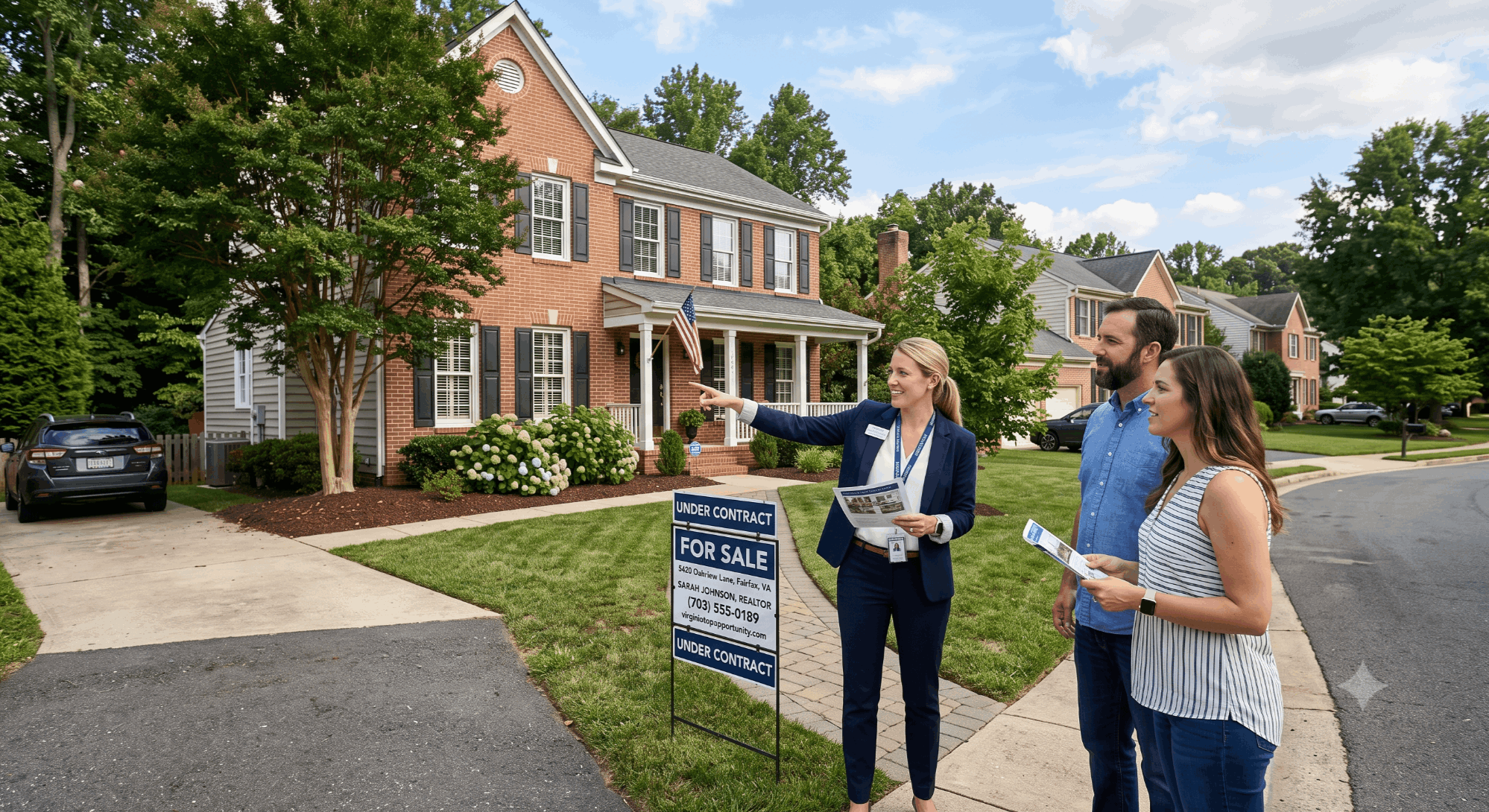
Quick Answer: Selling a house in Virginia typically takes about 75 to 90 days from listing to closing. That breaks down into roughly 27 to 45 days on the market to receive an accepted offer, plus another 30 to 45 days to complete the closing. Northern Virginia tends to move faster, often around 35 days on market, while rural areas usually take longer.
Key Takeaways
- Average days on market in Virginia: 27 to 45 days, depending on region and season
- Closing timeline: 30 to 45 days after you accept an offer (7 to 14 days for cash)
- Total time to sell: about 75 to 90 days from listing to handing over the keys
- Fastest months to sell: April, May, and June
- Northern Virginia moves fastest, averaging close to 35 days on market
- Biggest timeline drivers: pricing, condition, location, financing, and seasonality
In This Guide
- Understanding the Virginia Home Selling Timeline
- What Is the Average Days on Market in Virginia?
- How Long It Takes to Sell in Each Virginia Region
- The Virginia Closing Process Step by Step
- Factors That Affect How Long It Takes to Sell
- When Is the Best Time to Sell a House in Virginia?
- How to Sell Your Virginia Home Faster
- Common Mistakes That Slow Down a Sale
- Faster Alternatives for Selling Your Home
- What Selling a House in Virginia Costs
- Seller Savings Calculator
- Your Next Steps as a Virginia Seller
- Frequently Asked Questions
- Glossary of Key Terms
For most Virginia homeowners, selling a house takes approximately 75 to 90 days from listing to closing. That timeline usually includes the period spent marketing the property and securing a contract, followed by inspections, appraisal, financing, title work, and settlement. A cash sale may close sooner, while pricing problems, repairs, buyer financing, or title issues can extend the process.
Location and property type also matter. A move-in-ready home in a competitive Fairfax or Loudoun County neighborhood may attract an offer quickly, while a rural property, luxury home, condo, or overpriced listing may require more time. An experienced Northern Virginia real estate agent should use recent Bright MLS data, comparable sales, local inventory, and contract activity to provide a property-specific estimate—not simply quote a statewide average.
Understanding the timeline early makes it easier to coordinate a relocation, purchase another home, manage temporary housing, or plan a downsizing move. This guide explains how long each stage of a Virginia home sale typically takes, what causes delays, and which preparation steps may help you close sooner. Start with a professional home valuation and a realistic listing plan tailored to your property, market, and preferred moving date.
Understanding the Virginia Home Selling Timeline
Selling a home in Virginia happens in two distinct phases, and each one carries its own timeline. Understanding both helps you plan the sale far more accurately than relying on a single number. For the full process beyond timing, our step-by-step guide to selling a house in Virginia walks through every stage from prep to closing day.
Phase 1: Days on Market (DOM)
Days on market measures how long your home is actively listed before you accept an offer. This is the marketing window: the period when buyers tour the property, agents schedule showings, and offers come in. Across Virginia, this phase currently averages 27 to 45 days, shaped largely by your location and local demand.
Phase 2: The Closing Period
Once you accept an offer, the closing period begins. This stretch covers the buyer's financing approval, the home inspection, the appraisal, the title search, and the final paperwork. In Virginia, closing usually takes 30 to 45 days for financed purchases, or as little as 7 to 14 days when the buyer pays cash.
Typical Virginia Home Sale Timeline
Total timeline: roughly 10 to 14 weeks from preparation to closing
What Is the Average Days on Market in Virginia?
Virginia's housing market continues to favor sellers, though at a steadier pace than the frenzied stretches of recent years. Limited inventory keeps well-priced homes moving, and most listings still see strong activity in their first two weeks. Watching current Virginia housing market conditions helps you gauge how quickly homes like yours are moving before you list.
| Metric | Virginia | National Average |
|---|---|---|
| Median days on market | 27 to 45 days | 55 to 65 days |
| Median home price | $450,000 to $475,000 | $415,000 |
| Months of supply | about 2 months | 3.5 months |
| Sale-to-list price ratio | around 100% | 98% |
A two-month supply of inventory points clearly to a seller's market. In a balanced market, you would typically see five to six months of supply. With fewer homes available, well-prepared listings sell faster and more often hit asking price, which is why Virginia sellers tend to land offers more quickly than the national average.
What Does "Days on Market" Actually Measure?
Days on market counts the time between the day your home hits the MLS and the day you go under contract. It does not include the closing period that follows. A low DOM signals strong buyer demand, while a number that keeps climbing usually flags a pricing or condition issue that needs attention.
Before you set a list price or a target date, it helps to know what your home is actually worth in today's market. A professional home value estimate gives you a realistic starting point and an accurate read on how quickly comparable properties are selling in your area.
Get a personalized valuation from The Jamil Brothers built on street-level comparable sales, not an automated guess. We respond within 24 hours.
How Long It Takes to Sell in Each Virginia Region
Virginia's real estate market varies a lot from one region to the next. Northern Virginia moves at a different pace than Richmond, Hampton Roads, or the more rural parts of the Commonwealth. Here is how selling timelines compare across the state.
| Region | Avg. Days on Market | Median Price | Pace |
|---|---|---|---|
| Northern Virginia (NVAR region) | 35 days | $715,000 to $750,000 | Fast |
| Fairfax County | 28 to 35 days | $680,000+ | Fast |
| Loudoun County | 30 to 40 days | $650,000+ | Fast |
| Arlington County | 25 to 32 days | $700,000+ | Fast |
| Prince William County | 35 to 45 days | $525,000 | Moderate |
| Richmond Metro | 40 to 50 days | $380,000 | Moderate |
| Hampton Roads | 45 to 55 days | $350,000 | Moderate |
| Rural and Southwest Virginia | 50 to 70+ days | $250,000 to $350,000 | Slower |
Why Northern Virginia Sells the Fastest
Northern Virginia's location next to Washington, D.C., paired with steady employment from the federal government, defense contractors, and the tech sector, keeps buyer demand consistently high. Communities across Fairfax, Loudoun, and Arlington benefit from strong job markets, sought-after schools, and tight inventory, all of which push homes under contract faster than the statewide pace. For a closer look at the numbers behind the region, see our detailed Northern Virginia selling timeline.
The Virginia Closing Process Step by Step
Once you accept an offer, the clock starts on closing. Virginia is a "settlement state," which means the process is handled by a licensed title company or a real estate attorney. Here is what unfolds during those 30 to 45 days.
Contract Ratified (Day 0)
Both parties sign, the earnest money deposit goes into escrow, and the title order is placed.
Loan Application (Days 1 to 3)
The buyer completes the mortgage application and receives a Loan Estimate from the lender.
Inspection Period (Days 3 to 14)
The home inspection takes place, followed by any repair requests or negotiations.
Appraisal and Title (Days 7 to 21)
The lender orders the appraisal while the title company runs its search for liens or claims.
Underwriting and Clear to Close (Days 14 to 30)
The lender clears all conditions and issues the clear-to-close. The Closing Disclosure reaches the buyer at least three days before settlement.
Closing Day and Recording
After the final walkthrough and settlement signing, funds are disbursed, the deed is recorded with the Circuit Court clerk, and keys are released, usually the same day or within 24 to 48 hours.
What Happens at the Closing Table?
The settlement appointment itself usually lasts about an hour. The buyer and seller, or their representatives, meet with a settlement agent to sign documents, transfer funds, and complete the legal change of ownership. In Virginia, the buyer's funds must arrive by wire transfer, cashier's check, certified check, or money order, since personal checks are not accepted for closing.
Factors That Affect How Long It Takes to Sell
Averages give you a useful benchmark, but your own timeline depends on several moving parts. These are the factors that most influence how quickly a Virginia home sells.
1. Pricing Strategy
Pricing is the single biggest lever on your timeline. Homes priced correctly for their market attract more showings and stronger offers, while overpriced listings sit, grow stale, and often sell for less than they would have with an accurate price from day one. A comparative market analysis from a local agent helps you find that sweet spot.
2. Property Condition
Move-in ready homes sell faster than those needing work. Buyers increasingly expect a home to show well, so deferred maintenance, dated kitchens, or worn carpet can stretch your timeline. Simple updates such as fresh paint, modern fixtures, and a deep clean make a real difference.
| Property Condition | Timeline Impact | Price Impact |
|---|---|---|
| Move-in ready, staged | 10 to 15 days faster | plus 3% to 5% |
| Good condition, minor updates | Average timeline | Market value |
| Dated but functional | 10 to 20 days slower | minus 3% to 7% |
| Needs significant repairs | 30+ days slower | minus 10% to 20% |
3. Location Within Virginia
As the regional breakdown shows, location dramatically affects timelines. Urban and suburban areas near employment centers sell faster than rural properties, and even within a single county, individual neighborhoods can move at very different speeds.
4. Seasonality
Spring and summer are the busiest seasons for Virginia real estate. Listing during peak months can meaningfully cut your days on market, a pattern covered in detail in the next section.
5. Mortgage Rates
Higher mortgage rates reduce buyer purchasing power and can slow the market. When rates sit in the 6% to 7% range, some buyers wait on the sidelines or shop in lower price brackets, which lengthens the average time to sell. When rates ease, buyer activity tends to pick back up.
6. Local Inventory Levels
When inventory is tight, as it is across much of Virginia right now, buyers compete and homes sell faster. When inventory grows, buyers have more choices and less urgency, which extends timelines.
7. Marketing Quality
Professional photography, a compelling listing description, smart pricing, and broad MLS exposure all shape how quickly you attract qualified buyers. Listings with weak photos or limited reach take longer to sell.
8. Buyer Financing
Cash buyers can close in 7 to 14 days. Conventional loans usually need 30 to 35 days, while FHA and VA loans may run 35 to 45 days because of their added requirements. The financing type your buyer brings directly shapes the back half of your timeline.
9. Agent Experience and Commission Approach
An experienced local agent understands pricing, marketing, and negotiation well enough to keep the process moving and head off problems before they cause delays. The way your representation is structured matters too. Some sellers assume a lower fee means fewer services, but that is not always the case, and exploring more flexible commission structures lets you keep full marketing support while protecting more of your equity.
Not every seller needs the same structure. See the full-service commission options available to Virginia sellers and choose the one that matches your goals and timeline.
When Is the Best Time to Sell a House in Virginia?
Timing your listing well can trim your days on market and, in many cases, lift your final sale price. Here is how Virginia's market tends to perform through the calendar.
| Period | Avg. Days on Market | Price Performance | Verdict |
|---|---|---|---|
| April | 32 days | plus 4% | Excellent |
| May | 35 days | plus 5% to 7% | Best for Price |
| June | 38 days | plus 6% | Excellent |
| July to August | 40 to 42 days | plus 2% to 3% | Good |
| September to October | 45 to 50 days | Near average | Moderate |
| November to December | 50 to 55 days | minus 2% to 4% | Slower |
| January to February | 55 to 60 days | minus 5% to 8% | Slowest |
Why Spring Sells Best in Virginia
A few things line up in spring to make April through June the strongest selling window: longer daylight for showings, pleasant weather that boosts curb appeal, families aiming to move before the school year, and tax refunds that help with down payments. Seller competition rises in spring too, but buyer demand usually outpaces supply during these months. If timing is your priority, our month-by-month guide to the best time to sell a house in Virginia breaks down each season in detail.
Pro Tip
Even in slower months, motivated buyers are still out there. Winter shoppers are often relocating for a job, facing a lease deadline, or working against another hard timeline, which makes them serious. If you have to sell in winter, pricing competitively matters even more.
How to Sell Your Virginia Home Faster
You cannot control mortgage rates or the broader market, but you can optimize the factors within your reach. These proven strategies help shorten your time on market.
Price It Right From Day One
Homes priced correctly draw the most attention in their first two weeks. Overpricing leads to fewer showings, a stale listing, and the price cuts that signal weakness to buyers. Choose an agent who builds your price on a data-driven analysis rather than telling you what you want to hear.
Invest in Professional Photography
Nearly every buyer starts the search online, so professional photos are no longer optional. Listings with high-quality images earn more views, more showings, and faster offers. Virtual tours and video walkthroughs add even more reach.
Stage for a Strong First Impression
Staging helps buyers picture themselves living in your home. At a minimum, declutter, depersonalize, deep clean, and arrange furniture to show off space and flow. Professional staging delivers even better results for vacant homes and higher price points.
Quick Staging Checklist
Interior
- ✓ Declutter every room
- ✓ Deep clean all surfaces
- ✓ Remove personal photos
- ✓ Add bright, even lighting
Curb Appeal
- ✓ Power wash walkways
- ✓ Mow lawn and trim shrubs
- ✓ Refresh the front door
- ✓ Make house numbers visible
Be Flexible With Showings
The more accessible your home is, the faster the offers arrive. Accommodate evenings and weekends, and when you can, step out during showings so buyers feel free to explore and talk openly with their agent.
Handle Obvious Issues Before Listing
Fix leaky faucets, squeaky doors, and cracked tiles before you list. Small visible problems signal neglect and often turn into inspection repair requests that delay closing. A pre-listing inspection can surface issues before they derail the sale.
Work With an Experienced Local Agent
An agent who knows your market can price accurately, market effectively, negotiate well, and steer around obstacles. Many Virginia sellers move faster and keep more of their proceeds by pairing that expertise with a 1.5% full-service listing program that includes the full marketing package without trimming any of the service.
From pricing and prep to marketing and negotiation, The Jamil Brothers walk you through every step of selling your home so the process stays on schedule and stress-free.
Common Mistakes That Slow Down a Sale
Steering clear of these pitfalls keeps your sale on track and helps you close on time.
Overpricing the Home
The most common mistake by far. Overpriced homes linger, go stale, and ultimately sell for less than a correctly priced listing would have.
Poor-Quality Photos
Dark, blurry, or amateur images push buyers away before they ever book a showing.
Skipping Needed Repairs
Visible issues make buyers wonder what else is wrong and frequently lead to inspection requests that delay closing.
Being Home During Showings
Buyers feel uneasy when the seller is present, so they rush through and rarely picture themselves living there.
Restricting Showing Times
Limiting access to a narrow window shrinks your buyer pool and slows everything down.
Holding Out for a Better Offer
Rejecting a fair early offer in hopes of something better that may never come. The first offer is often the strongest.
Faster Alternatives for Selling Your Home
If you need to move quicker than the traditional timeline allows, a few alternatives can compress the process considerably.
Cash Offers
Cash buyers can close in as few as 7 to 14 days because there is no mortgage approval to wait on. Cash offers usually come in below market value, often 10% to 20% lower, but they trade that discount for speed and certainty. This route can make sense if you are facing foreclosure, inherited a property you cannot maintain, or are working against a firm relocation deadline. When speed matters most, you can request a no-obligation cash offer and compare it against a traditional sale.
iBuyers
Some technology companies make instant offers on homes that meet their criteria. The convenience comes at a cost, typically 5% to 8% in service fees plus a lower offer, and iBuyers have a limited presence in Virginia, usually buying only in specific price ranges and conditions.
| Selling Method | Timeline | Net Proceeds | Best For |
|---|---|---|---|
| Traditional sale (MLS) | 75 to 90 days | Highest | Maximum value, flexible timeline |
| 1.5% full-service listing | 75 to 90 days | Higher (lower fees) | Maximum value plus savings |
| Cash offer | 7 to 14 days | Lower (10% to 20% less) | Speed, certainty, as-is sales |
| iBuyer | 14 to 30 days | Lower (fees plus discount) | Convenience, specific criteria |
If timing, condition, or certainty matters more than top dollar, a cash offer may be the right fit. We will walk you through the full range of options with no pressure.
What Selling a House in Virginia Costs
Your timeline and your costs are linked, so understanding the fees involved helps you estimate your net proceeds accurately. Here is what Virginia sellers typically pay. For a full line-by-line look, our breakdown of the total cost to sell a house in Virginia walks through every fee.
| Cost | Typical Range | Notes |
|---|---|---|
| Listing agent commission | 1.5% to 3% | Negotiable; full-service 1.5% options exist |
| Buyer agent commission (if offered) | 2% to 3% | Negotiable after the NAR settlement changes |
| Grantor's tax (transfer tax) | $1 per $1,000 | State-mandated; about 0.1% of price |
| Owner's title insurance | 0.5% to 1% | Who pays is often negotiable |
| Settlement or closing fee | $750 to $1,200 | Paid to the title company or attorney |
| HOA transfer or disclosure fees | $200 to $600 | If your property is in an HOA |
| Mortgage payoff | Remaining balance | Plus any prepayment penalty |
Total seller closing costs in Virginia usually run 6% to 10% of the sale price when commissions are included, or roughly 2% to 4% without commissions.
Do Not Forget Carrying Costs
Every extra month on the market costs money: mortgage, property taxes, insurance, utilities, and HOA dues. If your monthly carrying costs are $3,500, a 60-day delay adds up to $7,000, often more than the gap between an early offer and a slightly higher one later. Running the numbers through a seller net sheet calculator shows you exactly what you would walk away with under different scenarios.
Our seller net sheet breaks down every cost, from commission to transfer taxes to closing fees, so you know your real bottom line before you list.
Seller Savings Calculator
Your commission has a direct effect on your net proceeds. Select your home's estimated value below to see how much more you keep with a 1.5% full-service listing fee compared with a traditional 3% agent.
Seller Savings Calculator
How much more do you keep with our 1.5% listing fee?
Select your home's estimated value to see your real net proceeds, side by side.
Traditional Agent, 3%
Our Fee, Only 1.5%
Extra in your pocket
$6,000
vs. a traditional 3% listing agent, with zero reduction in service or marketing.
Traditional Agent, 3%
Our Fee, Only 1.5%
Extra in your pocket
$7,500
vs. a traditional 3% listing agent, with zero reduction in service or marketing.
Traditional Agent, 3%
Our Fee, Only 1.5%
Extra in your pocket
$9,000
vs. a traditional 3% listing agent, with zero reduction in service or marketing.
Traditional Agent, 3%
Our Fee, Only 1.5%
Extra in your pocket
$11,250
vs. a traditional 3% listing agent, with zero reduction in service or marketing.
Traditional Agent, 3%
Our Fee, Only 1.5%
Extra in your pocket
$15,000
vs. a traditional 3% listing agent, with zero reduction in service or marketing.
Estimates only. Closing costs vary. Buyer's agent commission is negotiable.
Your Next Steps as a Virginia Seller
Selling a house in Virginia generally takes 75 to 90 days from listing to closing, roughly 27 to 45 days on the market plus 30 to 45 days to close. Your own timeline comes down to location, pricing, condition, seasonality, and the wider market.
The recipe for a faster, more profitable sale stays consistent: price correctly from day one, present the home at its best, lean on an experienced local agent, and stay flexible through the process. Whether you are in Ashburn, Fairfax, Vienna, Haymarket, or anywhere else in Northern Virginia, the right preparation and guidance make all the difference. When you are ready to move forward, our team can walk you through the entire full-service home selling process from first conversation to closing day.
Know your equity, understand your costs, and see exactly what you will keep before you make a single decision. The Jamil Brothers provide a full seller consultation at no cost or obligation.
Frequently Asked Questions
How long does it take to sell a house in Virginia on average?
On average, selling a house in Virginia takes about 75 to 90 days from listing to closing. That includes roughly 27 to 45 days on the market to land an accepted offer, followed by 30 to 45 days to complete the closing. Pricing, condition, location, and season all shift this range up or down.
How long does it take to sell a house in Northern Virginia?
In Northern Virginia, including Fairfax, Loudoun, Arlington, and Prince William counties, homes average about 28 to 40 days on the market before going under contract. Add 30 to 45 days for closing and the total runs roughly 60 to 85 days. The region tends to move faster than statewide averages thanks to strong employment and tight inventory.
Can I sell my Virginia house in 30 days or less?
It is possible, though it depends on a few things lining up. Selling in 30 days or less usually requires aggressive pricing, a cash buyer to skip the typical 30 to 45 day financing process, and a home in solid condition. Many sellers explore cash offers when speed is the priority, though that route generally trades a lower price for the quicker close.
What is the difference between days on market and time to close?
Days on market measures only the time your home is actively listed until you accept an offer. Time to close is the separate 30 to 45 day stretch afterward, when inspections, the appraisal, and loan processing happen. The total time to sell combines both phases.
Why do some Virginia homes sell in days while others take months?
It almost always comes down to pricing, condition, and location. A home priced correctly, in move-in ready shape, in a desirable area can sell within days and sometimes draws multiple offers. Overpriced homes, those needing significant work, or properties in lower-demand areas can sit on the market for months.
Is winter a bad time to sell a house in Virginia?
Winter, roughly November through February, typically brings fewer buyers, longer days on market, and slightly softer prices than spring and summer. The upside is that winter buyers tend to be serious and motivated. If you must sell in winter, competitive pricing and a home that shows well matter even more.
What delays closing on a Virginia home sale most often?
The most common holdups are appraisal gaps where the home values below the offer, financing problems when a buyer's loan falls through, title issues such as liens or ownership disputes, inspection-driven repair negotiations, and documentation delays. Working with experienced professionals helps anticipate and prevent most of these.
How do I choose the right agent to sell my Virginia home?
Look for strong local market knowledge, a recent track record in your area and price range, clear communication, quality marketing, and a commission structure that fits your situation. Interview a few agents and ask for references. As a point of reference, The Jamil Brothers Realty Group has helped sellers and buyers across more than 840 homes and over $500M in volume, pairing local expertise with full-service options such as a 1.5% listing program.
Should I make repairs before listing or sell as-is?
Minor repairs and cosmetic updates usually pay off with faster sales and stronger offers. Major repairs depend on your market and your situation. Selling as-is attracts fewer buyers and lower offers, but it can make sense if you lack the funds to fix things or need to move quickly. A local agent can advise which improvements deliver the best return in your specific market.
How do mortgage rates affect my selling timeline?
Higher mortgage rates reduce buyer purchasing power, which can slow the market and stretch out selling timelines. When rates sit in the 6% to 7% range, some buyers pause or shop in lower price brackets, so competitive pricing becomes even more important for reaching the active buyers who remain.
How do I coordinate selling and buying my next home at the same time?
Coordinating a sale and a purchase takes planning. Common approaches include selling first and renting briefly, making a contingent offer on your next home, negotiating a rent-back agreement to stay in your current home after closing, or using bridge financing. An experienced agent can map the timing so the two transactions line up smoothly.
Glossary of Key Terms
Days on Market (DOM)
The number of days between when a property is listed on the MLS and when it goes under contract.
Pending
A status showing the seller has accepted an offer and the property is under contract, awaiting closing.
Contingency
A condition that must be met for the sale to proceed, such as financing, a satisfactory inspection, or appraisal value.
Clear to Close
The lender's confirmation that all loan conditions are satisfied and the buyer is approved to close.
Settlement (Closing)
The final meeting where documents are signed, funds are transferred, and ownership changes hands.
Earnest Money Deposit
A good-faith deposit from the buyer, usually 1% to 3% of the price, held in escrow until closing.
Grantor's Tax
Virginia's transfer tax paid by the seller, calculated at $1 per $1,000 of the sale price.
Months of Supply
How long current inventory would last at the current sales pace. Under four months favors sellers.
Explore More
Browse Every Corner of the DMV Market
Whether you're searching by budget, neighborhood, or buying situation — find exactly what you need below.
Virginia Homes by Budget
Washington DC Homes by Budget
Maryland Homes
Explore Northern Virginia Communities
Loudoun County
Fairfax County & Surrounding
Ready to Make a Move?
Full-Service · No Tradeoffs
List for 1.5% & Keep More Equity
Professional photography, drone video, 3D tours, and expert negotiation — all included. On an $800K home, that's $12,000 more in your pocket vs. a 3% agent.
See the 1.5% Program →Need Speed or Certainty?
Get a No-Obligation Cash Offer
Skip the showings, skip the contingencies. If timing or condition matters more than top dollar, a cash offer may be the right fit. We'll walk you through every option.
Explore Cash Offers →
Categories
- All Blogs (1228)
- Aldie (3)
- Ashburn (6)
- Buyer Guide (8)
- Buying a home (2)
- Buying Strategies (30)
- festivals (1)
- General Blog (67)
- Leesburg (5)
- Market Intelligence (29)
- Market Updates (8)
- Notable Properties For Sale (32)
- Real Estate Tips, News, and More (385)
- Seller Guide (2)
- Seller Guides (60)
- Selling Your Home (523)
- Sterling (6)
- Top Realtors in Northern Virginia (58)
Recent Posts
Message Sent!
Thank you for reaching out. Arslan & Saad have received your details and will be in touch shortly.
Need immediate assistance? Call or text 703-782-4830.