
How Long Are Homes Taking to Sell in 2026? DMV Days on Market Explained
How Long Are Homes Taking to Sell in 2026? DMV Days on Market Explained
Published February 2026 | Jamil Brothers Realty Group | Northern Virginia · Maryland · DC
If you've been watching the housing market in the DMV — Northern Virginia, Maryland, and Washington, DC — you've probably noticed something: homes aren't flying off the shelf the way they did during the pandemic frenzy. The days of listing a home on Thursday and collecting five offers by Sunday afternoon are, for most neighborhoods, firmly in the rearview mirror.
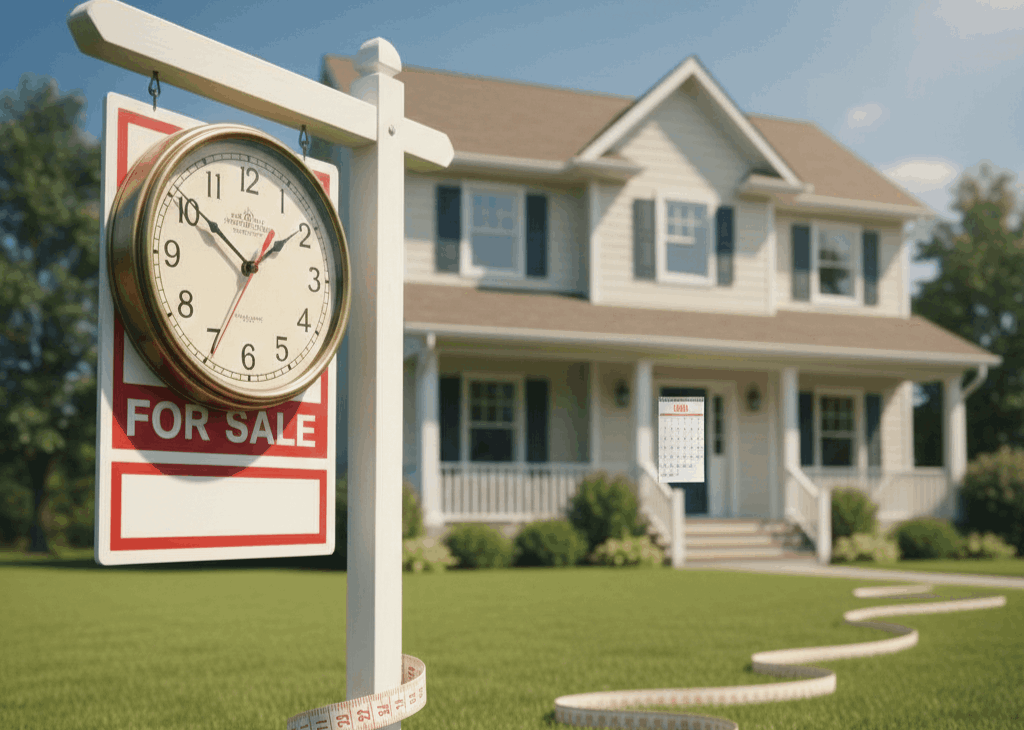
That doesn't mean the market is slow. It means the market is normalizing — and the data backs that up. Across the greater Washington, DC metro area, homes are spending measurably more time on the market in early 2026 compared to the breakneck pace of 2021–2023. But "longer" is relative. In many Northern Virginia suburbs, well-priced homes are still going under contract in under three weeks. Meanwhile, parts of DC proper are seeing listings sit for 45 to 70 days — a timeline that would have been unthinkable just three years ago.
Understanding days on market (DOM) — how long a home sits listed before going under contract — is one of the most practical things buyers, sellers, and investors can do right now. It shapes pricing strategy, negotiation leverage, offer timelines, and even whether you need to stage your home or bother with a pre-inspection. This guide breaks down exactly what's happening with selling timelines across the DMV in 2026, what's causing the shift, and what you should do about it.
📊 Quick Facts at a Glance — Days on Market in 2026
- National median DOM (Jan 2026): 64 days — the longest in six years
- Northern Virginia DOM (Dec 2025): 35 days — up 29.6% year-over-year
- Maryland DOM (early 2026): ~28 days — still seller-favorable
- Washington, DC DOM (Dec 2025): ~64 days — up from 55 days the prior year
- NOVA median sold price (2025 full year): $750,000 — up 2.78% from 2024
- Mortgage rates (2026 forecast): Low-to-mid 6% range, trending toward ~6.15%
- Inventory trend: Up 35–55% in many NOVA counties vs. one year ago
- Market type: Transitioning from strong seller's market to balanced-but-still-seller-leaning
📑 Table of Contents
- What Are "Days on Market" and Why Should You Care?
- Why Homes Are Taking Longer to Sell in 2026
- How the Economy and Rates Are Shaping Selling Timelines
- 2026 Days on Market by Region: NOVA, Maryland, and DC
- County-by-County Breakdown: Where Homes Sell Fastest (and Slowest)
- What This Means for Sellers: Pricing, Prep, and Strategy
- What This Means for Buyers: Leverage, Timing, and Negotiation
- Pros and Cons of a Slower Market for Both Sides
- What to Do Right Now Whether You're Buying or Selling
- Frequently Asked Questions
🏠 What Are "Days on Market" and Why Should You Care?
Days on market (DOM) is the number of days between when a home is officially listed for sale on the MLS and when it goes under contract with a buyer. It does not include the additional 30–45 days typically needed to close the loan and finalize the transaction.
DOM is one of the single best indicators of how competitive a housing market really is. Here's the shorthand:
- Under 21 days: Strong seller's market. Buyers need to move quickly and compete. Multiple offers are common.
- 21–45 days: Moderate seller-to-balanced market. Sellers still have the edge, but buyers have room to negotiate.
- 45–70 days: Balanced market. Both sides have leverage, and condition and pricing matter a lot.
- Over 70 days: Buyer's market. Sellers may need to make concessions on price, repairs, or closing costs.
For context, during the pandemic peak in 2021–2022, many DMV homes went under contract in 3–7 days. That was an anomaly. A "healthy" market historically has homes selling in the 30–50 day range. What we're seeing in 2026 is a return to something closer to that long-term normal — not a crisis, but a meaningful shift from the chaos of recent years.
📈 Why Homes Are Taking Longer to Sell in 2026
Multiple forces are pushing days on market upward across the DMV. None of them signal a market collapse — but together they represent a real change in tempo.
1. Mortgage rates are keeping buyers deliberate. With 30-year fixed rates hovering in the low-to-mid 6% range heading into 2026, monthly payments on a median-priced NOVA home are significantly higher than they were at 3–4% rates. Buyers are being more careful with their money and taking more time to evaluate.
2. Inventory is rising — finally. Active listings across Northern Virginia jumped 35–55% year-over-year in late 2025, depending on the county. More choices means less urgency. Buyers don't have to bid on the first house they see because another good option might come on the market next week.
3. Federal government uncertainty. The DMV's economy is deeply tied to the federal workforce. Uncertainty around government spending, agency restructuring, and layoffs has made some would-be buyers hesitant. This effect is strongest in DC proper and parts of Maryland closest to federal agencies, and less pronounced in the private-sector-heavy Northern Virginia suburbs.
4. The "rate lock-in" effect is loosening — slowly. Millions of homeowners locked in sub-4% mortgage rates during 2020–2022 and have been reluctant to sell. As life events (job changes, growing families, divorces, retirements) accumulate, more of those owners are listing — adding to supply and giving the market room to breathe.
5. Buyer expectations have shifted. The pandemic-era mindset of "bid $50K over asking sight-unseen" has been replaced by a more measured approach. Buyers want inspections, they want appraisals, and they want to feel confident before committing. This naturally extends timelines.
💰 How the Economy and Rates Are Shaping Selling Timelines
The economic backdrop of early 2026 is one of cautious stability. The labor market remains solid nationally, and Northern Virginia continues to benefit from a diversified employment base that includes defense, tech, healthcare, and government contracting. But "solid" doesn't mean "confident" — and that distinction matters for how quickly people make six- and seven-figure purchase decisions.
Mortgage rates are the single biggest lever affecting days on market right now. Forecasters with Bright MLS, NAR, and Freddie Mac project 30-year fixed rates to average around 6.15% by late 2026, a modest decline from the roughly 6.6% average seen in 2025. Even small rate decreases can unlock buyer activity — a half-point drop on a $700,000 loan saves roughly $250 per month. Buyers who are serious about making a move in 2026 should explore what current financing options and rate programs are available to them.
For the DMV specifically, Bright MLS's 2026 forecast projects home sales in the DC region to increase roughly 8% year-over-year, while median home prices may hold relatively flat or dip slightly in some areas. That combination — more transactions at stable prices — points to a market where activity picks up as the year progresses, likely pulling days on market down from winter highs as spring demand kicks in.
📅 2026 Days on Market by Region: NOVA, Maryland, and DC
The DMV is not one market — it's a collection of micro-markets that behave very differently from one another. Here's where things stand heading into the spring 2026 selling season.
| Region / Area | Avg. DOM (Late 2025 – Early 2026) | Year-over-Year Change | Market Type |
|---|---|---|---|
| Northern Virginia (overall) | 28–35 days | ↑ ~30% | Seller-leaning |
| Fairfax County | 17–25 days | ↑ moderate | Seller's market |
| Loudoun County | 18–26 days | ↑ moderate | Seller's market |
| Prince William County | 19–28 days | ↑ moderate | Seller-leaning |
| Arlington County | 24–32 days | ↑ moderate | Balanced-to-seller |
| Alexandria | 16–26 days | ↑ slight | Seller's market |
| Maryland (statewide) | 28–46 days | ↑ moderate | Seller-leaning |
| Washington, DC | 45–70 days | ↑ significant | Balanced |
| National (U.S.) | ~64 days | ↑ ~7 days YoY | Balanced |
Sources: NVAR, Bright MLS, Redfin, Houzeo, Realtor.com. Ranges reflect seasonal variation and property-type differences. Data current as of early 2026.
The standout takeaway: Northern Virginia is still selling significantly faster than the national average. Even at 35 days in the slower winter months, NOVA homes are moving nearly twice as fast as the typical American home. That's driven by the region's job base, school quality, and the simple fact that demand for housing here consistently outstrips supply.
🏘️ County-by-County Breakdown: Where Homes Sell Fastest (and Slowest)
Where you're selling — or buying — within the DMV dramatically changes the timeline. Here's a closer look at the key counties and jurisdictions.
Fairfax County remains the strongest seller's market in the region. The county's median price hit roughly $755,000 in mid-2025, listings were selling at about 101% of asking price, and homes moved in a median of 17 days during the spring selling season. Even in winter, well-priced Fairfax homes typically go under contract within three to four weeks. Inventory has risen (up 55% from spring 2024), but with only around 1 month of supply, the math still heavily favors sellers. If you own a home in Fairfax County, now is a strong time to see what your property is currently worth.
Loudoun County posted a median price of roughly $810,000 in 2025 — up around 8% year-over-year — and spring DOM averaged about 18 days. Loudoun's data center-fueled tax base, top-rated schools, and continued residential construction along the Route 7 and Route 50 corridors keep demand strong. Homes here tend to sell at or just above asking price.
Prince William County saw the largest inventory increase in the region — listings jumped 68% year-over-year heading into 2025. That gave buyers more breathing room. Median price was approximately $550,000, and spring DOM hovered around 19 days. The county remains highly attractive to first-time buyers and investors seeking relative affordability within commuting distance.
Arlington County sits in an interesting position. It's close to DC and heavily influenced by federal employment trends. DOM averaged about 24 days in the spring of 2025, slightly longer than outer suburbs, and homes sold at approximately 99.6% of asking. Inventory was up 70% year-over-year. Condos in Arlington — particularly older units near Rosslyn and Ballston — are taking longer, while single-family homes in north Arlington still move briskly.
Alexandria was one of the fastest-moving markets in the DMV as of mid-2025, with a median DOM of just 16 days and homes selling at essentially full asking price. Median price was approximately $755,000. The city's walkable neighborhoods, historic charm, and Metro access continue to draw steady buyer interest.
Washington, DC is where the slowdown has been most pronounced. Average DOM reached roughly 64 days in December 2025, up from 55 days the year prior. That said, there's a wide split: hot, well-priced homes in desirable neighborhoods (Georgetown, Capitol Hill, Logan Circle) still sell in 25–33 days. Overpriced homes or condos in less central locations are sitting much longer. Federal employment uncertainty has had the biggest impact here. DC-area buyers interested in taking advantage of these conditions should browse current listings across the metro area to see what's available.
Maryland (DMV suburbs): Maryland's statewide DOM sits around 28 days with about 2.2 months of supply. Montgomery County and Howard County see consistent year-round demand. The spring selling window (April–June) typically produces the fastest sales — averaging 19–28 days — while winter listings take longer. The state is firmly seller-favorable, though not as intensely competitive as Northern Virginia.
🏷️ What This Means for Sellers: Pricing, Prep, and Strategy
If you're selling a home in the DMV in 2026, the core message is this: the market still favors you, but it won't forgive mistakes. During 2021–2022, overpriced and under-prepared homes still attracted offers because buyers had no alternatives. That's no longer the case.
Here's what sellers need to understand about the current environment:
Pricing correctly from day one is non-negotiable. The first two weeks on the market are when your home gets the most buyer attention. If you overprice, those critical first impressions are wasted on showings that don't convert. Price reductions later send a signal to the market that something is wrong — and those homes typically end up selling for less than they would have if priced correctly at launch.
Condition matters more than it has in years. Move-in-ready homes — freshly painted, professionally photographed, staged, and free of deferred maintenance — are still selling quickly and at strong prices. Homes that need work are sitting longer, attracting lower offers, and facing more aggressive inspection negotiations. Professional photography alone has been shown to reduce DOM by up to 30%.
Concessions are back on the table. Buyers in 2026 are asking for closing cost credits, home warranties, and repair allowances at rates we haven't seen in several years. Sellers who build some flexibility into their pricing strategy are closing faster than those who insist on pandemic-era terms.
Sellers who are listing in a high-inventory environment should also be thinking about net proceeds — not just the sale price. One of the most effective ways to maximize what you walk away with is to work with a listing team that offers competitive commission structures that save you thousands at closing.
Curious what your home would sell for in today's market? Let's run the numbers.
🔑 What This Means for Buyers: Leverage, Timing, and Negotiation
Buyers in the DMV in 2026 are in a measurably better position than they've been in at any point since 2019. That doesn't mean it's a buyer's market — Northern Virginia in particular remains competitive — but the power dynamics have shifted meaningfully.
Here's what's different for buyers right now:
You have more choices. Active listings are up 35–70% year-over-year across NOVA counties. More homes on the market means you can be selective about location, condition, and price without the panic-buying pressure of recent years.
You have more time. With DOM up across the board, you don't have to submit an offer within 24 hours of a listing going live. You can attend open houses, schedule second showings, complete inspections, and make informed decisions. This is what a healthy market looks like.
You have more negotiating power. Homes that have been on the market for more than 14–21 days in NOVA (or 30+ days in DC/MD) represent real opportunities. Sellers with extended DOM are more likely to accept below-asking offers, cover closing costs, or agree to repair credits. Buyers who want to capitalize on the current environment should get pre-approved early and explore available loan programs and rate buydowns before jumping into showings.
You can still face competition on the best homes. A longer average DOM does not mean all homes are sitting. Well-priced, move-in-ready homes in top school districts are still attracting multiple offers in under two weeks across Fairfax, Loudoun, and Alexandria. The shift is primarily affecting homes that are overpriced, need significant work, or sit in less desirable locations.
If you're relocating to the DMV or buying for the first time, the spring 2026 window (March–June) is expected to offer the best balance of inventory and competitive — but not frantic — conditions. Exploring what's currently on the market across Northern Virginia, Maryland, and DC is a great place to start building your short list.
⚖️ Pros and Cons of a Slower Market for Both Sides
A market where homes take longer to sell isn't inherently good or bad — it depends on which side of the transaction you're on and how prepared you are.
| ✅ Pros (Who Benefits) | ⚠️ Cons (Who Faces Challenges) |
|---|---|
| Buyers get more inventory, more time, and more negotiating power | Sellers may wait longer for offers and face more concession requests |
| Transactions are healthier — fewer waived inspections, fewer regrets | Sellers who overprice are punished more severely than in past years |
| Appraisals are more reliable when comparable sales aren't inflated | Carrying costs (mortgage, taxes, insurance) add up for sellers during extended DOM |
| Investors can find better deals on homes with longer DOM | Condo owners in DC and inner suburbs face the longest timelines |
| Well-prepared sellers who price correctly still sell quickly at strong prices | Sellers who need to relocate on a deadline face more pressure to price aggressively |
🎯 What to Do Right Now Whether You're Buying or Selling
The 2026 DMV housing market rewards preparation and punishes procrastination. Here's your action plan based on where you sit.
If you're selling:
- Get a professional home valuation — not a Zestimate, but a real comparative market analysis from a local agent who knows your neighborhood. Understanding what today's buyers are actually paying for homes like yours is the foundation of a successful sale. You can request a detailed evaluation of your home from our team to get started.
- Invest in pre-listing preparation. At minimum: professional cleaning, decluttering, fresh interior paint where needed, and high-quality photography. In a longer-DOM market, first impressions determine whether buyers schedule a showing or keep scrolling.
- Price strategically. Work with an agent who can show you data on active, pending, and recently sold comps. The goal is to price your home where it generates strong showing activity in the first 7–10 days.
- List during peak season. In the DMV, March through June is when buyer activity is highest and DOM is lowest. If you can time your listing for this window, you'll likely sell faster and for more.
- Protect your net proceeds. In a market where every dollar counts, listing with a team that offers a 1.5% listing fee without cutting corners on marketing can save you tens of thousands.
If you're buying:
- Get pre-approved before you start shopping. In a market where sellers are fielding fewer offers, a strong pre-approval letter makes your offer stand out. Know your budget and loan options before you walk into an open house.
- Target homes with extended DOM. A home that's been on the market for 21+ days in NOVA or 40+ days in DC is a signal that the seller may be more flexible on price and terms.
- Negotiate confidently. Ask for closing cost credits, repair allowances, or rate buydowns. Sellers in 2026 are more willing to work with buyers than they have been in years.
- Don't wait for a crash. The DMV is not a market where prices are falling off a cliff. Moderate appreciation is expected in most areas. Trying to time the absolute bottom often costs buyers more in rising rents and missed opportunities than they save.
❓ Frequently Asked Questions
How long does it take to sell a home in Northern Virginia in 2026?
As of late 2025 into early 2026, Northern Virginia homes are averaging about 28–35 days on market, though that number drops to 16–20 days during the spring selling season in high-demand counties like Fairfax, Loudoun, and Alexandria. Well-priced, move-in-ready homes in top school districts can still go under contract in under two weeks.
Why are homes taking longer to sell in the DMV?
Several factors are extending selling timelines: higher mortgage rates (low-to-mid 6% range) are making buyers more deliberate, inventory has risen 35–55% in many areas giving buyers more choices, federal government uncertainty is dampening confidence in parts of DC and Maryland, and the extreme urgency of the pandemic era has simply worn off.
Is the DMV housing market crashing in 2026?
No. The market is normalizing, not crashing. Northern Virginia's median sold price reached $750,000 for full-year 2025 — up 2.78% from 2024. Inventory is rising but remains historically low. Forecasters expect moderate price growth of 1–4% in most DMV areas in 2026. This is a healthier market, not a distressed one.
What is the national average days on market right now?
The typical U.S. home that sold in January 2026 spent approximately 64 days on the market before going under contract — the longest timeframe in six years. This is roughly a week longer than the same period in 2025. Northern Virginia remains significantly faster than this national average.
How long are homes sitting on the market in Washington, DC?
Washington, DC homes averaged roughly 64 days on market in December 2025, up from 55 days the prior year. However, there's a wide split — well-priced homes in popular neighborhoods still sell in 25–33 days, while overpriced properties and condos in less central locations take considerably longer. Federal employment uncertainty is a major factor in DC's slower pace.
What is the best month to sell a home in Northern Virginia?
March through June is the strongest selling window in the DMV. Homes listed during this period typically sell faster and for higher prices than those listed in fall or winter. In Northern Virginia specifically, spring listings can sell 10–15 days faster on average than winter listings.
Should I buy a home now or wait for rates to drop more?
This depends on your personal finances and timeline, but waiting for significantly lower rates carries risk. If rates drop, more buyers enter the market — which drives up competition and prices. Many real estate professionals advise buying when you find the right home and can afford it, then refinancing if rates improve. The 2026 market offers more inventory and negotiating power than buyers have had in years.
What mortgage rates are expected in 2026?
Major forecasters including Bright MLS, NAR, and Freddie Mac project 30-year fixed mortgage rates to average in the low-to-mid 6% range through 2026, potentially dipping toward 6.15% by year-end. Some borrowers may access lower rates through buydowns, ARM products, or special loan programs.
How can I sell my home faster in this market?
The three biggest levers are pricing correctly from day one, investing in professional photography and staging, and listing during the spring selling season. Homes that are overpriced or poorly presented are the ones sitting the longest. Sellers who nail the first two weeks on market — with strategic pricing, strong visuals, and an experienced listing agent — are still selling quickly across the DMV.
Is it still a seller's market in Northern Virginia?
Yes, but less aggressively so than in 2021–2023. Northern Virginia had approximately 1 month of supply heading into 2026, which by standard definitions is a seller's market (under 4 months is seller-favorable, 4–6 months is balanced). However, the intensity has dialed back. Sellers are getting fewer multiple-offer situations and more negotiation on terms. Well-prepared sellers are still achieving strong results.
Ready to Make Your Move in 2026?
Whether you're buying, selling, or just exploring your options — the Jamil Brothers Realty Group has the local data and market expertise to help you navigate the DMV with confidence.
📞 Call or text us: 703-782-4830
Categories
- All Blogs (1228)
- Aldie (3)
- Ashburn (6)
- Buyer Guide (8)
- Buying a home (2)
- Buying Strategies (30)
- festivals (1)
- General Blog (67)
- Leesburg (5)
- Market Intelligence (29)
- Market Updates (8)
- Notable Properties For Sale (32)
- Real Estate Tips, News, and More (385)
- Seller Guide (2)
- Seller Guides (60)
- Selling Your Home (523)
- Sterling (6)
- Top Realtors in Northern Virginia (58)
Recent Posts


Message Sent!
Thank you for reaching out. Arslan & Saad have received your details and will be in touch shortly.
Need immediate assistance? Call or text 703-782-4830.