
What Are Closing Costs for Sellers in Prince William County?
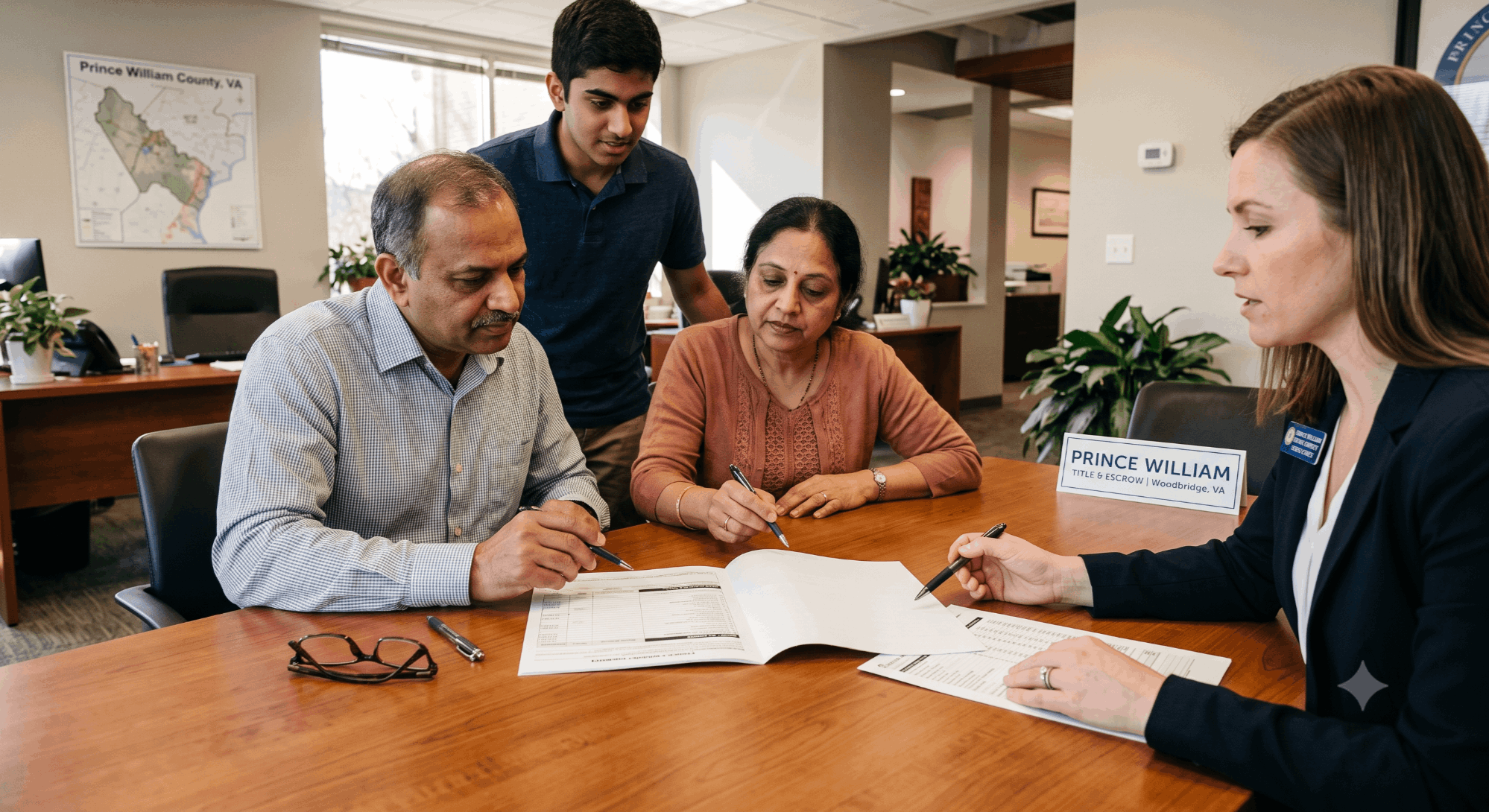
Quick Answer: Seller closing costs in Prince William County usually total 8% to 10% of the sale price. The biggest piece is the real estate commission (around 5% to 6% in a traditional setup, or about 4% when you list at a full-service 1.5% rate), followed by Virginia grantor tax (0.25%), the seller portion of county recordation tax (about 0.125%), owner's title insurance ($1,200 to $2,800), and settlement fees ($400 to $800). On a $540,000 home, expect roughly $43,000 to $54,000 with a traditional 6% commission, or closer to $32,000 to $43,000 with a 1.5% full-service listing fee.
Key Takeaways
- Total cost is usually 8% to 10% of the sale price once you add commission, taxes, title, and settlement charges.
- Commission is the single largest expense, which is exactly why your listing fee structure moves your net proceeds more than any other line item.
- Virginia grantor tax is 0.25% of the sale price and is paid entirely by the seller.
- Prince William County recordation tax is split with the buyer, leaving the seller responsible for about 0.125%.
- Sellers customarily pay for owner's title insurance in Virginia, typically $1,200 to $2,800.
- Several costs are negotiable, including commission, repair credits, and fee allocation between buyer and seller.
- Hidden costs add up: prorated property taxes, HOA transfer fees, prepping the home, and carrying costs all reduce your final check.
In This Guide
- Seller Closing Costs at a Glance
- Real Estate Commission Breakdown
- Virginia and Prince William County Transfer Taxes
- Title Insurance and Title Fees
- Settlement and Closing Fees
- Recording and Document Fees
- Prorated Property Taxes and HOA Fees
- Mortgage Payoff Charges
- Pre-Closing Seller Expenses
- Negotiable vs. Non-Negotiable Costs
- Real Closing Cost Examples by Price
- How to Reduce Seller Closing Costs
- Costly Mistakes Sellers Make
- Keep More of What Your Sale Earns
- Frequently Asked Questions
- Closing Cost Glossary
Selling a home in Prince William County involves much more than agreeing on a sale price. The number that really matters is what lands in your bank account after settlement, and that figure depends heavily on your closing costs. For most homeowners working with experienced Prince William County real estate services, seller closing costs land between 8% and 10% of the sale price. That range covers the real estate commission, Virginia transfer taxes, title insurance, and a handful of smaller fees that quietly add up.
The gap between your gross sale price and your actual net proceeds catches a lot of sellers off guard. Knowing exactly what you will pay, why each charge exists, and which expenses you can trim is the difference between maximizing your equity and leaving thousands of dollars behind. This guide breaks down every seller closing cost in Prince William County, walks through real examples at different price points, and lays out practical ways to keep more of what your sale earns.
Seller Closing Costs at a Glance
Seller closing costs in Prince William County cover the expenses required to transfer ownership to the buyer. Unlike buyer closing costs, which center on loan related fees, seller costs focus on transaction facilitation, the legal transfer of title, and professional services. Understanding the full picture before you list keeps your expectations grounded and your net proceeds calculation honest.
What Is the Total Cost to Sell a House in Prince William County?
Total seller closing costs typically run 8% to 10% of the sale price once every expense is included. On a median priced $540,000 home, that works out to roughly $43,200 to $54,000. The exact figure shifts based on the commission structure you choose, the terms you negotiate, your specific property, and current market conditions. Watching the current Prince William County housing market helps you gauge how local demand and inventory move your final number.
Real estate commission is the heavyweight here. It accounts for 5% to 6% in traditional structures, or about 4% with a full-service program built around a 1.5% listing fee. Every other closing cost combined usually totals 2% to 4% of the sale price, which means the commission decision shapes your bottom line more than anything else on the settlement statement.
The Main Categories of Seller Closing Costs
Seller closing costs fall into several clear buckets. Real estate commission pays the listing and buyer agents for their work and stands as the largest expense by far. Transfer taxes include both the Virginia state grantor tax and the local Prince William County recordation tax. Title and settlement charges cover owner's title insurance, the title search, and the settlement company that coordinates closing. Recording and administrative fees pay for filing the deed and preparing documents. Prorated costs adjust for property taxes and HOA dues you have prepaid past your closing date. Mortgage payoff charges include your remaining loan balance plus accrued interest. Pre-closing expenses cover prep work, repairs, and marketing before the home ever hits the market.
How Virginia Differs From Other States
Prince William County practices line up with the rest of Virginia but differ from some other states in ways worth knowing. Virginia sellers customarily pay for the owner's title insurance policy, which is not universal nationwide. The state imposes the grantor tax on sellers specifically rather than splitting it or assigning it to buyers. Virginia also relies on settlement companies for most residential closings, while some states require an attorney to handle the process. On top of the state grantor tax, Prince William County adds a local recordation tax, which raises the total tax burden compared with a few neighboring jurisdictions. These conventions hold across the state, and our statewide Virginia seller closing costs guide breaks down each line item in more depth.
| Cost Category | Typical Range | % of Sale Price | Notes |
|---|---|---|---|
| Real Estate Commission | $21,600 to $32,400 | 4% to 6% | Largest expense; full-service 1.5% programs lower this to about 4% |
| Transfer Taxes | $1,350 to $2,025 | about 0.375% | State grantor tax plus county recordation; non-negotiable |
| Owner's Title Insurance | $1,200 to $2,800 | about 0.3% | Seller paid in Virginia; price scales with sale amount |
| Settlement Fees | $400 to $800 | about 0.1% | Often split with the buyer |
| Recording and Admin Fees | $200 to $500 | about 0.1% | Government filing and processing charges |
| Miscellaneous Costs | $500 to $2,000 | about 0.2% | Prorated taxes, HOA fees, payoff processing |
| Total at Traditional 6% | $43,000 to $54,000 | 8% to 10% | Based on a $540,000 sale |
Before you can estimate your real bottom line, it helps to know what your home is worth today. A free home valuation based on recent Prince William County comparable sales gives you the starting number every other calculation depends on.
Get a personalized valuation from The Jamil Brothers built on street level comparable sales, not an automated guess. You will have a response within 24 hours.
Real Estate Commission Breakdown
Real estate commission is the largest seller closing cost by a wide margin, usually consuming 5% to 6% of the sale price in a traditional arrangement. Because it dwarfs every other expense, understanding how commission works and what competitive alternatives exist can save you tens of thousands of dollars.
How Traditional Commission Is Structured
Traditional full-service representation in Prince William County typically runs 5% to 6% total, split between the listing agent who represents the seller and the agent who represents the buyer. Common splits include 3% listing plus 3% buyer agent for a 6% total, or 2.5% plus 2.5% for a 5% total.
On the county's median $540,000 home, a 6% commission equals $32,400, while 5% equals $27,000. Either way, this is your single largest selling expense, and it often exceeds every other closing cost combined.
Competitive and Flexible Commission Options
A traditional 6% is not your only path. The market has evolved to offer several commission models, each with its own tradeoffs. Full-service programs at a reduced listing fee (1.5% to 2%) deliver complete traditional service at competitive pricing, saving $8,000 to $13,000 on a typical Prince William County sale. Flat-fee MLS services ($300 to $800) only get your home on the MLS, leaving you to handle showings, negotiation, and paperwork. Discount brokers (3% to 4% total) offer partial service at reduced rates, though the level of support varies widely.
The smarter question is not "what is the lowest commission?" but "which mix of service and cost produces the best net proceeds?" An inexperienced agent at 4% who underprices your home by $20,000 nets you less than a skilled agent at a competitive rate who secures full market value. If you want to weigh structures side by side, our flexible commission options lay out how different service levels map to different price points.
Every sale is different. Compare full-service options and see which approach keeps the most money in your pocket without cutting corners on marketing or negotiation.
What Does the Commission Actually Pay For?
Understanding what commission covers makes it easier to judge value. Listing agent services include a detailed market analysis and pricing strategy, professional photography and marketing, MLS listing and syndication to the major portals, social and digital advertising, showing coordination, open houses, offer evaluation, skilled negotiation, contract management, and problem solving from contract to close.
Buyer agent compensation, which is paid from your proceeds but benefits the buyer, covers their property search, lender coordination, offer preparation, inspection and appraisal management, and transaction coordination through closing. Following the national NAR settlement, buyer agent compensation is negotiable and no longer automatically embedded in the listing fee, so it should be discussed openly as part of your strategy.
| Commission Structure | Total Rate | Cost on $540K | Savings vs. 6% |
|---|---|---|---|
| Traditional High (3% + 3%) | 6% | $32,400 | none |
| Traditional Standard (2.5% + 2.5%) | 5% | $27,000 | $5,400 |
| Full-Service 1.5% (1.5% + 2.5%) | 4% | $21,600 | $10,800 |
| Discount Broker (2% + 2%) | 4% | $21,600 | $10,800 |
| Flat-Fee MLS Only | $500 + 2.5% | about $14,000 | $18,400 |
The 1.5% Full-Service Advantage
A full-service program built on a 1.5% listing fee is the strongest value for most Prince William County sellers. These programs deliver the complete traditional experience, including expert marketing, professional photography, full MLS exposure, skilled negotiation, and start to finish transaction management, while saving well over $10,000 compared with a traditional 3% listing fee.
The key distinction is that this is not a reduced service model designed to cut corners. It is competitively priced full-service representation, and it demonstrates that the old 3% listing fee often costs more than excellent results actually require. On a $540,000 home, a 1.5% listing fee ($8,100) plus a standard 2.5% buyer agent commission ($13,500) totals $21,600, which saves $10,800 against a 6% traditional commission with no drop in service quality. You can review exactly what is included in our 1.5% full-service listing program before you decide.
Professional photography, drone video, 3D tours, expert negotiation, and full MLS marketing, all included at 1.5%. No hidden fees and no service reductions.
Virginia and Prince William County Transfer Taxes
Transfer taxes are mandatory government charges on the transfer of property ownership. Unlike commission, you cannot negotiate them away, but understanding how they are calculated ensures you are billed correctly on the settlement statement.
Virginia Grantor Tax (State Transfer Tax)
Virginia charges a state transfer tax known as the grantor tax at $0.25 per $100 of the sale price, which works out to 0.25%. In Virginia this tax is paid entirely by the seller rather than split with the buyer as it is in some states.
The math is simple. Divide the sale price by 100, then multiply by $0.25. On a $540,000 sale, that is 5,400 taxable units times $0.25, or $1,350 in Virginia grantor tax. This applies to every Virginia home sale regardless of price, financing, or buyer profile.
Prince William County Recordation Tax (Local Transfer Tax)
Prince William County adds a local transfer tax of $0.25 per $100 of the sale price, matching the state rate. Unlike the seller only grantor tax, the county recordation tax is customarily split evenly between buyer and seller, leaving each party responsible for $0.125 per $100.
On a $540,000 sale, the full county transfer tax is $1,350, split as $675 for the seller and $675 for the buyer. That 50/50 split is the local custom but is technically negotiable, so your purchase contract should spell out who pays what. Deviating from the standard split is uncommon in practice.
Your Total Transfer Tax Burden
Combining state and local taxes, a Prince William County seller pays roughly 0.375% of the sale price in transfer taxes (0.25% state plus 0.125% county). On a $540,000 home, the total seller transfer tax burden is about $2,025 ($1,350 state plus $675 county). That ranks in the moderate middle among Northern Virginia jurisdictions, with some localities charging more and others charging less or nothing at the local level.
Transfer Tax by Price Point
$400,000 sale: Virginia grantor tax $1,000 plus county seller portion $500 = $1,500 total seller transfer tax
$540,000 sale: Virginia grantor tax $1,350 plus county seller portion $675 = $2,025 total seller transfer tax
$700,000 sale: Virginia grantor tax $1,750 plus county seller portion $875 = $2,625 total seller transfer tax
Title Insurance and Title Fees
Title insurance and related fees protect the buyer against defects in ownership and ensure clean title transfer. In Virginia, the seller customarily pays for the owner's title insurance policy.
Owner's Title Insurance Policy
An owner's title insurance policy protects the buyer against title defects, liens, or ownership disputes that existed before closing but were not uncovered during the title search. Virginia custom puts this cost on the seller even though the policy protects the buyer. The premium typically ranges from $1,200 to $2,800 for a Prince William County home and is a one time charge that provides coverage for as long as the buyer or their heirs own the property.
Title insurance rates in Virginia are filed with and regulated by the State Corporation Commission's Bureau of Insurance, so every title company charges similar rates for equivalent coverage. Shopping around rarely produces meaningful savings because the rates are standardized.
Title Search and Examination
Before issuing a policy, the title company runs a thorough title search of public records to find liens, judgments, easements, restrictions, or anything else affecting ownership. The examination fee usually runs $200 to $400 and is often bundled into the title insurance premium. A search commonly surfaces issues that need to be cleared before closing, such as outstanding mortgage or tax liens, judgment liens, easements, deed errors, or breaks in the ownership chain.
Lender's Title Insurance
A buyer who is financing the purchase must also buy a lender's title insurance policy that protects the mortgage lender. In Virginia the buyer pays for this, not the seller, so it is a buyer closing cost and not part of your obligation as the seller.
Resolving Title Problems
If the search turns up a problem, the cost to fix it varies. Minor issues like a missing signature or a small deed correction might run $100 to $500. Paying off a small unknown lien could cost anywhere from a few hundred to a few thousand dollars. Larger defects, such as an ownership dispute or a significant lien, can be expensive or even stall a sale. Reviewing title early in the process gives you time to clear issues without putting the transaction at risk.
Settlement and Closing Fees
Settlement coordination and any legal services make sure the transaction closes properly and funds are disbursed correctly. Virginia uses settlement companies for most residential closings rather than requiring an attorney to run the process.
Settlement Company Fees
Settlement companies, which are often affiliated with title companies, coordinate the closing, prepare the settlement statement, disburse funds, and make sure every document is signed and recorded. Settlement fees typically total $400 to $800 and are often split between buyer and seller, leaving each side responsible for $200 to $400. The settlement company handles scheduling, preparing the Closing Disclosure, collecting and disbursing all funds, confirming required signatures, coordinating with lenders and title companies, and filing documents with the appropriate offices.
Attorney Fees (Optional for Sellers)
Virginia does not require sellers to hire an attorney for a residential sale, though some choose legal representation for added protection or complex situations. When a seller does retain counsel, fees generally run $500 to $1,500 depending on the complexity. Situations where an attorney makes sense include tangled title issues, estate sales involving multiple heirs, divorce with contentious property division, commercial or investment property, and any case where you want independent legal review beyond your agent. Most straightforward Prince William County sales close successfully without a seller attorney, relying on the settlement company and an experienced agent.
Notary Fees
Notarization confirms the authenticity of signatures. Notary fees at closing usually run $50 to $150 total and are sometimes folded into the settlement fee rather than charged separately. Many settlement companies provide notary service at no extra cost as part of their standard coordination.
Recording and Document Fees
Government recording fees pay for filing the deed and other documents with the Prince William County Clerk's Office, which creates the official public record of the ownership transfer.
Deed Recording Fees
The county charges a fee to record the deed transferring ownership from seller to buyer. Recording fees typically run $50 to $150 depending on the length and number of pages, and they cover the administrative cost of maintaining the public record. In Virginia the buyer customarily pays the deed recording fee since the deed benefits them as the new owner, though this is negotiable and sometimes split.
Document Preparation Fees
The settlement company or attorney charges a document preparation fee for creating the deed, settlement statement, and other closing paperwork. These fees generally run $150 to $300 and are frequently included in the overall settlement fee rather than billed on their own.
Miscellaneous Administrative Charges
A handful of small administrative fees show up on most settlement statements, including a wire transfer fee if your proceeds are wired ($25 to $50), a courier fee for overnight document delivery ($25 to $75), copying or scanning charges ($20 to $50), and a tax certificate fee for verifying tax status ($50 to $100). Individually minor, these collectively add $100 to $300 to your closing costs.
Prorated Property Taxes and HOA Fees
Prorated costs adjust for expenses you have prepaid beyond your closing date. They reimburse you for the buyer's portion of costs that cover time after you no longer own the home, or charge you for time you still owned it.
Property Tax Proration
Prince William County property taxes are billed semi-annually. If you have prepaid taxes that cover time past closing, the buyer reimburses you at settlement. If taxes are due but unpaid, you owe the buyer for your ownership period. Whether proration helps or costs you depends on timing. For example, with annual taxes of $6,000 ($3,000 each half), closing on July 15 right after paying the January through June bill means you have prepaid about $1,500 for July through December that the buyer owes back to you. Close on December 15 before the next bill is due, and you owe the buyer roughly $2,750 for the time you owned the home in the second half of the year.
HOA Fee Proration and Transfer Charges
If your home belongs to a homeowners association, monthly or quarterly HOA dues are prorated at closing the same way property taxes are. On top of that, many HOAs charge a transfer fee or resale certificate fee ($100 to $500) when a property changes hands, and these are typically a seller obligation in Prince William County. Townhomes and condos are far more likely to carry these charges than detached homes without an association.
Final Utility Bills
Utilities are not usually prorated. Instead, you close your accounts effective the closing date, but final bills for water, sewer, electricity, gas, and trash often arrive weeks later. Budget $200 to $500 for these final bills covering your last usage period, depending on timing and usage.
Mortgage Payoff Charges
If you still have a mortgage, paying it off at closing involves a few charges beyond the principal balance itself.
Outstanding Principal Balance
Your remaining loan principal is paid off at closing. This is not technically a closing cost, since it is simply repaying borrowed money, but it directly reduces your net proceeds and has to be accounted for when you calculate what you will keep.
Accrued Interest Through Closing
Mortgage interest accrues daily, so you owe interest for every day you owned the home through the closing date. This per diem interest runs from your last payment date through closing and depends on your balance and rate. On a $300,000 loan at 4%, daily interest is about $32.88, so closing 20 days after your last payment adds roughly $658 in accrued interest.
Prepayment Penalties
Most modern mortgages do not carry prepayment penalties, but some older loans, including certain FHA or subprime mortgages, may charge a fee for early payoff. Check your loan documents. If a penalty applies, it can range from a few hundred to several thousand dollars depending on the terms.
Payoff Processing and Second Liens
Lenders typically charge $50 to $150 to process the payoff request and prepare the payoff statement. If you also carry a second mortgage, a HELOC, or any other lien, each one must be paid at closing with its own balance, accrued interest, and processing fee. Make sure your settlement company obtains accurate payoff statements for every lien well ahead of closing to avoid last minute surprises.
A personalized seller net sheet breaks down every cost, from commission and transfer taxes to title and payoff, so you know your real bottom line before you list.
Use the calculator below to see how a 1.5% full-service listing fee changes your net proceeds at several common Prince William County price points.
Seller Savings Calculator
How much more do you keep with our 1.5% listing fee?
Select your home's estimated value to see your real net proceeds, side by side.
Traditional Agent at 3%
Our Fee, Only 1.5%
Extra in your pocket
$6,000
vs. a traditional 3% listing agent, with zero reduction in service or marketing.
Traditional Agent at 3%
Our Fee, Only 1.5%
Extra in your pocket
$7,500
vs. a traditional 3% listing agent, with zero reduction in service or marketing.
Traditional Agent at 3%
Our Fee, Only 1.5%
Extra in your pocket
$9,000
vs. a traditional 3% listing agent, with zero reduction in service or marketing.
Traditional Agent at 3%
Our Fee, Only 1.5%
Extra in your pocket
$11,250
vs. a traditional 3% listing agent, with zero reduction in service or marketing.
Traditional Agent at 3%
Our Fee, Only 1.5%
Extra in your pocket
$15,000
vs. a traditional 3% listing agent, with zero reduction in service or marketing.
Estimates only. Closing costs vary. Buyer's agent commission is negotiable.
Pre-Closing Seller Expenses
Beyond the official charges on the settlement statement, sellers spend money getting a home ready to sell and keeping it carried while it is on the market. These costs do not appear at closing, but they reduce your net proceeds just the same.
Property Preparation and Repairs
Prep work usually costs $2,000 to $10,000 depending on the condition of the home and the choices you make. Common expenses include whole house professional painting ($2,000 to $5,000), deep cleaning ($200 to $500), landscaping and curb appeal ($500 to $2,000), minor repairs to obvious defects ($500 to $2,000), and staging that ranges from a simple consultation to a full setup ($200 to $5,000). None of this is required, but homes that show in excellent condition tend to sell faster and for more, which often recoups the prep cost through a stronger sale price and lower carrying costs.
Professional Photography and Marketing
Strong marketing materials drive showing requests and buyer interest. Professional photography runs $200 to $500 and may include twilight shots and aerial drone images. Virtual tours and video walkthroughs add $150 to $400 and expand your reach to out of area buyers. Premium brochures and feature sheets run $100 to $300. With a full-service listing, these are typically included, though sellers using a discount or flat-fee broker often have to arrange and pay for photography on their own.
Inspection-Related Repairs
Buyers usually order a home inspection and then request repairs or credits based on what it finds. Negotiated repairs can range from a few hundred dollars for small items to several thousand for bigger issues like HVAC, roofing, or plumbing. A pre-listing inspection ($400 to $600) lets you address problems before a buyer ever sees them, which can reduce surprise negotiations later. Some sellers skip it to avoid creating disclosure obligations for items a buyer might never notice.
Carrying Costs While the Home Sells
Every month on the market carries ongoing expenses. Mortgage payments, property taxes, insurance, utilities, and maintenance continue until closing. On a typical Prince William County home, carrying costs run $2,500 to $4,000 or more per month. These are not closing costs, but they reduce your net proceeds just as surely as any fee at settlement, which is why accurate pricing and good preparation matter financially, not just for hitting a strong sale price.
Negotiable vs. Non-Negotiable Costs
Knowing which costs you can negotiate and which are fixed by law or custom helps you spend your negotiating energy where it actually pays off.
| ✓ Negotiable | ✗ Non-Negotiable |
|---|---|
| Real estate commission and listing fee structure | Virginia grantor tax ($0.25 per $100) |
| Settlement fee allocation between parties | Government recording fee rates |
| Repair credits and seller concessions | Title insurance rates (state regulated) |
| County recordation tax split (customarily 50/50) | The existence of transfer taxes themselves |
| Who pays for owner's title insurance | Per diem mortgage interest through closing |
Customary vs. Required
It helps to separate "customary" from "required." Many costs are customary in Prince William County but not mandated by law, which means they are open to negotiation. Sellers customarily pay for owner's title insurance, yet a contract can assign that cost to the buyer. The county recordation tax customarily splits 50/50, but a contract can shift more to either side. Settlement fees are often split, though nothing requires that division. A strong negotiating position, usually found in a buyer's market or with a highly motivated buyer, creates room to shift some customarily seller paid costs onto the other party. If you want the complete picture of how Virginia divides closing costs between buyer and seller, a side-by-side comparison shows which line items typically land on each side.
Real Closing Cost Examples by Price
Seeing a complete breakdown at different price points makes your likely costs far easier to estimate than a general percentage. The examples below span common Prince William County markets, from Woodbridge townhomes to Gainesville single-family homes.
Example 1: $425,000 Woodbridge Townhome
Sale Price: $425,000 · Mortgage Balance: $275,000
Closing Costs
Commission (6% traditional): $25,500
Virginia grantor tax: $1,063
County recordation (seller portion): $531
Owner's title insurance: $1,400
Settlement fees (seller portion): $400
Recording and admin fees: $250
HOA transfer fee: $200
Mortgage payoff processing: $100
Prorated taxes (owed to buyer): $450
Total Closing Costs: $29,894
Net Proceeds
$425,000 sale price, less $29,894 costs, less $275,000 payoff = $120,106
With a 1.5% listing fee: save $6,375 in commission for net proceeds of $126,481
Example 2: $540,000 Manassas Single-Family Home
Sale Price: $540,000 · Mortgage Balance: $350,000
Closing Costs
Commission (6% traditional): $32,400
Virginia grantor tax: $1,350
County recordation (seller portion): $675
Owner's title insurance: $2,000
Settlement fees (seller portion): $500
Recording and admin fees: $300
Mortgage payoff processing: $125
Prorated taxes (credited by buyer): $600 in your favor
Total Closing Costs: $36,750
Net Proceeds
$540,000 sale price, less $36,750 costs, less $350,000 payoff = $153,250
With a 1.5% listing fee: save $10,800 in commission for net proceeds of $164,050
Manassas sellers can see this same math applied locally in our closing costs for sellers in Manassas breakdown, which reflects city-specific price points and HOA patterns.
Example 3: $675,000 Gainesville Single-Family Home
Sale Price: $675,000 · Mortgage Balance: $425,000
Closing Costs
Commission (6% traditional): $40,500
Virginia grantor tax: $1,688
County recordation (seller portion): $844
Owner's title insurance: $2,600
Settlement fees (seller portion): $600
Recording and admin fees: $350
Mortgage payoff processing: $150
Inspection repairs (negotiated): $2,500
Prorated taxes (owed to buyer): $800
Total Closing Costs: $50,032
Net Proceeds
$675,000 sale price, less $50,032 costs, less $425,000 payoff = $199,968
With a 1.5% listing fee: save $13,500 in commission for net proceeds of $213,468
Selling in Gainesville specifically? Our Gainesville closing cost breakdown covers the same line items tuned to that submarket's higher price band.
How to Reduce Seller Closing Costs
You cannot erase closing costs entirely, but a few smart moves trim the unnecessary parts and protect your net proceeds.
Start With the Commission Structure
Commission is your largest closing cost, which makes it the highest impact place to save. A full-service program at a 1.5% listing fee saves $8,000 to $13,000 on a typical Prince William County sale while keeping complete professional representation. No other single decision moves your net proceeds as much. Just avoid choosing an agent on price alone, since an inexperienced agent who underprices your home or fumbles the transaction can cost far more than the commission they saved you. The goal is to list your Prince William County home with a team that pairs competitive pricing with proven results.
Negotiate Strategically
Your leverage depends on market conditions, but a few tactics reduce costs in most deals. Ask buyers to cover their own standard closing costs without seller concessions, which is realistic in a strong market. Negotiate repair credits instead of completing repairs yourself, which often lowers your actual cash outlay. Time your closing to minimize prorated tax obligations where you can. Compare settlement companies for competitive rates on the negotiable fees.
Consider a Cash Offer When Speed Matters
A traditional listing is not the only route. If timing, certainty, or avoiding prep and showings matters more than squeezing out the last dollar of sale price, weighing cash offer options alongside a conventional listing can make sense. A cash sale can cut carrying costs and skip many pre-closing expenses, though it usually trades some price for speed and convenience.
If timing, condition, or certainty matters more than maximum price, a cash offer may be the right fit. We will walk you through your full range of options with no pressure.
Review the Settlement Statement Carefully
Errors on settlement statements happen more often than sellers expect. Review yours two to three days before closing to catch calculation mistakes in prorations, commissions, or fees, duplicate charges or fees for services never provided, incorrect or outdated payoff figures, and any transfer tax miscalculation. Catching these before closing prevents post-closing disputes and makes sure you are charged correctly.
Costly Mistakes Sellers Make
Avoiding these common errors keeps unnecessary expenses and last minute complications off your settlement statement.
- ✓ Underestimating total costs. Many sellers focus on commission and forget the rest, then feel blindsided when net proceeds fall short. Add up every expense before listing.
- ✓ Picking an agent on commission alone. A weak agent who underprices your home by $15,000 to $25,000 costs far more than any commission savings. Weigh service and expected sale price together.
- ✓ Ignoring closing timing. Closing right after paying semi-annual taxes earns you a reimbursement; closing right before they are due means you owe the buyer. Understand the impact even when you cannot fully control the date.
- ✓ Not getting accurate payoff statements. Outdated mortgage figures create last minute headaches. Request updated payoffs three to five days before closing for every loan and lien.
- ✓ Skimming the settlement statement. Signing without a careful review can leave hundreds or thousands of dollars in errors uncorrected. Question anything unclear.
Keep More of What Your Sale Earns
Understanding closing costs turns an abstract sale price into a concrete number you can actually plan around. The 8% to 10% range can look intimidating at first, but sellers who approach those costs strategically routinely beat their own expectations.
A few principles do most of the heavy lifting in Prince William County:
- Focus on the largest cost first; commission structure matters more than every other fee combined.
- A full-service 1.5% listing fee saves $8,000 to $13,000 without sacrificing results.
- Transfer taxes are fixed but modest, around 0.375% combined for the seller.
- Many smaller fees are negotiable or can be minimized with smart choices.
- Pre-closing and carrying costs add up quickly, so accurate pricing pays off twice.
- Review your settlement statement closely, because errors are more common than most sellers realize.
- Run a realistic net proceeds estimate before listing so there are no surprises at the table.
The difference between sellers who maximize proceeds and those who leave money behind rarely comes from avoiding legitimate costs. It comes from making informed decisions about commission, negotiating well, preventing unnecessary expenses, and running the transaction efficiently. When you are ready to put that into action, The Jamil Brothers pair deep Prince William County knowledge with a full-service 1.5% listing fee, from Woodbridge to Manassas to Gainesville and the western county.
Know your equity, understand your costs, and see exactly what you will walk away with before you make any decisions. The Jamil Brothers provide a full seller consultation at no cost or obligation.
Frequently Asked Questions
What are typical closing costs for sellers in Prince William County?
Seller closing costs in Prince William County usually total 8% to 10% of the sale price. That includes the real estate commission (5% to 6% traditional or about 4% with a full-service 1.5% program), Virginia grantor tax (0.25%), the seller portion of county recordation tax (about 0.125%), owner's title insurance ($1,200 to $2,800), settlement fees ($400 to $800), and several smaller charges. On a $540,000 home, expect roughly $43,000 to $54,000 with a traditional 6% commission, or about $32,000 to $43,000 with a 1.5% listing fee.
How much are transfer taxes in Prince William County?
Sellers pay two transfer taxes. The Virginia state grantor tax is $0.25 per $100 of sale price (0.25%) and is paid entirely by the seller. The Prince William County recordation tax is also $0.25 per $100 but is customarily split 50/50 with the buyer, leaving the seller responsible for about $0.125 per $100. Combined, the seller transfer tax burden is roughly 0.375% of the sale price, or about $2,025 on a $540,000 sale ($1,350 state plus $675 county).
Can I negotiate closing costs with the buyer?
Yes, several costs are negotiable. These include how settlement fees are split, the allocation of the county recordation tax, repair credits or seller concessions after the inspection, and even who pays for owner's title insurance, which the seller covers by custom in Virginia. Other costs are not negotiable, including the Virginia grantor tax, government recording fee rates, and state regulated title insurance premiums.
Do sellers pay for title insurance in Virginia?
By custom, Virginia sellers pay for the owner's title insurance policy that protects the buyer, though this is technically negotiable. Most Prince William County contracts follow that custom. In a strong seller's market or with a very motivated buyer, the cost can sometimes be shifted to the buyer. The buyer always pays separately for the lender's title insurance that protects their mortgage lender, which is a buyer cost rather than a seller obligation.
What happens if my mortgage payoff is higher than expected at closing?
If your payoff exceeds the estimate, you will need additional funds at closing or the discrepancy has to be resolved. Common causes include an outdated payoff statement that misses recent interest, an undisclosed prepayment penalty, or a calculation error. To prevent surprises, request an updated payoff statement three to five days before closing, confirm every charge matches your loan documents, and verify that no prepayment penalty applies. If something looks off, question it right away, since errors do happen and can be corrected before closing.
Are seller closing costs tax deductible?
Some seller costs may reduce your taxable gain even if they are not deductible in the usual sense. Real estate commission reduces capital gains dollar for dollar, certain selling expenses may reduce gain, and mortgage interest paid through the closing date is generally deductible. Costs like transfer taxes, title insurance, settlement fees, and recording fees are usually not deductible. Tax treatment varies widely based on how long you owned the home, whether it was your primary residence, and your total profit, so consult a tax professional about your specific situation.
How can I reduce my closing costs in Prince William County?
Start with the commission, since a full-service 1.5% listing program saves $8,000 to $13,000 on a typical sale and moves your net proceeds more than any other choice. Then negotiate strategically on repair credits and fee allocation, price accurately to minimize carrying costs, time your closing to limit prorated tax obligations when possible, and review your settlement statement closely for errors. Commission structure has by far the biggest impact on your total costs.
What closing costs do buyers pay in Prince William County?
Buyers typically pay for lender's title insurance, loan origination and processing fees, the appraisal, the home inspection, their customary half of the county recordation tax and settlement fees, and the deed recording fee. Total buyer closing costs generally run 2% to 5% of the purchase price. Knowing what buyers already carry helps you negotiate, since asking a buyer to cover your costs on top of their own is often unrealistic in a balanced or buyer's market.
When do I pay closing costs, at closing or before?
Most closing costs are paid at settlement directly from your sale proceeds, so you do not need cash up front for them. The settlement company deducts everything from the sale price and disburses your net proceeds. Some pre-closing expenses do require payment beforehand, including property prep and repairs, professional photography and marketing, and any inspection repairs you choose to complete rather than credit. All the official closing costs, such as commission, transfer taxes, and title insurance, come out of proceeds at closing.
What if I do not have enough equity to cover closing costs?
If your mortgage balance plus closing costs exceeds your sale price, you will need to bring cash to closing to cover the gap. When lender approval is required, this becomes a short sale, which adds significant complexity. Options include bringing cash to closing, negotiating short sale approval with your lender, postponing until you have more equity, or exploring an alternative sale method. If you are in this situation, talk to a real estate professional and possibly an attorney early, since short sales involve complex lender negotiations and can affect your credit.
Are closing costs different for condos and townhomes?
The major costs, commission, transfer taxes, and title insurance, apply the same way across property types. The main difference is that condos and townhomes in an HOA often add a transfer fee and a resale certificate fee ($100 to $500) that detached homes without an association do not carry. Some condo associations also charge additional documentation fees. Most of the variation between property types comes from differences in sale price, not from fundamentally different cost structures.
How do Prince William County closing costs compare to nearby counties?
They are similar to neighboring Northern Virginia jurisdictions, with a moderate local transfer tax. Fairfax and Loudoun counties carry comparable total costs with identical state taxes and similar local rates. Stafford County to the south tends to have slightly lower local transfer taxes, while Arlington runs higher. The major cost drivers, commission and state grantor tax, stay consistent across Virginia, so local transfer tax differences usually amount to only $200 to $500 on a median priced home.
Closing Cost Glossary
Closing Costs
All expenses a seller pays to complete a sale, including commission, taxes, and fees. Typically 8% to 10% of the sale price in Prince William County.
Grantor Tax
Virginia's state transfer tax of $0.25 per $100 of sale price, paid entirely by the seller.
Net Proceeds
The amount a seller actually receives after paying off the mortgage, closing costs, and all other obligations.
Owner's Title Insurance
A policy protecting the buyer against title defects, liens, or ownership disputes. Customarily seller paid in Virginia.
Settlement Statement
The official document (Closing Disclosure) detailing the sale price, loan amounts, closing costs, and net proceeds to each party.
Proration
Dividing costs or credits between buyer and seller based on how long each owns the property, common for taxes and HOA dues.
Payoff Statement
A document from your lender showing the exact amount to pay off your loan on a given date, including principal, interest, and fees.
Per Diem Interest
Daily mortgage interest from your last payment through closing. You pay interest for every day you own the property.
Recordation Tax
Prince William County's local transfer tax, customarily split 50/50 between buyer and seller.
Seller Concession
Credits a seller provides toward the buyer's closing costs or repairs, often negotiated after the inspection.
This guide to seller closing costs in Prince William County provides general educational information based on current practices, typical fee ranges, and standard legal requirements. It is not legal, tax, or personalized financial advice. Actual costs vary based on the specific transaction, negotiated terms, property characteristics, and timing. Consult licensed real estate professionals, attorneys, and tax advisors about your circumstances before making selling decisions. Closing cost structures and regulations can change.
Explore More
Browse Every Corner of the DMV Market
Whether you're searching by budget, neighborhood, or buying situation — find exactly what you need below.
Virginia Homes by Budget
Washington DC Homes by Budget
Maryland Homes
Explore Northern Virginia Communities
Loudoun County
Fairfax County & Surrounding
Ready to Make a Move?
Full-Service · No Tradeoffs
List for 1.5% & Keep More Equity
Professional photography, drone video, 3D tours, and expert negotiation — all included. On an $800K home, that's $12,000 more in your pocket vs. a 3% agent.
See the 1.5% Program →Need Speed or Certainty?
Get a No-Obligation Cash Offer
Skip the showings, skip the contingencies. If timing or condition matters more than top dollar, a cash offer may be the right fit. We'll walk you through every option.
Explore Cash Offers →Categories
- All Blogs (1235)
- Buyer Guide (7)
- Buying a home (2)
- Buying Strategies (30)
- festivals (1)
- General Blog (62)
- Market Intelligence (28)
- Market Updates (7)
- Notable Properties For Sale (32)
- Real Estate Tips, News, and More (396)
- Seller Guides (58)
- Selling Your Home (523)
- Top Realtors in Northern Virginia (58)
Recent Posts








Let's Connect