
Buyer Fatigue in 2026: Why Showings Are Down and Offers Are Slower Across the DMV
Buyer Fatigue in 2026: Why Showings Are Down and Offers Are Slower Across the DMV
Published February 2026 · Jamil Brothers Realty Group · Northern Virginia & DMV Real Estate
Something has shifted in the 2026 housing market — and if you've been paying attention, you can feel it. Homes that would have sparked bidding wars two years ago are now sitting. Open houses that used to draw crowds are seeing half the traffic. Buyers who once wrote aggressive, no-contingency offers are now taking their time, requesting inspections, and negotiating hard. Welcome to the era of buyer fatigue.
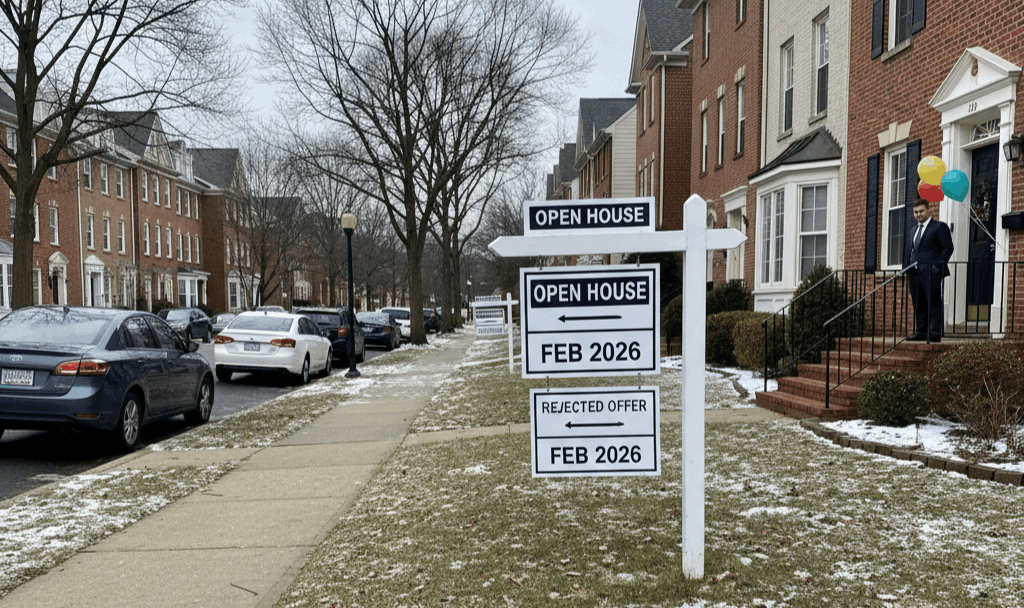
Across the DMV — from Fairfax County and Loudoun County to Arlington, Alexandria, Prince William County, and into Maryland and D.C. — buyer fatigue is quietly reshaping how homes get shown, how offers get written, and how long it takes for deals to close. It's not that demand has disappeared. It's that years of high prices, elevated mortgage rates, and economic uncertainty have worn buyers down. They're still looking — but they're pickier, slower, and far more cautious than at any point in the last five years.
For sellers, understanding this shift is critical. For buyers, recognizing the opportunity it creates is equally important. Here's what's really happening with buyer fatigue in the DMV in 2026 — and what you should do about it.
📊 Quick Facts at a Glance — Buyer Fatigue in 2026
- 📉 Existing home sales dropped 8.4% month-over-month in January 2026, the sharpest decline since February 2022 (NAR)
- ⏳ Homes now spend 64 days on market before going under contract — the longest in six years (Redfin)
- 🏠 Northern Virginia closed sales fell 5.6% year-over-year in January 2026 (NVAR)
- 📈 NOVA active listings surged 21.1% year-over-year, giving buyers more options than they've had in years
- 💰 Mortgage rates hovering near 6.1% — lowest in three years but still double pandemic-era lows
- 📊 Pending home sales down 3.3% year-over-year nationally (Redfin)
- 🏗️ Builder confidence dropped to 37 on the HMI, with 40% of builders cutting prices (NAHB)
- 🔑 First-time buyers now represent 31% of sales, up from 28% a year ago (NAR)
📑 Table of Contents
- What Is Buyer Fatigue — and Why Is It Hitting in 2026?
- Why Buyer Fatigue Matters for DMV Homeowners and Sellers
- The Economic Forces Behind Buyer Burnout
- How Showings and Offers Have Changed: A 2022–2026 Timeline
- Where Buyer Fatigue Is Hitting Hardest Across the DMV
- What Buyer Fatigue Means for DMV Real Estate Prices and Strategy
- Northern Virginia's Unique Position: Resilience Meets Recalibration
- Buyer Fatigue: Pros and Cons for Both Sides of the Transaction
- What Buyers and Sellers Should Do Right Now
- Frequently Asked Questions
🔍 What Is Buyer Fatigue — and Why Is It Hitting in 2026?
Buyer fatigue happens when prospective homebuyers become emotionally and financially exhausted from the process of searching for, bidding on, and losing out on homes. It's not a new concept — but in 2026, it's become one of the defining forces reshaping showings, offers, and overall transaction volume across the DMV.
The roots of today's buyer fatigue run deep. Since 2022, buyers have faced a relentless combination of obstacles: mortgage rates that more than doubled from pandemic lows, home prices that kept climbing even as rates rose, fierce competition that forced waived inspections and escalation clauses, and an economy that's felt uncertain for years on end. Many of the buyers searching today have been in the market for 12 to 24 months or longer — and they're tired.
According to NAR data released in February 2026, existing-home sales fell 8.4% from December to January, landing at a seasonally adjusted annual rate of 3.91 million units — the slowest pace since December 2023. NAR's chief economist described potential buyers as still struggling, with many Americans essentially stuck in place.
This isn't just a national trend. In Northern Virginia, NVAR reported that January 2026 closings came in at 786 homes — down 5.6% from January 2025. Buyers have more inventory to choose from (active listings rose over 21% year-over-year), yet they're converting at a slower rate. The issue isn't a lack of options. It's a lack of urgency.
💡 Key Insight: Buyer fatigue isn't the absence of demand — it's the slowing of action. Buyers are still in the market. They're attending showings, browsing listings, and running numbers. But they're making decisions more slowly, writing fewer offers, and walking away from properties they would have fought over just two years ago.
⚠️ Why Buyer Fatigue Matters for DMV Homeowners and Sellers
If you're planning to sell a home in the DMV in 2026, buyer fatigue is the single most important market dynamic you need to understand. It changes everything — from how you price your home, to how you stage it, to how long you should expect it to take before you're under contract.
Here's the reality: in a fatigued market, buyers don't just have more negotiating power. They have more patience. A buyer who has been searching for 18 months and lost out on five homes isn't going to rush into another emotional decision. They're going to take their time, request every inspection, and negotiate on price and closing costs. The Redfin data backs this up — homes sold in January 2026 spent a median of 64 days on market before going under contract, the longest span in six years.
For DMV sellers, this means the "list it and wait for offers by Monday" era is over for most properties. In January, the total sold dollar volume in Northern Virginia was approximately $666 million — a 4.6% decrease compared with the prior January. Sellers who price too aggressively or skip presentation basics are watching their listings sit, then reduce, then sit some more.
Nationally, about 6% of sellers are choosing to pull their listings off the market entirely rather than accept lower offers, according to recent NAR analysis. That's higher than normal and signals that both sides of the transaction are feeling the strain of a market that hasn't fully normalized. If you're thinking about selling in Fairfax County, Loudoun County, or anywhere in the DMV, getting an accurate home evaluation before you list is more important now than it's been in years.
💼 The Economic Forces Behind Buyer Burnout
Buyer fatigue doesn't happen in a vacuum. It's the result of several compounding economic pressures that have been building since the pandemic — and that are all colliding in early 2026.
Mortgage rates remain elevated. While the current weekly average of roughly 6.1% is near its lowest point in three years, it's still roughly double the rates many buyers locked in during 2020 and 2021. For a buyer purchasing a $700,000 home in Northern Virginia with 10% down, that rate difference translates to hundreds of dollars more per month compared to pandemic-era pricing.
Economic anxiety is widespread. A December 2025 consumer survey from Bright MLS found that over 80% of renters reported being worried about needing to cut essential spending. That kind of financial stress doesn't exactly encourage people to commit to a 30-year mortgage. Layoff cycles, federal workforce reductions in the DMV, and broad uncertainty about the economy have made many would-be buyers hesitant to act.
Prices haven't corrected enough to offset rate increases. Nationally, the median home-sale price in January 2026 was roughly $396,800 — still the highest January price on record, according to NAR. In Northern Virginia, the December 2025 median sold price was $715,000, up 2.1% from the prior year. Buyers are looking at these numbers and doing the math — and for many, the numbers still don't work. For those who are ready but need help with affordability, exploring financing options and rate strategies can be a real game-changer.
Wages are rising, but not fast enough. Wage growth of roughly 4% year-over-year is helping, and the median monthly mortgage payment has actually declined about 5% year-over-year to around $2,559 nationally. But for many households — especially first-time buyers — the gap between income and the cost of homeownership remains daunting.
Sources: NAR, Redfin, NVAR, NAHB — January/February 2026 reports
📅 How Showings and Offers Have Changed: A 2022–2026 Timeline
To fully understand buyer fatigue in 2026, it helps to look at how dramatically buyer behavior has shifted over the past four years. The contrast is striking.
2022: The Peak Frenzy. Mortgage rates were still relatively low early in the year, and competition was intense. Multiple-offer situations were the norm across Northern Virginia. Buyers routinely waived inspections, appraisal gaps, and contingencies. Homes regularly sold in under a week — often within days of listing. Showings were overflowing, and sellers held all the leverage.
2023: The Rate Shock. As rates climbed into the high 6% and 7% range, buyer activity cooled sharply. Many would-be buyers pulled out of the market entirely. Those who remained were more selective, but inventory was still so tight that competition persisted in desirable neighborhoods. The first signs of fatigue started to appear — buyers were making fewer offers and taking longer to decide.
2024–2025: The Stalemate. Rates fluctuated between the mid-6% and low-7% levels. The "lock-in effect" kept many homeowners from listing, which constrained supply. But buyer demand also stayed muted. Sales volume nationally hovered near historic lows — around 4 million units — for roughly two years. Both sides were stuck, and frustration grew on both sides of the transaction.
Early 2026: The Fatigue Era. Rates have eased to around 6.1%, and new listings are slowly rising. But buyers who've been through years of sticker shock and bidding wars aren't snapping back. Homes that sold in January 2026 nationally spent a median of 64 days on market — up roughly a week from a year earlier. Pending sales continued to decline. The NAR has called current conditions the most affordable since early 2022, yet transactions are still falling. The math is improving, but the psychology hasn't caught up.
In Northern Virginia specifically, the months of supply rose to 1.1 months in January 2026 — up roughly 20% year-over-year. That's still well below the six months that indicates a balanced market, but it represents a meaningful shift for a region where homes were being absorbed almost instantly for years. Buyers who want to take advantage of this shift can start browsing available homes across Northern Virginia to see how much more room they have to be selective.
📍 Where Buyer Fatigue Is Hitting Hardest Across the DMV
Buyer fatigue isn't affecting every neighborhood equally. Across the DMV, the impact varies significantly depending on price point, property type, location, and local economic factors.
Fairfax County is the region's biggest bellwether — and it's showing classic signs of fatigue-driven recalibration. NVAR's 2026 forecast predicts prices will rise only about 1.9% this year, with unit sales increasing approximately 8.4%. The imbalance between rising inventory and modest sales growth means some homes — particularly those priced above market value — are sitting longer than sellers expect. Buyer fatigue is most visible in the mid-tier price range, where affordability pressures are strongest.
Loudoun County is seeing one of the most dramatic inventory surges, with listings forecast to rise over 36% in 2026. Median prices are expected to climb about 3.3%, and sales should increase roughly 7.6% — but the pace of showings has noticeably slowed in some newer suburban communities where buyers have more options than they've had in years.
Prince William County faces the most pronounced fatigue at the entry-level price point. Prices are forecast to stay essentially flat in 2026 (declining about 0.2%), and while transaction volume should increase modestly, buyer enthusiasm is tempered by the math — price-to-income ratios that still feel stretched for many households in the area.
Arlington and Alexandria remain more resilient thanks to proximity to D.C., walkability, and strong employment anchors. Arlington's median prices are expected to rise 3.8% in 2026, and Alexandria is forecast to see about 4.2% appreciation. However, even in these high-demand markets, days on market have lengthened and buyers are negotiating more aggressively than during the frenzy years.
Maryland and D.C. markets are seeing similar patterns. Montgomery County, like Fairfax, is forecast for flat or minimal appreciation in 2026. The broader D.C. metro area is experiencing what Bright MLS economists have called a "transition year" — not a rebound, but a reset. Uncertainty around federal employment has added an extra layer of buyer hesitancy in government-heavy neighborhoods.
💡 Local Insight: Buyer fatigue is most visible in the $500K–$800K range across Northern Virginia, where affordability constraints are strongest. The $1M+ segment has actually remained the most active nationally, according to NAR. Luxury buyers are less rate-sensitive and more motivated by lifestyle and equity — which is why pricing strategy matters differently at every price tier.
🏡 What Buyer Fatigue Means for DMV Real Estate Prices and Strategy
Buyer fatigue doesn't necessarily mean prices are going to crash. In fact, most economists expect prices in Northern Virginia to remain relatively stable or grow modestly in 2026. NVAR and George Mason University's Center for Regional Analysis describe the market as entering a "more stable phase" — not declining, but decelerating.
What buyer fatigue does mean is that the margin for error on pricing is razor-thin. In a fatigue-driven market, the difference between a well-priced home and an overpriced home is dramatic. Well-priced homes in strong micro-markets can still generate multiple offers and sell quickly. Overpriced homes — even by 5% to 10% — are increasingly likely to sit, accumulate days on market, require price reductions, and ultimately sell for less than they would have if priced correctly from the start.
This dynamic is especially important in Northern Virginia, where micro-markets behave very differently from one neighborhood to the next. A home in Vienna may sell in a week while a comparable property in an outer Fairfax subdivision sits for 45 days. The neighborhood, school district, walkability, and competitive landscape all matter — and in a fatigued market, they matter more than ever.
For sellers, this means accurate pricing from day one is non-negotiable. Sellers who are trying to maximize their net proceeds should also be thinking about how to reduce their commission costs while still getting full-service marketing — because in a slower market, every dollar counts.
For buyers, buyer fatigue actually creates a window of opportunity. With fewer competing offers and more time to evaluate, buyers who remain active in 2026 have leverage they haven't had since before the pandemic. The key is staying engaged and ready to act — not waiting for a "perfect" market that may never arrive.
Thinking about making a move in this market? Let's talk strategy — whether you're buying or selling.
🌐 Northern Virginia's Unique Position: Resilience Meets Recalibration
Northern Virginia isn't like the rest of the country. While national headlines focus on sluggish sales and cooling demand, the NOVA market continues to outperform national averages — even in the face of buyer fatigue.
The December 2025 median sold price in Northern Virginia hit $715,000, reflecting 2.1% year-over-year growth. Nationally, the median existing-home price rose only about 0.4% to $405,400 over the same period. That gap reflects the structural advantages of Northern Virginia: proximity to the federal government and defense sector, a highly educated workforce, top-tier schools, strong infrastructure investment, and sustained demand from relocators.
But Northern Virginia isn't immune to fatigue. The market is best described as "recalibrating" rather than declining. Days on market have lengthened. Buyers have more room to negotiate. And the frenzy-era expectation that every listing will generate a bidding war within 48 hours has given way to a more measured pace.
NVAR's forecast for 2026 reinforces this: moderate price increases across most jurisdictions, inventory continuing to rise (though still well below long-term norms), and a market that rewards strategy over speed. The fundamentals — employment, demand, limited land, transportation investments — remain strong. What's changed is that buyers are demanding more value for their money, and sellers need to deliver it.
There's also a unique DMV factor: federal workforce changes. The government shutdowns and workforce reductions that marked late 2025 created additional uncertainty for government employees and contractors — a huge share of the DMV buyer pool. Even if these disruptions prove temporary, the psychological impact on buyer confidence is real and ongoing. Buyers who can get pre-approved and understand their financing position before shopping are the ones best positioned to act decisively when the right home comes along.
⚖️ Buyer Fatigue: Pros and Cons for Both Sides of the Transaction
Buyer fatigue isn't purely negative. Depending on which side of the transaction you're on, it creates both challenges and opportunities.
For Buyers — The Advantages:
- Less competition. Fewer aggressive offers mean you're less likely to be outbid or forced into waiving contingencies.
- More negotiating power. Sellers are outnumbering active buyers by a record gap in some markets, which means concessions on price, closing costs, and repairs are more achievable than they've been in years.
- More time to make decisions. With homes sitting longer, you can attend multiple showings, sleep on it, and make a rational decision rather than a panic-driven one.
- Improving affordability. Wages are outpacing home price growth for the first time since the Great Recession era, and monthly payments are trending down year-over-year.
For Buyers — The Risks:
- Waiting too long. If rates drop further, competition will surge and prices will follow. Buyers who wait for the "perfect" moment may find themselves back in a bidding war.
- Analysis paralysis. More options and more time can actually make it harder to commit, leading to months of indecision.
For Sellers — The Advantages:
- Prices are still strong. Northern Virginia median prices are near all-time highs. Selling now still locks in substantial equity — especially for homeowners who bought before 2022.
- Serious buyers are out there. The buyers in today's market are pre-approved, intentional, and ready to close. They may take longer to commit, but they're less likely to fall through.
For Sellers — The Challenges:
- Pricing must be precise. Overpricing is being punished more severely than at any point in recent memory.
- Presentation matters more. Fatigued buyers are pickier. Staging, photography, and condition are all under the microscope.
- Expect longer timelines. The list-to-contract timeline has lengthened across almost every DMV submarket.
Sellers who want to stay competitive while keeping more money in their pocket should look into how listing for a reduced commission rate can increase their net proceeds — especially in a market where every dollar counts.
🎯 What Buyers and Sellers Should Do Right Now
Whether you're buying or selling in the DMV in 2026, the playbook has changed. Here's how to navigate buyer fatigue effectively.
If You're a Buyer:
Get pre-approved and know your numbers. In a fatigued market, the buyers who win are the ones who can move when the right property appears. Getting pre-approved doesn't just help you — it signals to sellers that you're serious. Talk to a lender, understand your budget, and be ready. If you haven't explored your options yet, browsing active listings in the DMV is a smart place to start.
Use your leverage wisely. You have more negotiating room than you've had in years — but don't overplay it. Asking for reasonable concessions on closing costs, repairs, or price adjustments is smart. Lowballing aggressively can backfire and alienate motivated sellers.
Don't wait for perfection. If you find a home that meets 80% or more of your criteria and the numbers work, it's worth serious consideration. Rates may not drop dramatically in 2026, and when they do eventually fall further, competition will ramp back up fast.
Think long-term. Every home purchase is a long-term investment. If you plan to stay for five to seven years or more, current conditions — improving affordability, rising inventory, negotiation leverage — make this a strategic buying window.
If You're a Seller:
Price it right from day one. In a fatigued market, your first two weeks on the market are critical. Overpricing leads to stale listings, which leads to price reductions, which signals desperation to buyers. Get a current market evaluation of your home before setting your list price.
Invest in presentation. Professional photography, staging, and curb appeal are not optional in 2026. Fatigued buyers are scrolling through dozens of listings. If yours doesn't grab attention in the first photo, they're moving on.
Be prepared to negotiate. Inspection requests, repair credits, and closing cost assistance are increasingly common. Building flexibility into your pricing strategy from the start will help you close faster and with less friction.
Choose your agent carefully. In a market where margins are thinner and timelines are longer, the quality of your representation matters enormously. You need an agent who understands micro-market pricing, has a proven marketing system, and can advise you on strategy — not just list your home and wait.
❓ Frequently Asked Questions About Buyer Fatigue in 2026
What is buyer fatigue in real estate?
Buyer fatigue occurs when homebuyers become emotionally and financially exhausted from searching, competing, and losing out in the housing market. In 2026, this is driven by years of high rates, elevated prices, and economic uncertainty. Fatigued buyers don't leave the market entirely — they slow down, become more cautious, and demand more value before writing offers.
How is buyer fatigue affecting showings in the DMV?
Showings have slowed across the DMV region compared to peak-era levels. Open houses are drawing fewer visitors, and homes are spending more time on the market. In January 2026, NVAR reported a 5.6% decline in closed sales despite a 21.1% increase in inventory — clear evidence that buyers are looking but converting at a slower pace.
Are home prices dropping because of buyer fatigue?
Not significantly. Northern Virginia median prices remain near record highs, and national prices rose about 0.9% year-over-year in January 2026. However, price growth has decelerated, and overpriced homes are taking much longer to sell. The risk isn't a crash — it's stagnation for sellers who don't price correctly.
Is 2026 a good time to buy a home in Northern Virginia?
For many buyers, 2026 represents the best opportunity since before the pandemic. Inventory is rising, competition has eased, and affordability is gradually improving. Buyers now have time to negotiate, request inspections, and make informed decisions — advantages that were nearly impossible during the frenzy years.
How long are homes taking to sell in 2026?
Nationally, homes sold in January 2026 spent a median of 64 days on market — the longest span in six years. In Northern Virginia, days on market have also increased, though well-priced homes in strong locations can still sell faster. The key variable is pricing accuracy relative to the local competitive landscape.
Should sellers lower their prices because of buyer fatigue?
Not necessarily — but sellers must price accurately from the start. Homes priced at or near market value are still attracting strong buyer interest. The problem arises when sellers list 5% to 10% above realistic value, which in a fatigued market leads to extended days on market and eventual reductions.
How are mortgage rates affecting buyer fatigue?
Rates near 6.1% are the lowest in about three years but are still roughly double pandemic-era lows. This means monthly payments remain high enough to give many buyers pause, even as affordability metrics improve. The psychological weight of rates staying elevated for several years has compounded the fatigue effect.
What should I do if my home isn't getting showings?
If your listing isn't generating traffic, the most common culprits are pricing, photos, and condition. Review your list price against recent comparable sales, invest in professional photography and staging, and consider offering buyer-friendly concessions. Working with an experienced local agent who understands your specific micro-market is essential.
Will buyer fatigue end soon?
Economists expect the market to gradually improve throughout 2026 as affordability continues to get better. However, a sudden return to frenzy conditions is unlikely. Most forecasters describe 2026 as a "transition year" or a "reset" rather than a full rebound, meaning buyer fatigue will likely ease gradually rather than disappear overnight.
How can the Jamil Brothers help me navigate buyer fatigue?
The Jamil Brothers Realty Group specializes in the DMV market — Fairfax County, Loudoun County, Prince William County, Arlington, Alexandria, and beyond. Whether you're buying or selling, we provide data-driven pricing strategies, professional marketing, and hands-on guidance tailored to today's market conditions. Call us at 703-782-4830 to discuss your situation.
Let's Navigate This Market Together
Buyer fatigue is real — but so is the opportunity. Whether you're buying, selling, or just exploring your options, the Jamil Brothers Realty Group is here to help you make a smart, informed move in the 2026 DMV market.
📞 703-782-4830
Categories
- All Blogs (1168)
- Aldie (3)
- Ashburn (6)
- Buyer Guide (8)
- Buying a home (2)
- Buying Strategies (28)
- festivals (1)
- General Blog (66)
- Leesburg (5)
- Market Intelligence (29)
- Market Updates (8)
- Notable Properties For Sale (29)
- Real Estate Tips, News, and More (376)
- Seller Guide (2)
- Seller Guides (60)
- Selling Your Home (479)
- Sterling (6)
- Top Realtors in Northern Virginia (58)
Recent Posts


Message Sent!
Thank you for reaching out. Arslan & Saad have received your details and will be in touch shortly.
Need immediate assistance? Call or text 703-782-4830.