
Google’s $9 B Virginia AI Investment: What It Means for Northern Virginia’s Real Estate
Selling or owning a home in Northern Virginia? You’ll want to lean in for this. With Google announcing a massive $9 billion investment in Virginia for AI, data centers, and cloud infrastructure, the ripple effects are poised to influence local real estate — especially in counties like Loudoun County, Prince William County, and Fairfax County.
This blog walks you through why this matters for homes, explores how neighborhoods may shift, and offers tips for homeowners and sellers to position themselves wisely. Because when tech money flows in, housing markets often feel it next.
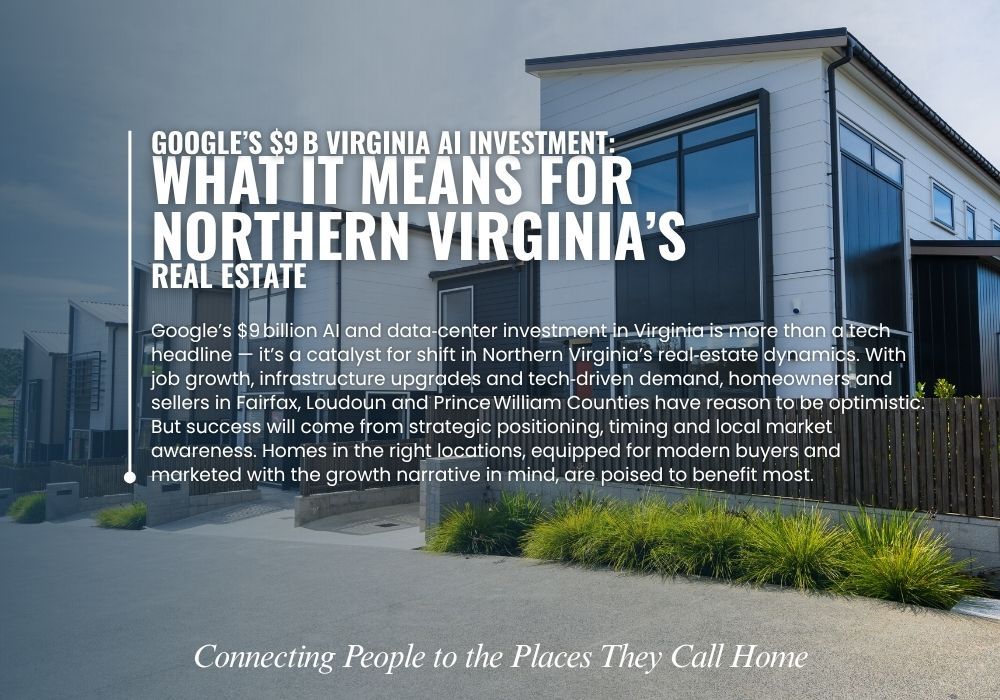
Calculate Your Home's Value
See how Google's investment could impact your property.
Get a free home valuation with our 1.5% listing program.
Free Valuation CalculatorWhy the $9 B Investment Matters for Real Estate
Job Growth and Tech Anchors
Google’s investment isn’t just about servers — it’s about people, jobs, infrastructure, and long-term commitment. With new AI infrastructure, data centers, and workforce development programs, Virginia is reinforcing its role as a tech hub. More jobs mean more demand for housing: from rental units to starter homes to premium residences.
Infrastructure & Location Premiums
When major companies build, there’s often infrastructure to go with it: roads, utilities, transit corridors, and amenities. These upgrades make nearby neighborhoods more attractive. Areas with a “tech-anchor” often see value uplift as the region becomes more desirable.
Supply & Demand Shift
Northern Virginia remains one of the world’s largest data-center and cloud-computing hubs. With more heavy tech investment, the pressure on housing supply and community amenities may increase, tightening market conditions and pushing home values upward — if other conditions align.
What to Watch in Fairfax, Loudoun & Prince William
Loudoun County:
This county has been labeled part of “Data Center Alley.” With Google’s investment explicitly extending into Loudoun, the residential market may feel upward momentum. The added employment and infrastructure draw may accelerate demand in established neighborhoods, while new subdivisions may benefit more slowly.
Prince William County:
With Google's expansion announced to include parts of Prince William County, areas slightly farther from the D.C. core may benefit from more tech-driven residential demand. That helps sellers in communities previously considered more value-oriented.
Fairfax County:
Fairfax already enjoys premium positioning thanks to schools, proximity to D.C., and established neighborhoods. With this tech momentum, premium homes and luxury segments may stand to gain even more, though affordability remains more challenged.
Opportunities for Homeowners & Sellers
- Equity Growth Potential: If demand outpaces supply and the region becomes more attractive for tech workers, you may benefit from stronger value retention or appreciation.
- Marketing Advantage for Sellers: If you’re selling, you can highlight proximity to tech hubs, infrastructure improvements, and future growth potential as part of your story.
- Strategic Timing: A market shift triggered by a major investment may bring a window of opportunity before higher prices fully set in. Listing smartly becomes important.
- Improving Neighborhood Appeal: If infrastructure upgrades or transit corridors emerge near your home, consider highlighting those in your listing or improving curb appeal to align with the growth narrative.
Opportunities Highlights:
- ✓ Equity Growth
- ✓ Marketing Advantage
- ✓ Strategic Timing
- ✓ Neighborhood Appeal
Cautions and Considerations
- Infrastructure Strain & Zoning Risk: Large tech and data-center growth may bring increased traffic, utility strains, or zoning changes. Some local community groups in Northern Virginia have expressed concern over the data-center growth impact.
- Affordability Pressure: As areas become more desirable, greater demand may reduce affordability for some residents, which may shift buyer profiles.
- Timing Lag: Real estate effects don’t always show immediately. Tech investments may take years to fully impact housing markets, so immediate benefits may be modest.
- Neighborhood Specifics Matter: Not all areas benefit equally. Homes closest to the tech growth or with strong amenities will lead; ones farther out may lag.
Cautions Highlights:
- ✓ Infrastructure Strain
- ✓ Affordability Pressure
- ✓ Timing Lag
- ✓ Neighborhood Specifics
What Sellers Should Do Right Now
- Highlight Technological & Infrastructure Proximity – In your listing, mention access to major tech campuses, fiber connectivity, transit options, and job hubs if applicable.
- Focus on Features Tech-Workers Value – Home offices, smart-home features, strong connectivity, low-maintenance yards — all appeal to tech-savvy buyers.
- Stay Ahead of Upgrades – Homes in ready-to-move-in condition will stand out in a shifting market.
- Choose a Pricing Strategy That Reflects Growth Potential – Don’t overprice based solely on future predictions. Price smartly while explaining value.
- Work with an Agent Who Understands Local Tech/Real Estate Dynamics – An agent familiar with the tech investment effect and Northern Virginia real-estate subtleties will guide strategy well.
Seller Tips:
- ✓ Highlight Proximity
- ✓ Tech Features
- ✓ Stay Ahead
- ✓ Pricing Strategy
- ✓ Expert Agent
Frequently Asked Questions (FAQ)
Categories
- All Blogs (1227)
- Aldie (3)
- Ashburn (6)
- Buyer Guide (8)
- Buying a home (2)
- Buying Strategies (30)
- festivals (1)
- General Blog (67)
- Leesburg (5)
- Market Intelligence (29)
- Market Updates (8)
- Notable Properties For Sale (32)
- Real Estate Tips, News, and More (385)
- Seller Guide (2)
- Seller Guides (60)
- Selling Your Home (522)
- Sterling (6)
- Top Realtors in Northern Virginia (58)
Recent Posts






Message Sent!
Thank you for reaching out. Arslan & Saad have received your details and will be in touch shortly.
Need immediate assistance? Call or text 703-782-4830.