Realtor Commission in Northern Virginia: 2026 Average Rates, How They Work & How to Keep More of Your Equity
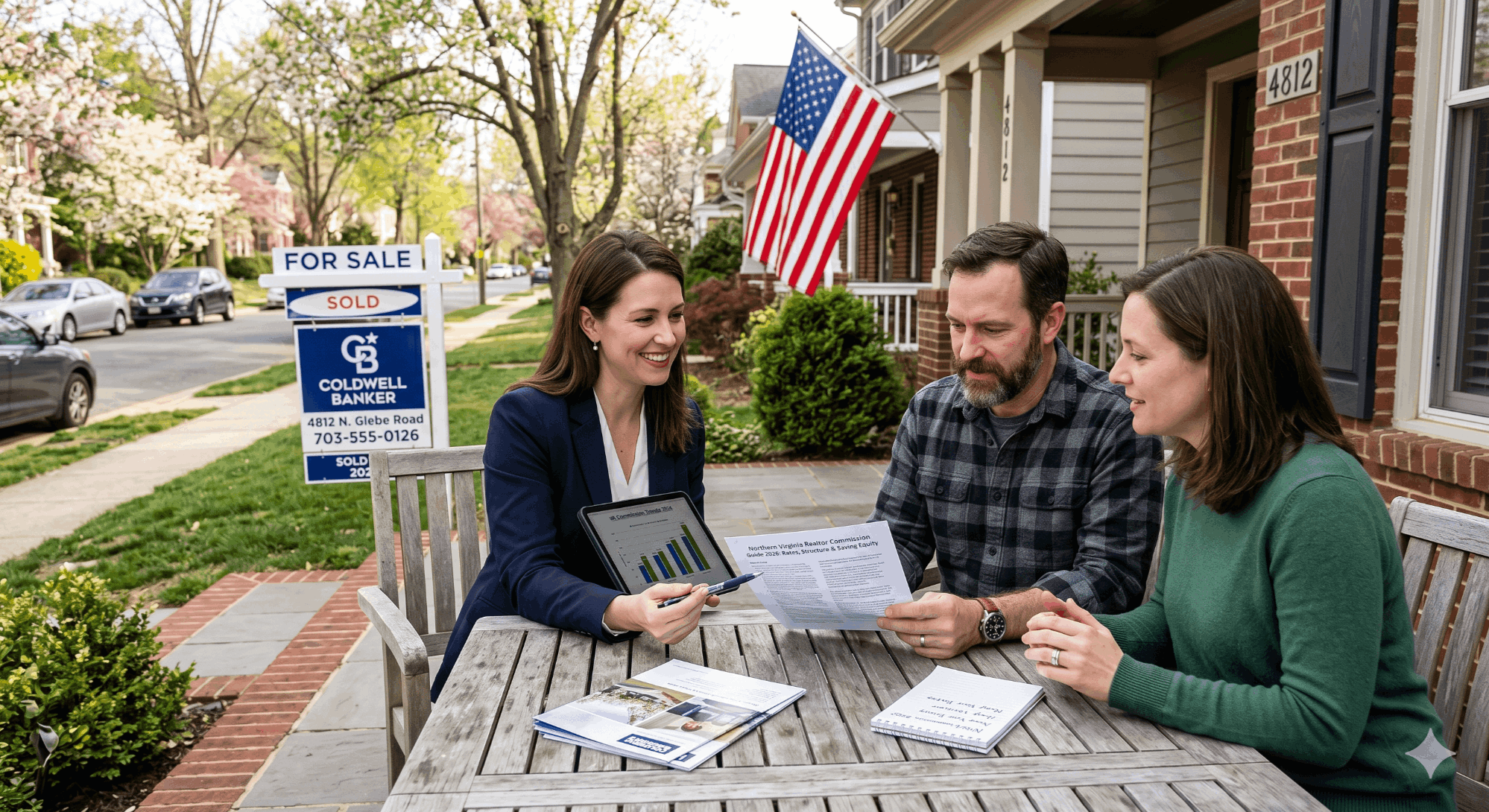
If you’re preparing to sell a home in Virginia, especially in competitive markets like Northern Virginia, Fairfax County, or Loudoun County, you’ve probably wondered: how much will I actually pay my real estate agent?
Realtor commission is often the largest single expense when selling a home, yet most sellers don't fully understand how it works, who pays what, or that there are alternatives to the traditional 6% model that's been standard for decades. This guide breaks down everything Virginia homeowners listing their homes for sale in Northern Virginia need to know, including recent industry changes, what's negotiable, and how the Jamil Brothers Realty Group delivers full-service representation at a fraction of the traditional cost.
Realtor commission is the fee paid to real estate agents for helping buy or sell a home, traditionally around 5 to 6% of the sale price in Virginia, split between the listing and buyer’s agents. Commission rates are negotiable, and some brokerages (like ours) offer full-service listing representation for as low as 1.5%, potentially saving Virginia sellers tens of thousands of dollars on a typical home sale.
- Traditional realtor commission in Virginia averages 5 to 6% of the sale price, typically split between the listing agent and buyer’s agent.
- On a $700,000 Northern Virginia home, that’s $35,000 to $42,000 in commission fees.
- Commission rates are always negotiable, there’s no law or rule mandating specific percentages.
- 2024 industry changes mean buyers may now pay their own agent’s commission directly in some transactions.
- Full-service alternatives exist: the Jamil Brothers Realty Group offers complete listing services for just 1.5%.
- Understanding commission helps you accurately calculate your net proceeds from selling.
- What Exactly Is Realtor Commission?
- How Real Estate Commission Works in Virginia
- Who Actually Pays the Realtor Commission in Virginia?
- Average Realtor Commission Rates in Virginia (2026)
- Breaking Down Where Your Real Estate Commission Goes
- 2024 Commission Rule Changes: What Virginia Sellers Must Know
- How to Negotiate Realtor Commission in Northern Virginia
- How Our 1.5% Full-Service Listing Fee Is Different
- See Your Commission Savings Side by Side
- Alternatives to Traditional Commission Models
- Common Commission Mistakes Virginia Sellers Make
- How to Calculate Your True Home-Selling Costs in Virginia
- Realtor Commission FAQs (Northern Virginia)
- Real Estate Commission Glossary
- Your Next Steps as a Northern Virginia Seller
What Exactly Is Realtor Commission?
Realtor commission is the fee paid to real estate agents or brokers for their professional services in facilitating a real estate transaction. This fee compensates agents for their expertise, time, marketing efforts, negotiation skills, and the resources they invest in helping you buy or sell property.
Unlike some professions that charge hourly rates or flat fees, real estate agents traditionally work on a commission basis, meaning they only get paid when the transaction successfully closes. This commission is calculated as a percentage of the home’s final sale price.
For example, if you sell your Fairfax County home for $750,000 and the total commission rate is 5%, the commission would be $37,500.
What Services Does Commission Cover?
For Sellers, Listing Agent Services
- Professional pricing analysis and market positioning
- Professional photography, videography, and virtual tours
- MLS listing on BrightMLS and syndication to Zillow, Realtor.com, Redfin, and hundreds of other websites
- Marketing campaigns (digital, print, social media)
- Open houses and private showings coordination
- Buyer screening and qualification
- Offer negotiation and contract management
- Transaction coordination through closing
- Guidance on repairs, staging, and presentation
For Buyers, Buyer’s Agent Services
- Property search and identification
- Market analysis and pricing guidance
- Scheduling and accompanying on showings
- Offer strategy and negotiation
- Inspection coordination and repair negotiations
- Guidance through financing and closing
How Real Estate Commission Works in Virginia
Understanding the mechanics of real estate commission helps you make informed decisions about selling or buying in Virginia. Here’s the step-by-step process:
-
1Commission Is Negotiated UpfrontWhen you hire a listing agent, you’ll sign a listing agreement that specifies the total commission rate and how it will be divided. This happens before your home goes on the market, and yes, this rate is negotiable.
-
2The Commission SplitTraditionally, the total commission has been split between two sides: the listing agent side (2.5 to 3%) who represents the seller, and the buyer’s agent side (2.5 to 3%) who represents the buyer. The table below shows how this breaks down.
-
3Further Splits With BrokeragesIndividual agents don’t keep the entire commission. They typically split their portion with their brokerage, often 60/40 to 80/20 depending on experience and production. So that 3% listing agent commission might mean $11,250 goes to the agent and $11,250 to their brokerage on a $750,000 sale.
-
4Payment at ClosingCommission is paid at closing, deducted from the seller’s proceeds before they receive their funds. The title company or settlement attorney handles disbursement to the appropriate brokerages.
| Party | Typical Share | Role |
|---|---|---|
| Listing Agent Side | 2.5 to 3% | Represents the seller |
| Buyer’s Agent Side | 2.5 to 3% | Represents the buyer |
Commission is just one piece of your selling costs. Our free seller net sheet calculator shows exactly what you’ll walk away with after all fees, costs, and payoffs.
Calculate Your Net Proceeds →Free, instant, specific to Northern Virginia closing cost structures.
Who Actually Pays the Realtor Commission in Virginia?
This question generates more confusion than almost any other aspect of real estate transactions. Here’s the straightforward answer.
The Traditional Model (Pre-2024)
Traditionally, the seller has paid the total commission, both their listing agent’s fee and an offered commission to the buyer’s agent. This amount was deducted from the sale proceeds at closing. However, economists note this is somewhat semantic: the buyer provides the funds to purchase the home, and commission is factored into pricing. The buyer’s purchase funds ultimately cover these costs.
The New Reality (2024 and Beyond)
Major industry changes in 2024 shifted how buyer agent compensation works. Sellers are no longer required to offer compensation to buyer’s agents through the MLS. This means:
- Buyers may negotiate and pay their own agent’s commission directly
- Sellers can still offer buyer agent compensation if they choose
- Compensation is now negotiated more transparently on both sides
- Buyer agency agreements are now required before home tours
In practice, most Northern Virginia sellers still offer roughly 2% to 2.5% in buyer-agent compensation to stay competitive in BrightMLS, though the exact amount is now negotiated on a case-by-case basis.
Average Realtor Commission Rates in Virginia (2026)
Commission rates vary by market, property type, and individual negotiation. Here’s what Virginia sellers typically encounter:
| Virginia Region | Typical Total Rate | Median Home Price | Typical Commission $ |
|---|---|---|---|
| Northern Virginia (overall) | 5 to 5.5% | $650,000 to $750,000 | $32,500 to $41,250 |
| Fairfax County | 5 to 5.5% | $700,000 to $800,000 | $35,000 to $44,000 |
| Loudoun County | 5 to 5.5% | $725,000 to $850,000 | $36,250 to $46,750 |
| Richmond Metro | 5 to 6% | $375,000 to $425,000 | $18,750 to $25,500 |
| Virginia Beach / Hampton Roads | 5 to 6% | $325,000 to $375,000 | $16,250 to $22,500 |
| Rural Virginia | 6% | $250,000 to $325,000 | $15,000 to $19,500 |
Rates are estimates based on typical market conditions. Actual rates vary by brokerage and are always negotiable.
Why Northern Virginia Rates Tend to Be Slightly Lower
The Real Dollar Impact at Northern Virginia Price Points
| Sale Price | 5% Commission | 3% Listing Only | 1.5% Listing + 2.5% Buyer Agent |
|---|---|---|---|
| $600,000 | $30,000 | $18,000 | $24,000 |
| $750,000 | $37,500 | $22,500 | $30,000 |
| $900,000 | $45,000 | $27,000 | $36,000 |
| $1,200,000 | $60,000 | $36,000 | $48,000 |
As you can see, even small percentage differences translate to significant dollar amounts in Northern Virginia’s higher-priced markets.
Breaking Down Where Your Real Estate Commission Goes
Many sellers assume their agent pockets the entire commission. The reality is far more complex. Here’s a typical breakdown of where commission dollars actually flow on a 5% total / $750,000 sale:
| Recipient | Percentage | Dollar Amount |
|---|---|---|
| Listing Agent (personal) | ~1.5% | $11,250 |
| Listing Brokerage | ~1% | $7,500 |
| Buyer’s Agent (personal) | ~1.5% | $11,250 |
| Buyer’s Brokerage | ~1% | $7,500 |
| Total | 5% | $37,500 |
What Agents Pay From Their Share
Before agents see profit, they typically cover these business expenses from their commission:
- Marketing costs (photography, staging, advertising)
- MLS fees and technology subscriptions
- Errors and omissions insurance
- Continuing education and licensing fees
- Vehicle and transportation costs
- Self-employment taxes (15.3%)
- Health insurance and benefits (self-funded)
This context doesn’t mean you should overpay, but it helps explain why quality agents typically can’t work for extremely low fees while maintaining service standards.
Why pay 2.5 to 3% for listing services when you can get everything you need for just 1.5%? Same marketing, same negotiation, same results, just a dramatically lower fee.
Learn About Our 1.5% Listing Fee →No reduced service. No shortcuts. Just a better deal for Northern Virginia sellers.
2024 Commission Rule Changes: What Virginia Sellers Must Know
The real estate industry underwent significant changes in 2024 following a major legal settlement involving the National Association of Realtors (NAR). These changes affect how commission is discussed, offered, and paid. Here’s what Virginia home sellers need to understand.
Key 2024 Commission Changes That Took Effect
Previously, sellers routinely offered a specific commission to buyer’s agents through the MLS listing. Now, these offers of compensation cannot be communicated through the MLS system. Sellers can still offer buyer agent compensation, but it must be communicated through other means.
Buyers must now sign a written agreement with their agent before touring homes. This agreement specifies what compensation the buyer’s agent will receive, making costs transparent upfront for both parties.
Commission conversations are now required to happen earlier and more explicitly. Both buyers and sellers are encouraged to negotiate fees as a standard part of the process, which is ultimately good for consumers.
What This Means for Virginia Sellers
| Change | Impact on Sellers |
|---|---|
| MLS commission rules | You choose whether to offer buyer agent compensation and how much |
| Buyer agency agreements | Buyers may ask you to cover their agent’s fee as part of negotiations |
| Negotiation culture | Expect more commission discussions; use this to your advantage |
| Pricing considerations | Consider how your approach to buyer agent compensation affects your buyer pool |
Strategic Considerations for Northern Virginia Sellers
In competitive Northern Virginia markets like Fairfax County and Loudoun County, carefully consider your approach to buyer agent compensation:
- Offering compensation can broaden your buyer pool. Some buyers, especially first-timers, may struggle to pay their agent out of pocket
- Not offering may reduce effective price competition. If buyers must add agent costs to your price, your home may appear more expensive
- Flexibility is key. You can offer to negotiate buyer agent compensation as part of offer negotiations
- Consult your listing agent. Market conditions vary by neighborhood and price point
How to Negotiate Realtor Commission in Northern Virginia
Commission rates are always negotiable, there’s no law, rule, or standard that mandates specific percentages. Here’s how to approach commission negotiation effectively.
Factors That Strengthen Your Negotiating Position
| Factor | Why It Helps |
|---|---|
| Higher-priced home | Agent earns more dollars even at lower percentage |
| Hot seller’s market | Homes sell quickly with less marketing investment required |
| Move-in ready condition | Less work for agent; easier to market professionally |
| Desirable location | Strong buyer demand in Fairfax, Loudoun, and Arlington areas |
| Repeat business potential | Agents value long-term client relationships |
| Multiple transactions | Selling and buying creates more business for the agent |
Commission Negotiation Strategies That Work
-
1Interview Multiple AgentsDon’t just accept the first quote. Interview at least 3 agents, discuss their commission rates, and understand what services are included. This gives you market context and leverage.
-
2Ask About Tiered StructuresSome agents offer reduced rates if the home sells within a certain timeframe or above a certain price. This aligns incentives while reducing your costs.
-
3Negotiate Services, Not Just PercentageIf an agent won’t budge on rate, negotiate for additional services, professional staging, premium photography, enhanced marketing, to increase value.
-
4Consider the Full PackageA slightly higher commission with an excellent agent may net you more money than a discount agent who sells for less or takes longer.
-
5Look for Alternative ModelsSome brokerages, including ours, have built more efficient business models that allow for lower commissions without sacrificing service. These aren’t “discount” services; they’re modern approaches to real estate.
What NOT to Do When Negotiating
- Don’t choose solely on price, the cheapest agent may cost you more in the end
- Don’t be adversarial, commission negotiation should be professional and collaborative
- Don’t forget buyer agent compensation, cutting this too much may limit your buyer pool
- Don’t skip the agent interview, evaluate experience, marketing plan, and local expertise
How Our 1.5% Full-Service Listing Fee Is Different
At the Jamil Brothers Realty Group, we’ve built our business model differently. We offer full-service listing representation for just 1.5%, not because we cut corners, but because we’ve streamlined operations and prioritized efficiency. It’s a fair question many Northern Virginia sellers ask us directly, why pay 3% when you can sell for 1.5%, and the honest answer is that the savings come from how we run the business, not from cutting service. On a $750,000 Northern Virginia home, that’s a savings of $7,500 to $11,250 compared to traditional listing agents.
What You Get for 1.5%
| Service | Traditional Agent (2.5 to 3%) | Jamil Brothers (1.5%) |
|---|---|---|
| Professional Photography & Drone Video | ✓ | ✓ |
| Matterport 3D Virtual Tour | Sometimes | ✓ Always |
| MLS Listing & Full Syndication | ✓ | ✓ |
| Digital Marketing Campaigns | ✓ | ✓ |
| Open Houses & Showing Coordination | ✓ | ✓ |
| Expert Contract Negotiation | ✓ | ✓ |
| Transaction Coordination to Close | ✓ | ✓ |
| Pricing Strategy & CMA | ✓ | ✓ |
| Your Savings on $750K Home | $0 | $7,500 to $11,250 |
How We Make It Work
- Technology-forward operations, modern tools that reduce administrative overhead
- Streamlined marketing, proven systems deliver professional results efficiently
- Volume-based model, lower margins per transaction, sustainable through consistent volume
- Direct client relationships, fewer middlemen means less markup
- Northern Virginia focus, deep local expertise reduces learning curves and speeds execution
See Your Commission Savings Side by Side
Select your home’s estimated value below to see exactly how much more you keep with the Jamil Brothers’ 1.5% listing fee vs. a traditional 3% listing agent. Same full-service marketing. Better bottom line.
More you keep with Jamil Brothers at 1.5% vs. a traditional 3% listing agent, with zero reduction in service or marketing.
More you keep with Jamil Brothers at 1.5% vs. a traditional 3% listing agent, with zero reduction in service or marketing.
More you keep with Jamil Brothers at 1.5% vs. a traditional 3% listing agent, with zero reduction in service or marketing.
More you keep with Jamil Brothers at 1.5% vs. a traditional 3% listing agent, with zero reduction in service or marketing.
More you keep with Jamil Brothers at 1.5% vs. a traditional 3% listing agent, with zero reduction in service or marketing.
More you keep with Jamil Brothers at 1.5% vs. a traditional 3% listing agent, with zero reduction in service or marketing.
Estimates only. Closing costs vary. Buyer agent commission is negotiable.
Alternatives to Traditional Commission Models
The traditional percentage-based commission model isn’t your only option. Here’s a comprehensive look at alternatives available to Virginia sellers, including how 1.5% compares to discount and flat-fee brokers:
| Model | Typical Cost | Best For | Considerations |
|---|---|---|---|
| Traditional Full-Service | 5 to 6% | Hands-off sellers wanting full support | Highest cost; full service included |
| Reduced-Fee Full-Service (Jamil Brothers) | 1.5% listing + 2.5% buyer agent | Cost-conscious sellers wanting full service | Same service, lower cost, the best of both |
| Flat-Fee MLS Listing | $300 to $500 + buyer agent % | Experienced, DIY-oriented sellers | Limited support; you handle most tasks yourself |
| Discount Brokerages | 1 to 2% listing side | Easy sales in hot markets | May have limited service; verify inclusions carefully |
| For Sale By Owner (FSBO) | $0 listing + buyer agent % (if offered) | Sellers with time, experience, and a ready buyer | Significant time investment; legal risks; often sells for less |
| iBuyer / Cash Offer | 5 to 15% below market value | Sellers needing speed over maximum price | Convenience at significant cost to net proceeds |
For Sale By Owner (FSBO): An Honest Assessment
✓ FSBO Pros
- No listing agent commission
- Complete control over process and price
- Works well when you have a known buyer
✗ FSBO Cons
- Limited market exposure without MLS
- Buyers may be wary or expect steep discounts
- Time-intensive: marketing, showings, paperwork
- Negotiation without experience can cost you
- Legal risks with contracts and disclosures
iBuyers and Cash Offer Companies
✓ iBuyer Pros
- Fast, certain closing
- No showings or open houses
- Sell as-is without repairs
- Predictable timeline
✗ iBuyer Cons
- Offers typically 5 to 15% below market value
- Service fees can rival or exceed traditional commission
- Not available in all areas or for all home types
- Limited negotiation on price
For most Northern Virginia sellers, a reduced-fee full-service model offers the best balance of professional expertise and lower cost. But if speed or certainty is the priority, we’ll walk you through your full range of options.
See Cash Offer Options →Available for VA, DC, MD, and WV.
Common Commission Mistakes Virginia Sellers Make
Many sellers assume commission rates are fixed or that negotiating will offend agents. Reality: commission is always negotiable, and professional agents expect the conversation. Not negotiating can cost you thousands of dollars on a transaction you only make once.
The lowest commission isn’t always the best value. An inexperienced agent charging 1% who sells your home for $30,000 less than market value costs you far more than a skilled agent charging 2.5% who negotiates top dollar. Evaluate the full value proposition.
Some low-commission offerings are à la carte: photography, marketing, and other services cost extra. Always get a complete breakdown of what’s included in the quoted rate before you compare numbers.
While you want to minimize costs, drastically cutting buyer agent compensation can limit your buyer pool. In Northern Virginia’s competitive market, this strategic decision deserves careful consideration with your listing agent.
Listing agreements contain important details: commission amount, duration, cancellation terms, and what happens if you find your own buyer. Read everything before signing. Ask about early termination provisions upfront.
Commission is just one selling cost. Virginia’s Grantor’s Tax, settlement fees, HOA transfer fees, and other expenses add up significantly. Plan for the complete picture using a seller net sheet before you set your list price.
How to Calculate Your True Home-Selling Costs in Virginia
Commission is typically the largest selling expense, but it’s not the only one. Here’s what Virginia sellers should budget for in full:
| Cost Category | Typical Range | Example ($750K Sale) |
|---|---|---|
| Real Estate Commission (Total) | 4 to 6% | $30,000 to $45,000 |
| Virginia Grantor’s Tax | $1 per $1,000 (state) + local | $750 to $1,875 |
| Title Insurance (Owner’s Policy) | Varies; often buyer’s responsibility | $0 to $2,000 |
| Settlement / Closing Fees | $500 to $1,500 | $800 |
| HOA Transfer Fees (if applicable) | $200 to $500 | $350 |
| Home Warranty (if offered to buyer) | $400 to $700 | $500 |
| Repairs / Concessions | Varies widely | $0 to $15,000+ |
| Staging / Preparation | $0 to $5,000 | $1,500 |
| Total Estimated Costs | 6 to 10% of sale price | $45,000 to $75,000 |
Note: These are estimates. Actual costs vary by transaction. Northern Virginia localities may have additional transfer taxes, such as the regional $0.10 per $100 grantor tax that helps fund WMATA and Metro.
Sample Net Proceeds Calculation: $750K Northern Virginia Sale
| Item | Amount |
|---|---|
| Sale Price | $750,000 |
| Less: Mortgage Payoff | ($425,000) |
| Less: Commission (4% with 1.5% listing + 2.5% buyer agent) | ($30,000) |
| Less: Transfer Taxes | ($1,500) |
| Less: Settlement Fees | ($800) |
| Less: HOA Transfer Fee | ($350) |
| Less: Repairs / Credits | ($5,000) |
| Estimated Net Proceeds | $287,350 |
Before calculating costs, you need an accurate estimate of what your Northern Virginia home would sell for in today’s market. Get a free, no-obligation home value assessment from our team.
Get Your Free Home Valuation →Takes 60 seconds. No commitment required.
Realtor Commission FAQs (Northern Virginia)
What is the average realtor commission in Virginia?
The average total real estate commission in Virginia typically ranges from 5% to 6% of the sale price, split between the listing agent and buyer’s agent. Rates vary by region and are always negotiable. In Northern Virginia’s higher-priced markets (Fairfax County, Loudoun County), rates tend to be on the lower end of that range because the dollar amounts are higher even at lower percentages.
Who pays the realtor commission in Virginia, the buyer or seller?
Traditionally, the seller pays the total commission from their sale proceeds at closing. However, 2024 industry changes now allow for more flexibility, buyers may negotiate to pay their own agent directly, and sellers are no longer required to offer buyer agent compensation through the MLS. The payment structure is now more negotiable between all parties.
Can I negotiate realtor commission in Northern Virginia?
Absolutely. Commission rates are always negotiable, there’s no law or regulation requiring specific percentages. Factors that help include: higher home values, seller’s market conditions, move-in ready properties, potential for repeat business, or working with efficient brokerages like ours that have built lower-cost models without sacrificing service.
What changed with real estate commission rules in 2024?
Following a major legal settlement, several changes took effect in 2024: sellers can no longer advertise buyer agent compensation through the MLS; buyers must sign written agreements with their agents before touring homes; and commission negotiations are now required to be more transparent on both sides. Sellers can still offer buyer agent compensation but must communicate it outside the MLS system.
Is a 1.5% listing fee legitimate? What’s the catch?
Reduced-fee full-service models like our 1.5% listing fee are legitimate and increasingly common. There’s no catch, the model works through operational efficiency, technology leverage, and volume-based business strategies. The key is ensuring you’re getting genuine full service (professional photography, drone video, 3D tour, MLS listing, marketing, negotiation support) rather than a stripped-down à la carte offering. Always ask for a complete list of included services.
Should I offer buyer agent commission as a seller in 2024?
This is a strategic decision that depends on your market and goals. Offering buyer agent compensation can broaden your buyer pool, especially for first-time buyers who may struggle to pay their agent out of pocket. However, you’re no longer required to do so. In competitive Northern Virginia markets, discuss this strategy with your listing agent to determine the best approach for your specific situation and price point.
How much would I save with a 1.5% listing fee vs. traditional 2.5 to 3%?
On a $750,000 Northern Virginia home, a 1.5% listing fee costs $11,250 compared to $18,750 at 2.5% or $22,500 at 3%, savings of $7,500 to $11,250. For a $1 million home, savings range from $10,000 to $15,000. Use our seller net sheet calculator to see your exact potential savings based on your specific situation.
How do I choose the best real estate agent in Northern Virginia?
When selecting a real estate agent in Northern Virginia, Fairfax County, or Loudoun County, consider: local market expertise (ask about recent sales in your specific neighborhood); communication style and responsiveness; marketing plan specifics; commission structure and what’s included; client references; and how they handle negotiations. Interview at least 2 to 3 agents before deciding. The Jamil Brothers Realty Group specializes in Northern Virginia real estate and offers a 1.5% full-service listing fee.
What are the total costs of selling a home in Fairfax or Loudoun County?
Total selling costs in Fairfax and Loudoun Counties typically range from 6 to 10% of the sale price. This includes: real estate commission (4 to 6%), Virginia grantor’s tax ($1 per $1,000 plus regional additions), settlement fees ($500 to $1,500), potential HOA transfer fees ($200 to $500), and any negotiated repairs or credits. For an accurate estimate, use our seller net sheet calculator.
Is it worth paying higher commission for a “better” agent?
Sometimes, but not always. A skilled agent who negotiates a higher sale price can more than offset their commission. However, paying more doesn’t guarantee better results. The best approach: evaluate agents on experience, marketing plan, local expertise, and track record, then compare the total value proposition, not just commission percentage. Some excellent agents offer competitive rates through efficient business models.
Can I sell my Virginia home without a realtor to save commission?
Yes, For Sale By Owner (FSBO) is always an option. However, FSBO sales often result in lower sale prices (studies suggest 5 to 10% less on average), require significant time investment, carry legal risks, and you may still need to offer buyer agent commission to attract represented buyers. For most sellers, a reduced-fee full-service option offers the best balance of cost savings and professional support.
When is commission paid in a Virginia home sale?
Commission is paid at closing, not before. The settlement attorney or title company deducts the commission from the seller’s proceeds and disburses it to the appropriate brokerages. You don’t pay anything upfront to your listing agent for commission, they’re paid only when the sale successfully closes.
Real Estate Commission Glossary
- Listing Agent
- The real estate agent who represents the seller, markets the property, and advocates for the seller’s interests throughout the transaction.
- Buyer’s Agent
- The real estate agent who represents the buyer, helps them find properties, and advocates for their interests during negotiations.
- Brokerage
- The real estate company that employs or contracts with individual agents. Brokerages typically receive a portion of their agents’ commissions.
- Commission Split
- How the total commission is divided, first between listing and buyer sides, then between individual agents and their brokerages.
- Listing Agreement
- The contract between a seller and their listing agent that specifies commission rate, duration, terms, and obligations of both parties. Read it carefully before signing.
- Buyer Agency Agreement
- A contract between a buyer and their agent specifying representation terms and compensation. Required before home tours under 2024 Virginia rules.
- Dual Agency
- When one agent (or brokerage) represents both the buyer and seller in the same transaction. Legal in Virginia but requires disclosure and consent from both parties.
- Net Sheet
- A calculation showing the seller’s estimated proceeds after subtracting all costs, including commission, closing costs, and mortgage payoff. Essential planning tool for every seller.
- Flat-Fee Listing
- A service model where sellers pay a fixed dollar amount for MLS listing rather than a percentage of the sale price. Usually limited service, verify what’s included.
- Full-Service Agent
- An agent who provides comprehensive services including marketing, showings, negotiations, and transaction management, as opposed to limited-service models.
- MLS (Multiple Listing Service)
- The database where real estate agents list properties for sale. In Northern Virginia, BrightMLS is the regional system. Listings syndicate to Zillow, Redfin, Realtor.com, and hundreds of other portals.
- Grantor’s Tax
- A Virginia state tax paid by sellers at closing, currently $1 per $1,000 of sale price. Some localities (like Fairfax County) add additional regional transfer taxes.
Your Next Steps as a Northern Virginia Seller
Now that you understand how realtor commission works, and how the Jamil Brothers Realty Group’s approach offers full service for less, here’s how to move forward:
If You’re Thinking About Selling
-
1Get your home’s current valueStart with a free home valuation to understand what your property might sell for in today’s Northern Virginia market. Don’t rely on Zestimate, get a real BrightMLS-based analysis.
-
2Calculate your net proceedsUse our seller net sheet calculator to see what you’ll actually walk away with after all costs, including commission, taxes, and payoffs.
-
3Learn about our 1.5% listing feeDiscover how we deliver full-service representation at a fraction of traditional commission costs, 4K photography, drone video, 3D tours, expert negotiation, all included.
-
4Connect with usHave questions about your specific situation? We’re here to help without pressure or obligation. Call us at (703) 782-4830 or reach out through the site.
If You’re Also Buying
Selling and buying simultaneously? Our team handles both sides of the transaction across Northern Virginia, Maryland, DC, and West Virginia. Learn more about our buyer strategy services or browse homes currently for sale in Northern Virginia.
Join the Northern Virginia sellers who’ve discovered that full-service representation doesn’t have to mean full-price commission. Our 1.5% listing fee saves you thousands without sacrificing quality, marketing, or negotiation expertise.
Explore Our 1.5% Listing Program →Or call us directly: (703) 782-4830. No pressure. Honest guidance.
The Jamil Brothers Realty Group, Saad Jamil and Arslan Jamil, serve home sellers and buyers throughout Virginia, Maryland, Washington DC, and West Virginia, with particular expertise in Northern Virginia, Fairfax County, and Loudoun County. Licensed in VA, DC, MD, and WV. NVAR Lifetime Top Producers. 840+ homes sold. $500M+ in closed volume. This article is for informational purposes and does not constitute legal or financial advice. Commission rates, closing costs, and market conditions vary. Contact us for guidance specific to your situation.
Explore More
Browse Every Corner of the DMV Market
Whether you're searching by budget, neighborhood, or buying situation — find exactly what you need below.
Virginia Homes by Budget
Washington DC Homes by Budget
Maryland Homes
Explore Northern Virginia Communities
Loudoun County
Fairfax County & Surrounding
Ready to Make a Move?
Full-Service · No Tradeoffs
List for 1.5% & Keep More Equity
Professional photography, drone video, 3D tours, and expert negotiation — all included. On an $800K home, that's $12,000 more in your pocket vs. a 3% agent.
See the 1.5% Program →Need Speed or Certainty?
Get a No-Obligation Cash Offer
Skip the showings, skip the contingencies. If timing or condition matters more than top dollar, a cash offer may be the right fit. We'll walk you through every option.
Explore Cash Offers →Categories
- All Blogs (1228)
- Aldie (3)
- Ashburn (6)
- Buyer Guide (8)
- Buying a home (2)
- Buying Strategies (30)
- festivals (1)
- General Blog (67)
- Leesburg (5)
- Market Intelligence (29)
- Market Updates (8)
- Notable Properties For Sale (32)
- Real Estate Tips, News, and More (385)
- Seller Guide (2)
- Seller Guides (60)
- Selling Your Home (523)
- Sterling (6)
- Top Realtors in Northern Virginia (58)
Recent Posts
Message Sent!
Thank you for reaching out. Arslan & Saad have received your details and will be in touch shortly.
Need immediate assistance? Call or text 703-782-4830.