
Loudoun County Real Estate Trends: What's Changing in 2026
Loudoun County's real estate market is navigating a pivotal transition in 2026, shaped by evolving interest rates, shifting buyer demographics, continued tech-sector influence, and infrastructure that is redefining which neighborhoods and property types command premium valuations. After years of exceptional appreciation that transformed Loudoun into one of America's wealthiest counties, the market is recalibrating toward more sustainable patterns while keeping the demand drivers that make this Northern Virginia region perpetually attractive.
As data-driven Loudoun County real estate market experts, The Jamil Brothers Realty Group break down what these trends mean for sellers timing their move, buyers positioning in competitive segments, and investors weighing where the next wave of appreciation will concentrate.
Quick Answer: Loudoun County's 2026 market is defined by moderate price appreciation (3–5% projected annually, down from double-digit gains), gradually increasing inventory (still below pre-pandemic levels but improving buyer options), interest-rate sensitivity (buyer activity moves with rates), and segmented performance (the $550K–$900K range is most competitive while luxury faces longer timelines). Emerging trends include data-center-corridor influence on eastern Loudoun, remote-work-driven western Loudoun interest, Silver Line appreciation around Ashburn, and new-construction competition affecting resale. For sellers, accurate pricing and professional presentation are critical; for buyers, improved inventory creates openings but competitive segments still reward preparation.
Key Takeaways
- Price growth moderating: 3–5% annual appreciation versus 10–15%+ in peak years.
- Inventory gradually improving: more options for buyers, but still a seller's market in most segments.
- Interest rates driving volatility: buyer activity surges when rates dip, pauses when they rise.
- Segmented performance: $550K–$900K most competitive; luxury ($1.2M+) faces longer timelines.
- Tech sector remains dominant: data centers and tech employment continue driving demand.
- Metro proximity premium rising: Silver Line access commands growing valuations.
- Remote work reshaping preferences: home-office space and larger lots gaining importance.
- New construction impact: builder incentives affect resale competitiveness in growth areas.
In This Guide
- 2026 market overview
- Price trends and projections
- Inventory and supply dynamics
- Interest rate impact
- Shifting buyer demographics
- Tech sector and data center influence
- Metro Silver Line effect
- Neighborhood-level trends
- Property type performance
- New construction impact
- Seller strategies for 2026
- Buyer strategies for 2026
- Investment outlook
- Risks and challenges ahead
- Frequently asked questions
- Market terms glossary
2026 Market Overview
Loudoun County enters 2026 in a state of recalibration, transitioning from the extraordinary conditions of recent years toward more balanced dynamics while retaining fundamental strength.
The current state of play
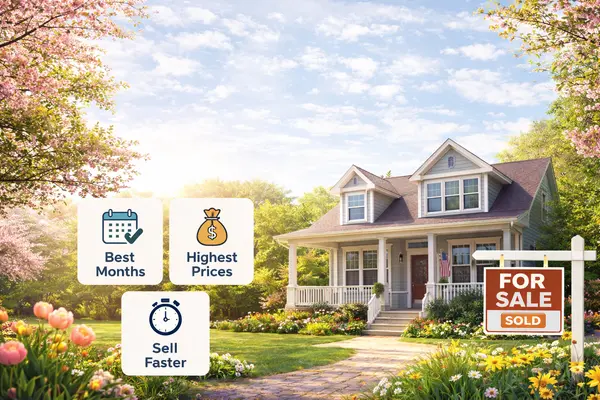
After years of a fierce seller's market, marked by multiple offers, waived contingencies, and rapid appreciation, Loudoun County is settling into a more normalized rhythm. Homes still sell, appreciation continues, and demand remains solid, but the frenzy has moderated. Buyers have more choices, more time to decide, and more negotiating leverage than they have had since before the pandemic. Timing your listing well still matters, and our guide to the best time to sell in Loudoun County shows how the seasons play into 2026 conditions.
This does not mean the market has weakened; it means it is healthier. Sustainable 3–5% annual appreciation is preferable to unsustainable 15%+ spikes that price out local workers and raise bubble concerns. The fundamentals supporting Loudoun demand, employment growth, excellent schools, quality of life, proximity to D.C., and continued tech-sector expansion, remain firmly intact.
Key market indicators
Days on market: averaging 25–40 days for well-priced properties versus 10–20 days during peak years, reflecting healthier balance rather than weakness.
Sale-to-list price ratio: hovering around 98–100% for most properties, down from 102–105%+ during multiple-offer peaks. Homes sell at fair market value rather than inflated bidding-war prices.
Months of inventory: roughly 2–3 months in most segments, still technically a seller's market (under 6 months) but with meaningfully more buyer options than the sub-1-month conditions of recent years.
Absorption rate: properties in the core $550,000–$900,000 range continue selling quickly; luxury ($1.2M+) and condos face longer timelines.
Regional context
Loudoun's performance is best understood within the broader Northern Virginia and national picture. The D.C. metro continues outperforming many national markets thanks to federal employment stability, defense-contractor presence, and tech-sector growth. Within the region, Loudoun benefits from its tech-corridor positioning, top schools, and lifestyle amenities, factors that sustain demand even when broader markets soften.
Price Trends and Projections
Price dynamics vary significantly by segment, location, and property type, which makes generalized statements about "the market" potentially misleading.
Overall price movement
Loudoun County median home prices continue rising but at moderated rates. After years of double-digit annual appreciation, 2026 is seeing 3–5% growth in most segments, healthy and sustainable rather than a sign of weakness. Prices continue setting new records, just at a more measured pace.
The median single-family price has climbed past $700,000, with wide variation by location. Eastern Loudoun (Ashburn, Brambleton) commands premiums with medians exceeding $800,000, while western Loudoun offers more value with medians closer to $600,000–$700,000 depending on the area.
Segment-specific price trends
Entry-level ($400,000–$550,000): limited inventory, mostly townhomes and smaller condos, keeps prices firm with steady appreciation. First-time buyers face competitive conditions here.
Core market ($550,000–$900,000): the most active segment and the majority of transactions. Moderate appreciation (3–5%) with healthy demand from move-up buyers and relocating professionals.
Upper-mid ($900,000–$1,200,000): more measured activity, longer days on market, and greater price sensitivity. Buyers have options and negotiate accordingly.
Luxury ($1,200,000+): extended timelines (60–120+ days typical), increased inventory, and selective buyers. Price reductions are more common when initial pricing misses the mark.
Price forecast considerations
Several factors will shape price trajectories through 2026: interest-rate movements (decreases accelerate growth, sustained highs maintain moderation), inventory levels (more supply moderates prices, tightening reignites competition), economic conditions (a recession pressures prices, continued health supports appreciation), and local employment (tech-sector and federal-contractor activity directly impact demand).
| Price Segment | 2026 Appreciation | Market Conditions |
|---|---|---|
| Entry-level ($400K–$550K) | 4–6% | Competitive |
| Core market ($550K–$900K) | 3–5% | Healthy seller's market |
| Upper-mid ($900K–$1.2M) | 2–4% | Balanced |
| Luxury ($1.2M+) | 0–3% | Buyer's market |
Conditions vary by neighborhood, price point, and property. Our free Home Valuation gives you a professional, street-level read on where your specific home stands in today's Loudoun market. Response within 24 hours.
Inventory and Supply Dynamics
Inventory is perhaps the most watched metric in Loudoun County real estate, and the gradual improvement in supply is reshaping buyer-seller dynamics.
The inventory story
Loudoun faced acute shortages in recent years, months when only 300–500 homes were available countywide, creating intense competition and rapid price escalation. Inventory has gradually improved, with active listings now typically ranging from 700 to 1,200+ depending on season, giving buyers meaningfully more options.
Current inventory still sits below historical norms, though. Pre-pandemic Loudoun typically had 2,000–3,000+ active listings, representing 4–6 months of supply. Today's 2–3 months, while improved from crisis-level lows, still constitutes a seller's market by traditional definitions.
Why inventory remains constrained
Rate lock-in effect: homeowners who refinanced or bought at 3–4% are reluctant to sell and face 6–7% on their next purchase. This "golden handcuffs" phenomenon keeps potential sellers in place.
Equity-rich but payment-sensitive: many owners have substantial equity but would face much higher monthly payments on comparable replacements, discouraging moves.
Limited new construction relative to demand: builders are active, but new construction does not fully offset constrained resale inventory.
Continued population growth: Loudoun keeps attracting new residents, tech workers, federal employees, and families seeking excellent schools, absorbing available inventory.
Inventory variations by segment
Entry-level: most constrained; limited options in the $400,000–$550,000 range keep competition fierce for first-time buyers. Core market: improving options in the $550,000–$900,000 range. Luxury: more abundant; homes over $1.2M have higher inventory relative to demand, giving buyers leverage. New construction: providing meaningful supply, particularly in growth areas like Brambleton, Stone Ridge, and developing western sections.
Interest Rate Impact
Interest rates remain the dominant external factor influencing Loudoun County's market in 2026.
Rate-driven market volatility
Buyer activity closely tracks rate movements. When rates dip toward 6%, showing activity increases, offers flow, and competition heats up. When rates push toward 7%+, activity moderates, properties sit longer, and sellers face more negotiation. This sensitivity creates short-term volatility, a property might draw multiple offers one month and struggle the next, driven more by rates than any change in the home or local conditions.
Affordability mathematics
At Loudoun price points, rate changes have significant payment impacts. On a $700,000 home with 20% down ($560,000 loan):
- At 6.0%: about $3,357/month principal and interest
- At 6.5%: about $3,540/month (+$183)
- At 7.0%: about $3,726/month (+$369 vs. 6%)
- At 7.5%: about $3,916/month (+$559 vs. 6%)
These differences affect qualification (debt-to-income ratios) and buyer psychology, directly shaping how many buyers can compete at various price points.
Rate outlook implications
Rates decline to 5.5–6%: significant demand release as sidelined buyers enter, likely reigniting competition and accelerating appreciation. Rates stable at 6–6.5%: current conditions persist, with moderate appreciation and improving inventory. Rates rise above 7%: reduced activity, longer days on market, and more seller flexibility required on price and terms.
Strategic implications
For sellers: monitor the rate environment when timing listings, since listing during dips can generate stronger buyer activity. For buyers: be ready to act quickly when rates dip, because competition increases fast, and consider rate-lock timing and buydown options carefully.
Shifting Buyer Demographics
Understanding who is buying in Loudoun County reveals important trends shaping demand and neighborhood preferences.
Primary buyer segments
Tech professionals: a substantial segment drawn by tech-corridor employment (data centers, tech companies, contractors), often with strong incomes, remote flexibility, and a priority on home-office space and connectivity.
Federal employees and contractors: a stable source who value Loudoun's proximity to D.C. while getting more space and value than closer-in areas.
Move-up families: households upgrading from starter homes or relocating from higher-cost areas (D.C., California, New York) for schools, space, and suburban lifestyle.
Relocating professionals: corporate relocations from across the country, particularly those following employers to the D.C. metro or using remote flexibility to choose high-quality-of-life locations.
Empty nesters and downsizers: long-time residents transitioning from larger family homes to lower-maintenance properties, often staying local to remain near family and community.
Changing buyer preferences
Home-office requirements: dedicated office space has moved from "nice to have" to a requirement for many; homes with existing or convertible offices command premiums. Outdoor-living emphasis: larger lots and access to trails and nature have gained importance, benefiting western Loudoun and homes backing to open space. Hybrid-work flexibility: buyers balance commute with remote days, favoring homes with Metro access plus work-from-home amenities. Multi-generational features: interest in in-law suites, separate entrances, and flexible floor plans has increased.
Geographic origin shifts
Buyer origins have evolved: continued in-migration from higher-cost metros (San Francisco, Seattle, New York), move-ups from Fairfax County seeking more space at similar prices, relocations from further-out areas chasing better schools and amenities, and international buyers, particularly in tech, drawn by Dulles-corridor opportunities.
Tech Sector and Data Center Influence
Loudoun County's position as "Data Center Alley," hosting more data-center capacity than anywhere else globally, continues shaping local real estate. For the full picture, see our deep dive on commercial real estate and the data-center economy in Loudoun County.
Data-center economic impact
The industry generates enormous local activity: high-paying jobs (operations, construction, engineering, support services), substantial tax revenue that supports county services and schools, and downstream business across hospitality, retail, and professional services. This engine sustains housing demand across all segments and helps keep the homeowner tax rate the lowest in Northern Virginia.
Geographic concentration effects
Data centers concentrate along the Route 28 corridor and Ashburn, creating localized impacts. Proximity to data-center employment supports demand in nearby communities. Expansion also creates tensions around land use, with some communities resisting additional industrial development, which can affect future supply dynamics.
Broader tech-sector presence
Beyond data centers, Loudoun benefits from cloud computing, cybersecurity, government-technology contractors, and emerging AI-related companies. Tech employment generally supports higher household incomes, sustaining demand for mid-to-upper price-point housing.
Potential risks
Tech concentration also creates risk exposure. A significant contraction, layoffs, reduced expansion, shifting investment, would pressure local demand. Diversification through healthcare, education, and other sectors provides some buffer, but tech remains the dominant driver.
Metro Silver Line Effect
The Metro Silver Line's extension to Ashburn is maturing as an influence on Loudoun County valuations, and the effect is measurable at the neighborhood level, as our look at how the new Silver Line stops are affecting local property values explains.
Station-area premium
Properties within walking distance or easy access of stations (Innovation Center, Loudoun Gateway, Ashburn) command growing premiums. Direct Metro access to Tysons, Arlington, and D.C. appeals to commuters, especially those with hybrid schedules requiring periodic office presence.
Development around stations
Transit-oriented development continues around Silver Line stations, adding new housing (apartments, condos, townhomes) plus retail and office space. This provides options at various price points while adding density to these corridors.
Changing commute calculations
The Metro fundamentally changes commute math for residents working in D.C. or Tysons. Homes that once faced grueling highway commutes now offer a rail alternative, though the trade-off involves fares, parking, and transit time. For many professionals, the option adds meaningful value, supporting demand in Metro-accessible areas.
Understanding your net proceeds is essential for planning your next move. Our seller net sheet shows exactly what you would walk away with after commission, transfer taxes, and closing costs.
Neighborhood-Level Trends
Market conditions vary significantly across Loudoun County's diverse communities, so understanding these micro-market dynamics is essential.
Eastern Loudoun: continued strength
Ashburn remains the market leader, with strong demand from tech employment, Metro access, and an established reputation; premium school feeders (Riverside, Rock Ridge) command the highest valuations, and the core $600,000–$900,000 range stays competitive. Brambleton pairs town-center development, resort-style amenities, and premium schools with new construction that adds inventory but also competes with resale. Broadlands offers mature landscaping, strong schools, and a proven track record that attracts move-up families. One Loudoun delivers urban-style, walkable living that appeals to young professionals and empty nesters.
Central Loudoun: value positioning
Leesburg combines historic charm with newer developments and town-center walkability, generally at moderate appreciation and good value relative to eastern Loudoun. South Riding and Stone Ridge are strong family-focused communities with quality amenities, schools, and newer inventory that attracts buyers priced out of eastern Loudoun.
Western Loudoun: lifestyle premium
Purcellville, Round Hill, and western areas draw buyers seeking small-town charm, larger lots, and rural character; remote work has supported demand, and unique properties command premiums even if timelines run longer. Horse country and estate areas are a niche market with limited but specific demand, stable values for quality properties, and a need for patient marketing.
School-district impact
School boundaries continue driving significant valuation differences within close geographic areas. Premium high-school feeders can command 10–20% premiums over comparable homes in other boundaries, and families timing purchases around enrollment create seasonal demand patterns.
Property Type Performance
Different property types are experiencing varying conditions in 2026.
Single-family detached: strongest performance
Single-family homes continue outperforming other types on sustained family demand, limited inventory, and post-pandemic space preferences. The $550,000–$900,000 range moves quickly; above $1.2 million faces more resistance. Homes with modern updates, offices, and quality outdoor space command premiums.
Townhouses: solid middle ground
Townhomes offer affordability while providing more space than condos. Performance varies by location and community: newer townhomes in premier communities sell well, while older ones in less desirable spots face more competition, particularly from new construction offering incentives.
Condominiums: facing headwinds
Condos face the toughest conditions: a limited buyer pool, new-construction competition, HOA-cost concerns, and preference shifts toward more space. Days on market exceed single-family averages, and pricing accuracy is especially critical since overpriced condos sit.
Luxury properties: extended timelines
Properties above $1.2 million face extended marketing (60–120+ days typical) as the buyer pool narrows. They require exceptional presentation, accurate pricing, and patient marketing; sellers expecting quick sales at premium prices often face reality checks.
| Property Type | Avg. Days on Market | Market Outlook |
|---|---|---|
| Single-Family ($550K–$900K) | 20–35 days | Strong |
| Single-Family ($900K–$1.2M) | 35–50 days | Balanced |
| Townhouse | 30–45 days | Stable |
| Condo | 45–70 days | Challenging |
| Luxury ($1.2M+) | 60–120+ days | Buyer's market |
New Construction Impact
Builder activity in Loudoun County is significantly influencing resale-market dynamics.
Builder incentives
Builders are offering substantial incentives to move inventory: rate buydowns (often to 4.99–5.5% versus market rates of 6.5%+), closing-cost assistance ($10,000–$30,000+), design-center credits, and price adjustments. These create competitive pressure on resale, particularly in communities with active building.
Resale competition
Resale sellers near new construction face a challenge: buyers can get new homes with modern features, warranties, and financing incentives, often at similar or lower effective prices. Resale sellers must compete on value, location advantages, mature landscaping, or price.
Geographic concentration
New construction concentrates in growth areas: western Brambleton, Stone Ridge expansion, and developing western sections. Established communities without new construction (Ashburn Farm, Broadlands core) face less builder competition, which can support resale values.
Long-term implications
New construction adds to overall housing stock, gradually improving inventory. It also expands the suburban footprint, affecting traffic, school capacity, and infrastructure, factors that can influence valuations across the county.
Seller Strategies for 2026
Success in 2026 requires strategic adaptation to current conditions. Our full Loudoun County home-selling guide ties the whole process together, from pricing to closing.
Pricing accuracy is critical
With buyers having more options and time, overpricing is punished more severely than during the frenzy. Homes priced accurately on current comps attract attention; overpriced homes sit, accumulate days on market, and often sell for less than accurate initial pricing would have achieved. Work with agents who understand current conditions, not those who promise the highest price to win the listing.
Presentation matters more
During peak markets, buyers overlooked imperfections to secure any available home. Now they compare options and choose homes that show best. Professional photography, thorough cleaning, minor repairs, and strategic staging deliver meaningful ROI through faster sales and stronger offers.
Timing considerations
Spring (March–May) remains the optimal selling season with peak buyer activity; fall provides a solid secondary window; winter sales are achievable but usually need longer timelines or more aggressive pricing. Listing when rates dip can generate stronger activity.
Flexibility on terms
Sellers who can accommodate buyer needs, closing dates, contingencies, minor repairs, often secure better outcomes than rigid negotiators. In a more balanced market, reasonable flexibility can be the difference between closing and losing a buyer.
Reset your commission, too
The same normalization that rewards accurate pricing makes commission worth a second look. The Jamil Brothers Realty Group deliver full-service marketing, pricing, and negotiation at a 1.5% Commission Real Estate NoVA listing fee instead of the traditional 3%, saving thousands in a market where every dollar of equity matters. When you are ready, you can sell your Loudoun County home with a team that treats your equity like its own.
On a $750,000 Loudoun home, the listing-side difference alone is roughly $11,250. Run your own numbers below.
Seller Savings Calculator
How much more do you keep with our 1.5% listing fee?
Select your home's estimated value to see your real net proceeds, side by side.
Traditional Agent (3%)
Our Fee, Only 1.5%
Extra in your pocket
$6,000
vs. a traditional 3% listing agent, with zero reduction in service or marketing.
Traditional Agent (3%)
Our Fee, Only 1.5%
Extra in your pocket
$7,500
vs. a traditional 3% listing agent, with zero reduction in service or marketing.
Traditional Agent (3%)
Our Fee, Only 1.5%
Extra in your pocket
$9,000
vs. a traditional 3% listing agent, with zero reduction in service or marketing.
Traditional Agent (3%)
Our Fee, Only 1.5%
Extra in your pocket
$11,250
vs. a traditional 3% listing agent, with zero reduction in service or marketing.
Traditional Agent (3%)
Our Fee, Only 1.5%
Extra in your pocket
$15,000
vs. a traditional 3% listing agent, with zero reduction in service or marketing.
Estimates only. Closing costs vary. Buyer's agent commission is negotiable.
Buyer Strategies for 2026
Buyers enjoy more leverage than in recent years but must still navigate competitive conditions in desirable segments.
Preparation remains essential
Mortgage pre-approval, clear budget parameters, and an understanding of your target market remain prerequisites. You have more time than during the frenzy, but desirable properties in competitive segments still attract multiple interested buyers.
Negotiate where appropriate
Current conditions support negotiation, requesting inspections, asking for repairs or credits, offering below asking. But leverage varies by segment: luxury buyers have substantial room, while buyers in the competitive $550K–$850K range should temper expectations. Read each situation individually rather than assuming universal buyer power.
Consider new construction
Builder incentives, rate buydowns and closing-cost assistance, can make new construction financially attractive. Evaluate total cost of ownership including incentives versus resale. For some buyers new construction offers better value; for others, resale locations or features justify a different choice.
Monitor interest rates
Rate movements affect both purchasing power and competition. Rate drops bring more buyers into the market and increase competition, so staying informed helps you anticipate conditions and time decisions.
Work with local expertise
Loudoun's micro-markets vary significantly. An agent with deep local knowledge helps identify value, understand neighborhood-specific dynamics, and craft a winning strategy for your situation.
Browse current listings and work with a local team that reads today's micro-markets, from Silver Line premiums to builder-incentive math, so you buy with confidence.
Investment Outlook
For investors, Loudoun County presents both opportunities and considerations in 2026.
Rental-market strength
Rental demand remains strong, driven by high rates keeping some would-be buyers renting, continued employment growth attracting new residents, and corporate relocations needing temporary housing. Rental rates have stabilized after significant increases but remain historically elevated.
Cash-flow challenges
At current prices and rates, positive cash flow on new purchases is challenging. Many investment properties rely on appreciation rather than cash flow to justify the buy. Investors should run conservative numbers and hold reserves for negative-cash-flow periods.
Long-term appreciation thesis
Loudoun's fundamental drivers, employment growth, excellent schools, quality of life, and limited land, support long-term appreciation. Investors with long horizons and the ability to weather short-term swings may find current conditions attractive for acquisition.
HOA and rental restrictions
Many Loudoun communities restrict rentals through HOA rules, so investors must verify rental permissions before purchasing. Properties in rental-friendly communities or without HOA restrictions command premiums from investor buyers.
Risks and Challenges Ahead
While fundamentals remain positive, several risks warrant monitoring.
Interest-rate uncertainty
Sustained high rates or unexpected increases could further pressure buyer activity and values. The market has adjusted to current rates, but significant upward moves would create new challenges.
Tech-sector vulnerability
Heavy reliance on tech employment creates exposure to industry downturns. Significant layoffs, reduced expansion, or AI-related workforce changes could impact local demand.
Affordability constraints
Loudoun has become expensive, potentially pricing out workers needed for local services and creating workforce challenges. Long-term affordability constraints could affect economic diversity and growth sustainability.
Infrastructure pressure
Continued growth strains schools, roads, and services. Traffic congestion, school-capacity issues, and infrastructure costs could affect quality of life and valuations in certain areas.
National economic factors
Recession, financial-market disruption, or policy changes affecting federal employment or defense spending could ripple through the local market. Loudoun is not immune to broader economic forces. For homeowners who prioritize certainty over maximizing price, a cash offer can provide a guaranteed sale regardless of market swings, typically at some discount to full market value.
Explore Loudoun County Communities
Market conditions vary street by street, so it helps to start with your specific area. Tap any community below to explore homes, market data, and neighborhood detail.
Explore Loudoun County
Browse cities and communities across Loudoun
Final Thoughts: Navigating 2026's Market
Loudoun County's 2026 real estate market represents a transition from extraordinary conditions to healthier normalization, still fundamentally strong, still appreciating, but with more balanced dynamics that serve both buyers and sellers better than the frenzy of recent years. The key themes: moderate appreciation (3–5%) replaces unsustainable double-digit gains; improved inventory provides more choices without flooding the market; interest rates remain the dominant external factor; segment performance varies widely; tech and data-center influence continues supporting demand; Silver Line access commands a growing premium; new-construction incentives affect resale; and accurate pricing plus quality presentation matter more than during the frenzy.
For sellers, the message is clear: you still have advantages, limited inventory, continued demand, record prices, but success requires strategic preparation, accurate pricing, and professional execution. For buyers, you have more options and leverage than recent years, yet competitive segments remain competitive, so preparation, patience, and local expertise position you to succeed. As DMV real estate professionals with more than $500 million in regional transaction experience, The Jamil Brothers Realty Group help you make decisions aligned with your specific circumstances and goals.
Know your home's current market position and exactly what you would net at 1.5% versus a traditional 3% agent, at no cost or obligation. Data-driven local expertise, backed by 840+ homes sold. Call (703) 782-4830.
Frequently Asked Questions
Is Loudoun County a good place to buy a home in 2026?
Yes. Loudoun remains attractive for buyers seeking excellent schools, quality of life, strong employment, and long-term appreciation. The 2026 market offers more inventory choices, less competition (though still competitive in desirable segments), and more negotiating leverage than recent years, while the fundamentals supporting demand, tech employment, federal contractors, top schools, and D.C. proximity, remain intact. Be realistic about prices, prepare financially for competitive segments, and work with a knowledgeable local agent to navigate varying micro-markets.
Are Loudoun County home prices going up or down in 2026?
Prices continue rising but at moderated rates, typically 3 to 5% annual appreciation versus the 10 to 15%+ gains of peak years. This is sustainable appreciation, not decline; prices are still setting records, just more gradually. Segment performance varies: entry-level and core market ($400K to $900K) show the strongest appreciation (4 to 6%), while luxury ($1.2M+) sees minimal gains or flat conditions. Direction could shift with rates, the economy, and employment, but the current trajectory suggests continued moderate growth.
Is now a good time to sell my Loudoun County home?
Conditions remain favorable for sellers: inventory is below historical norms, demand continues for well-priced homes, and prices are at or near record levels. The market has normalized from the peak, though, so expect fewer multiple-offer situations, more negotiation, and greater importance of accurate pricing and quality presentation. Core-market homes ($550K to $900K) sell well year-round; luxury requires patience; all homes benefit from spring and summer timing. A local agent can assess your specific property's position.
Which Loudoun County neighborhoods are best for investment?
It depends on strategy and time horizon. For appreciation, eastern Loudoun (Ashburn, Brambleton) near tech employment and Metro access has historically shown the strongest gains. For rental income, look at communities allowing rentals without restrictions, near employment centers and good schools. For value, South Riding, Stone Ridge, and Leesburg offer lower entry prices with solid fundamentals. Verify HOA rental restrictions before buying, and consider property-tax rates and school boundaries. Long-term investors with patience may find opportunities as the market stabilizes.
How do interest rates affect Loudoun County real estate?
Rates significantly impact this high-price-point market. At current levels (6 to 7%), purchasing power is well below the 3 to 4% era. Rate movements create volatility: dips bring more buyers and increase competition; increases reduce activity and extend timelines. On a typical $700,000 home, each 0.5% change affects monthly payments by roughly $150 to $200, meaningful for qualification and psychology. Forecasts suggest potential modest decreases through 2026, which would likely increase buyer activity and competition.
How long does it take to sell a house in Loudoun County in 2026?
Timelines vary by segment, type, and location. Well-priced single-family homes in the core $550K to $900K range typically sell in 20 to 35 days; upper-mid ($900K to $1.2M) averages 35 to 50 days; luxury ($1.2M+) often needs 60 to 120+ days; condos and townhomes average 30 to 70 days. These are up from peak-frenzy periods (7 to 14 days) but remain healthy by historical standards. Accurate pricing and quality presentation are the most controllable factors affecting speed.
Should I buy new construction or resale in Loudoun County?
Both have merit in 2026. New construction offers builder incentives (rate buydowns to 4.99 to 5.5%, closing-cost credits), modern floor plans, warranties, and no competing buyers. Resale offers established neighborhoods with mature landscaping, potentially better locations, known community dynamics, and sometimes lower effective prices in premium areas without active building. Evaluate total cost including incentives, compare similar products in your target areas, and weigh move-in-ready against waiting for construction.
What's happening with the luxury market in Loudoun County?
The luxury market ($1.2M+) faces more challenging conditions than the broader market. Inventory has increased, days on market average 60 to 120+, and appreciation has stalled or turned slightly negative in some segments. The limited buyer pool creates a buyer's market where purchasers have leverage. Luxury sellers should expect extended timelines, potential price negotiations, and the importance of exceptional presentation and accurate pricing. Rate-sensitive luxury buyers may re-enter if rates fall, but current conditions favor patient buyers.
How do Loudoun County schools affect home values?
School assignments significantly impact values, creating 10 to 20% premiums for homes in premium high-school feeder patterns versus comparable homes in other boundaries. This school premium persists regardless of broader conditions, since families prioritize educational quality and pay accordingly. Boundary lines create dramatic differences between otherwise similar adjacent properties. Buyers with school-age children should research current boundaries (which can change) and understand the premium they are paying; sellers in premium boundaries should emphasize the advantage.
What impact does the Metro Silver Line have on Loudoun County real estate?
The Silver Line extension to Ashburn has established a measurable premium for homes with convenient station access, particularly appealing to hybrid workers needing periodic office access to D.C. or Tysons. Transit-oriented development around stations is adding housing and retail. The Metro changes commute math for some professionals, supporting demand in accessible areas, though parking costs and transit time mean benefits vary by individual, the premium is most meaningful for those who will actually use the system.
How do I choose the best real estate agent in Loudoun County?
Select an agent with demonstrated Loudoun expertise, current market knowledge, and a track record in your price range and location. Weigh local expertise, current activity in today's market, communication style, marketing capability, and a competitive commission structure that does not sacrifice service. The Jamil Brothers Realty Group bring extensive Loudoun experience across Ashburn, Brambleton, South Riding, Leesburg, and surrounding areas, with data-driven pricing and a 1.5% full-service listing fee that saves sellers thousands versus traditional rates.
Will there be a housing crash in Loudoun County?
Current indicators do not suggest an imminent crash. Key differences from 2008: lending standards remain strict, homeowner equity is substantial, inventory remains constrained rather than oversupplied, and local employment fundamentals remain positive. More likely scenarios are continued moderate appreciation (3 to 5%), temporary softness if rates spike, or modest corrections in overheated segments like luxury. Risks exist, a severe recession or major tech contraction could pressure values, so make decisions based on your personal timeline and needs rather than trying to time peaks or bottoms.
Market Terms Glossary
Days on Market (DOM)
Number of days a property is actively listed before going under contract. A key gauge of market pace and pricing accuracy.
Months of Inventory
How long current inventory would last at the current sales pace. Under 6 months is a seller's market; over 6 is a buyer's market.
Absorption Rate
The rate at which available homes sell in a market, used to calculate months of inventory and assess balance.
Sale-to-List Price Ratio
Final sale price divided by original list price, showing whether homes sell above, at, or below asking.
Median Price
The middle price point where half of homes sold for more and half for less, less skewed by extremes than an average.
Rate Lock-In Effect
When homeowners with low mortgage rates are reluctant to sell and face higher current rates, constraining inventory.
Rate Buydown
A payment to the lender to reduce the interest rate, commonly offered as a builder incentive on new construction.
Appreciation
The increase in a property's value over time, expressed as a percentage change from a previous value.
This market analysis provides educational information based on current conditions, historical patterns, and professional real estate experience. Real estate markets are inherently unpredictable, and actual future performance may differ from projections. Statistics cited represent typical ranges and may vary from current conditions. This is not investment advice or a guarantee of outcomes. Consult licensed real estate and financial professionals regarding your specific situation. Advertising provided by Samson Properties, Chantilly, VA. Team: The Jamil Brothers Realty Group. Equal Housing Opportunity.
Explore More
Browse Every Corner of the DMV Market
Whether you're searching by budget, neighborhood, or buying situation — find exactly what you need below.
Virginia Homes by Budget
Washington DC Homes by Budget
Maryland Homes
Explore Fairfax County & Surrounding Northern Virginia
Ready to Make a Move?
Full-Service · No Tradeoffs
List for 1.5% & Keep More Equity
Professional photography, drone video, 3D tours, and expert negotiation — all included. On an $800K home, that's $12,000 more in your pocket vs. a 3% agent.
See the 1.5% Program →Need Speed or Certainty?
Get a No-Obligation Cash Offer
Skip the showings, skip the contingencies. If timing or condition matters more than top dollar, a cash offer may be the right fit. We'll walk you through every option.
Explore Cash Offers →
Categories
- All Blogs (1228)
- Ashburn (3)
- Buyer Guide (8)
- Buying a home (2)
- Buying Strategies (30)
- festivals (1)
- General Blog (67)
- Market Intelligence (29)
- Market Updates (8)
- Notable Properties For Sale (32)
- Real Estate Tips, News, and More (385)
- Seller Guide (2)
- Seller Guides (60)
- Selling Your Home (523)
- Sterling (6)
- Top Realtors in Northern Virginia (58)
Recent Posts



Let's Connect