
Selling a Historic Townhouse in Georgetown, DC: What Sellers Should Know
Selling a Historic Townhouse in Georgetown, DC: What Sellers Should Know
Updated March 2026 · 18-minute read
Georgetown is one of the most coveted residential addresses in Washington, DC — and selling a historic townhouse here is nothing like listing a typical home. With a median townhouse listing price hovering around $2.5 million and some of the strictest historic preservation requirements in the country, getting a Georgetown sale right requires specialized knowledge, careful preparation, and a pricing strategy that resonates with a sophisticated buyer pool.
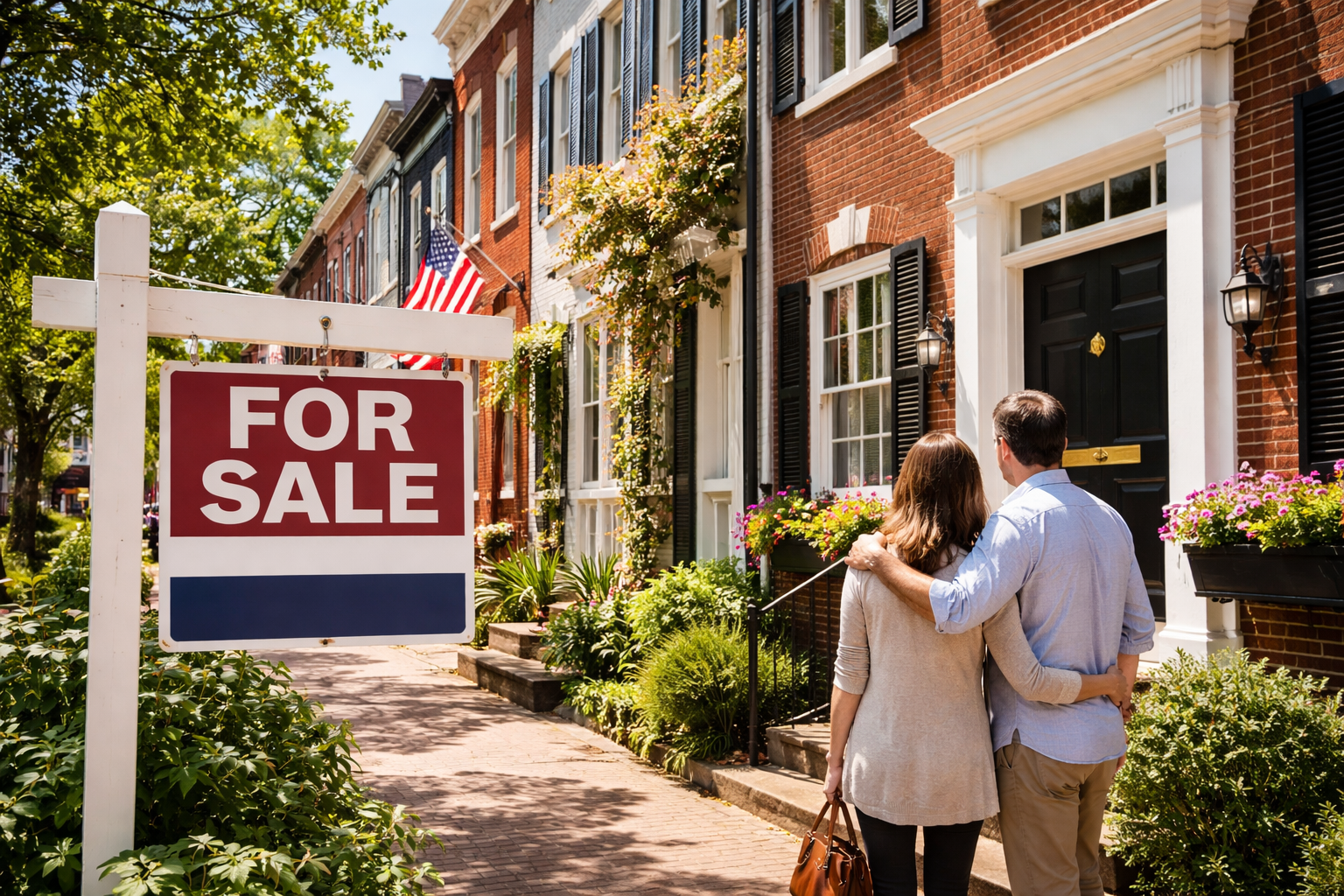
This guide walks you through every step: from understanding the Old Georgetown Board review process to navigating DC's transfer taxes, staging a centuries-old property for today's luxury buyers, and ultimately netting the most from your sale. Whether your townhouse dates to the Federal period or the Victorian era, the principles here will help you sell smarter.
Quick Answer
Selling a historic townhouse in Georgetown requires navigating the Old Georgetown Board's exterior review process, pricing strategically within a luxury market where the median sale price is approximately $1.8 million, and understanding that DC sellers typically pay a 1.45% transfer tax at closing. Homes in Georgetown spend an average of 45–100+ days on market depending on condition and price point, so preparation and patience are both critical.
Key Takeaways
- Georgetown's historic district status means exterior changes must be approved by the Old Georgetown Board (OGB) — and buyers will scrutinize what's been done to your home.
- The median sale price for Georgetown homes reached approximately $1.8M in late 2025, with townhouses listing around $2.5M.
- DC sellers typically pay a transfer tax of 1.45% on sales above $400,000 — on a $2M townhouse, that's roughly $29,000.
- Luxury buyers in Georgetown expect updated mechanicals behind preserved facades — original character plus modern comfort.
- Pricing strategy matters more here than almost anywhere: overpricing can lead to 100+ days on market while strategic pricing can generate multiple offers within weeks.
- Working with an agent experienced in historic properties and DC's regulatory landscape can save you tens of thousands and months of delays.
Table of Contents
- Georgetown Market Snapshot for 2026
- Understanding Georgetown's Historic District Rules
- The Old Georgetown Board: What Sellers Need to Know
- Pricing a Historic Townhouse Correctly
- What Luxury Buyers Expect in Georgetown
- Preparing Your Historic Townhouse for Sale
- Closing Costs and Transfer Taxes in DC
- Real Estate Commissions and Saving on Fees
- Selling Timeline: Week by Week
- Common Mistakes Georgetown Sellers Make
- Alternatives to a Traditional Sale
- Georgetown Micro-Neighborhoods and Pricing
- Frequently Asked Questions
- Glossary of Key Terms
Georgetown Market Snapshot for 2026
Georgetown continues to rank among Washington, DC's most expensive residential neighborhoods. The luxury market here is driven by constrained supply — the historic district encompasses roughly 4,000 buildings across just 260 acres — and persistent demand from diplomats, lobbyists, executives, and international buyers seeking proximity to power.
Key Numbers At-a-Glance
| Median Sale Price (Georgetown) | ~$1.8M |
| Median Townhouse Listing Price | ~$2.5M |
| Median Price per Sq. Ft. | ~$716–$900 |
| Average Days on Market | 45–102 days |
| Sale-to-List Ratio | ~97% (avg ~3% below list) |
| Top-End Sales | $20M+ (estates) |
| Compete Score (Redfin) | 58/100 (somewhat competitive) |
Unlike many DC neighborhoods where condos dominate, Georgetown's townhouse stock is the primary draw. Renovated rowhouses with garage parking and outdoor space command the highest premiums. A beautifully restored four-story brick home along the waterfront recently sold for 90% of its list price after about 50 days on market — a timeline that reflects the patience luxury sales require here.
Georgetown is also experiencing notable development activity in 2026. New luxury residential projects like EastBanc's Miradoro (seven residences including penthouses up to 3,600 sq. ft.) and new hotel openings are adding energy to the neighborhood without diluting its historic character. For sellers, this means increased foot traffic and buyer interest in the neighborhood overall.
Georgetown Price Tiers — Where Townhouses Land
Under $1M (condos/small units)
$1M – $2M (entry-level townhouses)
$2M – $5M (renovated historic townhouses)
$5M+ (estates, waterfront, Book Hill)
Bar length represents approximate share of Georgetown's townhouse market activity.
Want to know what your Georgetown townhouse is currently worth? Request a free home valuation based on recent comparable sales in your specific block and micro-neighborhood.
Understanding Georgetown's Historic District Rules
Georgetown holds the distinction of being DC's first historic district and only the sixth in the entire United States. The Old Georgetown Act of 1950 established federal oversight of exterior construction in the neighborhood — a layer of regulation that affects virtually every property transaction here.
As a seller, this matters because buyers will investigate whether past renovations received proper approvals, whether current exterior conditions comply with preservation standards, and whether any planned improvements will face regulatory hurdles. An unpermitted exterior alteration can become a deal-breaker or a leverage point for price reductions.
What the Historic Designation Actually Covers
The historic review process focuses specifically on exterior elements visible from public spaces. Interior renovations — kitchen remodels, bathroom upgrades, finished basements — generally do not require historic board approval. This is a crucial distinction that many sellers misunderstand.
What Requires Old Georgetown Board Review
| ✅ Window replacement (material, style, proportion) | ✅ Roof changes visible from the street |
| ✅ Facade paint color changes | ✅ New fencing or gate installation |
| ✅ Rear additions visible from public areas | ✅ HVAC equipment placement (exterior) |
| ✅ Signage (stricter rules in Georgetown) | ✅ Deck or patio additions |
| ❌ Interior kitchen/bath remodels | ❌ Interior structural changes |
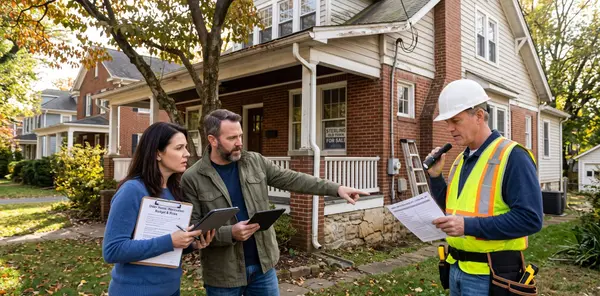
Before listing, gather documentation for any exterior work completed during your ownership. Approved permits, OGB approval letters, and stamped drawings all strengthen your position. If you completed exterior work without approval, consult with a preservation attorney about your options before going to market.
The Old Georgetown Board: What Sellers Need to Know
The Old Georgetown Board operates under the Commission of Fine Arts and conducts monthly design reviews of proposed exterior projects. While the OGB process primarily affects renovators and buyers planning improvements, it directly impacts sellers in several ways.
How the OGB Affects Your Sale
Savvy Georgetown buyers — and their attorneys — will request permit histories. They want to confirm that any modifications to your home's exterior received proper authorization. The review involves multiple agencies: the OGB for design approval, the DC Department of Consumer and Regulatory Affairs (now Department of Buildings) for building permits, and sometimes the Historic Preservation Review Board for additional local review.
Typical OGB Approval Timeline for Exterior Projects
This timeline matters for your sale because buyers who plan to renovate will factor it into their offer price and decision-making. A home that's already been sensitively updated with proper approvals is significantly more attractive than one requiring extensive review-board navigation.
Seller Tip: Credits Over Repairs
Because exterior repairs in Georgetown must comply with OGB guidelines, many sellers find it simpler to offer a buyer credit rather than completing repairs pre-sale. A straightforward roof repair elsewhere in DC becomes a multi-step approval process in Georgetown. Discuss this strategy with your agent early in the listing process.
How Much Will You Net After Selling in Georgetown?
DC transfer taxes, agent commissions, and repair credits add up quickly. See your estimated proceeds before listing.
Get Your Free Seller Net Sheet →Pricing a Historic Townhouse Correctly
Pricing a Georgetown townhouse is part art, part science. The wide range of sale prices — from $1.2M for smaller unrenovated rowhouses to $20M+ for grand estates — means comparable-sale analysis must be extremely precise. A three-block difference can shift value by hundreds of thousands of dollars.
Factors That Drive Georgetown Townhouse Pricing
| Factor | Impact on Price | Notes |
|---|---|---|
| Off-street parking | +$100K–$300K | Garage parking is extremely rare and commands huge premiums |
| Outdoor space (garden, deck, terrace) | +$75K–$200K | Private outdoor space is highly valued in Georgetown's dense layout |
| Updated mechanicals (HVAC, plumbing, electric) | +$50K–$150K | Buyers strongly prefer not navigating upgrades through OGB |
| Waterfront or canal views | +15–30% | Proximity to Georgetown Waterfront Park drives premium pricing |
| Period architectural details (original) | +5–15% | Original mantels, molding, and hardware are selling points |
| Unpermitted exterior work | −10–20% | Enforcement can include fines, stop-work orders, and required restoration |
The Overpricing Trap
Georgetown's luxury segment is particularly susceptible to stale listings. Recent data shows that the average listing age for Georgetown properties is around 100+ days — and properties that are even slightly overpriced can linger for months. Hot homes priced strategically can go pending in as few as 10 days, while overpriced listings may eventually sell for 10% or more below their original ask.
The lesson? Price for the market you have, not the market you wish existed. Your agent should provide a detailed comparative market analysis (CMA) focusing on sales within the last 90 days, ideally within a few blocks of your property.
What Luxury Buyers Expect in Georgetown
Georgetown attracts a specific buyer profile: high-net-worth professionals, foreign diplomats, embassy staff, university-affiliated executives, and second-home purchasers drawn to Washington's cultural and political cachet. Understanding their expectations is key to positioning your townhouse.
What Buyers Love
- Original Federal/Georgian architectural details preserved
- Modern kitchen with high-end appliances behind a historic facade
- Updated HVAC, plumbing, and electrical systems
- Garage or off-street parking
- Private garden, courtyard, or rooftop terrace
- Proximity to shops, dining, and waterfront
- Clean permit history with OGB documentation
What Turns Buyers Off
- Outdated wiring (especially knob-and-tube) or old plumbing
- Poorly executed "modern" renovations that strip character
- No parking and no nearby permit options
- Unresolved OGB violations or unpermitted work
- Foundation or structural issues common in 18th/19th century construction
- Dark, segmented floor plans with no path to open them up
- Deferred maintenance on masonry, roofing, or windows
The golden formula in Georgetown is "preserved character, modern comfort." Buyers will pay a significant premium for a townhouse that retains its original mantels, wide-plank floors, and arched doorways while offering a renovated kitchen, updated bathrooms, efficient climate control, and smart home integration behind the scenes.
Thinking About Selling Your Georgetown Townhouse?
List with a full-service team for just a 1.5% listing fee — with no reduction in marketing, negotiation, or representation quality.
Learn About Our 1.5% Listing Fee →Preparing Your Historic Townhouse for Sale
Preparation in Georgetown goes beyond typical staging. The condition of your home's historic elements, the documentation of past improvements, and the presentation of its unique story all factor into buyer interest and offer strength.
Pre-Listing Preparation Checklist
| ☐ Compile all OGB approval letters and building permits |
| ☐ Order a pre-listing home inspection (structural, mechanical, and roof) |
| ☐ Address any known exterior maintenance items (repoint brick, repair slate, clean gutters) |
| ☐ Deep clean original hardwood floors, mantels, and period hardware |
| ☐ Stage to highlight architectural character — not to obscure it |
| ☐ Professional photography emphasizing natural light, details, and outdoor spaces |
| ☐ Prepare a property history sheet (construction date, notable owners, architectural style) |
| ☐ Verify property tax records are accurate with the DC Office of Tax and Revenue |
| ☐ Consider a pre-listing appraisal for properties above $3M |
| ☐ Create a detailed floor plan showing square footage by level |
Staging a Historic Home: Less Is More
Luxury staging in Georgetown should complement the home's architectural story, not compete with it. Neutral, high-quality furnishings that allow original details to breathe — exposed brick, hand-carved mantels, crown molding — perform better than heavily themed staging. Buyers in this market have refined taste and want to envision their own collections in the space.
If your home has a garden courtyard or rooftop terrace, stage those spaces as livable extensions of the home. In Georgetown's dense urban setting, private outdoor space is a luxury that justifies premium pricing.
Closing Costs and Transfer Taxes in DC
Washington, DC imposes some of the highest transfer-related taxes in the country. As a Georgetown seller, the numbers are significant — and understanding them upfront prevents surprises at the closing table.
DC Transfer Tax (Seller's Responsibility)
The transfer tax rate for residential properties in DC is 1.1% on sales under $400,000 and 1.45% on sales of $400,000 or more. Since virtually every Georgetown townhouse sale exceeds $400,000, the 1.45% rate applies. On a $2M sale, the seller's transfer tax alone is approximately $29,000.
Estimated Seller Closing Costs — Georgetown Townhouse at $2,000,000
| Cost Item | Estimated Amount |
|---|---|
| DC Transfer Tax (1.45%) | $29,000 |
| Title Insurance (owner's policy) | $3,000–$5,500 |
| Settlement/Closing Fee | $800–$1,500 |
| Agent Commission (at 1.5% listing fee) | $30,000 |
| Buyer's Agent Commission (if applicable, ~2.5%) | $50,000 |
| Prorated Property Taxes | Varies |
| Recording Fees, Doc Prep, Misc. | $500–$1,000 |
| Estimated Total Seller Costs | $113,300–$117,000 |
Estimates based on a $2M sale price. Actual costs vary. The buyer typically pays the DC recordation tax separately.
These numbers underscore why commission savings matter. At a traditional 2.5%–3% listing fee, the listing agent commission alone on a $2M home would be $50,000–$60,000. Working with a team that offers a full-service 1.5% listing fee can save you $20,000–$30,000 in commission costs without sacrificing marketing, staging support, or negotiation expertise.
Use a seller net sheet calculator to see your estimated take-home proceeds based on your specific sale price, mortgage balance, and expected costs.
Real Estate Commissions and Saving on Fees
Since the 2024 NAR settlement reshaped how commissions work nationally, sellers have more flexibility than ever. In Georgetown's luxury market, the stakes are high: even a one-percentage-point difference in commission on a $2.5M sale equals $25,000.
Commission Comparison for Georgetown Sellers
| Commission Model | Listing Fee | Cost on $2M Sale | Service Level |
|---|---|---|---|
| Traditional Brokerage | 2.5%–3% | $50,000–$60,000 | Full-service |
| Jamil Brothers (1.5% listing fee) | 1.5% | $30,000 | Full-service |
| Discount/Limited Service | 1%–1.5% | $20,000–$30,000 | Reduced |
| Flat-Fee MLS Only | $300–$500 flat | $300–$500 | Minimal (listing only) |
In the Georgetown luxury market, going with a limited-service or flat-fee option can be risky. Buyers' agents and attorneys in this segment are experienced negotiators, and having an equally skilled listing agent matters. A full-service team that charges a competitive 1.5% listing fee — covering professional photography, staging consultation, pricing strategy, legal coordination, and hands-on negotiation — offers the strongest balance of value and service.
Selling Timeline: Week by Week
Selling a Georgetown townhouse typically takes longer than the DC average. Between preparation, luxury staging, extended marketing exposure, and the negotiation process, sellers should plan for a 3–6 month timeline from decision to closing.
Georgetown Townhouse Selling Timeline
Spring (March–June) remains the strongest selling season for Georgetown's luxury market, though well-priced properties can sell year-round. The fall post-Labor Day window also generates strong activity as the political and diplomatic community returns to Washington.
What's Your Georgetown Townhouse Worth Right Now?
Get a data-backed home valuation using recent sales on your block and in your specific micro-neighborhood.
Get a Free Home Valuation →Common Mistakes Georgetown Sellers Make
Selling in Georgetown's luxury historic market is high-stakes. These are the most common missteps that cost sellers time and money.
Mistakes That Cost Georgetown Sellers the Most
1. Pricing based on emotional attachment, not data. Your townhouse may have irreplaceable personal value, but the market determines price. Georgetown's wide price spread makes accurate comps essential.
2. Ignoring OGB compliance. Unpermitted exterior work discovered during a buyer's due diligence can delay or kill a deal. Enforcement can include stop-work orders, fines, and mandatory restoration to original conditions.
3. Choosing an agent unfamiliar with historic properties. Selling a property under historic preservation regulations requires an agent who understands the process, the buyer pool, and the negotiation dynamics unique to this market.
4. Over-renovating and stripping character. Replacing original wide-plank floors with engineered hardwood or covering exposed brick with drywall can actually reduce a Georgetown home's value. Preservation is a feature, not a constraint.
5. Underestimating closing costs. Between DC's 1.45% transfer tax, potential commission costs, and other fees, seller costs on a $2M+ sale can easily exceed $100,000. Use a seller net sheet to avoid surprises.
6. Neglecting seasonal timing. Listing a $3M townhouse in late December is rarely optimal. Time your launch for maximum buyer exposure.
Alternatives to a Traditional Sale
While the traditional listing route is usually the best way to maximize sale price in Georgetown, some sellers have circumstances that warrant alternative approaches.
| Option | Best For | Trade-Offs |
|---|---|---|
| Traditional MLS Listing | Maximizing sale price | Longer timeline, showings, preparation required |
| Off-Market / Private Sale | Privacy-conscious sellers, high-profile owners | Reduced buyer pool, may sell below market value |
| Cash Offer | Speed and certainty of closing | Typically 10–20% below market value |
| Auction (Luxury) | Unique or hard-to-comp properties | Buyer premium structure, requires specialty firm |
For Georgetown sellers managing estate settlements, relocating internationally, or simply preferring a faster process, exploring a cash offer option can be worthwhile — especially for properties that need significant updating.
Georgetown Micro-Neighborhoods and Pricing
Georgetown is not a monolith. Pricing and buyer demand vary significantly based on micro-location within the neighborhood. Understanding these distinctions helps you price and position your townhouse appropriately.
| Micro-Area | Character | Typical Townhouse Range |
|---|---|---|
| East Village / N Street Corridor | Grand Federal-era homes, tree-lined blocks, near Dumbarton Oaks | $2M–$8M+ |
| Book Hill (upper Wisconsin Ave) | Boutique-lined, elevated terrain, village-like feel | $1.8M–$5M |
| Georgetown Waterfront | Potomac views, newer luxury condos, walkable dining | $1.5M–$4M (condos & townhouses) |
| M Street / Commercial Core Adjacent | Mixed-use energy, walkability, close to shops and restaurants | $1.2M–$3M |
| Volta Park Area | Family-friendly, near park and playground, quieter streets | $1.5M–$3.5M |
| Burleith (bordering Georgetown) | More residential, slightly lower prices, strong community | $1M–$2.5M |
If you're also looking to buy your next home after selling in Georgetown, explore current listings across the DC metro area or work with a team that can coordinate your sale and purchase simultaneously with a buyer strategy consultation.
Buying Your Next Home After Georgetown?
Coordinate your sale and purchase seamlessly. Our buyer strategy sessions help you plan your next move.
Schedule a Buyer Strategy Session →Frequently Asked Questions
How much does it cost to sell a townhouse in Georgetown, DC?
Total seller costs typically range from 5%–7% of the sale price, including the DC transfer tax (1.45%), agent commissions, title insurance, settlement fees, and prorated property taxes. On a $2M sale, that can total $100,000–$140,000 depending on commission structure. Using a 1.5% listing fee model significantly reduces total costs.
Do I need Old Georgetown Board approval to sell my home?
No — you don't need OGB approval to sell. However, buyers (and their inspectors and attorneys) will research whether any past exterior modifications received proper OGB approval. Unpermitted changes can become a negotiation issue or require corrective action.
What is the average days on market for Georgetown townhouses?
Georgetown townhouses typically spend 45–102 days on market. Competitively priced homes can attract offers within 10–14 days, while properties above $3M may take significantly longer. Luxury properties often require patience and targeted marketing.
Who pays the transfer tax and recordation tax in DC?
By default in the standard DC real estate contract, the seller pays the transfer tax and the buyer pays the recordation tax. Both rates are 1.45% for sales above $400,000. However, this allocation is negotiable and should be clearly specified in the contract.
Can I renovate my Georgetown townhouse before selling?
Yes, but exterior renovations require OGB approval, which can take 2–12 months depending on scope. Interior updates (kitchens, bathrooms, mechanicals) are generally not subject to historic review. Many sellers focus on interior improvements and offer exterior repair credits to buyers rather than navigating the approval process before selling.
Is spring the best time to sell in Georgetown?
Spring (March–June) and the fall post-Labor Day period are typically the strongest selling seasons. Spring generates the highest volume of buyer activity, while fall benefits from the return of government, diplomatic, and lobbying professionals. Well-priced properties can sell year-round, however.
Does Georgetown's historic designation hurt or help property values?
Historic designation generally helps property values in Georgetown. The preservation requirements maintain the neighborhood's aesthetic quality, limit supply of new construction, and protect the character that attracts premium buyers. Properties in well-maintained historic districts tend to appreciate more consistently than comparable non-designated areas.
How do I choose the best real estate agent for selling in Georgetown, DC?
Look for an agent or team with demonstrated experience in Georgetown's luxury historic market, including familiarity with OGB processes, a track record of recent sales in the neighborhood, strong relationships with luxury buyer agents, and a marketing approach tailored to high-end properties. Also evaluate commission structure — a team like the Jamil Brothers Realty Group, for example, offers a full-service 1.5% listing fee backed by $500M+ in career sales and NVAR Lifetime Top Producer recognition. Compare at least two or three agents before deciding, and ask for a detailed marketing plan specific to your property.
Are there any tax credits for historic home sellers in DC?
The Federal Historic Rehabilitation Tax Credit (20% credit) is generally available only for income-producing properties, not owner-occupied residences. However, DC may offer local grants or incentives through the Historic Preservation Office. Additionally, long-term homeowners may benefit from capital gains exclusions ($250K single / $500K married) when selling a primary residence. Consult a tax professional for your specific situation.
What structural issues are common in Georgetown's older townhouses?
Common issues in 18th and 19th century Georgetown homes include foundation settling, aging mortar that requires repointing, outdated electrical and plumbing systems, evidence of past water intrusion, and original wood structural elements that may have deteriorated. A pre-listing inspection by a professional experienced with historic construction is highly recommended.
Can I sell my Georgetown townhouse off-market?
Yes, off-market and "pocket listing" sales are not uncommon in Georgetown's luxury segment, particularly for high-profile sellers who prefer privacy. However, off-market sales typically achieve lower prices because they reach fewer buyers. Your agent should help you weigh the privacy benefits against the potential price impact.
Glossary of Key Terms
| Old Georgetown Board (OGB) | A committee of architects appointed by the Commission of Fine Arts that reviews exterior construction and alteration proposals within the Georgetown historic district. |
| Transfer Tax | A DC tax imposed on the conveyance of property. The seller typically pays this at closing, calculated as a percentage of the sale price. |
| Recordation Tax | A DC tax on recording deeds and mortgages. The buyer typically pays this at closing. Rates mirror the transfer tax. |
| HPRB | Historic Preservation Review Board — DC's local preservation body that handles reviews for historic districts. In Georgetown, the OGB takes primary responsibility for exterior work. |
| Commission of Fine Arts (CFA) | The federal body under which the Old Georgetown Board operates. The CFA has final authority over exterior design reviews in Georgetown. |
| Federal-Style Architecture | An architectural style common in Georgetown's oldest homes (late 1700s–early 1800s), characterized by symmetrical facades, low-pitched roofs, and refined detailing. |
| CMA (Comparative Market Analysis) | An agent-prepared report comparing your home to recently sold comparable properties. Essential for setting an accurate list price. |
| Seller Net Sheet | A document showing estimated proceeds from a home sale after subtracting all costs including commissions, taxes, fees, and any mortgage payoff. |
| Bright MLS | The regional multiple listing service covering DC, Maryland, Virginia, and surrounding areas. Where agents list and search for properties. |
Final Thoughts: Selling Smart in Georgetown
Selling a historic townhouse in Georgetown is a significant financial event that deserves careful planning. The neighborhood's prestige, constrained supply, and discerning buyer pool all work in your favor — but only if you price accurately, present the home properly, and navigate the regulatory landscape with expertise.
Your next steps should include getting an accurate, data-driven valuation of your property, understanding your net proceeds through a seller net sheet, and selecting an agent or team with proven experience in Georgetown's luxury historic market.
Ready to Sell Your Georgetown Townhouse?
Get a free home valuation, see your estimated net proceeds, and learn how a full-service 1.5% listing fee can keep more money in your pocket — without compromising on marketing, negotiation, or representation quality.
Disclaimer: This article is for informational purposes only and does not constitute legal, financial, or tax advice. Market data referenced is based on publicly available information and is subject to change. Closing cost estimates are approximate — consult your settlement company, attorney, and tax advisor for figures specific to your transaction. Commission structures are negotiable.
Categories
- All Blogs (1187)
- Aldie (3)
- Ashburn (6)
- Buyer Guide (8)
- Buying a home (2)
- Buying Strategies (29)
- festivals (1)
- General Blog (66)
- Leesburg (5)
- Market Intelligence (29)
- Market Updates (8)
- Notable Properties For Sale (29)
- Real Estate Tips, News, and More (376)
- Seller Guide (2)
- Seller Guides (60)
- Selling Your Home (497)
- Sterling (6)
- Top Realtors in Northern Virginia (58)
Recent Posts

Message Sent!
Thank you for reaching out. Arslan & Saad have received your details and will be in touch shortly.
Need immediate assistance? Call or text 703-782-4830.