
Selling a Home With Tenants in Virginia: What Sellers Must Know (2026 Guide)
Selling a Home With Tenants in Virginia: What Sellers Must Know (2026 Guide)

Selling a tenant-occupied home in Virginia is not the same as selling a home you live in yourself. You are balancing two sets of legal rights — yours as the owner, and your tenant's as the current occupant — and the wrong move can delay closing, shrink your buyer pool, or expose you to a lawsuit. The good news: with the right lease review, proper notice, and a pricing strategy that matches your buyer pool, most landlord sales in Virginia close cleanly and on schedule.
Quick Answer: Yes, you can sell a home with tenants in Virginia — but your options depend on the lease. A fixed-term lease transfers to the new buyer and must be honored through its end date. A month-to-month tenancy can be terminated with 30 days' written notice under the Virginia Residential Landlord Tenant Act. You will need to respect tenant showing rights, handle the security deposit properly at closing, and market the home to the buyer pool that actually fits: investors, owner-occupants willing to wait, or a buyout of your tenant.
Key Takeaways
- A fixed-term lease runs with the land — the new buyer inherits your tenant through the lease end date.
- Month-to-month tenancies in Virginia can be terminated by either party with 30 days' written notice.
- Tenant-occupied homes in Virginia typically sell for 3–8% less than vacant comparable homes, but save you the cost of turnover, staging, and carrying months.
- Your security deposit must be transferred to the buyer at closing or returned to the tenant — it cannot simply be kept.
- Four real options exist: sell with lease in place, wait until the lease ends, offer cash-for-keys, or sell to the tenant.
- The buyer's agent compensation is fully negotiable after the 2024 NAR settlement — that affects how you price and market a rental sale.
In This Guide
- Virginia Landlord-Tenant Law: Your Legal Starting Point
- Month-to-Month vs. Fixed-Term — Why It Changes Everything
- Your Four Options for Selling With Tenants
- How to Give Proper Notice in Virginia
- Tenant Rights During the Sale
- Marketing and Showings With Tenants in Place
- How Tenant Occupancy Affects Your Sale Price
- Your Net Proceeds Calculator
- Cash-for-Keys: When a Buyout Makes Sense
- Selling to Your Tenant — A Quiet Exit
- Tax Implications — 1031 Exchanges and Capital Gains
- Closing Mechanics: Security Deposit, Rent Proration, Estoppel
- Common Mistakes Landlord-Sellers Make
- Frequently Asked Questions
- Glossary
Whether you own a single-family rental in Fairfax County, a townhouse in Ashburn, or a small multifamily in Alexandria, the same Virginia statutes apply — and the same three variables will drive your outcome: the type of lease you signed, the condition of your tenant relationship, and whether your pricing matches the buyer pool you can actually reach. This guide walks through each of them in order.
Then we break down the four realistic paths to a successful sale, show how tenant occupancy typically affects your net proceeds versus a vacant listing, and give you the exact closing mechanics — security deposit transfer, rent proration, the tenant estoppel certificate — so nothing surprises you at the settlement table.
Virginia Landlord-Tenant Law: Your Legal Starting Point
Virginia governs most residential rentals under the Virginia Residential Landlord and Tenant Act (VRLTA), codified in Title 55.1 of the Code of Virginia. The VRLTA applies to virtually all single-family, townhouse, condo, and small multifamily rentals in Northern Virginia. It sets the rules for notice, security deposits, showings, termination, and the tenant's right of quiet enjoyment — all of which come into play when you decide to sell.
Two things matter first. One: selling a rental does not, by itself, end a tenant's lease. The property conveys, but the lease conveys with it. Two: your tenant does not lose any VRLTA rights just because you have listed the house. Showings still require reasonable notice. Security deposit handling still has to follow the statute. Retaliation against a tenant who asserts their rights during the sale is illegal.
If your property is in a municipality with stricter local rules (Alexandria and Arlington have some local notice preferences, for instance), those local rules supplement the VRLTA but cannot weaken it. When in doubt, give a tenant more notice, not less — both for legal safety and because cooperative tenants make for cleaner showings and a faster sale.
ℹ️ Always Pull Your Lease First
Before you make any move, read your lease end-to-end. Look for: the term (fixed vs. month-to-month), the notice-to-show clause, early termination language, a sale contingency or "termination upon sale" clause (rare but exists), and security deposit terms. Every option that follows assumes you know exactly what your current lease says.
Month-to-Month vs. Fixed-Term — Why It Changes Everything
The single most important question in any tenant-occupied sale is: what type of lease do you have right now? The answer determines your timeline, your buyer pool, and often your net proceeds. Here is the difference laid out plainly.
| Lease Type | Termination Rules | Effect on Sale |
|---|---|---|
| Month-to-Month | Either party may terminate with 30 days' written notice under the VRLTA | Most flexible. You can vacate in roughly a month and sell as a standard residential listing. |
| Fixed-term (e.g., 12-month lease, 4 months remaining) | Cannot be unilaterally terminated by landlord mid-term absent a breach | Lease transfers to buyer. Investor buyers love it; owner-occupants typically will not wait. |
| Expired lease, tenant still paying rent | Legally converts to month-to-month under Virginia law | Treated like any month-to-month. 30 days' notice terminates the tenancy. |
| Lease with "sale termination" clause | Termination rules follow what the lease specifies — usually 60–90 days' notice | Rare, but powerful. Review the lease carefully — this clause may let you terminate early. |
In our experience representing DMV landlords, roughly 70% of small landlords end up in month-to-month territory by the time they want to sell — either because the original fixed term expired and the tenant stayed, or because they intentionally moved to month-to-month to preserve flexibility. That is usually a good position to sell from. Fixed-term leases with many months remaining are the trickier case.
Your Four Options for Selling With Tenants
Every tenant-occupied sale in Virginia comes down to one of four strategies. Each has trade-offs in speed, price, risk, and buyer pool. The right one depends on your lease, your tenant, and your financial priorities.
Option 1: Sell with the lease in place (investor-friendly)
List the home exactly as it sits — tenant, lease, and all — and market it to buyers who want a turnkey rental. The buyer steps into your shoes as landlord at closing. No vacancy, no turn costs, no staging. The trade-off is a narrower buyer pool: this is almost exclusively investors and small landlords, which typically means pricing 3–8% below what a vacant comparable would bring.
Option 2: Wait until the lease ends, then sell vacant
The cleanest path if your timeline allows it. You give proper non-renewal notice, the tenant vacates at the end of the term, you turn the property (paint, clean, maybe replace flooring), and you list on the open market to both owner-occupants and investors. Top dollar potential, but you carry the mortgage, utilities, and possibly HOA for 1–3 vacant months.
Option 3: Cash-for-keys buyout
You pay the tenant an agreed lump sum in exchange for early voluntary lease termination, usually documented in a written agreement that also releases any security deposit disputes. Typical DMV buyouts range $1,500 to $4,000 depending on months remaining, rent level, and tenant cooperation. Fast and flexible, but it has to be genuinely voluntary — you cannot pressure a tenant with fixed-term rights.
Option 4: Sell to the tenant directly
If your tenant has loved the home for two or three years and has stable income, they may be your ideal buyer. No showings, no open houses, no disruption, and in many cases a faster closing because the property never has to be staged or vacated. We cover the mechanics below.
Which option fits your situation?
Here is a quick visual of how each option scores on the three things sellers care most about: net proceeds, speed to close, and disruption to your tenant.
Relative Net Proceeds (vs. a fully vacant open-market sale = 100%)
Illustrative ranges based on DMV transaction data 2023–2025. Actual results vary by market, condition, and tenant cooperation.
Pros and Cons at a Glance
| ✓ Pros of Keeping the Tenant | ✗ Cons of Keeping the Tenant |
|---|---|
| Rent income continues through closing | Smaller buyer pool — mostly investors |
| No vacancy or carrying costs | Typically 3–8% lower sale price vs. vacant |
| Skip staging, paint, and turn costs | Cluttered or unkept interior hurts showing photos |
| Turnkey rental is attractive to 1031 buyers | Uncooperative tenant can delay or kill deals |
| Faster listing — no make-ready phase | Financing tighter for investor loans vs. primary |
Get a personalized home valuation from The Jamil Brothers — with side-by-side pricing scenarios for occupied vs. vacant. Real comps, no automated estimates. Response within 24 hours.
How to Give Proper Notice in Virginia
If your plan requires your tenant to move out before closing (or before listing), you have to end the tenancy the right way. Virginia is strict about the mechanics — wrong notice is no notice, and no notice means your tenant has every right to stay. Here is the correct sequence.
Review the lease — Day 1
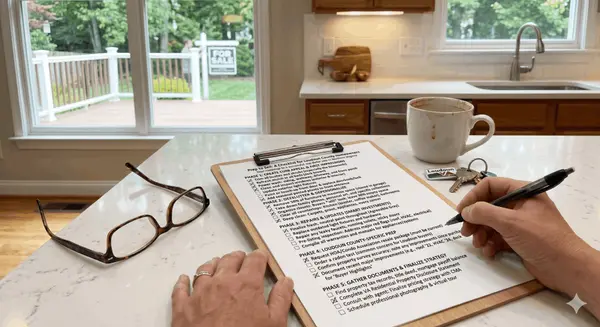
Confirm the tenancy type, the notice period the lease specifies (it may exceed Virginia's statutory minimum), and any sale-specific clauses. Calendar the lease end date and any renewal windows.
Draft a written termination or non-renewal notice — Day 2
Virginia requires written notice. Include the tenant's full name, the property address, the effective termination date (at least 30 days from delivery for month-to-month, or the lease end date for fixed-term non-renewal), and your signature. Keep the tone professional and neutral.
Deliver using a traceable method — Day 2–3
Hand-deliver with a signed receipt, send via certified mail with return receipt, or use the delivery method specified in the lease. Email alone is usually insufficient unless the lease expressly permits it. Keep copies of everything.
Coordinate move-out logistics — Day 3 to Day 30
Offer to help schedule the move-out walkthrough, confirm utility transfer, and arrange key return. Most tenants appreciate being treated with respect during a sale — and a cooperative tenant is a shown-well home.
Conduct move-out inspection and return the deposit — Day 31–45
Virginia requires landlords to return the security deposit, or provide an itemized statement of deductions, within 45 days of lease termination. Document condition with photos and written notes. This is one of the most commonly litigated issues — do it by the book.
⚠️ Do Not Shortcut the Notice
Verbal conversations, text messages, and casual emails are not a legal substitute for proper written notice in Virginia. A tenant who refuses to leave on a defective notice is not a trespasser — they are a rightful occupant, and you will lose weeks in General District Court trying to prove otherwise. Always paper the process.
Tenant Rights During the Sale
Under the VRLTA, your tenant retains every right they had before the "for sale" sign went up. Respecting those rights is not just a legal box to check — cooperative tenants produce cleaner showings, faster sales, and higher offers. Here is what your tenant is entitled to throughout the listing period.
Tenant Rights Checklist — Do Not Violate Any of These
- ✓ Quiet enjoyment — the tenant can live normally through the full lease term, even while the home is listed.
- ✓ Reasonable advance notice before showings (commonly 24–72 hours in writing; follow what the lease specifies).
- ✓ Entry only at reasonable times (generally business hours and early evenings — not 9 p.m. or 6 a.m.).
- ✓ Habitability — all essential services (heat, hot water, plumbing, electricity) must continue through closing.
- ✓ Security deposit protection — the deposit must be transferred to the new owner or returned at move-out per statute.
- ✓ Freedom from retaliation — you cannot raise rent, terminate, or harass a tenant for asserting VRLTA rights.
- ✓ Right to information — tenant may reasonably ask who the new landlord will be after closing.
- ✓ Full honor of the existing lease — rent, term, pet rules, and any concessions continue unchanged.
Marketing and Showings With Tenants in Place
A tenant-occupied listing is a different marketing beast than a vacant one. You have less control over presentation, less flexibility on showings, and a narrower buyer pool that is almost entirely pricing-sensitive. Done well, it still sells. Done poorly, it sits. Here is how we approach it.
Get your tenant on your side first
Before we photograph a single room, we meet the tenant. We explain the timeline, the showing plan, who will handle access, and whether a tenant cooperation incentive (a reduced month's rent or a small stipend) is on the table. Tenants who feel respected show a home well. Tenants who feel blindsided do not.
Photograph to the furniture that's there
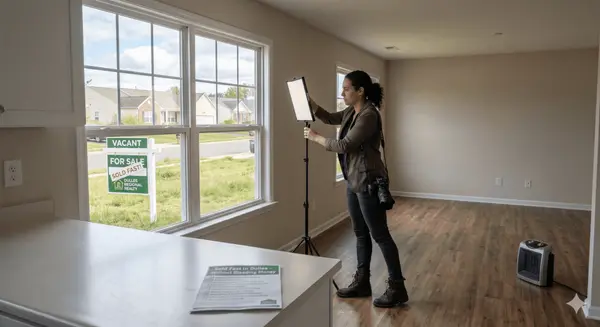
You likely cannot restage — the home belongs to the tenant during the term — but a professional real estate photographer can often work with what is in place. If the tenant is willing to declutter for a morning, great. If not, a skilled listing agent will still produce professional photos and supplement with drone footage, 3D tours, and floor plans that help buyers visualize beyond the current furniture.
Concentrate showings into blocks
Rather than 20 individual scattered appointments, batch showings into two or three tight windows per week — Tuesday evenings, Saturday mornings, Sunday afternoons. This minimizes disruption for the tenant and creates urgency for buyers who see other cars in the driveway. A well-run open house can replace a dozen individual showings entirely.
Target the right buyer pool in the listing description
Be explicit in the MLS remarks: "Turnkey investment property — tenant in place through [date] at $X/month." This filters out owner-occupants who cannot wait and attracts investor buyers, 1031 exchange buyers, and portfolio landlords who actively search for occupied properties in markets like Fairfax, Ashburn, Leesburg, and Alexandria.
How Tenant Occupancy Affects Your Sale Price
The pricing impact of selling occupied versus vacant is the question every landlord wants answered before they list. The honest answer is: it depends on the lease, the rent-to-market ratio, the local buyer pool, and the condition of the home. Here are the ranges we see in Northern Virginia in 2026.
Price Adjustment vs. Vacant Comparable (typical NOVA range)
Based on BrightMLS data and The Jamil Brothers Realty Group transaction sample, 2023–2025. Your actual delta depends on property condition and negotiation.
The pattern is clear: the closer your in-place rent is to current market rent, the smaller the discount. Investor buyers care about one number — the cap rate — and that is driven entirely by the rent relative to the purchase price. If your tenant is paying market rent under a clean lease, your occupied sale might only cost you 1–3%. If your rent is well below market, investors will price that gap directly into their offers.
That is why in most cases it is worth having your listing agent run both scenarios for you before you list — what you'd net selling occupied today versus waiting, turning the property, and selling vacant in 60–90 days. It is a math decision, not an emotional one, and a full seller net sheet gives you both answers on one page.
Your Net Proceeds Calculator
Here is a quick side-by-side of what you would net on a Virginia sale at different price points, comparing a traditional 3% listing agent to our 1.5% full-service listing program. Same marketing, same service level, different fee.
Seller Savings Calculator
How much more do you keep with our 1.5% listing fee?
Select your home's estimated value to see your real net proceeds — side by side.
Traditional Agent — 3%
Our Fee — Only 1.5%
Extra in your pocket
$6,000
vs. a traditional 3% listing agent — with zero reduction in service or marketing.
Traditional Agent — 3%
Our Fee — Only 1.5%
Extra in your pocket
$7,500
vs. a traditional 3% listing agent — with zero reduction in service or marketing.
Traditional Agent — 3%
Our Fee — Only 1.5%
Extra in your pocket
$9,000
vs. a traditional 3% listing agent — with zero reduction in service or marketing.
Traditional Agent — 3%
Our Fee — Only 1.5%
Extra in your pocket
$11,250
vs. a traditional 3% listing agent — with zero reduction in service or marketing.
Traditional Agent — 3%
Our Fee — Only 1.5%
Extra in your pocket
$15,000
vs. a traditional 3% listing agent — with zero reduction in service or marketing.
Estimates only. Closing costs vary. Buyer's agent commission is negotiable.
Our custom net sheet factors in your in-place rent, lease term remaining, transfer taxes, and realistic buyer-pool pricing — so you see two scenarios side-by-side before you list.
Cash-for-Keys: When a Buyout Makes Sense
Cash-for-keys is a voluntary agreement where you pay your tenant a lump sum in exchange for ending the lease early and delivering the property clean and vacant by an agreed date. Done right, it is one of the fastest and most economical ways to convert an occupied home into a vacant one ready for open-market sale.
The math usually favors the seller. If waiting for a vacant sale unlocks an extra $30,000 in sale price and a $2,500 buyout removes the only obstacle, that is a clear win. The tricky part is getting the structure and the paperwork right.
| Scenario | Typical Buyout Range (NOVA) | When It Makes Sense |
|---|---|---|
| 1–2 months remaining, cooperative tenant | $1,000–$2,000 | Speed premium, minor incentive needed |
| 3–6 months remaining | $2,500–$4,000 | Most common range in our practice |
| 6–12 months remaining, below-market rent | $4,000–$8,000+ | Tenant has strong incentive to stay — buyout must reflect that |
| Difficult tenant, behind on rent | Often cheaper than eviction litigation | Compare against 60–120 days and legal fees in General District Court |
Every buyout must be documented in a short written agreement signed by both parties. At minimum, the agreement should state: the exact buyout amount, the vacate date, who pays the last month's rent, how the security deposit will be handled, the condition expected at move-out, and a mutual release of further claims. Vague verbal deals blow up 60 days later — paper everything.
Selling to Your Tenant — A Quiet Exit
Your tenant is often a qualified buyer hiding in plain sight. They know the home, they know the neighborhood, they have been paying market-adjacent rent for 1–5 years, and if they are still there, odds are they like the property. Approaching them first can save you months of marketing, staging, and tenant-showing logistics.
Not every tenant can actually buy. But when the numbers work, a direct tenant-to-landlord sale tends to close faster, with less drama, and at a price very close to market — because both sides skip the buyer-agent cost and the tenant avoids a move.
How to approach the conversation
Keep it low-pressure. Tell your tenant you are considering selling and want to know if they would be interested in buying before the home hits the open market. Give them a reasonable window (30–60 days) to get pre-approved by a lender. Share the comp-based price range you would list at. Most tenants will tell you yes or no within a week.
Key mechanics
Tenant-to-Landlord Sale Checklist
- ✓ Lender pre-approval letter from a reputable Virginia lender (not a quick pre-qualification)
- ✓ Agreed purchase price backed by recent comps — your listing agent can run these
- ✓ Standard VR/NVAR purchase contract, not a handshake
- ✓ Home inspection by an independent inspector — protects everyone
- ✓ Title search and title insurance through a Virginia-licensed title company
- ✓ Security deposit credited at closing or returned per statute
- ✓ Proper disclosures — Virginia lead-based paint (if pre-1978), residential property disclosure, HOA docs if applicable
Tax Implications — 1031 Exchanges and Capital Gains
Selling a rental property triggers different tax consequences than selling a primary residence. You lose the Section 121 primary-residence exclusion (unless you lived in the home for 2 of the last 5 years), you face depreciation recapture at up to 25%, and long-term capital gains tax applies to the rest. For many DMV landlords, the tax bill on a sale is the single largest line item — and also the most commonly underestimated.
ℹ️ This is not tax advice
Your actual tax outcome depends on your cost basis, depreciation taken, holding period, state of residence, and income bracket. Before you list, run the numbers with a CPA who handles real estate. We can connect you with one if you need a referral.
1031 exchange: the tax-deferral option worth knowing about
If you are selling one Virginia rental and intend to buy another investment property, a Section 1031 like-kind exchange lets you defer capital gains and depreciation recapture by rolling your equity into the replacement property. The structure is strict: you must identify replacement property within 45 days of closing your sale and complete the purchase within 180 days, and the funds have to be held by a qualified intermediary — never in your own bank account.
A 1031 turns a sale into the start of the next investment rather than a taxable event. It is the primary reason many sophisticated DMV buyers seek out occupied rental listings in the first place. If that applies to you on the buy side or the sell side, your listing agent and a qualified intermediary should be looped in from day one.
If your tenant situation is complicated — lease conflicts, non-paying tenant, or you just want to skip the listing process entirely — a cash offer may be the right fit. We'll walk you through your full range of options, including the open-market alternative, so you can compare apples to apples.
Closing Mechanics: Security Deposit, Rent Proration, Estoppel
Three closing items trip up landlord-sellers in Virginia more than any others: the security deposit, the rent proration, and the tenant estoppel certificate. None is complicated on its own, but each has to be handled correctly in the settlement statement or you will be getting calls from an unhappy tenant or an unhappy buyer six months later.
1. Security deposit transfer
Under Virginia law, the security deposit either transfers to the new owner at closing (most common when the tenant stays) or gets returned to the tenant after move-out (when the tenant vacates before closing). A transfer shows up on the settlement statement as a credit from seller to buyer, with a signed acknowledgment. Keeping the deposit yourself without a lawful deduction is not an option.
2. Prepaid rent and rent proration
If closing happens mid-month, the rent for that month gets prorated. The seller keeps rent for the days they owned the property; the buyer is credited the rent for the days after closing. If the tenant has already paid the full month to the seller, the proration appears as a credit to the buyer on the settlement statement. This is standard — your settlement company will handle the arithmetic, but confirm the numbers before you sign.
3. Tenant estoppel certificate
Buyers of occupied properties almost always require a tenant estoppel certificate: a short signed statement from the tenant confirming the lease term, current rent, security deposit on file, and that the landlord is not in default. It protects the buyer from surprise claims after closing. It takes ten minutes to execute and is usually the last thing signed before closing.
| Settlement Item | Who Pays / Receives | Typical Handling |
|---|---|---|
| Security deposit | Credit: seller → buyer | Transferred with signed acknowledgment |
| Prepaid rent (current month) | Prorated at closing | Credit to buyer for days post-closing |
| Tenant estoppel certificate | Prepared by buyer, signed by tenant | Delivered 3–5 days before closing |
| Virginia grantor tax | Seller | $1 per $1,000 of sale price + NOVA congestion tax if applicable |
| HOA transfer fee (if applicable) | Typically seller, negotiable | $250–$500 in most NOVA associations |
| Lease assignment | Neutral — executed at closing | Automatic under VRLTA; formal assignment document is optional |
Common Mistakes Landlord-Sellers Make
Avoid These — They Cost Real Money
- ✗ Giving verbal or text-message notice instead of proper written notice
- ✗ Showing the home without the notice period required by the lease or statute
- ✗ Pricing as if the home were vacant when it is not
- ✗ Keeping the security deposit at closing without a lawful deduction or proper transfer
- ✗ Ignoring a fixed-term lease and signing a contract promising vacant possession
- ✗ Offering cash-for-keys without a signed written agreement
- ✗ Marketing to owner-occupants when the lease runs another 10 months
- ✗ Missing the 1031 exchange 45-day identification window after closing
Frequently Asked Questions
Can I sell my house if it has tenants in Virginia?
Yes, you can absolutely sell a tenant-occupied home in Virginia. The sale does not automatically end the lease — a fixed-term lease transfers to the new owner and must be honored through its end date, while a month-to-month tenancy can be terminated by either party with 30 days' written notice under the Virginia Residential Landlord Tenant Act. You have four primary paths: sell with the lease in place to an investor buyer, wait until the lease ends and sell vacant, offer a cash-for-keys buyout, or sell directly to your tenant.
How much less does a tenant-occupied home sell for in Northern Virginia?
In our Northern Virginia transaction experience and BrightMLS data from 2023–2025, tenant-occupied homes typically sell for 3–8% less than vacant comparable homes. The exact discount depends on the rent-to-market ratio, the lease term remaining, and tenant cooperation. Homes with market-rate rent and cooperative tenants often fall at the low end (1–3% discount). Homes with well-below-market rent and uncooperative tenants fall at the high end (8–12%).
How much notice do I have to give a tenant to sell in Virginia?
For a month-to-month tenancy, Virginia requires 30 days' written notice to terminate, delivered in a traceable way (hand delivery with signature, certified mail with return receipt, or as specified in the lease). For a fixed-term lease, you generally cannot terminate early without the tenant's agreement or a lease breach — you must wait until the end of the term and give proper non-renewal notice. Your lease may require a longer notice period than the statute, so always check the lease first.
Does the new buyer have to honor my tenant's existing lease?
Yes. Under the general rule that a lease runs with the land, a fixed-term lease transfers to the new owner when the property sells. The buyer steps into the shoes of the landlord, inherits the rent schedule, term, and any tenant rights, and assumes the security deposit obligation. This is why occupied listings typically attract investor buyers — owner-occupants rarely want to wait 8 or 10 months to move in.
How long does it take to sell a tenant-occupied home in Northern Virginia?
Occupied listings in Fairfax, Loudoun, Arlington, and Alexandria counties typically take 30–60 days from list to contract when priced correctly for the investor pool. Add 30–45 days to close, for a total of 60–105 days. A cooperative tenant, clean lease, and market-rate rent shorten that window. An uncooperative tenant or below-market rent lengthens it substantially.
What is cash-for-keys, and is it legal in Virginia?
Cash-for-keys is a voluntary agreement where the landlord pays the tenant a lump sum in exchange for ending the lease early and delivering the property vacant and clean by an agreed date. It is fully legal in Virginia as long as it is genuinely voluntary — you cannot use it to pressure a tenant with fixed-term rights into leaving. Typical Northern Virginia buyouts range from $1,000 for short remaining terms up to $8,000+ for long remaining terms with below-market rent. Always document the agreement in writing.
What happens to the security deposit when I sell?
Under Virginia law, the security deposit must either be transferred to the new owner at closing (if the tenant stays in place) or returned to the tenant per the statutory 45-day accounting rules (if the tenant vacates before closing). On the settlement statement, a transferred deposit appears as a credit from seller to buyer. Keeping the deposit yourself without a lawful deduction is not permitted — it is the tenant's money held in trust.
How do I choose the right listing agent for a tenant-occupied sale?
Look for three things: demonstrated experience selling occupied rentals (ask for two recent examples), an investor buyer database they can tap on day one, and a clear written marketing plan tailored to the investor pool. Ask how they handle showing coordination with tenants, and what they recommend on pricing occupied vs. vacant. The Jamil Brothers Realty Group has closed 840+ homes across the DMV, and a significant share of our transactions involve occupied rentals — so this is a workflow we run every month, not a one-off. Our 1.5% full-service listing program includes the same professional photography, drone video, 3D tour, and investor outreach that a traditional 3% agent provides.
After the 2024 NAR settlement, how does buyer-agent compensation work for a tenant-occupied sale?
As of August 2024, buyer-agent compensation is fully negotiable and is no longer posted in the MLS. For a tenant-occupied sale, the practical effect is the same as any other transaction: the seller decides whether to offer buyer-agent compensation in the contract, the buyer negotiates their own representation fee, and every offer will specify whatever the buyer wants the seller to cover. In Northern Virginia, sellers still commonly offer 2–2.5% to the buyer's agent as competitive market practice, but it is not required. Your listing agent should walk you through the trade-offs before you set the offer.
Can I show my tenant-occupied home without the tenant's permission?
You can show the home, but only with reasonable advance notice as required by the lease and the VRLTA — typically 24–72 hours in writing, at reasonable times. You cannot enter and show the home whenever you want. Tenants who feel respected tend to cooperate with a reasonable showing schedule; tenants who feel steamrolled will push back, and a pushback during a listing window is a problem. Always provide notice in writing and try to batch showings into predictable windows.
Do HOA restrictions affect the sale of a tenant-occupied home in NOVA?
Occasionally yes. Some Northern Virginia HOAs cap the percentage of rental units in the community, and a few impose waiting periods before a new owner can rent. If your community is at or near its rental cap, that can disqualify investor buyers from being able to continue renting after closing — which would push you toward an owner-occupant sale strategy instead. Always pull the HOA resale disclosure package early so these restrictions do not surface at the worst possible moment.
What is a tenant estoppel certificate, and is it required?
A tenant estoppel certificate is a short written statement signed by the tenant that confirms the essential facts of the lease: term, rent, security deposit on file, move-in date, and that the landlord is not in default. It protects the buyer from claims that could contradict what the seller represented. It is not legally required in every Virginia transaction, but it is standard for any sale involving a tenant, and a sophisticated investor buyer will almost always request one as a condition of closing.
Glossary
VRLTA
The Virginia Residential Landlord and Tenant Act — Virginia's statewide framework governing most residential rentals, found in Title 55.1 of the Code of Virginia.
Month-to-Month Tenancy
A rental arrangement that continues each month until either side gives proper notice. Virginia statute requires 30 days' written notice to terminate.
Fixed-Term Lease
A lease with a defined start and end date (e.g., 12 months). Neither party can terminate early absent a breach or a mutual written agreement.
Quiet Enjoyment
The tenant's right to possess and use the rented property without unreasonable interference from the landlord or new owner.
Cash-for-Keys
A voluntary written agreement where the landlord pays the tenant a lump sum in exchange for ending the lease early and delivering the property clean and vacant.
Tenant Estoppel Certificate
A signed tenant statement confirming the current lease terms, rent, security deposit, and that the landlord is not in default — used to protect the buyer at closing.
1031 Exchange
A Section 1031 like-kind exchange lets an investor defer capital gains and depreciation recapture by rolling sale proceeds into another investment property within 45/180 days.
Grantor Tax (Virginia)
Virginia state transfer tax paid by the seller — $1 per $1,000 of sale price, plus a regional congestion tax in Northern Virginia jurisdictions.
Your Next Step
Selling a tenant-occupied home in Virginia is absolutely doable — it just requires the right lease review, the right notice, and a pricing strategy that matches the buyer pool you can realistically reach. Almost every landlord we work with tells us the same thing six weeks after closing: it was simpler than they expected, and they wish they had started sooner.
If you are thinking about selling a rental anywhere in Fairfax, Loudoun, Prince William, Arlington, or Alexandria County, the best first step is to see your two scenarios side by side: what you net selling occupied today versus what you net selling vacant in 60–90 days. We put that together at no cost, with real comps and the specific closing costs for your jurisdiction — and you can see the 1.5% full-service listing program numbers on the same sheet.
Know your equity, understand the occupied-vs-vacant trade-off, and see exactly what you'll walk away with — before you make any decisions. The Jamil Brothers provide a full seller consultation at no cost or obligation.
Questions before you start? Call The Jamil Brothers Realty Group directly at (703) 782-4830, or explore more community-specific seller guides below.
Explore More Seller Guides
Fairfax McLean Vienna Reston Herndon Ashburn Leesburg Sterling Alexandria Prince William 1.5% Listing Program Seller Net Sheet Cash Offers Homes for SaleExplore More
Browse Every Corner of the DMV Market
Whether you're searching by budget, neighborhood, or buying situation — find exactly what you need below.
Virginia Homes by Budget
Washington DC Homes by Budget
Maryland Homes
Explore Northern Virginia Communities
Loudoun County
Fairfax County & Surrounding
Ready to Make a Move?
Full-Service · No Tradeoffs
List for 1.5% & Keep More Equity
Professional photography, drone video, 3D tours, and expert negotiation — all included. On an $800K home, that's $12,000 more in your pocket vs. a 3% agent.
See the 1.5% Program →Need Speed or Certainty?
Get a No-Obligation Cash Offer
Skip the showings, skip the contingencies. If timing or condition matters more than top dollar, a cash offer may be the right fit. We'll walk you through every option.
Explore Cash Offers →
Categories
Recent Posts







Let's Connect